


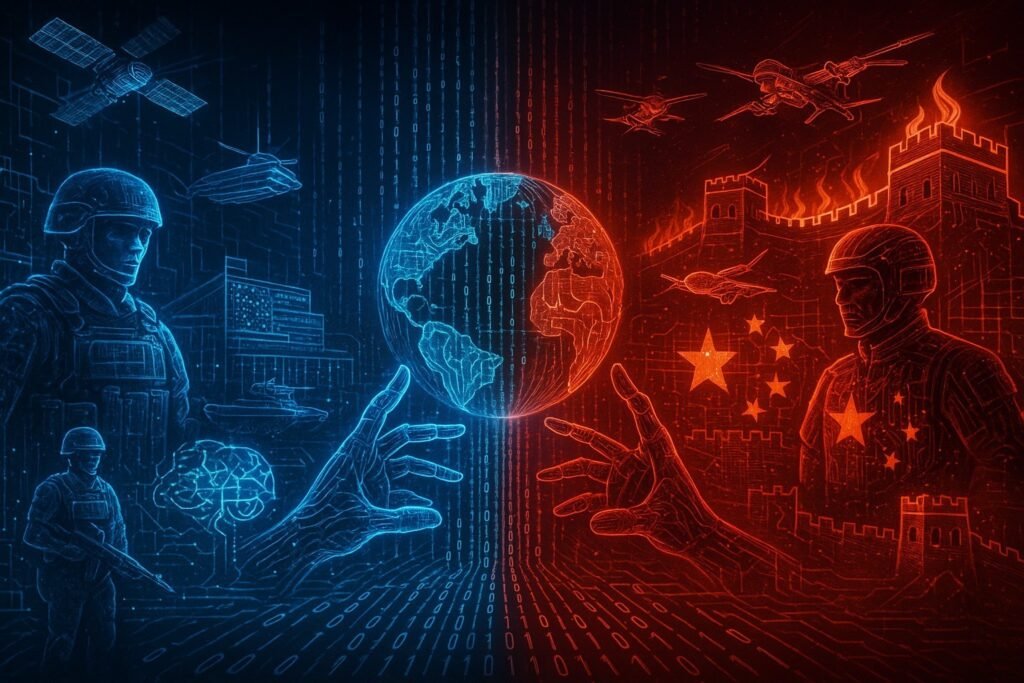
The AI Arms Race: A 2025 Guide to Artificial Intelligence in Military Strategy and Global Security
Introduction – Why This Matters
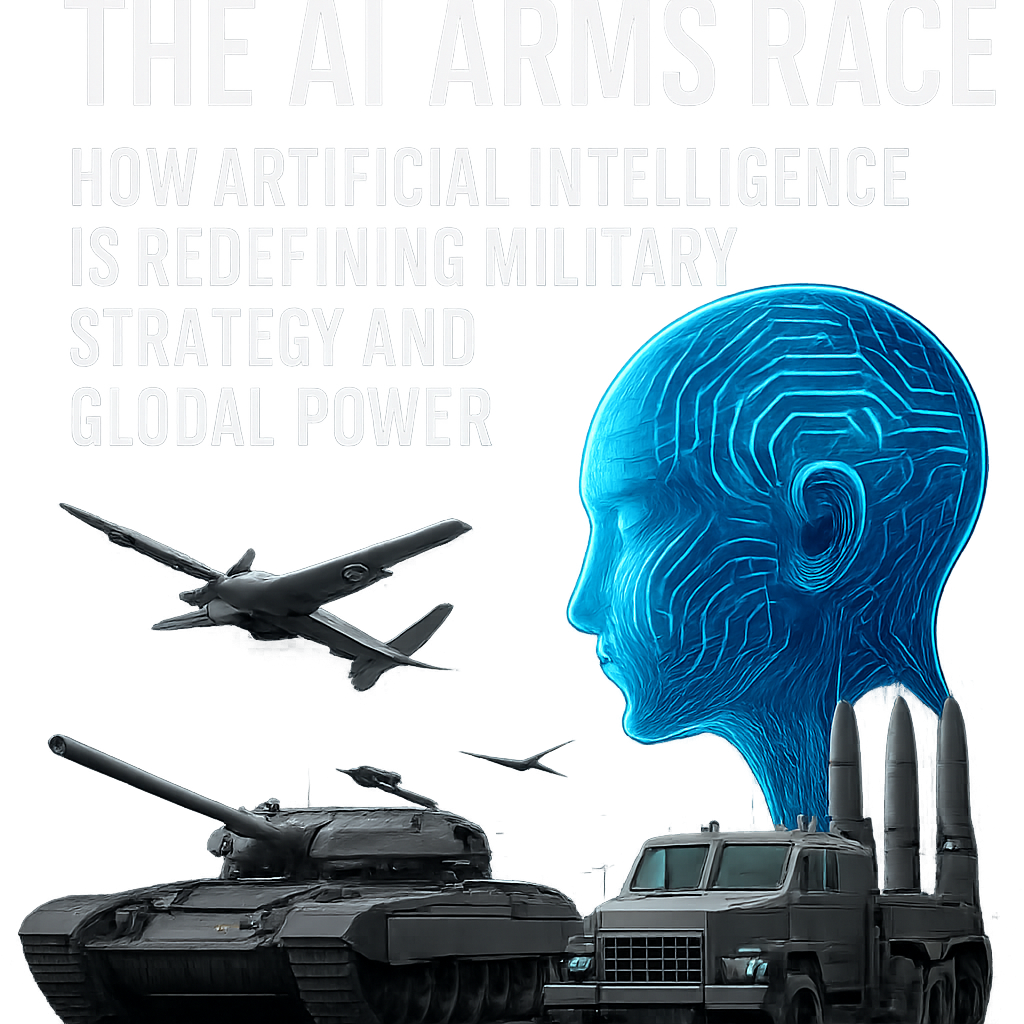
In the corridors of the Pentagon, the PLA’s Academy of Military Science in Beijing, and research labs from Tel Aviv to Silicon Valley, a quiet revolution is unfolding—one powered not by traditional explosives, but by algorithms and data. The integration of Artificial Intelligence (AI) into military systems represents the most significant strategic shift since the advent of nuclear weapons. This isn’t about robots taking over the battlefield in a sci-fi fantasy; it’s about a fundamental recalibration of how power is projected, decisions are made, and wars are won or deterred.
In my experience analyzing defense technologies, the most profound change I’ve witnessed is the compression of the “OODA Loop”—the military concept of Observe, Orient, Decide, Act. What I’ve found is that AI is collapsing this cycle from minutes to milliseconds, creating a battlefield where human cognition alone is becoming a bottleneck. For the curious beginner, understanding this shift is key to grasping the new frontiers of geopolitics. For the security professional, it’s an urgent refresher on a domain where a software update can alter the global balance of power as decisively as a new aircraft carrier. This guide will navigate the complex landscape of the AI arms race, separating hype from reality and exploring its profound implications for every nation’s security. For foundational knowledge on the technology itself, you can explore our detailed resource on Artificial Intelligence and Machine Learning.
Background / Context
The military application of AI is not new. Early expert systems and targeting algorithms have existed for decades. However, the current “race” was ignited by a confluence of three factors in the 2010s:
- The “Deep Learning” Breakthrough: Advances in neural networks, coupled with massive datasets and powerful GPU computing, enabled machines to perform tasks like image recognition and natural language processing at superhuman levels.
- Great Power Competition Re-emerges: The U.S. National Defense Strategy’s 2018 pivot to “great power competition” with China and Russia identified AI as a critical technology. China’s 2017 “Next Generation Artificial Intelligence Development Plan” explicitly stated its aim to be the world’s primary AI innovation center by 2030, with clear military implications.
- The Commercial-Civilian Surge: Unlike past military-tech breakthroughs (stealth, nuclear), AI is being driven overwhelmingly by the commercial sector—companies like Google, Baidu, and NVIDIA. This presents a unique challenge: military advantage now depends on accessing talent and innovation in the private sector.
The seminal moment was arguably the U.S. Defense Advanced Research Projects Agency’s (DARPA) 2016 “AlphaDogfight” trial, where an AI pilot defeated a seasoned human F-16 pilot in a simulated dogfight 5-0. This wasn’t just a stunt; it was a proof-of-concept that shattered long-held assumptions about human superiority in complex, dynamic tasks.
The context today is a frantic, global sprint. The U.S. has established the Joint Artificial Intelligence Center (JAIC) and is pushing for “AI-ready” forces. China is pursuing a “civil-military fusion” strategy, legally mandating private tech firms to support military AI goals. Russia, while behind in raw R&D, focuses on asymmetric concepts like AI-enabled electronic warfare and disinformation. Smaller powers like Israel, the UK, and France are developing niche capabilities, recognizing they cannot compete across the board but can excel in specific domains.
Key Concepts Defined
- The AI Arms Race: The competitive development and deployment of artificial intelligence technologies for military and strategic advantage by nation-states, driven by fears of falling behind a strategic rival.
- Autonomous Weapons Systems (AWS): Often called “killer robots,” these are systems that, once activated, can select and engage targets without further human intervention. This is a contentious subset of military AI.
- Algorithmic Warfare: Warfare where the core strategic advantage lies in superior data processing, pattern recognition, and predictive algorithms, often decoupled from the sheer mass of platforms or personnel.
- Human-Machine Teaming / Centaur Warfare: The optimal integration of human intuition, ethical judgment, and experience with machine speed, precision, and data-processing power. The concept is that a human-AI team will outperform either alone.
- The Data Advantage: In the AI era, the most critical strategic resource is not oil or rare earths, but high-quality, labeled, and relevant data for training algorithms. The side with the best data often has the best AI.
- Explainable AI (XAI): A critical field focused on making AI decision-making processes understandable to humans. In military contexts, a “black box” that cannot explain why it recommended a strike is legally and ethically problematic.
- AI Safety & Alignment: Ensuring AI systems do what their operators intend, are robust against hacking or spoofing, and do not develop catastrophic, unintended behaviors—especially critical for systems with lethal authority.
- Swarming Tactics: The coordination of large numbers of relatively simple, cheap autonomous drones or vehicles (air, sea, land) that overwhelm defenses through sheer numbers and coordinated, intelligent maneuvers.
How It Works (Step-by-Step Breakdown): The AI-Enabled Kill Chain

To understand the impact, let’s walk through a hypothetical, AI-augmented mission—a strike on a mobile missile launcher—compared to a traditional 20th-century approach.
Traditional Kill Chain (Hours/Days):
- Observe: Satellite imagery is taken, downloaded, and sent to an analysis center.
- Orient: Teams of imagery analysts manually scour photos for hours, looking for the launcher.
- Decide: A report is sent up the chain of command. Multiple echelons debate options, assess collateral damage, and seek authorization.
- Act: Orders are relayed to a pilot. A jet takes off, flies to the area, and the pilot visually acquires the target before weapon release.
Total Time: 12-48 hours. The target has likely moved.
AI-Augmented Kill Chain (Minutes):
- Observe: A constellation of low-earth orbit satellites and high-altitude drones provides persistent, real-time sensor data (video, radar, signals) directly to a cloud-based “combat cloud.”
- Orient: An AI computer vision model, trained on millions of images of vehicles, instantly analyzes the data stream. It flags the mobile launcher with 99.8% confidence, distinguishes it from civilian trucks, and pinpoints its location and direction of travel. It fuses this with signals intelligence from another AI detecting the launcher’s electronic emissions.
- Decide: The AI presents this fused intelligence, along with a menu of pre-approved kinetic and non-kinetic options (e.g., a cyber strike on its launch system, a precision-guided missile, or a drone swarm), to a human commander via a decision-support dashboard. It predicts probable collateral damage and enemy responses using wargaming simulations. The commander approves an option in minutes.
- Act: The commander’s decision is transmitted. An autonomous drone loitering in the area, or a ground-launched loitering munition, is assigned the task via the combat cloud. The drone’s own AI handles the final approach, confirms the target via its sensors, and executes the strike.
Total Time: Under 10 minutes. The time from sensor to shooter is collapsed.
This acceleration creates what military theorists call “hyperwar”—conflict at speeds beyond human reaction time, where the side with superior AI can paralyze an opponent’s decision-making process before they can even perceive the threat.
Why It’s Important: Beyond the Battlefield
The AI arms race matters because its implications extend far beyond faster missiles or smarter drones. It is reshaping the very foundations of global security and the nature of power.
- Strategic Stability and Crisis Instability: AI could dangerously compress decision-making time in a crisis. Imagine an AI-powered early-warning system that falsely interprets a civilian rocket launch as a nuclear attack and recommends a pre-emptive counterstrike. The “flash war” risk is real. Trust in AI systems becomes a critical, fragile component of nuclear deterrence.
- The Changing Character of War: Mass may become less important than data and algorithms. A nation with a smaller, but AI-augmented force could potentially defeat a larger, traditional military. This empowers middle powers and even non-state actors who can access commercial AI.
- The New Industrial Base: Military power is increasingly determined by a nation’s access to top AI researchers, semiconductor foundries (like TSMC), and cloud computing infrastructure. This shifts strategic competition into the domains of education, immigration policy, and supply chain security. It mirrors the complex interdependencies seen in global supply chain management.
- The Ethics and Law Vacuum: International laws like the Laws of Armed Conflict (LOAC) struggle to account for autonomous systems. Who is responsible if an autonomous weapon commits a war crime—the programmer, the commander, the manufacturer? The lack of global norms is a dangerous gap.
- Democratization of Lethal Capability: Sophisticated, AI-enabled drones are becoming cheaper and more accessible. In the near future, a terrorist group or rogue state could deploy a swarm of hundreds of explosive drones, a threat historically only available to major militaries.
Sustainability in the Future: Avoiding a Race to the Bottom
An unchecked AI arms race is inherently destabilizing and unsustainable. The future demands proactive governance.
- Technical Safety as a Strategic Imperative: Nations must invest not just in AI capability, but in AI safety, robustness, and alignment. An unsafe, hackable AI is a strategic liability. Shared research on AI safety, like past cooperation on nuclear safety, could be a starting point for dialogue between rivals.
- Human-in-the-Loop (or on-the-Loop) Mandates: Many nations and advocacy groups are calling for a legal requirement that humans retain ultimate authority over lethal force. The debate is between a “meaningful human control” standard (requiring real-time approval) versus a “human on-the-loop” model (where the human can veto but not micro-manage).
- Confidence-Building Measures (CBMs): Inspired by Cold War-era agreements, these could include pre-notification of major AI military exercises, data exchanges on AI safety incidents, and “hotlines” between AI military command centers to prevent miscalculation.
- Dual-Use Dilemma and Export Controls: Most AI is dual-use (civilian and military). Controlling the spread of sensitive AI technologies without stifling innovation is a monumental challenge. The Wassenaar Arrangement, which controls conventional arms and dual-use goods, is slowly adding AI-related items, but enforcement is difficult.
Common Misconceptions
- Misconception 1: “The AI arms race is about building Terminator-style humanoid robots.”
- Reality: The most consequential applications are less visible: logistics algorithms that optimize supply chains, predictive maintenance for equipment, cyber defense systems that detect intrusions, and intelligence software that sifts through intercepted communications. It’s often about support functions, not frontline combatants.
- Misconception 2: “AI will replace soldiers and pilots entirely.”
- Reality: The near- and mid-term future is human-machine teaming. AI will be a force multiplier, not a replacement. A fighter jet will have an AI “co-pilot”; a soldier will have AI-enhanced situational awareness in their goggles; a commander will have an AI strategic advisor. The human role shifts from operator to supervisor and orchestrator.
- Misconception 3: “Whoever has the most advanced AI wins.”
- Reality: It’s about the effective integration of AI into doctrine, training, and organization. A moderately advanced AI, deeply embedded in a military’s culture and processes, can defeat a more advanced AI used in a clumsy, ad-hoc manner. The “software” of a military organization is as important as the “hardware” of the algorithms.
- Misconception 4: “Private tech companies want nothing to do with military AI.”
- Reality: While employee protests at Google over Project Maven highlighted ethical concerns, the relationship is complex. Many firms, especially startups and defense contractors, actively seek Pentagon contracts. In China, the line between private tech giants (Baidu, Alibaba, Tencent) and the state is legally blurred through Civil-Military Fusion.
Recent Developments (2024-2025)

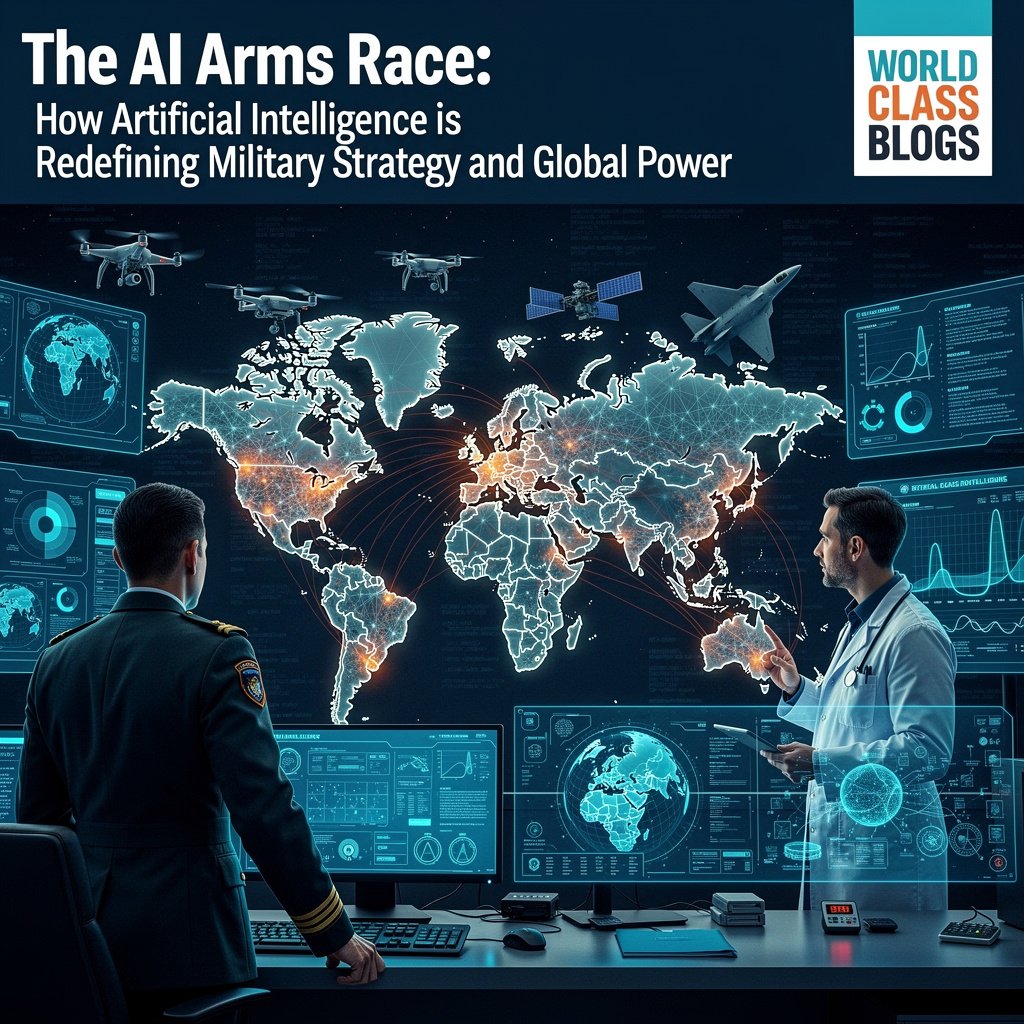
- Large Language Models (LLMs) Go to War: Military labs are aggressively testing LLMs like GPT-4 and their counterparts for staff work: drafting operation orders, summarizing intelligence reports, simulating diplomatic dialogues for training, and even proposing courses of action in wargames. The 2024 DARPA “AIxOps” initiative aims to create AI assistants for every level of military planning.
- The Swarm Proliferation: The conflict in Ukraine has been a stark laboratory. Both sides use commercial and military drones extensively, but 2024 saw the first documented, though rudimentary, use of coordinated drone swarms for suppression of air defenses. The U.S. Replicator initiative and China’s development of “mothership” drones that release smaller swarms indicate this is a top priority.
- AI in the Cognitive Domain: The focus is expanding beyond physical actions to influencing human minds. AI is used to generate hyper-realistic disinformation (deepfake videos of leaders), tailor propaganda to individual psychological profiles scraped from social media, and automate influence campaigns across thousands of online platforms simultaneously. This is a core facet of modern hybrid warfare.
- The Chip War Intensifies: The U.S. 2023 export controls on advanced AI chips (like NVIDIA’s A100 and H100) to China are having a tangible impact. Reports in 2024 suggest Chinese AI labs are struggling to access the computational power needed for cutting-edge model training, potentially creating a temporary gap. However, China is investing billions in domestic semiconductor production.
- Alliances Forge AI Partnerships: NATO approved its first-ever AI Strategy in 2021 and established the DIANA (Defence Innovation Accelerator for the North Atlantic) initiative to foster dual-use tech. The U.S., UK, and Australia (AUKUS) are expanding their pact to include AI and hypersonics collaboration.
Success Stories (If Applicable)
- Project Maven’s Evolution: Initially controversial, the U.S. Department of Defense’s Project Maven (which uses AI to analyze drone footage) has become a cornerstone of its AI strategy. By 2024, it had successfully transitioned from a prototype to an operational capability deployed in multiple combatant commands, dramatically reducing the workload of imagery analysts and accelerating targeting cycles. It demonstrated the Pentagon’s ability (albeit with difficulty) to adopt commercial AI tech.
- Israel’s “AI-First” Defense: The IDF’s “Machine Learning & AI Center” (of Unit 9900) has integrated AI across its operations. A notable success is its “Alchemist” system for Gaza border defense, which uses AI to fuse sensor data from radar, cameras, and drones to automatically detect and classify intrusions, alerting human troops only when a confirmed threat emerges. This has significantly improved response times and reduced manpower needs.
Real-Life Examples
- Case Study: The Turkish Kargu-2 in Libya (Reported 2021)
- What Happened: A UN report confirmed that a Turkish-made Kargu-2 loitering munition “autonomously” hunted and attacked a human target during the Libyan civil war. The system used facial recognition and was operating in a “fully autonomous” mode due to a communications-jammed environment.
- The Lesson: It stands as one of the first documented uses of an autonomous weapon system selecting and engaging humans without explicit real-time command. It proved that the technology is not future speculation; it is present, deployed, and being used in active conflicts.
- Case Study: China’s Civil-Military Fusion in AI
- What Happened: China’s national strategy systematically leverages its vast commercial AI sector for military ends. For example, Megvii and SenseTime—companies known for facial recognition software used for domestic surveillance—are also major contractors for the PLA, developing “smart camps” and battlefield recognition systems. The government mandates data sharing and provides direct funding.
- The Lesson: It presents a unique, integrated model that Western democracies, with their stronger separations between private enterprise and the military, struggle to match. It turns China’s surveillance state apparatus into a direct engine for military AI advancement.
Conclusion and Key Takeaways
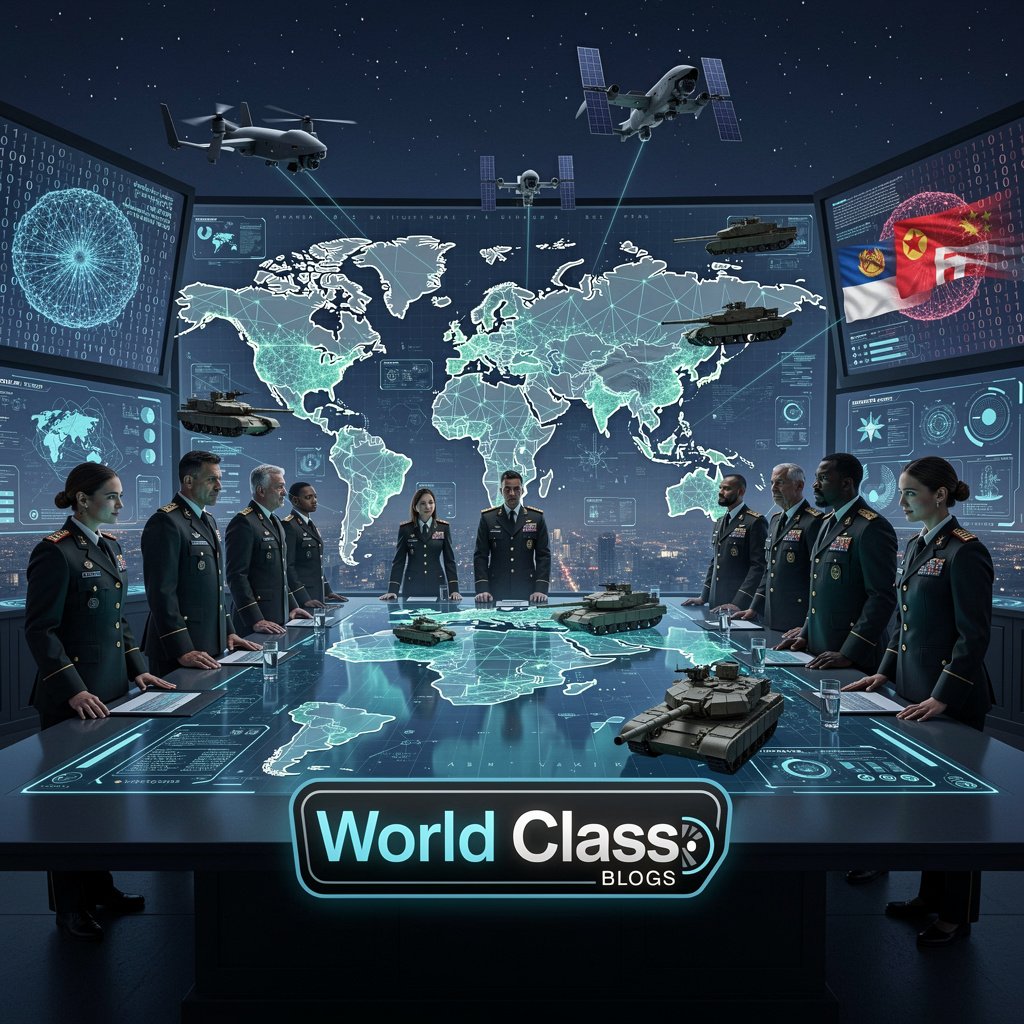
The AI arms race is not a side competition; it is becoming the central arena of great power rivalry. It is redefining the sources of national power, the experience of war, and the very meaning of security. Its trajectory will influence global stability for the rest of the century.
Key Takeaways:
- Speed is the New Stealth. The core advantage of military AI is the radical compression of decision cycles, enabling a form of strategic paralysis against slower adversaries.
- Data is the New Oil. The quality, quantity, and diversity of data available for training AI models are now fundamental determinants of military capability. Securing data pipelines is as critical as obtaining fuel lines.
- The Front Line is Everywhere. AI-enabled warfare erodes the boundaries between battlefield and homeland, civilian and combatant, and peace and war, with attacks possible in cyberspace, the information sphere, and logistics networks simultaneously.
- Ethics and Safety are Strategic. Building trustworthy, robust, and explainable AI is not a sidebar ethical discussion; it is a military necessity to ensure reliable command and control and to maintain legitimacy.
- No Nation is an Island. The globally interconnected nature of AI research, talent, and supply chains (especially for semiconductors) means that national strategies cannot be purely insular. Alliances and partnerships, like those discussed in our Nonprofit Hub on global cooperation, will be crucial.
Navigating this new landscape requires a blend of technical acuity, strategic foresight, and ethical vigilance from policymakers, military leaders, and engaged citizens alike.
FAQs (Frequently Asked Questions)
Q1: What is the single most important military application of AI right now?
A: Intelligence, Surveillance, and Reconnaissance (ISR) processing. AI that can sift through petabytes of drone video, satellite imagery, and intercepted signals to find the proverbial “needle in a haystack” is providing an immediate, transformative advantage.
Q2: Can AI launch nuclear weapons?
A: No responsible nuclear power has delegated launch authority to an AI. All nuclear command and control systems retain a “human in the loop” at the ultimate decision point. However, AI is increasingly used in the supporting systems (early warning, threat analysis, and simulation), which creates complex risks of false warnings or biased recommendations that could pressure human decision-makers.
Q3: What is “centaur warfare” or “human-machine teaming”?
A: It’s the concept that the optimal warfighter is a synergistic team of a human and an AI. The AI handles high-speed data processing, pattern recognition, and tedious calculation. The human provides contextual understanding, ethical judgment, creativity, and ultimate responsibility. Think of an F-35 pilot with an AI assistant managing sensor fusion and threat prioritization.
Q4: How is AI used in cyber warfare?
A: Offensively, AI can automate vulnerability discovery, craft highly personalized phishing emails, and design malware that adapts to its environment. Defensively, AI is critical for detecting novel attacks in network traffic, automating threat response, and predicting adversary moves. It’s a core driver of the cyber arms race.
Q5: What is the “Replicator” initiative?
A: A U.S. Department of Defense program announced in 2023 aimed at fielding thousands of “attritable, autonomous systems” across multiple domains (air, land, sea) within 18-24 months. The goal is to quickly mass-produce smart, cheap drones to counter China’s numerical advantage in ships and missiles in the Pacific.
Q6: Are there any international laws banning autonomous weapons?
A: Not yet. Discussions have been ongoing for a decade at the UN Convention on Certain Conventional Weapons (CCW) in Geneva. A growing number of countries and NGOs call for a binding treaty, but major military powers (U.S., Russia, China, UK, Israel) oppose a ban, advocating for non-binding “principles” instead.
Q7: What is a “deepfake” and why is it a security threat?
A: AI-generated, hyper-realistic but fake audio or video. A security threat includes faking a leader’s order to stand down troops, creating false evidence of atrocities to justify intervention, or destabilizing a country by showing a politician saying something inflammatory they never said. It’s a potent tool for information warfare.
Q8: How does AI change logistics and supply chains for the military?
A: Drastically. AI predictive maintenance can forecast when a tank engine will fail before it breaks. AI algorithms can optimize global supply routes in real-time to avoid threats or congestion. This makes forces more agile and reduces the massive “tail” of support traditionally needed.
Q9: What is “AI safety” in a military context?
A: It encompasses ensuring the AI is robust (can’t be fooled by adversarial examples—e.g., a stop sign with a sticker that makes an AI see it as a speed limit), aligned (does what the commander intends, not a misinterpreted order), and secure (cannot be hacked or hijacked by an enemy).
Q10: Can a small country compete in the AI arms race?
A: Yes, through niche specialization and alliances. A country like Estonia excels in cyber defense AI. Israel leads in drone and counter-drone AI. They may not build a full-spectrum AI force, but they can develop exportable, world-leading capabilities in specific areas that provide leverage within alliances.
Q11: What is “quantum machine learning” and how might it affect the race?
A: It’s the application of quantum computing principles to AI algorithms. In theory, it could exponentially speed up the training of complex models or break current encryption. It’s currently in early R&D, but the nation that achieves a practical quantum advantage could leapfrog competitors in certain AI domains.
Q12: How is AI used in training and simulation?
A: To create hyper-realistic, adaptive virtual worlds. Instead of training against scripted opponents, soldiers can train against AI adversaries that learn their tactics and develop counters. This creates a much more dynamic and challenging training environment. AI can also act as a personalized tutor, identifying weaknesses in a trainee’s performance.
Q13: What is “predictive analytics” in warfare?
A: Using AI to analyze patterns of life data (movement, communications, social media) to predict where an insurgent attack might occur, when a piece of equipment will fail, or how an adversary leader might react to a diplomatic move. It’s about moving from reaction to anticipation.
Q14: Does the U.S. or China have the lead?
A: It’s domain-specific. The U.S. leads in foundational research, cutting-edge algorithms, and battlefield implementation (e.g., Project Maven). China leads in facial/object recognition applications, data collection scale (due to fewer privacy constraints), and the integration of commercial and military sectors. The race is extremely close and dynamic.
Q15: What are “lethal autonomous weapons systems” (LAWS)?
A: The UN term for what are commonly called “killer robots.” There is no universally agreed-upon definition, but it generally refers to systems that can select and engage targets without human intervention. The debate centers on where to draw the line between “automated” (human-delegated) and “autonomous” (AI-decided).
Q16: How does AI affect nuclear command, control, and communications (NC3)?
A: It can improve early-warning sensor fusion and reduce false alarms. However, integrating AI into NC3 also introduces new vulnerabilities (cyber attacks on the AI, data poisoning of its training sets, or simply opaque decision-making) that could undermine crisis stability. Extreme caution is the watchword.
Q17: What role do companies like Palantir, Anduril, and Shield AI play?
A: They are “defense tech” companies built for the AI era. Unlike traditional contractors, they are software-first, agile, and founded by people from Silicon Valley. They are providing the Pentagon with new platforms for data fusion (Palantir), autonomous drones (Shield AI), and AI-powered border surveillance (Anduril), often developing capabilities faster than the traditional acquisition system.
Q18: Can AI be used for peacekeeping or conflict prevention?
A: Yes. AI can analyze satellite data to track troop movements that violate ceasefires, monitor social media for early signs of ethnic violence, or process refugee testimonies to identify patterns of human rights abuses for war crimes tribunals.
Q19: What is an “adversarial attack” on an AI system?
A: A technique to fool an AI by making subtle, often human-imperceptible changes to input data. For example, putting specific stickers on a tank could make an AI image classifier see it as a school bus. Defending against such attacks is a major focus of military AI safety research.
Q20: How does AI impact electronic warfare (EW)?
A: AI is revolutionizing EW. AI can rapidly analyze the electromagnetic spectrum, identify new enemy radar or communication signals, and instantly generate and deploy the most effective jamming technique. It turns EW from a manual, pre-programmed discipline into a dynamic, adaptive AI-versus-AI duel.
Q21: What is the “AI battlefield management system”?
A: A centralized, cloud-based software platform (like the U.S. “Joint All-Domain Command and Control” or JADC2) that connects sensors from all military services (Army, Navy, Air Force, etc.) into a single network. AI acts as the brain of this system, recommending the optimal shooter (e.g., a Navy ship, an Air Force drone, an Army missile battery) for any detected target.
Q22: Is there an AI version of an arms control treaty?
A: Not yet, but proposals exist. They could include bans on certain categories of autonomous weapons (e.g., anti-personnel swarms), agreements not to use AI in nuclear launch decisions, or data exchanges on AI safety testing results. The political will for such treaties is currently lacking among the major powers.
Q23: How does the commercial sector’s development of AGI (Artificial General Intelligence) relate?
A: The hypothetical creation of an AGI—an AI with human-like general reasoning ability—would be a seismic event for military affairs. It could theoretically outperform humans in strategy formulation. While most experts believe AGI is decades away, its potential impact makes it a subject of long-term strategic forecasting and concern in defense circles.
Q24: What is “algorithmic bias” in a military setting?
A: If an AI targeting system is trained predominantly on data from one ethnic group or environment, it may perform poorly or make dangerous errors when encountering different groups or terrains. This isn’t just an ethical issue; it’s an operational failure that could lead to tragic mistakes and mission failure.
Q25: Where can I track developments in military AI responsibly?
A: Follow research from think tanks like CSIS, RAND, and SIPRI. Read reports from the U.S. National Security Commission on AI (NSCAI) archives. Follow credible defense tech journalists. Be wary of sensationalist sources. For a broader understanding of the business and partnership models driving such dual-use tech, resources like Shera Kat Network can provide valuable context.
About Author
Sana Ullah Kakar is a strategic futurist and defense analyst specializing in the geopolitical implications of emerging technologies. With a background in both computer science and international relations, they have consulted for government agencies and private sector firms on navigating the risks and opportunities of the AI revolution in security affairs. They believe in demystifying complex technological trends to inform public discourse. This article is part of our commitment at World Class Blogs to provide in-depth analysis on global issues. Learn more about our approach on our About World Class Blogs page.
Free Resources
- The National Security Commission on AI (NSCAI) Final Report (2021): The seminal U.S. government-commissioned study on AI and national security.
- CSIS AI Governance Tracker: A tool monitoring global initiatives to govern military AI.
- “Army of None” by Paul Scharre: An accessible and authoritative book on autonomous weapons.
- The Diplomat’s “Asia-Pacific Defense AI Monitor”: Tracks developments in the crucial Indo-Pacific region.
- Stanford’s “AI Index Report” (Annual): Includes a chapter on AI in military and surveillance, with global data.
- For insights on building the kind of agile, innovative organizations needed to thrive in this new technological landscape, see this guide on successful business partnerships.
Discussion
The ethical line in the sand: Where do you believe the line should be drawn for autonomous weapons? Is a ban on systems that target humans feasible, or should regulation focus on ensuring “meaningful human control”? How can democracies innovate rapidly in AI while upholding their ethical values? We welcome your thoughtful perspectives in the comments. For more discussions on critical topics shaping our world, browse our full range of blogs. If you have specific expertise or questions on this topic, please contact us.


