


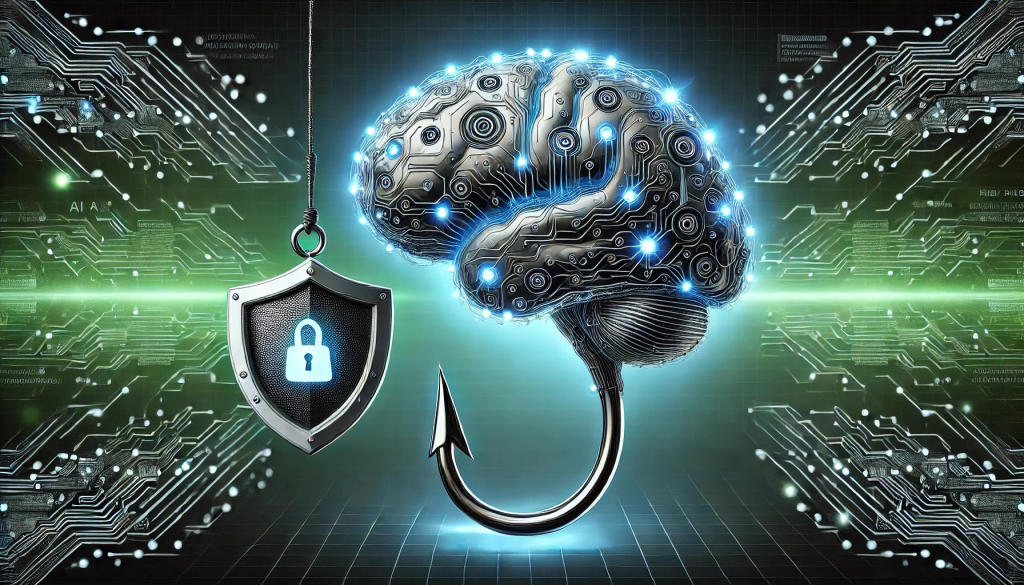
Introduction: The End of the “Bad Grammar” Phishing Email
For years, the tell-tale signs of a phishing email were obvious: poor grammar, spelling mistakes, generic greetings, and suspicious sender addresses. These flaws made them relatively easy for vigilant users to spot. That era is over. The advent of publicly available Generative AI tools like ChatGPT, Google Gemini, and Claude has handed cybercriminals a weapon of mass deception, supercharging the oldest and most effective cyber threat: phishing.
AI-Powered Phishing represents a quantum leap in social engineering. Attackers can now use AI to generate flawlessly written, highly personalized, and contextually relevant emails at an unprecedented scale. This isn’t just about text. AI can clone voices, create convincing deepfake videos, and automate entire multi-channel attack campaigns. The result is a dramatic increase in the sophistication, volume, and success rate of phishing attacks, posing an existential threat to individual and organizational security.
Understanding this new paradigm is not just for IT departments; it is essential for every employee, executive, and individual who uses email, social media, or a phone. This guide will dissect the anatomy of AI-powered phishing, reveal how it works, and provide a robust defense-in-depth strategy to protect against these hyper-personalized attacks. For a broader understanding of the digital landscape, explore our Technology & Innovation focus area.
Background & Context: The Evolution of a Social Engineering Scourge
Phishing has evolved through distinct generations:
- The Spray-and-Pray Era (1990s-2000s): Mass, generic emails sent to millions, relying on volume over quality. The “Nigerian Prince” scam is a classic example.
- The Targeted Phishing Era (2010s): The rise of Spear Phishing (targeting individuals) and Whaling (targeting executives). Attackers spent time researching victims on LinkedIn and social media to craft more convincing lures.
- The AI-Powered Era (2023-Present): Generative AI automates and enhances the research and content creation process. What took a human attacker hours of manual labor now takes an AI seconds, making highly targeted spear phishing accessible to low-skilled attackers.
The democratization of AI has broken the skill barrier. A hacker no longer needs to be a native English speaker or a skilled writer to create a perfectly crafted, persuasive email. They just need to know how to write a good prompt for an AI model. This shift has fundamentally altered the threat landscape, making everyone a potential target for a highly convincing scam.
Key Concepts Defined: The New Phishing Arsenal
To understand the threat, we must define its new components:
- Generative AI: Artificial intelligence that can create new, original content—such as text, images, audio, and video—based on the patterns it has learned from training data.
- Spear Phishing: A highly targeted phishing attack directed at a specific individual or organization, using personalized information to increase credibility.
- Vishing (Voice Phishing): Phishing attacks conducted via phone calls. AI-powered vishing now uses voice cloning to impersonate executives or family members in real-time.
- Smishing (SMS Phishing): Phishing attacks sent via SMS/text messages.
- Deepfake: A synthetic media in which a person’s image, video, or audio is replaced with someone else’s likeness using AI.
- Business Email Compromise (BEC): A sophisticated scam targeting businesses working with foreign suppliers and/or businesses regularly performing wire transfer payments. AI makes BEC attacks far more convincing.
- Large Language Model (LLM): The underlying technology for AI like ChatGPT, capable of understanding and generating human-like text.
How AI-Powered Phishing Works: A Step-by-Step Attack Breakdown
Let’s walk through a modern attacker’s playbook, highlighting where AI supercharges each step.

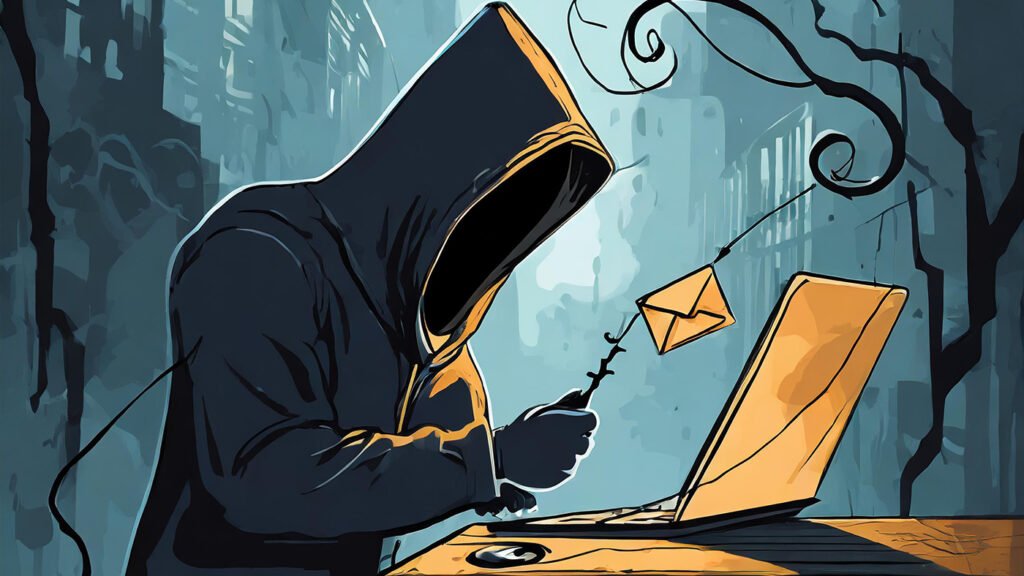
Step 1: Reconnaissance and Data Harvesting (The AI Research Assistant)
- Traditional Method: Manually scouring LinkedIn, company websites, and social media for target details.
- AI-Powered Method: Attackers use AI-powered tools to automatically scrape and synthesize vast amounts of Open-Source Intelligence (OSINT). An AI can be prompted to: “Find all employees in the finance department of [Target Company] from their LinkedIn profiles and summarize their roles, projects, and potential colleagues.” This creates a rich target profile in minutes.
Step 2: Payload and Lure Creation (The AI Content Factory)
- Traditional Method: Manually writing a limited number of phishing emails, often with linguistic errors.
- AI-Powered Method: The attacker feeds the harvested data into an LLM with a prompt like: “Write a convincing email from the CEO, [CEO Name], to the head of finance, [Target Name]. Reference the recent Q3 budget meeting and create urgency for an urgent wire transfer of $[amount] to a new vendor for a confidential project. Sound authoritative and friendly.” The AI generates a perfectly written, professionally toned email, free of errors, that mimics the CEO’s known communication style.
Step 3: Multi-Channel Delivery and Impersonation (The AI Actor)
- Traditional Method: Relying mostly on email.
- AI-Powered Method:
- Email: The AI-generated email is sent.
- Vishing: As a follow-up, the attacker uses an AI voice-cloning tool. With a short sample of the CEO’s voice from a company podcast or YouTube video, they can generate synthetic speech to call the target and add pressure, saying, “Did you get my email? This is extremely time-sensitive.”
- Deepfakes: For high-value targets, an attacker could create a short deepfake video of the CEO authorizing the transaction.
Step 4: Evading Detection (The AI Trickster)
- Traditional Method: Constantly changing sender addresses.
- AI-Powered Method: AI can be used to generate thousands of slightly varied email templates to bypass static content filters. It can also be used to write code for creating polymorphic malware—malware that changes its code to avoid signature-based detection.
Why AI-Powered Phishing is a Critical Threat
The implications of this technological shift are profound:
- Unprecedented Scale and Personalization: Attackers can run thousands of highly personalized spear-phishing campaigns simultaneously, a feat previously impossible.
- Erosion of Trusted Communication Channels: When a voice, email, or even video of a colleague can be faked, the very foundations of digital communication and trust are undermined.
- Higher Success Rates, Higher Stakes: More convincing lures lead to more clicks, more credential theft, and more financial losses. The FBI reported BEC losses totaling over $2.9 billion in 2023, a figure poised to grow with AI.
- Increased Mental Load on Employees: The constant vigilance required to spot these advanced attacks can contribute to alert fatigue and stress, impacting overall Mental Wellbeing in the workplace.
Common Misconceptions and Pitfalls
Dangerous assumptions leave organizations vulnerable.
- Misconception: “Our email filter will catch it.”
Reality: Traditional filters that look for malicious links and known malware signatures are ineffective against AI-generated text-only emails that persuade a user to take a harmful action willingly. - Misconception: “I’m too smart to fall for a phishing scam.”
Reality: AI-powered attacks are designed to bypass critical thinking by exploiting trust and urgency. Everyone is susceptible to a sufficiently sophisticated and personalized lure. - Misconception: “AI Phishing is a future problem.”
Reality: It is happening now. Security firms are already observing a massive surge in AI-generated phishing emails and vishing attacks. - Misconception: “Using AI detectors will solve the problem.”
Reality: AI text detectors are unreliable and produce false positives and negatives. Relying on them creates a false sense of security.
Recent Developments and a Case Study
The field is moving rapidly from theory to real-world harm.
Recent Developments:
- FraudGPT and WormGPT: Malicious counterparts to ChatGPT, advertised on dark web forums, designed specifically for cybercriminal activities with no ethical safeguards.
- Real-Time Voice Cloning: Tools now exist that can clone a voice from a short audio clip and simulate a conversation in real-time, making vishing incredibly potent.
- QR Code Phishing (Quishing): AI is used to generate convincing lures that direct users to scan malicious QR codes, bypassing traditional link analysis in emails.
Case Study: The Deepfake CFO Scam
In early 2024, a multinational corporation in Hong Kong experienced a sophisticated deepfake phishing attack. An employee in the finance department received a message that appeared to be from the company’s UK-based CFO.
- The Attack: The employee was invited to a video conference call with several other “digital personas” of colleagues, all of which were deepfakes. The deepfake CFO instructed the employee to execute a secret transaction of $25 million to a foreign account for a confidential acquisition.
- The Outcome: Believing the video call to be legitimate, the employee authorized multiple transactions totaling $25 million. The scam was only discovered days later when the employee contacted the CFO’s office directly for a follow-up.
- The Lesson Learned: The veracity of live video is no longer a guarantee of authenticity. This case proves that multi-factor authentication of identity itself is now necessary, especially for high-value transactions. It underscores the need for out-of-band verification (e.g., a pre-established code word via a separate communication channel like a phone call to a known number).
Conclusion & Key Takeaways
AI-powered phishing is not an incremental change; it is a phase shift in the cyber threat landscape. The defensive strategies of yesterday are no longer sufficient. We must adopt a new, more resilient security posture that assumes lures will be perfect and will bypass technical controls.
Key Takeaways:
- The Human Firewall is the Last Line of Defense: Technology alone cannot save us. Continuous, updated, and simulated security awareness training is more critical than ever.
- Implement Strict Process Controls: For sensitive actions like wire transfers, enforce a “two-person rule” and mandatory out-of-band verification for any payment or credential change request.
- Adopt a “Zero Trust” Mindset to Communication: Verify, then trust. If a message creates urgency or seems slightly off, pick up the phone and verify using a known, trusted number.
- Focus on Behavior, Not Just Content: Train employees to recognize the context of a request (urgency, secrecy, pressure) rather than just looking for grammatical errors.
- Leverage AI for Defense: Use AI-powered security tools that analyze email behavior (like relationship graphs between sender and recipient) and network anomalies to detect sophisticated attacks.
Staying secure in this new era requires vigilance, education, and robust processes. For businesses, this is part of building a resilient operational foundation, much like securing a Global Supply Chain. To understand our broader content mission, visit our About Us page. For more insights, explore our Blogs or get in touch via our Contact Us page.
Frequently Asked Questions (FAQs)
1. What is the single most effective defense against AI-powered phishing?
A combination of universal Multi-Factor Authentication (MFA) and vigilant human verification. MFA prevents stolen credentials from being used, and a culture of verification stops authorized users from being tricked into performing malicious actions.
2. Can AI be used to detect phishing emails?
Yes. Defensive AI can analyze writing style, metadata, and behavioral patterns to flag anomalies that humans and traditional filters might miss. The cybersecurity battle is increasingly becoming an AI-vs-AI arms race.
3. How can I tell if an email was written by AI?
It’s becoming nearly impossible. Instead of looking for AI hallmarks, look for behavioral red flags: unusual urgency, requests for secrecy, pressure to bypass normal procedures, and any request for money or credentials.
4. What should I do if I suspect a vishing call uses a cloned voice?
Hang up immediately. Do not press any buttons. Call the person back at a known, official phone number from the company’s website or your official directory—not a number provided by the caller.
5. Are personal email accounts also at risk?
Absolutely. AI can be used to craft personalized scams targeting individuals for bank account details, password resets, or by impersonating family members in distress.
6. What’s the difference between a BEC attack and standard phishing?
BEC is a specific, high-value type of spear phishing that doesn’t always use malicious links or attachments. It relies solely on social engineering to trick an employee into wiring money or revealing sensitive financial data.
7. How can small businesses protect themselves with limited budgets?
Focus on the fundamentals, which are highly effective and low-cost: enforce MFA, provide regular (even free) security awareness training, and implement a clear “call-to-verify” policy for any financial or sensitive requests.
8. What is “prompt engineering” in the context of malicious AI?
It’s the skill of crafting inputs (prompts) to the AI to generate the most effective output. Cybercriminals are sharing successful phishing prompts on dark web forums, lowering the barrier to entry.
9. Will AI eventually make phishing undetectable?
While the lures will become more perfect, the underlying context of the request will always be a potential giveaway. A CEO asking for an urgent, secret gift card purchase will always be suspicious, regardless of how perfect the email sounds.
10. What role does data privacy play in preventing these attacks?
A major one. The less personal and corporate information available publicly on social media and data broker sites, the less ammunition AI has for personalization. Limiting your digital footprint is a key defensive strategy.


