


Introduction: The Sourcing Revolution
In 2024, 68% of consumers reported abandoning an online purchase due to concerns about product quality or slow shipping times, according to the Global Ecommerce Trust Report. This statistic reveals the fundamental limitation of traditional dropshipping and the monumental opportunity for those willing to evolve beyond it. The race to the bottom—finding the cheapest possible product on AliExpress—has created a market saturated with disappointed customers and short-lived stores. But a new path is emerging, one that leads not just to sales, but to a legitimate, valuable brand.
In my experience helping ecommerce sellers scale, I’ve found that the single most transformative decision is the strategic pivot from “supplier” to “partner.” This isn’t just semantics. A supplier fills your order; a partner collaborates on quality control, packaging, and even new product development. Making this shift requires leaving the comfort of AliExpress’s infinite scroll and embarking on a more deliberate sourcing journey. It demands more upfront work but builds a moat around your business that cheap competitors cannot cross.
This guide is for the entrepreneur who has tasted initial success with dropshipping and now faces a critical choice: continue chasing fleeting winning products or invest in building a brand that lasts. We will move beyond basic sourcing to explore wholesale directories, domestic manufacturers, white-labeling, and small-batch production. You’ll learn how to find partners who align with your quality standards, how to negotiate like a professional, and how to develop products that truly deserve a premium price. Let’s build something worth owning.
Background / Context: The Three Eras of E-commerce Sourcing
Understanding the history of product sourcing explains why the current shift is both necessary and inevitable.
Era 1: The Gatekeeper Model (Pre-2010)
Before the internet democratized access, sourcing products meant attending trade shows, paying for expensive wholesale directories, or establishing relationships through industry insiders. Manufacturers were hard to find, and minimum order quantities (MOQs) were prohibitively high for small businesses. This barrier protected margins for those who could get in but limited innovation and kept many entrepreneurs out.
Era 2: The Alibaba/AliExpress Revolution (2010-2020)
Platforms like Alibaba (B2B) and AliExpress (B2C) blew the doors open. Suddenly, anyone with an internet connection could access thousands of factories and products with no MOQ. This catalyzed the dropshipping boom, empowering a generation of entrepreneurs. However, it created a “Wild West” environment with severe downsides: inconsistent quality, communication barriers, intellectual property theft, and painfully slow logistics. Competition became purely about price and marketing, eroding customer trust.
Era 3: The Curated & Strategic Era (2020-Present)
We are now in a correction phase. The market has bifurcated:
- The Commodity Layer: Ultra-competitive, generic products sourced from marketplaces. Characterized by thin margins, high customer churn, and brand anonymity.
- The Brand Layer: Curated, high-quality products sourced from vetted partners. Characterized by better margins, customer loyalty, and real business equity.
A 2025 survey by Digital Commerce 360 found that brand-focused ecommerce stores using strategic sourcing reported 3x higher customer retention rates and 50% higher average order values (AOV) than their generic dropshipping counterparts. The data is clear: customers reward quality, transparency, and speed with their loyalty and their wallets. Sourcing is no longer a backend task—it’s the core of your brand strategy.
Key Concepts Defined: The Vocabulary of Strategic Sourcing
Strategic Sourcing: The systematic process of identifying, evaluating, and partnering with suppliers to secure the best possible products in terms of quality, cost, reliability, and alignment with brand values. It’s proactive, relationship-driven, and focused on long-term partnership rather than transactional purchasing.
Minimum Order Quantity (MOQ): The smallest number of units a manufacturer or wholesaler is willing to produce/sell in a single order. MOQs exist because production runs have setup costs. Key Insight: MOQs are often negotiable, especially for custom products. Offering to pay a higher per-unit price or committing to a long-term relationship can lower MOQs significantly.
White-Labeling: Purchasing generic products from a manufacturer and applying your own branding (logo, labels, packaging). This is a middle ground between selling completely generic products and fully custom manufacturing.
Private Label Manufacturing: A step beyond white-labeling. You work with a manufacturer to create a custom product—often by modifying an existing design—that is exclusive to your brand. You may own the design specifications.
Domestic/Onshore Sourcing: Partnering with manufacturers or wholesalers within your own country or continent. The primary advantages are drastically reduced shipping times (2-7 days vs. 15-30+), easier communication, and stronger intellectual property protection. The trade-off is typically higher per-unit cost.
Supply Chain Transparency: The degree to which a brand discloses information about where its products are made, by whom, and under what conditions. Modern consumers, especially Gen Z, increasingly demand this transparency, associating it with ethical and quality standards.
Lead Time: The total time between placing an order with your supplier and receiving the goods at your warehouse or fulfillment center. Reliable lead times are crucial for inventory planning and customer promise-keeping.
Quality Control (QC): The process of ensuring products meet specified standards before they are shipped to you or your customer. This can involve third-party inspection services, pre-shipment samples, or defined Acceptable Quality Limits (AQL).
What I’ve found is that entrepreneurs often fear terms like “MOQ” and “lead time,” seeing them as barriers. In reality, they are filters. They separate hobbyists from serious builders and in doing so, dramatically reduce your competition. Embracing these constraints is the first step toward building a real business.
How It Works: The Four-Level Sourcing Framework

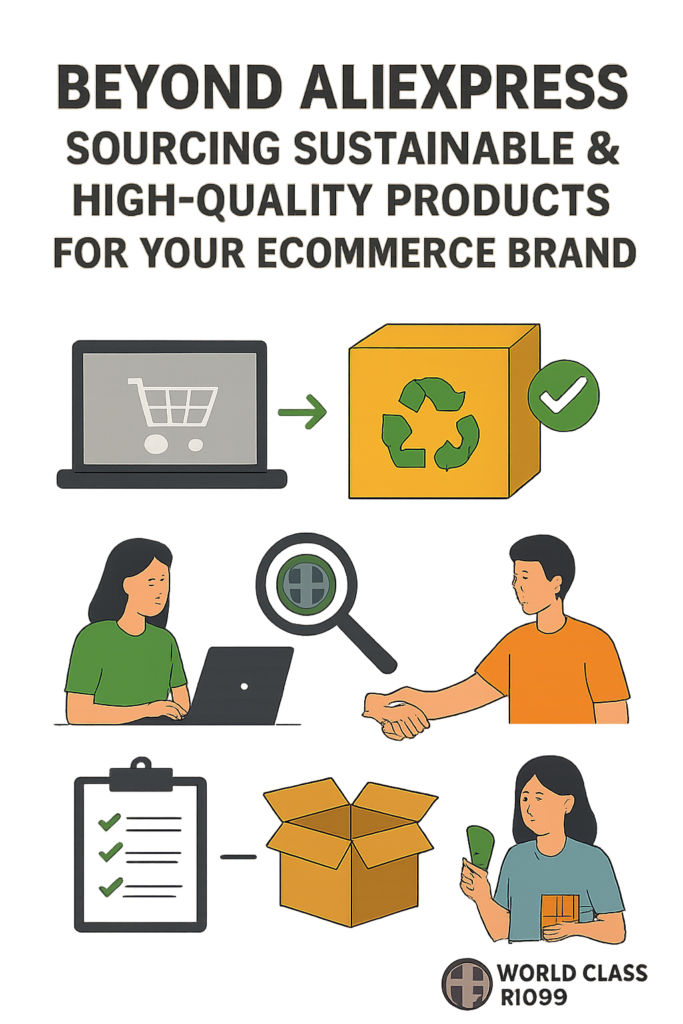
Moving up the sourcing ladder is a gradual process. This framework allows you to progress at your own pace, mitigating risk while steadily building a more defensible business.
Level 1: The Vetted Marketplace Supplier (Beyond Basic AliExpress)
Before abandoning platforms entirely, learn to use them professionally.
Advanced AliExpress/Alibaba Vetting:
- Filter for “Trade Assurance” & “Verified Suppliers”: These badges indicate Alibaba has vetted the supplier. On AliExpress, look for stores open 2+ years with a 97%+ positive feedback rating.
- Analyze Communication: Send a detailed message with specific questions about materials, packaging, and QC processes. Gauge response time and English proficiency. A supplier who asks thoughtful questions in return is a good sign.
- Order a Comprehensive Sample Kit: Don’t just order the product. Request your exact packaging, any custom labels, and the product in all color variants. Pay the $50-$100 for express shipping—it’s an investment.
- Use a Third-Party Inspector: For orders over $1,000, hire a service like Asia Inspection (now QIMA) or V-Trust to conduct a pre-shipment inspection at the factory ($300-$500). They will check for defects, functionality, and packaging consistency.
The “Agent” Advantage: Consider using a sourcing agent based in the product’s country of origin (like China or Vietnam). For a fee (typically 5-10% of order value), they handle supplier communication, QC, and consolidation of orders from multiple factories. This is a hybrid step that provides professional oversight while you still use marketplace suppliers.
Level 2: Wholesale & Domestic Supplier Networks
This level involves leaving open marketplaces for closed, vetted networks.
Wholesale Directory Platforms:
- SaleHoo: A paid directory ($67/year) with over 8,000 pre-vetted wholesalers and dropshippers. Includes valuable market research tools and a supportive community.
- Worldwide Brands: One of the oldest and largest directories, focused heavily on US-based wholesalers with a strong emphasis on legitimacy.
- ThomasNet: For industrial products, components, and custom manufacturing in North America.
How to Approach Wholesalers:
- Present as a Legitimate Business: Have a professional website, business email, and ideally, an EIN (Employer Identification Number) or business registration number ready.
- Initial Contact: Use a template, but personalize it. “Hello [Company Name], I’m the founder of [Your Brand], an online retailer specializing in [Your Niche]. I’m impressed with your [Specific Product Line] and am interested in exploring wholesale terms.”
- Be Prepared for Questions: They may ask for your business license, resale certificate (for tax exemption), or expected order volume. Honesty is best—”I’m launching and plan to start with test orders of 20-50 units” is a fine answer.
Domestic Dropshipping Suppliers: Companies like Modalyst (now part of Wix), Spocket, and Syncee aggregate US and EU-based suppliers with faster shipping times. They integrate directly with Shopify, offering a smoother transition from AliExpress with significantly improved logistics.
Level 3: White-Label & Private Label Manufacturing
Here, you begin to create product exclusivity and true branding.
The White-Label Process:
- Find a Manufacturer, not a reseller. On Alibaba, filter for “Manufacturers” and look for factories that list “OEM” (Original Equipment Manufacturer) or “ODM” (Original Design Manufacturer) services.
- Request Customization Quotes: Be specific. “Can you apply my logo here? Can you use this Pantone color? Can you ship in this custom box?” Provide print-ready artwork files.
- Understand MOQs: White-label MOQs can range from 100 to 500 units. This is where your confidence in the product, built from earlier testing, becomes critical.
The Private Label Journey:
This is a collaborative design process. You might:
- Modify an Existing Model: “Can you make this coffee mug with a slightly wider base and a fingerprint-resistant coating?”
- Create from Scratch: This requires technical drawings, material specifications, and prototypes. It’s a major investment but creates ultimate exclusivity.
Table: Sourcing Pathway Comparison
| Sourcing Level | Best For | Investment | Lead Time | Control & Exclusivity | Best Next Step |
|---|---|---|---|---|---|
| Marketplace (AliExpress) | Validating product ideas, first sales | Very Low ($ per unit) | Long (15-30+ days) | Very Low | Move to Vetted Suppliers or Agents |
| Vetted Marketplace/Agent | Improving reliability while testing | Low-Medium (Sample + agent fees) | Medium-Long (10-20 days) | Low-Medium | Explore Wholesale or White-Label |
| Wholesale/Domestic | Improving speed & customer experience | Medium (Higher per-unit cost) | Short (2-7 days) | Medium | Commit to inventory; begin White-Label |
| White-Label | Building brand recognition | High (MOQ of 100-500 units) | Medium (Includes production) | High | Develop deeper supplier partnership |
| Private Label | Creating market-defining products | Very High (R&D, tooling, high MOQ) | Long (Months for development) | Very High | You have a brand with a loyal audience. |
Level 4: Building a Hybrid, Resilient Supply Chain
The most successful modern brands don’t rely on a single source. They build a resilient network.
The Hybrid Model in Practice:
- Fast-Moving Bestsellers: Source these via white-label or private label and hold inventory in a local warehouse (e.g., ShipBob, Fulfillment by Amazon) for 2-day delivery.
- Complementary/Test Products: Source these through a vetted domestic dropshipper or wholesaler to avoid inventory risk.
- Seasonal/Holiday Items: Use a reliable marketplace supplier with a proven track record for short-run, seasonal goods.
Building the Partnership Mindset:
- Pay On Time: Nothing builds trust faster than being a reliable, paying customer.
- Communicate Forecasts: Share your sales projections (even if rough) to help them plan raw materials.
- Visit if Possible: A face-to-face meeting at a trade show or factory visit solidifies a relationship like nothing else. As noted in resources on building successful business partnerships, trust is the ultimate currency.
- Be Their Customer, Not Just a Client: Show interest in their business. Recommend them to other entrepreneurs if they do great work.
Why It’s Important: The Tangible Benefits of Strategic Sourcing

Investing in better sourcing is not an expense; it’s the foundation for a more valuable, stable, and enjoyable business.
1. Dramatically Improved Customer Experience & Loyalty:
Fast shipping and consistent quality are the two biggest drivers of customer satisfaction. By sourcing domestically or holding inventory, you can offer shipping times that compete with Amazon. This reduces customer service inquiries about “where’s my order?” and builds trust that translates into repeat purchases and positive reviews.
2. Higher Profit Margins & Price Control:
While your per-unit cost may rise, your ability to command a higher price rises more. Customers will pay a premium for speed, quality, and brand story. Furthermore, by avoiding the generic product race, you escape the relentless downward pressure on prices. Your margins become more stable and defensible.
3. Brand Equity & Business Value:
A store selling generic gadgets from AliExpress has little intrinsic value. A store with exclusive products, proprietary designs, and established manufacturing partnerships is a sellable asset. Acquirers look for “moats”—and supply chain advantages are a formidable one.
4. Reduced Operational Stress & Risk:
Dealing with constant supplier issues, lost packages, and defective products is emotionally draining and wastes countless hours. Reliable partners provide peace of mind. You spend less time fighting fires and more time on growth activities like marketing and product development.
5. Innovation & Market Responsiveness:
When you have a collaborative relationship with a manufacturer, you can develop new products or variations quickly. You can test new materials, colors, or features based on customer feedback, allowing you to stay ahead of trends instead of chasing them.
6. Ethical Alignment & Storytelling:
Strategic sourcing allows you to choose partners who align with your values—whether that’s environmental sustainability, fair labor practices, or supporting local industry. This provides authentic content for your marketing, resonating deeply with conscious consumers. This connects to broader discussions on responsibility found in our Nonprofit Hub resources.
Sustainability in the Future: The Ethical & Green Supply Chain
The future of commerce is transparent and responsible. Building sustainability into your sourcing isn’t just good ethics; it’s smart business.
1. Material Matters:
- Seek Out Sustainable Materials: Recycled plastics, organic cotton, FSC-certified wood, biodegradable packaging.
- Ask for Certifications: OEKO-TEX for textiles, BPA-Free for plastics, Fair Trade for labor practices.
- Lifecycle Thinking: Consider the end-of-life for your product. Is it repairable? Recyclable? Can you offer a take-back program?
2. Carbon-Neutral Logistics:
- Choose Regional Suppliers: The single biggest impact on your carbon footprint is shipping distance.
- Use Carbon-Offset Programs: Partners like EcoCart or Shopify Planet allow customers to offset the emissions of their order at checkout, often at a minimal cost.
- Optimize Packaging: Right-size boxes, use recycled fill material, and avoid plastic poly mailers when possible.
3. Transparency as a Feature:
Don’t just be sustainable; communicate it powerfully.
- “Behind the Brand” Pages: Feature photos and stories of your manufacturing partners.
- Supply Chain Mapping: Use simple graphics to show the journey of your product from raw material to customer.
- Impact Reporting: Share annual metrics like “plastic saved through recycled materials” or “carbon offset.”
4. The Circular Economy Model:
Forward-thinking brands are designing for reuse.
- Take-Back Programs: Offer a discount on a new purchase when customers return their old product for recycling or refurbishment.
- Product-as-a-Service: Explore subscription or rental models for appropriate products (e.g., high-end baby gear, outdoor equipment).
What I’ve found is that the brands that authentically embrace these principles don’t just attract customers; they attract evangelists. People want to support businesses that make them feel good about their purchase, beyond the product itself. Your sourcing story becomes a powerful part of your brand narrative.
Common Misconceptions Debunked
Misconception 1: “Sourcing better products is too expensive and will kill my margins.”
Reality: While unit costs increase, your selling price can increase more. You escape the “race to the bottom” and compete on quality and experience, not just price. Your net profit margin can actually improve due to higher AOV and repeat customer rates.
Misconception 2: “I need to order thousands of units to work with a real manufacturer.”
Reality: Many factories, especially those open to OEM work, have manageable MOQs (100-500 units) for simple customizations like logo printing or color changes. You can start small and scale production as demand grows.
Misconception 3: “Domestic manufacturing is dead; everything is made in China.”
Reality: Reshoring and nearshoring are significant trends. For many product categories, especially those where speed, customization, or IP protection is key, domestic or regional (e.g., Mexico for the US, Turkey for the EU) manufacturing is thriving.
Misconception 4: “If I design a custom product, the factory will steal my idea and sell it themselves.”
Reality: Reputable factories value their client relationships more than the short-term gain of copying one design. You can protect yourself with clear contracts, staggered payment terms (never pay 100% upfront), and by filing for design patents or trademarks where appropriate. Working with an agent can also provide a layer of oversight.
Misconception 5: “Strategic sourcing is only for huge companies.”
Reality: The tools and platforms (like wholesale directories and OEM-friendly Alibaba factories) have democratized access. Small brands are now the primary drivers of product innovation because they can move faster and take risks that large corporations cannot.
Misconception 6: “Holding inventory is too risky.”
Reality: Inventory risk is managed through data. By using your initial dropshipping phase to validate demand, you only commit inventory to proven winners. Tools now make inventory management and forecasting accessible for solo entrepreneurs.
Recent Developments: Sourcing in 2024/2025
The landscape continues to evolve with technology and global trends.
1. AI-Powered Sourcing Platforms:
Tools like Sourcify and Suppy use AI to match brands with pre-vetted manufacturers based on their specific product needs, desired quality tier, and budget. They manage the RFQ (Request for Quote) process and quality control, acting as a high-tech sourcing agent.
2. On-Demand & Digital Manufacturing:
Services like Printful and Printify (for print-on-demand) have expanded beyond apparel into home goods and accessories. More broadly, digital fabrication (3D printing, CNC machining for small batches) allows for ultra-low-MQO custom production with local speed.
3. Blockchain for Provenance & Transparency:
Pioneering brands are using blockchain technology to create immutable records of a product’s journey. A customer can scan a QR code to see the origin of materials, factory audit reports, and carbon footprint. This is the ultimate expression of supply chain transparency.
4. The “Socially Responsible” Sourcing Mandate:
Regulations like the EU’s Digital Product Passport (coming 2026) will require detailed disclosures on product composition and environmental impact. Proactive brands are getting ahead of this by building traceable supply chains now.
5. Hyper-Local & Community Sourcing:
A powerful niche strategy involves sourcing products from artisans or small-batch producers within a specific region or community. This creates an incredibly strong brand story around preservation, craftsmanship, and local economic impact.
For insights into the complex systems behind moving goods, which directly impact sourcing strategy, the guide to global supply chain management provides valuable context.
Success Stories: Real Brands, Real Sourcing
Case Study: “Pakt” – The Travel Bag Brand Built on Sourcing Integrity
Background: Pakt set out to create the perfect sustainable travel bag. They knew their brand would live or die on quality and ethics.
The Sourcing Journey:
- Material First: They started not with a factory, but with material innovation, sourcing recycled nylon and ocean-bound plastics.
- Partner, Not Vendor: They spent over a year finding a manufacturing partner in Vietnam who shared their commitment to ethical labor (verified by third-party audits) and who could execute complex, durable designs.
- Transparency as Marketing: Their website details every material, factory, and ethical choice. They don’t hide behind vague terms.
- Customer-Funded Inventory: They used Kickstarter not just for funding, but to validate demand and finance their first production run, mitigating inventory risk.
Result: Pakt commands premium prices ($200-$300 per bag), has a cult-like following, and has built a brand with immense equity. Their sourcing isn’t a secret; it’s their headline feature.
Real-Life Examples: The Kitchen Scale Transformation
Let’s see how sourcing choices transform the same basic product.
Product: A digital kitchen scale.
Store A (Generic Dropshipping):
- Source: Lowest-cost AliExpress seller.
- Product: Generic, unbranded scale in a plain white box. Accuracy is inconsistent.
- Price: $14.99
- Customer Experience: Arrives in 3 weeks in flimsy packaging. Works okay, but feels cheap. No branding. If it breaks, no recourse.
Store B (Strategic Sourcing Brand):
- Source: OEM factory in Taiwan found via Alibaba, vetted for quality electronics.
- Customizations: Custom color (matte sage green), branded logo, custom packaging with minimalist design, and included a printed “guide to baking ratios.”
- QC: Pre-shipment inspection for accuracy and finish.
- Logistics: Shipped in bulk to a US 3PL (Third-Party Logistics) warehouse.
- Price: $39.99
- Customer Experience: Arrives in 2 days in beautiful packaging. Feels substantial and accurate. Comes with a useful guide. Feels like a premium purchase from a brand they trust. The website has a story about the factory’s commitment to precision.
Store B invests more upfront, builds a brand asset, and earns a customer for life. Store A makes a few dollars but builds nothing of lasting value.
Conclusion and Key Takeaways: Your Sourcing Evolution Plan
Moving beyond AliExpress is not an all-or-nothing leap; it’s a strategic evolution. Your sourcing strategy should mature alongside your brand.
Your Phased Sourcing Roadmap:
Phase 1: The Validation Stage (Months 1-3)
- Use AliExpress, but professionally: vet suppliers, order samples, use an agent if volume grows.
- Focus on identifying 1-2 “hero products” with proven demand and good customer feedback.
- Goal: Prove product-market fit with minimal risk.
Phase 2: The Partnership Stage (Months 4-9)
- Take your hero product to the next level. Approach wholesalers or OEM factories for white-label customization.
- Place your first small MOQ order (100-300 units). Invest in custom packaging.
- Shift this product to a domestic 3PL for fast shipping.
- Goal: Transform a winning product into a branded asset and improve customer experience.
Phase 3: The Brand Stage (Year 1+)
- Develop a true private label product based on customer insights from your hero product.
- Build a hybrid supply chain: inventory for staples, dropship for complements.
- Formalize partnerships with your top 2-3 manufacturers.
- Goal: Build a diversified, resilient brand with multiple exclusive products and predictable economics.
The thread connecting each phase is customer feedback. Let your customers’ pain points (slow shipping, quality issues) guide your sourcing upgrades. Let their desires inform your product development.
Ultimately, strategic sourcing is about taking ownership. Ownership of the quality your customers receive, ownership of the experience you deliver, and ownership of the valuable business you are building. It’s the difference between being a reseller and being a founder.
Key Takeaways:
- Modern sourcing is a strategic function, not a transactional task. It builds your brand’s moat.
- Progress through sourcing levels (Marketplace → Vetted → Wholesale → White-Label → Private Label) as your business matures.
- The hybrid model—mixing inventory-held bestsellers with on-demand complementary items—balances risk and customer experience.
- Sustainability and transparency are no longer optional; they are competitive advantages and table stakes for the future.
- Building true partnerships with manufacturers requires trust, communication, and a long-term mindset.
- The increased costs of better sourcing are offset by higher prices, better margins, and vastly greater customer lifetime value.
- Your sourcing story is a powerful marketing asset. Share it authentically.
FAQs: Your Strategic Sourcing Questions Answered
1. How do I know when I’m ready to move beyond AliExpress?
When you have a product selling consistently (5-10+ units per day), you’re receiving positive reviews about the product itself (not just the shipping), and you find yourself frustrated by supplier unpredictability. The financial readiness is having enough profit from that product to reinvest in a small MOQ order.
2. What’s a realistic MOQ to start with for customizing a product?
For simple customizations (logo, color, packaging) with an OEM factory, you can often find MOQs of 100-300 units. For completely new designs, expect 500-1000 units minimum. Always negotiate.
3. How do I pay an overseas manufacturer safely?
Use secure methods with buyer protection. For first orders: 30% deposit via PayPal or credit card, 70% balance after pre-shipment inspection and before shipping. Never use wire transfers for unknown suppliers. Alibaba’s Trade Assurance offers payment protection.
4. What is the single most important thing to check when vetting a manufacturer?
Ask for and actually contact references from other Western clients they have worked with. A reputable factory will have them. Ask those references about communication, problem-solving, and reliability.
5. Can I source sustainable products from China?
Yes, absolutely. Many Chinese factories now specialize in sustainable materials (RPET, organic cotton) and have ethical audits (like BSCI). You must ask specifically and request certifications. The narrative that China only produces “cheap and dirty” goods is outdated.
6. How much does custom packaging cost, and is it worth it?
Custom boxes for a MOQ of 500 might add $0.50-$2.00 per unit to your cost. It is almost always worth it. Unboxing is a key brand touchpoint. It reduces perceived risk, increases shareability (unboxing videos), and elevates the entire customer experience.
7. What’s the difference between a sourcing agent and a wholesale directory?
A sourcing agent is a person/company that acts as your representative on the ground (e.g., in China). They find factories, negotiate, conduct QC, and ship. A wholesale directory (like SaleHoo) is a database of pre-vetted suppliers you contact directly. An agent provides more hands-on service for a fee; a directory gives you tools to do it yourself.
8. How do I handle import taxes and duties?
When ordering inventory, you will be responsible for duties. Your freight forwarder or agent will help with customs clearance. For orders under $800 (de minimis value in the US), duties are often exempt. Always clarify “DDP” (Delivered Duty Paid) vs. “DAP” (Delivered at Place) in your shipping terms with the supplier.
9. What if my custom product from the factory has defects?
This is why a pre-shipment inspection (PSI) is critical. The inspection report defines the defect rate. If it exceeds your AQL (Acceptable Quality Limit), you can require the factory to fix the issues before shipping. Have this process outlined in your purchase agreement.
10. Is it better to have one supplier for everything or multiple specialists?
For a small brand, start with one excellent supplier for your core product category. As you expand into different product types (e.g., from apparel to accessories), you will likely need different specialist factories. Don’t force a bag factory to make jewelry.
11. How can I protect my product design from being copied?
Use legal tools: file for a design patent (protects ornamental design) or a utility patent (protects function) if applicable. Register your trademark. Have a strong contract with your manufacturer that includes non-compete and confidentiality clauses. Realistically, speed to market and brand building are your best defenses.
12. What are Incoterms, and which ones should I use?
Incoterms define responsibility for shipping, risk, and costs. For beginners, FOB (Free On Board) is common: you own the goods and are responsible once they’re loaded on the ship/plane at the origin port. Your supplier handles everything to that point. Use DDP (Delivered Duty Paid) if you want the supplier to handle everything to your door—it’s simpler but usually more expensive.
13. How do I find domestic manufacturers in the USA/Europe?
Use industry-specific directories (ThomasNet for the USA), attend trade shows, search on Maker’s Row, or use LinkedIn to find company profiles. Local chambers of commerce can also be helpful.
14. What is a “golden sample” and why is it important?
The “golden sample” is the final approved sample that you and the factory sign off on before mass production. It is the physical standard against which all units in the production run will be measured. Never approve production without a signed golden sample.
15. How much should I budget for my first small production run?
Budget for: Cost of goods (units x price), Tooling/mold fees (if any), Sample costs, Custom packaging, Pre-shipment inspection, Shipping, and duties. For 300 units of a moderately complex product, a starting budget of $3,000-$8,000 is realistic.
16. Can I start with wholesale before doing any manufacturing?
Yes, and many do. Wholesaling lets you sell established brands’ products. This can be a great way to build an audience and learn about your market before investing in your own product development. It also generates cash flow to fund future custom projects.
17. What questions should I ask a potential manufacturing partner?
- Can I have contact info for 2-3 other Western clients?
- What is your standard QC process and AQL?
- What are your standard payment terms?
- How do you handle RMA (Returns Merchandise Authorization) for defective goods?
- Can you provide certifications for materials/processes?
- What is your estimated lead time for a sample? For the production of 300 units?
18. How does sourcing affect my ability to sell on Amazon?
It dramatically improves it. Amazon rewards fast shipping (Seller Fulfilled Prime) and penalizes long delivery times. Holding inventory in the US and having consistent quality is almost essential for success on Amazon. It also allows you to use FBA (Fulfillment by Amazon) effectively.
19. What is a “freight forwarder” and when do I need one?
A freight forwarder arranges the international shipment of goods from the factory to your destination. You need one when you place an inventory order that will be shipped by sea or air freight. They handle customs, documentation, and logistics. Your sourcing agent can often recommend one.
20. Is strategic sourcing worth it for a low-price product (under $20)?
It is very difficult. Low price points leave little room for the increased costs of better sourcing. The business model relies on extreme volume. For most entrepreneurs, it’s better to choose products with a natural selling price of $30+ where you can absorb the costs of quality and build a brand.
About the Author
With a background that spans global supply chain management for Fortune 500 companies and bootstrapping my own product-based brands, I’ve seen sourcing from both sides of the table. I’ve negotiated container shipments from Shenzhen and also packed orders in my garage. This unique perspective has cemented my belief that superior sourcing is the most under-leveraged advantage for small and medium-sized ecommerce businesses.
My consulting work now focuses exclusively on helping online brands navigate the transition from generic dropshipping to owning their supply chain. I’ve witnessed firsthand the transformative moment when a founder holds their first custom product—it changes everything. The business shifts from a marketing experiment to a tangible creation.
I write to provide a clear, step-by-step path through what can seem like a daunting process. The world of manufacturers, MOQs, and freight forwarders has its own language, but it’s a language any determined entrepreneur can learn. My goal is to be your translator and guide.
For more perspectives on building the foundational elements of a successful venture, explore our guide on starting an online business.
Free Resources to Launch Faster
- Supplier Communication Email Templates: Professional scripts for initial contact, sample requests, and negotiation.
- Pre-Production Checklist: A detailed list of every item to confirm with a factory before your first production run.
- Cost Calculator Tool: A spreadsheet to model your all-in cost per unit, including hidden fees like duties and freight.
- Sample Evaluation Scorecard: A form to systematically grade product samples across durability, finish, and function.
- Directory of Vetted Sourcing Platforms: A curated list of the most reliable directories, agent networks, and platforms for 2025.
(Note: These would be downloadable resources hosted on World Class Blogs.)
Join the Discussion
Sourcing is a journey best shared. I invite you to:
- Share your sourcing wins and challenges in the comments below.
- Ask for supplier recommendations (or warnings!) for specific product categories.
- Connect with other brand builders who are at a similar stage.
- Suggest a product category you’d like to see a deep-dive sourcing guide on.
For more insights into building all aspects of a resilient business, from technology to partnerships, browse our full collection of Blogs. Ready to take the next step in your partnership journey? Explore different business partnership models that can support your growth.
Remember, every iconic brand started with a single well-made product. Yours is next.


