


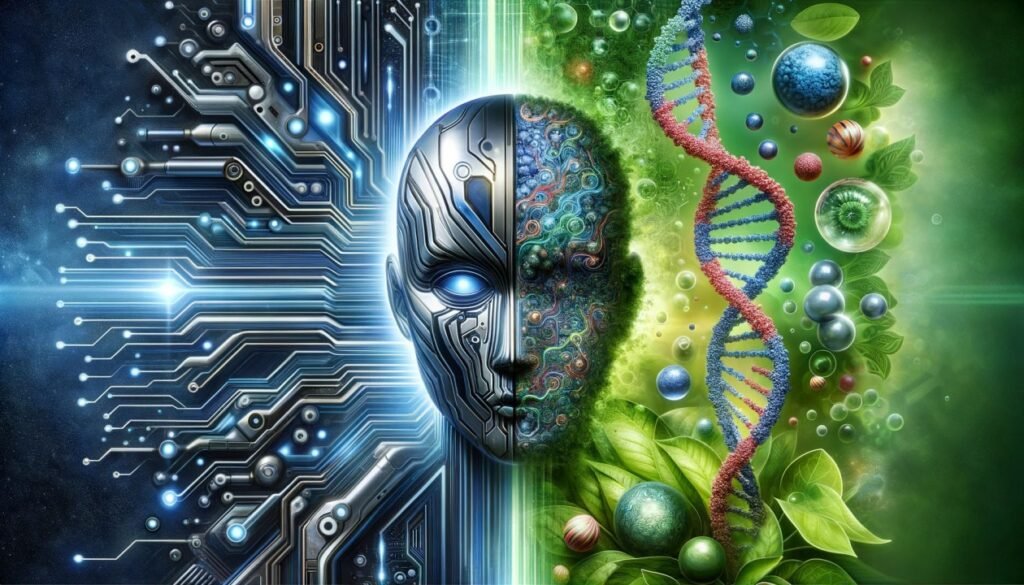
Introduction: The Next Platform Revolution is Biological
The great technological revolutions of the past century were built on silicon—first with the microprocessor, then the internet, and now artificial intelligence. But a new, more profound revolution is brewing, one where the platform is not silicon, but life itself. This is the Bio-Digital Convergence: the merging of the biological and digital worlds, powered by breakthroughs in genetic engineering, data science, and AI.
This matters because it gives us the unprecedented ability to read, write, and edit the code of life. Just as we can manipulate digital code to create software, we are learning to manipulate genetic code (DNA) to program biological systems. This convergence is poised to solve some of humanity’s most intractable challenges, from curing genetic diseases and ending pandemics to creating sustainable food and materials. However, it also raises profound ethical questions. Understanding this field is no longer the domain of specialized scientists; it is essential for anyone who wants to grasp the future of health, industry, and what it means to be human.
Background/Context: From Observation to Programming
Humanity’s relationship with biology has evolved through distinct phases:
- Observation & Description (Ancient – 19th Century): Classifying plants and animals, understanding basic anatomy.
- Manipulation & Breeding (10,000 BC – Present): Selective breeding in agriculture and animal husbandry, a slow and imprecise form of genetic manipulation.
- Understanding the Code (1953 – 2003): The discovery of the DNA double helix (1953) and the completion of the Human Genome Project (2003) gave us the “source code” for life.
- Programming the Code (2012 – Present): The development of powerful gene-editing tools like CRISPR-Cas9, combined with AI and automation, has shifted us from simply reading the genetic code to writing and editing it with precision. Biology is becoming an engineering discipline.
Key Concepts Defined
- Bio-Digital Convergence: The intersection of biological systems with digital technologies, where biological data informs digital models and digital tools are used to design and engineer biological systems.
- Synthetic Biology: A field of science that involves redesigning organisms for useful purposes by engineering them to have new abilities. It aims to design and construct new biological parts, devices, and systems.
- CRISPR-Cas9: A revolutionary gene-editing technology that allows scientists to precisely cut and paste DNA sequences, much like using a word processor’s “find and replace” function on the genetic code.
- Personalized Medicine (Precision Medicine): A medical model that proposes the customization of healthcare, with medical decisions, treatments, practices, or products being tailored to the individual patient based on their genetic makeup, environment, and lifestyle.
- Bioinformatics: The application of computational tools and methods to manage, analyze, and understand biological data, especially large genetic datasets.
- mRNA Technology: A technology that uses messenger RNA to instruct cells to produce a protein that triggers an immune response. This was the foundational platform for the Pfizer and Moderna COVID-19 vaccines.
- Digital Twins (in Biology): A virtual model of a biological process, organ, or patient. It can be used to simulate the effects of treatments or diseases.
How the Bio-Digital Convergence Works: A Step-by-Step Process
The process of engineering biology is becoming a streamlined, data-driven workflow.
Step 1: Reading the Code – DNA Sequencing
The first step is to digitize biology by sequencing DNA. Modern high-throughput sequencers can read an entire human genome in hours for a fraction of the cost of the original Human Genome Project. This creates massive datasets—the raw material for AI.
Step 2: Analyzing the Data – Bioinformatics and AI
This is where the “digital” half of the convergence shines. AI and machine learning algorithms sift through these vast genomic datasets to find patterns.
- They can identify genetic mutations linked to specific diseases.
- They can predict how a particular protein will fold based on its amino acid sequence (a problem known as “protein folding” that was largely solved by Google DeepMind’s AlphaFold).
- They can discover new drug candidates by simulating how millions of molecules will interact with a biological target.
Step 3: Designing the Solution – Computational Biology
Using specialized software, biologists can now design new biological systems on a computer. They can design a new genetic circuit, a new metabolic pathway for a microbe to produce a biofuel, or a new mRNA sequence for a vaccine.
Step 4: Writing the Code – DNA Synthesis and Editing
The digital design is converted back into physical biology. DNA printers (synthesizers) can physically create strands of DNA from scratch based on the digital file. Alternatively, tools like CRISPR are used to precisely edit the DNA of living cells, inserting, deleting, or modifying genes.
Step 5: Testing and Learning – Automated Laboratories
Robotic systems in automated labs can conduct thousands of experiments in parallel to test the newly engineered biological systems. The results of these experiments are fed back into the AI models in Step 2, creating a closed-loop, self-improving R&D cycle that dramatically accelerates the pace of discovery.
Why It’s Important: The Transformative Impact

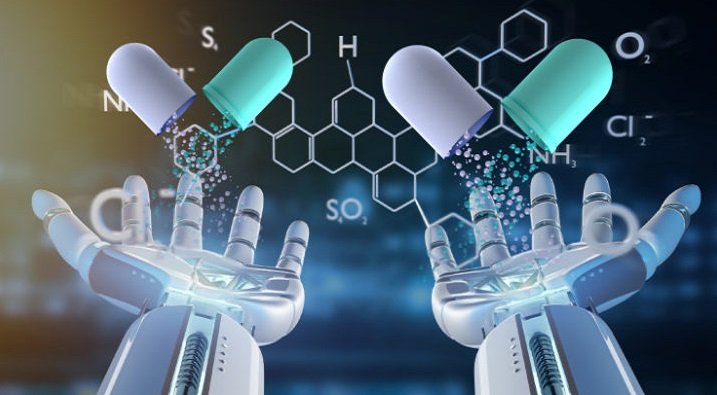
The implications of this convergence are staggering:
- Revolutionizing Medicine: We are moving from a one-size-fits-all model to truly personalized medicine. Treatments and drugs can be tailored to an individual’s genetic profile, making them more effective and with fewer side effects. This has profound implications for managing global health crises and individual Mental Wellbeing by providing more effective, targeted treatments.
- Curing Genetic Diseases: Therapies are being developed that have the potential to cure monogenic diseases like sickle cell anemia and Huntington’s disease by correcting the faulty gene in a patient’s own cells.
- Rapid Response to Pandemics: The mRNA vaccine platform demonstrated how quickly we can now respond to new pathogens. The digital design of the vaccine was completed in mere days, shifting the bottleneck to clinical trials and manufacturing.
- Sustainable Production: Engineered microorganisms can be programmed to produce biofuels, biodegradable plastics, and food ingredients, reducing our reliance on petrochemicals and unsustainable agriculture. This can create more resilient and eco-friendly Global Supply Chains.
- New Materials: We can grow materials with specific properties, from self-healing concrete to spider-silk strength fibers for textiles, all designed digitally and produced biologically.
Common Misconceptions
- Myth: This is just about “designer babies.”
Reality: While human germline editing is a major ethical frontier, the vast majority of current applications are in somatic (non-heritable) cell therapy, agriculture, and industrial biotechnology. The focus is on curing disease, not on enhancement. - Myth: It’s “playing God” and is inherently dangerous.
Reality: Like any powerful technology (nuclear energy, AI), it comes with risks and benefits. The focus of the scientific community is on establishing robust ethical guidelines, safety protocols, and regulatory oversight to ensure responsible development. - Myth: These treatments will only be for the ultra-wealthy.
Reality: While initially expensive, the cost of genomic sequencing and synthesis is plummeting. The goal of many initiatives is to make these technologies accessible and affordable, much like the cost of computing power decreased over time. - Myth: Genetic engineering is unnatural.
Reality: Humans have been genetically engineering crops and animals for millennia through selective breeding. New tools like CRISPR simply make the process vastly more precise and efficient.
Recent Developments
- The AlphaFold Revolution: Google DeepMind’s AI solved the 50-year-old “protein folding problem,” predicting the 3D structure of a protein from its amino acid sequence with stunning accuracy. This is accelerating drug discovery and basic biological research.
- CRISPR-Based Therapies Gaining Approval: The first CRISPR-based therapy for sickle cell disease has received regulatory approval in several countries, marking a historic milestone for gene editing.
- The mRNA Vaccine Platform: The spectacular success of mRNA vaccines against COVID-19 has validated a new, rapid, and flexible platform for preventing infectious diseases and is now being applied to other areas like cancer and HIV.
- Engineering the Microbiome: Companies are using synthetic biology to engineer probiotic bacteria that can live in the human gut and treat metabolic diseases from within.
Success Story: The mRNA COVID-19 Vaccines
The development of the Pfizer-BioNTech and Moderna COVID-19 vaccines is the most powerful real-world example of the Bio-Digital Convergence.
- How it worked: As soon as the genetic sequence of the SARS-CoV-2 virus was published online (the digital code), scientists designed the mRNA sequence for the vaccine on a computer. This digital design was then used to synthesize the mRNA molecule (the biological product).
- The Lesson: This approach bypassed the need to grow the actual virus, shaving years off the traditional vaccine development timeline. It proved that a digitally-enabled, platform-based approach to biology could respond to a global threat with unprecedented speed and efficacy.
Case Study: Insulin Production – From Animal Extraction to Microbial Factories
The story of insulin production provides a historical lesson in biotech evolution.
- The Lesson Learned: For decades, insulin for diabetics was extracted from the pancreases of pigs and cows. With the advent of genetic engineering in the 1970s, the human gene for insulin was inserted into E. coli bacteria, turning them into tiny factories that produce human insulin. This was an early, crude form of synthetic biology. It made treatment safer, more effective, and more scalable. Today, newer, more precise insulins are designed computationally and produced using engineered cells, showing the continuous improvement of the field.
Real-Life Examples
- Impossible Foods: Uses engineered yeast to produce heme, a molecule that gives their plant-based burgers a meaty taste and appearance.
- Modern Meadow: Grows animal-free leather in labs by programming yeast cells to produce collagen.
- CAR-T Cell Therapy: A cancer treatment where a patient’s own immune cells (T-cells) are genetically engineered to better recognize and attack cancer cells, then infused back into the body.
Sustainability of the Trend and Its Future

The Bio-Digital Convergence is a sustainable mega-trend driven by powerful forces:
- Exponential Growth in Data: Biological data is the new oil. The more data we have, the better our AI models become, leading to faster discoveries and more precise engineering.
- Massive Investment: Billions in public and private funding are flowing into biotech R&D, driven by the potential for massive returns and societal impact.
- Convergence of Multiple Tech Waves: It sits at the intersection of AI, automation, and biotechnology, each amplifying the other’s progress.
The Future (5-10 years out): We will see the rise of “cell therapies” for a wide range of diseases. AI-designed molecules and drugs will become the norm. “Digital twins” of human patients will be used to test thousands of virtual treatments before a single physical pill is prescribed. Biology will become a standard manufacturing platform, and the line between treating a disease and enhancing human capability will become a central societal debate. This will also create new models for Personal Finance as healthcare costs and longevity change.
Conclusion & Key Takeaways
The Bio-Digital Convergence marks a pivotal moment in human history. We are transitioning from being passive observers of nature to active architects of the biological world. This brings both extraordinary promise and profound responsibility.
Key Takeaways:
- Biology is Becoming an Information Technology: DNA is code, and cells are programmable hardware.
- AI is the Indispensable Accelerator: The complexity of biology is so vast that AI is no longer a luxury but a necessity for making sense of it and engineering it.
- Personalized Medicine is Inevitable: The era of generic medicine is ending. The future is prevention and treatment tailored to your unique biological blueprint.
- The Ethical Dimension is Paramount: The power to redesign life demands a global conversation about safety, equity, access, and the very definition of life and nature.
- Interdisciplinary is Key: The biggest breakthroughs will come from teams that combine biologists, computer scientists, engineers, and ethicists.
To stay informed on these groundbreaking developments and their societal implications, explore our dedicated Technology & Innovation section and the wider collection of Blogs on our platform.
Frequently Asked Questions (FAQs)
1. What is the difference between genetic engineering and synthetic biology?
Genetic engineering typically involves transferring a specific gene from one organism to another. Synthetic biology is a more advanced form that involves designing and constructing new biological parts, devices, and systems that do not exist in the natural world.
2. Are CRISPR and gene editing safe?
The technology is becoming increasingly precise and safe. However, “off-target” effects, where the wrong part of the genome is edited, remain a risk that scientists are diligently working to minimize.
3. Can I get my genome sequenced?
Yes, directly-to-consumer services like 23andMe and AncestryDNA provide limited genotyping. For full clinical-grade sequencing, you typically need to go through a healthcare provider.
4. What is a “gene drive”?
A gene drive is a genetic engineering technology that can spread a particular set of genes throughout a population faster than traditional inheritance. It has potential for eradicating mosquito-borne diseases like malaria but raises major ecological concerns.
5. How is AI used in drug discovery?
AI can analyze biological data to identify new drug targets, design novel drug molecules that are likely to be effective, and even predict which patients will respond best to a drug in clinical trials.
6. What are the ethical concerns about “designer babies”?
The primary concerns are about social inequality (creating a genetic “upper class”), the loss of genetic diversity, and the moral implications of editing the human germline, changes that would be passed to future generations.
7. Can synthetic biology help with climate change?
Yes. Scientists are engineering microbes and plants to capture more carbon dioxide from the atmosphere, and others are creating microbes that can produce sustainable biofuels and bioplastics.
8. What is “bioinformatics” and what skills are needed?
Bioinformatics is the science of managing and analyzing biological data. It requires skills in biology, computer programming (Python, R), statistics, and data science.
9. How can a non-scientist get involved or invest in this field?
For investing, there are biotech-focused ETFs and mutual funds. For learning, numerous online courses and resources can build foundational knowledge. Following the work of research institutes and biotech companies is a great start.
10. What is the role of big data in this convergence?
Biology is generating data at an unprecedented scale (genomics, proteomics, medical imaging). This “big data” is the training fuel for the AI models that power the entire convergence.
11. Are there any successful bio-digital products on the market today?
Yes. Beyond the mRNA vaccines, examples include synthetic insulin, the Impossible Burger, and many new cancer immunotherapies like CAR-T.
12. What is “phage therapy” and how is it related?
Phage therapy uses viruses that infect and kill bacteria. It’s an old concept, but synthetic biology is now being used to engineer these phages to be more effective and targeted, offering a potential solution to antibiotic resistance.
13. How does this impact the future of food?
Precision fermentation (using engineered microbes to produce proteins) and cellular agriculture (growing meat from animal cells) are set to revolutionize the E-commerce of food, making it more sustainable and ethical.
14. Can this technology be used for bioterrorism?
Like any dual-use technology, there is a risk. This is why there is a strong emphasis in the scientific community on biosecurity—developing protocols and oversight to prevent the malicious use of biological tools.
15. What is a “xenobot”?
A xenobot is a tiny living robot, constructed from frog stem cells and designed by AI. It demonstrates how we can now create novel life forms not found in nature for specific tasks, like cleaning up microplastics.
16. How can nonprofits leverage this technology?
Nonprofits can fund research for neglected diseases, advocate for equitable access to therapies, and educate the public. Learn more about such initiatives in our Nonprofit Hub.
17. What is the “minimum genome” project?
An effort to create a bacterium with the smallest possible set of genes needed for life. This helps us understand the fundamentals of biology and provides a simple “chassis” for engineering new functions.
18. Is the public ready for these advancements?
Public understanding and acceptance vary widely. Transparent communication, education, and inclusive dialogue about the benefits and risks are essential for building societal trust.
19. What is the biggest technical challenge facing the field?
The sheer complexity of biological systems. Even with AI, predicting how a genetically modified organism will behave in a complex, real-world environment is incredibly difficult.
20. How long until we see widespread gene therapies for common diseases?
We are already seeing them for rare monogenic diseases. For more common, complex diseases like Alzheimer’s or heart disease, it will likely take another 10-20 years, as they involve multiple genes and environmental factors.
21. What is “epigenetics” and why is it important?
Epigenetics refers to changes in gene expression that do not involve changes to the underlying DNA sequence. It’s a crucial layer of complexity that AI is also helping to decipher.
22. Can I use biohacking to improve my own health?
The term “biohacking” is broad. While lifestyle changes based on genetic data (nutrigenomics) are becoming more common, DIY genetic engineering is extremely dangerous and strongly discouraged.
23. Where can I find reliable information about new biotech developments?
Reputable sources include scientific journals (Nature, Science), tech news outlets with dedicated science desks, and the press releases of major research universities.
24. How does World Class Blogs ensure balanced coverage of such a complex topic?
Our mission, as outlined About World Class Blogs, is to provide insightful, accurate, and balanced analysis. We strive to explain both the potential and the pitfalls of transformative technologies.
25. I have more questions. How can I ask them?
We encourage curiosity and dialogue. For further inquiries, please feel free to Contact Us directly. You can also explore our editorial stance on Our Focus page.


