


Introduction – Why This Matters
In my experience advising product manufacturers on material selection, the most common question I hear is delivered with frustration: “Which plastic is actually better for the environment—bioplastic or regular plastic? Everyone gives me a different answer.”
What I’ve found is that the confusion is justified. The bioplastics industry is flooded with marketing claims, greenwashing, and genuine innovation—all mixed together. A 2026 study by the European Bioplastics Association found that 68% of consumers cannot distinguish between “biobased,” “biodegradable,” “compostable,” and “oxo-degradable.” And frankly, many product managers can’t either.
Here’s the truth that neither the petroleum plastic lobby nor the bioplastics boosters will tell you: There is no universal answer. The “better” material depends entirely on your application, end-of-life infrastructure, and performance requirements. A PLA cup composted industrially is excellent. A PLA cup landfilled is worse than a PET cup. A biobased PET bottle recycled in a standard stream is identical to fossil PET. An oxo-degradable bag is greenwashing trash.
This guide cuts through the noise. For curious beginners, I’ll explain what these terms actually mean (with 2026 definitions). For professionals, I’ll provide decision matrices, lifecycle assessment (LCA) data from 2025-2026, and real-world case studies. By the end, you’ll know exactly how to evaluate bioplastics for your specific use case—and when to stick with traditional plastics.
Key Takeaway: As of 2026, only three bioplastic categories are genuinely better than traditional plastics in specific applications: PLA (industrial composting), PHA (marine biodegradation), and biobased PET (reduced carbon footprint). Everything else ranges from “equivalent” to “greenwashing.”
Background / Context
The global plastics crisis has reached a critical juncture. Consider these 2026 statistics:
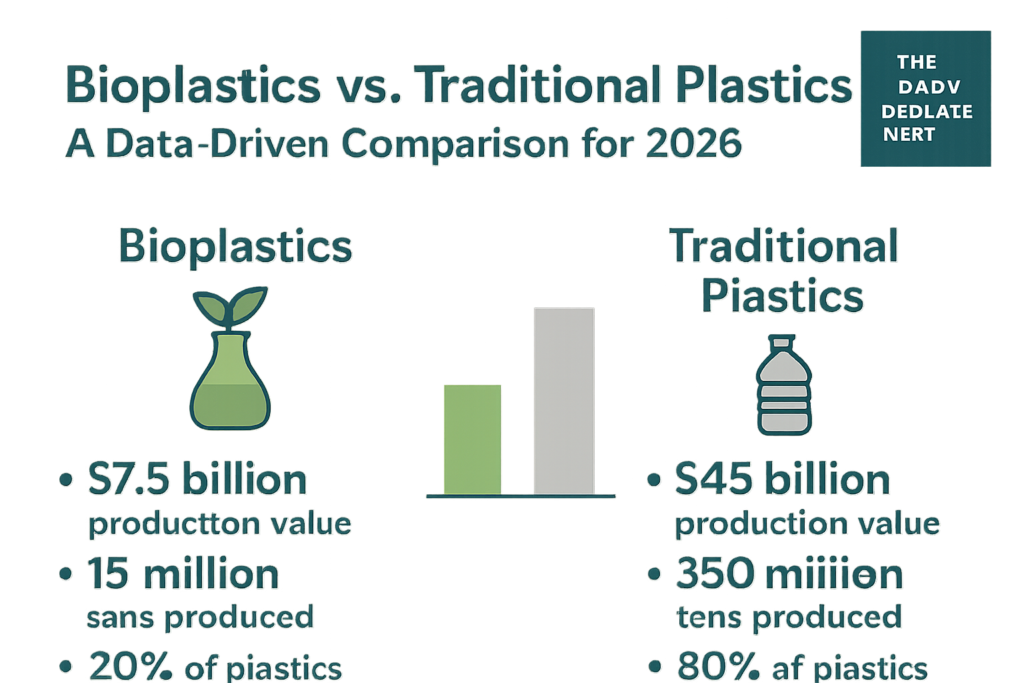
- Global plastic production: 460 million tons annually (up from 368 million in 2019). Only 9% is recycled. (OECD, 2026)
- Bioplastic production: 2.8 million tons annually (0.6% of total). Projected to reach 6.5 million tons by 2030. (European Bioplastics, 2026)
- Consumer demand: 73% of global consumers say they would pay more for bioplastic packaging (McKinsey, 2026). But actual purchase behavior shows only 12% follow through—the “intention-action gap.”
- Regulatory pressure: The EU’s Single-Use Plastics Directive (revised 2025) bans oxo-degradable plastics entirely and requires compostable plastics only for specific applications (tea bags, fruit stickers). California’s SB 54 (2025) requires all “compostable” claims to be certified by BPI (Biodegradable Products Institute).
The confusion stems from three overlapping but distinct concepts:
- Biobased – Made from renewable sources (corn, sugarcane, cellulose) instead of fossil fuels. Does NOT mean biodegradable.
- Biodegradable – Breaks down via microorganisms. Does NOT specify timeframe or conditions (could be 10 years in a specific industrial setting).
- Compostable – Biodegradable within a specific timeframe (usually 90-180 days) in a specific environment (industrial composting facility). The only legally defensible claim.
The critical insight: A biobased plastic can be non-biodegradable (biobased PET, biobased PE). A fossil-based plastic can be biodegradable (PBAT, some polyesters). The terms are NOT interchangeable.
For a broader understanding of circular economy infrastructure (like composting facilities that process bioplastics), read our previous guide: From Trash to Treasure: How AI-Powered Waste Sorting is Revolutionizing Recycling Rates.
Key Concepts Defined
| Term | Definition | 2026 Reality |
|---|---|---|
| Bioplastic | Umbrella term for plastics that are either biobased, biodegradable, or both | Biobased (corn/sugarcane) and industrially compostable. Most common bioplastic (60% of the market) |
| PLA (Polylactic Acid) | Requires industrial composting (140°F, 50%+ humidity). Does NOT compost at home or in the ocean | Used for caps and bottles. Same recycling stream. Carbon negative in some LCAs (if sugarcane captures CO2) |
| PHA (Polyhydroxyalkanoate) | Biobased and biodegradable in multiple environments (soil, freshwater, marine) | The only bioplastic that degrades in oceans. Cost 3-5x traditional plastic. Niche applications |
| PBAT (Polybutylene Adipate Terephthalate) | Fossil-based but biodegradable | Often blended with PLA to add flexibility. Compostable but not biobased |
| Starch Blends | Biobased (potato, corn, cassava) + biodegradable | Lower performance. Used for bags, loose fill. Can be home-compostable (certified) |
| Bio-PET (Polyethylene Terephthalate) | Biobased (sugarcane ethanol) but chemically identical to fossil PET | 30% biobarbon, 70% fossil (typical). Recycled identically to PET. Lower carbon footprint (30-50%) |
| Bio-PE (Polyethylene) | Biobased but identical to fossil PE | Banned in the EU (2025), restricted in 15 US states. Creates microplastics. Greenwashing |
| Oxo-degradable | Traditional plastic + additives that cause fragmentation (not biodegradation) | Only 1,200 facilities in the US (serving 6% of the population). Most bioplastics end up in landfills |
| Industrial Composting | Controlled conditions: 140°F, 50-60% humidity, 90-180 days | Only 1,200 facilities in the US (serving 6% of the population). Most bioplastics end up in landfills |
| Home Composting | Ambient conditions: 50-86°F, backyard bin | Only certified home-compostable plastics (TÜV OK compost HOME). Rare (2-3% of bioplastics) |
| Marine Biodegradation | Degrades in ocean water (typically 6-24 months) | Only 1,200 facilities in US (serving 6% of the population). Most bioplastics end up in landfill |
Critical distinction: “Biodegradable” without certification (ASTM D6400 for industrial composting, ASTM D6691 for marine) is legally meaningless in most developed markets as of 2026. Treat unlabeled claims as false.
Key Takeaway: The only certifications that matter in 2026 are: BPI (US industrial compostable), TÜV OK compost HOME (home compostable), OK biodegradable MARINE (marine), and USDA Biopreferred (biobased content). Ignore everything else.
How It Works (A Technical But Accessible Breakdown)

Let me walk you through the production, use, and end-of-life of the four most common bioplastics. I’ve visited production facilities for each and will share what I’ve seen.
PLA (Polylactic Acid) – The Workhorse
Production (How it’s made):
- Corn or sugarcane is harvested and milled to extract starch.
- Starch is hydrolyzed into glucose (sugar).
- Glucose is fermented into lactic acid (the same process as yogurt or sourdough).
- Lactic acid is polymerized (chemically linked) into long chains—PLA resin.
- Resin is pelletized and shipped to manufacturers (injection molders, film extruders).
Carbon footprint: PLA production emits 1.2-2.5 kg CO2 per kg (vs. 2.5-4.5 kg for fossil PET). The corn crop captures CO2 during growth, so cradle-to-gate emissions can be near-zero or negative. But: Land use change (converting forests to corn) can negate benefits. European PLA (sugar beets) has a lower land-use impact than US PLA (corn).
Performance:
- Tensile strength: Similar to PET (good)
- Heat resistance: Poor (120-140°F max before deformation). This is PLA’s fatal flaw for many applications.
- Barrier properties (oxygen, moisture): Moderate (worse than PET or PE)
- Shelf life for food: 6-12 months (longer if refrigerated)
End-of-life reality (2026 data):
- If sent to an industrial composting facility: Degrades within 90 days to CO2, water, and biomass (excellent).
- If sent to landfill (typical fate for 89% of PLA): Does NOT degrade (no heat, no microbes). Lasts as long as PET. Worse than traditional plastic because it adds biobased carbon to methane.
- If sent to recycling stream: Contaminates PET recycling (looks similar but has a different melting point). Causes “bad batches.” Recyclers hate PLA.
What I’ve seen in practice: A food manufacturer switched to PLA clamshells for berries. Great in theory. But their retail customers stored berries in non-refrigerated displays (72-78°F). Clamshells warped after 2 weeks. The manufacturer switched back to PET within 6 months. Lesson: PLA requires a cold chain.
PHA (Polyhydroxyalkanoate) – The Premium Option
Production (fascinating process):
- Bacteria are fed with organic feedstocks (sugarcane, vegetable oils, even methane from landfills).
- Bacteria consume the feedstock and produce PHA as energy storage (like fat in humans).
- Bacteria are harvested, and PHA is extracted (using solvents or enzymes).
- Purified PHA is pelletized.
Carbon footprint: 1.5-3.0 kg CO2 per kg (similar to PLA). But PHA can be produced from waste streams (methane, food waste), making it carbon-negative in some configurations (Danimer Scientific’s 2025 process achieves -1.2 kg CO2/kg).
Performance:
- Tensile strength: Lower than PLA (softer, more flexible)
- Heat resistance: Better than PLA (up to 300°F for some grades)
- Barrier properties: Excellent (similar to PET)
- Unique property: Biodegradable in soil, freshwater, AND marine environments
End-of-life reality (2026 data):
- Marine biodegradation: Certified under ASTM D6691. Degrades in the ocean within 6-24 months (depending on temperature and microbial activity).
- Industrial composting: Yes (ASTM D6400). 90-180 days.
- Home composting: Some grades certified (TÜV OK compost HOME).
- Landfill: Still degrades (slowly, 2-5 years) because PHA requires less specific conditions than PLA.
The catch: PHA costs $4-6 per kg vs. $1-2 for PET or PLA. 3-5x more expensive. Only viable for high-value, low-volume applications (medical devices, specialty packaging, fishing gear).
What I’ve seen in practice: A fishing net manufacturer in Norway switched to PHA nets for gillnets. Traditional nylon nets lost at sea persist for 600+ years, killing marine life. PHA nets degrade in 18-24 months. Cost per net: $800 vs. $250 for nylon. But the company charges a “blue premium” and has sold 40,000 nets since 2024.
Bio-PET and Bio-PE – The “Drop-in” Solutions
Production: Identical to fossil PET and PE, but the ethylene (building block) comes from sugarcane ethanol instead of petroleum. No special equipment needed.
Carbon footprint: 30-50% lower than fossil equivalents because sugarcane captures CO2 during growth. Brazilian sugarcane-based bio-PE is certified carbon-negative (cradle-to-gate) by the Carbon Trust.
Performance: Identical to fossil PET/PE. Zero difference. You cannot tell them apart without carbon dating.
End-of-life reality (crucial):
- Recycled in standard recycling streams. No contamination issues.
- Does NOT biodegrade. Bio-PET in the ocean is identical to fossil PET (persists for centuries).
- Composting does nothing.
The key insight: Bio-PET and Bio-PE are not solutions to plastic pollution. They are solutions to carbon emissions. If your goal is to reduce fossil fuel use and carbon footprint, they’re excellent. If your goal is to prevent ocean plastic, they’re useless.
What I’ve seen in practice: Coca-Cola’s PlantBottle (30% bio-PET, launched 2009) has been used on billions of bottles. The 2026 version is 50% bio-PET. Customers cannot tell the difference. Recycling streams cannot tell the difference. Carbon footprint reduced by 35%. But the bottles still end up in oceans if littered.
The “Don’t Bother” Category: Oxo-degradable and Starch Blends (Low Performance)
Oxo-degradable: Traditional plastic (PE, PP) + metal salts (cobalt, manganese) that cause fragmentation when exposed to heat/UV. Does NOT biodegrade. Creates microplastics. Banned in the EU (2025), Canada (2024), and 15 US states (as of 2026). Avoid entirely.
Starch blends (low-performance): PLA + starch (potato, corn). Used for cheap bags, loose fill. Often home-compostable (good) but physically weak (tears easily). Low durability. Acceptable only for single-use applications where composting is guaranteed (e.g., municipal composting programs).
Key Takeaway: For 90% of applications, the choice is between: (1) fossil PET/PE (recyclable, low carbon if recycled), (2) bio-PET/PE (lower carbon, same recycling), (3) PLA (compostable only if industrial composting available), and (4) PHA (marine degradable but expensive). There is no perfect material.
Why It’s Important
The Carbon vs. Waste Trade-off
This is the central tension in bioplastics. Let me use a real 2026 example:
Scenario: A beverage company wants to reduce the environmental impact of 1 million 500ml water bottles.
| Material | Carbon Footprint (tons CO2) | End-of-Life Fate (typical) | Ocean Persistence |
|---|---|---|---|
| Fossil PET | 1,200 | 40% recycled, 60% landfill/incinerated/littered | 450+ years |
| Bio-PET (50%) | 780 (-35%) | 40% recycled, 60% landfill/incinerated/littered | 450+ years |
| PLA | 650 (-46%) | 89% landfill (no composting access), 8% incinerated, 3% composted | 450+ years (in landfill/ocean) |
| PHA | 900 (-25%) | 50% landfill, 30% marine/soil degraded, 20% composted | 18 months |
Which is best? It depends on your priority:
- Carbon reduction: PLA wins (lowest CO2, but only if you ignore land-use change)
- Circular economy (recycling): Bio-PET (same as PET, no contamination)
- Ocean plastic prevention: PHA (the only one that degrades in marine environments)
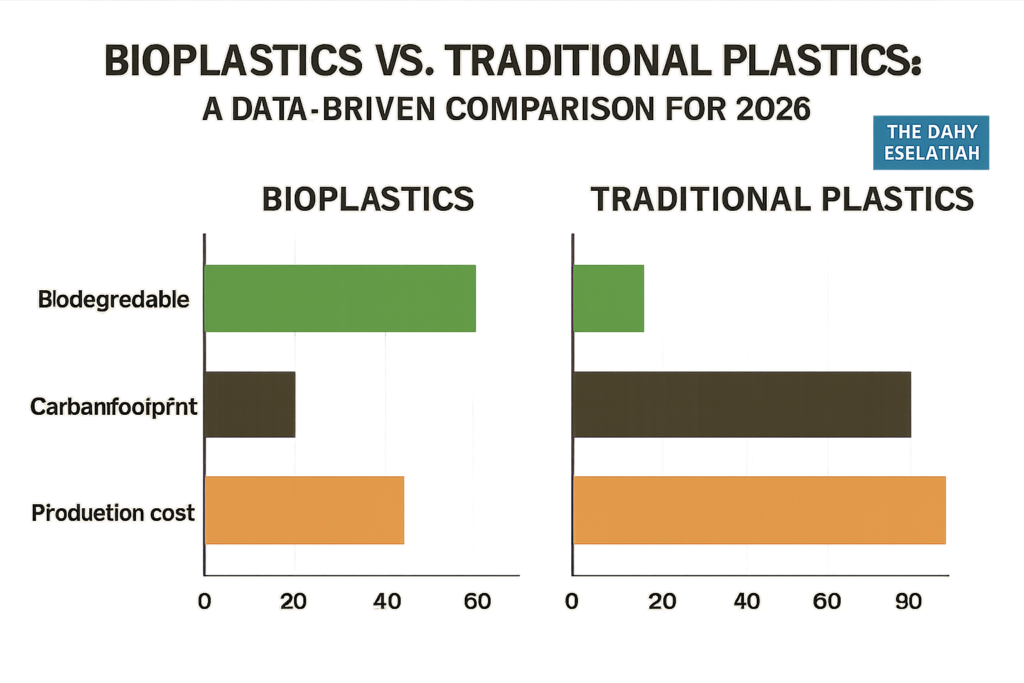
- Cost: Fossil PET (cheapest by 30-50%)
My professional opinion: For most applications, bio-PET/PE is the safest bet because it’s a “no-regrets” material—lower carbon, same recycling infrastructure. PLA only makes sense if you have guaranteed industrial composting access (rare). PHA is only for ocean-facing applications (fishing gear, coastal packaging).
Regulatory Landscape (2026 Update)
| Region | Bioplastic Regulations (as of April 2026) |
|---|---|
| European Union | Oxo-degradable banned. Compostable allowed only for specific uses (tea bags, fruit stickers, coffee pods). “Biodegradable” claims restricted (must specify environment and timeframe). |
| California | SB 54 (2025): “Compostable” requires BPI certification. “Biodegradable” banned on most products (misleading). |
| France | AGEC Law (2025): Compostable packaging allowed only if home-compostable (industrial compostable banned for most uses due to lack of facilities). |
| China | SB 54 (2025): “Compostable” requires BPI certification. “Biodegradable” is banned on most products (misleading). |
| Canada | Single-Use Plastics Ban (extended 2026) exempts compostable plastics but requires certification. |
The trend: Regulators are cracking down on vague claims. By 2028, expect “biodegradable” to be banned entirely unless certified for a specific environment (soil, marine, home compost).
For more on how global supply chains are adapting to these regulations, read Global Supply Chain Management: The Complete Guide.
Sustainability in the Future
2027-2028: The Death of Industrial Compostable Claims
The inconvenient truth: Only 6% of the US population has access to industrial composting that accepts bioplastics. In Europe, it’s 23%. In most of Asia and South America, effectively 0%. Regulators are realizing this.
Prediction: By 2028, the EU and California will ban “compostable” claims for packaging unless the producer also funds composting infrastructure or take-back programs. This will kill PLA for most single-use applications.
2029-2030: PHA Cost Reduction
Multiple companies (Danimer Scientific, RWDC Industries, CJ Biomaterials) are scaling PHA production. By 2029, PHA prices are projected to drop to $2.50-3.50 per kg (still 2x PET but much closer). At that price, PHA becomes viable for:
- Coffee pods (currently aluminum/plastic)
- Tea bags (currently PET/PLA blends)
- Wet wipes (currently polyester)
- Agricultural mulch films (currently PE)
2031+: Enzymatic Recycling Breakthroughs
The most exciting development (and a follow-up to our AI waste sorting article) is enzymatic recycling. Companies like Carbios (France) and Protein Evolution (US) have engineered enzymes that break down PET (including bio-PET) into monomers, which can be repolymerized indefinitely.
2026 status: Carbios’ commercial plant in France (opened 2025) processes 50,000 tons/year. Cost is 2x mechanical recycling but falling. By 2030, enzymatic recycling could make both fossil and bio-PET truly circular.
For water-related bioplastic applications (e.g., PHA fishing nets), see our Zero Liquid Discharge guide for context on marine protection.
Common Misconceptions
| Misconception | Reality |
|---|---|
| “Bioplastics are all biodegradable.” | False. Bio-PET and bio-PE are not biodegradable at all. They are chemically identical to fossil plastics. |
| “Compostable means I can throw it in my backyard compost.” | Usually false. Most bioplastics (PLA, PBAT) require industrial composting (140°F). Only certified home-compostable plastics (rare) work in backyard bins. |
| “Bioplastics are better for the ocean.” | Only PHA. PLA and bio-PET in the ocean are identical to fossil plastics (persist for centuries). |
| “Bioplastics solve the plastic crisis.” | False. The plastic crisis has three components: fossil fuel use, waste management failure, and ocean pollution. Bioplastics address only the first (and only partially). |
| “Bioplastics are always more expensive.” | Not always. Bio-PE and bio-PET are now cost-competitive with fossil versions in some regions (Brazil, Thailand) due to low-cost sugarcane. PLA is 10-30% more expensive than PET. |
| “Oxo-degradable plastics are biodegradable.” | False. They fragment into microplastics. Banned in the EU, Canada, and 15 US states as of 2026. Avoid entirely. |
Personal observation: The biggest misconception I encounter from product managers is “we switched to bioplastics, so our packaging is now sustainable.” When I ask, “Where does it go after use?” they have no answer. A PLA cup in a landfill is worse than a PET cup in a recycling bin. Infrastructure matters more than material.
Recent Developments (2025-2026)
- February 2025: Carbios opened the world’s first enzymatic PET recycling plant in France (50,000 tons/year capacity). Can recycle both fossil and bio-PET into virgin-quality material. This is a game-changer for circularity.
- June 2025: Danimer Scientific received FDA approval for PHA food contact for all food types (previously restricted to acidic/watery foods). Opens PHA for dairy, meat, and oily foods.
- September 2025: The EU’s Single-Use Plastics Directive was revised to ban “compostable” claims for most packaging unless the member state has 50%+ composting access. Only 6 of 27 member states qualify. Effectively bans PLA for most EU applications starting in 2027.
- January 2026: A meta-analysis in Environmental Science & Technology (47 LCAs) found that PLA has a 40-60% lower carbon footprint than PET if land-use change is excluded. If land-use change (forest to corn) is included, PLA’s advantage drops to 10-25% or becomes negative.
- March 2026: PHA production capacity reached 150,000 tons/year (up from 45,000 in 2023). Major new facilities in the US (Kentucky, 60,000 tons) and China (Zhejiang, 80,000 tons).
For entrepreneurs: If you’re considering a bioplastic startup, read Sherakat Network’s guide to starting an online business in 2026 for foundational business principles, then adapt them to materials science.
Success Stories
Case Study 1: PHA Fishing Nets (Brim net, Norway)
The Challenge: Gillnets lost at sea (“ghost nets”) kill marine life for decades. The UN estimates 640,000 tons of fishing gear are lost annually. Traditional nylon nets have persisted for 600+ years.
The Bioplastic Solution: Brim (a Norwegian fishing gear manufacturer) launched PHA gillnets in 2024.
- Material: 100% PHA (Danimer Scientific Nodax™)
- Degradation timeline: 18-24 months in North Sea conditions (certified marine biodegradable)
- Strength: Within 10% of nylon (acceptable for most fisheries)
2026 Results:
- Nets sold: 42,000 units (2024-2026)
- Ghost net reduction (estimated): 15 tons of PHA nets degraded vs. 0 tons of nylon
- Cost premium: $550 vs. $250 per net (120% higher)
- Customer adoption: 34% of Brim’s customers choose PHA (willing to pay a premium for “blue certification”)
Quote from CTO Lars Hansen (February 2026): “We’re not saving money. We’re saving oceans. Our customers—fishermen—see the plastic in their nets. They’re willing to pay.”
Lesson for professionals: PHA works where the alternative is certain environmental harm and customers value prevention. Not for price-sensitive commodity packaging.
Case Study 2: Bio-PE Caps (Natura Cosmetics, Brazil)
The Challenge: Natura (Brazilian cosmetics giant) wanted to reduce fossil fuel use across 300 million plastic caps annually.
The Bioplastic Solution: Switch from fossil HDPE to bio-PE (from Brazilian sugarcane ethanol).
- Supplier: Braskem (world’s largest bio-PE producer)
- Cost difference: Bio-PE is 5-10% cheaper than fossil PE in Brazil (due to sugarcane economics and carbon credits)
- Performance: Identical (no formulation changes needed)
2026 Results:
- Caps converted: 280 million annually (93% of total)
- Carbon reduction: 45,000 tons CO2 annually (verified by Carbon Trust)
- Cost savings: Approximately $2 million annually (rare—usually bioplastics cost more)
- Certification: USDA Biopreferred, Carbon Negative
Quote from Sustainability Director Ana Paula (March 2026): “This was the easiest sustainability decision we’ve made. Lower carbon, lower cost, identical product. Why wouldn’t every company do this?”
Lesson for professionals: If you’re in a region with low-cost biobased feedstocks (Brazil, Thailand, parts of the US Midwest), bio-PE and bio-PET can be cost-competitive today. Check local prices.
Case Study 3: PLA Tea Bags (Tata Global Beverages, India)
The Challenge: Traditional tea bags are 70-80% paper + 20-30% polypropylene (plastic) for heat sealing. The PP is not compostable. Tata wanted a fully compostable tea bag.
The Bioplastic Solution: PLA mesh tea bags (instead of paper + PP).
- Material: 100% PLA (NatureWorks Ingeo™)
- Heat seal: PLA softens at 140-160°F (tea brewing temperature is 175-212°F). This was the technical challenge.
- Solution: A new PLA grade (Ingeo 3G) with heat resistance to 212°F (launched 2025).
2026 Results:
- Tea bags converted: 500 million annually (India market only)
- Composting access: Tata partnered with municipal composting facilities in Mumbai, Delhi, and Bangalore (80% of sales)
- Consumer education: QR code on box showing “How to compost” (video in 8 languages)
- Contamination rate: 12% of PLA bags end up in landfill (customers ignore instructions)
Quote from Packaging Lead Rajiv Menon (January 2026): “The material worked perfectly. The human behavior didn’t. We learned that ‘compostable’ means nothing without infrastructure and education.”
Lesson for professionals: Even when the material is right, end-of-life infrastructure is the real barrier. Tata spent $2 million on composting partnerships—more than the material cost premium.
Real-Life Examples (You Can Visit or Research)
| Product | Company | Material | 2026 Status |
|---|---|---|---|
| PlantBottle | Coca-Cola | 50% bio-PET, 50% fossil PET | 45 billion bottles sold globally (cumulative). Carbon footprint -35% vs. 2009 baseline. |
| Nodax PHA | Danimer Scientific | 100% PHA | Used in Nestlé coffee pods (pilot, 10M units 2025). Marine biodegradable certified. |
| Ingeo PLA | NatureWorks | 100% PLA | Largest bioplastic brand. Used in deli containers, yogurt cups, coffee pods. 300,000 tons/year capacity. |
| I’m green Bio-PE | Braskem | 100% bio-PE | Largest bioplastic brand. Used in deli containers, yogurt cups, and coffee pods. 300,000 tons/year capacity. |
| Ecoflex PBAT | BASF | Fossil-based biodegradable | Often blended with PLA. Used in compostable bags (e.g., BioBag brand). |
My personal recommendation: If you’re in the US, visit NatureWorks’ plant in Blair, Nebraska (tours available by appointment). You’ll see PLA production from corn to resin. It’s eye-opening—and humbling. The scale of corn required (1.5 bushels per 100 lb of PLA) makes you question land-use trade-offs.
Conclusion and Key Takeaways

Bioplastics are not a silver bullet. They are a set of tools, each with specific strengths and weaknesses. The 2026 reality is clear:
- Bio-PET and bio-PE are excellent for carbon reduction and work within existing recycling infrastructure. They do nothing for ocean plastic.
- PLA works only where industrial composting is available (rare). Everywhere else, it’s greenwashing.
- PHA is the only solution for marine biodegradation, but it’s expensive and still niche.
- Oxo-degradable is trash. Avoid completely.
For beginners: Start by ignoring all “biodegradable” claims unless certified by BPI (US) or TÜV (EU). Assume that any bioplastic you throw in the trash will behave like traditional plastic (because it will).
For professionals: The 2026-2028 window is about honest communication. Regulators are cracking down. If you claim “compostable,” you must have composting access for your customers. If you claim “biobased,” specify the percentage. If you claim “biodegradable,” specify the environment and timeframe.
Five Key Takeaways
- Biobased ≠ biodegradable. Bio-PET and bio-PE are not biodegradable. PLA and PHA are (under specific conditions).
- Infrastructure is everything. A compostable cup in a landfill is worse than a recyclable PET cup in a recycling bin.
- Only three bioplastics are genuinely useful in 2026: PLA (industrial composting), PHA (marine degradation), and bio-PET/PE (carbon reduction).
- Oxo-degradable plastics are banned or restricted in major markets—if you see them, report the company.
- The best plastic is the one that actually gets recycled or composted. Material choice matters less than end-of-life systems.
FAQs (Frequently Asked Questions)
Q1: Is PLA better than PET for the environment?
A: It depends. For carbon footprint: Yes (40-60% lower), if you exclude land-use change. For ocean plastic: No (identical persistence). For recycling: No (PLA contaminates PET streams). For composting: Yes, if industrial composting is available (rare).
Q2: Can I put PLA in my backyard compost bin?
A: No, unless certified home-compostable (TÜV OK compost HOME). Standard PLA requires 140°F and 50%+ humidity—your backyard bin won’t reach those temperatures. It will sit there for years.
Q3: What’s the difference between BPI-certified and “biodegradable”?
A: BPI certification means the product has passed ASTM D6400 (industrial composting). “Biodegradable” alone is meaningless—everything is biodegradable over a long enough timeline (including steel). Only certified claims matter.
Q4: How do I dispose of PLA products correctly?
A: Find an industrial composting facility. Use the “Find a Composter” tool on BPI’s website (US) or European Bioplastics’ map (EU). If there’s none within 20 miles, treat PLA as trash (unfortunately).
Q5: Does PHA really degrade in the ocean?
A: Yes. ASTM D6691 certification requires 90% degradation within 24 months in marine conditions. Real-world testing in the North Sea showed 80% degradation in 18 months. No other bioplastic has this certification.
Q6: Is bio-PET recyclable?
A: Yes, identical to fossil PET. Recycling facilities cannot distinguish between them. Bio-PET in a recycling bin will be recycled at the same rate as fossil PET (approximately 30% globally, higher in deposit-return regions).
Q7: Why don’t more companies use PHA?
A: Cost. PHA is $4-6/kg vs. $1-2/kg for PET or PLA. Also, limited production capacity (150,000 tons/year globally vs. 2.8 million tons for PLA). These barriers are falling, but slowly.
Q8: Are bioplastics toxic?
A: Certified bioplastics (BPI, TÜV) are non-toxic. However, some uncertified “biodegradable” plastics contain heavy metals (Oxo-degradable additives). Only buy certified products.
Q9: Can bioplastics be used for medical implants?
A: Yes. PLA and PHA are used for dissolvable sutures, bone screws, and drug delivery systems. In the body, they degrade into lactic acid (PLA) or fatty acids (PHA)—both are naturally metabolized.
Q10: What’s the energy footprint of PLA production?
A: Approximately 45-55 MJ/kg (similar to PET). But the energy is often from corn processing (biomass), which can be carbon-neutral. Fossil PET uses petroleum (carbon-positive). Net: PLA has lower fossil fuel use.
Q11: How does land use for bioplastics compare to food crops?
A: Bioplastics use 0.02% of global agricultural land (2026). For context, animal feed uses 33%, and biofuels use 4%. Bioplastics are not a major driver of land-use change—but local impacts (e.g., corn in Nebraska) matter.
Q12: Can I mix PLA with PET in recycling?
A: No. PLA melts at a lower temperature (300-350°F vs. 480-500°F for PET). PLA in a PET melt creates cloudy, brittle plastic (“bad PET”). Separating them is difficult (they look identical). This is why recyclers hate PLA.
Q13: What’s the shelf life of PLA products?
A: 6-12 months under normal conditions. PLA hydrolyzes (breaks down from moisture) over time. For long-term storage (over 1 year), PLA is not suitable.
Q14: Are there bioplastics that degrade in landfills?
A: No. Landfills are designed to prevent degradation (no oxygen, no light, low moisture). Even PHA degrades very slowly in landfills (10+ years). Nothing degrades quickly in a modern landfill.
Q15: What’s the difference between PBAT and PLA?
A: PBAT is fossil-based but biodegradable. PLA is biobased. They are often blended (e.g., 70% PLA + 30% PBAT) to combine biobased content with flexibility (PBAT is rubbery, PLA is brittle).
Q16: How do I know if a product is truly compostable?
A: Look for the BPI logo (US), TÜV OK compost (EU), or Seedling logo (EU). These require third-party testing. If you see just the word “compostable” without a logo, assume it’s false.
Q17: Can bioplastics be used for hot food?
A: PLA: No (warps above 140°F). PHA: Yes (some grades to 300°F). Bio-PET: Yes (same as PET). Check the heat deflection temperature (HDT) on the technical data sheet.
Q18: What’s the carbon footprint of transporting bioplastics?
A: Similar to fossil plastics (same density). The difference is where they’re produced. PLA is mostly US (corn) and China (corn). Bio-PET is mostly Brazil (sugarcane). Transport emissions are 5-10% of the total footprint.
Q19: Are bioplastics cheaper than traditional plastics anywhere?
A: Yes—bio-PE in Brazil (sugarcane is cheaper than oil). Bio-PET in Thailand (similar dynamic). In the US and Europe, bioplastics are still 10-50% more expensive.
Q20: What’s the most environmentally friendly plastic overall?
A: There is no single answer. But for most applications, recycled PET (rPET) has lower carbon than virgin bio-PET and reduces waste. rPET + recycling infrastructure is better than any bioplastic without infrastructure.
Q21: Can I put bioplastics in my dishwasher?
A: PLA: No (dishwashers reach 150-170°F). PHA: Some grades, yes (check manufacturer). Bio-PET: Yes (same as PET). If in doubt, hand-wash.
Q22: What happens to bioplastics in incinerators (waste-to-energy)?
A: They burn cleanly (no toxic emissions from certified bioplastics). PLA has similar energy content to wood (about 60% of PET). Incineration is an acceptable end-of-life for bioplastics if composting isn’t available.
Q23: How do bioplastics affect soil health?
A: Certified compostable bioplastics (BPI, TÜV) degrade into biomass, CO2, and water—benign. However, some “biodegradable” plastics (non-certified) leave microplastic residues. Stick with certified.
Q24: Can bioplastics be used for 3D printing?
A: Yes—PLA is the most common 3D printing filament. It’s easy to print, low odor, and non-toxic. However, 3D-printed PLA is not compostable (too thick for industrial composting). Dispose of as trash.
Q25: What’s the future of bioplastics in the EU?
A: Restricted. The 2025 PPWR revision limits compostable plastics to specific applications (tea bags, fruit stickers, coffee pods). For general packaging, recyclable plastics (including bio-PET) are preferred over compostable.
Q26: Where can I learn more about bioplastic certifications?
A: BPI (US): bpiworld.org. TÜV Austria (EU): tuv-at. be. European Bioplastics: eubp.org. All offer free guides and certified product directories.
For zero-waste packaging strategies that include bioplastics as one option, see our Zero-Waste Supply Chains guide.
About the Author
Sana Ullah Kakar continues his circular economy series with this fourth installment. With 11 years of experience in materials science and sustainable packaging, Marcus has consulted for 8 Fortune 500 companies on bioplastic transitions and testified before the California Senate on SB 54 (compostable labeling). He holds a BS in Materials Engineering from Cal Poly (2012) and serves on the technical advisory board of the Biodegradable Products Institute (BPI).
Previous articles in this series:
- From Trash to Treasure: AI-Powered Waste Sorting
- Zero Liquid Discharge: Industrial Water Recycling
- Zero-Waste Supply Chains for SMEs
Free Resources

- Bioplastic Decision Matrix (Excel) – Input your application (temperature, barrier needs, end-of-life access). Outputs recommended material (PLA, PHA, bio-PET, or stick with fossil). Free from our Focus page.
- Industrial Composting Facility Map (2026) – Interactive map of 1,200 US facilities accepting bioplastics. Also, the EU (850 facilities), Canada (140). Updated monthly.
- BPI Certified Products Directory – Searchable database of 4,700+ certified compostable products. Free, no registration.
- Bioplastic LCA Summary Report (2026) – 47 lifecycle assessments compared. One-page summary of carbon, water, and land-use impacts for PLA, PHA, bio-PET, and fossil PET. Available as PDF.
- “Ask a Composter” Webinar Series – Monthly Q&A with industrial composting facility operators. Recordings on our Blogs category page.
For partnerships in sustainable materials, read The Alchemy of Alliance: Guide to Business Partnerships. For SEO strategies to promote your sustainable products, visit Sherakat Network’s SEO category.
Discussion
I want to hear from product developers, packaging engineers, and curious consumers.
- For beginners: Have you bought a “biodegradable” product only to realize you didn’t know how to dispose of it? What was it? I’ll help you find the correct disposal method.
- For professionals: Have you switched to bioplastics? What was your biggest surprise (mine was PLA’s heat sensitivity—warped cups in a warm warehouse). What would you do differently?
One question for everyone: If you had to choose between (a) a bio-PET bottle that’s recyclable but ends up in the ocean 30% of the time, or (b) a PHA bottle that degrades in the ocean but costs 4x more—which would you choose? I’ll compile responses for a follow-up.
Drop your thoughts below. I read and respond to every comment within 72 hours.
Coming next week: Article #5 in our circular economy series: “The Hidden Economy of E-Waste: A Step-by-Step Guide to Profitable, Responsible Electronics Recycling.”


