



Introduction: Why Taking Control of Your Learning Matters Now More Than Ever
We live in an age of information abundance, but also of overwhelming noise. A quick online search for “data science skills” can return millions of results: university courses, YouTube tutorials, paid bootcamps, academic papers, and conflicting advice from countless forums. For the modern lifelong learner, the challenge is no longer access to information; it’s curation, context, and consistency.
The old model of education—where an institution provided a standardized curriculum, a set timeline, and a one-size-fits-all path to knowledge—is crumbling. In its place, a new paradigm is emerging, driven by individuals who take ownership of their intellectual and professional growth. This is the world of self-directed learning. But to thrive in this world, you can’t just be a passive consumer of random content. You need a system. You need a strategy. You need a Personal Learning Environment (PLE).
A PLE is more than just a collection of bookmarks. It is a consciously designed ecosystem of tools, resources, communities, and people that you assemble to guide, support, and document your learning journey. It’s the operational backbone that brings to life the lifelong learning mindset we’ve championed before. While our previous article, The Lifelong Learning Mindset: Thriving in the Age of Continuous Change, explored the why, this guide is your definitive manual for the how.
In this comprehensive 4500-word guide, you will learn everything you need to know to build your own powerful PLE. We will define the core concepts, walk you through a step-by-step creation process, debunk common myths, and showcase real-life success stories. By the end, you will have the blueprint to move from scattered learning to a structured, purposeful, and highly effective personal education system that grows with you throughout your life and career.
Background/Context: The Shift From Institutional Learning to Personal Learning
For centuries, formal education was the primary gatekeeper of knowledge. Learning was structured, sequential, and confined to physical classrooms and libraries. The curriculum was decided by a central authority, and success was measured by standardized tests. This model served the industrial age well, producing a workforce with standardized skills.
However, the digital revolution has fundamentally altered the landscape. The half-life of skills is shrinking rapidly. A technical skill learned in a four-year degree program might be obsolete by graduation. According to a report from the World Economic Forum, 50% of all employees will need reskilling by 2025 as technology adoption increases. This pace of change renders the traditional, front-loaded education model insufficient.
Concurrently, the internet has democratized information. Platforms like Coursera, edX, and YouTube offer world-class instruction for free or low cost. Knowledge communities on Reddit, Stack Overflow, and LinkedIn provide real-time support and peer-to-peer learning. This shift places the responsibility—and the power—firmly in the hands of the individual.
The concept of the Personal Learning Environment emerged in the mid-2000s as educators and technologists began to recognize this shift. They saw that learners were naturally starting to pull together their own collections of blogs, RSS feeds, social networks, and wikis. The PLE was formalized as a pedagogical approach to empower learners to take control and manage their own learning using a suite of tools and services. It represents a move from a provider-push model to a learner-pull model, perfectly suited for our complex, interconnected world.
Key Concepts Defined

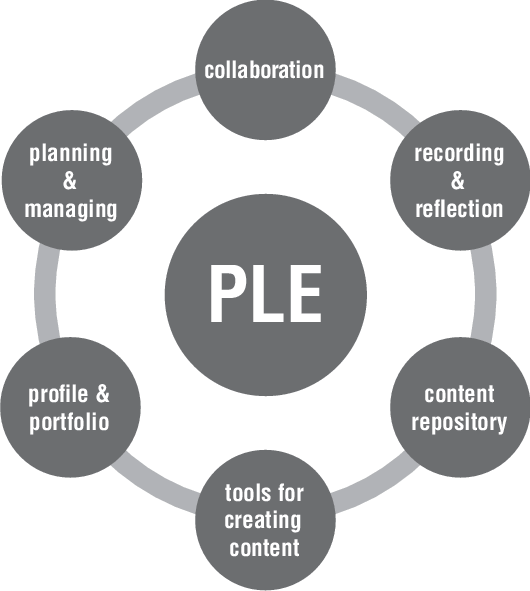
Before we dive into building your PLE, let’s clarify the terminology to ensure we’re on the same page.
- Personal Learning Environment (PLE): A self-curated set of tools, communities, information sources, and services (both digital and physical) that an individual assembles to facilitate their lifelong learning goals. It is a concept and a process, not a single platform. Your PLE is unique to you, your goals, and your learning style.
- Personal Learning Network (PLN): This is the social component of your PLE. It consists of the people and communities you connect with to share knowledge, ask questions, and gain new perspectives. Your PLN might include mentors on Twitter, peers in a Slack group, experts you follow on blogs, or colleagues in your workplace. As explored in our Technology & Innovation section, digital tools are the glue that binds a global PLN together.
- Learning Management System (LMS): A centralized, institution-controlled software application for administering, documenting, tracking, and delivering educational courses. Examples include Blackboard, Moodle, or a corporate training portal. The key difference is control: an LMS is managed for you, while a PLE is managed by you.
- Self-Directed Learning: The process in which individuals take the initiative, with or without the help of others, in diagnosing their learning needs, formulating goals, identifying resources, choosing and implementing learning strategies, and evaluating learning outcomes. Your PLE is the engine that makes self-directed learning efficient and sustainable.
- Curation: The act of discovering, gathering, organizing, and sharing the best and most relevant information on a specific topic. In the context of a PLE, curation is the essential skill of filtering the signal from the noise. This principle is central to our mission here at World Class Blogs, where we strive to curate impactful content.
How to Build Your Personal Learning Environment: A 5-Step Framework
Building a PLE is not a one-time task but an ongoing, reflective process. Follow this step-by-step framework to construct yours from the ground up.
Step 1: Define Your Learning Goals & “Why”
You cannot build an effective system without a clear destination. A PLE built for “learning about marketing” will be as messy and ineffective as a library with no cataloging system.
- Start with the “Big Why”: Why do you want to learn? Is it for a career transition (e.g., from teacher to instructional designer)? To master a new skill for a promotion (e.g., data visualization)? Or for personal enrichment (e.g., learning about Renaissance art)?
- Set SMART Goals: Make your learning goals Specific, Measurable, Achievable, Relevant, and Time-bound.
- Vague Goal: “I want to get better at coding.”
- SMART Goal: “I will complete the ‘Python for Everybody’ specialization on Coursera and build three portfolio projects using the Flask framework within the next six months.”
- Conduct a Skill Gap Analysis: Compare your current skillset against the one required to achieve your goal. This gap is the space your PLE will fill.
Step 2: Collect & Curate Your Information Sources
With a clear goal, you can now start gathering high-quality input channels. This is the “feeding” stage of your PLE.
- Formal Resources: Online courses (Coursera, edX, Udemy), textbooks, academic journals, and structured tutorials.
- Informal Resources: This is where the power of a PLE truly shines.
- Blogs & Newsletters: Identify leading blogs in your field. Use an RSS reader like Feedly or Inoreader to aggregate them in one place.
- YouTube Channels: Subscribe to channels that offer in-depth tutorials, lectures, and explanations.
- Podcasts: Find podcasts that you can listen to during your commute or downtime.
- Social Media: Use Twitter/X and LinkedIn to follow experts, join conversations using hashtags, and discover new content. Reddit communities (subreddits) can be goldmines of peer knowledge and resource sharing.
Pro Tip: Don’t just collect links. Use a tool like Pocket or Instapaper to save articles to read later, and always tag them with relevant keywords.
Step 3: Organize Your Tools & Workflow
A pile of resources is useless without a system to organize and process them. This step is about choosing the digital “spine” of your PLE.
- Knowledge Management Hub: This is the core of your PLE. You need a central place to store notes, connect ideas, and track progress.
- Notion: Extremely versatile for creating databases for courses, resources, and project notes. Perfect for building a custom learning dashboard.
- Evernote: A classic for note-taking and web clipping.
- Obsidian or Roam Research: Powerful for users who want to create a “networked” web of their thoughts, ideal for advanced knowledge synthesis.
- Communication & Collaboration:
- Slack/Discord: Join public or private communities related to your field.
- Twitter/X Lists: Create private lists of experts to filter your feed.
- Content Creation & Practice:
- A Blog (even a personal one): The best way to solidify learning is to teach. Writing forces you to clarify your understanding. Consider starting a blog on a platform like WordPress or GitHub Pages. You can explore our Category Hub for inspiration on structuring your content.
- GitHub: Essential for coders to store projects and contribute to open source.
- A Digital Portfolio: Use sites like Behance (for designers) or a personal website to showcase your work.
Step 4: Engage, Create, and Apply
Learning is not a spectator sport. Passive consumption is the enemy of mastery. Your PLE must be a dynamic system for engagement.
- Do the Work: Complete the exercises in your online courses. Write the code. Do the analysis.
- Take Notes Actively: Don’t just highlight. Use methods like the Cornell Note-Taking System or create your own templates in your knowledge hub. Summarize what you learn in your own words.
- Build Things: Application is key. If you’re learning a new programming language, build a small app. If you’re learning about digital marketing, run a small campaign for a friend’s blog.
- Engage with Your PLN: Ask questions in your Slack group. Comment thoughtfully on blog posts. Share your own progress and insights on social media. This turns your network from a passive list into an active support system.
Step 5: Reflect, Share, and Iterate
This is the most crucial yet most often skipped step. A PLE is a living system that must be regularly reviewed and refined.
- Schedule Weekly Reviews: Every week, spend 30 minutes reviewing what you’ve learned, what resources were most helpful, and what’s working (or not working) in your system.
- Share Your Knowledge: Write a blog post about a concept you’ve mastered. Create a short video tutorial. Present your findings to a colleague. Sharing not only helps others but also cements your own knowledge and attracts like-minded people to your PLN. For insights on impactful sharing, our Nonprofit Hub offers lessons on community engagement.
- Prune and Update: Remove sources that are no longer relevant. Add new, exciting blogs or experts you discover. Update your goals as you progress. Your PLE from two years ago should not look the same as it does today.
Why Building a PLE is Critically Important
Investing the time to build a PLE is one of the highest-return activities a modern professional or curious individual can undertake.
- Future-Proofs Your Career: In a volatile job market, the ability to rapidly and efficiently learn new skills is the ultimate career insurance. A PLE gives you the apparatus to do just that.
- Creates Deep, Not Just Broad, Knowledge: By connecting information from various sources (a course, a blog post, a discussion with your PLN), you build a rich, interconnected understanding of a subject, moving beyond superficial familiarity.
- Increases Learning Efficiency and Saves Time: A well-organized PLE eliminates the “what should I learn next?” paralysis. Your next step is always clear, and your resources are at your fingertips, saving you hours of searching.
- Fosters Autonomy and Confidence: Taking control of your learning journey is an empowering experience. It shifts your identity from someone who is “taught” to someone who “learns,” building immense self-confidence.
- Connects You to a Global Community: A PLE breaks down geographical and institutional barriers, connecting you with mentors, collaborators, and friends from across the globe who share your passions.
Common Misconceptions and Myths About PLEs
Let’s clear up some common confusions that hold people back.
- Myth 1: “A PLE is just a fancy term for a list of bookmarks.”
- Reality: A bookmark list is passive. A PLE is an active, dynamic system that includes not just resources (the “what”) but also tools for processing (the “how”) and a network for discussion (the “who”).
- Myth 2: “I need to be tech-savvy to build one.”
- Reality: The principles are more important than the tools. You can start a highly effective PLE with a free Evernote account, a Twitter list, and a commitment to reflect. The tools are just enablers.
- Myth 3: “It’s a solitary and lonely way to learn.”
- Reality: The exact opposite is true! A PLE, by definition, includes a Personal Learning Network (PLN). It is a highly social and connected approach to learning, deliberately designed to connect you with people.
- Myth 4: “My company’s LMS is my PLE.”
- Reality: Your corporate LMS is a part of your PLE, but it is not the whole thing. Your PLE includes the blogs you read, the podcasts you listen to, the peers you connect with on LinkedIn, and the notes you take in your personal notebook. The LMS is a single, formal component within your larger, personal ecosystem.
- Myth 5: “Once I build it, I’m done.”
- Reality: A PLE is never “finished.” It is a living project that evolves with your interests, goals, and the changing landscape of knowledge and technology. Just as you maintain your physical health, you must maintain your learning environment.
Recent Developments and Success Stories

The concept of the PLE is more relevant than ever, fueled by several key trends.
- The Rise of “Second Brain” and PKM (Personal Knowledge Management): Tools like Notion, Obsidian, and Roam Research have exploded in popularity, creating a entire community of people focused on building external systems to manage their learning and ideas. This is the PLE concept supercharged by modern software.
- Microlearning Integration: As discussed in our article, The Microlearning Revolution, PLEs are perfect for integrating bite-sized learning. Your PLE can include channels for 5-minute video explanations or quick-read newsletters, making learning fit into a busy schedule.
- Success Story: From Teacher to UX Designer: Sarah, a high school teacher, wanted to transition into User Experience (UX) Design. She built a PLE with the following components:
- Goals: “Land an entry-level UX designer job in 12 months.”
- Sources: Coursera’s “Google UX Design Professional Certificate,” the Nielsen Norman Group blog, the “UX Podcast,” and the r/UXDesign subreddit.
- Tools: A Notion dashboard to track her course progress, store design notes, and manage her project portfolio.
- PLN: She followed hundreds of UX designers on Twitter, joined a “Breaking into UX” Slack community, and actively asked for portfolio feedback.
- Result: Within 10 months, through the projects she documented in her PLE and the connections she made in her PLN, Sarah secured a UX role at a tech startup. Her PLE provided the structure and community support she needed to make a dramatic career change successfully.
Case Study: Building a PLE for Financial Literacy – A Lesson in Adaptability
Background: David, a recent college graduate, felt overwhelmed by personal finance. He understood the basics but wanted to master investing, taxes, and long-term wealth building. He decided to use a PLE to tackle this complex subject.
Initial Approach & Failure: David’s first attempt was disorganized. He bookmarked dozens of finance blogs, subscribed to 20 YouTube channels, and joined several Facebook groups. He quickly became overwhelmed with contradictory advice, sensationalist headlines, and information overload. His learning stalled because his “PLE” was just a chaotic collection of inputs with no filtering or goal-oriented structure. This experience mirrors the confusion many face when starting out, a topic we often address in our Our Focus section on effective learning strategies.
Pivot and Success: David stepped back and applied the PLE framework properly.
- He Defined a Specific Goal: “Create and implement a solid personal investment strategy for my IRA within 3 months.”
- He Curated Ruthlessly: Instead of following every finance influencer, he identified a few credible, non-sensational sources like the Personal Finance Complete Guide from SheraKat Network and the Bogleheads forum. He unsubscribed from all the noise.
- He Organized His Workflow: He created a simple Trello board with lists for “To Learn,” “Learning Now,” “Understood,” and “Questions for my Financial Advisor.” He used a dedicated notebook for key concepts.
- He Engaged His PLN: He posted his specific questions on the Bogleheads forum, where he received detailed, thoughtful answers from experienced investors.
Lesson Learned: The key lesson from David’s journey is that curation is more important than collection. A small, high-quality, and trustworthy set of resources within a clear structure is infinitely more powerful than a massive, unfiltered pile of information. Your PLE’s value is defined by the quality of its components, not the quantity.
Real-Life Examples of PLEs in Action
- The Academic Researcher:
- Goal: Stay at the forefront of a niche field in biotechnology.
- PLE Components: Google Scholar alerts for specific keywords, a reference manager like Zotero, a lab notebook in Obsidian to link ideas, a private Twitter list of leading researchers, and attendance at key annual conferences (virtual or physical).
- The Digital Marketing Manager:
- Goal: Keep up with the latest algorithm changes and marketing strategies.
- PLE Components: Feedly feed of top marketing blogs (e.g., HubSpot, Moz), a Slack community for SEO professionals, a Notion database for tracking campaign experiments and results, and weekly practice sessions on new platform features. For a broader business context, resources like the E-commerce Business Setup Guide can provide valuable insights.
- The Lifelong Hobbyist (e.g., History Buff):
- Goal: Develop a deep understanding of Roman history.
- PLE Components: A curated list of history podcasts and YouTube channels, a personal blog where they write summaries of books they read, a physical bookshelf organized by era, and a membership to a local historical society for discussions.
Conclusion & Key Takeaways
The journey of lifelong learning in the 21st century is an exciting one, but it requires a new set of navigational tools. A Personal Learning Environment is that toolkit. It is the deliberate, structured, and personal approach to managing your own growth in a world of endless information.
Building a PLE transforms you from a passive consumer of content into an active architect of your own knowledge. It empowers you to weave together formal education, informal insights, and a global community of peers into a coherent and powerful learning journey.
Key Takeaways:
- You Are in Control: Your education is no longer confined to institutions. A PLE is the practical manifestation of taking ownership.
- Start with Purpose, Not Tools: Clearly define your learning goals before you ever open an app. The “why” drives the “what” and the “how.”
- Curation is Your Superpower: Learn to filter aggressively. Your attention is your most valuable resource; guard it fiercely by only letting the highest-quality information into your system.
- Learning is Social: Your Personal Learning Network (PLN) is the heart of a vibrant PLE. Engage, ask, share, and collaborate.
- It’s a Dynamic Process, Not a Static Product: Your PLE will and should change. Regularly reflect, refine, and iterate on your system to keep it aligned with your evolving goals.
The task may seem daunting, but you don’t have to build it all in one day. Start small. Pick one goal. Find one great resource. Organize it in one tool. The act of starting is what matters. Begin building your Personal Learning Environment today, and unlock your potential for a lifetime of growth. If you need personalized guidance, feel free to reach out through our Contact Us page.
Frequently Asked Questions (FAQs)
1. What is the simplest way to start building a PLE today?
Start with a single tool like Google Docs or a free Notion account. Write down one learning goal. Then, find and save two high-quality resources related to that goal (e.g., a relevant blog and a YouTube channel). You’ve just started your PLE.
2. Is a PLE only for learning professional or technical skills?
Absolutely not! A PLE is for any area where you want to grow. You can build a PLE for learning a language, understanding philosophy, mastering gardening, or improving your mental wellbeing, much like the comprehensive approach found in The Daily Explainer’s Mental Health Guide.
3. What’s the single most important tool in a PLE?
There isn’t one. The most important element is your mindset of proactive curation and reflection. However, a good knowledge management hub (like Notion or Evernote) often becomes the central organizing point.
4. How much time does it take to maintain a PLE?
It varies, but a consistent, small investment is key. Spending 30-60 minutes once a week on a “weekly review” to organize new resources, reflect on learning, and plan the next week is often sufficient.
5. Can I use a physical notebook as part of my PLE?
Yes! A PLE is not exclusively digital. A physical notebook for sketches, mind maps, and reflections is a perfectly valid and powerful component. The key is that it’s part of your intentional system.
6. How is a PLE different from just “using the internet to learn”?
“Using the internet” is often reactive and random (clicking on whatever appears in your feed). A PLE is proactive and purposeful. You deliberately select your sources and have a system for processing the information, moving you from being a passenger to being the driver.
7. I’m overwhelmed by tool choices. Notion, Evernote, Obsidian… which is best?
The best tool is the one you will actually use consistently. Don’t get paralyzed by choice. Pick one that seems to fit your style (Notion for structure, Obsidian for interlinking ideas) and try it for a month. You can always migrate your content later.
8. How do I find a good Personal Learning Network (PLN)?
Start by following experts and thinkers in your field on platforms like Twitter and LinkedIn. Engage genuinely with their content by asking thoughtful questions. Join online communities (Slack, Discord, Reddit) related to your interests. Be a contributor, not just a lurker.
9. What if my learning goals change?
That’s expected and perfectly normal! Your PLE is designed to be adaptable. When your goals change, you simply go back to Step 1, redefine your goals, and then curate your resources and network to align with the new direction.
10. Is a PLE compatible with formal education?
Yes, it’s an excellent complement. A student can use a PLE to go beyond the classroom curriculum, connect with professionals in their field, and organize their notes and research in a more holistic way.
11. How can I assess my progress within my PLE?
Use your original SMART goals. Are you completing the courses? Are you building the projects? Are you able to explain complex concepts clearly? Your weekly reviews are also a great time for self-assessment. Tangible outcomes are the best measure of progress.
12. Can a PLE help with career advancement?
Without a doubt. A well-maintained PLE demonstrates initiative, self-motivation, and a commitment to continuous improvement—highly valued traits in any employee. The projects and knowledge you build become talking points in interviews and performance reviews.
13. How do I avoid digital distraction while using my PLE?
This is a crucial skill. Use your PLE as a tool for focus, not distraction. During dedicated learning time, close all unrelated tabs and notifications. Use your curated resource list as a “to-do” list for learning, so you’re not tempted to wander off.
14. Are there privacy concerns with building a digital PLE?
It’s wise to be mindful. Don’t feel you need to share everything publicly. Your core notes and reflections can be private. Engaging in public discussions (like on forums) is part of building a PLN, but always be cautious about sharing overly personal information.
15. How does a PLE relate to broader global systems thinking?
A PLE trains you to see connections. By curating diverse sources and perspectives, you develop a more systemic understanding of complex topics. This mindset is invaluable for tackling global challenges, a theme often explored in resources like The Daily Explainer’s Guide to Global Supply Chains.
16. I work for a nonprofit. Can a PLE help our organization?
Yes! The principles of a PLE can be scaled to an “Organizational Learning Environment.” A team can collaboratively curate resources on fundraising, donor management, and impact measurement, fostering a culture of continuous learning and adaptation, a core tenet of our Nonprofit Hub.
17. What is the biggest mistake beginners make?
Trying to do too much, too fast. They sign up for 10 courses, follow 100 people, and set up a complex, multi-tool system in one weekend. This leads to burnout. Start small, be consistent, and let your PLE grow organically with your needs.


