


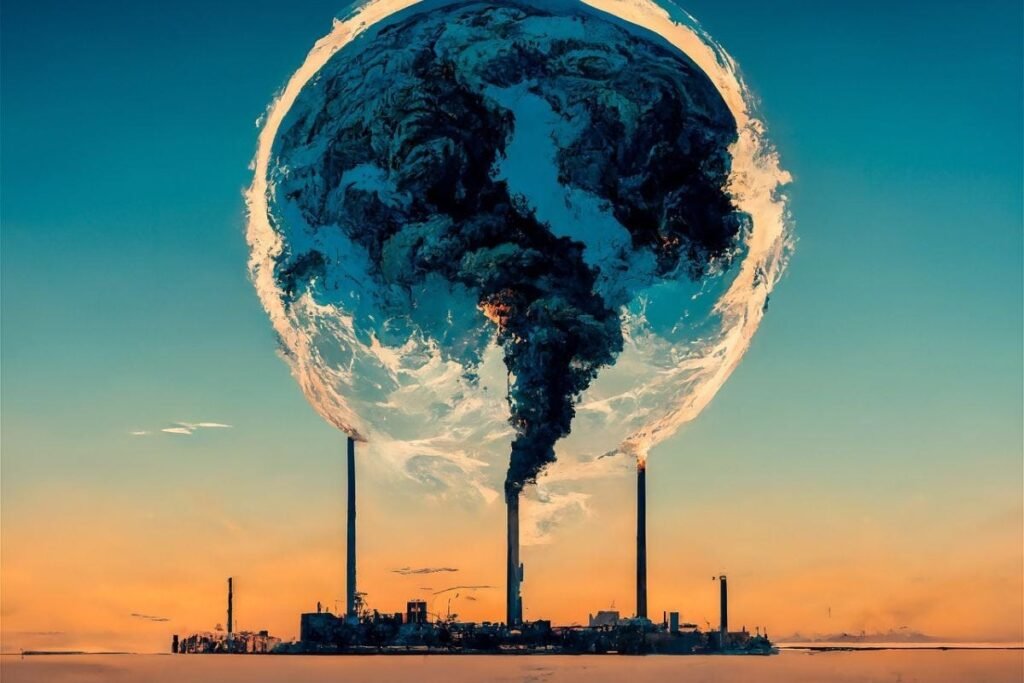
Climate Change as a National Security Threat: The 2025 Guide to a Hotter, More Volatile World
Introduction – Why This Matters
On a sweltering day in July 2023, a senior Pentagon official stood before a congressional committee and delivered a stark warning: “The Department of Defense is not a debating society on climate science. We see the impacts. Our bases are flooding. Our troops are dealing with wildfires and extreme heat. Our potential adversaries are already weaponizing climate change.” This statement reflects a fundamental shift. Climate change is no longer solely an environmental or humanitarian issue; it is now a core, accelerating, and pervasive national security threat, redefining the landscape of global conflict and instability.
In my experience working with coastal communities and military planners, the most dangerous misconception is viewing climate change as a slow-moving, distant concern. What I’ve found is that it acts as a “threat multiplier” and a “conflict accelerant,” taking existing fissures in our global system—poverty, weak governance, ethnic tension—and cracking them wide open. For the curious beginner, understanding this link is key to interpreting headlines about fires, floods, and geopolitical strife. For the security professional, it’s a mandatory recalibration of risk assessment and strategic planning. This guide will explore how rising temperatures, extreme weather, and sea-level rise are driving resource competition, state failure, and human displacement, creating a new paradigm for international security. For foundational knowledge on managing complex global systems under stress, see our related guide on global supply chain management.
Background / Context
The formal recognition of climate change as a security issue is relatively recent but has gained rapid, bipartisan acceptance in defense circles. The catalyst was a series of pivotal reports and events:
- 2007: The CNA Corporation’s Military Advisory Board, comprised of retired U.S. flag officers, published “National Security and the Threat of Climate Change,” concluding that climate change “presents significant national security challenges.”
- 2014: The U.S. Department of Defense’s Quadrennial Defense Review officially labeled climate change a “threat multiplier.”
- 2021: The U.S. National Intelligence Council’s first-ever National Intelligence Estimate on Climate Change stated that “geopolitical tensions are likely to grow as countries increasingly argue about how to accelerate the reductions in net greenhouse gas emissions.”
- 2023: The UN Security Council, after years of debate, passed a resolution recognizing the link between climate change and conflict, highlighting its impact on peacekeeping and conflict prevention.
The context is one of cascading, systemic risk. Climate impacts do not respect borders. A drought in the “breadbasket” of one continent can spike global food prices, sparking unrest in cities half a world away. A cyclone can wipe out a nation’s infrastructure, creating a governance vacuum exploited by armed groups. Melting Arctic ice opens new sea lanes and resource claims, leading to heightened military posturing between great powers. The security challenge is no longer just about responding to a single disaster, but about navigating a world of interconnected, simultaneous, and compounding crises that strain military, diplomatic, and humanitarian resources to their limits.
Key Concepts Defined
- Threat Multiplier: The core concept. Climate change does not necessarily create entirely new conflicts but exacerbates existing drivers of instability—poverty, political tensions, ethnic strife, weak institutions—making conflicts more likely, more severe, and harder to resolve.
- Climate Security: The intersection of climate change impacts with national, regional, and international security. It focuses on how climate-induced stressors can lead to conflict, displacement, and state failure.
- Resource Scarcity & Competition: The struggle over diminishing or increasingly variable essentials like water, arable land, and fisheries. This is a primary pathway from climate stress to conflict, particularly in regions with pre-existing tensions.
- Climate-Fragility Nexus: The point where climate stressors intersect with fragile governance, pushing societies into conflict, collapse, or humanitarian crisis.
- Environmental Migration & Displacement: The movement of people driven, wholly or partially, by climate-related environmental changes (sudden-onset disasters like storms, or slow-onset processes like desertification). Often called “climate refugees,” though they lack formal legal status.
- Arctic Security: The emerging security dynamics in the Arctic due to climate-driven ice melt, including competition over new shipping routes (the Northern Sea Route), access to undersea resources (oil, gas, minerals), and increased military presence.
- Military as a First and Last Responder: The dual role of armed forces in a climate-impacted world: responding to domestic climate disasters (wildfires, floods) and preparing for international missions in climate-fragile states.
- Adaptation as Deterrence: Building climate resilience (in infrastructure, agriculture, water management) is increasingly viewed as a national security imperative to prevent instability and reduce future demands on military resources.
How It Works (Step-by-Step Breakdown): The Pathways from Climate Stress to Conflict

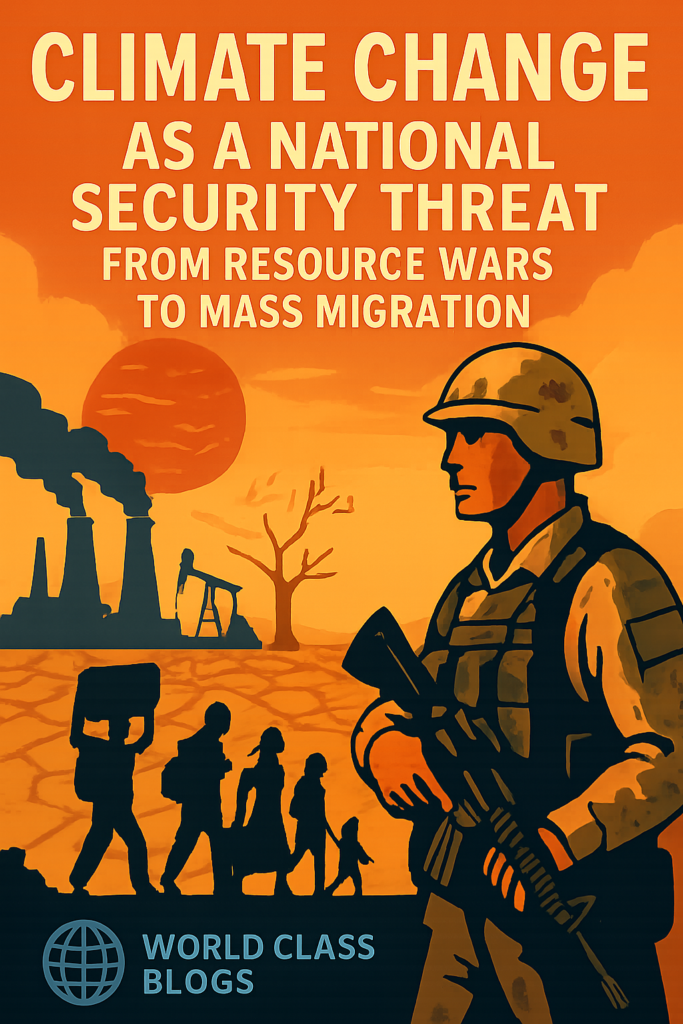
Climate change fuels insecurity through multiple, often interlocking, pathways. Let’s trace one plausible scenario in a fictional, climate-vulnerable region, “The Sahelian Belt.”
Phase 1: The Stressor Intensifies (Years of Build-Up)
- The Trigger: A multi-year, intensified drought linked to changing rainfall patterns. Temperatures in the region are rising at 1.5 times the global average.
- Impact on Livelihoods: Rain-fed agriculture fails. Pastureland for nomadic herders dries up. Groundwater levels drop. Crop yields plummet by 40%, and livestock begin to die.
- Economic Shock: Rural incomes collapse. Food prices in local markets triple. Government revenue from agriculture taxes evaporates.
Phase 2: Societal Pressure and Coping Mechanisms
- Resource Competition: Desperate herders are forced to drive their remaining cattle further south into areas traditionally farmed by settled agricultural communities, following ancient migration routes that are now barren.
- Breakdown of Social Contracts: The central government, weak and corrupt, is unable to provide relief or mediate disputes. Local governance structures are overwhelmed.
- Negative Coping: Young men with no economic prospects become susceptible to recruitment by existing armed groups or criminal networks. Some communities turn to illicit trades (smuggling, banditry) to survive.
Phase 3: Escalation to Violence and Conflict
- Localized Clashes: A violent altercation occurs at a scarce water point between herders and farmers, fueled by historical ethnic tensions. Retaliatory attacks begin.
- Exploitation by Malign Actors: A jihadist insurgent group, already active in the region, exploits the chaos. They provide “security” and food to disaffected communities, frame the conflict in religious or ethnic terms, and recruit heavily from the pool of disillusioned youth.
- State Response & Spillover: The government responds with a heavy-handed military crackdown, often targeting entire ethnic groups associated with the herders. This further alienates the population and fuels support for the insurgency. Refugees flow across borders, destabilizing neighboring countries.
Phase 4: Systemic Regional Instability
- Conflict Lock-In: The conflict becomes self-sustaining, driven now by grievance, profit (from smuggling routes, ransoms), and political power, even if the original drought ends.
- Internationalization: The conflict draws in regional powers and international actors (peacekeepers, foreign militaries, humanitarian agencies). It becomes a protracted, complex humanitarian emergency and a breeding ground for transnational terrorism.
- The New Normal: The region becomes a ” fragility trap,” where climate vulnerability, poverty, and conflict reinforce each other in a vicious cycle, consuming security resources for decades.
This pathway shows how climate acts as the “ignition source” in a tinderbox of pre-existing vulnerabilities. The science is clear: for every 1-degree Celsius increase in temperature, research suggests a 5-10% increase in the risk of intergroup conflict in fragile regions.
Why It’s Important: Redefining the Battlefield
Climate security matters because it fundamentally alters the calculus of global power, defense planning, and human safety.
- Strategic Resource Competition: Climate change is redrawing the geopolitical map. The Arctic is the clearest example: as ice recedes, the U.S., Russia, Canada, and others are vying for control of shipping lanes and an estimated $1 trillion in untapped resources. In the South China Sea, concerns over fishing stocks (depleted by warming waters and overfishing) add another layer of tension to territorial disputes. Control over transboundary water sources (the Nile, Mekong, Indus rivers) is becoming an increasingly potent source of diplomatic and potentially military friction.
- The Burden on Military Forces: Armed forces are on the front lines of climate impacts. Domestically, they are increasingly called upon for disaster response (e.g., the U.S. National Guard fighting wildfires and floods). This strains training and readiness for core warfighting missions. Internationally, climate-driven instability creates more demand for peacekeeping, humanitarian assistance, and stabilization missions in challenging environments.
- Vulnerability of Military Infrastructure: A 2024 Pentagon report detailed that dozens of key U.S. military bases are at high risk from sea-level rise, recurrent flooding, and wildfires. Norfolk Naval Station, the world’s largest naval base, is acutely vulnerable. Hardening or relocating these multi-billion-dollar assets is a massive, costly undertaking.
- Mass Displacement as a Strategic Shock: The World Bank estimates that by 2050, over 216 million people could be forced to move within their own countries due to climate impacts. Cross-border migration will add to this. Such large-scale, unmanaged movements can destabilize transit and destination countries, fuel xenophobia, and be exploited by extremist groups. This represents a human security crisis with profound geopolitical ramifications.
- The Mental Health Toll on Forces: Deploying soldiers to increasingly chaotic disaster zones and conflict areas exacerbated by climate stress takes a significant psychological toll, an aspect of wellbeing explored in our partner’s guide to mental health in the modern world.
Sustainability in the Future: Building Climate-Resilient Security

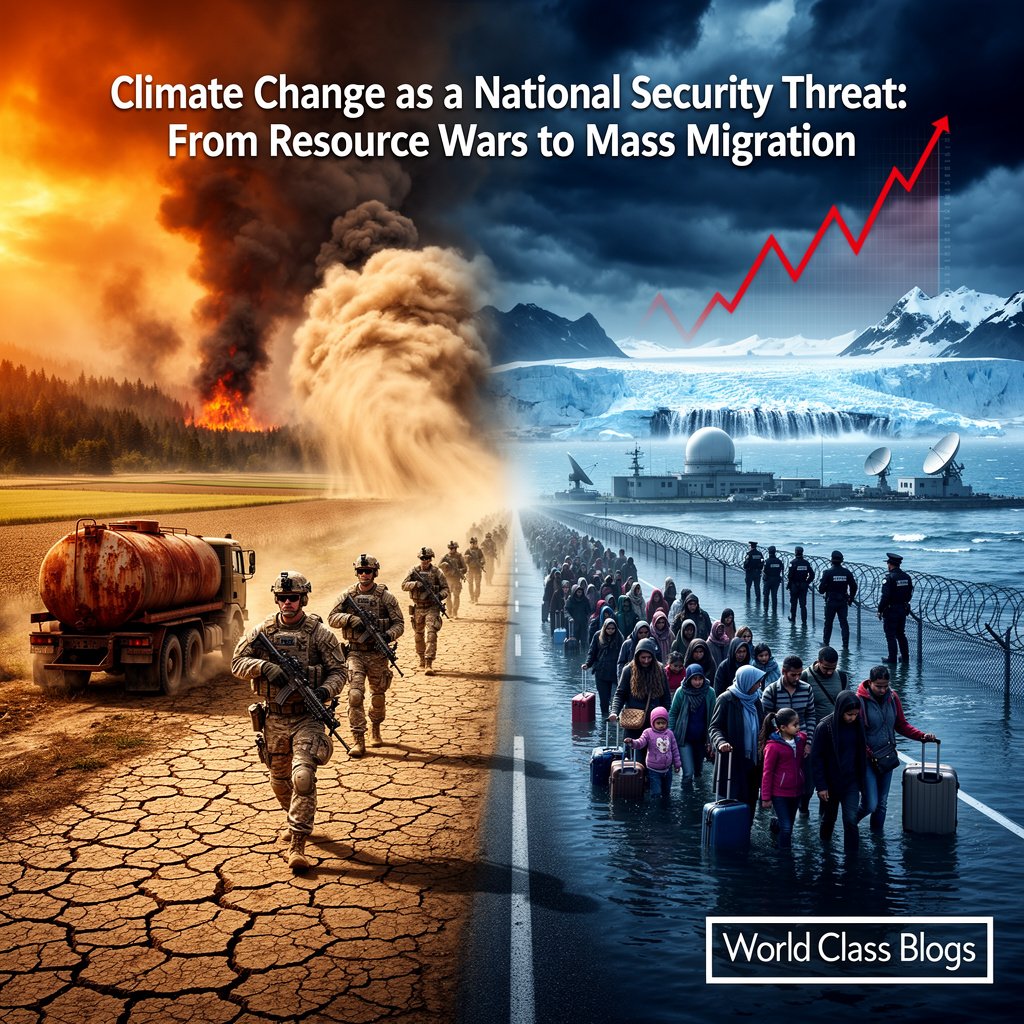
The future of international security depends on successfully integrating climate action into defense and foreign policy. This requires a shift from reactive response to proactive resilience-building.
- Mainstreaming Climate into Security Planning: This means climate risk assessments are as standard in military wargames and intelligence estimates as assessments of enemy order of battle. The U.S. military now requires installation commanders to develop climate adaptation plans. NATO has a Climate Change and Security Action Plan.
- Investing in Climate-Resilient Infrastructure: This applies to both military bases and civilian critical infrastructure (ports, energy grids, water systems). Resilience is a force multiplier, ensuring continuity of operations and reducing recovery costs.
- Greening the Defense Sector: While militaries are major carbon emitters, there is a growing operational and strategic drive for energy innovation. Renewable microgrids on bases provide energy security. Electric or hybrid tactical vehicles reduce vulnerable fuel convoys. This isn’t just about being “green”; it’s about increasing operational effectiveness and reducing logistical tails.
- Cooperative Security for Shared Risks: Many climate security challenges are transboundary. This creates an imperative for cooperation, even among rivals. Examples include:
- Search and Rescue agreements in the Arctic.
- Joint management of transboundary river basins.
- Early warning systems for extreme weather.
- Addressing the Legal Gap for “Climate Refugees”: The 1951 Refugee Convention does not recognize climate as a ground for asylum. Developing new international frameworks for protection and orderly migration is a critical, if politically fraught, long-term security and humanitarian necessity.
Common Misconceptions
- Misconception 1: “Climate change will cause direct ‘climate wars’ between countries.”
- Reality: It is highly unlikely we will see a “water war” where Country A bombs Country B over a dam. The link is more indirect and insidious. Climate stress creates the conditions—scarcity, displacement, state weakness—that make existing conflicts worse and make new conflicts more likely to ignite, often within states or between non-state groups.
- Misconception 2: “It’s only a problem for poor, tropical countries.”
- Reality: While the most acute impacts are felt in the Global South, the security consequences are global. Instability drives migration to Europe and North America. Disrupted supply chains affect all economies. Great power competition intensifies in the Arctic and maritime domains. No nation is immune to the systemic ripple effects.
- Misconception 3: “The military should stick to fighting wars, not worry about the environment.”
- Reality: This is a fundamental misunderstanding of modern military responsibility. Mission success depends on secure bases, predictable operating environments, and stable allies. Climate change directly threatens all three. Preparing for climate impacts is force protection and mission assurance.
- Misconception 4: “It’s too slow to be a security priority.”
- Reality: The impacts are happening now and are accelerating. The 2020-2023 Horn of Africa drought, the worst in 40 years, pushed millions to the brink of famine and fueled recruitment by Al-Shabaab. The 2022 Pakistan floods, which submerged a third of the country, were a profound national security shock. The pace is now defined by “compound events”—multiple disasters striking in quick succession, leaving no time for recovery.
Recent Developments (2024-2025)
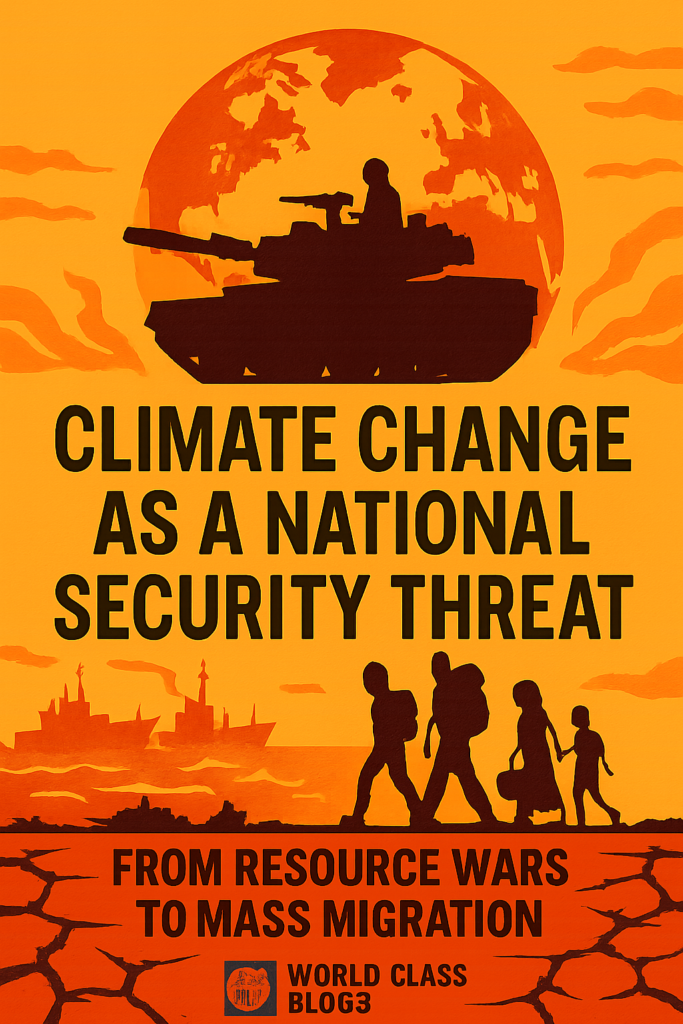
- The “Loss and Damage” Fund and Security: The operationalization of the UN’s Loss and Damage Fund (to help vulnerable countries cope with climate impacts) has direct security implications. If funded effectively, it could be a critical tool for building resilience and preventing conflict in fragile states. If it fails, it will be seen as a profound injustice, fueling resentment and instability.
- Climate Intelligence (“CLINT”) Goes Mainstream: Intelligence agencies are now producing dedicated climate security assessments. In 2024, the U.S. Office of the Director of National Intelligence (ODNI) highlighted specific “countries of concern” where climate and fragility intersect, such as Afghanistan, Guatemala, Haiti, and several West African states, warning of near-term risks of state failure or mass migration.
- The EU’s “Climate-Defense Nexus” Strategy: The European Union is explicitly linking its climate finance (the Green Deal) with its security and defense policy. Initiatives are emerging to help partner countries build climate-resilient infrastructure (like water treatment plants) in conflict-prone areas as a form of conflict prevention.
- The Militarization of the “Blue Economy”: As fish stocks migrate to cooler waters due to warming oceans, disputes over exclusive economic zones (EEZs) are intensifying. This is leading to increased coast guard and naval deployments in regions like the West African coast and the Western Pacific, where ” illegal, unreported, and unregulated (IUU) fishing” is both an environmental and a security crisis.
- AI for Climate Security Forecasting: Governments and research institutes are using artificial intelligence to model complex climate-fragility pathways. These models try to predict which districts are most likely to experience conflict following a crop failure, allowing for targeted early intervention. For more on the enabling technology, see our section on AI and Machine Learning.
Success Stories (If Applicable)
- Jordan’s Water Security Diplomacy: In one of the world’s most water-scarce countries, Jordan has made water security a cornerstone of its national defense strategy. It has invested heavily in high-efficiency irrigation, wastewater reuse, and desalination projects. Crucially, it has used diplomacy to secure water-sharing agreements with neighbors like Israel, turning a potential source of conflict into a rare area of regional cooperation. This proactive adaptation is a model of climate resilience as national security.
- The U.S. Army’s Net-Zero Initiative: At installations like Fort Carson, Colorado, the Army has implemented ambitious “net-zero” programs for water, waste, and energy. These are not merely environmental projects; they enhance security. On-site renewable energy and water recycling make the base less dependent on vulnerable civilian grids, a critical lesson in self-sufficiency that can be applied to forward operating bases abroad.
Real-Life Examples
- Case Study: The Syrian Civil War (2011-Present)
- The Climate Link: While not the sole cause, a severe drought from 2006-2010, described by NASA as the worst in 900 years, played a crucial role as a threat multiplier. It devastated Syria’s agricultural heartland, displacing up to 1.5 million rural residents to cities already struggling with poverty, poor governance, and an influx of Iraqi refugees. This created a tinderbox of social and economic grievance that helped fuel the initial 2011 uprising.
- The Lesson: It stands as a canonical example of how climate stress can interact with poor governance, demographic pressure, and political repression to trigger catastrophic conflict. It showed the international security community that climate impacts could help collapse a state in a strategically vital region.
- Case Study: The Lake Chad Basin Crisis
- What Happened: Lake Chad, a vital water source for over 30 million people in Nigeria, Niger, Chad, and Cameroon, has shrunk by 90% since the 1960s due to climate change and overuse. This collapse of livelihoods for farmers and fishermen created a vast pool of unemployed, disillusioned youth in an area with weak state presence.
- The Exploitation: The jihadist group Boko Haram explicitly exploited this ecological and economic desperation, offering alternative livelihoods and framing their struggle in terms of justice for the poor. The climate-induced fragility of the region provided the perfect recruitment ground and operating environment for a brutal insurgency that has killed tens of thousands and displaced millions.
- The Lesson: It demonstrates the direct operational exploitation of climate vulnerability by terrorist organizations. Counter-terrorism strategies that ignore the underlying environmental drivers are doomed to fail.
Conclusion and Key Takeaways
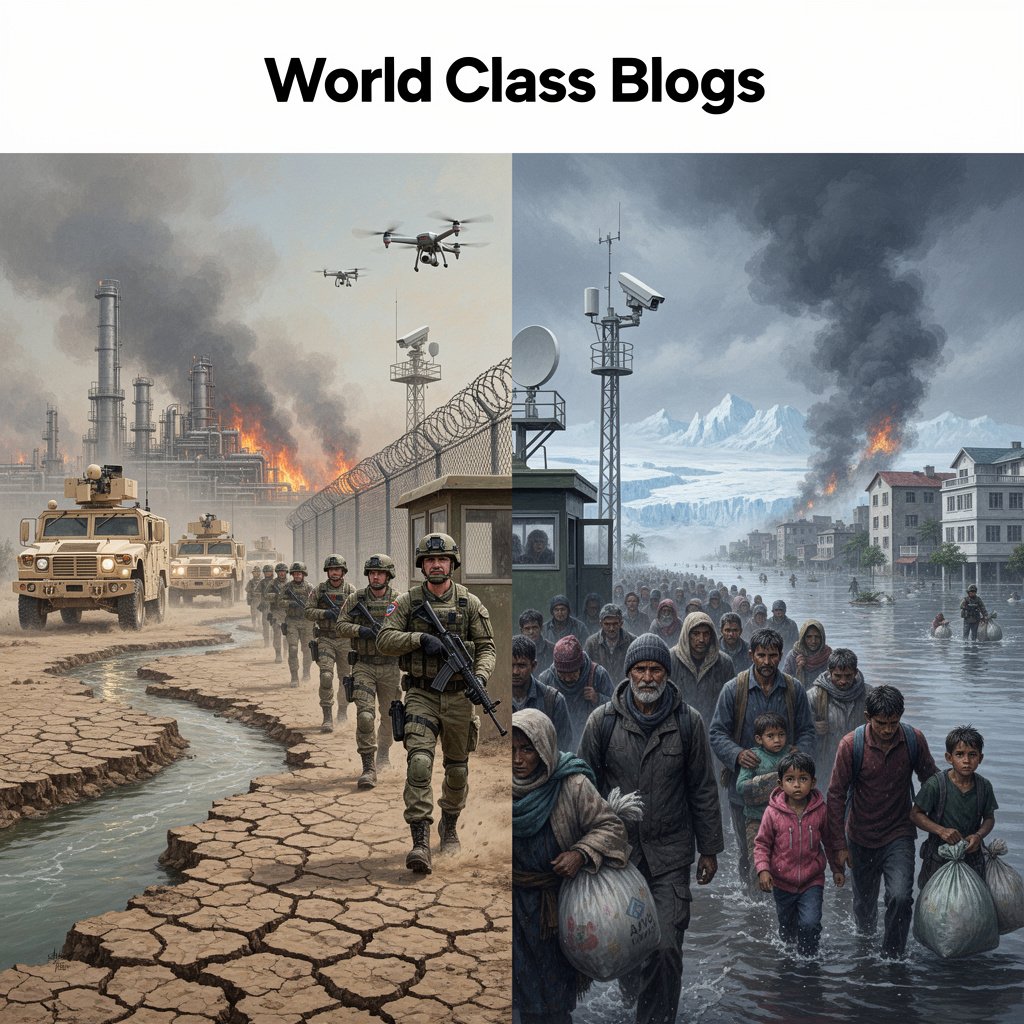
Climate change is the ultimate systemic risk, weaving itself into the fabric of global security. It is not a separate issue to be dealt with by environmental ministries alone; it is a central variable in the equation of peace and conflict in the 21st century. The security community’s task is to manage the unavoidable impacts and prevent the unmanageable ones through resilience and cooperation.
Key Takeaways:
- Climate Change is a “Threat Multiplier.” Its greatest danger is its ability to intensify existing drivers of conflict—resource scarcity, poverty, weak governance—pushing fragile societies over the edge.
- The Battlefield is Expanding. Security planning must now encompass melting ice caps, rising seas, drought-stricken farmlands, and storm-battered coastlines, as well as the human displacement and instability they cause.
- Resilience is National Defense. Building climate-resilient infrastructure, economies, and societies is not a “soft” issue; it is a core strategic imperative to reduce vulnerability and prevent future conflicts that would demand military intervention.
- The Military Has a Dual Role. It must adapt its own infrastructure and operations to a changing climate while preparing for increased demand in both disaster response and stability operations in climate-fragile regions.
- International Cooperation is a Strategic Necessity. Many climate security challenges—managing shared rivers, Arctic governance, disaster response—cannot be solved unilaterally. Building cooperative frameworks, even with competitors, is essential for managing shared risks.
The choices made today on emissions reduction and adaptation investment will directly shape the security landscape for decades to come. Ignoring the climate-security nexus is a gamble no responsible nation can afford to take.
FAQs (Frequently Asked Questions)
Q1: Is there a scientific consensus linking climate change to specific conflicts?
A: Yes, but with nuance. Climate scientists and political scientists use statistical models to show strong correlations. For example, studies show a significant increase in the risk of conflict in ethnically fractionalized societies following extreme temperature deviations or droughts. While it’s rarely the sole cause (politics is always key), the evidence that it is a major contributing factor is overwhelming.
Q2: What are “climate refugees,” and are they protected by law?
A: The term “climate refugee” is widely used but has no legal standing. The 1951 Refugee Convention protects those fleeing persecution, not environmental change. People displaced by climate impacts are often referred to as “climate-displaced persons” and have limited legal protections. Creating new frameworks is a major international challenge.
Q3: How does climate change affect terrorism?
A: It creates enabling environments. By destroying livelihoods and weakening state authority in already marginal regions, climate change creates pools of recruits and ungoverned spaces where terrorist groups can operate, recruit, and control resources (like water points and smuggling routes).
Q4: What is the single biggest climate security threat to the United States?
A: Most assessments point to cascading systemic failures. Not one event, but a combination: extreme weather damaging critical infrastructure (like the Texas 2021 grid failure), concurrent disasters straining FEMA and the military, supply chain disruptions impacting defense manufacturing, and climate-driven instability in key allied or partner regions requiring U.S. intervention.
Q5: How is China approaching climate security?
A: With a strong domestic focus on securing resources. China is deeply concerned about the impact of climate change on its own food and water security, which drives its overseas agricultural investments (the “land grab”). It is also actively pursuing Arctic interests and building a “blue water” navy, partly to secure sea lanes and fishing grounds affected by climate change.
Q6: Can the green energy transition itself cause conflict?
A: Yes, the transition creates new security dynamics—”green conflicts.” Competition for critical minerals (lithium, cobalt, rare earths) needed for batteries and renewables could lead to new dependencies and instability in producer countries (like the Democratic Republic of Congo). Ensuring a just and secure transition is a key challenge.
Q7: What is “climate-proofing” peacekeeping?
A: It involves training peacekeepers to understand climate-fragility links, equipping missions to operate in more extreme environments (e.g., with water purification units in drought zones), and mandating missions to help build climate resilience in host communities as part of their stability operations.
Q8: How does climate change affect naval strategy?
A: Profoundly. Sea-level rise threatens naval bases. Changing ocean conditions affect operations. Opening Arctic routes requires new ice-capable vessels and changes global trade patterns. Ocean acidification and warming can damage sonar performance and affect marine life used in certain types of naval sensing.
Q9: Are there “winners” in climate change from a security perspective?
A: In a highly relative and risky sense, some countries may see short-term tactical advantages. Russia may benefit from an ice-free Arctic for resources and shipping. Canada may see longer growing seasons. However, these are dwarfed by the systemic global instability that would accompany such changes, which would ultimately harm all nations. There are no true winners in a globally destabilized system.
Q10: What role do insurance companies play in climate security?
A: A critical one. As insurers withdraw from climate-vulnerable areas (refusing to cover homes in wildfire or flood zones), it can trigger economic collapse and social unrest. The insurance industry’s risk models are a leading indicator of future climate security hotspots. Public-private partnerships on climate risk are essential.
Q11: What is “food security” as a defense issue?
A: It’s a foundational element of national stability. Climate change disrupts global food production through droughts, heatwaves, and pests. Spikes in global food prices (as seen after the Russia-Ukraine war) have historically sparked riots and revolutions (e.g., the Arab Spring). Securing food supply chains is a matter of internal security.
Q12: How does urbanisation factor into climate security risks?
A: Most of the world’s population now lives in cities, many of which are coastal. Climate-driven migration from rural areas strains urban services. Coastal cities are vulnerable to sea-level rise and storm surges. The combination of dense populations, inadequate infrastructure, and climate stress is a recipe for urban unrest and humanitarian crisis.
Q13: What is “environmental peacebuilding”?
A: The flip side of the coin. It involves using cooperation on shared environmental challenges (managing a river, protecting a forest) as a means to build trust and dialogue between conflicting parties. It’s a tool for turning a potential source of conflict into a platform for peace.
Q14: How does climate change affect nuclear security?
A: It threatens the physical security of nuclear facilities. Coastal nuclear plants are at risk from sea-level rise and stronger storms. Inland plants face water shortages for cooling. More frequent extreme weather can disrupt command and control systems and increase the risk of accidents.
Q15: What is the DoD’s “Climate Assessment Tool”?
A: A modeling tool used by the U.S. military to assess the vulnerability of its global installations to climate hazards over the next 20 years. It helps prioritize funding for resilience projects and informs strategic basing decisions.
Q16: Can climate interventions (geoengineering) create security risks?
A: Absolutely. Techniques like Solar Radiation Management (injecting particles into the atmosphere to cool the planet) could have unequal regional effects, potentially benefiting some countries while harming others (e.g., disrupting monsoons). This could lead to accusations of “climate warfare” and severe international conflict. Governance of such technologies is a looming security challenge.
Q17: How does climate affect the mental health and readiness of military personnel?
A: Deploying to increasingly intense disaster zones takes a toll. Operating in extreme heat reduces physical performance and increases heat-related illnesses. Long-term, anxiety about climate impacts on families and homes (especially for personnel from vulnerable areas) can affect morale and retention.
Q18: What is the “water-energy-food nexus”?
A: The deep interconnection between these three critical sectors. It takes water to produce energy (for cooling power plants) and food (for irrigation). It takes energy to pump and treat water and to produce and transport food. Climate stress on one (e.g., a drought) cascades through all three, creating complex, systemic vulnerabilities that are a security concern.
Q19: How are militaries reducing their own carbon footprints?
A: Driven by operational necessity as much as policy. Examples include: the U.S. Navy’s “Great Green Fleet” initiative using biofuels, the use of solar panels at forward operating bases to reduce dangerous fuel resupply convoys, and research into synthetic fuels for aviation. Efficiency equals tactical advantage.
Q20: What is “climate intelligence” (CLINT)?
A: A sub-field of intelligence analysis focused on forecasting how climate impacts will affect political stability, economic output, and social cohesion in specific countries or regions. It blends climate science data with political and economic analysis.
Q21: How does permafrost melt pose a security threat?
A: In the Arctic, thawing permafrost is damaging critical infrastructure (runways, radars, buildings) on Russian and North American military sites. It also risks releasing ancient pathogens and methane, a potent greenhouse gas, further accelerating warming—a dangerous feedback loop.
Q22: Is there a link between climate change and pandemics?
A: Yes, an emerging one. Climate change alters the habitats of animals and insects, changing the distribution of zoonotic diseases (like Lyme and malaria). Deforestation driven by climate stress brings humans into closer contact with wildlife, increasing spillover risk. Future pandemics could originate in climate-disrupted ecosystems, creating a catastrophic convergence of health and security crises.
Q23: How can businesses contribute to climate security?
A: By building resilient supply chains, investing in climate adaptation in their operating regions, and supporting stable governance. A stable operating environment is good for business and security. For strategies, resources like those from Shera Kat Network on building successful alliances can be valuable.
Q24: What is the role of the UN Security Council on climate security?
A: It is a contested arena. Many states (like small island nations) want the Council to treat climate change as a formal threat to international peace and security, which could trigger sanctions or peacekeeping mandates. Permanent members are divided, with Russia and China often resisting, viewing it as an encroachment on national sovereignty.
Q25: Where can I find reliable data on climate security risks?
A: Key sources include: The ICG’s Climate Security Risk Index, The EU’s Global Climate Change and Security Dashboard, The Woodrow Wilson Center’s Environmental Change and Security Program, and reports from the International Military Council on Climate and Security (IMCCS).
About Author
Sana Ullah Kakar is a geopolitical risk analyst specializing in climate security and resource conflict. With field research experience in climate-vulnerable regions from the Sahel to Southeast Asia, they have advised international organizations and private sector clients on navigating the intersection of environmental change and political instability. They believe that the next generation of security leaders will be defined by their ability to think in systems and build resilience. This work is part of World Class Blogs’ mission to provide authoritative guides on pressing global issues. Discover our wider perspective on our About Us page.
Free Resources
- The International Military Council on Climate and Security (IMCCS): A network of senior military leaders advocating for climate action as security policy.
- Center for Climate and Security (CCS): A think tank with excellent primers and policy briefs.
- The World Bank’s “Groundswell” Reports: The definitive modeling on internal climate migration.
- IPCC Reports (Working Group II on Impacts): The scientific foundation for understanding physical climate risks.
- “The Great Displacement” by Jake Bittle: A powerful book chronicling climate migration in the United States.
- For insights on building the resilient and adaptive organizational models needed to face these systemic challenges, explore this guide on starting an online business in 2026.
Discussion
The adaptation dilemma: Should wealthy nations’ climate security strategies focus primarily on “fortressing” their own borders and bases against climate impacts, or on massively investing in resilience-building in the most vulnerable countries to prevent instability at its source? What is the right balance between self-protection and cooperative security? We welcome your reasoned debate. For more thought-provoking discussions, visit our main blogs hub. To contribute your expertise, feel free to contact us.


