


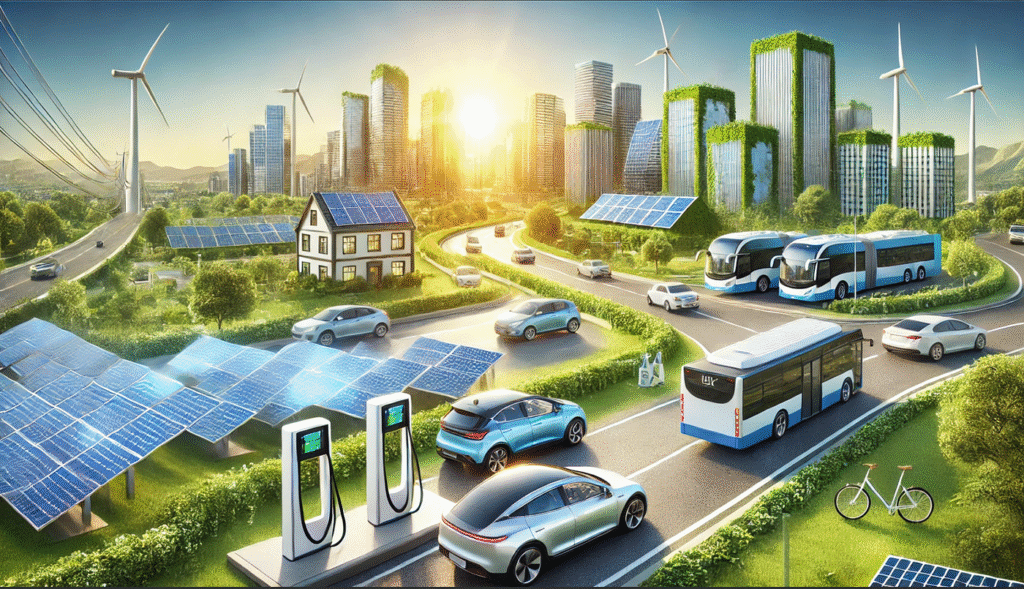
Introduction: The Quiet Disruption on Our Highways
The internal combustion engine (ICE) has dominated personal transportation for over a century, shaping our cities, our economies, and our global environment. But a profound and silent revolution is now underway, challenging this long-standing reign. Electric Vehicle Technology is no longer a distant promise or a niche curiosity; it is a mainstream, rapidly accelerating force that represents the most significant transformation in the automotive industry since its inception. This shift is not merely about swapping a gasoline tank for a battery pack; it’s a fundamental reimagining of the automobile as a sophisticated, software-driven, and connected electronic device. For anyone interested in the cutting edge of gadget and consumer tech, the modern EV is arguably the most complex and impactful consumer product one can own. This guide will provide a deep, comprehensive exploration of EV technology, cutting through the hype to examine the real-world implications for your wallet, your driving experience, and the planet.
Background/Context: From Humble Beginnings to Mainstream Momentum
The story of electric vehicles is one of false starts and a dramatic, recent resurgence.
- The Early Era (19th Century): Believe it or not, electric vehicles were among the earliest automobiles. In the late 1800s and early 1900s, they were quiet, easy to start, and popular in cities. However, their short range and the mass production of the affordable gasoline-powered Model T led to their decline.
- The False Dawn (1990s-2000s): Concerns about air pollution and regulations like California’s Zero-Emission Vehicle (ZEV) mandate spurred a brief revival, most famously with the GM EV1. While technologically innovative, these cars were ultimately doomed by limited range, weak industry commitment, and political headwinds. Most were famously recalled and crushed.
- The Modern Catalyst: Tesla (2008-Present): The pivotal moment came with the launch of the Tesla Roadster in 2008. Tesla’s masterstroke was not just building an electric car, but building a desirable one. They proved that an EV could be high-performance, stylish, and have a usable range. By focusing on a premium market first, they changed public perception and forced the entire auto industry to take notice.
- The Global Tipping Point (2020-Present): We are now in the era of mass adoption. Driven by falling battery costs, stringent global emissions regulations, and a wave of compelling new models from legacy automakers (Volkswagen, Ford, Hyundai/Kia) and new entrants (Rivian, Lucid), EV sales are growing exponentially. Governments worldwide are setting end dates for ICE vehicle sales, signaling an irreversible transition.
Key Concepts Defined: The EV Lexicon
To understand the EV landscape, it’s essential to master its terminology.
- Battery Electric Vehicle (BEV): A vehicle powered exclusively by a large battery pack and an electric motor. It has no gasoline engine and must be plugged in to recharge. Examples: Tesla Model Y, Ford Mustang Mach-E, Hyundai Ioniq 5.
- Plug-in Hybrid Electric Vehicle (PHEV): A vehicle that combines a smaller battery pack and electric motor with a gasoline engine. It can be plugged in to drive a limited distance on electricity alone (typically 20-50 miles) before the gas engine engages. Example: Toyota RAV4 Prime.
- Lithium-Ion Battery: The rechargeable battery technology that powers virtually all modern EVs. Its high energy density, power output, and falling cost have made the current EV revolution possible.
- Kilowatt-hour (kWh): The unit of energy used to measure EV battery capacity. Think of it as the “size of the fuel tank.” A larger kWh rating generally means a longer driving range.
- Range Anxiety: The fear that an EV’s battery will deplete before reaching its destination or a charging station. This is the primary psychological barrier for new EV buyers, though it is diminishing as ranges increase and charging networks expand.
- Regenerative Braking: A key efficiency feature that captures kinetic energy during deceleration and braking, converting it back into electricity to recharge the battery. This can significantly extend range, especially in city driving.
- DC Fast Charging (DCFC): High-powered charging, typically found at public stations, that can charge an EV battery from 10% to 80% in 20-45 minutes, depending on the vehicle and charger power level.
How It Works: The Anatomy of an Electric Drivetrain (A Step-by-Step Breakdown)

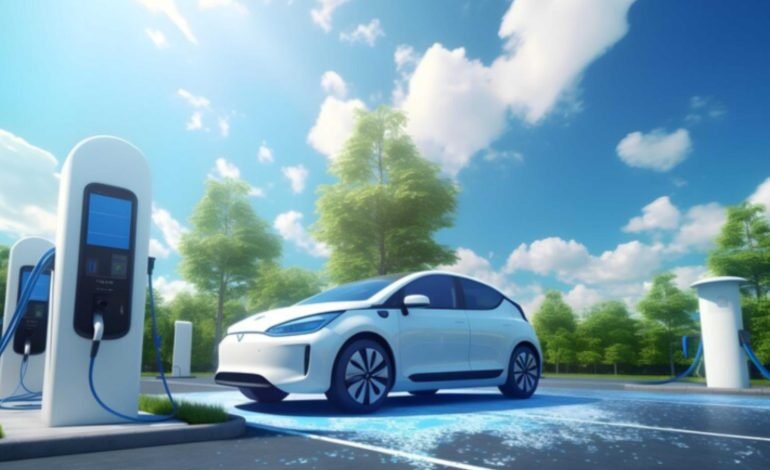
The simplicity of an EV’s drivetrain is its greatest engineering advantage over a conventional car.
- Energy Storage – The Battery Pack: The process begins with the massive lithium-ion battery pack, usually located under the floor of the vehicle. This pack is not a single battery but thousands of individual battery cells grouped into modules. A sophisticated Battery Management System (BMS) constantly monitors and balances the health, temperature, and state of charge of every cell to ensure safety, performance, and longevity.
- Power Conversion – The Inverter: The battery stores electricity as Direct Current (DC). However, the electric motor runs on Alternating Current (AC). The inverter’s job is to convert the DC power from the battery into AC power for the motor. Crucially, it also controls the frequency of the AC power, which dictates the motor’s speed, and the power’s amplitude, which controls the motor’s torque. This is how the “gas pedal” precisely controls your speed.
- Propulsion – The Electric Motor: The AC power from the inverter is sent to the electric motor. Here, electromagnetic forces create rotational motion. Electric motors are incredibly efficient (over 85-90% compared to ~35% for ICE), provide instant torque for rapid acceleration, and have far fewer moving parts than an internal combustion engine, leading to reduced maintenance.
- Energy Recapture – Regenerative Braking: When you lift your foot off the accelerator or press the brake pedal, the motor temporarily operates in reverse, acting as a generator. It converts the vehicle’s moving energy (kinetic energy) back into electrical energy, which is sent back to the battery. This creates a noticeable slowing effect, often allowing for “one-pedal driving” where the brake pedal is rarely used.
- Recharging – The Onboard Charger: When you plug in your EV, the AC power from your home or a public Level 2 charger goes to the onboard charger. This device converts the AC power back into DC power to be stored in the battery. The speed of AC charging is limited by the power of this onboard charger (typically 7-11 kW). DC Fast Chargers bypass the onboard charger by supplying DC power directly to the battery, enabling much faster charging.
Why It’s Important: The Multifaceted Case for Electrification
The transition to electric vehicles is critical for a confluence of economic, environmental, and technological reasons.
- Environmental Imperative: The transportation sector is a leading source of air pollution and greenhouse gas emissions. While EV manufacturing has a carbon footprint, over its entire lifecycle—from manufacturing to charging to disposal—a typical EV is responsible for significantly lower emissions than a comparable gasoline car, especially as electricity grids become cleaner with more renewables. This shift is a cornerstone of global climate strategy.
- Economic and Performance Benefits:
- Lower Fueling Costs: Electricity is cheaper than gasoline per mile driven. Charging at home overnight can cost the equivalent of $1-$2 per gallon of gasoline.
- Reduced Maintenance: No oil changes, spark plugs, timing belts, or exhaust systems. Brakes last longer due to regenerative braking. This can save owners thousands of dollars over the life of the vehicle.
- Performance: Instant torque delivers breathtaking acceleration. The low center of gravity from the floor-mounted battery improves handling and stability.
- Energy Security and Diversification: Shifting from oil to electricity diversifies a nation’s energy portfolio, reducing dependence on geopolitically volatile fossil fuel markets. It also allows for the use of domestically produced energy sources like solar, wind, and nuclear.
- Integration with the Clean Energy Grid: EVs can act as mobile energy storage units. Future “Vehicle-to-Grid” (V2G) technology will allow EVs to send power back to the grid during peak demand, stabilizing the network and allowing homeowners to power their houses during an outage. This transforms the car from an energy consumer to a proactive part of the energy ecosystem, a complex interplay not unlike optimizing a global supply chain management system for energy.
Common Misconceptions and Observations
Despite growing popularity, several persistent myths cloud the public’s perception of EVs.
- Misconception: “EVs are just as bad for the environment when you consider battery manufacturing and electricity from coal.”
Reality: Numerous lifecycle analyses have debunked this. Even when charged on a grid with a high coal mix, an EV’s total emissions are typically lower than a gasoline car. As the grid gets cleaner, the EV’s advantage grows exponentially. Furthermore, EV batteries are highly recyclable, and a robust recycling industry is developing. - Observation: “The power grid can’t handle everyone charging an EV.”
Reality: While upgrades are needed, the grid has significant capacity, especially at night when demand is low and most EV charging occurs. Smart charging, which incentivizes off-peak charging, will be key to managing the load effectively. The transition will be gradual, allowing utilities time to adapt. - Misconception: “EV batteries only last a few years and are too expensive to replace.”
Reality: Modern EV batteries are designed to last the life of the car, typically 15-20 years or 100,000-200,000 miles. Most manufacturers offer 8-year/100,000-mile warranties on their battery packs. Data from older Teslas and Nissan Leafs show minimal degradation over a decade of use. - Observation: “There aren’t enough charging stations for long trips.”
Reality: This is the most valid concern, but the landscape is changing rapidly. Massive investments from governments (Biden’s NEVI program) and private companies (Tesla Supercharger network, Electrify America) are rapidly filling in charging corridors. For the 90% of charging done at home, this is a non-issue. - Misconception: “EVs are not safe; their batteries can catch fire.”
Reality: All cars carry energy and carry fire risk. EV batteries are housed in heavily armored enclosures and include complex safety systems. Data shows that EVs are actually less likely to catch fire than gasoline vehicles. When fires do occur, they are often more publicized.
Recent Developments and Success Stories
The EV market is a hotbed of innovation and fierce competition.
The Tesla Phenomenon and its Supercharger Network: Tesla’s success is a masterclass in vertical integration. They control the hardware, software, and, crucially, the charging infrastructure. The reliability and ubiquity of the Tesla Supercharger network have been a key competitive advantage, directly addressing range anxiety. Their recent decision to open this network to other EV brands (using a Magic Dock adapter or native NACS port) is a game-changer for the entire industry.
The Hyundai/Kia E-GMP Platform Success: Hyundai Motor Group has emerged as a formidable competitor with its dedicated Electric-Global Modular Platform (E-GMP). Vehicles like the Hyundai Ioniq 5, Kia EV6, and Genesis GV60 have won universal acclaim for their innovative design, ultra-fast 800-volt charging architecture (allowing some of the fastest charging speeds on the market), and excellent performance. This demonstrates how a ground-up, dedicated EV platform can outperform vehicles adapted from gasoline counterparts.
The Ford F-150 Lightning: Perhaps the most symbolic victory for EVs has been the success of the Ford F-150 Lightning. By electrifying America’s best-selling vehicle for decades, Ford sent a powerful message that EVs are ready for the mainstream, for work, and for tradition. Its ability to power a worksite or a home during an outage (“vehicle-to-load”) showcases a practical utility beyond mere transportation.
Case Study: Tesla’s Gigafactory – A Lesson in Vertical Integration and Scale

Tesla’s Gigafactories are not just car plants; they are the engine of its entire business model and a key reason it has maintained a lead.
- The Problem: In the early 2010s, the global supply of lithium-ion batteries was limited and expensive, controlled by a few large suppliers like Panasonic and LG Chem. This was the single biggest bottleneck to producing affordable, high-volume EVs.
- The Strategy – Vertical Integration: Instead of relying solely on suppliers, Tesla took a radical step. It partnered with Panasonic to build its own massive battery factories, dubbed “Gigafactories.” The first, Gigafactory Nevada, is one of the largest buildings in the world by footprint.
- The Execution and Benefits:
- Economies of Scale: By producing batteries at an unprecedented scale, Tesla drove down the cost per kilowatt-hour—the most critical metric for EV affordability.
- Supply Chain Control: It secured its supply of the most important component, insulating itself from market shortages and price spikes.
- Innovation: Co-locating battery production with vehicle design allowed for continuous innovation, such as the structural battery pack in the Model Y, where the battery pack is integrated into the car’s chassis for better rigidity and weight savings.
- Lesson Learned: Tesla demonstrated that to disrupt a century-old industry, you sometimes need to build a new industrial base from the ground up. This level of vertical integration and scale is a powerful strategy for dominating a new market, a principle that can be studied in the context of complex ecommerce business setup and logistics.
Real-Life Examples and Sustainable Approaches for the Future
The EV revolution is being lived by millions of drivers every day.
- Real-Life Use Cases:
- The Suburban Commuter: Charges their Chevrolet Bolt overnight in their garage for a few dollars, covering their 50-mile daily commute for a fraction of the cost of gasoline, and never visits a gas station.
- The Tech-Savvy Family: Uses their Tesla Model Y’s built-in navigation to plan a road trip, which automatically routes them through Supercharger stations, pre-conditioning the battery at each stop for optimal charging speed.
- The Fleet Manager: A company transitioning its delivery vans to electric (like the BrightDrop Zevo 600) to significantly reduce fuel and maintenance costs, improving their bottom line and meeting corporate sustainability goals.
- Sustainable Approaches for the Future:
- Battery Recycling and Second-Life Applications: Establishing a circular economy for EV batteries is paramount. Companies like Redwood Materials, founded by a Tesla co-founder, are developing processes to recycle over 95% of battery materials. Before recycling, used EV batteries with reduced capacity can get a “second life” as stationary storage for solar energy or for grid backup.
- Green Charging Infrastructure: The environmental benefit of EVs is maximized when charged with renewable energy. Incentivizing home solar + storage and building solar canopies over public charging lots are critical steps.
- Supply Chain Ethics and Transparency: Sourcing materials like lithium, cobalt, and nickel responsibly is a major challenge. Manufacturers must invest in traceable, ethical supply chains and develop battery chemistries that reduce or eliminate conflict minerals.
- Smart Grid Integration: Widescale adoption of smart charging and V2G technology will be essential to turn the millions of EVs on the road from a grid burden into a grid asset, smoothing demand peaks and supporting renewable integration.
- Design for Disassembly: EVs should be designed from the start for easier end-of-life disassembly and component recycling, minimizing waste and maximizing material recovery. This holistic view of sustainability is a core part of the mission we highlight in our nonprofit hub.
Conclusion & Key Takeaways: The Road Ahead is Electric
The transition to electric vehicles is no longer a question of “if” but “how fast.” The technological superiority, economic benefits, and environmental imperative are now undeniable. While challenges around charging infrastructure, upfront cost, and supply chains remain, the trajectory is clear and the momentum is unstoppable.
Key Takeaways:
- The Technology is Mature: Modern EVs offer sufficient range, performance, and charging speed to meet the needs of the vast majority of drivers.
- The Economic Equation is Favorable: Lower “fuel” and maintenance costs make the total cost of ownership for many EVs competitive with or better than gasoline cars, even before incentives.
- Charging is the Key Hurdle: The continued, rapid expansion of reliable and fast public charging networks is the single most important factor for universal adoption.
- Sustainability is a Full-Lifecycle Goal: The environmental promise of EVs depends on cleaning up the electrical grid, developing robust battery recycling systems, and ensuring ethical material sourcing.
- The Car is Becoming a Tech Platform: The EV is evolving into a software-defined vehicle, capable of receiving over-the-air updates that improve its performance, add features, and enhance safety over time.
The electric vehicle is more than just a new type of car; it’s a catalyst for a cleaner, smarter, and more efficient transportation ecosystem. To stay updated on the latest developments in this and other transformative technologies, explore our dedicated Technology & Innovation category and the wide array of topics on our blogs.
Frequently Asked Questions (FAQs)
- How much does it cost to charge an electric car?
It varies by electricity rates and the car’s efficiency. On average, charging at home costs about $0.04-$0.08 per mile, compared to $0.10-$0.15 per mile for a gasoline car (at $3-$4/gallon). - How long does it take to charge an EV?
- Level 1 (Standard Wall Outlet): 24-48 hours for a full charge.
- Level 2 (Home/Public Charger): 4-10 hours for a full charge.
- DC Fast Charger: 20-45 minutes to reach 80% charge.
- What is the true range of an EV in real-world conditions?
An EV’s rated range is an EPA estimate. Real-world range can be 10-20% less, affected by high speeds, cold weather, and use of climate control. Most new EVs offer a real-world range of 200-300 miles. - Are there enough raw materials (like lithium) for all these batteries?
Yes, lithium is abundant in the earth’s crust. The challenge is scaling up mining and refining capacity in an environmentally and socially responsible way. Recycling will also play a huge role in supplying future materials. - What tax credits or incentives are available for EVs?
Many countries and states offer incentives. In the U.S., the federal EV tax credit is up to $7,500 for eligible vehicles and buyers, with additional state and local incentives often available. - Can I install a Level 2 charger at home?
Yes, but it typically requires a 240-volt circuit, similar to an electric dryer. You will likely need to hire a licensed electrician for the installation, which can cost $500-$2,000. - What happens if I run out of charge on the road?
Similar to running out of gas, you would need to be towed to a charging station. Many EV manufacturers and insurance companies offer roadside assistance that includes a flatbed tow or a mobile charging unit. - Are EVs good for long road trips?
Yes, with planning. Using apps that plot routes with DC fast chargers along the way, modern EVs with 250+ miles of range are very capable road trip vehicles, though charging stops add 30-60 minutes every 2-3 hours of driving. - How does cold weather affect an EV?
Cold temperatures reduce battery efficiency and can cut range by 20-30%. It also slows down DC fast charging. Pre-conditioning the battery and cabin while still plugged in before a trip can mitigate this. - What is the difference between NACS and CCS?
CCS (Combined Charging System) and NACS (North American Charging Standard) are different plug types for DC fast charging. NACS, pioneered by Tesla, is becoming the de facto standard in North America due to its smaller size, reliability, and Tesla’s decision to open it to other automakers. - Can I charge an EV in the rain?
Yes, absolutely. EV charging connectors are designed to be weatherproof and safe to use in rain and snow. - How much does it cost to replace an EV battery?
It is expensive, typically $5,000-$15,000+, but it is a rare event due to long battery warranties (usually 8 years/100,000 miles). The cost is expected to fall significantly as technology improves and recycling scales. - Do electric cars have transmissions?
Most have a single-speed transmission because electric motors produce high torque across a wide RPM range, eliminating the need for multiple gears. - What is ‘one-pedal driving’?
A driving mode where lifting your foot off the accelerator causes strong regenerative braking, slowing the car significantly without using the brake pedal. It takes some getting used to but many drivers prefer it. - Are electric cars more expensive to insure?
Currently, they can be, due to their higher purchase price and the cost of specialized parts and repair. However, as they become more common, insurance rates are expected to normalize.


