


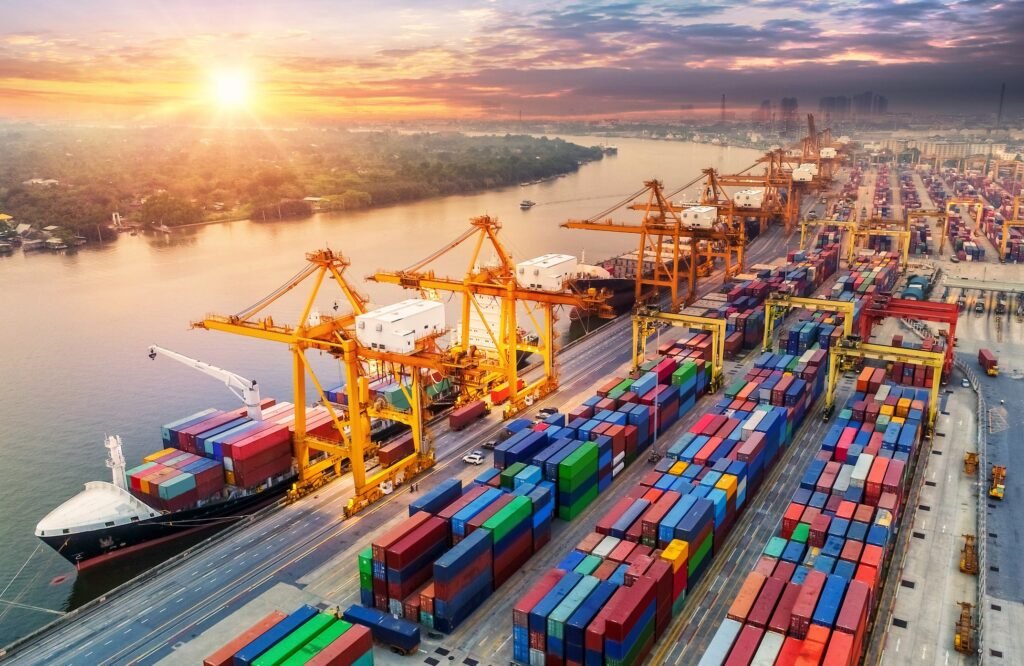
A Deep Dive into the Shift from Hyper-Globalization to Strategic Resilience
By the World Class Blogs Team
Published on 25-December-2025
Introduction – Why This Matters
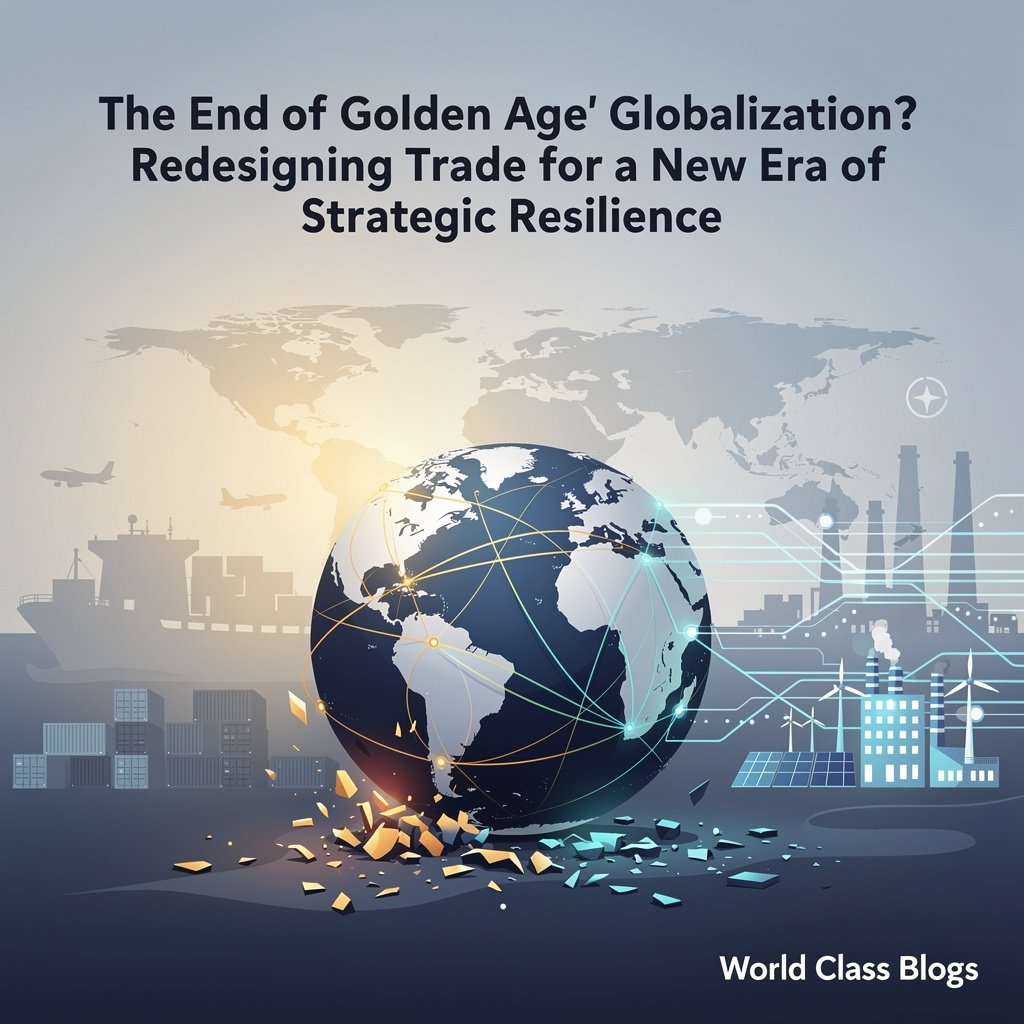
We are living through the greatest reconfiguration of the global economic system since the end of the Cold War. For decades, the world operated on a simple, powerful principle: hyper-globalization. This model, built on unfettered free trade, intricate worldwide supply chains, and the relentless pursuit of cost efficiency, lifted billions from poverty and made consumer goods cheaper than ever. Yet, today, that era is over. Its foundational belief—that deep economic interdependence would guarantee peace and perpetual growth—has shattered against the hard realities of geopolitical rivalry, pandemic disruption, and climate-driven instability.
What I’ve found from analyzing global trade flows and advising multinational corporations is that we are not simply witnessing a temporary slowdown. We are observing a structural regime change. The new paradigm, often called “slowbalization,” “deglobalization,” or “friend-shoring,” prioritizes national security, supply chain resilience, and strategic autonomy over pure efficiency. This shift is not a policy choice from a single nation but a collective, often chaotic, reaction to systemic vulnerabilities laid bare by recent crises.
This comprehensive guide will serve as your essential roadmap. For the curious beginner, it will explain why your electronics cost more and why “Made in USA” labels are reappearing. For the seasoned professional, it provides a detailed framework for navigating new risks, from geoeconomic sanctions to forced diversification. We will move beyond headlines to explore the complex mechanics, high-stakes trade-offs, and profound implications of this historic transition, equipping you to understand and operate in the world as it is being remade.
Background / Context: The Rise and Fall of the Hyper-Globalized Order
To comprehend the magnitude of the current shift, we must first understand the system it is replacing. The era of hyper-globalization (roughly 1991-2016) was not an accident but a carefully constructed project.
The Pillars of the “Golden Age”
- The Ideological Victory: With the fall of the Berlin Wall, the Washington Consensus—a set of neoliberal policies promoting free markets, privatization, and deregulation—became the global economic orthodoxy.
- The Institutional Framework: The creation of the World Trade Organization (WTO) in 1995 established a rules-based system designed to lower tariffs and settle disputes, providing a stable platform for global trade.
- The Catalytic Engine: China’s accession to the WTO in 2001 was the pivotal event. It integrated the world’s largest workforce into the global capitalist system, creating a deflationary powerhouse that drove down manufacturing costs for three decades.
- The Technological Enablers: Standardized container shipping, lean “just-in-time” manufacturing principles, and advances in communication technology made managing complex, globally dispersed production not just feasible but immensely profitable.
The Gathering Storm: Cracks in the Foundation
While generating immense wealth, this model sowed the seeds of its own crisis:
- The Social Contract Fractures: In advanced economies, the benefits of cheap goods accrued to capital owners and consumers, while the costs—manufacturing job losses, wage stagnation, and regional decline—were concentrated in specific communities. This fueled political populism and backlash, evident in the 2016 Brexit vote and the U.S. presidential election.
- The Efficiency Trap: In the quest for lean operations, supply chains became dangerously concentrated. For example, over 70% of the world’s advanced semiconductor manufacturing capacity became located in Taiwan and South Korea, a single chokepoint for the global digital economy.
- Strategic Myopia: The West’s belief in the pacifying effect of economic interdependence—often termed “Chimerica”—led to the offshoring of not just toys and textiles, but critical industries like pharmaceuticals, rare earth processing, and communications infrastructure.
The 2008 Global Financial Crisis delivered the first major blow, eroding public trust in global institutions. However, the system was patched up. The fatal blows came in rapid succession in the 2020s: the COVID-19 pandemic, which exposed fatal dependencies in medical and goods supply chains; the war in Ukraine, which weaponized energy and food exports; and escalating U.S.-China strategic competition, which transformed trade from a win-win activity into a arena of zero-sum rivalry.
Key Concepts Defined
- Hyper-Globalization: The period of extreme global economic integration (c. 1991-2016) characterized by rapidly growing trade-to-GDP ratios, cross-border capital flows, and networked supply chains that prioritized cost efficiency above all else.
- Slowbalization / Deglobalization: The measurable slowdown or reversal of global integration. Key metrics like the growth rate of world trade relative to GDP have stalled or declined since the mid-2010s, signaling a retreat from hyper-globalization.
- Strategic Resilience: The new paramount objective for nations and firms. It emphasizes the capacity to withstand systemic shocks—geopolitical, climatic, or pandemic—even at the expense of some efficiency. This involves building redundancy, diversifying suppliers, and holding strategic stockpiles.
- Derisking: The dominant strategy of the U.S. and its allies regarding China. It is a targeted approach aimed at reducing critical, strategic dependencies (e.g., in advanced semiconductors, AI, critical minerals) while maintaining broad trade and economic engagement in non-sensitive areas. It is a rejection of full-scale “decoupling.”
- Friend-shoring / Ally-shoring: The practice of relocating or redirecting supply chains and investment to countries that are political allies or share similar values and low-risk profiles, thereby creating more secure and predictable trade networks.
- Strategic Autonomy: A core objective, particularly of the European Union, to develop independent capacities and sovereignty in key strategic sectors (defense, digital, energy) to ensure freedom of action and reduce over-reliance on any single foreign power, including allies.
- Geoeconomics: The explicit use of economic instruments—trade policy, investment screening, sanctions, subsidies—to achieve geopolitical and national security objectives. It marks the definitive end of the separation between economics and foreign policy.
- Supply Chain Sovereignty: The concept of maintaining national control over the entire production process of goods deemed vital to national security, from the extraction of raw materials to final assembly, within a nation’s borders or a tightly allied network.
How It Works: The Step-by-Step Mechanics of the Great Reconfiguration

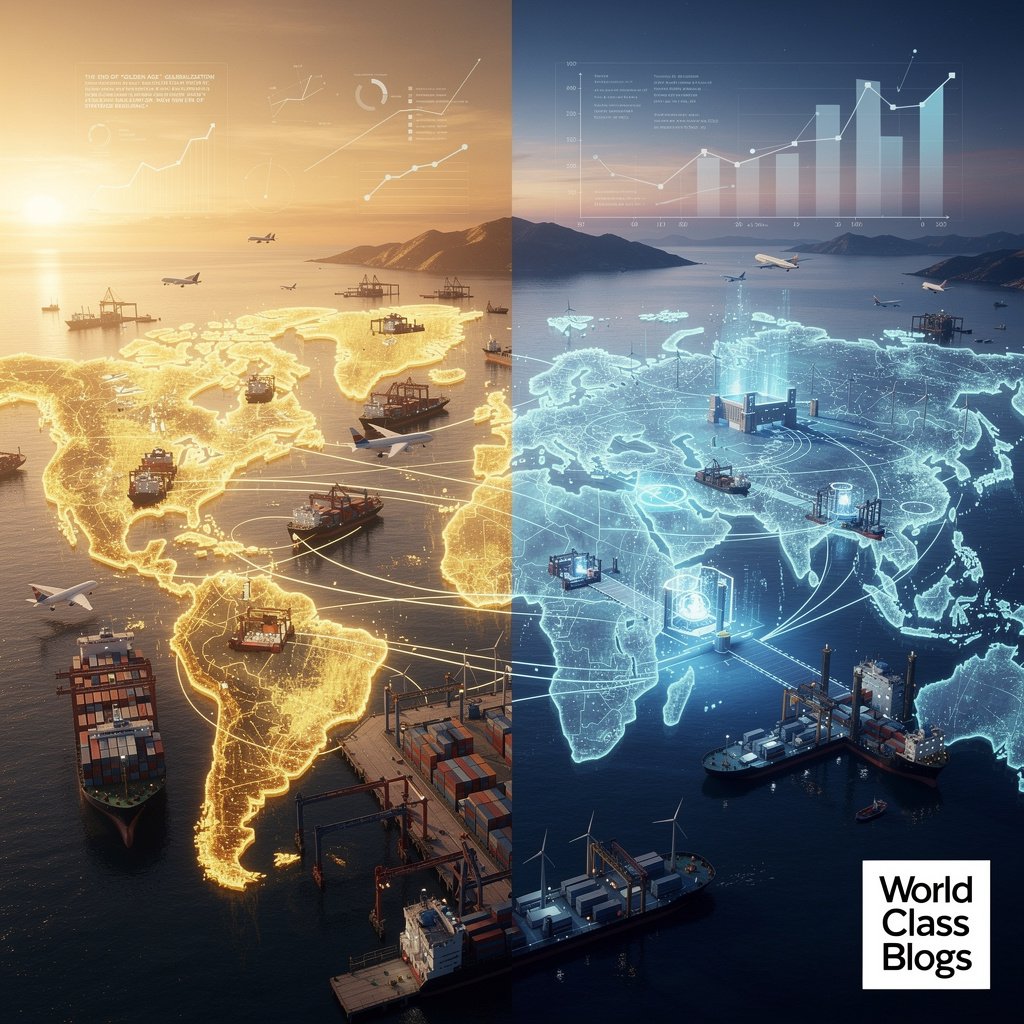
The transition from hyper-globalization to strategic resilience is a complex, multi-layered process actively unfolding. Here is a detailed breakdown of its mechanics.
Step 1: The Policy Revolution – Governments Reshape Markets
Nations are deploying a new toolkit that overturns decades of neoliberal policy, explicitly shaping markets for strategic ends.
- The Return of Industrial Policy: Landmark legislation like the U.S. Inflation Reduction Act (IRA) and the CHIPS and Science Act represent a seismic shift. They deploy hundreds of billions in subsidies, tax credits, and grants to onshore production of clean energy technology and semiconductors. The EU has responded in kind with its Green Deal Industrial Plan and a relaxation of state-aid rules, triggering what some call a “subsidy war.”
- Strategic Trade Controls: “Small yard, high fence” technology export controls are used to maintain a lead in foundational technologies. The U.S. restrictions on advanced semiconductor manufacturing equipment to China are the archetype, designed to slow a rival’s progress in critical fields.
- Investment Screening Fortifications: Mechanisms like the U.S. Committee on Foreign Investment (CFIUS) have been strengthened to block foreign acquisitions—particularly from strategic competitors—in sensitive sectors like technology, critical infrastructure, and personal data.
- Diversification Mandates: Governments are moving beyond rhetoric to direct firms. Japan’s subsidy program for companies shifting production out of China and the EU’s push for “Open Strategic Autonomy” are clear directives to diversify sourcing.
Step 2: The Corporate Transformation – Rewiring for a “Just-in-Case” World
Corporations are undergoing a fundamental operational pivot, internalizing the new logic of resilience.
- Supply Chain X-Ray: Firms are investing heavily in digital supply chain twins and AI-driven analytics to map their sub-tier suppliers, often 4 or 5 layers deep, to identify invisible single points of failure.
- The “China + N” Blueprint: Few companies are undertaking a full-scale exodus from China, which remains a massive market and manufacturing hub. Instead, they are executing a “China Plus One” (or Plus Two, Three) strategy, adding alternative production bases in nations like Vietnam, India, Mexico, or Poland.
- Strategic Buffering: The philosophy of lean inventories is being abandoned for critical components. Companies are carrying higher levels of safety stock and, in some cases, building strategic reserves of items like rare earth magnets or specialty chemicals.
- Dual Sourcing and Qualification: For key inputs, firms are now qualifying two or more suppliers, often in different geographic regions. This redundancy comes with a high cost but is seen as essential insurance.
Step 3: The Geopolitical Realignment – The Emergence of Economic Blocs
Trade and investment flows are gradually sorting themselves along geopolitical fault lines, leading to a more fragmented global system.
- The U.S.-Led “Derisking” Network: Centered on North America, key treaty allies in Asia (Japan, South Korea, Australia), and a broadly aligned EU. Focus is on securing technology, clean energy, and pharmaceutical supply chains within this trusted network, as seen in the Indo-Pacific Economic Framework (IPEF).
- China’s Regional Entrenchment: China is deepening its economic integration within its own sphere through the Regional Comprehensive Economic Partnership (RCEP), now the world’s largest trade bloc. Coupled with the Belt and Road Initiative, this creates a powerful regional gravitational pull.
- The Rise of the “Swing” States: Nations like India, Indonesia, Saudi Arabia, and Brazil are adeptly practicing multi-alignment. They are leveraging their non-aligned or flexible positions to attract investment and extract concessions from all sides, becoming crucial nodes in the new, more complex trade web.
Table: The Paradigm Shift – From Hyper-Globalization to Strategic Resilience
| Feature | Hyper-Globalization (c. 1991-2016) | Strategic Resilience / Gated Globalization (2020s+) |
|---|---|---|
| Primary Driver | Corporate efficiency & profit maximization | National security & strategic autonomy |
| Core Principle | Comparative Advantage | Controlled Interdependence / Derisking |
| Supply Chain Model | Lean, Global, Just-in-Time | Redundant, Regionalized, Just-in-Case |
| Role of Government | Rule-setter, Liberalizer | Investor, Protector, Market Shaper |
| Geopolitical Logic | Interdependence = Peace & Stability | Vulnerability = Risk; Security is Paramount |
| Primary Risk | Systemic fragility to external shocks | Higher costs, inflation, innovation fragmentation |
Why It’s Important: The High Stakes of the Global Transition
This fundamental redesign of the world’s economic architecture carries profound consequences for prosperity, power, and planetary health.
1. Economic Stakes: The Efficiency-Resilience Trade-Off
The pursuit of security comes with a direct economic cost. McKinsey Global Institute estimates that building comprehensive supply chain resilience could raise annual operating costs by 2-5% across many industries. This contributes to structurally higher inflationary pressures. Furthermore, a sustained fragmentation of the global economy into competing blocs could reduce long-term global GDP growth by up to 1.2% annually, according to IMF models. The central economic question of our time is whether this “resilience premium” is a wise investment to ensure against catastrophic, civilization-scale disruptions, or a needless burden that will lower living standards.
2. Geopolitical Stakes: From Cooperation to Zero-Sum Competition
Trade has become a primary battlefield for geopolitical influence. Control over the supply chains of critical minerals (lithium, cobalt), semiconductors, and clean tech is now viewed as essential to national power and military advantage. This transforms trade negotiations into high-stakes security negotiations. The danger is a descent into a geoeconomic Thucydides Trap, where rising tensions fuel escalating retaliatory measures—sanctions, tariffs, investment bans—that ultimately shrink the pie for everyone, increasing the risk of direct conflict.
3. Developmental Stakes: A New Challenge for Emerging Economies
The old model offered a clear, if difficult, path: attract foreign investment with low-cost labor and integrate into global value chains. The new model is more complex and demanding. While some nations like Vietnam and Mexico are winning big from diversification-driven investment, others risk being excluded. The massive subsidy programs of the U.S. and EU risk “crowding out” investment in poorer nations that cannot match financial incentives. Success now requires not just cheap labor but political alignment, regulatory stability, skilled workforces, and existing infrastructure—a much higher bar.
4. Climate Stakes: The Green Transition’s Double Bind
Climate action is both a driver of and a potential casualty of this shift. On one hand, the U.S. IRA and EU Green Deal are unleashing historic investments in clean energy, accelerating the transition. On the other hand, friend-shoring can break globally optimized green supply chains. Shipping solar panels from a subsidized factory in Ohio to Europe may have a higher carbon footprint than sourcing them from a globally efficient but geopolitically risky supplier in China. The novel challenge is to build secure, sovereign, and simultaneously low-carbon supply chains.
Sustainability in the Future
Can this new model of “gated globalization” be sustained, or will its costs trigger a backlash and a return to the old ways?
The long-term sustainability of strategic resilience hinges on three critical balances:
- The Political Will to Pay: The resilience premium will manifest in marginally higher prices for consumers and higher tax burdens for citizens. Will democratic publics continue to support these policies once the memory of recent crises fades? Sustaining support requires governments to successfully frame economic security as a public good—like national defense—worth the ongoing cost.
- Avoiding a Full Bloc-Based Breakdown: The system can likely sustain a world of “slowbalization” and “managed rivalry,” where trade within trusted networks remains robust and some commerce continues across geopolitical lines. However, a full rupture into hostile, autarkic blocs—a true Cold War 2.0 economic iron curtain—would be devastatingly costly and politically explosive. The focused strategy of derisking over decoupling is explicitly designed to find and hold this sustainable middle ground.
- Driving the Next Productivity Wave: Ultimately, the new system must catalyze, not stifle, growth. If reshoring and green subsidies successfully spur a revolution in advanced manufacturing (additive manufacturing, robotics), clean energy abundance, and next-generation semiconductors, they could birth a new, more sustainable growth model less dependent on long-distance labor arbitrage. The sustainability of the regime depends on its ability to generate its own economic and technological momentum.
Common Misconceptions
- Misconception: We are headed for full “decoupling” between the U.S./West and China.
Reality: Total decoupling is an economic fantasy and a strategic miscalculation. U.S.-China bilateral trade in goods reached nearly $575 billion in 2023, a testament to deeply intertwined economies. The official strategy is “derisking and diversifying.” This means surgically reducing dependence in a handful of foundational, security-related areas (advanced chips, AI, critical minerals) while maintaining robust trade in consumer goods, agriculture, and other non-sensitive sectors. The relationship is becoming more complex, managed, and wary, not severed. - Misconception: Reshoring means all manufacturing jobs are coming back to the West.
Reality: Reshoring is highly selective and capital-intensive, not a broad-based labor movement. It is focused on strategic, high-value, or highly automated industries like semiconductors, electric vehicle batteries, and specialty pharmaceuticals. Many labor-intensive industries (apparel, furniture) will continue to migrate to lower-cost nations, albeit with more geographic diversification (“China + Vietnam + Mexico”). The jobs returning are often highly skilled technician, engineering, and robotics maintenance roles, not the mass assembly-line jobs of the mid-20th century. - Misconception: This is just old-fashioned protectionism, which always makes countries poorer.
Reality: While protectionist elements exist, the new paradigm is substantively different. Historical protectionism often aimed to shelter inefficient, sunset domestic industries from competition. Today’s industrial policies are largely about building new, globally competitive industries of the future (e.g., a full clean tech ecosystem) deemed vital for economic and national security, using subsidies to overcome first-mover disadvantages and scale up quickly. The test is whether these “infant industries” mature into efficient, export-competitive champions or become permanent wards of the state. - Misconception: Friend-shoring will make supply chains perfectly secure.
Reality: Friend-shoring trades one set of risks for another. It reduces geopolitical risk but can increase exposure to regional, climate, and correlated economic risks. If all battery production is friend-shored to a region prone to droughts that affect lithium mining, a single climate event can still cripple the entire chain. True resilience requires geographic, political, and supplier diversification, not merely a shift from one concentrated region to another.
Recent Developments (2024-2025)
The pace of the great reconfiguration has accelerated, with several landmark events defining its current trajectory.
- The “Subsidy War” Escalates: In 2024, the European Commission approved over €150 billion in new national state aid for green industries, a direct and forceful response to the U.S. Inflation Reduction Act. This risks triggering an intra-alliance subsidy competition that could fragment the single market and divert investment from less wealthy EU member states.
- Critical Minerals Diplomacy Intensifies: The U.S. and Japan signed a major critical minerals trade agreement in 2024, aiming to create a China-free supply chain for electric vehicle batteries. The EU concluded similar pacts with Chile and Canada, and the Minerals Security Partnership is actively financing projects from Angola to Greenland.
- RCEP’s Deepening Integration: Preliminary 2024 trade data shows intra-RCEP bloc trade growing approximately 40% faster than the bloc’s trade with the U.S. or EU. This solidifies Asia’s regional economic architecture with China at its center, creating a powerful alternative gravitational pole in the world economy.
- The “Logistics Power” Focus: The severe disruptions in the Red Sea (2023-2025) and the drought-induced constraints in the Panama Canal have shifted strategic attention from where things are made to how they are shipped. Governments and firms are now heavily investing in strategic port infrastructure, alternative land corridors (e.g., the India-Middle East-Europe Economic Corridor, or IMEC), and larger logistics fleets as a core element of national security.
- The Dawn of “Climate Tariffs”: The EU’s Carbon Border Adjustment Mechanism (CBAM), now in its definitive phase, charges imports based on their embedded carbon emissions. This is not traditional protectionism but “regulatory imperialism,” effectively exporting EU climate policy and forcing global suppliers to decarbonize. It creates a powerful new nexus between trade and climate policy that others are sure to emulate.
Success Stories: Early Adapters in the New Era
Several nations and corporations are providing instructive blueprints for navigating this transition successfully.
- Vietnam: The Quintessential “Plus One”
Vietnam has emerged as the primary beneficiary of supply chain diversification out of China. It received over $36.7 billion in registered Foreign Direct Investment (FDI) in 2024, with significant portions in electronics, machinery, and textiles from firms establishing alternative Asian bases. Its success is built on a web of strategic Free Trade Agreements (FTAs)—including with the EU and through the CPTPP—a young and growing workforce, and sustained government investment in infrastructure and business climate improvements. - Tesla’s “Gigafactory” Vertical Integration Model
Tesla’s global strategy presaged the current era. By building massive, vertically integrated Gigafactories in key markets (Berlin, Shanghai, Austin), it controls a significant portion of its supply chain—from battery cells to final assembly—within continental regions. This provides immense resilience against trade disruptions, reduces logistics costs and emissions, and perfectly positions it to capitalize on local subsidies like those in the U.S. Inflation Reduction Act. - Morocco: Forging a Green Industrial Hub
Leveraging its unique advantages—proximity to Europe, abundant solar and wind resources, and vast phosphate reserves—Morocco is strategically positioning itself as a green hydrogen and battery component hub for the European market. In 2024, it signed a landmark €1.5 billion agreement with the European Union for green hydrogen imports and attracted major investments for electric vehicle battery component plants. It demonstrates how resource-endowed developing nations can leverage the energy transition to move up the value chain.
Real-Life Examples
1. The Semiconductor Saga: From Taiwan to Arizona
The journey of a single advanced semiconductor chip encapsulates the entire shift. Designed in the U.S. (by firms like Nvidia or AMD), its manufacturing became overwhelmingly concentrated in Taiwan (TSMC) and South Korea (Samsung). The U.S. CHIPS and Science Act is fundamentally altering this calculus. TSMC is now constructing two of the world’s most advanced semiconductor fabrication plants (“fabs”) in Arizona, with a goal of producing 5nm and 3nm chips on U.S. soil by 2026. This is friend-shoring in its most explicit form: a strategic industry being partially relocated to allied territory, driven by national security imperatives and fueled by government incentives.
2. The European Union’s “De-risking” of its Auto Industry
The EU, a historic champion of multilateral free trade, is now implementing a comprehensive derisking strategy to protect its flagship automotive industry during the electric transition. Its multi-pronged approach includes:
- Investigating Chinese EV Subsidies: The EU launched an anti-subsidy investigation that will likely lead to tariffs on Chinese electric vehicle imports in 2025, aiming to protect its domestic manufacturers from what it sees as unfair competition.
- Building a Local Battery Ecosystem: Through the European Battery Alliance, over 15 giga-factories for battery cells are under construction across the continent, supported by significant public and private investment.
- Securing Raw Materials: The EU is actively signing Critical Raw Materials Partnerships with resource-rich countries like Chile (lithium) and Zambia (cobalt) to ensure diversified, responsible sourcing.
This case shows that derisking is not a U.S.-only policy but a broad Western strategy to preserve industrial sovereignty.
3. The Red Sea Crisis: Geography Strikes Back
The Houthi attacks on commercial shipping in the Red Sea (2023-2025) provided a stark, real-time lesson in logistics vulnerability. Forcing container vessels to reroute around the Cape of Good Hope added 10-14 days and 30%+ in additional costs to Asia-Europe voyages. This was not a change in trade policy but a geopolitical event that instantly reactivated the geographic friction that globalization had seemingly minimized. It validated massive investments in alternative multimodal routes, such as the India-Middle East-Europe Economic Corridor (IMEC), proving that in the new era, maritime chokepoints are as critical as factories.
Conclusion and Key Takeaways
The “Golden Age” of frictionless, efficiency-first globalization has reached its end. In its place, we are constructing an era of managed, secure, and values-conscious globalization, where trade and investment are explicitly harnessed as tools of national strategy, climate action, and geopolitical competition. This is not a cyclical downturn but a fundamental structural transformation of the world economy.
Key Takeaways:
- Security is the New Cardinal Direction: The supreme organizing principle for international economic engagement is no longer “lowest cost” but “resilience and strategic alignment.” Every supply chain decision, investment, and trade agreement is now scrutinized through a lens of national and economic security.
- The State is Back as a Direct Market Shaper: Through assertive industrial policy, strategic subsidies, and targeted controls, governments have returned to the center of the economic stage. The new model relies on a deep, structured partnership between public purpose and private enterprise.
- A Multi-Polar, Multi-Bloc World Economy is Materializing: The global economy is not cleanly bifurcating but rather forming a complex mosaic of overlapping, issue-based alliances (tech, clean energy, minerals). Success requires the skill of “multi-alignment”—navigating different partnerships for different objectives.
- The Climate-Security Nexus is the Defining Challenge: The clean energy transition is both the driver of and the potential casualty of this new system. Building secure, sovereign, and sustainable supply chains for critical minerals and green tech is the paramount industrial project of this decade.
- The Cost is Real, But the Stakes Are Higher: The transition imposes a “resilience premium”—higher costs, inflationary pressures, and administrative complexity. However, this is increasingly framed as a necessary and prudent insurance premium against the catastrophic economic, social, and security costs of a critical supply chain failure in a moment of acute crisis.
The nations, corporations, and individuals who will thrive in the coming decades will be those who master the delicate art of balancing openness with security, efficiency with resilience, and competition with the indispensable cooperation needed to tackle transcendent global challenges.
FAQs (Frequently Asked Questions)
1. Q: As an ordinary consumer, how will this “Great Reconfiguration” affect my daily life and wallet?
A: You will likely experience moderately higher prices for big-ticket items like electronics, vehicles, and possibly some appliances due to reshoring and diversified manufacturing costs. You may also see less deep discounting and slower product turnover for some goods. However, you could benefit from greater availability of essential products (medicines, basic goods) during global crises and the potential for a stronger domestic job market in strategic sectors.
2. Q: Is “Made in USA” or “Made in EU” about to become the norm on store shelves again?
A: For high-value, strategic, or bulky goods (advanced batteries, specialty chemicals, certain pharmaceuticals, large machinery), regional production will increase significantly. For the vast array of everyday consumer goods (apparel, footwear, plastic items, lower-end electronics), production will remain global but more diversified. The label will increasingly indicate a product’s geopolitical and strategic profile, not just its cost point.
3. Q: What’s the single biggest practical difference for a business between the pre-2020 world and now?
A: The end of strategic certainty and the primacy of geopolitical risk. Previously, the main business risks were market demand and operational efficiency. Today, a profitable, efficient supply chain can be rendered non-viable overnight by a new sanctions regime, an export control list, or a regional conflict. The new core competency is continuous geopolitical and regulatory risk assessment.
4. Q: Can small and medium-sized enterprises (SMEs) survive this shift, or will they be crushed by larger rivals?
A: It is a significant challenge but not impossible. Survival requires SMEs to: a) Diversify their supplier base even if it raises unit costs; b) Invest in supply chain visibility software to understand their own dependencies; c) Actively seek out government support programs (many IRA and CHIPS Act programs have set-asides for small businesses); and d) Collaborate within industry clusters or consortia to pool resources and share best practices on resilience.
5. Q: How does this global trade shift affect the fight against climate change? Is it a net positive or negative?
A: It presents a critical paradox. Positively, massive green industrial policies (IRA, Green Deal) are pouring trillions into accelerating decarbonization technologies. Negatively, fragmented supply chains and new trade barriers could slow the global diffusion of the most efficient clean tech, raise the cost of the transition, and increase emissions from less-optimized logistics. The imperative is to develop international “green trade” agreements that lower barriers for environmentally friendly goods while maintaining security.
6. Q: Is the World Trade Organization (WTO) now completely obsolete?
A: Not obsolete, but increasingly marginalized on the most pressing strategic issues. It remains functional for adjudicating traditional trade disputes (e.g., over agricultural subsidies). However, its consensus-based model is too slow and ill-suited for the security-driven, rapid unilateral and minilateral actions that now define the landscape. The real action has shifted to smaller, flexible “coalitions of the willing” like the IPEF, MSP, and critical minerals agreements.
7. Q: What specific professional skills will be most valuable in this new economic environment?
A: Premium skills will include: Geopolitical and country risk analysis, supply chain cybersecurity, government relations and regulatory affairs (to navigate new subsidies and rules), sustainable sourcing and ESG compliance, and data analytics for supply chain mapping. Professionals who can bridge the worlds of international business, public policy, and security will be in high demand.
8. Q: Are we reverting to the protectionist policies of the 1930s that deepened the Great Depression?
A: Most economic historians argue that the context is fundamentally different. The 1930s saw competitive, beggar-thy-neighbor tariff hikes on a wide range of goods during a massive demand shock, which strangled trade. Today’s policies are more targeted (focused on specific technologies), often use subsidies to build capacity rather than just tariffs to block imports, and occur in a context of strong overall demand. The risk today is of slow erosion of growth potential and innovation, not an immediate, catastrophic collapse of global trade.
9. Q: What is “friendshoring,” and how do countries get on the “friends” list?
A: Friend-shoring is directing trade and investment to politically aligned, low-risk nations. Getting on the list typically requires: a) Shared security alliances (e.g., NATO membership, major non-NATO ally status); b) Similar regulatory and values frameworks (strict rule of law, democratic governance, intellectual property protection); c) Economic stability and reliability; and d) Strategic geographic or resource positioning. It’s less about friendship and more about calculus of trust and shared strategic interests.
10. Q: How are critical minerals different from traditional commodities, and why are they so central?
A: Critical minerals like lithium, cobalt, nickel, and rare earth elements are fundamental enablers of modern and future technology (EV batteries, wind turbines, semiconductors, fighter jets). Their supply chains are often highly concentrated (e.g., over 60% of cobalt from the DRC, most rare earth processing in China), making them geopolitical leverage points. Unlike oil, they are not easily substituted in the short term, creating inelastic demand and high strategic stakes.
11. Q: Can a company be “apolitical” and just focus on business in this new environment?
A: Effectively, no. A company’s supply chain origins, investment partners, and technology providers now carry inherent political and security implications. Choosing a supplier in one country over another is a de facto geopolitical decision. Companies are being forced to develop explicit geopolitical strategies alongside their business strategies, assessing not just cost and quality, but the long-term stability and alignment of their partners.
12. Q: What is the “Inflation Reduction Act,” and why is it causing such controversy with U.S. allies?
A: The U.S. Inflation Reduction Act (IRA) is a $369 billion package of subsidies and tax credits for clean energy and technology, with strong “Made in America” requirements for final assembly and sourcing of components. Allies like the EU, South Korea, and Japan argue it discriminates against their firms and could lure investment away from their shores, undermining their own green industrial ambitions. It is the clearest example of how domestic climate policy has become a tool of geoeconomic competition.
13. Q: What does “strategic autonomy” mean for the European Union, and is it achievable?
A: EU strategic autonomy means developing the capacity to act independently—particularly in defense, digital technology, and critical supply chains—so it is not overly reliant on any single foreign power (including the U.S. or China). Its achievability is debated. While the EU has a market size and regulatory power, it lacks a unified fiscal policy and faces internal divisions. Progress is being made in areas like battery production and cloud infrastructure, but full autonomy in advanced semiconductors or defense systems remains a distant goal.
14. Q: How is artificial intelligence affecting global supply chains and this transition?
A: AI is a dual-use tool in the reconfiguration. It is vital for optimizing new, complex supply networks, predicting disruptions, and managing inventory across diversified sources. Simultaneously, control over AI technology itself is a core arena of strategic competition between the U.S. and China. Furthermore, AI is used for geopolitical analysis and sanctions monitoring, making it both a tool for managing the transition and a primary asset being fought over. For more on this intersection, explore our deep dive on AI and foreign policy on our technology and innovation hub.
15. Q: What role do tax havens and global finance play in this new system?
A: The pressure for transparency and “fair share” taxation is intensifying as governments seek revenue for industrial subsidies. The OECD Global Minimum Tax deal (Pillar Two) aims to curb profit shifting to low-tax jurisdictions. In a world of strategic competition, governments are less tolerant of capital flowing to opaque havens, seeing it as a drain on national resources needed for resilience. Finance is becoming more aligned with geopolitical blocs, with investment screening applied to sensitive sectors.
16. Q: How are sanctions evolving as a tool in this fragmented world?
A: Sanctions have become more frequent, complex, and financially sophisticated. We now see: Primary sanctions (on a target country), secondary sanctions (threatening third parties who deal with the target), and sectoral sanctions. The 2022-2025 sanctions on Russia demonstrated the power of freezing central bank assets and excluding banks from SWIFT. However, they also spurred the target and others to develop alternative financial messaging systems and trade channels, accelerating the fragmentation of the global financial system.
17. Q: Is there a risk of a “brain drain” reversing as talent follows reshored industries?
A: Yes, there is a noticeable trend. As high-tech manufacturing and R&D centers are established in the U.S. and EU through acts like the CHIPS Act, they are attracting top global engineering and scientific talent. This can draw skilled workers away from traditional tech hubs in Asia and elsewhere, potentially re-concentrating human capital in Western innovation districts. This “reverse brain drain” is a deliberate, if secondary, goal of these industrial policies.
18. Q: What is “nearshoring,” and how is it different from reshoring?
A: Reshoring means bringing production back to a firm’s home country. Nearshoring means moving production to a nearby, often lower-cost, country within the same region (e.g., a U.S. firm moving production from China to Mexico; a German firm moving to Poland or Türkiye). Nearshoring offers a compromise: it reduces geopolitical risk and shortens, simplifies logistics while still offering some cost advantages. It is often the most commercially viable step in diversification.
19. Q: How is the military-industrial complex affected by these supply chain changes?
A: Profoundly. Defense ministries are conducting deep audits of their supply chains for everything from microchips to explosives. There is a major push for domestic or allied-source production for critical defense components. The war in Ukraine highlighted vulnerabilities in ammunition supply chains. This is driving closer integration between defense contractors, their commercial suppliers, and national governments, further blurring the line between commercial and defense industrial bases.
20. Q: Can blockchain and other digital technologies help secure supply chains?
A: They are promising tools. Blockchain can provide immutable, transparent records of a product’s journey from raw material to end user, helping to verify origins, ethical sourcing, and compliance with sanctions (“provenance tracking”). Digital Product Passports, as proposed in the EU, will use such technology. However, these are complementary tools, not silver bullets. They improve visibility and trust but do not solve the physical concentration of production assets.
21. Q: What happens to global standards (like 5G or Wi-Fi) in a fragmented world?
A: The risk of “standard fragmentation” is high. We may see competing technological standards emerge from different blocs (e.g., a U.S.-allied 6G standard vs. a Chinese-led alternative). This would increase costs for manufacturers and reduce interoperability for consumers. International standards bodies are becoming new arenas of intense diplomatic lobbying. Maintaining common global standards in key areas is a major challenge for preserving some interoperability.
22. Q: How should an investor think about portfolio allocation in this new era?
A: Traditional geographic diversification remains important, but investors must now add a layer of geopolitical and thematic analysis. Sectors benefiting from reshoring, green subsidies, and defense spending are likely to see sustained tailwinds. Investments in countries that are clear “swing states” or secure allies may be favored. There is heightened risk in sectors with deep, irreplaceable dependencies on geopolitical rivals. Macroeconomic analysis must now be fused with geopolitical risk assessment.
23. Q: What is the future of long-term, multi-national infrastructure projects like China’s Belt and Road Initiative (BRI)?
A: The BRI will continue but faces headwinds. Recipient countries are negotiating harder, fearing debt traps, and Western alternatives (like the G7’s PGII) are emerging. The BRI will likely refocus on a core group of strategic partners and shift towards “small but beautiful” projects with faster returns. It remains a powerful tool for China to shape trade routes and diplomacy, but in a more contested and competitive landscape.
24. Q: How does this affect the availability and price of food globally?
A: Food security has become a central geopolitical concern. The war in Ukraine triggered export bans on wheat and fertilizers from various nations. Countries are now stockpiling key staples and seeking to shorten food supply chains. This can lead to higher prices and volatility. Climate change exacerbates this, as regions may need to import more food. The era of completely reliable, cheap global food markets is under threat, pushing “food sovereignty” up national agendas.
25. Q: Where can I find reliable, ongoing analysis of these trends?
A: Follow the publications and data portals of: the World Trade Organization (WTO), the Organisation for Economic Co-operation and Development (OECD), the International Monetary Fund (IMF), and think tanks like the Peterson Institute for International Economics (PIIE) and the Center for Strategic and International Studies (CSIS). For business strategy, consult major management consultancies’ global trade reports. You can also find ongoing analysis and related content on our own platform at World Class Blogs, particularly in our sections on global affairs and strategic partnerships.
About the Author
The World Class Blogs Global Affairs Team is a collective of seasoned policy analysts, economists, and former trade and security professionals. With decades of combined experience in international institutions, government advisory roles, and corporate strategic planning, we specialize in translating complex systemic shifts into clear, actionable insights. Our work sits at the crucial intersection of geopolitics, economics, and technology, providing a vital guide for navigating an increasingly turbulent world. You can learn more about our rigorous analytical approach and mission on our Focus page.
Free Resources
- Global Trade Alert (University of St.Gallen): The world’s most comprehensive real-time database on discriminatory trade policies, providing unbiased monitoring of protectionism.
- OECD Trade and Investment Policy Papers: Authoritative, in-depth research on global value chains, trade in services, and the impact of new industrial policies.
- U.S. International Trade Commission (USITC) Interactive Tariff and Trade DataWeb: A powerful public tool for analyzing U.S. trade flows, tariffs, and economic relationships at a granular level.
- Chatham House (The Royal Institute of International Affairs) Research on Geoeconomics: Leading analysis on the intersection of economics and geopolitics from a premier UK think tank.
- For a foundational understanding of the mechanics behind these shifts, read The Complete Guide to Global Supply Chain Management from our partners at The Daily Explainer, which provides essential context for today’s disruptions.
- For insights on building the strategic alliances that are key to success in this new paradigm, see the comprehensive guide The Alchemy of Alliance on the Shera Kat Network, which explores partnership models critical for navigating fragmented markets.
Discussion
The central dilemma we face: Can the world construct a new, stable economic equilibrium that is open enough to foster innovation, tackle shared existential threats like climate change and pandemic preparedness, and maintain some measure of shared prosperity, while also being resilient enough to safeguard national security and political sovereignty in an age of renewed great power rivalry?
Is the current Western-led push for “derisking” and resilience a necessary, prudent correction to the excesses and vulnerabilities of hyper-globalization? Or is it the first step on a slippery slope towards a poorer, more conflict-prone world of fragmented blocs, where the costs of duplication and mistrust outweigh the security benefits? We invite you to share your perspective and continue the conversation on our dedicated platforms.
For more in-depth discussion on building sustainable and ethical systems in this complex environment, visit our Nonprofit Hub. To understand the broader vision behind our analysis, please read about World Class Blogs. We always welcome your thoughtful feedback and inquiries through our Contact Us page.


