


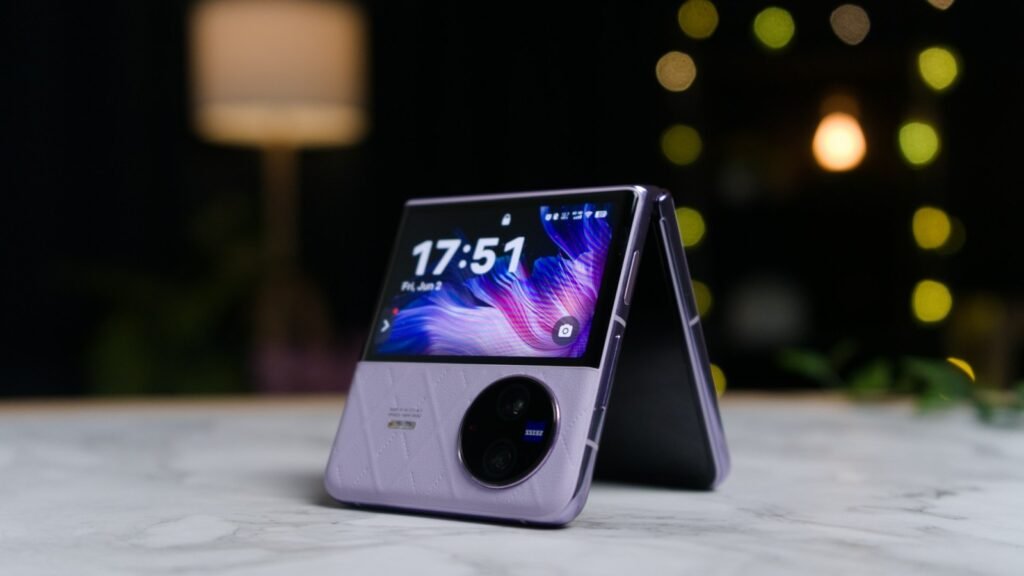
Introduction: The Pocketable Powerhouse
For decades, the fundamental design of the smartphone—a rigid, rectangular “slab”—remained largely unchanged. The battle was fought on the inside: faster processors, better cameras, sharper displays. But a new frontier has emerged, one that bends the very definition of a phone. Foldable phones represent the most significant shift in smartphone technology and innovation in over a decade, promising the portability of a phone with the screen real estate of a tablet. But are they a genuine glimpse into the future of mobile gadgets, or merely an expensive experiment for early adopters? Understanding this technology is crucial for any tech enthusiast looking to understand where consumer tech is headed.
Background/Context: From Concept to Consumer
The idea of a flexible display isn’t new. Science fiction and tech prototypes have teased it for years. The journey to market, however, was fraught with engineering challenges.
- Early Prototypes (2010s): Companies like Samsung and LG showcased flexible display concepts, but they were fragile, expensive, and not consumer-ready.
- The First Wave (2019): The modern foldable era began with the Royole FlexPai and later the Samsung Galaxy Fold. The launch was rocky, with widespread reports of broken screens and durability issues, highlighting the teething problems of a new technology and innovation.
- Refinement and Competition (2020-Present): Samsung iterated rapidly, improving durability. Other players entered the market, including Huawei, Motorola (with its revived Razr), and Google with the Pixel Fold. The market shifted from “if it can be made” to “how well it can be made.”
Key Concepts Defined
- Foldable Phone: A smartphone with a flexible display that can be folded to reduce its footprint, typically featuring a hinge mechanism.
- Flexible OLED (Organic Light-Emitting Diode): The core technology enabling foldables. Unlike rigid glass, these displays use a flexible plastic substrate that can bend without breaking.
- UTG (Ultra-Thin Glass): A thin, flexible glass layer Samsung and others use on top of the display to improve feel and durability compared to pure plastic.
- Form Factor: The physical design and size. The two main foldable form factors are the “book-style” (folds out into a tablet) and the “clamshell” (folds vertically into a compact square).
- Hinge Mechanism: The most critical mechanical component. A well-engineered hinge allows for smooth folding and unfolding and protects the delicate screen from damage.
How It Works: The Engineering Marvel (A Step-by-Step Breakdown)

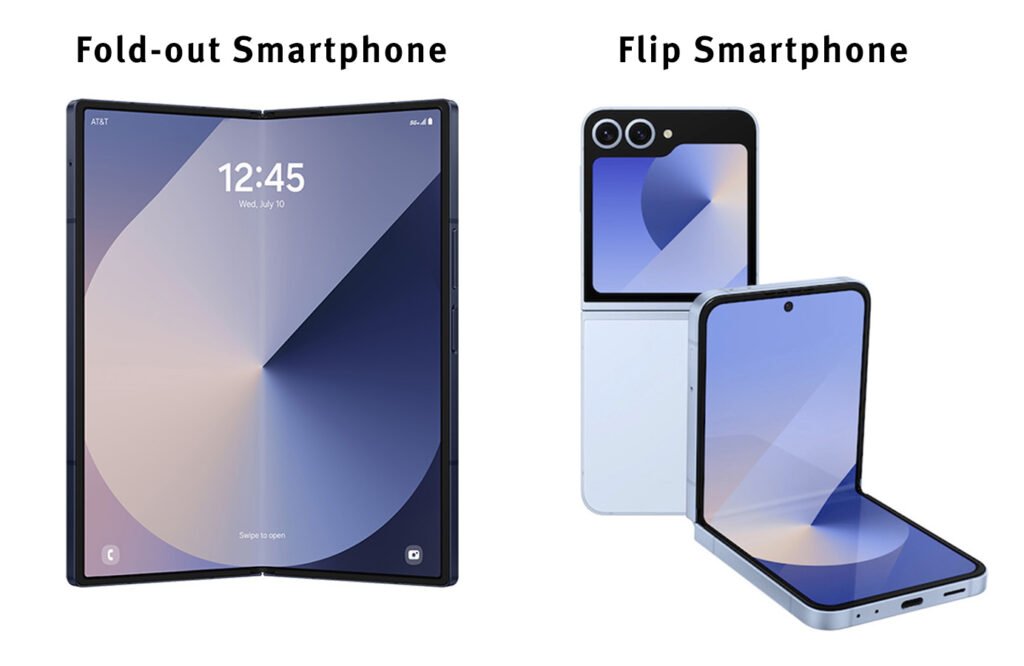
The magic of a foldable phone lies in the seamless integration of several advanced technologies.
- The Flexible Display: At the heart is a Flexible OLED panel. Instead of a rigid backplate, it’s built on a bendable plastic polymer. Individual pixels still light up, but the entire sheet can flex.
- The Protective Layer: Early models used a polymer plastic screen protector, which was easily scratched. Modern devices use UTG, which is chemically treated to be flexible, providing a harder, more scratch-resistant surface that still feels like glass.
- The Hinge Engineering: This is a masterpiece of micro-engineering. The hinge allows the screen to fold smoothly while creating a neutral stress point. Many modern hinges use a “teardrop” design, where the screen bends in a wide U-shape when closed, minimizing the crease and stress. Brushes inside the hinge keep out dust and debris, a critical lesson learned from early failures.
- Software Adaptation: The hardware is only half the battle. The operating system (like Android) must dynamically adapt the user interface when the phone is folded or unfolded. This involves shifting from a phone-optimized layout to a tablet-style interface with enhanced multitasking, like split-screen apps and resizable windows.
Why It’s Important: The Multitasking and Portability Revolution
Foldable phones matter because they solve a fundamental user dilemma: the desire for a large screen versus the need for pocketable portability.
- Enhanced Productivity: The larger canvas is a game-changer for multitasking. You can comfortably have two or three apps open side-by-side—perfect for writing an email while referencing a document or watching a video while browsing the web. This aligns with the modern need for efficient workflows, a principle that applies to everything from global supply chain management to personal task management.
- Immersive Media Consumption: Watching movies, playing games, and reading on a near-tablet-sized screen is a significantly more immersive experience than on a standard phone.
- The Ultimate Compact Device: Clamshell foldables like the Motorola Razr offer a different value: a large screen that folds down into an incredibly compact and pocketable form factor, appealing to those who value portability and nostalgia.
- Driving Innovation: The R&D poured into foldables pushes the entire industry forward, leading to advancements in materials science, hinge design, and software that eventually trickle down to conventional devices.
Common Misconceptions
- Misconception: “The screen crease is a deal-breaker and very distracting.”
Reality: While a crease is still visible on most models, it has become significantly less pronounced with each generation. Most users report that their brain filters it out after a short period of use, much like a laptop’s keyboard gap. - Misconception: “Foldable phones are too fragile to last.”
Reality: Durability has improved dramatically. Modern foldables undergo rigorous testing, including hundreds of thousands of folds. While they are not as robust as a slab phone with Gorilla Glass, they are durable enough for daily use with normal care. - Misconception: “They’re just a gimmick with no real use case.”
Reality: For users who heavily multitask, consume media, or read documents on their phones, the larger screen provides a tangible productivity and entertainment benefit that a slab phone cannot match. - Misconception: “The price will never come down.”
Reality: Like all new technology, prices are high initially. As manufacturing scales and becomes more efficient, costs will decrease, making them more accessible, a pattern seen across consumer electronics.
Recent Developments and Success Stories
Samsung’s Galaxy Z Series Dominance: Samsung has iterated its Galaxy Z Fold and Z Flip lines into a polished and successful product lineup. The Galaxy Z Fold 5 offers a near-seamless hinge and robust software, while the Z Flip 5’s large cover screen has made it a fashion statement and a practical tool for quick interactions without opening the phone.
The Google Pixel Fold: Google’s entry into the market was significant because of its software prowess. The Pixel Fold’s software is exceptionally optimized for the form factor, leveraging Google’s clean version of Android to provide a seamless and intuitive foldable experience.
The Rise of the Clamshell: Phones like the Motorola Razr+ and Samsung Z Flip have proven that there is a massive market for foldables that prioritize style and compactness over being a pocket tablet. Their success shows the format’s versatility.
Case Study: The Samsung Galaxy Fold – Lessons Learned


The launch of the original Galaxy Fold in 2019 is a masterclass in product development and public relations.
- The Problem: Just days after sending review units to tech journalists, reports of broken displays surfaced. The causes were twofold: a protective layer on the screen that looked like a removable film (which, when removed, broke the display) and a hinge design that allowed debris to enter and damage the screen from behind.
- The Response: Instead of pushing forward, Samsung delayed the launch for months. They recalled the review units, publicly acknowledged the issues, and went back to the drawing board.
- The Redesign: The final consumer version featured a redesigned hinge that wrapped tightly around the back of the phone, leaving no gap for debris. The protective layer was extended underneath the bezel, making it clear it was not to be removed.
- Lesson Learned: The case study underscores that with radical technology and innovation, real-world testing is irreplaceable. Samsung’s willingness to absorb a short-term reputational and financial hit to fix a fundamental flaw ultimately built long-term trust and set the stage for its current dominance. This principle of iterative improvement based on feedback is crucial in any field, from product design to ecommerce business setup.
Real-Life Examples and Sustainable Approaches
- Real-Life Use: A real estate agent using a Galaxy Z Fold to view full-floor plans and manage client emails simultaneously at a property. A commuter using a Z Flip to quickly check notifications on the cover screen and only unfolding for longer tasks.
- Sustainable Approaches for the Future:
- Repairability: The biggest sustainability challenge is the integrated, complex nature of the screen and hinge. Manufacturers need to design for repairability, making screen and battery replacements more accessible and affordable.
- Longevity: Building devices with long-term software support (5+ years of OS updates) is crucial to ensure the hardware doesn’t become obsolete prematurely.
- Modular Design: Future concepts could explore modular components, where a broken screen or a worn-out hinge could be replaced without needing a whole new device, reducing electronic waste. For more on building sustainable systems, explore our nonprofit hub for insights on long-term impact.
Conclusion & Key Takeaways
Foldable phones are no longer a fragile fantasy; they are a mature, albeit premium, segment of the smartphone market. They have successfully carved out a niche by offering unparalleled multitasking and a unique blend of portability and screen size.
Key Takeaways:
- Foldable phone technology has matured significantly, with major improvements in durability, display quality, and software.
- They offer genuine advantages in productivity and media consumption for users who need a larger screen on the go.
- The high price and remaining concerns about long-term durability are valid barriers for the average consumer.
- The category is here to stay and will continue to evolve, with rollable screens and new form factors on the horizon.
- The future success of foldables depends on lowering costs, improving repairability, and continuing to refine the user experience.
This is just one example of the rapid technology and innovation happening in the gadget space. For more insights and reviews, be sure to check out our dedicated Technology & Innovation category.
Frequently Asked Questions (FAQs)
- How many times can a foldable phone fold?
Modern foldables are rated for 200,000 to 400,000 folds. That’s over 5 years of folding 100 times a day. - Can you use a screen protector on a foldable phone?
It is not recommended to add a third-party screen protector as it can interfere with the hinge and void the warranty. They come with a pre-installed, optimized protector. - Are foldable phones heavier than regular phones?
Yes, due to the complex hinge and additional screen components, they are typically heavier than similarly sized slab phones. - Is the crease in the screen getting better?
Yes, with each new generation, the crease becomes less visible and less noticeable to the touch. - What happens if the screen on my foldable phone breaks?
Repair costs are high, often several hundred dollars. It’s highly recommended to get insurance or a manufacturer’s care plan for a foldable device. - Are all apps compatible with the large foldable screen?
Most major apps have been updated to support foldables, but some smaller apps may just stretch to fill the screen rather than offering an optimized tablet layout. - Which is better, a book-style or a clamshell foldable?
It depends on your needs. Book-style is for productivity and media. Clamshell is for portability and style. - Do foldable phones have good battery life?
They generally have large batteries to power the big screen, but battery life is often similar to flagship slab phones, as the larger display consumes more power. - Will Apple make a foldable iPhone?
There are many rumors, but Apple has not announced any plans. It’s likely they are researching the technology but waiting for it to mature further. - Can foldable phones get wet?
Most modern foldables have an IPX8 rating, meaning they can be submerged in water. However, the “X” means they are not rated for dust resistance, so sand and fine debris are still a risk. - Why are foldable phones so expensive?
The flexible display, complex hinge mechanism, and extensive R&D costs contribute to the high price. - What is a “rollable” phone?
The next evolution, where the screen rolls out from a body to become larger, eliminating the hinge and crease entirely. It’s still in the prototype stage. - Is now a good time to buy a foldable phone?
If you are an early adopter who values the form factor and can handle the cost and potential repair risks, yes. For most, waiting for prices to drop and durability to be proven over more years is wise. - How does the camera compare to regular flagship phones?
The cameras on foldables are now very good and often match the quality of other flagship phones from the same manufacturer. - Can I use a foldable phone with one hand?
When closed, a book-style foldable can be used with one hand. When open, it requires two hands. Clamshells are designed for one-handed use when closed.


