


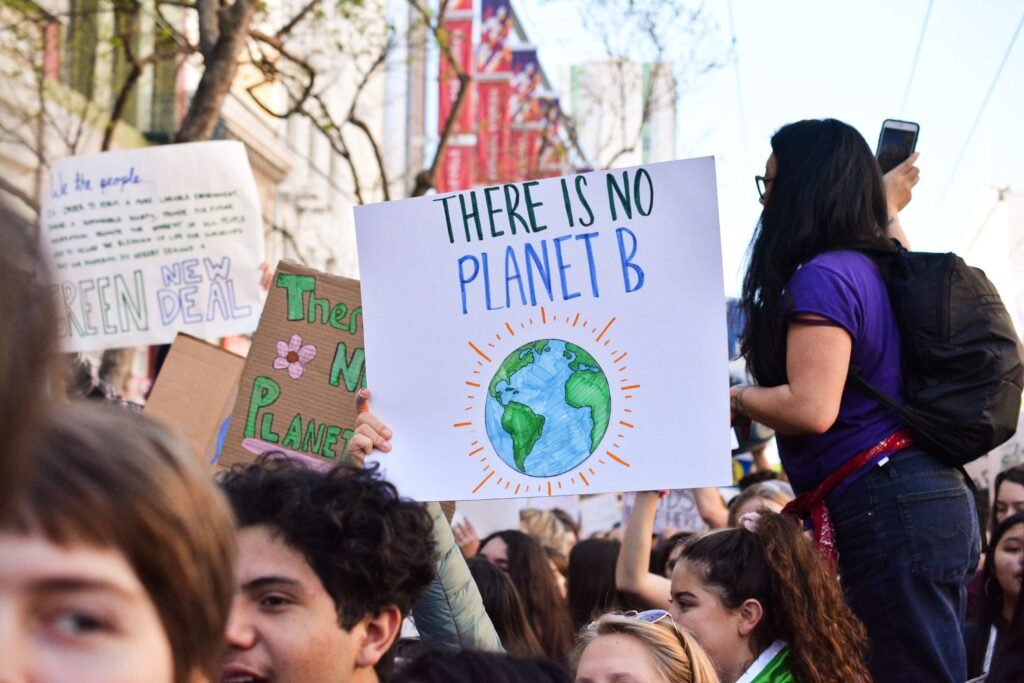
Introduction – The Power of Local Action in a Global Crisis
While international climate negotiations often dominate headlines, the most dynamic and transformative climate action is increasingly emerging from grassroots movements and local communities. From youth-led school strikes to indigenous land defenders, from neighborhood solar cooperatives to city climate plans, people worldwide are taking climate action into their own hands—demonstrating that effective responses don’t only flow from top-down mandates but can bubble up from everyday citizens. For curious beginners and professionals seeking a quick refresher, understanding this bottom-up climate action reveals a more hopeful and participatory dimension of climate response beyond daunting global statistics.
In my experience working with community climate initiatives across four continents, what I’ve found most inspiring is how local ingenuity often outpaces institutional innovation. Communities facing climate impacts directly don’t have the luxury of abstract debate; they develop practical solutions tailored to their specific contexts, cultures, and capacities. These solutions often address multiple challenges simultaneously—reducing emissions while creating jobs, improving health, strengthening community bonds, and increasing resilience. This integrated approach contrasts with the siloed responses common in larger institutions.
The growing recognition of non-state and subnational actors in global climate governance represents a significant shift from traditional state-centric approaches. The Paris Agreement explicitly acknowledges their role, and platforms like the Global Climate Action Portal track thousands of commitments from cities, regions, businesses, investors, and civil society. This multi-level governance approach recognizes that national governments alone cannot deliver the pace and scale of transformation needed—complementary action from all levels of society is essential. Understanding this bottom-up dimension provides a more complete picture of how climate action actually unfolds in practice.
Background / Context: The Historical Roots of Grassroots Climate Action
Early Environmental Justice Movements
Modern grassroots climate action builds upon decades of environmental justice organizing that connected environmental degradation with social inequality. Beginning in the 1980s, communities of color and low-income neighborhoods organized against disproportionate exposure to pollution, toxic waste, and environmental hazards. These movements pioneered the principle that “the environment is where we live, work, and play”—expanding environmentalism beyond wilderness conservation to include human communities and their health.
The 1991 People of Color Environmental Leadership Summit adopted 17 principles of environmental justice that continue to influence climate activism today, including: affirming the sacredness of Mother Earth; demanding the right to participate as equal partners at every level of decision-making; opposing the destructive operations of multinational corporations; and protecting the right of victims of environmental injustice to receive full compensation and reparations. These principles established the moral and strategic foundation for contemporary climate justice movements that center equity alongside emissions reduction.
Indigenous Climate Leadership
Indigenous communities have been at the forefront of climate action for decades, though their contributions have often been overlooked in mainstream climate discourse. With deep connections to their territories and intergenerational knowledge of ecosystem dynamics, indigenous peoples have developed sophisticated adaptation strategies and sustainable resource management practices. Their leadership in forest conservation—with indigenous lands showing significantly lower deforestation rates than protected areas—demonstrates how traditional stewardship contributes to climate mitigation.
The growing recognition of indigenous knowledge systems in climate science and policy represents an important evolution. The IPCC’s 2019 Special Report on Climate Change and Land included substantial indigenous contributions, acknowledging that indigenous knowledge “is critical for sustainable development and ecosystem conservation.” This inclusion reflects broader shifts toward recognizing multiple ways of knowing in climate response, though challenges remain in ensuring indigenous communities participate as equal partners rather than token representatives.
The Rise of Youth Climate Activism
While youth have always participated in environmental movements, the current generation of climate activists has achieved unprecedented visibility and impact. Beginning with Greta Thunberg’s solitary school strike in 2018, the movement has grown to encompass millions of young people worldwide organizing strikes, protests, lawsuits, and advocacy campaigns. This youth mobilization has shifted public discourse, injected moral urgency into policy debates, and demonstrated intergenerational solidarity with those who will live longest with climate consequences.
Youth climate activism exemplifies how non-traditional actors can reshape political landscapes. By leveraging social media, employing compelling personal narratives, and mobilizing across national boundaries, young activists have created pressure points that traditional lobbying often cannot. Their emphasis on climate justice—connecting emissions reduction with equity concerns—has broadened climate discourse beyond technical fixes to include systemic transformation of economic and social systems.
Key Concepts Defined: Understanding Grassroots Climate Action

Climate Justice Framework
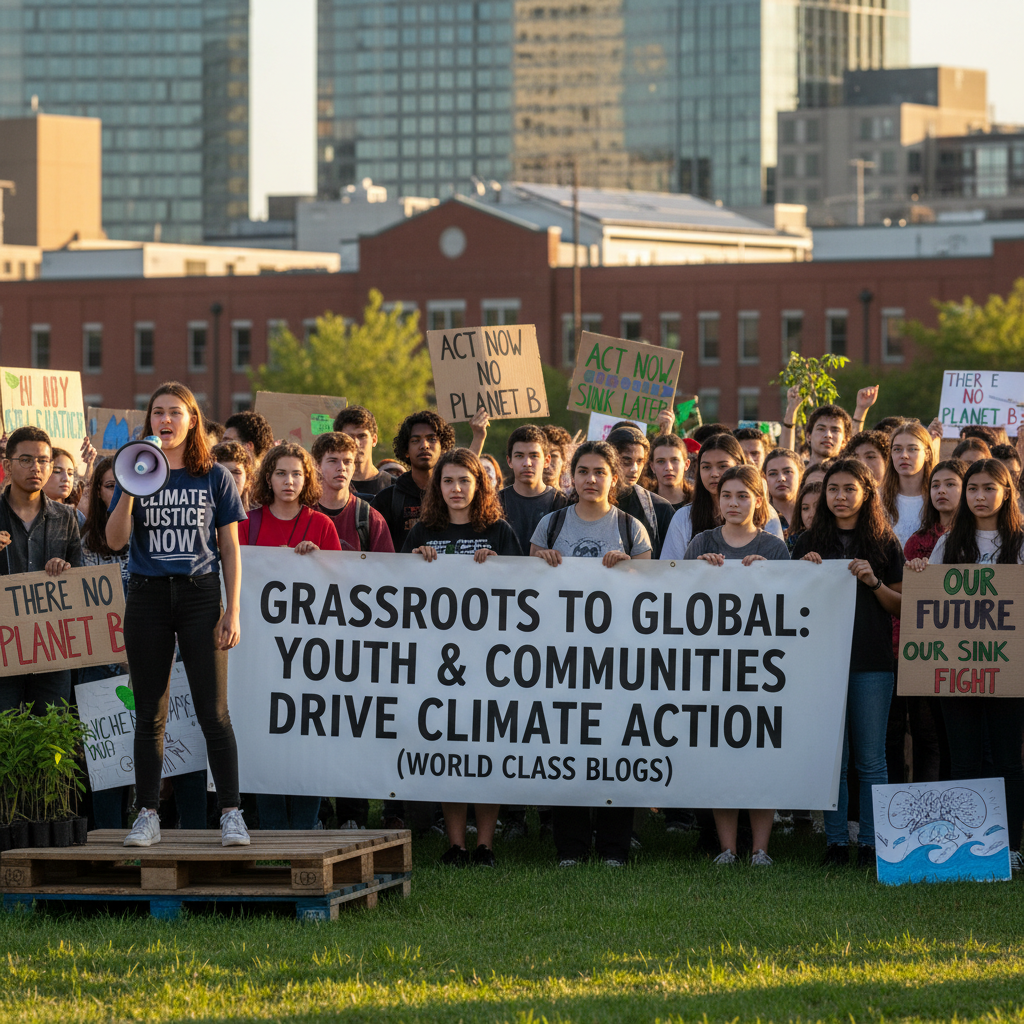
Climate justice represents a framework that connects climate change with social, racial, and economic justice. Unlike purely environmental approaches focused on emissions reduction, climate justice emphasizes: historical responsibility of developed nations for emissions; disproportionate impacts on vulnerable communities; equitable distribution of costs and benefits; meaningful participation in decision-making; and protection of human rights. This framework transforms climate action from technical problem-solving to moral imperative with equity at its core.
The climate justice movement operates at multiple scales: globally, advocating for fair burden-sharing between developed and developing countries; nationally, challenging policies that protect polluters while imposing costs on ordinary people; locally, opposing projects that concentrate pollution in marginalized neighborhoods. This multi-level approach recognizes that injustice manifests differently across scales but shares common roots in unequal power relationships. Understanding climate justice is essential for engaging with contemporary grassroots movements that increasingly frame climate action through equity lenses.
Just Transition Principles
Just transition refers to ensuring that workers and communities dependent on fossil fuel economies are supported through the shift to cleaner systems. Originally developed by labor unions concerned about job losses from environmental regulations, the concept has expanded to encompass broader community wellbeing, including: quality job creation in new industries; retraining and income support for displaced workers; community investment and economic diversification; and democratic participation in transition planning.
Just transition principles provide crucial bridge between environmental and social movements, addressing legitimate concerns that climate action could exacerbate inequality if poorly designed. Successful examples demonstrate that well-managed transitions can create more and better jobs while improving community health and resilience. The concept has gained formal recognition in international agreements, with the Paris Agreement preamble referencing “the imperatives of a just transition of the workforce and the creation of decent work and quality jobs.”
Community-Led Adaptation
Community-led adaptation represents an approach to climate resilience that centers local knowledge, priorities, and decision-making. Unlike top-down interventions that may not match local contexts, community-led approaches: build on existing coping strategies and traditional knowledge; address multiple vulnerabilities simultaneously; strengthen social networks and collective capacity; and prioritize the needs of most vulnerable community members. This participatory approach often yields more effective and sustainable outcomes than externally-driven projects.
Examples of community-led adaptation include: farmer-managed natural regeneration of degraded lands in the Sahel; community-based early warning systems for floods in South Asia; indigenous fire management practices in Australia and North America; and urban community gardens that provide food security while reducing heat island effects. These approaches demonstrate how local innovation often precedes and informs formal policy responses, offering valuable lessons for scaling adaptation effectively.
How Grassroots Action Influences Global Policy: Pathways of Impact
Building Political Will Through Public Mobilization
Grassroots movements create bottom-up pressure that can overcome political inertia on climate action. By demonstrating public concern, shifting social norms, and making climate politically salient, activists create space for policymakers to pursue more ambitious measures. The youth climate strikes have been particularly effective in this regard, with research suggesting they increased public climate concern and influenced election outcomes in several countries. This public pressure complements insider advocacy by changing the political calculus around climate action.
The mechanisms of influence include: agenda-setting by keeping climate in media and public discourse; social diffusion of concern through networks and relationships; electoral accountability through voting and political engagement; and norm change that redefines what constitutes responsible climate citizenship. These pathways often operate subtly and cumulatively rather than through dramatic confrontations, though moments of highly visible protest can accelerate processes already underway. Understanding these mechanisms helps explain how seemingly marginal movements can eventually shift mainstream politics.
Demonstrating Feasibility and Innovation
Grassroots initiatives often serve as living laboratories that demonstrate the feasibility of climate solutions before they’re adopted at larger scales. Community energy projects showed that renewable cooperatives could work economically before utilities embraced them; urban cycling activists pioneered infrastructure that cities later institutionalized; indigenous forest management provided models for REDD+ programs. By proving concepts in practice, grassroots action reduces perceived risks and provides templates for scaling.
This demonstration function is particularly valuable for social and behavioral innovations that are difficult to model theoretically. How will communities actually use shared electric vehicles? What governance models work for neighborhood retrofits? How can circular economy principles be implemented locally? Grassroots experimentation provides evidence about what works in real-world contexts with real people, informing more effective policy design. This evidence-from-practice complements evidence-from-research in building the case for specific approaches.
Creating Alternative Institutions and Economies
Beyond influencing existing institutions, grassroots movements are building alternative structures that embody climate solutions in practice. Energy cooperatives create democratic ownership models for renewable energy; community land trusts provide affordable housing near transit while preventing displacement; local food networks shorten supply chains and reduce emissions; repair cafes and tool libraries promote circular economy principles. These alternatives not only reduce emissions directly but also demonstrate different ways of organizing economic life.
These prefigurative politics—creating the future in the present—serve multiple functions: they provide immediate benefits to participants; demonstrate viable alternatives to extractive systems; build skills and capacity for broader transformation; and create networks of mutual support that increase community resilience. While individual initiatives may be small, their collective impact and symbolic power can be substantial. They represent what anthropologist David Graeber called “the politics of the small figure”—creating change through countless small actions that together reshape possibilities.
Direct Action and Strategic Litigation
Some grassroots movements employ confrontational tactics to directly stop climate-damaging projects or hold polluters accountable. Blockades of fossil fuel infrastructure, divestment campaigns targeting financial institutions, and shareholder activism at corporate meetings all represent forms of direct intervention in systems perpetuating climate harm. While controversial, these tactics have achieved concrete outcomes: cancelled pipeline projects, fossil fuel divestment commitments totaling trillions of dollars, and corporate policy changes.
Complementing street activism, strategic climate litigation has emerged as powerful tool for grassroots influence. Communities and youth are suing governments for inadequate climate policies and corporations for climate damages or deception. Notable cases include: the Urgenda decision ordering the Dutch government to strengthen its climate target; Juliana v. United States (though ultimately dismissed) establishing youth standing to sue for climate harms; and various cases holding fossil fuel companies accountable for climate misinformation. These legal strategies leverage existing institutions to advance climate justice.
Why Grassroots Action Matters: Beyond Emissions Reduction

Enhancing Democratic Participation and Legitimacy
Top-down climate policies often face implementation challenges when communities feel excluded from decisions affecting their lives. Grassroots involvement addresses this democratic deficit by ensuring those most affected participate in shaping solutions. Participatory processes—community assemblies, citizen juries, participatory budgeting for climate projects—can produce more legitimate and effective outcomes than expert-driven approaches alone. This democratic dimension is particularly important for just transitions, where affected communities deserve voice in their futures.
This participatory approach also builds civic capacity for ongoing climate governance. As communities develop skills in deliberation, planning, and collective action, they become more resilient not just physically but politically. This civic infrastructure proves valuable for addressing other challenges beyond climate change, creating positive spillovers for democratic health more broadly. In an era of declining trust in institutions, locally-grounded climate action can rebuild social capital and democratic practice.
Addressing Intersecting Injustices Comprehensively
Grassroots movements often excel at addressing climate change intersectionally—connecting it with other forms of injustice rather than treating it as isolated issue. Community organizations fighting pollution also address housing, jobs, and healthcare; indigenous land defenders connect climate protection with cultural survival and sovereignty; youth activists link climate action with racial justice and economic transformation. This integrated approach matches the interconnected nature of actual community experiences rather than the siloed approach of many institutions.
This intersectional perspective reveals how climate solutions can address multiple community priorities simultaneously. Energy efficiency retrofits reduce emissions while lowering bills and improving health; public transit expansion cuts transportation emissions while increasing mobility for non-drivers; green space creation sequesters carbon while reducing heat stress and providing recreational benefits. By starting with community-identified needs rather than narrow emissions targets, grassroots initiatives often discover synergies that specialized approaches miss.
Fostering Cultural and Psychological Resilience
Beyond physical infrastructure, grassroots action builds cultural and psychological resources for coping with climate change. Community gardens create spaces for connection and meaning amid ecological anxiety; cultural projects help process grief over climate losses; mutual aid networks provide practical support during climate disruptions. These “soft” dimensions of resilience are often overlooked in technical assessments but prove crucial for maintaining community cohesion through difficult transitions.
This psychosocial dimension of climate response addresses growing concerns about climate anxiety, especially among youth. By providing avenues for meaningful action, connection with others, and positive vision of the future, grassroots engagement can transform paralyzing fear into productive agency. This psychological benefit extends beyond activists to broader communities that see neighbors taking constructive action, countering narratives of helplessness that can undermine collective response.
Sustainability in the Future: Scaling Grassroots Innovation
Networks and Federations for Amplification
Individual grassroots initiatives achieve greater impact when connected through networks and federations that share learning, coordinate advocacy, and achieve economies of scale. The Transition Town movement links hundreds of community resilience initiatives worldwide; the ICLEI network connects thousands of local governments committed to sustainability; the Climate Justice Alliance brings together frontline communities across the United States. These networks amplify local voices while preserving local autonomy—a delicate balance but crucial for scaling without homogenizing.
These connective structures enable cross-pollination of ideas across different contexts: urban gardening techniques adapted from one city to another; cooperative business models shared across regions; advocacy strategies transferred between movements. They also provide platforms for collective action on issues requiring scale beyond any single community, such as regional policy advocacy or supply chain transformation. This networked approach represents promising middle path between isolated localism and homogenizing centralization.
Policy Institutionalization of Grassroots Innovations
Successful grassroots approaches sometimes transition to formal policy adoption as governments recognize their effectiveness. Community solar programs begun as cooperatives become municipal initiatives; bike infrastructure pioneered by activists becomes city transportation policy; participatory budgeting experiments become standard practice. This institutionalization represents both opportunity and risk: opportunity for scaling impact, but risk of co-optation or dilution of participatory elements.
Navigating this transition requires careful design of scaling pathways that preserve core principles while adapting to new contexts. Participatory governance mechanisms, community benefit agreements, and ongoing evaluation can help maintain accountability as initiatives scale. The most successful examples involve continued community partnership rather than simple handoff to institutions, creating hybrid models that combine grassroots energy with institutional resources. This co-evolution approach recognizes that scaling isn’t linear replication but adaptive translation.
Digital Tools for Distributed Action
Digital platforms are enabling new forms of distributed grassroots action that combine local grounding with global coordination. Apps for sharing resources, platforms for citizen science, tools for distributed advocacy, and social media for movement building all lower barriers to participation while maintaining local specificity. Digital tools can help match needs with resources across communities, aggregate local data for regional planning, and facilitate peer learning at scale.
However, digital engagement raises important questions about inclusion and equity, as not all communities have equal access to technology or digital literacy. Hybrid approaches that combine digital tools with in-person organizing often prove most effective, using technology to enhance rather than replace human connection. The most promising digital tools are those developed with and for communities rather than imposed from outside, ensuring they address actual needs and contexts.
Common Misconceptions About Grassroots Climate Action
“Grassroots Action Is Too Small to Matter”
This misconception underestimates both the aggregate impact of countless local actions and their catalytic influence on larger systems. While any single community project may seem insignificant against global emissions, collective impact across thousands of communities becomes substantial. More importantly, grassroots action often triggers larger changes by demonstrating feasibility, shifting norms, building political will, and creating alternative models that institutions later adopt. The smallness of grassroots action is often its strength, allowing experimentation and adaptation that larger systems cannot easily achieve.
Historical examples demonstrate how seemingly minor actions can trigger systemic change: the Chipko movement’s tree-hugging in India influenced national forest policy; the Love Canal protests launched the U.S. Superfund program; the first Earth Day mobilized millions and led to major environmental legislation. These examples remind us that large systems often change through accumulation of small pressures rather than single dramatic events. Grassroots action matters not despite its scale but because of it—operating at human scale where change often begins.
“Grassroots Movements Are Always Progressive”
While many climate movements advocate for progressive policies, grassroots action encompasses diverse political perspectives. Some communities oppose renewable projects they perceive as threatening local interests; others resist climate policies they view as economically damaging; still others develop climate responses rooted in conservative values like stewardship, thrift, or local self-reliance. Assuming all grassroots climate action aligns with progressive politics overlooks this diversity and misses opportunities for broader coalition-building.
This diversity suggests that effective climate communication should speak to multiple value systems rather than assuming one-size-fits-all messaging. Conservative communities may respond to frames about energy independence, fiscal responsibility, or preserving natural heritage for future generations. Rural communities may engage with climate solutions that support agricultural viability or local economic development. Recognizing this political diversity within grassroots action enables more inclusive and durable climate coalitions.
“Local Action Distracts From Needed Systemic Change”
Some critics argue that grassroots initiatives focusing on individual or community behavior change let corporations and governments off the hook for systemic transformation. While this risk exists, most contemporary grassroots movements explicitly connect local action with demands for systemic change. The climate strike movement, for instance, combines individual school strikes with clear demands for government and corporate accountability. Similarly, community energy initiatives often advocate for supportive policies while implementing projects.
This dual strategy—building alternatives while challenging existing systems—represents sophisticated approach rather than either/or choice. Grassroots action demonstrates what’s possible while creating pressure for broader change. It also builds capacity for systemic transformation by developing skills, networks, and democratic practice. Rather than distracting from systemic change, well-designed grassroots action prepares the ground for it by creating constituencies, demonstrating alternatives, and building power.
“Grassroots Solutions Can’t Scale to Global Challenges”
This critique assumes that scaling means simply replicating small solutions at larger sizes, which often fails due to contextual differences. However, effective scaling often involves translating principles rather than replicating specifics—adapting participatory processes, cooperative ownership models, or integrated problem-solving approaches to different contexts. Grassroots innovations often scale through influence on policy and institutions rather than direct expansion.
Additionally, some climate challenges inherently require distributed solutions rather than centralized ones. Renewable energy generation benefits from geographic dispersion; sustainable food systems thrive on regional networks rather than global supply chains; adaptation necessarily varies by local conditions. For these challenges, grassroots approaches aren’t second-best alternatives to top-down solutions but optimal responses to distributed problems. The appropriate scale for action varies by problem type, with many climate solutions working best at multiple scales simultaneously.
Recent Developments (2024-2025)

Youth Climate Litigation Advances
Youth-led climate lawsuits have achieved significant milestones, with courts in several countries recognizing governmental climate duties to protect young people’s rights. In 2024, the European Court of Human Rights ruled in favor of Portuguese youth plaintiffs, finding that governments’ inadequate climate policies violate human rights. While enforcement remains challenging, these legal victories establish important precedents and increase pressure on governments to strengthen climate action. Youth plaintiffs have shown remarkable persistence, with some cases continuing for nearly a decade.
These legal strategies complement street activism by leveraging existing institutions to advance climate justice. They also demonstrate intergenerational collaboration, with youth plaintiffs supported by legal teams, scientific experts, and advocacy organizations. The growing success of climate litigation suggests that courts may play increasingly important role in climate governance, particularly where political processes have stalled. This judicial pathway represents innovative form of grassroots influence on systemic change.
Community-Led Renewable Energy Expansion
Community energy projects continue expanding despite supply chain challenges and policy uncertainties. In 2024, the European Union reported that community-owned renewables accounted for approximately 15% of installed capacity in several member states, with particularly strong growth in wind cooperatives in Denmark and Germany. Developing countries are also seeing expansion, with community solar projects providing electricity access in remote areas while creating local economic opportunities.
This growth reflects both technological advances (lower costs, improved storage) and policy innovations (community energy regulations, shared ownership models). Successful projects increasingly combine technical solutions with attention to social dimensions—ensuring benefits flow to local communities, providing opportunities for participation, and building skills for maintenance and governance. This integrated approach demonstrates how grassroots energy initiatives can address both climate and development objectives simultaneously.
Municipal Climate Policy Innovation
Cities and local governments continue advancing climate policies that often exceed national ambition. In 2024, several major cities implemented innovative measures: Barcelona’s “superblock” program expanded, reclaiming streets from cars for public space; Mexico City launched comprehensive zero-waste strategy; Lagos implemented flood resilience plan combining infrastructure and community-based approaches. These local policies often emerge from grassroots advocacy and community partnerships rather than top-down planning.
This municipal leadership is particularly important in federal systems where national climate policy may be constrained. Cities are forming networks to share best practices and coordinate advocacy for supportive national policies. The Global Covenant of Mayors now includes over 12,000 cities representing more than one billion people, demonstrating the scale of local climate commitment. This bottom-up federalism represents important complement to traditional state-centric climate governance.
Success Stories: Grassroots Initiatives with National Impact
The Transition Town Movement
Beginning in 2006 in Totnes, England, the Transition movement has grown to encompass thousands of community initiatives worldwide focused on building local resilience and reducing carbon emissions. Transition groups undertake diverse projects: community gardens, renewable energy cooperatives, local currency systems, repair cafes, skill-sharing networks, and resilience planning. While activities vary by community, they share common principles: positive visioning, inclusion, awareness raising, and building partnerships.
The movement’s impact extends beyond individual projects to influencing municipal policies and shifting community narratives about possibility and agency. Several Transition initiatives have evolved into formal municipal climate plans, while others have inspired regional economic development strategies. The movement demonstrates how grassroots action can scale through network diffusion rather than centralized replication, with each community adapting principles to local context while contributing to global learning community.
The Sunrise Movement in the United States
Founded in 2017, the Sunrise Movement has transformed U.S. climate politics through youth-led mobilization for a Green New Deal. Combining mass mobilization (including highly visible protests in congressional offices), electoral engagement (endorsing and supporting climate champions), and narrative work (framing climate action as opportunity for jobs and justice), Sunrise shifted the Overton window on climate policy. While the Green New Deal legislation hasn’t passed, its principles have influenced the Inflation Reduction Act and shifted Democratic Party platform.
Sunrise exemplifies how grassroots movements can influence national politics through strategic combination of inside and outside tactics. By mobilizing young people as political force, building alliances with other progressive movements, and maintaining clear moral messaging, Sunrise achieved impact disproportionate to its organizational size. The movement continues evolving, with recent efforts focusing on implementation of climate policies and holding elected officials accountable.
Shack/Slum Dwellers International
Shack/Slum Dwellers International is a network of community-based organizations of the urban poor in 33 countries, focusing on housing, basic services, and secure tenure. While not exclusively climate-focused, SDI’s work addresses climate vulnerability through community-led upgrading of informal settlements, disaster risk reduction, and advocacy for inclusive urban planning. Member organizations have developed innovative approaches like community-managed enumerations, savings groups, and demonstration projects that influence municipal policies.
SDI demonstrates how grassroots organizations of vulnerable communities can drive climate-resilient development from the bottom up. By organizing communities to document their own conditions, design solutions, and negotiate with authorities, SDI builds both physical resilience and political power. The federation model enables scaling while maintaining community ownership, with local innovations shared across the network. This approach offers important alternative to top-down urban planning that often excludes informal settlement residents.
Real-Life Examples: Community Climate Action in Diverse Contexts
Indigenous Forest Guardianship in the Amazon
Indigenous territories in the Amazon have consistently demonstrated lower deforestation rates than surrounding areas, with guardianship practices protecting both biodiversity and carbon stocks. The Kayapó people in Brazil have defended their territory against illegal logging and mining through patrols, monitoring, and advocacy, protecting over 10 million hectares of forest. Similar efforts by the Ashaninka in Peru, the Siona-Secoya in Ecuador, and other indigenous groups demonstrate how territorial defense contributes to climate mitigation.
These efforts face escalating threats from increasing deforestation pressures and sometimes violence against defenders. Yet they continue through combination of traditional knowledge, modern technology (drones, satellite monitoring), and international alliances. Supporting indigenous guardianship represents one of most cost-effective climate strategies, with studies suggesting indigenous forest protection could provide up to one-third of cost-effective climate mitigation needed by 2030. These initiatives demonstrate how climate action rooted in cultural identity and territorial rights can achieve significant impact.
Community Flood Resilience in Bangladesh
Local communities in flood-prone regions of Bangladesh have developed sophisticated adaptation strategies through experience with regular inundation. These include: raised homesteads and community platforms for flood refuge; floating gardens that produce food during floods; early warning systems using indigenous knowledge and modern technology; community-managed evacuation plans; and post-flood recovery mutual aid. These strategies combine traditional knowledge with innovations developed through necessity.
These community-based approaches have been institutionalized through national programs like the Comprehensive Disaster Management Programme, which partners with local organizations to scale effective practices. International NGOs and researchers have documented and helped disseminate these approaches to other flood-prone regions. The Bangladesh example demonstrates how grassroots innovation in vulnerable communities can inform national and international adaptation practice, reversing typical knowledge flows from global experts to local recipients.
Urban Community Energy in Germany
Germany’s energy cooperatives have transformed the country’s energy landscape, with over 900 energy co-ops owning approximately 10% of installed renewable capacity. These community-owned projects began in the 1990s when activists installed the first wind turbines despite utility opposition. Through patient organizing, legal innovations, and policy advocacy, they created models that were later adopted more widely. Energy co-ops typically involve local residents as members, with profits reinvested in communities rather than extracted to distant shareholders.
The cooperative model has influenced national energy policy, with Germany’s Renewable Energy Act including provisions for community projects. While recent policy changes have challenged the model, energy co-ops continue innovating—exploring sector coupling (integrating electricity, heat, and transport), energy sharing within communities, and participation in flexibility markets. The German experience demonstrates how grassroots innovation can scale through favorable policy frameworks while maintaining community control.
Conclusion and Key Takeaways

Grassroots climate action represents a vital and dynamic dimension of global climate response, demonstrating that effective solutions often emerge from communities facing climate challenges directly rather than from centralized institutions alone. From youth strikes to indigenous land defense, from community energy to urban resilience initiatives, bottom-up action complements top-down policy through demonstration, innovation, pressure, and alternative-building. As climate impacts intensify and political processes sometimes stall, grassroots movements offer pathways for continued progress and hope.
Several key insights emerge from examining grassroots climate action:
First, effective climate action requires multiple levels of engagement—from international negotiations to national policies to local implementation. Grassroots movements don’t replace governmental action but complement it, often pushing for more ambition while demonstrating what’s possible. The most promising approaches involve synergy between bottom-up innovation and top-down enablement, with each level strengthening the other rather than competing for primacy.
Second, climate justice provides essential framework connecting emissions reduction with equity concerns. Grassroots movements have been instrumental in advancing this framework, insisting that climate solutions address historical responsibility, disproportionate impacts, and unequal power relationships. This justice orientation makes climate action more morally compelling and politically sustainable, building broader coalitions than narrowly technical approaches.
Third, local knowledge and innovation often outpace institutional responses. Communities facing climate impacts directly develop practical, context-specific solutions that address multiple challenges simultaneously. These grassroots innovations provide valuable learning for scaling effective approaches, though scaling requires adaptation rather than simple replication to different contexts. Respecting local expertise and supporting community-led solutions represents both effective strategy and ethical imperative.
Fourth, grassroots action builds crucial capacities beyond immediate emissions reduction: democratic participation skills, community cohesion, psychological resilience, and alternative economic models. These capacities prove valuable for navigating climate disruptions and other challenges, creating positive spillovers beyond climate objectives. Investing in grassroots capacity represents long-term resilience strategy as much as emissions reduction strategy.
Fifth, digital tools and networks enable new forms of distributed grassroots action that combine local grounding with global coordination. However, technology should enhance rather than replace human connection, and digital divides must be addressed to ensure inclusive participation. The most effective digital tools are those co-developed with communities to address their specific needs and contexts.
Sixth, intergenerational collaboration strengthens climate action. Youth movements bring moral urgency and long-term perspective, while elders contribute experience, historical memory, and intergenerational knowledge transfer. Indigenous leadership exemplifies this intergenerational approach, with knowledge transmission across generations proving crucial for climate resilience. Bridging rather than exploiting generational divides creates more durable movements.
Finally, hope emerges from action rather than preceding it. Many grassroots participants report that engaging in climate action—even small actions—alleviates climate anxiety and builds agency. This psychological benefit extends beyond activists to broader communities that witness neighbors taking constructive steps. Grassroots action thus addresses both external climate challenges and internal psychological challenges, demonstrating that the two are deeply connected.
As we navigate the complex challenges of climate change, grassroots movements remind us that transformation often begins at human scale—in neighborhoods, schools, workplaces, and communities. Their diversity, creativity, and persistence offer hope that climate action can be not just necessary burden but opportunity to build more just, resilient, and connected societies. By supporting and learning from these bottom-up efforts while continuing to push for ambitious top-down action, we can accelerate progress toward climate-safe futures for all.
Frequently Asked Questions
What is grassroots climate action?
Grassroots climate action refers to climate initiatives driven by communities, citizens, and local organizations rather than governments or large institutions. It includes community energy projects, youth climate strikes, indigenous land defense, neighborhood resilience initiatives, local policy advocacy, and other bottom-up efforts to address climate change. These actions often emphasize participation, equity, and context-specific solutions.
How effective is grassroots action compared to government policy?
Grassroots action and government policy complement each other rather than compete. Grassroots initiatives often demonstrate feasibility, build political will, create alternative models, and address justice dimensions that top-down policies may overlook. Government policies provide frameworks, resources, and scaling mechanisms for grassroots innovations. The most effective climate responses involve synergy between bottom-up and top-down action.
What is the youth climate movement and what has it achieved?
The youth climate movement, sparked by Greta Thunberg’s 2018 school strike, has grown into global force mobilizing millions of young people. Achievements include: raising public awareness and concern about climate change; influencing election outcomes in several countries; advancing climate litigation; shifting corporate behavior through divestment campaigns; and keeping climate high on political agendas despite competing crises. The movement has particularly emphasized climate justice and intergenerational equity.
How do indigenous communities contribute to climate action?
Indigenous communities contribute through: forest stewardship that protects carbon sinks; traditional knowledge about ecosystem management and adaptation; defense of territories against deforestation and extraction; advocacy for rights-based climate solutions; and demonstration of sustainable livelihoods in harmony with nature. Indigenous lands show significantly lower deforestation rates than protected areas, making indigenous guardianship among most cost-effective climate strategies.
What are community energy projects and how do they work?
Community energy projects are renewable energy initiatives owned and controlled by local communities rather than utilities or corporations. They typically involve: community members pooling resources to finance projects; democratic governance structures; local economic benefits through jobs and revenue; and engagement with broader energy transition. Examples include wind cooperatives in Denmark, solar gardens in the United States, and micro-hydro projects in Nepal.
What is climate justice, and why does it matter?
Climate justice is a framework connecting climate change with social, racial, and economic justice. It emphasizes: historical responsibility of developed nations; disproportionate impacts on vulnerable communities; equitable distribution of costs and benefits; meaningful participation in decision-making; and protection of human rights. This framework matters because it addresses the root causes of climate vulnerability and builds broader, more durable coalitions for climate action.
How can individuals get involved in grassroots climate action?
Individuals can: join local climate organizations or start new ones; participate in community projects (gardens, energy co-ops, repair cafes); engage in climate advocacy through petitions, letters, or protests; support youth and indigenous climate leadership; reduce personal emissions while pushing for systemic change; use their professional skills to support climate initiatives; and vote for climate-conscious candidates at all government levels.
What are some successful examples of grassroots climate action?
Successful examples include: Germany’s energy cooperatives owning 10% of renewable capacity; the Transition Town movement building community resilience worldwide; youth climate strikes mobilizing millions; indigenous forest guardianship protecting Amazon carbon stocks; community flood adaptation in Bangladesh reducing vulnerability; and the Sunrise Movement shifting U.S. climate politics toward Green New Deal principles.
How does grassroots action influence national and international policy?
Grassroots action influences policy through: building public pressure and shifting political will; demonstrating the feasibility of solutions; providing models for policy design; advancing litigation that establishes legal precedents; electing climate-conscious officials; and participating in formal consultation processes. International networks like the Global Covenant of Mayors amplify local voices in global forums.
What challenges do grassroots climate movements face?
Challenges include: limited resources compared to fossil fuel interests; burnout among activists; repression in some contexts (particularly for indigenous and frontline defenders); difficulty scaling while maintaining participatory values; coordination across diverse movements; and maintaining momentum through policy cycles and competing crises. Successful movements develop strategies to address these challenges through mutual support, alliance-building, and adaptive tactics.
How are digital tools changing grassroots climate action?
Digital tools enable: rapid mobilization and coordination; distributed campaigning across geographies; citizen science and environmental monitoring; resource sharing and mutual aid networks; documentation of rights violations; and global solidarity building. However, digital divides can exclude some communities, and online activism should complement rather than replace in-person organizing. The most effective approaches combine digital and analog strategies.
What is a just transition, and how do communities achieve it?
Just transition ensures workers and communities dependent on fossil fuel economies are supported through the shift to cleaner systems. Communities achieve it through: participatory planning processes; retraining programs for displaced workers; economic diversification strategies; community benefit agreements with new industries; and policies that create quality jobs in renewable energy, efficiency, and other climate solutions. Just transition principles bridge the environmental and labor movements.
How do grassroots movements address climate adaptation?
Grassroots adaptation includes: community-based early warning systems; local water management and conservation; urban gardening for food security; neighborhood mutual aid networks for disaster response; indigenous knowledge-based resilience strategies; and community-led upgrading of informal settlements. These approaches often prove more effective than top-down interventions because they build on local knowledge and strengthen social networks.
What role do cities and local governments play in climate action?
Cities and local governments implement climate policies often exceeding national ambition, including: building codes and standards; public transit investment; urban planning for compact development; renewable energy procurement; waste reduction programs; and climate resilience planning. Many cities participate in networks like C40 and ICLEI to share best practices and coordinate advocacy for supportive national policies.
How does grassroots action address climate anxiety?
Grassroots action addresses climate anxiety by: providing avenues for meaningful contribution; creating communities of support and solidarity; building skills and agency; offering positive visions of the future; and achieving concrete wins that counter hopelessness. Psychological research suggests that climate action—even small actions—reduces anxiety by replacing passive worry with active engagement.
What are community resilience initiatives?
Community resilience initiatives strengthen local capacity to withstand and recover from climate impacts and other shocks. Examples include: community gardens for food security; tool libraries and skill-sharing networks; mutual aid groups for disaster response; local energy systems with backup capacity; and social networks that check on vulnerable neighbors. These initiatives build both physical infrastructure and social cohesion.
How can grassroots action be inclusive and equitable?
Inclusive grassroots action: centers frontline communities most affected by climate change; addresses intersecting injustices (racial, economic, gender); uses accessible language and processes; provides childcare and transportation for meetings; compensates community members for their time; shares leadership across demographics; and builds partnerships across movements. Intentional inclusion requires ongoing effort but strengthens movements morally and strategically.
What is prefigurative politics in climate action?
Prefigurative politics involves creating desired future in the present through alternative institutions and practices. Climate examples include: energy cooperatives modeling democratic ownership; community gardens demonstrating local food systems; repair cafes practicing circular economy; and co-housing communities reducing consumption. These initiatives not only reduce emissions directly but also demonstrate viable alternatives to extractive systems.
How do climate lawsuits work, and who files them?
Climate lawsuits are filed by communities, youth, NGOs, and sometimes governments against polluters or governments for climate damages or inadequate action. They use various legal theories: human rights violations, constitutional protections, public trust doctrine, consumer protection against deception, and negligence. Notable cases include Urgenda v. Netherlands, Juliana v. United States, and various suits against fossil fuel companies.
Where can I learn more about grassroots climate initiatives?
Resources include: Global Climate Action Portal tracking non-state commitments; Climate Justice Alliance member stories; Transition Network resources; Sunrise Movement organizing tools; Indigenous Environmental Network updates; ICLEI city case studies; and academic journals like Local Environment and Community Development Journal. Many organizations offer workshops, toolkits, and networking opportunities for new participants.
About the Author
This guide was developed by researchers and practitioners with experience supporting grassroots climate action across multiple contexts. Our team includes former community organizers, participatory action researchers, movement strategists, and allies who have worked alongside youth climate activists, indigenous land defenders, community energy pioneers, and urban resilience initiatives.
We believe that grassroots climate action represents not just a supplementary approach but an essential dimension of effective climate response. By centering community knowledge, democratic participation, and justice principles, bottom-up initiatives offer pathways that are both more equitable and often more innovative than top-down approaches alone. Our work seeks to amplify these grassroots voices while facilitating learning across movements and scales.
Our approach emphasizes partnership rather than extraction—working with communities to document and share their experiences while respecting their autonomy and leadership. We recognize that grassroots movements face real power imbalances and resource constraints, and our role is to support rather than direct their work. This humble, solidarity-based perspective guides our engagement with diverse climate movements.
For more perspectives on collaborative approaches to complex challenges, explore related content on our platform including guides to building successful partnerships and frameworks for optimizing distributed operations.
Free Resources for Further Learning
- Global Climate Action Portal: UN platform tracking commitments and actions from cities, regions, businesses, investors, and civil society.
- Climate Justice Alliance Member Stories: Case studies and resources from frontline communities leading climate solutions.
- Transition Network Resources: Tools, guides, and case studies for community-led transition initiatives worldwide.
- Sunrise Movement School: Training materials and organizing tools for youth climate activism.
- Indigenous Environmental Network: Updates and resources on indigenous climate leadership and rights.
- ICLEI Case Study Library: Examples of local government climate action from cities worldwide.
- Community Environmental Legal Defense Fund: Resources for community rights and local governance.
For those interested in the psychological dimensions of climate engagement, consider exploring this guide to psychological wellbeing which addresses how to maintain hope and agency while confronting climate challenges.
Discussion
Grassroots climate action raises important questions about power, scale, and transformation:
How should grassroots movements navigate tensions between reform and transformation? Some initiatives work within existing systems to achieve incremental change, while others seek to transform those systems fundamentally. Both approaches have value, but tensions can arise when reformist actions legitimize systems that need transformation, or when transformative purism prevents achievable gains. Developing strategic clarity about when to work within systems versus challenge them represents ongoing challenge for movements.
What constitutes appropriate solidarity between privileged activists and frontline communities? Climate movements increasingly recognize that those most affected should lead, but practical implementation raises questions: How should resources be shared? Who speaks for communities? How are decisions made in cross-class, cross-race coalitions? Developing principles and practices for ethical solidarity—that centers frontline leadership without tokenizing or burdening communities—requires ongoing reflection and relationship-building.
How can grassroots energy be sustained through long-term transformation rather than momentary mobilization? Many movements experience boom-bust cycles with bursts of activity followed by burnout and decline. Building sustainable organizations with healthy cultures, leadership development, and resilience against repression represents crucial challenge. Lessons from historical social movements suggest the importance of combining “high-risk” activism with “low-risk” community building, cultural work, and alternative institution creation.
What role should disruption and confrontation play in climate movements? Tactics like blockades, strikes, and property destruction generate attention and pressure but can alienate potential supporters and invite repression. Movements must strategically assess when disruption advances goals versus when it undermines broader support. This calculation varies by context, with some countries tolerating more confrontation than others. Developing diverse tactical repertoires that include both disruptive and persuasive approaches often proves most effective.
How can grassroots movements effectively engage with political systems without being co-opted? Electoral politics, policy advocacy, and institutional partnerships offer pathways for influence but risk diluting radical demands or diverting energy from grassroots organizing. Movements that successfully navigate this tension often maintain separate organizing bases while engaging strategically with political systems, using insider-outsider strategies that leverage both protest and policy channels.
These questions have no definitive answers but merit ongoing discussion within and across movements. By grappling with these challenges, grassroots climate action can continue evolving as a powerful force for both immediate change and long-term transformation—demonstrating that another world is not only necessary but already being built in countless communities worldwide.


