


Introduction: Why Your Investment Portfolio Can Be a Force for Good
For decades, investors faced a perceived binary choice: maximize financial returns through traditional investments or donate to charity for social good. What if you could do both simultaneously? This is the powerful premise of impact investing—the practice of making investments with the intention to generate measurable, beneficial social or environmental impact alongside a financial return.
No longer a niche strategy, impact investing has entered the financial mainstream, representing trillions of dollars in assets under management. It recognizes that the capital markets, one of the most powerful forces on the planet, can and must be harnessed to address critical global challenges like climate change, inequality, and access to healthcare and education. For anyone with capital to deploy—from institutional investors to everyday individuals—understanding impact investing is key to aligning your financial future with the future you want to see. This approach to finance is a core part of building a Sustainable Future.
Background/Context: From Niche Idea to Mainstream Movement
The term “impact investing” was coined in 2007 at a Rockefeller Foundation gathering, but its roots lie in faith-based investing, the anti-apartheid divestment movements, and community development finance institutions (CDFIs) that have operated for decades. The early 2000s saw the rise of socially responsible investing (SRI), which primarily used negative screens to exclude “sin stocks” like tobacco or firearms.
Impact investing evolved beyond this exclusionary approach to a proactive one. It’s about actively seeking out investments that create positive change. The formation of the Global Impact Investing Network (GIIN) in 2009 provided a crucial backbone for the industry, creating standards, metrics, and a community for practitioners. The adoption of the United Nations Sustainable Development Goals (SDGs) in 2015 provided a universal framework for defining impact, further accelerating the field’s growth. This represents a maturation of capital markets, similar to how technology is evolving other sectors, as explored in our Technology & Innovation section.
Key Concepts Defined: The Lexicon of Conscious Capital

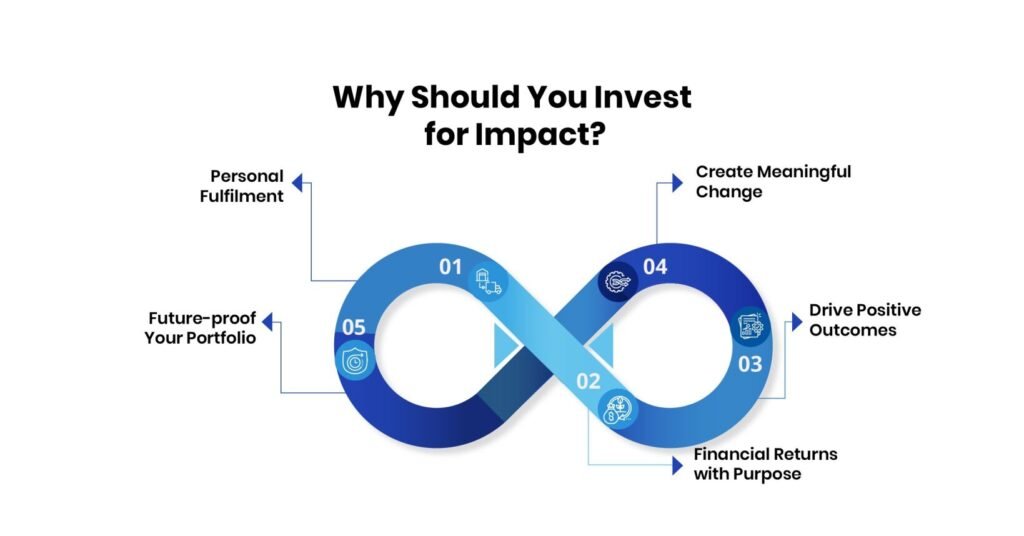
- Impact Investing: Investments made into companies, organizations, and funds with the intention to generate measurable, beneficial social and environmental impact alongside a financial return.
- ESG (Environmental, Social, Governance): A set of criteria used to evaluate a company’s ethical and sustainable practices. Impact investing often uses ESG data to inform decisions, but the key differentiator is the intentionality behind generating a specific, positive impact.
- Thematic Investing: Focusing on specific impact themes, such as clean energy, sustainable agriculture, financial inclusion, or affordable housing.
- IRIS+ System: The generally accepted system for measuring, managing, and optimizing impact, managed by the GIIN. It provides standardized metrics to compare impact performance across portfolios.
- Impact-Washing: Akin to greenwashing, this is when investors or funds overstate the social or environmental benefits of their investments to attract capital.
- Theory of Change: A methodology that outlines a long-term goal and maps backward to identify the necessary preconditions to achieve it, explaining how the investment is expected to create its intended impact.
How It Works (Step-by-Step): Building an Impact Investment Portfolio
Building an impact portfolio is a deliberate process that integrates financial and impact due diligence.
Step 1: Define Your Impact Thesis
What change do you want to see in the world? Your thesis should be specific. Are you passionate about gender equality, climate solutions, or racial equity? Aligning with the UN SDGs is an excellent starting point. This is as crucial as having a clear strategy when starting any venture, much like the planning needed for an E-commerce Business.
Step 2: Determine Your Financial Expectations
Impact investments can target a range of returns:
- Market-Rate: Seeking risk-adjusted returns competitive with traditional investments.
- Below-Market-Rate (Concessionary): Accepting a lower return in exchange for greater impact. This is often called “patient capital.”
Step 3: Select Your Asset Classes and Vehicles
Impact investing is possible across the entire capital spectrum:
- Public Equity: Buying stocks of companies with strong ESG practices and positive impact.
- Fixed Income: Purchasing green bonds, social bonds, or sustainability-linked bonds.
- Private Equity & Venture Capital: Investing directly in private social enterprises or through impact-focused VC funds.
- Real Assets: Investing in sustainable forestry, renewable energy projects, or affordable housing.
Step 4: Conduct Rigorous Due Diligence
This is a two-part process:
- Financial Due Diligence: The traditional analysis of the business model, management team, market size, and financial projections.
- Impact Due Diligence: Assessing the company’s Theory of Change, its impact measurement framework, and how “mission-locked” it is to ensure the impact is genuine and lasting.
Step 5: Measure, Manage, and Report Impact
Once invested, the work is not over. Use frameworks like IRIS+ to track the investment’s performance against its impact goals. Transparent reporting is essential to ensure accountability and combat impact-washing.
Why It’s Important: The Ripple Effects of Conscious Capital
- Drives Capital to Critical Areas: It directs funding to solutions for the world’s most pressing problems that are underserved by traditional markets.
- De-risks the Future: By investing in sustainable and equitable business models, impact investors help build a more resilient global economy, mitigating long-term risks associated with climate change and social unrest.
- Signals Market Demand: The growth of impact investing sends a powerful signal to all companies that social and environmental performance is a material factor in their ability to access capital.
- Aligns Values and Wealth: It allows individuals and institutions to ensure their capital is not working against their values, contributing to a sense of purpose and, by extension, supporting Mental Wellbeing by aligning actions with beliefs.
Common Misconceptions
- “Impact investing means sacrificing returns.” A growing body of evidence, including reports from the GIIN and major financial institutions, shows that impact investments can and often do achieve market-rate returns. Impact can be a source of alpha (outperformance) by identifying innovative companies poised for growth in emerging sectors.
- “It’s the same as ESG.” ESG is a risk management framework used to assess a company’s operational practices. Impact investing is an investment strategy with the deliberate goal of generating positive, measurable impact. You can use ESG data to be a better impact investor, but they are not synonymous.
- “It’s only for ultra-high-net-worth individuals.” While direct private equity deals may be, retail investors can access impact through publicly traded ESG ETFs, mutual funds, green bonds, and crowdfunding platforms focused on social enterprises.
- “The impact is too difficult to measure.” While challenging, the field has made significant strides with standardized systems like IRIS+. The question is no longer if impact can be measured, but how well it is being measured and managed.
Recent Developments & Success Stories
Recent Development: The Explosion of Sustainable Debt
The market for green, social, and sustainability-linked bonds has exploded, surpassing the $1 trillion mark for the first time in a single year. Corporations and governments are using these instruments to fund specific environmental projects (green bonds) or social outcomes (social bonds), providing a clear, liquid, and scalable way for fixed-income investors to generate impact.
Success Story: The Rise of LeapFrog Investments
LeapFrog is a profit-with-purpose private equity firm that invests in high-growth financial services and healthcare companies in Asia and Africa. Their focus is on “the emerging consumer,” the billions of people joining the formal economy for the first time. LeapFrog has consistently delivered top-quartile financial returns to its investors while measurably improving the lives of over 200 million people by providing them with access to insurance, savings, and healthcare for the first time. This proves that serving low-income markets can be both impactful and highly profitable.
Case Study & Lessons Learned: The Omidyar Network
Case Study: Founded by eBay creator Pierre Omidyar and his wife Pam, the Omidyar Network is a pioneering impact investing firm. It uniquely uses a hybrid structure: it makes for-profit investments to scale business solutions and nonprofit grants to support advocacy and research, all focused on the same social issues like digital identity, property rights, and education.
Lessons Learned:
- The Power of a Flexible Capital Stack: By having both for-profit and philanthropic capital, Omidyar can deploy the right tool for the job. They can fund early-stage, high-risk research with grants and then invest in the most promising, scalable ventures that emerge.
- Systems-Level Change: Their approach demonstrates that real change requires tackling a problem from multiple angles—supporting both the supply (innovative businesses) and demand (policy, consumer awareness) sides of a market.
- Patience and Conviction: Impact often takes time to materialize. Omidyar’s long-term commitment to its focus areas shows that achieving deep, systemic impact requires patience and a conviction that goes beyond short-term financial cycles.
Real Life Examples
- The Rise Fund (TPG): A massive global impact investing fund co-founded by Bono and Jeff Skoll that rigorously measures the financial value of its social and environmental impact using a metric called the “Impact Multiple of Money.”
- Calvert Impact Capital: A nonprofit that allows individuals to invest in communities around the world by purchasing notes that fund a portfolio of nonprofits and social enterprises.
- Triodos Bank (Europe): A pioneer in sustainable banking that only lends to and invests in organizations working in culture, social welfare, the environment, and sustainable energy.
Conclusion & Key Takeaways
Impact investing is dismantling the old paradigm that purpose and profit are mutually exclusive. It is a sophisticated, evidence-based approach to deploying capital that recognizes the interconnectedness of our global economy and its societal foundations.
Key Takeaways:
- Intentionality is Key: The core of impact investing is the deliberate intention to create positive, measurable impact.
- It’s a Spectrum: Your strategy can range from avoiding harm to actively benefiting stakeholders, with a corresponding range of financial return expectations.
- Due Diligence is Dual-Pronged: You must assess both financial viability and impact integrity with equal rigor.
- Measurement is Non-Negotiable: “What gets measured, gets managed.” Robust impact measurement is essential for credibility and effectiveness.
- The Future is Already Here: Impact investing is not a fringe movement; it is a rapidly growing segment of the global financial landscape that is reshaping how capital is allocated.
By choosing impact investing, you are not just allocating capital; you are casting a vote for the kind of world you want to build. For more insights on managing your financial life, see this guide on Personal Finance, and for more thought leadership, explore our Blog.
Frequently Asked Questions (FAQs)
1. What is the minimum amount needed to start impact investing?
You can start with as little as the price of a single share of an ESG-focused ETF or mutual fund, which can be less than $100.
2. How do I know if a fund is truly impactful or just “impact-washing”?
Look for transparency: Do they publicly report their impact metrics using standardized systems like IRIS+? Are they certified by third parties like B Lab (for funds) or the Operating Principles for Impact Management?
3. Can impact investing help me retire?
Yes, if you build a diversified portfolio targeting market-rate returns. The goal is for your retirement savings to grow while supporting a sustainable economy.
4. What’s the difference between an ESG rating and an impact score?
An ESG rating assesses a company’s resilience to ESG-related risks. An impact score measures the positive outcomes a company creates for people and the planet.
5. Are there impact investing options in emerging markets?
Yes, and many compelling opportunities exist there, particularly in areas like financial inclusion, renewable energy, and affordable healthcare, where the need for investment is greatest.
6. How does impact investing relate to shareholder activism?
Impact investors can use their shareholder votes to push companies in their public portfolios to adopt more sustainable and equitable practices, amplifying their impact.
7. What are “green bonds”?
Bonds where the proceeds are exclusively applied to finance or re-finance new and/or existing eligible green projects, such as renewable energy or energy efficiency.
8. Is crypto and blockchain part of impact investing?
Yes, there are emerging use cases, such as using blockchain for transparent supply chains or creating new models for decentralized philanthropy. The technology itself is neutral; its impact depends on the application.
9. How do I find an impact investing financial advisor?
Look for advisors who hold credentials like the Chartered SRI Counselor (CSRIC) or who are part of networks like the US SIF: The Forum for Sustainable and Responsible Investment.
10. What are the biggest risks in impact investing?
The same financial risks as traditional investing (market, liquidity, credit risk), plus impact-specific risks, such as the failure to achieve the intended social or environmental outcome.
11. Can I invest in my local community through impact investing?
Absolutely. This is often called “place-based investing.” You can invest in local CDFIs, community development projects, or small business funds focused on your region.
12. How does impact investing relate to venture philanthropy?
Venture philanthropy applies venture capital principles to charitable giving, focusing on capacity-building grants for nonprofits. Impact investing uses investment tools (debt, equity) to support revenue-generating social enterprises.
13. What is a “SDG-aligned” investment?
An investment that directly contributes to achieving one or more of the United Nations’ 17 Sustainable Development Goals, such as SDG 7 (Affordable and Clean Energy) or SDG 5 (Gender Equality).
14. Do I need to be an expert to start?
No. Starting with a simple, low-cost ESG ETF is a great way to begin aligning your portfolio with your values while you learn more about the deeper strategies of direct impact investing.
15. Where can I learn more about specific impact investment opportunities?
Platforms like ImpactBase, CapShift, and Toniic are dedicated platforms and membership networks that provide access to vetted impact investment opportunities across asset classes.


