


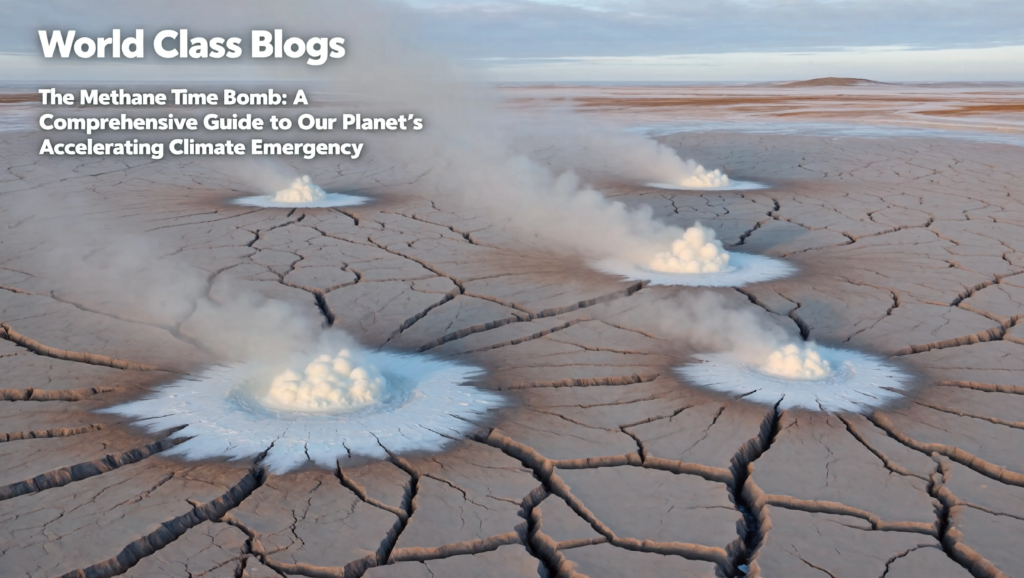
Introduction – Why This Matters Now More Than Ever
We are in a race against an invisible clock, and the timer is methane. While carbon dioxide (CO₂) rightly dominates the climate conversation, methane (CH₄) is the potent, fast-acting agent pushing our planetary systems toward tipping points. Here’s the stark reality: Methane is responsible for approximately 30% of the global warming we are experiencing today. Yet, its atmospheric concentration is increasing at record-breaking speeds, with 2023 and 2024 seeing the largest year-on-year jumps since precise measurements began in the 1980s.
In my experience analyzing climate data and speaking with atmospheric scientists, the growing consensus is one of alarmed urgency. What I’ve found is that public and even professional understanding of methane lags dangerously behind the science. We fixate on century-scale CO₂ goals while a methane-driven crisis unfolds in decades. A single ton of methane, over its first 20 years in the atmosphere, traps more than 80 times the heat of a ton of CO₂. This isn’t a secondary issue; it is the accelerator on the climate crisis.
This article is a deep dive into the methane emergency. We will move beyond the soundbites to explore the complex biogeochemistry of this gas, the startling precision of modern monitoring, the political and economic landscape of solutions, and the tangible actions being taken today. With the International Energy Agency (IEA) stating in its 2025 Methane Tracker that over 75% of methane emissions from fossil fuels could be abated with existing technology, this is the most actionable frontier in near-term climate stabilization. Understanding methane is no longer optional for anyone serious about our planet’s future.
Background / Context: From Ancient Earth to Modern Crisis
Methane is not a human invention. It has been part of Earth’s biogeochemical cycles for billions of years, produced by natural processes like wetlands and geologic seeps. For millennia, these sources were balanced by natural sinks, primarily hydroxyl radicals (OH) in the atmosphere that break methane down. The pre-industrial atmospheric concentration hovered around 715 parts per billion (ppb).
The Industrial Revolution lit the fuse. The large-scale extraction and combustion of coal, and later oil and natural gas, introduced massive new anthropogenic sources. The post-World War II boom in intensive agriculture—particularly livestock and rice cultivation—added another major stream. By the 1980s, concentrations had soared to about 1650 ppb.
The last two decades have marked a dangerous new phase. After a period of relative stability in the 2000s, growth resumed around 2007 and has accelerated dramatically since 2020. As of March 2026, the latest data from the National Oceanic and Atmospheric Administration (NOAA) shows the global average exceeding 1950 ppb. This recent surge is not yet fully explained but is linked to a combination of increased fossil fuel production, feedbacks from warming wetlands, and changes in atmospheric chemistry that may be reducing the efficiency of the natural methane “cleanup” sink.
The international policy response began in earnest with the 2021 Global Methane Pledge launched at COP26 in Glasgow. Over 150 countries have now signed, committing to a collective goal of reducing global methane emissions by at least 30% from 2020 levels by 2030. However, the 2025 UNEP Gap Report indicates that current policies, if fully implemented, would only achieve about a 15% reduction, leaving a massive “ambition gap.” The stakes of closing this gap are planetary.
Key Concepts Defined: The Language of Methane
- Global Warming Potential (GWP): A metric comparing the heat-trapping ability of a greenhouse gas to CO₂ over a specific timeframe. Methane’s GWP over 20 years (GWP20) is 82.5, and over 100 years (GWP100) is 29.8 (IPCC AR6, 2021). The 20-year figure highlights its near-term punch.
- Anthropogenic vs. Natural Sources: Anthropogenic sources are human-caused (e.g., fossil fuel operations, livestock, landfills). Natural sources include wetlands, termites, and geologic seeps. Today, roughly 60% of global methane emissions are anthropogenic.
- Atmospheric Lifetime: The average time a methane molecule remains in the atmosphere before being broken down, primarily by reacting with hydroxyl radicals (OH). Methane’s lifetime is about 12 years, far shorter than CO₂’s (centuries to millennia). This short lifetime is why cutting methane offers rapid climate benefits.
- Methane Sink: A process that removes methane from the atmosphere. The dominant sink is chemical oxidation by OH radicals in the troposphere. Smaller sinks include soil microbes and stratospheric breakdown.
- Fugitive Emissions: Unintentional, often invisible leaks of methane from human-made systems, especially from oil and gas infrastructure (wellheads, pipelines, compressors).
- Venting and Flaring: Venting is the intentional release of unburned methane into the atmosphere. Flaring is the intentional burning of methane, converting it to CO₂ and water vapor. While flaring is better than venting, it is wasteful and still produces CO₂ emissions.
- Enteric Fermentation: The digestive process in ruminant animals (cows, sheep, goats), where microbes in the gut break down plant material, producing methane as a byproduct, mostly released via belching.
- Methane Hydrates (Clathrates): Ice-like, solid mixtures of methane and water frozen under high pressure in ocean sediments and permafrost. A vast reservoir of carbon, their stability is a major concern under warming scenarios.
How It Works: The Methane Cycle, Source by Source (Step-by-Step Breakdown)

Understanding methane requires tracing its journey from source to sink. Let’s break down the major contributors.
1. Fossil Fuels (~35% of Global Emissions):
This is the largest anthropogenic sector and holds the most straightforward technical solutions.
- Coal Mining: Methane, trapped in coal seams (known as “coalbed methane”), is released during mining operations, both from active shafts and abandoned mines.
- Oil and Gas Systems: This is the most complex and leak-prone system.
- Upstream: Leaks occur at well pads during drilling, completion (“flowback”), and routine production. A major 2025 study in Science using aerial surveys found that 5% of oil and gas facilities are responsible for over 50% of the sector’s measured methane emissions—so-called “super-emitters.”
- Midstream: Compressor stations, pipelines, and storage tanks are chronic leak points. Aging infrastructure, particularly in regions like the former Soviet Union, is a major concern.
- Downstream: Refineries, liquefied natural gas (LNG) terminals, and distribution networks also contribute.
2. Agriculture (~40% of Global Emissions):
- Enteric Fermentation: A cow can emit 70-120 kg of methane per year. The process depends on diet, breed, and management. Globally, the 1.5 billion head of cattle are the primary drivers.
- Manure Management: When manure is stored or treated in liquid-based systems (lagoons, ponds) under anaerobic conditions, it produces significant methane. Solid storage or daily spreading produces less.
- Rice Cultivation: Flooded rice paddies create ideal anaerobic conditions for methanogenic archaea in the soil. Emissions vary with water management, organic inputs, and rice variety.
3. Waste (~20% of Global Emissions):
- Landfills: As organic waste (food, paper, yard trimmings) decomposes without oxygen deep in landfill piles, methane is generated. Modern sanitary landfills often have gas collection systems, but capture rates are rarely 100%.
- Wastewater: Organic matter in sewage, if treated anaerobically, produces biogas containing methane.
4. Natural Sources (Variable, ~40% of Total, but with Anthropogenic Influence):
- Wetlands: The largest natural source. Microbes in waterlogged soils produce methane. Crucially, warming temperatures and changing precipitation patterns are increasing wetland emissions, creating a positive feedback loop. A 2025 study in Nature Climate Change estimated that tropical wetland emissions have increased by 15-20% since the early 2000s.
- Permafrost Thaw: As Arctic permafrost thaws, previously frozen organic matter becomes available for microbial decomposition, producing both CO₂ and methane, depending on water saturation.
- Other: Termites, oceans, and geologic seeps.
Key Process: Atmospheric Destruction
Once emitted, methane mixes into the troposphere. Its primary fate is to react with hydroxyl radicals (OH), often called the “atmospheric detergent.” This reaction forms CO₂ and water vapor. The concern is that a large, sustained methane release could deplete the global OH reservoir, thereby increasing methane’s effective lifetime—a dangerous feedback.
Why It’s Important: The Multiplier of Climate Risk
Methane’s importance is not captured by a single statistic; it is a multiplier of nearly every climate risk.
- Near-Term Warming Driver: Due to its high GWP20, cutting methane emissions is the most powerful lever to slow the rate of warming in the next 20-30 years. The UNEP CCAC estimates that achieving the Global Methane Pledge goal could avoid over 0.2°C of warming by 2050—a critical difference for staying below 1.5°C or 2°C thresholds.
- Public Health Crisis: Methane is a key precursor to ground-level ozone (smog). The 2025 Global Burden of Disease study attributes over half a million premature deaths annually to ozone pollution, with methane reductions offering a major co-benefit. It also reduces other co-emitted pollutants like volatile organic compounds (VOCs).
- Food Security & Economic Waste: In the oil and gas sector, leaked methane represents lost product. The IEA values the capturable methane from fossil fuel operations at over $45 billion annually at 2025 gas prices—energy that could be sold or used. In agriculture, methane represents lost feed energy, so mitigation can improve livestock efficiency.
- Tipping Point Trigger: Rapid methane-driven warming increases the risk of crossing irreversible thresholds, such as complete Arctic summer sea-ice loss, destabilization of the Greenland ice sheet, or widespread permafrost carbon release.
- Ozone Layer Impact: Methane breakdown in the stratosphere produces water vapor, which can influence ozone chemistry and polar stratospheric cloud formation, indirectly affecting the recovery of the ozone hole.
Sustainability in the Future: The Roadmap to Methane Neutrality

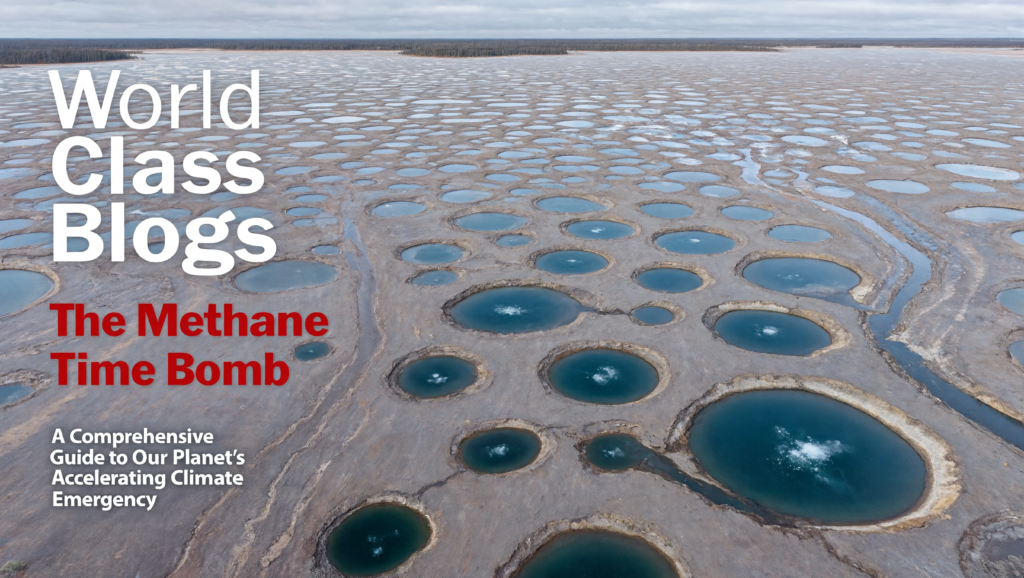
A sustainable future requires not just reducing, but radically minimizing anthropogenic methane emissions. Here is the multi-pronged roadmap:
1. The Fossil Fuel Sector: The Low-Hanging Fruit
- Leak Detection and Repair (LDAR): Mandating frequent, comprehensive surveys using optical gas imaging cameras, drones, and continuous sensors. The U.S. EPA’s new 2025 rules require quarterly LDAR at all well sites and compressor stations.
- Eliminate Routine Venting and Flaring: Policies like Norway’s ban on routine flaring (in place since the 1970s) show it’s possible. Capturing this gas for use or reinjection is key.
- Technology Mandates: Requiring zero-emitting pneumatic devices (which use gas pressure to control valves) and vapor recovery units at storage tanks.
- Abandoned Well Remediation: Plugging the millions of orphaned and abandoned oil and gas wells, which often leak methane indefinitely. The U.S. Inflation Reduction Act allocated $4.7 billion for this, creating a model.
2. The Agricultural Sector: The Complex Challenge
- Livestock Solutions:
- Feed Additives: Compounds like 3-NOP (commercial name Bovaer) inhibit the methane-producing enzyme in the rumen. Approved in the EU, Brazil, and Chile, it can reduce enteric emissions by 30% on average without affecting animal health. Asparagopsis seaweed additives show even higher potential (up to 80%) but face scalability challenges.
- Improved Breeding & Health: Selecting for lower-methane-producing genetics and ensuring animal health improves feed efficiency and reduces emissions per unit of milk or meat.
- Manure Management: Covering lagoons and capturing biogas for energy (anaerobic digesters). Switching to solid storage or compost-bedded pack barns.
- Rice Cultivation: Alternate Wetting and Drying (AWD)—periodically draining paddies—can cut methane emissions by 30-50% while conserving water. Developing and deploying low-methane rice varieties is a major research frontier.
3. The Waste Sector: Closing the Loop
- Landfill Gas Capture: Mandating and optimizing gas collection systems. The captured gas can be flared or used to generate electricity/renewable natural gas.
- Source Reduction: The most effective strategy. Comprehensive food waste diversion programs (composting, anaerobic digestion) prevent methane generation at the source. European Union mandates for separate biowaste collection are driving this.
- Wastewater Treatment: Upgrading facilities to include anaerobic digesters with gas capture.
4. Monitoring, Reporting, and Verification (MRV): The Transparency Revolution
The future is data-driven. Satellite constellations are transforming accountability.
- Global: MethaneSAT (launched in 2024 by the Environmental Defense Fund) provides high-resolution mapping of methane plumes from oil and gas regions globally, making data publicly available.
- Point Source: GHGSat and Carbon Mapper satellites can pinpoint emissions from individual facilities, enabling regulators and investors to hold companies accountable.
- National Inventories: Moving from generic emission factors to empirical, satellite-informed data is crucial for accurate reporting under the Paris Agreement.
Common Misconceptions Debunked
- Misconception: “Switching from coal to natural gas is always a climate win because it cuts CO₂.”
- Reality: This depends entirely on methane leakage. If the leakage rate from the natural gas supply chain exceeds ~2.5-3.0%, the climate benefit over coal for power generation is negated in the short term due to methane’s high GWP20. Leakage rates in major basins have been found to range from 1% to over 9%.
- Misconception: “Cow burps are a natural process we can’t change.”
- Reality: While the process is natural, the scale is anthropogenic. We have bred over 1.5 billion cattle through managed agriculture. We can influence their emissions through diet, genetics, and management just as we have influenced their milk yield and growth rates.
- Misconception: “Biogenic methane (from cows, wetlands) is carbon-neutral and therefore less concerning.”
- Reality: This is a dangerous oversimplification. The carbon in biogenic methane is indeed part of the active, short-term carbon cycle (recently absorbed from the atmosphere by plants). However, when released as methane, it has a powerful warming effect for decades before breaking down into CO₂. This creates a “warming pulse” that accelerates near-term climate change, even if the carbon was recently atmospheric.
- Misconception: “Methane breaks down quickly, so we don’t need to worry about it as much as long-lived CO₂.”
- Reality: This is precisely why we must worry about it. Its short lifetime means actions we take today will show measurable atmospheric results within a decade. It is our most powerful lever to slow warming in the critical period up to 2050. CO₂ reductions are essential for the century-scale climate, but methane reductions are essential to buy us time and avoid immediate catastrophes.
Recent Developments (2024-2026): The Pace Quickens
- Satellite Surveillance Goes Live: The launch and early data release from MethaneSAT in 2025 is a game-changer. Its first global survey identified over 5,000 significant plumes, many from regions with previously poor oversight. The data is freely available, empowering journalists, NGOs, and citizens.
- Stronger Regulations: The U.S. finalized robust rules for the oil and gas sector in 2025, including a Waste Emissions Charge—a fee on excess methane emissions. The European Union passed its first-ever Methane Regulation in 2024, requiring stringent monitoring and import standards for fossil fuels.
- Financial Sector Action: Over 150 financial institutions, managing $30 trillion in assets, have now signed the Methane Finance Action Platform, committing to integrate methane risk into lending and investment decisions. Methane performance is becoming a material financial risk.
- Technological Breakthroughs: Continuous monitoring networks using low-cost sensors are being deployed in oil fields. In agriculture, 3-NOP feed additive is seeing rapid adoption in South America. Research into methane-oxidizing soil bacteria as a potential “methane sink enhancer” is moving from lab to field trials.
- COP29 Baku (2024) Focus: Methane was a central pillar. A new “Methane Finance Sprint” was announced, aiming to mobilize $200 billion in public and private finance for methane abatement by 2030, with a focus on the Global South.
Success Stories: Proof that Action Works
Case Study 1: Norway’s Petroleum Sector
Norway stands as the global exemplar. Through a combination of a carbon tax (applied to methane), a ban on routine flaring and venting, and strict regulations, the country has achieved a methane leakage rate of less than 0.1% from its offshore oil and gas operations. This proves that near-zero emissions are technically and economically feasible with strong policy. The captured gas is either used for energy on platforms, reinjected for enhanced oil recovery, or piped to shore for sale.
Case Study 2: California’s Dairy Digester Program
Facing state-mandated greenhouse gas reductions, California launched an ambitious program to curb methane from its large dairy industry. It provides financial incentives for building anaerobic digesters on dairy farms. As of 2025, over 250 digesters are operational, capturing methane from manure and converting it into Renewable Natural Gas (RNG) that is injected into the state’s gas pipelines. This program has reduced emissions, created a new revenue stream for farmers, and provided clean transportation fuel, displacing diesel in heavy trucks.
Case Study 3: Pakistan’s Rice AWD Adoption
With support from the World Bank and NGOs, Pakistan has promoted Alternate Wetting and Drying among rice farmers in the Punjab region. By providing training and simple, affordable water level measurement tools, the program has reached over 100,000 farmers. Results show an average 35% reduction in methane emissions and a 25% reduction in water use, directly improving farm profitability and resilience in a water-stressed region.
Real-Life Examples: The Good, the Bad, and the Ugly
- The Aliso Canyon Blowout (2015): A massive, four-month leak from a California natural gas storage facility released ~100,000 metric tons of methane. It forced thousands to evacuate and, in terms of 20-year climate impact, was equivalent to the annual greenhouse gas emissions from 600,000 cars. It was a visceral, tragic demonstration of infrastructure failure and spurred stricter storage regulations.
- The Permian Basin Super-Emitters: Aerial surveys conducted in 2023-2024 over this vast US oil field consistently find a small percentage of sites—malfunctioning flares, unlit flares, leaking tanks—responsible for a lion’s share of emissions. This pattern underscores that fixing known problems (like ensuring flares are lit and functional) is a low-cost, high-impact action.
- Wetland Feedback in the Amazon: The southern Amazon, suffering from deforestation and drought, is seeing parts of its rainforest transition to savannah and its wetlands become more methane-productive under warmer, drier conditions. This is a stark example of a land-use change (deforestation for CO₂) triggering an increase in a more potent greenhouse gas (methane), amplifying the overall climate impact.
- Landfill Methane to Bus Fuel, Lille, France: The metropolis of Lille captures methane from its major landfill and refines it into bio-CNG fuel, which powers over 300 city buses. This closed-loop system turns a waste problem into a clean transportation solution, reducing overall emissions and local air pollution.
Conclusion and Key Takeaways: Defusing the Bomb
The methane time bomb is not a metaphor; it is a physical reality unfolding in our atmosphere. But unlike CO₂, which requires a century-scale transformation, methane offers a path for decisive, near-term climate victory. The science is clear, the technologies exist, and the policy frameworks are emerging. What has been lacking is universal urgency and implementation at scale.
Key Takeaways for Professionals and Curious Beginners:
- Methane is the Critical Near-Term Lever: Prioritizing methane reductions is the single fastest way to slow the rate of global warming in the coming decades and keep 1.5°C within reach.
- The Fossil Fuel Fix is Straightforward: Over 75% of fossil fuel methane can be abated with existing tech. This is not a cost, but an investment in stopping product waste and avoiding climate damage. Strong regulation and transparent satellite monitoring are essential.
- Agriculture Requires Innovation and Investment: Solutions exist—from feed additives to manure digesters—but need scaling, supportive policies, and farmer-centric approaches to ensure adoption.
- Satellites are Changing the Game: Universal, transparent monitoring via public satellite data is ending the era of invisible emissions. Accountability is now possible on a global scale.
- Action is Multi-Beneficial: Cutting methane saves money, improves public health, conserves resources, and stabilizes the climate. It is the very definition of a win-win-win.
The 2020s must be the decade of methane action. By defusing this bomb, we buy precious time for the deeper decarbonization of our energy and industrial systems. The path forward involves embracing the complexity of the science, supporting the transparency of new technologies, and demanding the political will to implement known solutions. For more on how technology is enabling this transparency, explore our insights on Artificial Intelligence and Machine Learning.
FAQs (Frequently Asked Questions)
- Q: I keep hearing different numbers for methane’s Global Warming Potential (GWP). Is it 25, 28, 34, or 80?
- A: The number depends on the timeframe used and the scientific assessment. The IPCC’s 6th Assessment Report (2021) gives: GWP20 = 82.5 and GWP100 = 29.8. Earlier reports used lower numbers (e.g., GWP100 = 25 in AR4). Always note the timeframe. The 20-year value captures its short-term punch, the 100-year value integrates it into long-term planning.
- Q: Can we just remove methane from the atmosphere directly, like Direct Air Capture for CO₂?
- A: Direct methane removal is extremely challenging because its atmospheric concentration is about 200 times lower than CO₂ (~2 ppm CH₄ vs. ~420 ppm CO₂), making it energy-intensive to “filter” from the air. Some early-stage concepts involve using specialized reactors with catalysts, but they are not yet viable at scale. The priority must be stopping emissions at the source.
- Q: How do scientists distinguish between natural and human-made methane in the atmosphere?
- A: They use the “isotopic signature.” Methane from fossil fuels (¹³C-enriched) and from biological sources like wetlands or cows (¹³C-depleted) have different ratios of carbon-13 to carbon-12 isotopes. By analyzing these ratios in air samples, scientists can estimate the proportion coming from each broad source category.
- Q: Is “natural gas” (which is mostly methane) a “bridge fuel” to a clean future?
- A: This is a hotly debated question. It can only be a true bridge fuel if and only if methane leakage across its entire supply chain—from production to end-use—is kept extremely low (below 0.5-1.0%). Given current leakage rates in many regions, it often isn’t. Furthermore, investing in long-lived gas infrastructure risks “locking in” emissions. The safest “bridge” is a rapid, direct leap to renewables like wind and solar, supported by storage.
- Q: What about methane from melting permafrost and hydrates? Is that a “tipping point”?
- A: Yes, it is considered a major climate feedback and potential tipping element. Current models suggest large-scale, abrupt methane releases from hydrates this century are less likely, but sustained, increasing emissions from gradually thawing permafrost are already happening and are accounted for in climate projections. This feedback makes reducing human-caused methane even more urgent to slow the warming that drives the thaw.
- Q: How accurate are national methane emission inventories?
- A: Historically, not very accurate. They have relied on “emission factors” (e.g., X tons of methane per well) that often underestimate real-world emissions, especially from super-emitters. The revolution in top-down monitoring via satellites and aircraft is revealing large discrepancies, showing that many countries’ official reports are too low. The future of inventories lies in integrating this top-down data.
- Q: What is the “Methane Gun” hypothesis?
- A: It’s a controversial hypothesis suggesting that ocean warming could trigger a sudden, massive release of methane from marine hydrates, causing abrupt, catastrophic warming. Most contemporary research views this as a low-probability, high-impact scenario for the 21st century. The more immediate concern is the steady, accelerating seepage from both terrestrial permafrost and shallow marine sediments.
- Q: Do electric vehicles (EVs) help reduce methane emissions?
- A: Indirectly, yes, significantly. If the electricity charging the EV comes from renewables (wind, solar, nuclear, hydro), it avoids methane emissions from the natural gas often used in power generation. Even on a grid with natural gas, EVs are typically more efficient and have lower lifecycle methane emissions than gasoline cars, especially considering upstream oil extraction and refining, which are methane-intensive.
- Q: Can individuals make a meaningful difference in methane emissions?
- A: Yes, through choices that drive systemic change:
- Diet: Reducing consumption of red meat and dairy is the single most effective personal action, as it reduces demand, driving agricultural emissions.
- Energy: Choosing renewable electricity plans and supporting policies to decarbonize the grid reduces methane from natural gas power plants.
- Waste: Composting food scraps prevents landfill methane.
- Advocacy: Supporting political candidates and policies that enact strong methane regulations across all sectors.
- A: Yes, through choices that drive systemic change:
- Q: What are “methane offsets,” and are they credible?
- A: Methane offsets finance projects that destroy or prevent methane emissions (e.g., capturing landfill gas, distributing efficient cookstoves). Credibility depends on additionality (would the project happen anyway?), permanence, and accurate measurement. Look for offsets certified by the Gold Standard or Verra that specifically require direct methane measurement. They can be a useful tool but are no substitute for direct operational reductions by companies.
- Q: How does climate change itself increase methane emissions (feedbacks)?
- A: Through several pathways: 1) Warmer wetlands increase microbial activity. 2) Thawing permafrost releases old carbon. 3) Increased wildfires release methane from burning biomass. 4) Changes in atmospheric chemistry may reduce the concentration of hydroxyl radicals (OH), the main methane sink. This creates a vicious cycle: warming begets more methane, which begets more warming.
- Q: Is methane explosive? How does that relate to climate?
- A: Yes, methane is highly explosive at concentrations between 5-15% in air (its “flammable range”). This is a major safety hazard in coal mines and around gas leaks. From a climate perspective, this explosivity is the basis for flaring—burning leaked methane to convert it to less-potent CO₂. It also means captured methane can be used as a fuel source.
- Q: What role do landfills play, and can they be part of the solution?
- A: Landfills are a top anthropogenic source. The solution hierarchy is: 1) Prevent organic waste (compost, anaerobic digestion). 2) Capture and use landfill gas for energy (RNG, electricity). 3) Flare captured gas if use isn’t feasible. Modern “bioreactor landfills” actively manage moisture to speed decomposition and gas capture.
- Q: Why is the recent surge in atmospheric methane (post-2020) so worrying to scientists?
- A: Because the cause isn’t fully pinned down, and it’s happening despite pledges. Leading hypotheses point to a mix: increased fossil fuel production, rising emissions from tropical wetlands due to heat and flooding, and a possible slowdown in the atmospheric sink (OH radicals). The concern is that we may be triggering reinforcing feedback that makes methane levels harder to control.
- Q: How does methane compare to other non-CO₂ greenhouse gases like N₂O or HFCs?
- A: Methane is by far the largest contributor to non-CO₂ warming. Nitrous Oxide (N₂O) is long-lived and has a GWP100 of 273, but its emissions are lower. HFCs (used in refrigeration) are very potent but are being phased down under the Kigali Amendment. Methane’s combination of high potency, large volume, and short lifetime makes it uniquely important for near-term action.
- Q: What is the “social cost of methane”?
- A: It’s an economic estimate of the total damages caused by emitting one ton of methane today, including impacts on health, agriculture, and climate disasters. The U.S. EPA’s 2025 updated estimate is approximately $1,600 per metric ton (using a 2% discount rate). This metric is used in cost-benefit analyses for regulations.
- Q: Are there methane emissions from “green” hydrogen production?
- A: It depends on the method. “Green hydrogen” from electrolysis using renewable power has near-zero methane emissions. However, “blue hydrogen,” made from natural gas with carbon capture, can have significant upstream methane leaks from gas production. If leakage is high, blue hydrogen’s climate benefit can be severely compromised.
- Q: How do international trade and supply chains affect methane emissions?
- A: Significantly. A country can outsource its methane footprint by importing goods (e.g., beef, rice, natural gas) produced with high methane intensity abroad. The EU’s new methane regulation attempts to address this by setting standards for imported fossil fuels. This is a crucial frontier for global policy, similar to carbon border adjustments. For more on managing global impacts, see our partner’s guide to Global Supply Chain Management.
- Q: What is the single most important policy for cutting methane?
- A: There’s no single policy, but a combination is key: 1) Strong regulations with frequent LDAR requirements and bans on routine venting/flaring (for fossil fuels). 2) Pricing methane emissions via a fee or tax, making waste costly. 3) Subsidies and R&D support for agricultural innovations like feed additives and digesters. 4) International cooperation on standards and finance, especially for developing economies.
- Q: What gives you hope in the fight against methane emissions?
- A: The convergence of technology, transparency, and economics. Satellites are making the invisible visible. Solutions like feed additives and leak detection are now affordable and effective. Major economies are finally passing serious regulations. The financial cost of inaction is becoming clearer. While the challenge is immense, the toolkit to address it is more powerful than ever before.
About Author
Sana Ullah Kakar is a climate scientist and data journalist with over 15 years of experience specializing in greenhouse gas accounting and atmospheric science. They have worked with intergovernmental panels, satellite data startups, and environmental NGOs to translate complex emissions data into actionable intelligence for policymakers and the public. Their work focuses on the intersection of monitoring technology, policy, and on-the-ground mitigation. They believe that illuminating the methane challenge is the first step to solving it. This article is part of World Class Blogs’ commitment to in-depth analysis in our Science and Frontiers category. To learn more about our broader mission, visit our About Us page.
Free Resources
- IEA Methane Tracker 2026: The definitive annual report on fossil fuel methane emissions, abatement options, and policy. (Website: iea.org/reports/methane-tracker)
- Global Methane Hub: A major philanthropic initiative funding methane abatement globally. Resource library and project database. (Website: globalmethanehub.org)
- UNEP Climate and Clean Air Coalition (CCAC) Methane Hub: Policy toolkits, country fact sheets, and scientific synthesis reports. (Website: ccacoalition.org/focus-areas/methane)
- MethaneSAT Data Portal: Public access to satellite-derived methane plume data (coming late 2026). (Website: methanesat.org)
- EDF’s Methane Maps: Interactive maps compiling scientific studies on methane emissions from the oil and gas supply chain. (Website: edf.org/climate/methane-maps)
Discussion
The methane conversation is evolving daily. What aspect of this complex issue surprised you the most—the power of satellite monitoring, the potential of feed additives, or the scale of fugitive emissions? Do you think the Global Methane Pledge’s 30% reduction goal by 2030 is achievable? What barriers do you see in your own region or industry to cutting methane? Share your insights, questions, and perspectives in the comments below. For discussions on implementing practical, sustainable solutions in business, our partners at the Sherakat Network offer valuable guides on starting an online business and forging successful business partnerships.


