


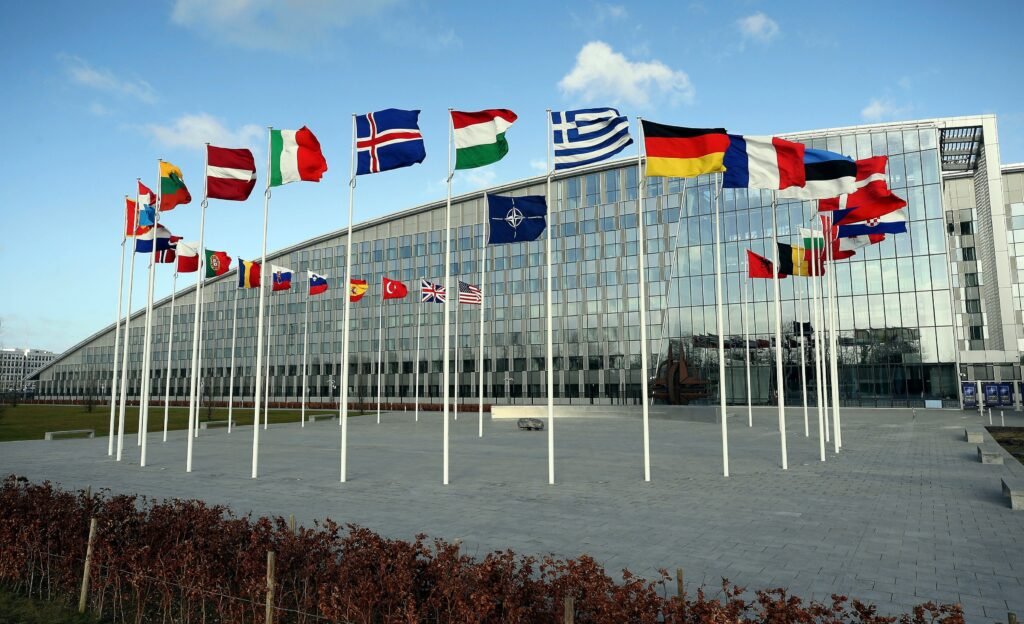
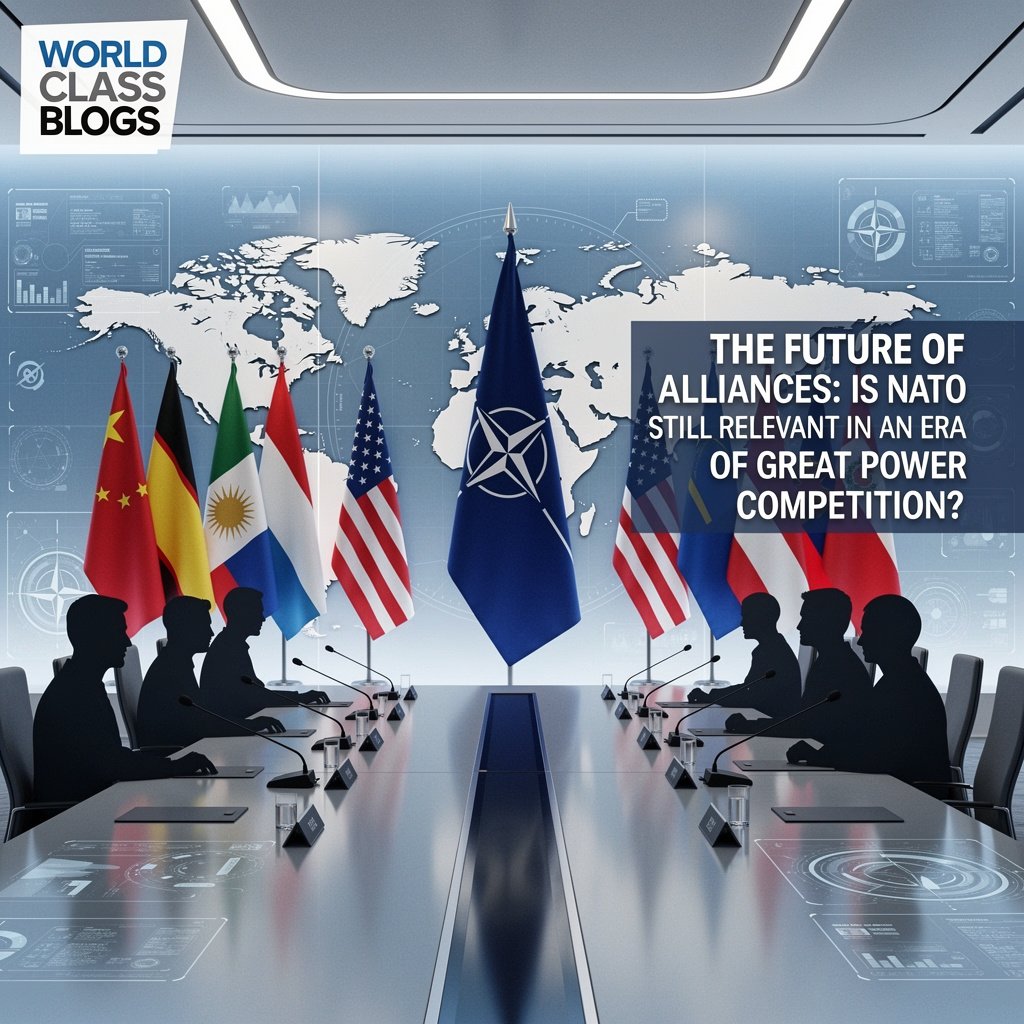
The Future of Alliances: Is NATO future Still Relevant in an Era of Great Power Competition?
Introduction – Why This Matters
On the morning of February 24, 2022, as Russian tanks rolled across the Ukrainian border, a centuries-old question was asked with renewed urgency in capitals from Washington to Warsaw: Who will come to our defence? The answer, for 31 nations in Europe and North America, was enshrined in a single, powerful sentence: Article 5. “An armed attack against one… shall be considered an attack against them all.” This principle of collective defence is the bedrock of the North Atlantic Treaty Organisation (NATO), history’s most successful military alliance. Yet, today, NATO stands at a pivotal crossroads. Confronted by a revanchist Russia, a rising and assertive China, disruptive technologies, and internal political strains, the alliance faces an existential question: Can a 75-year-old pact, forged in the Cold War, secure the peace in a 21st century defined by cyber warfare, hybrid threats, and strategic competition that spans the globe?
In my experience observing NATO summits and military exercises, the alliance’s greatest strength—and its greatest vulnerability—is its consensus-based nature. What I’ve found is that NATO is not a monolith but a complex, sometimes fractious, political-military organism. For the curious beginner, understanding NATO’s evolution is key to deciphering today’s headlines on Ukraine, European defence, and transatlantic relations. For the security professional, it’s a critical case study in adapting institutional power to new threats. This guide will dissect NATO’s challenges and opportunities, exploring whether it can reinvent itself as the central pillar of a new era of collective security or risk obsolescence in a world of diffuse and complex dangers. For context on the technological landscape shaping modern conflict, see our analysis in Artificial Intelligence and Machine Learning.
Background / Context
NATO was born on April 4, 1949, in Washington, D.C., with 12 founding members. Its primary purpose was clear: to deter Soviet expansion in Europe and anchor the United States securely to the continent’s defence. For four decades, it stood opposite the Warsaw Pact, a balance of terror maintained by nuclear deterrence and massive conventional forces. The collapse of the Soviet Union in 1991 presented NATO with its first “crisis of purpose.” The enemy was gone. What now?
The alliance embarked on a dual strategy:
- Enlargement: Welcoming former Warsaw Pact nations and Soviet republics (Poland, Hungary, Czech Republic in 1999; Baltic states in 2004; etc.), extending its security umbrella eastward.
- Transformation: Shifting from a static, territorial defence force to a more agile, expeditionary alliance, undertaking missions “out of area” like in the Balkans (Bosnia, Kosovo) and Afghanistan.
This post-Cold War period fostered a sense of strategic complacency. Defence budgets in Europe dwindled. The famous U.S. criticism of allies not meeting the 2% of GDP defence spending target became a perennial grievance. The 2014 annexation of Crimea by Russia was a shock, but the response—economic sanctions and the deployment of small, tripwire battlegroups to the Baltics—was measured. The true paradigm shift came on February 24, 2022. Russia’s full-scale invasion of Ukraine shattered the post-1991 European security order overnight. It validated the fears of eastern flank allies and forced a dramatic reinvigoration of NATO, culminating in the accession of Finland (2023) and Sweden (2024), and the most significant overhaul of its defence plans since the Cold War.
The context today is one of simultaneous, multi-domain competition. The “Euro-Atlantic area” is no longer a discrete theatre. Challenges are interconnected: Russian aggression in Europe, Chinese coercion in the Indo-Pacific, cyber and hybrid attacks from both, and the destabilising effects of climate change and disinformation. NATO must defend its treaty area while managing global strategic competition.
Key Concepts Defined
- Collective Defence (Article 5): The heart of the NATO treaty. The commitment that an attack on one member is an attack on all, obliging each to take “such action as it deems necessary,” including the use of armed force.
- Deterrence and Defence: The twin pillars of NATO strategy. Deterrence is about preventing conflict by convincing a potential adversary that the costs of aggression outweigh the benefits. Defence is about being prepared to fight and win if deterrence fails.
- The 2% Guideline: A commitment made by all Allies at the 2014 Wales Summit to move towards spending 2% of their Gross Domestic Product (GDP) on defence within a decade. It is a political benchmark for burden-sharing, not a legal obligation.
- Forward Presence / Enhanced Forward Presence (eFP): The deployment of multinational NATO battlegroups to the Baltic states and Poland on a rotational basis post-2014. These are not permanent bases (due to treaty restrictions with Russia), but persistent, combat-ready forces meant to deter and, if necessary, defend from the first moments of a crisis.
- The NATO Response Force (NRF): A high-readiness force comprising land, air, maritime, and special operations components that can be deployed quickly for collective defence, crisis response, or stabilisation operations.
- The Strategic Concept: NATO’s core policy document, updated roughly every decade. The 2022 Strategic Concept, approved at the Madrid Summit, is the current blueprint. It identifies Russia as “the most significant and direct threat” and, for the first time, addresses the “systemic challenges” posed by the People’s Republic of China.
- Hybrid Threats (in NATO context): Malign activities below the threshold of armed conflict (cyber-attacks, disinformation, political subversion, use of proxies) that NATO must now counter as part of its core deterrence mission.
- Indo-Pacific Partners: A group of non-NATO countries (Japan, South Korea, Australia, New Zealand) with whom NATO is deepening dialogue and cooperation, recognising that security in Europe and the Indo-Pacific is interconnected.
How It Works (Step-by-Step Breakdown): NATO’s Machinery of Deterrence and Decision

NATO is often perceived as a single army. It is not. It is a political-military alliance where sovereign nations commit to collective action. Here’s how it functions, from daily operations to an Article 5 crisis.
The Political Level: Consensus is King
- The North Atlantic Council (NAC): The principal political decision-making body. Composed of Permanent Representatives (Ambassadors) from each member state. It meets weekly. All decisions are made by consensus—no voting. One member can block any action.
- Summits: Meetings of NATO Heads of State and Government, typically every year or two. They set the alliance’s strategic direction (e.g., the 2022 Madrid Summit).
- The Secretary General: The chief international civil servant (currently Jens Stoltenberg). Chairs the NAC, oversees the International Staff, and is the alliance’s primary spokesperson and broker of compromise.
The Military Command Structure: From Planning to Action
- The Military Committee (MC): The senior military authority, composed of the Chiefs of Defence of each member state. It provides military advice to the NAC.
- Strategic Commands:
- Allied Command Operations (ACO), headquartered at SHAPE in Mons, Belgium. Led by the Supreme Allied Commander Europe (SACEUR), always a U.S. General. This is the warfighting command. It is responsible for planning and executing all NATO operations.
- Allied Command Transformation (ACT), in Norfolk, Virginia, USA. Focuses on future warfare, developing new capabilities, doctrine, and interoperability.
The Article 5 Process: What Happens if an Ally is Attacked?
- Consultation & Verification: The attacked Ally immediately invokes Article 4 (consultation) or directly invokes Article 5. The NAC convenes urgently to assess the situation, verify the attack, and determine its collective nature.
- Consensus for Action: The NAC must reach a unanimous consensus that Article 5 has been invoked. This is a political, not an automatic, decision.
- Strategic Direction: Once Article 5 is invoked, the NAC provides strategic political direction to the military authorities.
- Military Response Options: SACEUR and his staff present the NAC with a range of military response options (from defensive deployments to full-scale combat operations).
- Consensus on Response: The NAC must again reach consensus on the specific collective response. This could include the deployment of the NATO Response Force, specific national contributions, or direct combat.
- Execution: National forces, under national command but operating according to NATO plans and often under the tactical command of a NATO commander, execute the agreed response.
This process is designed to be deliberate and binding. The strength of Article 5 lies not in its automaticity, but in its certainty: a potential aggressor must calculate that it will eventually face the combined might of the alliance. The 9/11 attacks on the U.S. triggered the first and only invocation of Article 5, leading to NATO’s mission in Afghanistan.
Why It’s Important: More Than a Military Pact
NATO’s relevance extends far beyond tanks and fighter jets. It is a strategic instrument that shapes the global order.
- The Guarantor of European Stability: For 75 years, NATO has prevented great power war on the European continent—its foundational and enduring success. It provides a security framework that allows the European Union to flourish politically and economically.
- The Transatlantic Bridge: NATO binds North America to Europe, ensuring that U.S. security guarantees underpin European defence. This link is America’s primary vehicle for influencing European security and prevents the continent from fragmenting into competing national spheres of influence.
- The Framework for Interoperability: NATO standards (for communications, ammunition, logistics) mean that a Dutch frigate, a Polish tank battalion, and a U.S. fighter squadron can operate together seamlessly. This interoperability is a massive force multiplier that no adversarial coalition can easily match. It’s a lesson in operational synergy, similar to the principles needed for successful business partnerships.
- Deterring Major Conflict: By presenting a unified front, NATO deters large-scale aggression against its members. The forward presence in the Baltics is a classic example of “tripwire” deterrence: any attack would immediately involve forces from multiple NATO nations, making miscalculation catastrophic for an aggressor.
- Managing Global Systemic Competition: While a regional alliance by treaty, NATO’s 2022 Strategic Concept acknowledges that challenges from China, disruptive technologies, and climate change affect alliance security. It provides a forum for Western democracies to coordinate strategies on these global issues.
Sustainability in the Future: Adaptation or Decline
The future of NATO hinges on its ability to adapt to four key challenges.
- The Burden-Sharing Dilemma (2% as a Floor, Not a Ceiling): The 2% GDP target has been largely met (over 20 allies are expected to hit it in 2024). The new challenge is the quality of spending. Money must go into modern, interoperable capabilities (air defence, long-range fires, cyber, undersea infrastructure) rather than personnel pensions. The next benchmark is the “Pledge of Madrid” to have forces at high readiness and to meet capability targets.
- The China Conundrum: NATO is a Euro-Atlantic alliance, but China’s global reach, its “no limits” partnership with Russia, and its coercion of allies’ economic interests in the Indo-Pacific demand a response. NATO will not become a global alliance or fight in the South China Sea. Its role is to: 1) Protect allies from Chinese hybrid and cyber threats, 2) Secure NATO infrastructure (e.g., 5G networks) from Chinese penetration, and 3) Support the security of Indo-Pacific partners through dialogue and exercises, ensuring they are not pressured into abandoning shared values.
- The Rise of “Warfare Below the Threshold”: How does a consensus-based alliance respond to cyber-attacks, disinformation, or sabotage that fall short of an armed attack but can be equally damaging? NATO has established a Cybersecurity Centre of Excellence and can now recognise a “cumulative series of attacks” as potentially triggering Article 5. Developing agile political responses to hybrid tactics is a work in progress.
- Political Cohesion and the “Doubt over Article 5”: The greatest long-term threat may be internal. Questions about the reliability of U.S. commitments (raised during the Trump presidency and lingering) and the rise of populist, Russia-sympathetic parties in some member states could erode the fundamental trust that makes deterrence credible. NATO’s political resilience is as important as its military readiness.
Common Misconceptions
- Misconception 1: “NATO is a tool of American imperialism.”
- Reality: While the U.S. is the dominant military power, NATO operates by consensus. European allies have frequently constrained U.S. ambitions (e.g., opposing the 2003 Iraq War as a NATO operation). It is a forum where allies influence U.S. policy as much as the U.S. leads.
- Misconception 2: “Article 5 means automatic war.”
- Reality: It means an attack on one is considered an attack on all, but the response is not automatic. Each ally determines what action it deems necessary. That response could be non-military (diplomatic, economic) or military. The process is political and deliberate.
- Misconception 3: “European NATO members are free-riders.”
- Reality: This is an outdated trope. Since 2014, and especially after 2022, European and Canadian defence spending has surged. They provide the vast majority of the troops for NATO’s forward presence and missions. European allies also contribute non-material assets that the U.S. lacks, such as extensive intelligence networks in Africa and the Middle East, and soft power influence.
- Misconception 4: “NATO expansion provoked Russia.”
- Reality: This is a key Russian propaganda point. NATO is a defensive alliance; membership is voluntary. Nations like Poland and the Baltics sought membership because of historical Russian aggression, not the other way around. Putin’s invasion of Ukraine—a country not in NATO and with no active membership plan—exposed this narrative as a pretext for imperial ambition.
Recent Developments (2024-2025)

- The D-Day Plus 80 Summit (2024): Marking the 75th anniversary, the Washington Summit focused on “Ukraine’s Bridge to NATO.” Allies announced a long-term security assistance framework for Ukraine and a new NATO command in Wiesbaden, Germany, to coordinate training and equipment delivery, institutionalising support beyond ad-hoc coalitions.
- The New Force Model & Regional Plans: NATO has completed its most ambitious defence planning overhaul since the Cold War. It has transitioned from a single, large NATO Response Force to a new model with over 300,000 troops at high readiness. Crucially, it has approved detailed regional defence plans for the first time since the 1990s, assigning specific forces and responsibilities to defend the Baltic region, the Black Sea, and the North Atlantic.
- Nordic Expansion Complete: With Sweden’s accession in March 2024, the entire Nordic region (Denmark, Norway, Iceland, Finland, Sweden) is now under the NATO umbrella. This transforms the Baltic Sea into a “NATO lake,” greatly simplifying the defence of the Baltic states and strengthening the alliance’s northern flank.
- The “Defence Industrial Pledge”: Recognising that stockpiles have been depleted by aid to Ukraine, allies pledged at the 2024 summit to rebuild and expand defence industrial capacity, move towards joint procurement, and strengthen supply chains against coercion—a lesson from the broader field of global supply chain management.
- AI and Emerging Tech Initiatives: NATO has launched an Innovation Fund and a DIANA (Defence Innovation Accelerator for the North Atlantic) program to foster dual-use technologies like AI, quantum computing, and hypersonics, ensuring the alliance maintains a technological edge.
Success Stories (If Applicable)
- The Baltic Air Policing Mission (2004-Present): Following their accession, Estonia, Latvia, and Lithuania, lacking fighter aircraft of their own, were vulnerable. NATO allies immediately began rotating fighter detachments to patrol their airspace 24/7. This continuous, visible demonstration of Article 5 commitment has been a cornerstone of deterrence and reassurance for two decades, without a single hostile interception.
- The Rapid Transformation Post-2022: The speed and unity of NATO’s response to the invasion of Ukraine is a testament to its underlying resilience. Within weeks, the eFP battlegroups were doubled in size; comprehensive sanctions were coordinated; and a massive, sustained military aid pipeline to Ukraine was established. It silenced doubts about NATO’s relevance and demonstrated its unique capacity to organise collective Western action.
Real-Life Examples
- Case Study: The 2014 Wales Summit & Readiness Action Plan
- The Trigger: Russia’s annexation of Crimea and destabilisation of eastern Ukraine.
- NATO’s Response: At the Wales Summit, allies agreed on the Readiness Action Plan (RAP). This included the creation of the Very High Readiness Joint Task Force (VJTF)—a 5,000-strong spearhead force able to deploy within days—and the establishment of the Enhanced Forward Presence battlegroups in the Baltics and Poland.
- The Lesson: It proved NATO could adapt quickly to a new threat paradigm. The RAP moved the alliance from a posture of reassurance to one of credible deterrence and forward defence, setting the stage for the even more robust posture after 2022.
- Case Study: Turkey’s S-400 Purchase & F-35 Exclusion
- The Conflict: A NATO ally, Turkey, purchased the Russian S-400 air defence system, incompatible with NATO systems and seen as a threat to the stealth technology of the F-35 fighter.
- NATO’s Dilemma: The U.S. imposed sanctions under CAATSA and removed Turkey from the F-35 program. This created a major intra-alliance crisis, pitting deterrence of Russia against the principles of interoperability and security of supply chains.
- The Lesson: It highlighted the internal tensions within NATO. Allies can have divergent strategic interests (Turkey’s focus on Kurdish threats and regional autonomy). Managing these divergences while maintaining a united front against external threats is the perpetual, difficult work of alliance politics.
Conclusion and Key Takeaways
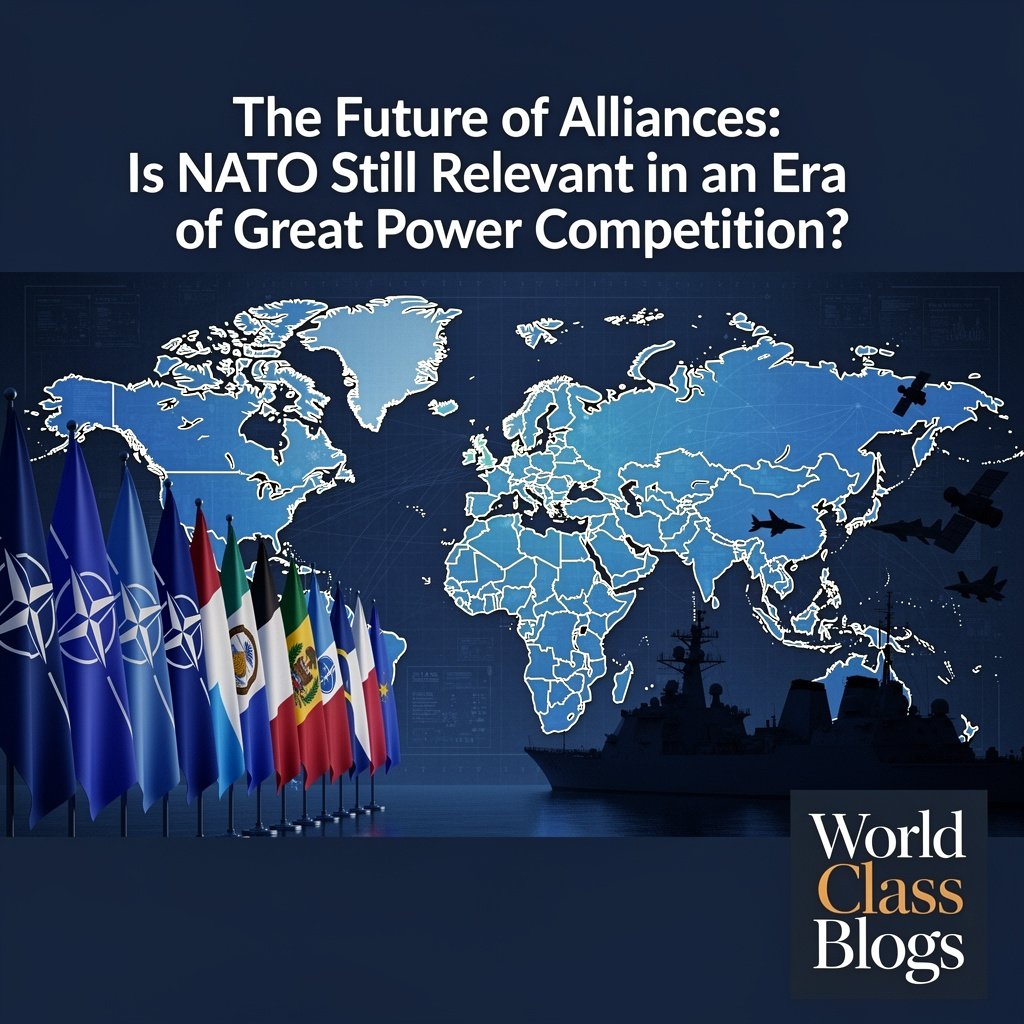
Is NATO still relevant? The events since February 2022 have answered with a resounding yes. But its future relevance is not guaranteed. It will be determined by the political will of its members to invest, adapt, and maintain unity in the face of persistent pressure.
Key Takeaways:
- NATO is Primarily a Political Alliance. Its military power derives from the political cohesion and mutual trust of its members. Erosion of that trust is its Achilles’ heel.
- Deterrence is Dynamic. It requires continuous adaptation. The new force model, regional plans, and focus on high-readiness forces are essential to deter a modern, capable Russia.
- The Threat Spectrum Has Expanded. NATO must now integrate defence against hybrid, cyber, and space-based threats into its core mission while managing the global systemic challenge posed by China.
- Burden-Sharing is Evolving. The debate is shifting from the 2% GDP metric to the quality of contributions, readiness of forces, and resilience of defence industrial bases.
- Ukraine Has Transformed NATO. The war has reinvigorated the alliance, driven historic increases in defence spending, clarified its purpose, and highlighted the critical importance of sustained support for partners under attack.
NATO’s task for the next decade is to execute its new defence plans, deepen its technological edge, manage relations with China without overreach, and, above all, nurture the political solidarity that makes its formidable military power credible. In an era of great power competition, a strong, united, and adaptive NATO remains the single most important instrument for preserving peace and stability in the Euro-Atlantic area and beyond.
FAQs (Frequently Asked Questions)
Q1: Could Ukraine ever join NATO?
A: The 2024 Washington Summit communiqué stated that “Ukraine’s future is in NATO.” A clear pathway was outlined, but no timeline was given. The practical reality is that membership is impossible while the war rages, as it would immediately drag NATO into direct conflict with Russia under Article 5. The current strategy is to build a “bridge” to membership through unprecedented security assistance and institutional integration.
Q2: What happens if a NATO country attacks another NATO country?
A: Article 5 is defensive; it does not apply to aggression between members. Such a scenario would be an unprecedented political catastrophe. Resolution would fall to diplomacy, potentially involving other allies and international bodies. NATO has no mechanism to expel a member.
Q3: Does NATO have its own army?
A: No. NATO has a command structure and integrated military plans, but the forces belong to the member nations. In peacetime, they remain under national command. In a NATO operation or under Article 5, nations place forces under NATO operational command for the mission’s duration.
Q4: What is NATO’s nuclear policy?
A: NATO is a nuclear alliance. Three members possess nuclear weapons: the U.S., UK, and France (though France’s are not assigned to NATO). U.S. tactical nuclear weapons are deployed in several European countries under a “nuclear sharing” arrangement, with host-country aircraft trained to deliver them in a crisis. The policy is one of deterrence, with arms control as a goal.
Q5: How does NATO make decisions?
A: By unanimous consensus in the North Atlantic Council. There is no voting. All 32 members must agree, or no decision is taken. This protects national sovereignty but can make decision-making slow and difficult on contentious issues.
Q6: What is the difference between NATO and the European Union (EU) on defence?
A: NATO is a military alliance with the U.S. and Canada, focused on collective defence. The EU is a political and economic union with a Common Security and Defence Policy (CSDP) for crisis management, peacekeeping, and capacity-building. They are complementary, not competitive. The EU cannot replace NATO’s collective defence guarantee, but it can undertake missions where NATO as a whole is not engaged and boost European defence industrial cooperation.
Q7: Why is interoperability so important?
A: It allows different national forces to communicate, share intelligence, and conduct joint operations effectively. A Polish artillery unit can call in fire support from a Dutch frigate because they use the same targeting protocols. This synergy is a massive force multiplier that adversaries cannot easily replicate.
Q8: What is the “Open Door Policy”?
A: Article 10 of the NATO treaty states that the alliance is open to any “European state in a position to further the principles of this Treaty.” Any invitation for membership must be approved by unanimous consensus. It is a foundational principle, though its application is a major point of contention with Russia.
Q9: How does NATO handle cybersecurity?
A: NATO has declared cyberspace a domain of operations (like land, sea, and air). It has a Cybersecurity Centre of Excellence in Tallinn. Allies have agreed that a major cyber-attack could trigger Article 5. They also provide mutual assistance in the event of cyber-attacks and conduct regular cyber defence exercises.
Q10: What is the relationship between NATO and the UN?
A: NATO’s founding treaty affirms its support for the purposes and principles of the UN Charter. NATO has often conducted operations under a UN Security Council mandate (e.g., in Bosnia and Libya). However, NATO can also act without a UN mandate if it deems it necessary for collective defence, as its treaty is based on the UN Charter’s right to self-defence.
Q11: Is NATO concerned about China’s military buildup?
A: Yes, explicitly so since the 2022 Strategic Concept. NATO does not see China as an adversary but as a “systemic challenge.” Concerns focus on China’s opaque military modernisation, its cyber capabilities, its disinformation, its coercive economic tactics, and its strategic partnership with Russia, which challenges the rules-based international order.
Q12: How does climate change affect NATO?
A: It is a “threat multiplier.” Rising sea levels threaten naval bases. Melting ice opens new Arctic sea lanes and competition. Extreme weather can disrupt operations and damage infrastructure. NATO has a Climate Change and Security Action Plan to adapt its forces and increase energy efficiency.
Q13: What is the “Brexit” impact on NATO?
A: Minimal militarily. The UK remains one of NATO’s most capable and committed members, often leading deployments. Politically, it removed a major European voice from EU defence discussions, potentially making NATO an even more important forum for UK-European security coordination.
Q14: Can a neutral country like Switzerland or Austria join NATO?
A: In theory, yes, if they applied and all allies agreed. However, their long-standing policies of neutrality are constitutionally embedded and enjoy broad public support. It is highly unlikely in the foreseeable future. They are, however, NATO partners and participate in the Partnership for Peace program.
Q15: What are NATO’s biggest military capabilities gaps?
A: Consistently cited gaps include: Integrated Air and Missile Defence (especially against drones and hypersonic missiles), Long-Range Precision Fires, Strategic Airlift and Sealift, Intelligence, Surveillance, and Reconnaissance (ISR) assets, and Undersea Warfare capabilities to protect critical seabed infrastructure.
Q16: How does NATO contribute to counter-terrorism?
A: Through intelligence sharing, capacity-building with partner nations in regions like North Africa and the Middle East, and direct operations. NATO led the International Security Assistance Force (ISAF) in Afghanistan for over a decade and currently provides training missions in Iraq.
Q17: What is the role of the Secretary General?
A: A critical, non-national role. The Secretary General is a chief diplomat, consensus-builder, and public face of the alliance. They chair meetings, mediate disputes between allies, and drive the agenda forward. They have no command authority over forces but wield significant moral and political influence.
Q18: How are NATO commanders chosen?
A: Key positions like SACEUR are filled by consensus. By longstanding custom, SACEUR is always a U.S. General, while the Deputy SACEUR is European. Other senior command posts are distributed among allies based on contributions and capability.
Q19: What happens if a member doesn’t meet the 2% spending pledge?
A: There is no formal penalty. It is a political commitment, not a legal one. Peer pressure, public shaming in summit communiqués, and behind-the-scenes diplomacy are the main tools to encourage compliance. The focus has shifted to ensuring that the money spent delivers real capabilities.
Q20: How does NATO handle disinformation?
A: Through its Strategic Communications Centre of Excellence in Riga. It monitors and analyses disinformation campaigns (often from Russia), provides guidance to allies, and runs public diplomacy efforts to counter false narratives about the alliance.
Q21: Is there a “NATO tax”?
A: No. Nations fund their own militaries. There is a common-funded NATO budget, but it is tiny (around €3 billion annually) and covers the costs of civilian and military headquarters, some air defence systems, and joint infrastructure, not national armies.
Q22: How does the war in Ukraine affect NATO’s relationship with Russia?
A: The NATO-Russia Founding Act of 1997, which sought cooperation, is effectively dead. The NATO-Russia Council is suspended. The relationship is now one of outright confrontation and deterrence. Diplomatic channels remain open at a low level to manage risks of escalation and incidents, but there is no meaningful dialogue on European security.
Q23: What is the “First-Mover Advantage” problem in NATO defence?
A: In a crisis, the political requirement for consensus to authorise major force movements could create a dangerous delay, giving an aggressor a “first-mover advantage” to seize territory. The new regional plans and pre-assigned forces are designed to mitigate this by making deployment decisions more automatic and rapid in the initial phase of a crisis.
Q24: How can a citizen engage with or understand NATO better?
A: Follow official NATO sources (website, social media) to avoid disinformation. Many NATO headquarters and national delegations offer public lectures and tours. Academic institutions and think tanks (like the Atlantic Council) publish extensive analyses. For a broader understanding of global affairs, resources like our Nonprofit Hub can provide context.
Q25: What is the future of NATO partnerships with countries in Africa or the Middle East?
A: They will remain focused on capacity-building and training to foster stability and combat terrorism. These partnerships are not about expanding membership but about addressing security challenges at their source to prevent spillover into NATO territory. The focus is on mutual interest, not collective defence.
About Author
Sana Ullah Kakar is a geopolitical analyst and historian specialising in transatlantic relations and alliance politics. Having worked with policy institutes on both sides of the Atlantic, they bring a nuanced understanding of the political and military dynamics that shape NATO. They are a firm believer in the alliance’s value but also a clear-eyed critic of its shortcomings. This detailed examination is part of World Class Blogs’ commitment to providing in-depth, balanced analysis on critical international issues. Learn more about our editorial mission on our About World Class Blogs page.
Free Resources
- NATO’s Official Website (nato.int): The primary source for official documents, news, and multimedia.
- The NATO Review Online Magazine: Excellent articles on strategy, history, and current affairs.
- The Atlantic Council’s Scowcroft Centre for Strategy and Security: Leading think tank analysis on NATO and transatlantic security.
- The International Institute for Strategic Studies (IISS) “Military Balance” Report: Authoritative data on allied defence spending and capabilities.
- “The Shield of the Alliance” by Julian Lindley-French: A concise, insightful book on NATO’s past and future challenges.
- For insights on the collaborative models that underpin successful alliances in any field, explore this guide on types of business partnerships.
Discussion
The European pillar vs. the American anchor: As European defence spending and integration grow, should the EU develop a more autonomous defence capability that could eventually operate independently of NATO, or would this inevitably weaken the transatlantic bond and, with it, deterrence? Is strategic autonomy complementary to or competitive with NATO? We invite your thoughtful analysis. Join more conversations on global strategy in our blogs section. For specific feedback or contributions, please contact us.


