


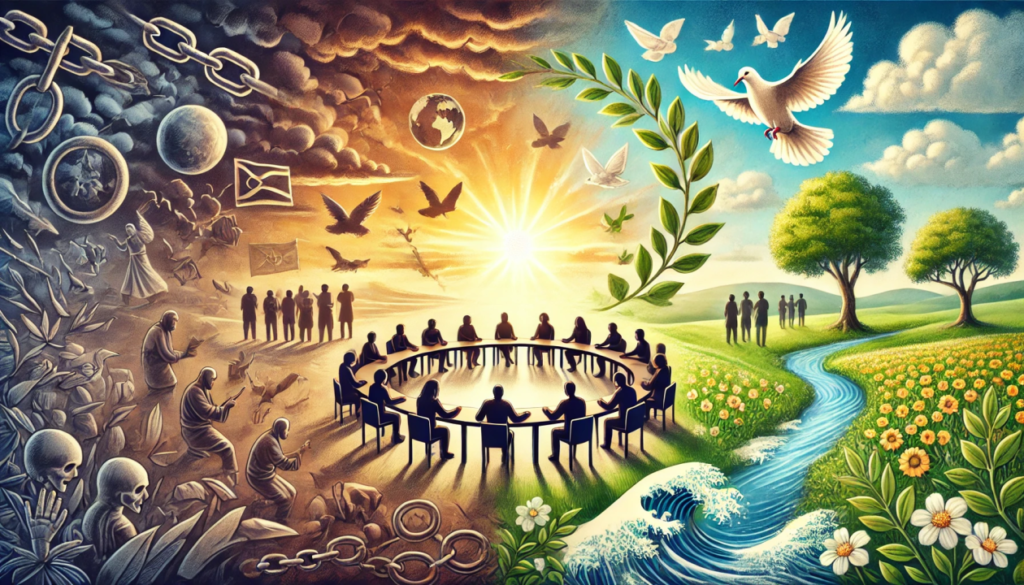
Non-governmental organizations (NGOs) and citizen diplomats have emerged as powerful, transformative forces in global peacebuilding, operating where official diplomacy fails and creating innovative pathways to conflict resolution through grassroots engagement, cross-cultural dialogue, and non-violent action.
While headlines focus on high-level summits between world leaders, a quiet revolution in conflict resolution is unfolding at the grassroots level. Non-state actors—including international NGOs, local community organizations, religious groups, and even individual citizens—are increasingly shaping peace processes in the world’s most intractable conflict zones. These actors practice what is known as “Track II” and “Track III diplomacy,” operating parallel to, or independently from, official government channels. They fill critical gaps left by traditional statecraft: building trust between warring communities when political leaders cannot meet, delivering humanitarian aid with local knowledge, and advocating for marginalized voices at peace tables. This expansion of the diplomatic field recognizes that sustainable peace requires more than just a signed treaty between elites; it requires healing societal wounds, addressing root causes of violence, and rebuilding the fabric of community trust. In a world where over 60% of peace agreements fail within five years (UN data), the innovative, flexible, and persistent work of these unofficial peacebuilders is not just complementary—it is often essential for breaking cycles of violence and creating the conditions for lasting stability.
Introduction – Why Unofficial Peacebuilding Matters
Official, state-to-state diplomacy, known as Track I diplomacy, is constrained by political agendas, sovereignty concerns, and the need to maintain strategic postures. When governments are locked in hostile relations, their formal communication channels often freeze, leaving conflicts to fester. This is where unofficial actors step in. They operate with a different set of tools and freedoms: the ability to listen without imposing conditions, to experiment with dialogue formats, and to work directly with the communities most affected by violence.
What I’ve found through studying peace processes from Colombia to Northern Ireland is that the most resilient agreements are those built upon a foundation of societal dialogue. Official negotiators can draft a ceasefire, but it is community leaders, women’s groups, youth activists, and faith-based organizations that must transform that paper agreement into lived reality. They are the ones who reintegrate former combatants, mediate local land disputes rekindled by war, and foster the everyday interactions that rebuild social cohesion.
The importance of this work has been starkly highlighted in recent years. In the war in Ukraine, while Track I diplomacy has struggled, networks of Ukrainian and Russian civil society actors, journalists, and former diplomats have maintained critical lines of communication, shared humanitarian information, and preserved a sense of shared humanity. Similarly, in Myanmar, following the 2021 military coup, international NGOs and local community-based organizations became the primary providers of humanitarian aid and documentation of human rights abuses when official UN and donor channels were severely restricted. Their role demonstrates that peacebuilding is no longer the sole purview of foreign ministries; it is a multilayered endeavor where the shopkeeper facilitating a conversation, the teacher integrating refugee children, and the artist collaborating across conflict lines are all practicing a form of vital, citizen-led diplomacy.
Background / Context: The Evolution of Multi-Track Diplomacy
The concept of diplomacy beyond the state is not new. Quakers and other religious groups have engaged in unofficial mediation for centuries. However, the formalization of “Multi-Track Diplomacy” as a field began in the late 20th century. Diplomat and scholar Joseph Montville coined the terms “Track I” (official government) and “Track II” (unofficial, often scholarly/ informal dialogue) in the 1980s to describe the backchannel work that helped pave the way for breakthroughs in the Arab-Israeli peace process.
The end of the Cold War accelerated this trend. As civil wars and intra-state conflicts proliferated, it became clear that these complex conflicts, rooted in identity, ethnicity, and governance, required engagement with a wider array of societal actors. The 1990s saw the dramatic rise of humanitarian NGOs like Médecins Sans Frontières (Doctors Without Borders) and the International Rescue Committee, who operated in active war zones under principles of neutrality and impartiality, often becoming de facto mediators for local ceasefires to allow aid delivery.
The landmark year was 1992, when then-UN Secretary-General Boutros Boutros-Ghali’s “Agenda for Peace” report explicitly called for partnerships with NGOs in conflict prevention and peacebuilding. This opened the door for greater institutional recognition. Major peace accords, such as the 1998 Good Friday Agreement in Northern Ireland and the 2005 Comprehensive Peace Agreement in Sudan, involved significant preparatory work by church groups, community organizers, and diaspora networks.
Today, the ecosystem is vast and varied. It includes:
- International NGOs (INGOs): Large, professional organizations like Search for Common Ground, the Centre for Humanitarian Dialogue, or the Carter Center, which facilitate dialogues and provide technical expertise.
- Local Civil Society Organizations (CSOs): Grassroots groups with deep community trust and understanding of local conflict dynamics.
- Faith-Based Organizations: Leveraging moral authority and extensive networks to mediate and reconcile.
- Academic & Research Institutions: Providing evidence-based analysis and hosting discreet dialogues.
- Private Sector Actors: Businesses investing in stability and using economic leverage to foster cooperation.
- Diaspora Communities: Remitting funds, sharing knowledge, and sometimes bridging divides from abroad.
- Individual “Citizen Diplomats”: Influential figures, artists, athletes, or former politicians using their platform for peace.
Key Concepts Defined

- Track I Diplomacy: Official diplomacy conducted by representatives of governments (diplomats, political leaders, military officials) through formal, authorized channels. This results in legally binding treaties and agreements.
- Track II Diplomacy: Unofficial, informal interaction between members of adversarial groups or nations that aims to develop strategies, influence public opinion, and organize human and material resources to resolve conflict. Participants are often academics, former officials, community leaders, or NGO representatives acting in their private capacity. The goal is to feed ideas and build relationships that can inform the official process.
- Track III Diplomacy: People-to-people diplomacy undertaken by individuals and private groups, focusing on the grassroots level. It involves transforming conflict through deep engagement within and between communities, emphasizing personal transformation, healing, and changing hostile attitudes. Activities include youth exchanges, joint community projects, and trauma counseling.
- Civil Society: The “third sector” of society, distinct from government and business, comprising non-governmental and not-for-profit organizations that express the interests and values of citizens. In conflict zones, this includes everything from human rights monitors to women’s associations and peasant farmer unions.
- Do No Harm / Conflict Sensitivity: A foundational framework for NGOs working in conflict zones. It mandates that organizations analyze how their assistance (whether food, funding, or training) interacts with the local conflict dynamics to avoid inadvertently exacerbating tensions or empowering one group over another.
- Peacebuilding Infrastructure: The network of individuals, relationships, organizations, and skills within a society that can be mobilized to manage conflicts non-violently. NGOs and citizen diplomats are crucial builders of this infrastructure, which remains even when political agreements collapse.
How It Works: The Unofficial Peacebuilder’s Toolkit
The work of NGOs and citizen diplomats is highly contextual, but several core methodologies define their approach to changing conflict dynamics.
1. Facilitating Backchannel Dialogue
When official talks are impossible, Track II actors create discreet, safe spaces for communication. These dialogues are typically held in neutral third countries under “Chatham House Rules” (participants are free to use information but cannot reveal the identity or affiliation of speakers). The objective is not to negotiate a deal but to humanize the “other,” explore underlying interests, and brainstorm creative solutions without political pressure. For example, prior to the official Oslo Accords, Israeli and Palestinian academics and former officials held a series of such meetings in Norway, which produced the foundational ideas for the subsequent government-to-government talks.
2. Grassroots Mediation and Local Peace Committees
In regions where state authority has collapsed or is distrusted, local NGOs often step in to mediate hyper-local conflicts over land, water, or cattle—disputes that can ignite wider violence. They help communities establish local peace committees comprising elders, women, youth, and religious leaders. These committees use traditional and modern conflict resolution practices to defuse tensions. In parts of Kenya and South Sudan, such committees, supported by NGOs like Catholic Relief Services, have been instrumental in preventing cyclical violence between pastoralist communities.
3. Building Cross-Identity Relationships
At the heart of Track III work is the belief that conflict is sustained by dehumanization. Programs are designed to foster personal connections across conflict lines. This includes:
- Joint Trauma Healing: Bringing together individuals from opposing sides who have suffered loss to share stories and grieve together, recognizing shared pain.
- Collaborative Projects: Co-creating a community garden, a radio drama, or a sports league where success depends on cooperation.
- Exposure Visits: Safely enabling community members to visit the “other side” to see their humanity and daily struggles firsthand.
4. Advocacy and Amplifying Marginalized Voices
NGOs act as advocates to ensure peace processes are inclusive. They conduct research, document human rights abuses, and lobby Track I negotiators to include women, youth, ethnic minorities, and victims’ groups at the table. The Women’s Peace and Humanitarian Fund, a partnership between UN agencies, governments, and civil society, directly funds women-led organizations to engage in peace processes, recognizing that their participation makes agreements 35% more likely to last at least 15 years.
5. Monitoring, Reporting, and Early Warning
With deep local networks, NGOs often serve as the eyes and ears on the ground. They monitor ceasefires, report on human rights, and run early warning systems that detect rising tensions (e.g., through monitoring hate speech or local disputes) to trigger preventive action before violence erupts.
Why It’s Important: The Unique Value Proposition

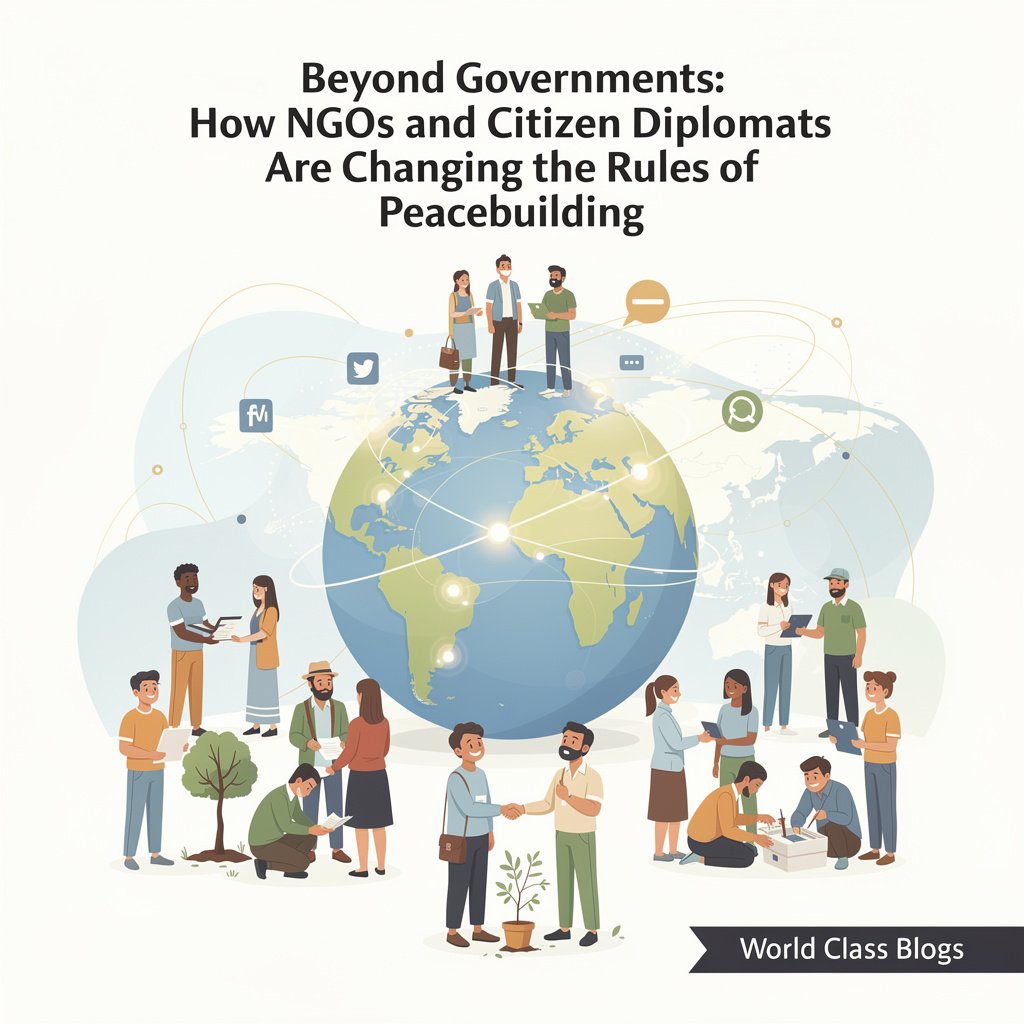
Unofficial peacebuilding fills critical gaps that state actors cannot, for both political and practical reasons.
- Sustaining Communication When Official Channels Are Closed: In frozen conflicts like Cyprus or Korea, where formal diplomacy is stalled, Track II dialogues have kept a minimum level of understanding and explored future scenarios for decades, ensuring a thread of connection remains.
- Addressing the Root Causes of Conflict: Governments often seek to stop violence and stabilize a political situation. NGOs and local actors dig deeper into the drivers of conflict: historical grievances, economic inequality, social exclusion, and damaged inter-group relations. They work on the long-term societal transformation required for peace to take root.
- Innovation and Risk-Taking: Free from the constraints of national policy and public opinion, unofficial actors can test unconventional ideas. They can engage with armed groups labeled as terrorists, explore contentious topics like federalism or land reform, and pilot reconciliation methods that governments might deem too politically risky.
- Legitimacy and Local Ownership: Sustainable peace must be owned by the society itself, not imposed from outside. Local civil society organizations embody this principle. They understand cultural nuances, command community trust, and ensure that peace agreements reflect local realities, not just the priorities of international mediators.
- Humanizing the “Enemy”: Perhaps the most profound contribution is breaking down the psychological barriers of conflict. By facilitating personal stories and shared experiences, citizen diplomats rebuild the empathy that is the absolute prerequisite for political compromise. As peace researcher John Paul Lederach argues, the goal is to change the “conflict narrative” from “us vs. them” to a narrative of a shared, interdependent future.
Sustainability in the Future: Challenges and Adaptation
The field of citizen diplomacy and NGO peacebuilding is at a crossroads, facing both unprecedented challenges and opportunities for evolution.
- The Shrinking Civic Space: A global trend of authoritarian pushback is making NGO work more dangerous. Governments in conflict zones increasingly label peacebuilders as “foreign agents,” “spies,” or threats to national security. Legislation restricting NGO funding and operations has been passed in dozens of countries, forcing organizations to operate more discreetly or relocate.
- Digital Transformation and New Frontiers: The digital realm has become a new battlefield. NGOs are now engaged in digital peacebuilding: countering online hate speech, using social media to spread peace narratives, and facilitating virtual dialogues across closed borders. However, they also face digital surveillance, cyber-attacks, and the spread of misinformation that undermines their work.
- The Localization Imperative: The international aid system has been criticized for being too top-down. The future demands authentic “localization”—shifting power, funding, and decision-making directly to local peacebuilding organizations. This requires INGOs to move from being implementers to being supporters and amplifiers of local agency.
- Integrating Climate and Conflict: As climate change becomes a major conflict multiplier, peacebuilding NGOs must integrate environmental peacebuilding into their work. This means mediating disputes over shrinking resources, supporting community-based climate adaptation, and linking environmental cooperation to peace processes, as seen in the work of EcoPeace Middle East.
- Measuring Impact and Securing Funding: Demonstrating the impact of peacebuilding is inherently difficult—how do you prove a war that didn’t happen? NGOs must get better at rigorous monitoring and evaluation to secure sustainable, flexible funding from donors who often prefer short-term, tangible results.
Common Misconceptions
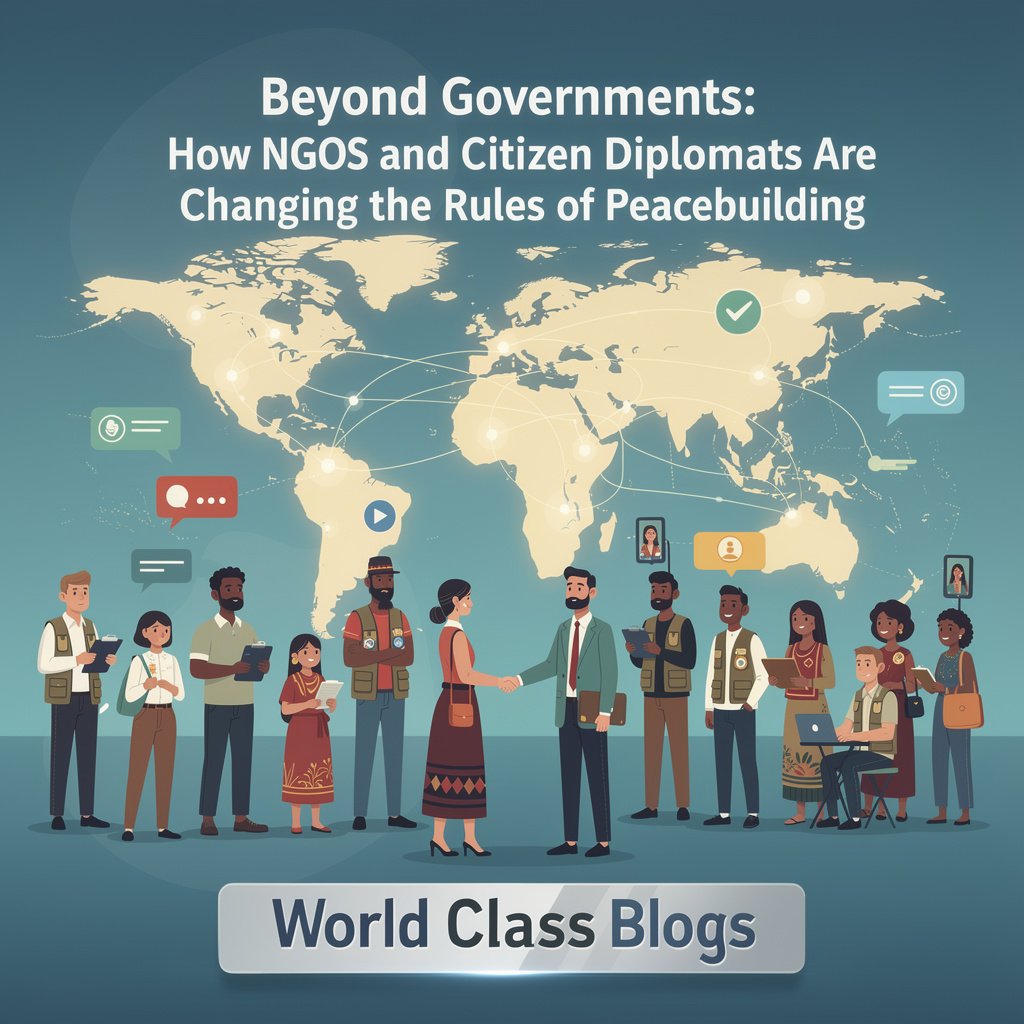
- Misconception: NGOs are Neutral in Conflicts.
Reality: While humanitarian NGOs strive for operational neutrality to access all sides, peacebuilding NGOs are not neutral on values. They are explicitly partisan for peace, human rights, and non-violence. They take sides for dialogue and against violence, which can make them targets. - Misconception: Citizen Diplomacy is Just Well-Meaning Amateurs.
Reality: Effective Track II and III work is highly professionalized. Practitioners are trained in mediation, conflict analysis, trauma sensitivity, and security protocols. Organizations invest heavily in research and strategic planning to ensure their interventions are conflict-sensitive and evidence-based. - Misconception: They Undermine Official Diplomacy.
Reality: The most effective unofficial work is done in careful awareness of the official process. The goal is not to replace governments but to create a more favorable environment for them to succeed—by building public support for compromise, testing ideas, and managing community-level tensions that could derail a deal. - Misconception: All Local NGOs are Inherently Legitimate.
Reality: Civil society is not monolithic. Some groups may represent narrow ethnic, political, or economic interests. Effective partnership requires careful analysis of an organization’s constituency, accountability, and actual standing within the communities they claim to represent.
Recent Developments (2023-2025)
- Ukraine: The Citizen Diplomacy Lifeline: Amidst the war, initiatives like the “Dialogue for Justice and Peace” network, facilitated by European NGOs, have maintained dialogue between Ukrainian civil society leaders, Russian anti-war activists, and Belarusian democrats. These spaces are crucial for planning post-war coexistence and justice mechanisms, even as official contact is minimal.
- The Taliban’s Afghanistan and NGO Adaptation: Since the Taliban’s return to power, international NGOs face an extreme operational dilemma. Many continue to provide lifesaving aid by engaging in direct, pragmatic negotiations with Taliban authorities at the provincial level—a form of hard-nosed, humanitarian diplomacy focused solely on access, while Afghan women-led organizations have gone underground to continue education and advocacy at immense personal risk.
- The African Union’s CSO Framework: In 2023, the African Union (AU) adopted a more robust framework for engaging Civil Society Organizations in its peace and security work, particularly through its Panel of the Wise. This formalizes a role for African NGOs in early warning and mediation support, recognizing their indispensable local knowledge.
- Tech for Peace: New platforms are emerging. “Build Up,” a peace tech organization, works with local partners from Myanmar to Mexico to design digital tools that strengthen social cohesion and counter polarized online narratives, representing the cutting edge of digital peacebuilding.
Success Stories
- The Sant’Egidio Community and Mozambique: The Italian Catholic lay community of Sant’Egidio played a pivotal role in ending Mozambique’s 16-year civil war. With no official mandate but immense patience and moral credibility, they hosted two years of secret talks in Rome between the government and the RENAMO rebels, culminating in the 1992 General Peace Agreement. Their success demonstrated the power of a small, trusted, faith-based mediator where larger actors had failed.
- Women of Liberia Mass Action for Peace: During Liberia’s brutal civil war, with official peace talks stalled, local women organized across Christian and Muslim lines. Led by Leymah Gbowee, they staged silent protests, sit-ins, and even a sex strike, directly confronting warlords and negotiators. Their relentless, grassroots pressure was instrumental in forcing the signing of the 2003 peace accord. Gbowee later received the Nobel Peace Prize, cementing recognition for women’s grassroots peace movements.
- The Parents Circle-Families Forum (Israel/Palestine): This joint Israeli-Palestinian organization is composed of over 600 families who have lost an immediate family member to the conflict. By sharing their stories of grief in joint meetings, they perform a powerful act of Track III diplomacy, demonstrating that pain knows no borders and that reconciliation is possible even amidst ongoing violence. They provide a living alternative to the dominant narrative of perpetual hatred.
Real-Life Examples
- Colombia: The Multi-Track Architecture for Peace: The historic 2016 peace agreement between the Colombian government and the FARC guerrillas is a textbook case of multi-track synergy. While the government negotiated in Havana (Track I), a parallel National Peace Council convened by the UN gathered inputs from thousands of victims, farmers, women, and ethnic communities across Colombia (Track III). Their recommendations on land reform, political participation, and victim reparations were directly fed into the official talks. Furthermore, the Catholic Church and NGOs like the Center for Dialogue and Analysis facilitated local humanitarian agreements and prepared communities for reintegration.
- The Syrian Civil Society in Exile: As the Syrian war grinded on, a vibrant network of Syrian journalists, doctors, human rights activists, and local council leaders operated from exile in Turkey, Europe, and neighboring countries. Supported by international NGOs, they documented atrocities, ran parallel negotiations on local ceasefires, and developed detailed plans for a democratic, pluralistic post-Assad Syria. Though they have been largely excluded from the UN-led political process dominated by world powers, they represent the Syrian voices most committed to a future built on justice and human rights, preserving a vision of peace beyond the current regime’s military victory.
- Business Peacebuilding in Nigeria’s Niger Delta: In the volatile Niger Delta, multinational oil companies like Shell have learned that their security depends on community stability. Through “Global Memoranda of Understanding,” they now partner with local NGOs, community leaders, and state governments to fund development projects, mediate conflicts between villages, and create youth employment programs. This represents a form of corporate-track diplomacy, where economic actors use their leverage and resources to address the governance and grievance issues that fuel militancy and sabotage.
Conclusion and Key Takeaways
The landscape of peace and conflict is being irrevocably changed by the rise of NGOs and citizen diplomats. They have proven that diplomacy is not an exclusive club for career officials but a vital practice that can—and must—be undertaken by diverse actors across society. Their work underscores a fundamental truth: peace is not an event that happens at a signing ceremony; it is a slow, often messy, societal process of rebuilding trust, repairing relationships, and reimagining a shared future.
Key Takeaways:
- Peace is Built from the Bottom Up and the Middle Out: Sustainable peace requires the official top (Track I), the grassroots bottom (Track III), and the expert middle (Track II) to work in concert. The most successful processes leverage all three tracks.
- Legitimacy is Rooted in Community, Not Just Authority: The legitimacy of a peace process increasingly depends on its inclusivity and connection to the lived experiences of affected populations. NGOs and citizen diplomats are essential brokers of this societal legitimacy.
- Persistence and Relationships Trump Political Timetables: While governments operate on election cycles and geopolitical shifts, citizen diplomats often work on the timeline of human relationships and generational change. Their long-term, relationship-based approach provides crucial continuity when politics fail.
- The Personal is Political in Peacebuilding: Transforming deep-seated conflict requires engaging hearts and minds, not just political interests. The work of healing trauma, humanizing the “other,” and changing conflict narratives is a specialized and critical form of diplomacy.
- The Field Must Evolve to Survive: To remain effective, unofficial peacebuilders must navigate closing civic spaces, harness technology ethically, authentically localize their work, and develop new strategies for integrated climate-conflict response.
In an age of complex, protracted conflicts, the rigid boundaries of traditional statecraft are insufficient. The future of peace depends on our ability to nurture and empower this broad, creative, and courageous ecosystem of unofficial peacebuilders—the doctors, teachers, activists, and ordinary citizens who dare to build bridges where walls seem insurmountable. For further insights on building effective coalitions and partnerships, which is central to this work, explore our guide on strategic alliance models.
Frequently Asked Questions (FAQs)
Q1: What’s the main difference between an NGO doing humanitarian aid and one doing peacebuilding?
Humanitarian NGOs focus on alleviating immediate human suffering (food, shelter, medicine) during or after a crisis, guided by principles of neutrality, impartiality, and independence. Peacebuilding NGOs focus on addressing the root causes of conflict and transforming relationships to prevent violence from recurring. Their work is inherently political (pro-peace) and long-term, involving dialogue, mediation, advocacy, and reconciliation.
Q2: Is Track II diplomacy legal? Can it get you in trouble?
It operates in a legal gray area. Participants are usually private citizens, so they are not violating laws about unauthorized negotiation. However, in authoritarian states or active conflict zones, engaging with the “other side” can be seen as treasonous or a threat to national security. Practitioners often face harassment, arrest, or worse. Discretion and careful security protocols are paramount.
Q3: How are these organizations funded?
Funding comes from a mix of sources: government grants (e.g., from USAID, EU, or European foreign ministries), private foundations (e.g., Carnegie, Rockefeller), individual donations, and sometimes membership fees. A major challenge is that donor funding is often short-term and project-based, while peacebuilding requires sustained, flexible, long-term investment.
Q4: Can an ordinary person really be a “citizen diplomat”?
Absolutely. Citizen diplomacy is any intentional action by a private citizen to foster cross-cultural understanding and reduce conflict. It can be as simple as a teacher creating a virtual exchange program between schools in rival countries, a businessperson fostering ethical supply chains in a conflict region, or a community leader hosting interfaith dialogues. The core is taking personal initiative to build bridges.
Q5: How do unofficial mediators gain the trust of armed groups or hostile governments?
Trust is built slowly, often through intermediaries and demonstrated credibility. Factors include: a long-term presence in the region, a reputation for fairness and confidentiality, deep listening without judgment, and sometimes the moral authority of a faith-based organization. They must prove they are not spies, agitators, or naive idealists, but serious, discreet facilitators.
Q6: What happens when unofficial and official diplomacy clash?
Tension can arise if Track I actors see Track II initiatives as undermining their strategy or breaking protocol. Successful practitioners maintain careful, if informal, communication with official channels to ensure their work is complementary. The worst-case scenario is when governments actively crack down on civil society peacebuilders, accusing them of foreign interference.
Q7: How effective is digital peacebuilding compared to face-to-face work?
Digital tools are powerful for scaling outreach, monitoring conflicts, and connecting people across closed borders. However, they are not a substitute for in-person relationship building, which is deeper and more trust-intensive. The most effective programs use a hybrid model: digital tools for connection and information, leading to carefully facilitated in-person encounters when safe and possible.
Q8: Are there ethical risks to NGO peacebuilding?
Yes, significant ones. These include: inadvertently legitimizing repressive actors by engaging with them, creating dependency by funding local groups, imposing Western conflict resolution models that don’t fit local culture, and raising community expectations that cannot be met by the slow pace of political change. Adhering to “Do No Harm” principles is a constant ethical exercise.
Q9: What role do diaspora communities play?
Diasporas are unique “Track 1.5” actors. They have deep cultural knowledge of their homeland and often significant political influence in their host country. They can fund peace initiatives, lobby foreign governments, spread information (or misinformation), and sometimes act as bridges between warring sides. Their role can be either powerfully constructive or dangerously destabilizing.
Q10: How do you measure the success of peacebuilding?
Success is complex to measure. Metrics can include: number of dialogue participants who report increased empathy, reductions in local violence in project areas, the adoption of peacebuilding proposals into formal agreements, increased representation of women/youth in peace forums, and the strength and activity of local peace committees. Long-term, the ultimate metric is the sustained absence of large-scale violence and positive social cohesion indicators.
Q11: What is a “local peace committee” and how does it function?
A Local Peace Committee (LPC) is a community-based group, often formed with NGO support, that includes respected local figures from different sides of a conflict (elders, religious leaders, women, youth). They serve as a standing mechanism to monitor tensions, mediate local disputes (over land, resources, etc.), disseminate accurate information to counter rumors, and liaise with higher-level authorities. They are the frontline infrastructure for peace.
Q12: How do peacebuilders deal with trauma in conflict zones?
Trauma is recognized as a major driver of cyclical violence (hurt people hurt people). Many peacebuilding NGOs integrate psychosocial support and trauma healing into their work. This involves creating safe spaces for individuals and groups to process grief and loss, often using methods like narrative therapy or communal ceremonies. Healing trauma is seen as essential for breaking revenge cycles and enabling people to engage in reconciliation.
Q13: What is “inclusive peacemaking” and why is it emphasized?
Inclusive peacemaking ensures that all segments of society—especially those traditionally excluded like women, youth, ethnic and religious minorities, and victims—have a meaningful voice in peace processes. Evidence shows that more inclusive processes lead to more durable and comprehensive peace agreements. NGOs are often the primary advocates and facilitators for this inclusion.
Q14: Can the private sector be a legitimate peacebuilder?
Yes, when it aligns with the “business for peace” concept. Companies have a vested interest in stable operating environments. They can contribute by: providing non-partisan employment across conflict lines, investing in community development, using their supply chains to foster inter-group economic cooperation, and sometimes discreetly facilitating dialogues between conflicting parties who respect their economic role.
Q15: How has the “War on Terror” affected NGO peacebuilding?
It has made work much harder. Counter-terrorism legislation often prohibits any engagement with groups labeled as terrorist, cutting off potential dialogue channels. Banks, fearing massive fines, are “de-risking”—closing the accounts of NGOs working in conflict zones, crippling their operations. The space for humanitarian negotiation and peace work has dramatically narrowed.
Q16: What is “reflexive practice” in peacebuilding?
It is the discipline of peacebuilders critically reflecting on their own role, biases, and impact. It asks: How does my identity (nationality, gender, class) affect my perception? Is my intervention reinforcing power imbalances? Am I listening more than I am speaking? This self-awareness is crucial for ethical and effective practice in complex cultural and political environments.
Q17: Are there university programs for this kind of work?
Yes, the field has become professionalized. Many universities offer Master’s degrees in Peace and Conflict Studies, International Peacebuilding, or Conflict Resolution. These programs combine theory with practical skills in mediation, negotiation, program design, and evaluation.
Q18: What is the biggest criticism of international NGOs in this field?
Common criticisms include: being disconnected from local realities, imposing pre-packaged solutions, consuming a disproportionate share of funding that should go to local organizations, having high overhead costs, and being accountable to distant donors rather than the communities they serve. This has fueled the strong push for localization.
Q19: How do faith-based organizations approach peacebuilding differently?
They often leverage spiritual teachings on forgiveness and reconciliation, the moral authority of religious leaders, and extensive congregational networks that reach deep into communities. They can call for peace as a religious imperative, which can resonate powerfully in highly religious societies. Examples include the Sant’Egidio Community (Catholic) and the Interfaith Mediation Centre in Nigeria.
Q20: What is “environmental peacebuilding” and how do NGOs engage in it?
It’s an approach that uses cooperation on shared environmental challenges (water scarcity, deforestation, pollution) as an entry point to build trust and collaborative institutions between conflicting parties. NGOs like EcoPeace Middle East bring together Jordanian, Palestinian, and Israeli communities to rehabilitate the Jordan River, using shared ecological interests to foster dialogue and practical cooperation.
Q21: How do peacebuilders handle situations with severe power imbalances (e.g., a government vs. a minority group)?
They work to create more balanced dialogue settings. This can involve setting ground rules that ensure all voices are heard, using “problem-solving” workshops where participants address shared challenges rather than negotiate positions, and often focusing initially on humanitarian or practical issues (e.g., prisoner exchanges, access for aid) where common ground is easier to find, before tackling core political issues.
Q22: Can sports or arts be tools for peacebuilding?
Powerfully so. Sports for peace programs (like football matches between rival communities) create neutral ground for interaction, teach teamwork, and channel youthful energy positively. Arts for peace (theater, music, mural painting) allow for the expression of trauma and hopes for the future in non-confrontational ways, fostering empathy and a shared creative identity.
Q23: What happens to peacebuilding NGOs when a war “ends” with a military victory (like in Syria or Sri Lanka)?
Their work often becomes even more critical and more difficult. They shift focus to post-conflict reconciliation, documenting human rights abuses for future accountability, supporting the reintegration of displaced populations, and advocating for inclusive governance in a now-winner-take-all political environment. They operate under intense scrutiny from the victorious government, which may view them with deep suspicion.
Q24: Is there a global network or association for peacebuilding practitioners?
Yes, several. The Alliance for Peacebuilding is a major global network of NGOs. The International Peace Institute is a prominent think tank. Regionally, networks like the African Centre for the Constructive Resolution of Disputes (ACCORD) play key roles. These networks advocate for the field, share best practices, and provide professional development.
Q25: How can someone start a career in this field?
Common entry points include: volunteering or interning with a peacebuilding NGO, joining a humanitarian organization to gain field experience, obtaining a relevant graduate degree, or developing deep regional expertise and language skills. The path is often non-linear, combining practical field experience with continuous learning.
Q26: What is the single most important skill for a peacebuilder?
Deep listening. The ability to listen without judgment, to understand the worldviews, fears, and hopes of all sides, is foundational. It is only from this place of genuine understanding that trust is built and creative solutions can emerge.
Q27: Looking ahead, what is the greatest opportunity for citizen diplomacy?
The democratization of communication technology. While it spreads hate speech, it also allows ordinary people to bypass government propaganda, connect directly with “the other,” share humanizing stories, and organize for peace across borders at a scale never before possible. Harnessing this power positively is the next great frontier.
About the Author
This article was authored by a practitioner-scholar with over 15 years of experience in the field of multi-track diplomacy and peacebuilding. The author has worked with international NGOs, UN agencies, and local civil society partners in conflict-affected regions across Africa, the Middle East, and Southeast Asia. Their work focuses on supporting inclusive peace processes, designing conflict-sensitive programs, and training the next generation of peacebuilders. They hold an advanced degree in Conflict Resolution and are a firm believer in the power of grassroots agency to transform even the most entrenched conflicts. For more perspectives on global policy and citizen action, visit our broader collection at World Class Blogs.
Free Resources
- The Beyond Intractability Knowledge Base: A massive, free online resource from the University of Colorado covering every conceivable topic related to conflict and peacebuilding, with contributions from top scholars and practitioners.
- UN Peacemaker Database: A public repository of peace agreements, mediation guidance, and lessons learned from UN-supported peace processes worldwide.
- The Peace Direct “Local Peacebuilding” Platform: Features reports, podcasts, and blogs amplifying the perspectives and work of local peacebuilders in over 40 countries.
- The Conflict Sensitivity Resource Hub: A collaborative platform providing free tools, training, and guidance on how to “Do No Harm” in conflict zones.
- Coursera / edX Courses: Several free online courses are available, such as “International Women’s Health and Human Rights” (Stanford) or “The Science of Well-Being” (Yale), which cover related concepts of resilience and advocacy.
- The Everyday Peace Indicators Project: A participatory research method that allows communities to define and measure what peace looks like in their own terms, with toolkits available for use.
- The Global Partnership for the Prevention of Armed Conflict (GPPAC) Network: A global network of civil society organizations with regional hubs, offering publications and policy advocacy tools.
- The Negotiation and Conflict Resolution Podcasts: Podcasts like “Negotiate Anything” and “The Peacebuilding Podcast” offer free insights and interviews with experts.
Discussion
The rise of citizen diplomacy challenges us to rethink where agency and power lie in the international system. Do you believe that the future of conflict resolution will be dominated more by agile, grassroots networks or by traditional state-led power politics? Can the moral authority and local knowledge of NGOs ever truly compensate for the lack of enforcement power that states hold? We invite you to share your thoughts, experiences, or questions about the role of ordinary people in building peace. Have you witnessed or participated in any form of citizen diplomacy? For those interested in the organizational models that make this work possible, you may find this guide on starting and structuring a mission-driven venture insightful. To explore more topics or contribute to the conversation, visit our blogs section or learn more about our platform.


