


Introduction: The Pursuit of Auditory Sanity in a Noisy World
We live in an era of unprecedented auditory clutter. The constant hum of city traffic, the drone of airplane engines, the distracting chatter in open-plan offices, and the relentless background noise of modern life have become an inescapable part of our daily soundscape. This cacophony does more than just annoy; it erodes our ability to concentrate, increases stress levels, and diminishes our overall sense of well-being. In response to this growing crisis of noise pollution, a technological savior has emerged: noise-cancelling headphones. Far more than a simple audio accessory, these devices represent a profound fusion of physics, engineering, and digital signal processing, offering users the seemingly magical ability to create a personal bubble of silence on demand. This technology and innovation is not merely about enhancing music listening; it’s about reclaiming control over our auditory environment, protecting our mental health, and optimizing our cognitive performance. For anyone interested in the intersection of gadget and consumer tech with daily life, understanding this silent revolution is essential. This comprehensive guide will delve into every facet of noise-cancelling technology, from its fundamental principles to its wide-ranging societal impact and its exciting future.
Background/Context: A Journey from Cockpits to Consumer Pockets
The story of noise cancellation is a fascinating tale of necessity birthing invention, followed by decades of refinement to become a mainstream consumer technology and innovation.
- The Genesis (1930s-1950s): The foundational concept was first patented by Paul Lueg in 1933, describing a process to cancel sinusoidal tones in ducts and to create “zones of silence” in rooms. However, the technology to realize this vision did not yet exist.
- The Aviation Breakthrough (1978): The true pioneer of modern Active Noise Cancellation (ANC) was Dr. Amar Bose. The legend goes that during a particularly loud flight in 1978, he was frustrated by the engine roar that prevented him from enjoying his airline’s headphones. This personal annoyance sparked a scientific quest. He and his team at Bose Corporation began developing a system that could electronically cancel low-frequency noise. The primary application was for pilots and the military, leading to the development of headsets that protected hearing and improved communication clarity in incredibly loud environments like helicopter cockpits and tanks.
- Consumer Market Entry (1989-2000): Bose introduced the first consumer product, the Acoustic Noise Cancelling Headset, in 1989. It was bulky, expensive, and targeted primarily at frequent business travelers and aviation professionals. For years, Bose held a near-monopoly on the technology.
- The Modern Era (2000-Present): As digital signal processors became smaller, more powerful, and more energy-efficient, ANC technology began to trickle down. The 2000s saw increased competition, but the real explosion occurred in the 2010s with the rise of brands like Sony and the proliferation of true wireless earbuds with ANC. Today, it is a standard feature in mid-to-high-end audio products, a testament to its mass-market appeal and perceived value.
Key Concepts Defined: Demystifying the Jargon

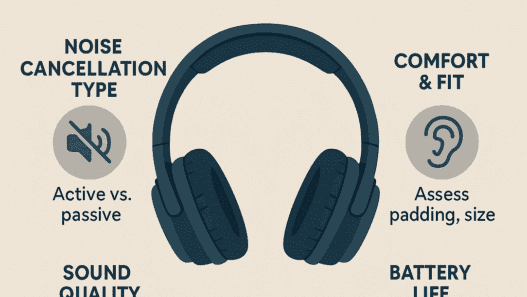
To fully appreciate how noise-cancelling headphones work, it’s crucial to understand the key terms that define their functionality.
- Active Noise Cancellation (ANC): The electronic process of using microphones to pick up ambient sound, generating an inverse “anti-noise” sound wave, and playing it back to cancel out the original noise before it reaches the ear. This is highly effective for consistent, low-frequency sounds like engine hums and air conditioners.
- Passive Noise Isolation (or Passive Noise Cancellation): This is the physical blocking of sound, achieved simply by the design of the headphones themselves. Over-ear cups that create a seal around the ear and in-ear tips that fit snugly in the ear canal act as physical barriers, blocking out higher-frequency sounds like human speech and keyboard clicks. All headphones provide some degree of passive isolation; ANC enhances it.
- Transparency Mode (or Ambient Sound Mode): A feature that uses the external microphones to pick up surrounding sounds and deliberately pipe them into your ears. This allows you to remain aware of your environment—hearing train announcements, having a conversation, or being alert to traffic—without removing your headphones.
- Adaptive Noise Cancellation: An advanced form of ANC where the system continuously and automatically adjusts the level of cancellation based on the environment. For example, it might increase cancellation on a noisy train and decrease it in a quiet office.
- Digital Signal Processor (DSP): The specialized microprocessor inside the headphones that performs the complex, real-time mathematical calculations required to analyze the incoming noise and generate the precise anti-noise wave. The speed and power of the DSP are critical to the effectiveness of the ANC.
- Sound Pressure Level (SPL): A measurable unit of sound pressure, often (incorrectly) referred to as “loudness.” Understanding SPL is key to discussing the safety and acoustic performance of headphones.
How It Works: The Symphony of Physics and Silicon (A Step-by-Step Deep Dive)
The process of active noise cancellation is an elegant application of wave physics, executed with lightning speed by modern electronics. Here is a detailed, step-by-step breakdown:
Step 1: Detection – The Ears of the System
The process begins with one or more tiny microphones placed on the exterior of the headphone ear cup (or on the stem of an earbud). These “reference microphones” are tasked with a single job: to continuously listen to and capture the ambient sound waves in your environment. They convert these sound waves (which are patterns of high and low air pressure) into an analogous electrical signal.
Step 2: Analysis and Inversion – The Brain’s Calculation
This electrical signal is immediately fed into the Digital Signal Processor (DSP). The DSP’s role is that of a hyper-fast audio mathematician. It analyzes the incoming sound wave in real-time, identifying its amplitude (volume) and frequency (pitch). Using this data, the DSP’s algorithm performs a critical operation: it creates a perfect mirror image of the sound wave. If the original noise wave has a crest, the DSP creates a trough of equal magnitude. This “anti-noise” or “inverted” wave is the key to the entire process. This principle, known as destructive interference, is a core concept in physics where two waves cancel each other out.
Step 3: Emission – The Counter-Attack
The newly generated anti-noise signal is amplified and sent to the headphone’s speaker driver, located just millimeters from your eardrum. The speaker plays this anti-noise wave simultaneously with your desired audio (music, podcast, or silence).
Step 4: Cancellation – The Moment of Silence
As the original ambient noise wave travels toward your eardrum, it meets the anti-noise wave emanating from the speaker. According to the principle of destructive interference, the two waves collide. The crest of the noise wave fills the trough of the anti-noise wave, and vice-versa. When perfectly aligned, they cancel each other out, resulting in a net reduction of sound energy and the perception of silence or a significant reduction in the original noise. This entire cycle—from detection to cancellation—happens in a fraction of a millisecond, allowing the system to react almost instantaneously to changes in your sound environment.
Step 5: Refinement and Adaptation – The Feedback Loop
Higher-end headphones incorporate an additional layer of sophistication: a “feedback microphone” placed inside the ear cup, near the speaker. This microphone listens to the sound that actually reaches your ear. It sends this data back to the DSP, which can then make micro-adjustments to the anti-noise signal to account for imperfections in the seal or changes in the noise profile, creating a more precise and effective cancellation effect. This is a core part of what makes adaptive ANC so effective.
Why It’s Important: Beyond Music – The Cognitive and Societal Impact
The value of noise-cancelling headphones extends far beyond an improved listening experience for music aficionados. Their impact touches upon productivity, health, and social dynamics.
- The Focus and Productivity Multiplier: In an age of distraction, the ability to create an auditory sanctuary is a powerful tool for deep work. By eliminating unpredictable and disruptive background noises, ANC headphones allow the brain to concentrate fully on the task at hand, whether it’s coding, writing, studying, or analyzing data. This can lead to significant gains in productivity and output quality. For professionals managing complex tasks, from software development to global supply chain management, this focused state is invaluable.
- A Guardian of Mental Wellbeing: Constant, uncontrollable noise is a documented stressor. It can elevate cortisol levels, increase anxiety, and lead to mental fatigue. By giving individuals control over their auditory input, ANC headphones can serve as a tool for managing sensory overload and creating moments of calm in a chaotic world. This aligns with broader strategies for maintaining mental health in high-stimulus environments. The simple act of putting on headphones can be a psychological signal to the brain to enter a state of focus or relaxation.
- The Traveler’s Essential Companion: For frequent flyers and commuters, ANC technology is transformative. It turns the thunderous roar of a jet engine into a gentle whisper and the rumble of a subway car into a non-issue. This not only makes travel more pleasant but also significantly reduces travel-induced fatigue, allowing people to arrive at their destinations feeling more rested and less stressed.
- Accessibility and Inclusivity: For individuals with sensory processing disorders, autism, or misophonia (a condition where certain sounds trigger strong emotional responses), ANC headphones can be life-changing. They provide a manageable way to navigate environments that would otherwise be overwhelming or painful, offering a degree of independence and comfort that was previously difficult to achieve.
- The Evolution of Personal Space: In dense urban living and open-plan offices, physical privacy is a luxury. Noise-cancelling headphones have become a universally recognized symbol for “do not disturb.” They allow individuals to carve out a slice of personal, cognitive space in shared environments, redefining social boundaries in the 21st century.
Common Misconceptions and Observations

Despite their popularity, several misconceptions about noise-cancelling headphones persist.
- Misconception: “ANC eliminates all sound completely.”
Reality: ANC is most effective against low-frequency, consistent sounds (drones, hums, engines). It is less effective against sudden, sharp, high-frequency sounds like a dog barking, a baby crying, or a person shouting. These are best blocked by a combination of ANC and good passive isolation. - Misconception: “ANC headphones are dangerous because you can’t hear your surroundings.”
Reality: This is a valid concern for situations where situational awareness is critical, like walking or cycling in traffic. However, this is precisely why Transparency Mode was invented. Responsible use involves using this mode in such scenarios. The safety concern is a user behavior issue, not an inherent flaw in the technology. - Misconception: “ANC degrades sound quality.”
Reality: This was true for early generations of the technology. Today, in high-quality models from Sony, Bose, and Apple, the DSP is so advanced that it can cancel noise without any perceptible negative impact on music fidelity. In fact, by removing the masking effect of background noise, ANC can allow you to hear finer details in your music at lower, safer volumes. - Observation: “ANC gives me a feeling of pressure or ‘ear suck’.”
Reality: This is a common experience, especially for first-time users. The sensation occurs because the ANC is successfully canceling the low-frequency air pressure waves that your body is used to feeling. Your brain interprets the absence of this expected pressure as a new pressure itself. Most people acclimatize to this feeling after a short period of use. - Misconception: “All ANC is created equal.”
Reality: The quality of ANC varies dramatically between a $50 pair of earbuds and a $400 pair of over-ear headphones. The number and placement of microphones, the sophistication of the DSP algorithm, and the quality of the passive seal all contribute to the overall effectiveness. Brand and model matter immensely.
Recent Developments and Success Stories: The Battle for Acoustic Supremacy
The market for premium noise-cancelling headphones has been dominated by a fierce rivalry that has driven rapid innovation.
The Sony WH-1000XM Series Dominance: For several years, Sony’s WH-1000XM line (e.g., XM4, XM5) has been widely regarded as the industry leader in ANC performance. Sony’s success is built on its proprietary HD Noise Cancelling Processor QN1 (and its successors), which integrates a powerful DSP and a high-performance 32-bit audio signal processor. Features like “Speak-to-Chat” (which automatically pauses music and engages transparency mode when you start speaking) and exceptional battery life have made them a favorite among tech reviewers and consumers alike. This success story shows how a relentless focus on a core technology and innovation can lead to market leadership.
Bose’s Legacy of Comfort and Clarity: As the originator of the category, Bose remains a top contender. The Bose QuietComfort Ultra Headphones and Earbuds emphasize a natural, pressure-free cancellation experience and best-in-class comfort for long wearing sessions. Bose’s focus on a wide “soundstage” and clear audio, coupled with effective ANC, ensures they retain a loyal customer base who value their particular acoustic signature.
Apple’s Seamless Ecosystem Integration: The Apple AirPods Pro (and Max) have been a massive success, not necessarily for having the absolute best ANC, but for its flawless integration within the Apple ecosystem. Features like automatic device switching, spatial audio, and the H1/H2 chip that manages the ANC process with incredible efficiency have made them the default choice for iPhone users. Their success underscores that in the gadget and consumer tech world, user experience and ecosystem can be as important as raw technical specifications.
Case Study: The AirPods Pro – A Lesson in Ecosystem-Driven Market Capture
When Apple launched the original AirPods, they were a cultural phenomenon, but they lacked noise cancellation. The launch of the AirPods Pro in 2019 was a strategic masterstroke that deserves a detailed case study.
- The Pre-Launch Landscape: The market for true wireless earbuds with ANC was already established, with players like Sony and Sennheiser offering technically proficient options. However, they often suffered from clunky connectivity, especially when switching between non-Apple devices.
- Apple’s Strategy: The H1 Chip as a Moat: Instead of just adding ANC, Apple leveraged its greatest strength: vertical integration. The custom-designed H1 chip in each AirPods Pro was the secret weapon. It handled everything: Bluetooth connectivity, audio processing, Siri voice activation, and, crucially, the complex computations for ANC and Transparency mode.
- The User Experience Triumph: This integration resulted in a user experience that competitors couldn’t match. The setup was instantaneous for iPhone users (“magical” pairing). Switching between devices signed into the same iCloud account was seamless. The force sensor on the stem provided intuitive controls. The transparency mode was lauded for its incredibly natural sound, as if you weren’t wearing earbuds at all.
- The Outcome and Lesson Learned: The AirPods Pro became a runaway success, not by winning every spec sheet comparison, but by offering the most cohesive and effortless experience for its target audience. The lesson for the broader gadget industry is clear: technological prowess must be paired with an intuitive and integrated user experience to achieve mass-market dominance. This principle of creating a seamless customer journey is equally critical in other fields, such as a well-orchestrated ecommerce business setup.
Real-Life Examples and Sustainable Approaches for the Future
The application of noise-cancelling technology is vast and growing.
- Real-Life Use Cases:
- The Student: Using Sony WH-1000XM5 headphones to block out dormitory noise, enabling deep focus while studying for exams.
- The Digital Nomad: Relying on Bose QuietComfort Earbuds to create a mobile office in a noisy coffee shop or co-working space, taking calls with clear voice pickup and listening to music without distractions.
- The New Parent: Using Apple AirPods Pro with Transparency Mode to listen to a podcast while still being able to hear their sleeping baby in the next room.
- The Factory Worker: Wearing specialized industrial ANC headsets to protect their hearing from machinery noise while still being able to communicate with colleagues via integrated radios.
- Sustainable Approaches for the Future:
- Modular and Repairable Design: The biggest sustainability challenge with modern electronics is their “disposability.” Headphone manufacturers must move towards modular designs where components like batteries, ear pads, and even speakers can be easily replaced by the user or a repair shop. France’s repairability index is already pushing companies in this direction.
- Long-Term Software Support: Ensuring that the firmware and companion apps for headphones receive updates for many years extends the functional life of the hardware, preventing premature obsolescence. This is a key part of our our focus on sustainable technology practices.
- Use of Recycled Materials: Many companies, like Apple and Sony, are already increasing their use of recycled rare-earth elements in magnets, recycled aluminum in housings, and recycled plastics. This trend needs to become an industry standard.
- Battery Longevity and Replacement Programs: Lithium-ion batteries have a finite lifespan. Designing headphones with user-replaceable batteries or offering affordable, official battery replacement services is crucial for sustainability. For more on building long-term value and sustainability, the principles in our nonprofit hub often emphasize similar enduring strategies.
- End-of-Life Recycling Programs: Establishing and promoting robust take-back and recycling programs ensures that valuable materials are recovered and hazardous components are disposed of responsibly at the end of the product’s life.
Conclusion & Key Takeaways: The Sound of the Future
Noise-cancelling headphones have evolved from a specialized tool for pilots into a ubiquitous piece of consumer technology that profoundly impacts how we interact with our environment. They are a perfect example of a gadget that successfully addresses a fundamental human need—the need for focus and peace—through sophisticated technology and innovation.
Key Takeaways:
- The Science is Sound: Active Noise Cancellation is a legitimate and highly effective application of wave physics, reliant on powerful microprocessors to generate destructive sound waves in real-time.
- Impact Beyond Audio: The primary value of ANC headphones lies in their ability to enhance concentration, reduce stress, and create personal auditory space, making them a tool for cognitive performance and mental well-being.
- A Competitive Landscape: The market is driven by intense competition between giants like Sony, Bose, and Apple, leading to rapid year-on-year improvements in cancellation quality, battery life, and smart features.
- Responsible Use is Key: While powerful, the technology requires responsible use, particularly regarding situational awareness. Features like Transparency Mode are essential for safety.
- The Future is Adaptive and Integrated: The next frontier involves even more context-aware ANC that adapts not just to noise, but to your activity (e.g., walking, running, sitting). Deeper integration with voice assistants and health monitoring (via biometric sensors) is also on the horizon.
As this technology continues to mature and become even more accessible, it will further redefine our relationship with the soundscapes of our lives, offering a portable sanctuary of silence in an ever-noisier world. To explore more cutting-edge reviews and analyses of such transformative technologies, be sure to browse our full blogs archive.
Frequently Asked Questions (FAQs)
- Can noise-cancelling headphones completely block out human speech?
No. While they can reduce the low-frequency rumble of a crowd, the unpredictable, high-frequency nature of speech is difficult to cancel completely. Good passive isolation is key for reducing speech. - Is it safe to sleep with noise-cancelling headphones on?
For over-ear models, it can be uncomfortable and puts strain on the headband and hinges. For earbuds, there’s a risk of them becoming lodged in the ear canal if you sleep on your side. It’s generally not recommended for regular use. - Do noise-cancelling headphones cause dizziness or headaches?
Some users, especially when first trying them, can experience dizziness or headaches due to the “pressure” effect. This usually subsides with acclimatization. If it persists, using them for shorter periods or disabling ANC may be necessary. - How does ANC affect battery life?
Active Noise Cancellation is a power-intensive process. Enabling ANC will significantly reduce the battery life of your headphones or earbuds compared to using them with ANC turned off. - Can I use ANC without listening to anything?
Absolutely. Many people use the silent noise-cancelling feature specifically to create a quiet environment for reading, working, or relaxing without any audio playback. - Why do my ears pop when I turn on ANC?
This is related to the “pressure” sensation. The cancellation of low-frequency air pressure waves can mimic the feeling of a change in altitude, similar to what you experience in an airplane, triggering a need to pop your ears. - Are there any health risks associated with long-term ANC use?
There are no known long-term health risks from the technology itself. The primary health consideration is listening to audio at safe volumes; since ANC blocks background noise, you may be tempted to listen at lower, safer volumes, which is actually a benefit. - Can ANC be added to existing headphones through an app or dongle?
True ANC requires external microphones and a dedicated DSP, which cannot be replicated by a software app. However, there are some dongles available that can provide a basic level of ANC for wired headphones, but their effectiveness is limited. - What’s the difference between ANC in over-ear vs. in-ear headphones?
Over-ear headphones generally provide superior ANC because they can create a better passive seal and house larger microphones and processors. However, modern high-end in-ear models (earbuds) have closed the gap remarkably. - Do noise-cancelling headphones work for tinnitus?
They can be helpful for some tinnitus sufferers by masking the internal ringing with soothing sounds, music, or even “silence.” The reduction in external stress can also sometimes reduce the perception of tinnitus. However, they are not a cure. - How do I clean the microphones on my ANC headphones?
Use a dry, soft-bristled brush (like a clean toothbrush) to gently remove dust and debris from the microphone ports. Avoid using compressed air or liquids, which can damage the sensitive components. - Why does the noise cancellation seem weaker in one ear?
This could be due to a clogged microphone port on one side, a poor seal from the ear tip or ear cup on that side, or a software/firmware glitch. Try cleaning the mics, adjusting the fit, and resetting the headphones. - Can I replace the battery in my wireless ANC headphones?
This is very difficult and often not intended by the manufacturer, as most are sealed units. This highlights the sustainability challenge. Some specialist repair shops offer the service, but it’s not easy. - How do I choose between Sony, Bose, and Apple?
- Sony: For the absolute best-in-class ANC and audio customization features.
- Bose: For exceptional comfort, a wide soundstage, and a natural cancellation feel.
- Apple: For seamless integration with iPhones, Macs, and iPads, and a great all-around user experience.
- What is the future of noise-cancelling technology?
The future points towards “personalized” ANC that adapts to the unique shape of your ear canal, “spatial” noise cancellation that can cancel sounds from specific directions, and integration with augmented reality audio experiences.


