


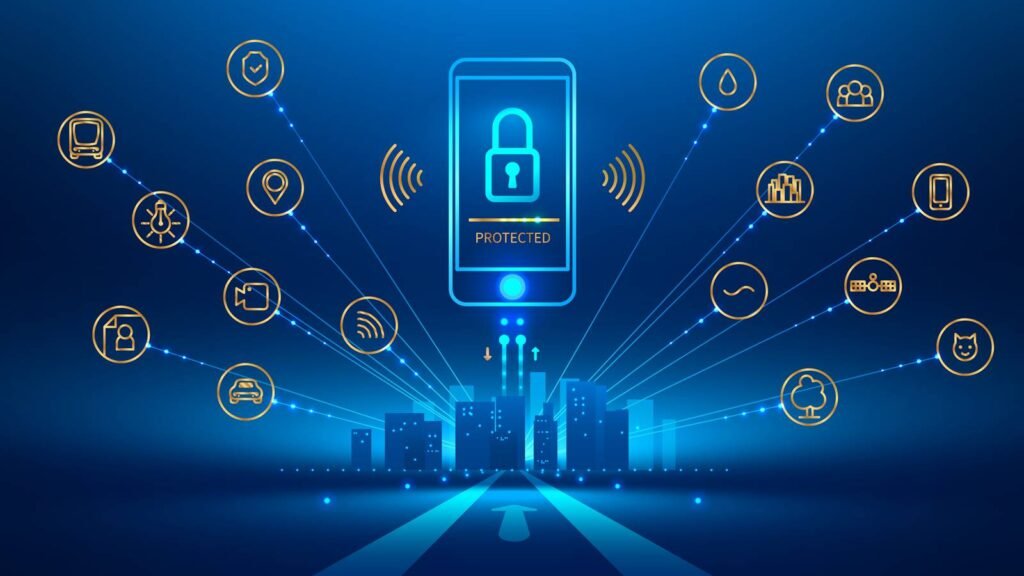
Introduction: The Invisible Threat in Our Homes and Cities
Imagine a world where your refrigerator can order milk, your city’s traffic lights optimize flow in real-time, and factory machines predict their own maintenance. This is the promise of the Internet of Things (IoT), a vast network of billions of physical objects embedded with sensors, software, and connectivity. From smart speakers and wearables to industrial robots and smart grids, IoT is weaving the digital and physical worlds together.
However, this hyper-connectivity comes with a massive, often invisible, security cost. Many of these “smart” devices are built for convenience and cost-effectiveness, not security. They represent a sprawling, vulnerable attack surface that cybercriminals and nation-states are eagerly exploiting. A compromised IoT device is not just about stolen data; it can lead to a hijacked baby monitor, a paralyzed hospital, or a city-wide blackout.
IoT Security is the discipline of safeguarding these connected devices and the networks they inhabit. It is one of the most critical and challenging frontiers in cybersecurity today because it extends digital threats into our physical safety. Understanding these risks and how to mitigate them is essential for every consumer, business leader, and policymaker. This guide will dissect the unique threats of the IoT landscape and provide a actionable, layered framework for defense. For more on foundational tech concepts, explore our Technology & Innovation category.
Background & Context: From Convenience to Critical Vulnerability
The first internet-connected appliance, a Coke machine at Carnegie Mellon University in the early 1980s, was a novelty. Today, there are over 15 billion connected IoT devices, with projections soaring to 29 billion by 2030. This explosive growth has been fueled by cheap components, ubiquitous wireless connectivity, and consumer demand for convenience.
The security problem was starkly illustrated by the Mirai Botnet in 2016. Mirai malware scanned the internet for IoT devices like home routers and security cameras that were still using factory-default usernames and passwords. It compromised hundreds of thousands of these devices, assembling them into a massive “botnet”—a network of zombie devices. This botnet was then used to launch a devastating Distributed Denial of Service (DDoS) attack that crippled major websites like Twitter, Netflix, and Reddit across the U.S. and Europe.
Mirai was a wake-up call. It proved that poorly secured IoT devices could be weaponized to disrupt the core infrastructure of the internet. Since then, the threat has only evolved, moving from consumer nuisance to attacks on Industrial IoT (IIoT) and critical infrastructure, with real-world consequences for public safety and national security.
Key Concepts Defined: The IoT Security Lexicon


To understand the problem, you must understand the key terms:
- Internet of Things (IoT): The network of physical objects—“things”—that are embedded with sensors, software, and other technologies for the purpose of connecting and exchanging data with other devices and systems over the internet.
- Industrial IoT (IIoT): The application of IoT technology in industrial sectors and critical infrastructure, such as manufacturing, energy, and healthcare. The stakes here are much higher.
- Firmware: The permanent software programmed into a device’s read-only memory. It is the device’s operating system and is a primary target for attackers.
- Botnet: A network of private computers infected with malicious software and controlled as a group without the owners’ knowledge, e.g., to send spam messages or to launch DDoS attacks.
- Attack Surface: The total number of points where an unauthorized user can try to enter data to or extract data from an environment. The IoT makes this surface immense.
- Zero Trust Architecture: A security model that assumes no device or user, inside or outside the network, should be trusted by default. This is a critical mindset for IoT.
- Network Segmentation: The act of splitting a computer network into subnetworks, each being a network segment. This is used to contain breaches.
The Unique Challenges of IoT Security
Why is securing IoT so difficult? The problems are baked into the ecosystem:
- Resource Constraints: Many IoT devices have limited processing power, memory, and battery life, making it impossible to run sophisticated security software.
- Insecure by Design: Manufacturers often prioritize speed-to-market and low cost over security. Default, hard-coded passwords, unencrypted data, and lack of a secure update mechanism are common.
- Proliferation and Scale: Managing security patches for thousands or millions of disparate devices is a logistical nightmare.
- Long Lifecycles: An IoT device (like a smart thermostat) may be in operation for a decade, far outlasting the manufacturer’s support commitment.
- Physical Accessibility: Unlike a server in a data center, many IoT devices are in physically accessible locations, making them vulnerable to tampering.
How to Secure IoT: A Layered Defense Framework (Step-by-Step)
A robust IoT security strategy must be layered, addressing risks at the device, network, and cloud level.
Layer 1: Securing the Device Itself
- Step 1: Change Default Credentials: This is the most critical and basic step. Every device must have a unique, strong password set upon installation.
- Step 2: Ensure Secure Firmware Updates: Choose devices from manufacturers that provide regular, secure (cryptographically signed) firmware updates. Enable automatic updates where available.
- Step 3: Implement Hardware Security: For high-value devices, look for hardware-based security like Trusted Platform Modules (TPM) or secure elements that can store cryptographic keys.
- Step 4: Practice Data Minimization: Only collect the data that is absolutely necessary for the device to function. This limits the impact of a potential data breach.
Layer 2: Securing the Network
- Step 5: Implement Network Segmentation: This is the single most effective network control. Place IoT devices on a separate, dedicated network (a guest VLAN) that is isolated from your main business or home network. This way, if a smart lightbulb is compromised, the attacker cannot pivot to your laptop containing sensitive files.
- Step 6: Use a Next-Generation Firewall (NGFW): Deploy a firewall that can inspect traffic and enforce policies based on the device type, not just the IP address. It can block IoT devices from communicating with known malicious domains.
- Step 7: Monitor Network Traffic: Use network monitoring tools to look for anomalous behavior, such as an IoT device communicating with a server in a foreign country at 3 a.m.
Layer 3: Securing the Cloud and Platform
- Step 8: Secure Cloud APIs: The communication between the device and the cloud platform often uses Application Programming Interfaces (APIs). These must be rigorously tested and secured to prevent data leaks.
- Step 9: Encrypt Data in Transit and at Rest: All data moving from the device to the cloud, and stored in the cloud, must be encrypted using strong standards.
- Step 10: Adopt a Zero-Trust Approach: Never assume a device is trustworthy. Continuously authenticate and authorize every access request.
Why IoT Security is a Societal Imperative
The consequences of poor IoT security extend far beyond individual privacy.
- Critical Infrastructure Attacks: Compromised Industrial Control Systems (ICS) can lead to power grid failures, water contamination, or disruptions in transportation systems. The 2015 attack on Ukraine’s power grid, which left hundreds of thousands without electricity, was a stark preview of this threat.
- Personal Safety Risks: A hacked connected car, medical device (like an insulin pump or pacemaker), or home security system can have direct, life-threatening consequences.
- Massive Privacy Invasions: IoT devices are data collection engines. A breach can expose intimate details of a person’s life, from their daily routines (smart speakers) to their health data (fitness trackers). This intersects deeply with concerns about Mental Wellbeing and the stress of being perpetually monitored.
- Economic Damage: Botnets made of IoT devices can disrupt e-commerce, and attacks on manufacturing IIoT can halt production, causing massive financial losses.
Common Misconceptions and Pitfalls
Dangerous assumptions are prevalent among consumers and businesses.
- Misconception: “It’s just a lightbulb, what’s the worst that could happen?”
Reality: A compromised “dumb” device can be a foothold into your network. From a smart lightbulb, an attacker can pivot to more valuable targets. - Misconception: “The manufacturer handles all the security.”
Reality: Many manufacturers have a poor track record. The user shares responsibility for configuring the device securely and keeping it updated. - Misconception: “IoT devices are too simple to be hacked.”
Reality: Their simplicity is their weakness. Lack of security features makes them easy, low-hanging fruit for automated attacks. - Misconception: “A strong Wi-Fi password is enough.”
Reality: While important, a Wi-Fi password does not protect against threats originating from inside your network from a compromised device. Segmentation is key.
Recent Developments and a Case Study
The IoT security landscape is evolving rapidly.
Recent Developments:
- Government Regulations: The UK’s PSTI (Product Security and Telecommunications Infrastructure) Act and the U.S. Cyber Trust Mark program are emerging to mandate basic security standards for consumer IoT devices, banning default passwords and requiring vulnerability disclosure policies.
- AI-Powered Threat Detection: Security platforms are now using AI to analyze the behavior of IoT device fleets and identify anomalies that signal a compromise.
- 5G and IoT: The rollout of 5G networks enables more IIoT applications but also introduces new attack vectors that require specialized security architectures.
Case Study: The Verkada Breach – When Cameras Turned Against You
- The Situation: Verkada is a major provider of cloud-based security camera systems. In March 2021, a group of hackers gained “super admin” access to Verkada’s internal network.
- The Attack: From this central point, they were able to access the live feeds and archived video from over 150,000 cameras inside Verkada’s customers’ facilities. The victims included hospitals, companies like Tesla and Cloudflare, prisons, and schools. The hackers could see inside factories, jail cells, and hospital wards.
- The Lesson Learned: This was a failure of cloud and platform security, not the individual cameras. It highlighted the massive concentration of risk that comes with centralized IoT management platforms. It underscored the critical importance of strong access controls, the principle of least privilege, and robust API security for the cloud backend that supports IoT devices. A single compromised admin account led to a panoramic privacy breach across hundreds of organizations.
Conclusion & Key Takeaways
The Internet of Things offers incredible benefits, but we cannot embrace its convenience by ignoring its risks. Securing IoT is a shared responsibility between manufacturers, regulators, and users. The strategy must be holistic, layered, and continuous.
Key Takeaways:
- Assume Compromise: Operate on the principle that any device could be compromised. This “assume breach” mindset is central to Zero Trust and effective IoT security.
- Segment Ruthlessly: The most effective immediate action you can take is to isolate IoT devices on their own network segment.
- Password and Patch: Never leave a default password in place and prioritize devices from manufacturers that provide long-term, secure firmware support.
- Think Beyond Data: The risk is not just data theft, but physical safety, operational continuity, and public infrastructure.
- Advocate for Regulation: Support and demand regulations that mandate a baseline of security for all IoT devices, creating a safer ecosystem for everyone.
Building a secure IoT environment is as fundamental to modern life as securing your Personal Finances. It requires vigilance and proactive measures. For more insights into building resilient systems, you can explore our resources on Global Supply Chain Management. To learn more about our mission, visit our About Us page or explore our other Blogs.
Frequently Asked Questions (FAQs)
1. What is the first thing I should do when I get a new smart home device?
Before you even plug it in, change the default password. Then, connect it to your dedicated IoT Wi-Fi network (guest network), disable any features you don’t need, and ensure it is running the latest firmware.
2. How do I create a separate network for my IoT devices?
Most modern home routers have a “Guest Network” feature. Simply enable it, give it a different name (SSID) and a strong password, and connect all your smart devices to this network instead of your main one.
3. What should I do with old IoT devices I no longer use?
Perform a factory reset to wipe your personal data from the device. Then, dispose of it properly at an e-waste recycling facility. Do not just throw it in the trash.
4. Are some IoT brands more secure than others?
Yes. Look for brands that have a public commitment to security, a clear vulnerability disclosure policy, and a track record of providing regular, timely firmware updates for their devices.
5. What is the biggest IoT security threat for businesses?
The convergence of IT and OT (Operational Technology) networks. When corporate IT networks are connected to industrial control systems without proper segmentation, a simple phishing email can lead to a factory shutdown.
6. Can a VPN help with IoT security?
A VPN (Virtual Private Network) encrypts your internet traffic, which is good for privacy. However, it does not replace network segmentation. A compromised device on a VPN-connected network can still attack other devices on that same network.
7. What are “hard-coded credentials” and why are they bad?
These are usernames and passwords that are embedded in the device’s firmware and cannot be changed by the user. They are a severe vulnerability because if discovered by attackers, every device of that model can be easily compromised.
8. Is Bluetooth for IoT devices secure?
Bluetooth can be secure if implemented correctly, but it has had its share of vulnerabilities (e.g., BlueBorne). Ensure your Bluetooth devices are updated and avoid using them in public, untrusted areas.
9. What is the role of AI in IoT security?
AI can be used defensively to analyze the massive amounts of data generated by IoT devices to detect anomalous behavior that indicates a compromise, much faster than humans can.
10. How does IoT security relate to data privacy laws like GDPR?
Many IoT devices collect personal data. If you are a business deploying IoT, you must comply with laws like GDPR, which require you to lawfully process data, protect it, and inform users about what you’re collecting. A breach of an IoT device is also a data breach.


