


Introduction: The Dawn of the Responsive Home
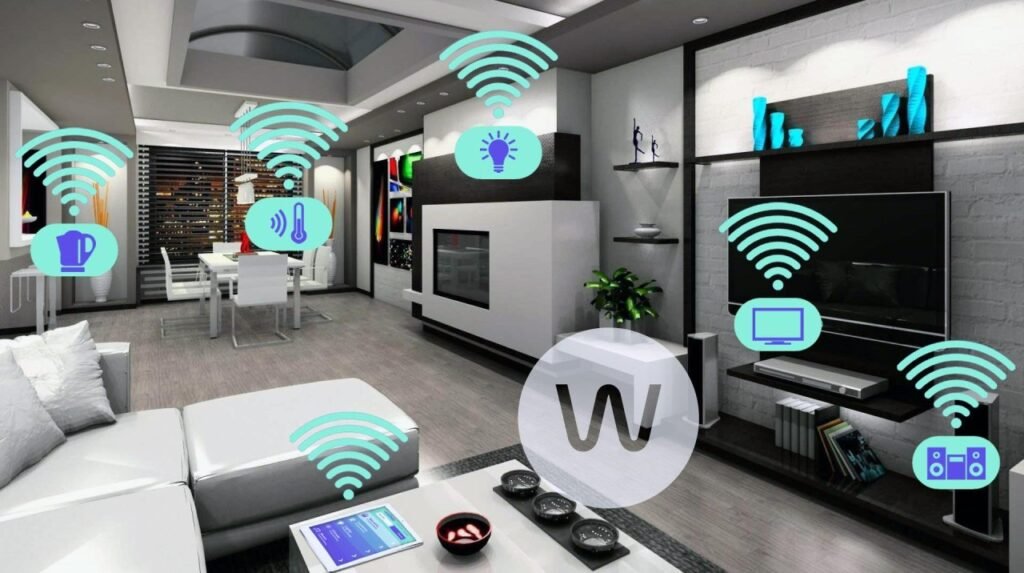
For generations, a home was a static structure—a physical shelter that provided protection from the elements but demanded constant manual intervention to manage its environment. Today, we are witnessing a paradigm shift. The four walls of our homes are becoming intelligent, responsive, and deeply integrated with our digital lives. This transformation is powered by the Smart Home Ecosystem, a network of interconnected devices, sensors, and software that automates tasks, provides unprecedented control, and enhances security, comfort, and efficiency. This is not just about turning on a light with your phone; it’s about creating a living space that anticipates your needs, conserves precious resources, and offers peace of mind. For enthusiasts of gadget and consumer tech, building a smart home is one of the most tangible and rewarding ways to experience the power of modern technology and innovation. This ultimate guide will navigate you through the complexities of planning, building, and securing a sophisticated smart home, transforming your living space from a passive container into an active partner in your daily life.
Background/Context: From X10 to Matter – The Long Road to Interoperability
The dream of home automation is decades old, but its realization has been a slow journey hampered by competing standards and technological limitations.
- The Proto-Smart Home (1970s-1990s): The first significant technology was X10, developed in 1975. It used a home’s existing electrical wiring to send signals between modules, allowing for basic control of lights and appliances. It was revolutionary but notoriously unreliable, slow, and offered no two-way communication.
- The Rise of Wireless Protocols (2000-2010): The advent of dedicated wireless protocols like Z-Wave and Zigbee marked a major leap forward. Operating on radio frequencies separate from crowded Wi-Fi bands, they enabled more reliable, low-power, meshed networks where devices could relay signals to one another, extending the network’s range.
- The Voice Assistant Revolution (2014-Present): The launch of Amazon Alexa and the Echo speaker in 2014 was the catalyst that brought smart homes to the masses. Voice control provided a natural, intuitive interface that eliminated the friction of smartphone apps. Google Assistant and Apple’s Siri quickly followed, turning the smart speaker into the central command post for the modern home.
- The Platform Wars and the Interoperability Problem: As the market exploded, a critical problem emerged: the “walled garden.” Companies like Apple, Google, and Amazon created their own ecosystems (HomeKit, Google Home, Alexa), and devices were often only compatible with one. This fragmentation confused consumers and stifled growth.
- The Modern Era: The Promise of Matter (2022-Present): In response to this fragmentation, the Connectivity Standards Alliance (CSA), backed by all major tech giants, developed Matter. Matter is a new, open-source, royalty-free connectivity standard designed to ensure that smart home devices are secure, reliable, and seamlessly interoperable across different ecosystems and brands. It represents the most significant step yet towards a unified and user-friendly smart home future.
Key Concepts Defined: The Lexicon of a Connected Home
Navigating the world of smart homes requires understanding its unique vocabulary.
- Smart Home Ecosystem: The collective network of all your connected devices, the software platforms that manage them, and the communication protocols that allow them to talk to each other.
- Internet of Things (IoT): The broader universe of physical objects (“things”) embedded with sensors, software, and other technologies for the purpose of connecting and exchanging data with other devices and systems over the internet. Smart home devices are a subset of consumer IoT.
- Voice Assistant: An AI-powered digital assistant (e.g., Amazon Alexa, Google Assistant, Apple Siri) that responds to voice commands to control devices, answer questions, and perform tasks.
- Hub/Bridge: A physical device that acts as a central translator and commander for a specific group of devices, particularly those using protocols like Zigbee or Z-Wave. It connects to your home router and allows these devices to communicate with your Wi-Fi network and the internet.
- Automation/Routine: A pre-programmed action or sequence of actions triggered by a specific condition. For example, “When the front door unlocks after 6 PM, turn on the entryway lights.” This is the core intelligence of a smart home.
- Geofencing: A location-based trigger that uses the GPS in your smartphone to perform an action when you cross a virtual geographic boundary. For example, “When the first family member arrives home, turn on the thermostat and unlock the front door.”
- Matter: The new, IP-based, unifying application-layer protocol that enables smart home devices to work reliably and securely with any Matter-certified ecosystem, such as Amazon Alexa, Google Home, Apple Home, and others.
- Thread: A low-power, wireless, mesh networking protocol designed specifically for home automation. It is often used in conjunction with Matter to provide robust and responsive device-to-device communication.
How It Works: The Blueprint for a Connected Home (A Step-by-Step Methodology)

Building a robust smart home is a strategic process. Rushing in without a plan leads to frustration, incompatibility, and security risks. Follow this step-by-step methodology for a successful build.
Phase 1: Foundation and Planning
- Step 1: Assess Your Needs and Goals: Before buying a single device, ask why. What problem are you solving? Is it convenience (voice-controlled lights), security (smart locks and cameras), savings (smart thermostat), or peace of mind (leak sensors)? Prioritize based on your actual needs, not just cool tech. This strategic planning mirrors the initial stages of any complex project, much like a ecommerce business setup requires a clear business plan.
- Step 2: Choose Your Core Ecosystem (The “Brain”): This is the most critical decision. You are essentially choosing the “operating system” for your home. Your primary options are:
- Amazon Alexa: The most extensive device compatibility, very strong for routines and voice control. Best for those who want the widest choice and are heavily invested in the Amazon ecosystem.
- Google Home: Deeply integrated with Google services, excels at answering questions and navigation. Offers a clean interface and strong casting capabilities for media.
- Apple HomeKit: The champion of privacy and security, with a strict certification process for devices. Offers a seamless, intuitive experience for users deep in the Apple ecosystem (iPhone, Mac, iPad). All processing for automations can be done locally on a HomePod or Apple TV, enhancing speed and privacy.
- Decision Factor: Your choice of smartphone and your prioritization of privacy vs. breadth of device selection will heavily influence this decision. For a future-proof setup, prioritize ecosystems that strongly support the new Matter standard.
Phase 2: Building the Network Infrastructure
- Step 3: Fortify Your Wi-Fi Network: Your smart home is only as good as your network. A flaky Wi-Fi connection will cause unresponsive devices and failed automations.
- Router: Ensure you have a modern, capable router. For larger homes, a mesh Wi-Fi system (like Google Nest Wifi, Eero, or ASUS ZenWiFi) is highly recommended to eliminate dead zones.
- Segmentation: Create a separate Wi-Fi network (a “Guest” network) exclusively for your IoT devices. This is a crucial security practice that isolates your smart devices from your primary computers and phones, containing a potential breach.
- Step 4: Integrate a Hub (If Needed): If you choose devices that use Zigbee or Z-Wave, or if you use Apple HomeKit, you will need a hub. For Apple, this is a HomePod or Apple TV. For others, it could be a Samsung SmartThings Hub or a hub built into an Amazon Echo. This hub will create a robust, local mesh network for your devices.
Phase 3: Device Integration and Automation
- Step 5: Start with a Core Device: Begin with a device that offers high utility. A smart speaker (to serve as your voice interface), a smart plug (to make a dumb lamp smart), or a smart light bulb are excellent, low-cost entry points.
- Step 6: Add Devices by Category: Expand systematically. Don’t buy random devices. Focus on one category at a time:
- Lighting: Smart bulbs, smart switches, smart plugs.
- Security: Smart locks, video doorbells, indoor/outdoor cameras, motion sensors.
- Climate: Smart thermostats, smart vents.
- Entertainment: Smart TVs, streaming devices.
- Step 7: Create Automations and Routines: This is where the magic happens. Move beyond manual control and let your home run itself.
- Simple: “Good Morning” routine triggered by your alarm: turns on lights slowly, reads the weather, and starts the coffee maker.
- Advanced: “Goodnight” routine triggered by a voice command: locks all doors, turns off all lights, adjusts the thermostat, arms the security system, and turns on a white noise machine.
- Location-Based: Use geofencing to turn on HVAC when you’re 15 minutes from home, saving energy while ensuring comfort upon arrival. This level of optimization is akin to the efficiency goals in global supply chain management.
Phase 4: Ongoing Management and Security
- Step 8: Maintain and Update: Regularly check for and install firmware updates for your router, hub, and all smart devices. These updates often contain critical security patches.
- Step 9: Review and Refine: Your lifestyle changes, and so should your smart home. Periodically review your automations. Are they still useful? Can they be improved? A smart home is a dynamic system, not a set-it-and-forget-it installation.
Why It’s Important: The Tangible Benefits of a Connected Life
The value proposition of a well-implemented smart home ecosystem is multi-faceted, impacting your wallet, your safety, and your quality of life.
- Unparalleled Convenience and Control: The ability to control your entire home’s environment from a single app on your phone or with a simple voice command is a fundamental quality-of-life improvement. Forgetting to turn off a light or adjust the thermostat is no longer a problem.
- Significant Energy and Cost Savings: Smart thermostats like the Nest Learning Thermostat can learn your schedule and preferences, automatically adjusting temperatures to save energy when you’re asleep or away. Smart plugs can cut power to “energy vampire” electronics. Smart sprinklers can adjust watering based on weather forecasts. The cumulative effect can lead to a substantial reduction in utility bills, a direct benefit to your personal finance.
- Enhanced Home Security and Peace of Mind: Smart home security provides layers of protection that traditional systems cannot match. Receive instant alerts on your phone when a motion sensor is triggered or a door is unlocked. See and speak to visitors at your door from anywhere in the world with a video doorbell. Grant temporary, scheduled access to guests or service providers without needing a physical key. This creates a powerful deterrent and gives homeowners profound peace of mind.
- Accessibility and Aging in Place: Smart home technology can be life-changing for elderly individuals or those with disabilities. Voice control can operate lights, locks, and thermostats without requiring physical mobility. Motion sensors can alert family members if there is no activity in the home for an unusual period. Automated lighting can prevent falls during the night.
- Data-Driven Insights into Your Home: Your smart home generates data that provides insights into your habits and your home’s performance. You can see your energy consumption patterns, track which doors are used most frequently, and understand your daily routines, allowing for further optimization of your environment.
Common Misconceptions and Observations
As with any emerging technology, several myths surround smart homes.
- Misconception: “Smart homes are a security nightmare waiting to be hacked.”
Reality: While security risks exist, they are often overstated. By following best practices—using strong, unique passwords, enabling two-factor authentication, keeping firmware updated, and segregating your IoT network on a guest Wi-Fi—you can mitigate the vast majority of threats. The new Matter standard also has security built into its core design. - Observation: “It’s too expensive for the average person.”
Reality: You don’t need to automate your entire house at once. Starting with a $30 smart plug or a $15 smart bulb is an affordable entry point. The market has matured, and prices for core devices have dropped significantly. The long-term energy savings from a smart thermostat can also offset its initial cost. - Misconception: “If the internet goes down, my entire house stops working.”
Reality: This depends on your setup. While cloud-dependent devices and voice control will be disabled during an outage, many local-based systems will continue to function. Apple HomeKit, with a home hub, can run all automations locally. Zigbee and Z-Wave devices connected to a local hub will also continue to operate their scheduled and sensor-triggered automations. Basic functions often remain intact. - Observation: “It’s just a lazy gimmick for tech bros.”
Reality: The benefits extend far beyond laziness. For families, it simplifies managing the home. For the security-conscious, it offers robust monitoring. For the environmentally aware, it enables real energy conservation. For those with mobility issues, it provides independence. - Misconception: “Setting up a smart home is too technically complicated.”
Reality: Modern consumer-grade smart home devices are designed for DIY installation. The companion apps provide clear, step-by-step guides. The process of adding a new device to an ecosystem is often as simple as scanning a QR code. The initial complexity lies more in the planning than the physical installation.
Recent Developments and Success Stories
The smart home industry is evolving at a breakneck pace, driven by both competition and collaboration.
The Matter and Thread Revolution: The launch of Matter 1.0 in 2022 is the single most important recent development. Success stories are already emerging. For example, a Eve Energy smart plug (which now supports Matter) can be set up directly in Apple Home and then instantly shared with Google Home and Amazon Alexa without any additional configuration. This “build once, work everywhere” promise is finally becoming a reality, reducing consumer confusion and friction. Companies like Eve, Nanoleaf, and Philips Hue have been early and enthusiastic adopters, building their future product lines around this new standard.
The Rise of the “Hubless” Mesh with Thread: Thread is proving to be a game-changer for device responsiveness. Unlike Zigbee and Z-Wave, which still require a central hub/bridge, Thread devices create their own self-healing, low-power mesh network. And because Thread is a core part of the Matter standard, it’s becoming ubiquitous in new devices. The latest Nest Hub, HomePod Mini, and many Amazon Eero routers act as “Thread Border Routers,” seamlessly extending the Thread network throughout your home without you needing to buy a separate hub. This simplifies the user experience immensely.
Consolidation and Platform Maturity: The major platforms are no longer just adding new device types; they are refining the user experience. Apple’s Home app has undergone significant redesigns for better organization. Google Home is deeply integrating its new “Google Home” infrastructure for faster and more reliable control. Amazon is focusing on “Ambient Intelligence,” where devices anticipate your needs without explicit commands. This maturation signals that the market is moving from a feature war to an experience war.
Case Study: The Nest Learning Thermostat – A Lesson in Behavioral Design and Market Creation
The story of the Nest Thermostat is a landmark case study in how to introduce a disruptive smart home device.
- The Pre-Nest Landscape: Thermostats were boring, beige, and confusing. Most people set them once and never touched them again, leading to massive energy waste. The market was dominated by established players like Honeywell.
- Nest’s Innovation: Nest Labs, founded by former Apple engineers Tony Fadell and Matt Rogers, didn’t just make a “smart” thermostat; they rethought the entire product category from the user up.
- Design: It was beautiful—a sleek, circular, minimalist device with a high-resolution color display. It felt like a premium consumer gadget, not a utility closet component.
- User Experience (UX): The installation process was designed to be DIY-friendly. The core innovation was “Auto-Schedule.” Instead of programming a complex weekly schedule, the Nest learned your preferences and schedule by observing your manual adjustments over the first week. It also introduced the “Leaf,” a simple, gamified indicator that rewarded you for energy-efficient settings.
- Savings Proposition: It provided clear, data-driven feedback on your energy usage and savings, making the abstract concept of energy conservation tangible.
- The Outcome and Lesson Learned: The Nest Thermostat was a runaway success, so much so that Google acquired Nest Labs for $3.2 billion in 2014. The lesson is profound: Technology and innovation alone are not enough. Nest succeeded because it combined a real utility (energy savings) with irresistible design, intuitive UX, and behavioral psychology. It didn’t just sell a thermostat; it sold a story of elegance, intelligence, and sustainability. This focus on human-centered design is a principle that can be applied to any product or service, a topic often explored in-depth on our blogs.
Real-Life Examples and Sustainable Approaches for the Future
A modern smart home can be tailored to virtually any lifestyle.
- Real-Life Implementations:
- The Eco-Conscious Family: A system with a Nest Thermostat, Rachio smart sprinkler controller, and smart plugs on entertainment centers. The system saves hundreds of dollars annually on energy and water bills while reducing their carbon footprint.
- The Security-Focused Urban Dweller: An apartment equipped with a Ring Alarm system, Aqara motion and contact sensors, and a Eufy video doorbell. All devices are integrated with Alexa for voice arming/disarming, and the user receives instant video alerts on their phone for any triggered sensor.
- The “Hands-Free” Parent: A home where voice commands through Google Home speakers control lights, play music, and add items to a shared shopping list. Geofencing automatically turns on lights and disarms the alarm when they arrive home with arms full of groceries.
- Sustainable Approaches for the Future:
- Prioritizing Longevity and Repairability: The biggest environmental threat from smart homes is electronic waste. Manufacturers must design devices that are built to last, with replaceable batteries and modular components. Supporting companies that offer long-term software support is key.
- Embracing the Matter Standard: Matter is inherently sustainable for the consumer. A Matter device won’t become a “brick” if you decide to switch from Google to Apple. This extends the functional life of hardware and reduces e-waste.
- Focusing on Energy Reduction: The core function of many smart home devices should be to reduce net energy consumption. Smart thermostats, energy monitors, and automated lighting are powerful tools in the fight against climate change.
- Local-Processing-First Architecture: Platforms that prioritize local processing (like Apple HomeKit) over cloud-dependent processing are more energy-efficient and reliable. Pushing for more devices to handle automations locally reduces the constant energy drain of data centers and maintains functionality during internet outages.
- Responsible End-of-Life Management: Consumers and manufacturers must partner on recycling. Manufacturers should provide clear pathways for recycling old devices, and consumers must be diligent about not throwing smart home tech into the regular trash. For more on building sustainable systems with long-term impact, the philosophies shared in our nonprofit hub are highly relevant.
Conclusion & Key Takeaways: Your Home, Intelligent and Personalized
The journey to a smart home is an exciting evolution in how we interact with our most personal space. It is a field of gadget and consumer tech that delivers immediate, tangible benefits to daily life. While the path has been complex, the future, guided by standards like Matter and Thread, is one of simplicity, security, and seamless interoperability.
Key Takeaways:
- Plan Before You Purchase: Your choice of a core ecosystem (Alexa, Google, Apple) is the most important decision and will guide all future device purchases.
- Security is Paramount: A secure smart home starts with a secure network. Use strong passwords, two-factor authentication, and a segregated IoT Wi-Fi network.
- Automation is the True Power: The real value is unlocked not by remote control, but by creating intelligent automations that make your home proactive rather than reactive.
- Matter and Thread are the Future: For a future-proof setup, prioritize devices that support these new standards to ensure long-term compatibility and performance.
- Start Small and Scale: Begin with a single, high-utility device and expand your system organically based on your needs and budget.
Building a smart home is a rewarding project that blends technology and innovation with practical life enhancement. It turns a house into a dynamic, responsive environment that saves you time, money, and worry. To continue your journey into the world of connected technology, explore the wide range of topics and guides available in our Technology & Innovation category.
Frequently Asked Questions (FAQs)
- What is the single best device to start with for a smart home?
A smart speaker (Echo, Nest Audio, HomePod Mini) or a smart plug. The speaker gives you a voice interface, and the plug can make any dumb appliance smart, offering immediate utility. - Can I mix and match devices from different brands?
Yes, absolutely. This is the entire point of a robust ecosystem. Your Google Home can control Philips Hue lights, your Apple HomeKit can manage a Schlage lock, etc. Just ensure they are compatible with your chosen ecosystem. Matter makes this even easier. - Do all smart home devices require a hub?
No. Many devices connect directly via Wi-Fi. However, devices using Zigbee or Z-Wave require a hub, and Apple HomeKit requires a HomePod or Apple TV as a hub for remote access and automations. - What happens to my data? Is my privacy at risk?
Privacy policies vary by company. Apple HomeKit is renowned for its strong privacy stance, with much processing done locally. Amazon and Google use more cloud processing. Always review a company’s privacy policy before purchasing. You can often disable data-sharing features you’re uncomfortable with. - How do I know if a device is compatible with my ecosystem?
Look for the official compatibility logo on the product’s packaging or website: “Works with Apple HomeKit,” “Works with Google,” or “Works with Alexa.” For the newest devices, look for the “Matter” logo. - Are smart home devices difficult to install?
Most consumer-grade devices are designed for easy DIY installation. Smart bulbs screw in like regular bulbs. Smart plugs plug into outlets. Thermostats and light switches require turning off power at the circuit breaker but come with detailed guides. - Can a smart home really save me money?
Yes, primarily through energy savings. A smart thermostat is the biggest saver, but smart plugs, smart sprinklers, and smart lights also contribute to reduced electricity and water bills over time. - What is the difference between a smart plug and a smart switch?
A smart plug makes any appliance plugged into it “smart.” A smart switch replaces your existing wall switch to control hardwired light fixtures. Switches are generally better for controlling multiple bulbs in a fixture. - My smart device is unresponsive. What should I do?
The universal first step is the “power cycle”: unplug the device (or turn off the breaker for a switch), wait 30 seconds, and plug it back in. If that fails, remove it from your app and re-add it. - Is Z-Wave or Zigbee better?
Both are excellent, low-power, mesh networking protocols. Z-Wave has less potential for wireless interference as it uses a different frequency band. Zigbee is more common and can sometimes be less expensive. For most users, the difference is negligible. - Can I create automations that work with multiple ecosystems?
Advanced users can use platforms like IFTTT (If This Then That) or open-source software like Home Assistant to create complex automations that bridge different ecosystems, but this is for more technical users. - How many devices can my Wi-Fi network handle?
A modern, quality router can typically handle 30-50 devices without issue. If you plan to have more, a mesh Wi-Fi system is highly recommended to distribute the load. - What is the benefit of a local vs. cloud-based system?
Local processing (like in HomeKit) is faster, works without an internet connection, and is generally more private. Cloud-based systems can be accessed from anywhere but rely on your internet and the company’s servers being online. - Are there monthly fees for smart home devices?
Some services, particularly for security cameras that offer cloud video storage (like Ring Protect or Nest Aware), require a monthly subscription. Most basic device functionality does not have a fee. - How do I ensure my smart home is secure from hackers?
- Use a strong, unique password for your Wi-Fi and ecosystem accounts.
- Enable two-factor authentication (2FA) everywhere it is offered.
- Create a separate “Guest” Wi-Fi network for your IoT devices.
- Regularly update the firmware on your router and all smart devices.
- Buy devices from reputable brands with a track record of providing security updates.


