


Introduction: Why This Matters
Around the world, traditional approaches to solving deep-rooted problems like poverty, lack of education, and environmental degradation have often fallen short, trapped in cycles of aid dependency or stifled by bureaucratic inertia. But a powerful new force is rising to meet these challenges: social entrepreneurship. This is not merely charity in a business suit. Social entrepreneurs are individuals who use market-driven strategies to tackle social and environmental issues at their core. They are the new engine for equitable global development, creating innovative, scalable, and sustainable solutions that empower communities from the ground up. Understanding this movement is critical because it represents a paradigm shift—a fusion of the heart of a non-profit with the scalability and innovation of a business, offering a viable path to achieving the Sustainable Development Goals (SDGs) and creating a world where commerce and justice are not opposing forces, but two sides of the same coin.
Background/Context
The term “social entrepreneur” was coined in the 1970s and popularized by thought leaders like Bill Drayton, founder of Ashoka, the first organization to support and fund social entrepreneurs globally. The concept, however, has older roots in the cooperative movements of the 19th century.
The late 20th and early 21st centuries saw a perfect storm of factors that fueled the rise of social entrepreneurship: growing disillusionment with purely profit-driven capitalism, the demonstrated limitations of traditional aid, and the advent of technology that enabled low-cost, high-impact solutions. The establishment of the Schwab Foundation for Social Entrepreneurship in 1998 and the Skoll Foundation in 1999 provided crucial funding and global platforms. The creation of the B Corp certification in 2006 gave these mission-driven businesses a verifiable standard to prove their commitment to all stakeholders, not just shareholders. Today, social entrepreneurship is a global phenomenon, supported by a burgeoning ecosystem of impact investors, incubators, and academic programs.
Key Concepts Defined

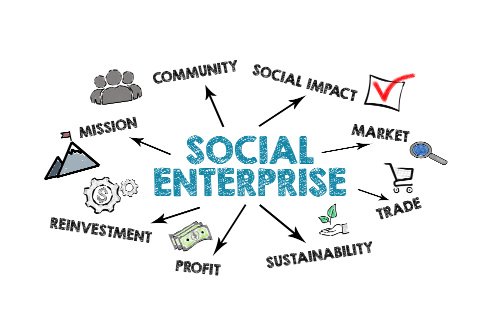
- Social Entrepreneurship: The use of start-up companies and other entrepreneurial techniques to develop, fund, and implement solutions to social, cultural, or environmental issues.
- Social Enterprise: The specific business or organization created by a social entrepreneur. Its primary purpose is to advance social or environmental goals, with profit being a means to sustainability and scale, not an end in itself.
- Triple Bottom Line: A framework that measures performance based on three pillars: People (social equity), Planet (environmental health), and Profit (economic viability). It is often summarized as “the three P’s.”
- Impact Investing: Investments made into companies, organizations, and funds with the intention to generate a measurable, beneficial social or environmental impact alongside a financial return.
- B Corporation (B Corp): A certification granted to for-profit companies by the non-profit B Lab that meet the highest standards of verified social and environmental performance, public transparency, and legal accountability.
- Scalability: The potential for a social enterprise’s solution to be expanded to reach a larger number of people or a broader geographic area without a fundamental change to the model.
- Systems Change: The ultimate goal of many social entrepreneurs: to alter the underlying structures and conventions (policies, practices, power dynamics, and mindsets) that cause a social or environmental problem in the first place.
How It Works (Step-by-Step)
The journey of a social entrepreneur typically follows this path:
- Identify a Deep-Seated Social Problem: The process begins with a clear, empathetic understanding of a specific problem, often one the entrepreneur has experienced firsthand. This goes beyond a surface-level need to uncover the systemic root causes.
- Develop an Innovative, Market-Based Solution: The entrepreneur designs a product, service, or process that addresses the problem. This solution must be not only effective but also financially viable, creating a sustainable revenue model.
- Build a Mission-Locked Business Model: The enterprise’s legal structure (for-profit, non-profit, hybrid) and operational plan are built to ensure the social mission remains central. This includes embedding the mission into the company’s legal governing documents.
- Secure “Patient” Capital: Social entrepreneurs often seek funding from impact investors, venture philanthropists, and crowdfunding platforms who are aligned with their mission and understand that financial returns may be below-market or long-term.
- Measure and Manage Impact: Rigorously track social and environmental performance using established metrics (like the IRIS+ system from the Global Impact Investing Network) to ensure the enterprise is truly creating the change it set out to achieve.
- Scale for Greater Impact: Once the model is proven, the entrepreneur focuses on scaling through replication, franchising, partnerships, or policy advocacy to maximize their positive impact.
Why It’s Important
Social entrepreneurship is a game-changer for global development for several key reasons:
- Sustainable and Scalable Solutions: By generating their own revenue, social enterprises are not perpetually dependent on donor funding, making their solutions more resilient and capable of reaching millions.
- Empowerment through Dignity: They often provide jobs, training, and market access to marginalized populations, treating them as customers and partners rather than passive beneficiaries. This fosters agency and dignity.
- Drives Innovation: The competitive pressure of the market forces social entrepreneurs to be highly innovative, efficient, and responsive to the real needs of the communities they serve.
- Fills Critical Gaps: They operate in areas where both the state and the traditional private sector have failed, delivering essential services like affordable healthcare, clean energy, and quality education to the “bottom of the pyramid.”
- Redefines the Role of Business: It proves that business can be a powerful force for good, challenging the outdated notion that profit must come at the expense of people and the planet.
Common Misconceptions
- Misconception 1: “Social enterprises are just non-profits that sell things.”
- Reality: While some are non-profits with earned-income streams, many are for-profit entities. The key difference is their primary motivation and how they measure success—by their social impact, not just their profit margin.
- Misconception 2: “They can’t be successful because they aren’t purely focused on profit.”
- Reality: Many social enterprises are highly profitable. By solving real problems, they tap into massive markets and build fierce customer loyalty. The focus on a triple bottom line can be a competitive advantage.
- Misconception 3: “It’s a small, niche trend for idealistic young people.”
- Reality: It is a rapidly growing, multi-trillion-dollar global movement supported by major financial institutions, corporations, and governments. It attracts experienced professionals from all sectors who want their work to have meaning.
Recent Developments and Success Stories


The field of Impact Investing has exploded, with major financial institutions like BlackRock and Goldman Sachs launching dedicated impact funds. This influx of capital is allowing social enterprises to scale at an unprecedented rate. Furthermore, the COVID-19 pandemic highlighted the resilience and agility of social enterprises, as many pivoted quickly to provide essential services and support to vulnerable communities.
Success Story: d.light
Founded to address the lack of reliable electricity, d.light designs, manufactures, and distributes affordable solar energy solutions to low-income households in the developing world. Using a market-based approach, they have transformed the lives of over 100 million people, providing clean, safe light and power, reducing kerosene use, and creating economic opportunities.
Case Study: Aravind Eye Care System (India)
- Background: In 1976, Dr. G. Venkataswamy was troubled by the immense number of needlessly blind people in India, most of whom could not afford cataract surgery.
- The Social Enterprise Model: He founded Aravind Eye Care, modeling its high-volume, high-efficiency processes after McDonald’s assembly line. The system operates on a cross-subsidy model: paying patients are charged market rates, which subsidizes free or drastically discounted surgeries for those who cannot afford to pay.
- Lesson Learned: Aravind proved that it is possible to achieve both massive scale and world-class quality in delivering a critical service to the poor. By applying sound business principles to a humanitarian crisis, they achieved sustainability without compromising their mission.
- Outcome: Aravind is now the largest provider of eye care in the world, performing over 500,000 surgeries a year. It has a reputation for quality that rivals top Western hospitals, all while over two-thirds of its patients pay little or nothing. Its model has been studied and replicated globally.
Real Life Examples
- Grameen Bank (Bangladesh): Founded by Nobel Laureate Muhammad Yunus, it pioneered microfinance, providing small loans to the impoverished without requiring collateral, empowering millions of women to start businesses.
- Sanergy (Kenya): Tackles the urban sanitation crisis by building a network of franchised, fresh-waterless toilets in slums. They collect the waste and convert it into valuable organic fertilizer and insect-based animal feed, creating a circular economy.
- TOMS Shoes: Popularized the “One for One” model, donating a pair of shoes for every pair sold. While its model has evolved, it brought mainstream consumer attention to the concept of conscious consumerism and embedded giving.
- Ecofiltro (Guatemala): Produces and distributes affordable water filters to rural families, addressing the problem of waterborne diseases. They use a tiered pricing model, selling to urban customers at a higher price to subsidize the cost for the poorest families.
Conclusion & Key Takeaways
Social entrepreneurship is more than a business trend; it is a fundamental re-imagining of how we solve the world’s most pressing problems. By harnessing the power of the market for the good of humanity, social entrepreneurs are building a more inclusive, sustainable, and equitable form of global development.
Key Takeaways:
- Mission is the Engine: The driving force is a deep commitment to social or environmental change, with profit serving as the fuel for sustainability and growth.
- Innovation is Key: Social entrepreneurs find new, efficient, and often technology-driven ways to address old problems.
- Impact Measurement is Non-Negotiable: Success is defined by demonstrable social and environmental outcomes, not just financial statements.
- It’s a Collaborative Ecosystem: Success depends on a supportive network of impact investors, incubators, policymakers, and consumers.
- The Future is Hybrid: The rigid lines between for-profit and non-profit are blurring, giving rise to new, flexible models designed for maximum impact.
To learn more about the innovators driving this change, visit our section on Technology and Innovation.
FAQ’s
- What is the difference between a social enterprise and a CSR program?
- Corporate Social Responsibility (CSR) is a program within a traditional corporation, often funded by a portion of profits. A social enterprise’s entire operation is its social mission; the mission is the core of the business model.
- Can a social enterprise be a non-profit?
- Yes. Many social enterprises are structured as non-profits, but they generate a significant portion of their revenue through earned income (selling goods/services) rather than relying solely on donations and grants.
- What is “impact washing”?
- Similar to “greenwashing,” it’s when a company exaggerates or falsely claims its social or environmental benefits to attract customers or investors. Third-party certifications like B Corp help combat this.
- How do social entrepreneurs make money?
- They generate revenue by selling products or services, just like any business. The key difference is that their pricing, distribution, and overall strategy are designed to achieve a social goal.
- What are the biggest challenges social entrepreneurs face?
- Access to appropriate capital, navigating complex legal structures, measuring impact, and scaling their operations while staying true to their mission.
- How is social entrepreneurship related to the SDGs?
- Social enterprises are on the front lines of achieving the SDGs. They provide direct, innovative solutions for goals like No Poverty (SDG 1), Quality Education (SDG 4), Clean Water and Sanitation (SDG 6), and Affordable and Clean Energy (SDG 7).
- What is a “hybrid” legal structure?
- These are new legal forms, like the Benefit Corporation in the U.S. or the Community Interest Company in the UK, that legally protect the company’s mission, requiring directors to consider the impact on all stakeholders.
- Do social enterprises only operate in developing countries?
- No. Social enterprises address problems everywhere, from food deserts in American cities to youth unemployment in Europe to plastic pollution in the oceans.
- How can I become a social entrepreneur?
- Start by deeply understanding a problem you are passionate about. Then, develop a viable solution, seek out mentors in the impact space, and consider joining a social enterprise incubator or fellowship program.
- How can I support social entrepreneurship as a consumer?
- Buy from certified B Corps and other social enterprises. Look for companies that are transparent about their supply chains and social impact. Your purchasing power is a vote for the kind of world you want.
- What is the role of technology in social entrepreneurship?
- Technology is a massive accelerator. Mobile phones enable mobile banking for the unbanked, data analytics improve impact measurement, and renewable energy tech is at the core of many clean energy social enterprises.
- How does social entrepreneurship relate to mental wellbeing?
- Creating work with purpose and meaning is a powerful contributor to psychological health. Furthermore, many social enterprises, much like the strategies discussed in this guide to mental wellbeing, directly address mental health challenges by providing access to affordable counseling and community support services.
- Can a large corporation be a social enterprise?
- Traditionally, the term is reserved for mission-driven startups. However, large corporations can adopt social entrepreneurship principles by shifting their entire business model toward a primary social purpose, as seen with Patagonia.
- What is “venture philanthropy”?
- It applies the principles of venture capital to philanthropy, providing social enterprises with long-term funding, strategic support, and capacity-building assistance, not just grants.
- Where can I find resources to learn more?
- Explore the websites of Ashoka, the Schwab Foundation, Skoll Foundation, and B Lab. For a deeper dive into the principles of sustainable business and financial management that underpin this field, resources like this personal finance guide can be invaluable. You can also find more curated content on our About Us page.


