


Introduction – Why This Matters
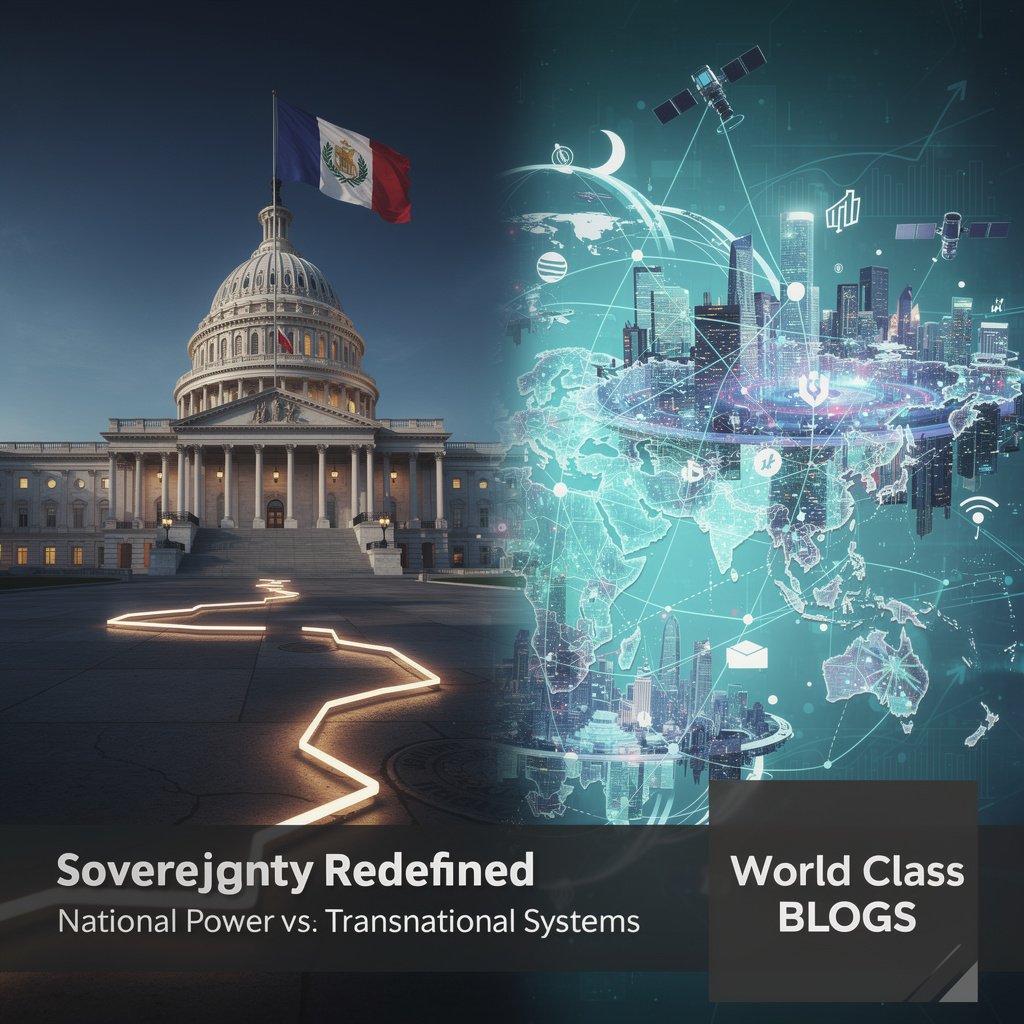
The most profound struggle defining 21st-century geopolitics is not between specific nations, but between competing concepts of sovereignty itself. For centuries, sovereignty was understood as the supreme authority of a state within its territorial borders—the bedrock of the Westphalian system. Today, this absolute notion is under siege from above and below: eroded from above by transnational forces like global capital, digital platforms, and climate change, and challenged from below by empowered cities, multinational corporations, and identity groups demanding recognition. The central question of our time is whether the nation-state can remain the primary vessel for human security, prosperity, and identity, or if it will be supplanted by a new, layered architecture of power.
In my experience advising governments and analyzing cross-border data flows, the tension is palpable. A finance minister seeks to tax a global tech giant whose value is generated from intangible algorithms hosted nowhere and everywhere. A health minister confronts a pandemic virus that ignores passport controls. A security agency tracks a disinformation campaign orchestrated from abroad, targeting the very fabric of national discourse. What I’ve found is that sovereignty is no longer a binary condition (you have it or you don’t) but a spectrum of capacity. States now exercise “sovereignty-as-a-service,” outsourcing functions to private contractors and sharing authority with international bodies, all while publicly proclaiming their absolute independence.
This deep dive, part of our foreign policy deep dives series at World Class Blogs, moves beyond abstract theory. We will dissect the practical battlegrounds where sovereignty is being renegotiated: in cyberspace, global finance, international law, and environmental governance. For policymakers, this is a guide to navigating unprecedented vulnerability. For business leaders, it’s a map of regulatory fragmentation and opportunity. For citizens, it’s the key to understanding why local decisions seem increasingly overridden by distant, unaccountable forces.
Background / Context: From Westphalia to the Web
The modern concept of sovereignty was crystallized in the 1648 Peace of Westphalia, ending Europe’s religious wars. Its core principles—territorial integrity, non-interference in domestic affairs, and the legal equality of states—became the DNA of the international system. This state-centric model peaked in the mid-20th century.
The Post-WWII Order: Pooled Sovereignty
After the catastrophes of two world wars, states created a system of international institutions (UN, IMF, World Bank, GATT/WTO) to manage collective problems. This represented a historic trade-off: nations voluntarily ceded slivers of sovereignty to rules-based bodies in exchange for stability, open trade, and mutual security. This was “sovereignty bargains” in action. The European Union took this furthest, creating supranational institutions with direct legal authority over members—a radical experiment in shared sovereignty.
The Globalization Acceleration (1990s-2010s)
The end of the Cold War unleashed hyper-globalization, powered by digital technology. This period saw the rise of powerful non-state actors:
- Multinational Corporations (MNCs): Firms whose revenues dwarf the GDP of many nations, gaining leverage to negotiate tax deals and shape regulations.
- Global Civil Society: NGOs like Amnesty International and Greenpeace, operating transnationally to hold states accountable.
- Digital Platforms: Companies like Google and Facebook are creating global spaces for communication, commerce, and community that exist outside any single state’s jurisdiction.
Sovereignty began to “leak” as capital, data, and ideas flowed across borders with diminishing state control.
The Sovereignty Backlash (2010s-Present)
A powerful political reaction emerged, embodied in events like Brexit, the “America First” doctrine, and the rise of populist nationalism worldwide. This movement championed the reassertion of “take back control” sovereignty. Simultaneously, authoritarian states like Russia and China promoted a model of “cyber sovereignty” or “information sovereignty,” asserting the state’s right to control the digital realm within its borders as an extension of traditional territorial control. We now live in the tension between these competing visions: global integration versus national reassertion.
Key Concepts Defined
- Westphalian Sovereignty: The traditional model: final authority within a defined territory, non-interference by external actors, and the state as the sole representative of its people internationally.
- Sovereignty Bargains: The conscious decisions states make to cede a degree of authority to international institutions or agreements (e.g., WTO trade rules, EU law, the Paris Agreement) in exchange for perceived benefits like security, market access, or collective problem-solving.
- De Facto vs. De Jure Sovereignty: De jure sovereignty is the legal right to rule. De facto sovereignty is the actual capacity to exert control within a territory. Weak or failed states possess de jure but not de facto sovereignty.
- Technological Sovereignty: The effort by states or blocs (like the EU) to assert control over their digital destiny—including data governance, platform regulation, and development of indigenous tech (e.g., European cloud infrastructure “GAIA-X”) to reduce dependency on foreign (often U.S. or Chinese) giants.
- Sovereignty-as-Service: The phenomenon where states, lacking internal capacity, outsource core sovereign functions (e.g., military logistics, prison management, welfare administration, cyber defense) to private corporations.
- Unbundled Sovereignty: The idea that the traditional “bundle” of sovereign rights (control of borders, currency, law, security) can be disaggregated and exercised by different entities. For example, a city may set climate policy while the federal government controls defense.
- Post-Westphalian Sovereignty: Emerging models where authority is shared among multiple, overlapping polities—cities, states, regions, international bodies—based on function rather than territory (e.g., global climate governance networks).
- Extraterritoriality: The application of a state’s laws beyond its borders. A key tool for powerful states to project sovereignty, as seen in U.S. sanctions on foreign companies or the EU’s GDPR data privacy regulation affecting global firms.
How It Works: The Mechanics of Modern Sovereignty

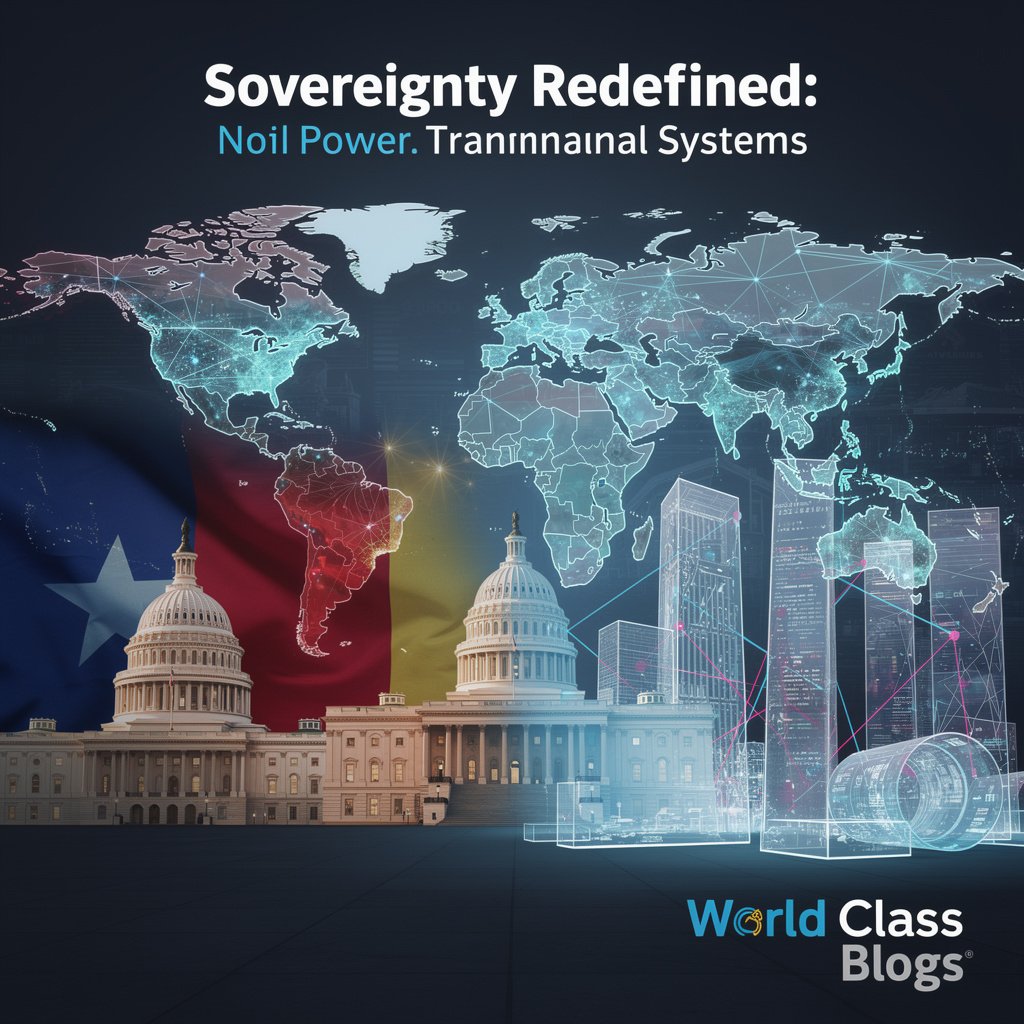
Sovereignty is no longer a static condition but a dynamic process of assertion, negotiation, and contestation across multiple arenas.
Step 1: The Assertion – Claiming Authority in a New Domain
When a new, borderless domain emerges (e.g., cyberspace, orbital space), states rush to assert control.
- The Chinese Model (Cyberspace): Enacts laws like the Cybersecurity Law and Data Security Law, establishing a doctrine of absolute state control over the domestic internet (the “Great Firewall”), data localization requirements, and content censorship. This is a direct claim of territorial sovereignty extended to digital flows.
- The EU Model (Digital Regulation): Uses its regulatory power as a large market to set global standards. The General Data Protection Regulation (GDPR) and Digital Markets Act (DMA) effectively force global companies to comply with EU rules, exporting European norms—a form of regulatory sovereignty.
- The U.S. Model (Cloud & Data): Relies on the dominance of its tech firms and the CLOUD Act, which asserts U.S. law enforcement’s right to access data stored by U.S. companies anywhere in the world, asserting a form of corporate-national sovereignty.
Step 2: The Contestation – Clashes of Jurisdiction
These assertions inevitably collide.
- The Microsoft Ireland Case: The U.S. government sought emails stored on a Microsoft server in Dublin. Microsoft resisted, arguing U.S. warrants don’t apply abroad. The legal battle highlighted the conflict between U.S. claims to data based on corporate nationality and EU claims based on data location and citizen privacy rights.
- The “Brussels Effect”: When a major market like the EU sets a strict rule, multinationals often adopt it globally for efficiency, making EU standards de facto global standards. This is sovereignty through market power, not military power.
- Sanctions as Sovereignty Projection: When the U.S. sanctions a foreign company for trading with Iran, it is imposing its domestic foreign policy preferences extraterritorially, forcing global firms to choose between the U.S. market and the sanctioned entity.
Step 3: The Negotiation – Forging New “Rules of the Road”
To manage conflict, states engage in complex diplomacy to create new frameworks.
- Bilateral/Multilateral Agreements: Like the U.S.-EU Data Privacy Framework or the OECD/G20 global minimum tax deal—attempts to harmonize rules and mitigate sovereignty clashes.
- International Law Development: The slow process at the UN of developing norms for state behavior in cyberspace. This is an attempt to build a new layer of sovereign obligation in a domain without clear borders.
- The Rise of “Splinternets”: When harmonization fails, the result is fragmentation. The internet is dividing into regional spheres (a U.S.-led open internet, a Chinese-controlled internet, an EU-regulated internet), creating a world of digital sovereignty blocs.
Step 4: The Internal Reconfiguration – The State Adapts
Within their borders, states reorganize to manage new realities.
- Creating Digital Ministries: New government departments focused on cyber, data, and AI policy.
- Public-Private Partnerships for Security: As seen in critical infrastructure protection, where governments depend on private owners (of power grids, telecoms) to implement state-mandated security standards—a shared sovereignty model.
- Subnational Actors Rise: Global cities like C40 Cities act independently on climate change, signing international agreements and setting policies that may differ from their national governments, practicing a form of municipal sovereignty.
Table: Sovereignty in the 21st Century – Contested Arenas
| Arena | Traditional Sovereign Claim | Challenging Forces | Emerging Model |
|---|---|---|---|
| Economy | Global social media platforms, cross-border disinformation, and encrypted apps. | State as the primary source of passport, civic identity. | Tax coordination (OECD), CBDCs, extraterritorial sanctions. |
| Information | Control broadcast media, promote national narrative. | Global capital mobility, tax havens, digital services, and MNC arbitration. | “Cybersovereignty” laws, platform regulation (DSA), content takedowns. |
| Law & Justice | Monopoly on legal authority and enforcement. | International courts (ICC), universal jurisdiction, corporate arbitration (ISDS). | Contested primacy, politicization of international law, lawfare. |
| Security | Monopoly on legitimate use of force within territory. | Transnational terrorists, cyber militias, PMCs, drone terrorism. | Security outsourcing, integrated public-private threat intel. |
| Identity & Citizenship | Plural identities, investment citizenship, and digital resident status. | State as the primary source of passport and civic identity. | Diaspora politics, transnational ideologies (e.g., climate activism), and digital nomadism. |
Why It’s Important: The Stakes of Redefinition
The struggle over sovereignty is not academic; it determines who governs the critical aspects of our lives and who is held accountable.
1. The Democratic Accountability Gap
When power shifts to transnational corporations or opaque international bodies, the chain of democratic accountability breaks. A citizen can vote out a national leader but cannot vote against the CEO of a platform that shapes public discourse or the arbitration panel that rules against environmental regulations. This erosion of popular sovereignty fuels populist backlash and distrust in liberal democracy itself.
2. The Inequality Amplifier
The ability to assert sovereignty is highly unequal. Powerful states can project rules extraterritorially (the U.S. with sanctions, the EU with regulations). Weak states are rule-takers, forced to accept terms set elsewhere. This creates a two-tier system: “sovereign” states that shape the global order and “dependent” states whose policy space is constrained by debt, investment treaties, and pressure from more powerful actors.
3. The Governance Void in Global Commons
Issues like climate change, pandemic response, and orbital debris are inherently transnational. The classic Westphalian system, based on territorial control, is ill-equipped to manage them. Without new models of shared or pooled sovereignty, these problems spiral into catastrophic “tragedies of the commons,” where individual state rationality leads to collective ruin.
4. The Future of Freedom and Control
The model of sovereignty that prevails will shape human freedom. A world of closed cyber sovereignty (like China’s) enables pervasive surveillance and control. A world of corporate-dominated digital spheres subjects rights to terms of service. A world of reinforced democratic sovereignty requires rebuilding state capacity to regulate global forces in the public interest. The choice is fundamental.
Sustainability in the Future: Hybrid Sovereignty or Systemic Breakdown?
Can the international system evolve a stable new conception of sovereignty, or are we headed for escalating conflict and fragmentation?
1. The “Layered Cake” or “Marble Cake” Model
A sustainable future may involve a functional division of authority, not a territorial one. Local issues (land use, policing) are managed locally. National issues (defense, macro-economy) remain with the state. Regional issues (trade, environment) go to blocs like the EU. Global issues (climate, pandemics, cyber norms) are governed by strengthened, accountable multilateral institutions. Sovereignty is distributed by purpose, not concentrated by territory.
2. The Critical Role of Middle Powers and Cities
Nations like Canada, South Korea, and Indonesia, and global cities, can act as laboratories and bridges. They are powerful enough to experiment with new governance models (e.g., data trusts, local carbon markets) but not so powerful as to impose their will unilaterally. They can form “coalitions of the willing” to pilot new forms of cooperation.
3. Rebuilding State Capacity for a New Age
For sovereignty to be meaningful, states need the technical, regulatory, and administrative capacity to engage with complex global systems. This means investing in expertise in digital law, financial regulation, and climate science. It means reforming bureaucracies to be agile. The state must evolve from a monolithic authority to a smart, networked node in a global system.
4. The Imperative of New Social Contracts
Ultimately, sovereignty derives from the consent of the governed. New models will only be sustainable if they are seen as legitimate by citizens. This requires transparent international decision-making, inclusive processes that bring in civil society and business, and clear mechanisms for redress when powerful actors overreach. The social contract must be renegotiated at local, national, and global levels.
The sustainable path rejects both the illusion of a return to hermetic nation-states and the naive dream of a world government. It points toward a messy, complex, but more resilient system of “sovereign pluralism.”
Common Misconceptions
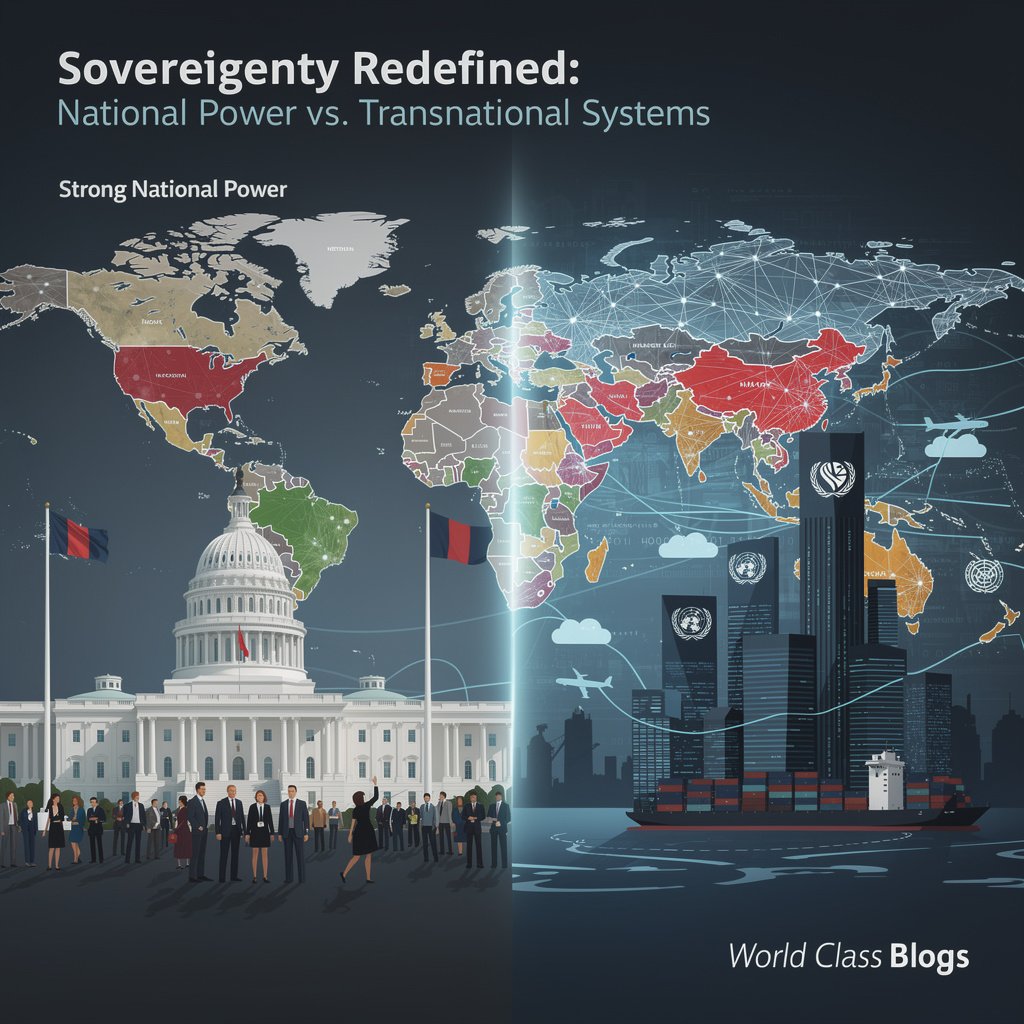
- Misconception: Sovereignty is an all-or-nothing concept; you either have it fully or you’ve lost it.
Reality: Sovereignty has always been negotiated and constrained. Even in the 17th century, treaties limited state action. The modern difference is the scale and nature of constraints. Today, it’s a matter of degree and domain. A state can be fully sovereign in setting education policy but have highly constrained sovereignty in monetary policy (if in a currency union) or digital policy (if subject to the “Brussels Effect”). - Misconception: Global corporations are more powerful than states now.
Reality: While MNCs have immense economic power, states retain unique, ultimate authority: the monopoly on legitimate violence, the power to write and enforce law, and the authority to confer citizenship. Apple cannot draft a tax code or deploy an army. The relationship is symbiotic and adversarial—states grant corporations legal personhood and enforce their contracts, while corporations influence state policy. It’s a rebalancing, not a reversal. - Misconception: Ceding sovereignty to international bodies is always a loss.
Reality: It is a strategic trade-off, often a “win.” By agreeing to WTO rules, a state gives up some trade policy autonomy but gains predictable access to global markets for its exporters. By joining the EU, states give up some legislative independence but gain influence over a massive internal market and collective weight in the world. The key is whether the bargain is voluntary, reciprocal, and beneficial. - Misconception: “Digital sovereignty” means the same thing to the U.S., EU, and China.
Reality: The term is used to describe profoundly different projects:- China: Means state control and censorship of the domestic internet (sovereignty over the digital realm).
- EU: Means protecting citizen data from foreign surveillance and regulating platforms to preserve democratic discourse (sovereignty through the digital realm).
- U.S.: Often means maintaining the technological edge and market dominance of its firms (sovereignty via the digital realm).
They are in direct conflict.
Recent Developments (2024-2025)
- The Enforcement of the EU’s Digital Regulatory Trilogy: The full implementation of the Digital Services Act (DSA), Digital Markets Act (DMA), and AI Act represents the world’s most assertive claim of regulatory sovereignty over the digital economy. The EU is designating global “gatekeeper” platforms and imposing strict obligations, effectively governing the internal operations of (mostly U.S.) tech giants.
- The Global Minimum Tax Deal Enters Implementation Phase: After years of negotiation, the OECD/G20 15% global minimum tax is being adopted by major economies. This is a historic pooling of sovereignty on tax policy, aimed at ending the “race to the bottom” and constraining the power of tax havens. It shows that states can cooperate to reclaim control from footloose capital.
- The “Chip Wars” and Supply Chain Sovereignty: The U.S. CHIPS Act and similar policies in the EU and Japan are massive state interventions to onshore semiconductor manufacturing. This is not just industrial policy; it’s a bid for “techno-sovereignty”—ensuring national control over the foundational hardware of the digital age, deemed a security imperative.
- Rise of Central Bank Digital Currencies (CBDCs): Over 130 countries, representing 98% of global GDP, are exploring CBDCs. While often framed in terms of payment efficiency, CBDCs are a profound sovereignty tool. They give states programmability over money, potential visibility into transactions, and a defense against private cryptocurrencies and other countries’ digital currencies.
- The ICJ and ICC in the Spotlight: The International Court of Justice hearing cases on the Russia-Ukraine war and Israel’s policies in Gaza, and the International Criminal Court issuing arrest warrants for world leaders, have placed international judicial bodies at the center of political storms. This highlights the fierce contest between the principle of universal jurisdiction and claims of national sovereignty and bias.
Success Stories: Innovative Sovereignty in Action
- Estonia’s Digital Republic: Estonia has rebuilt its sovereignty around digital governance after the Soviet collapse. Its e-Residency program decouples economic citizenship from physical presence, allowing global entrepreneurs to start and run EU-based businesses online. Its data embassies (server backups in allied countries) and blockchain-based public records ensure state continuity even if territory is compromised. It’s a model of a small state leveraging technology to amplify its sovereignty.
- The Climate Action Leadership of California and the Under2 Coalition: While the U.S. federal government oscillated on climate policy, California exercised its regulatory sovereignty to set stringent emissions standards, influencing national car markets. It leads the Under2 Coalition, a network of over 270 subnational governments committed to climate action, demonstrating how cities and states can forge transnational sovereign networks that bypass slow-moving national governments.
- Singapore’s Sovereign Wealth Funds (GIC & Temasek): With no natural resources, Singapore transformed its financial acumen into a pillar of sovereignty. Its state-owned investment vehicles control global assets worth hundreds of billions, giving the small city-state outsized economic influence and strategic resilience. This is sovereignty through financial statecraft and excellence in governance.
Real-Life Examples
1. The GDPR Effect: Regulating the World from Brussels
When the EU’s General Data Protection Regulation came into force in 2018, it didn’t just apply to European companies. Any firm, anywhere, targeting EU citizens or monitoring their behavior had to comply. Overnight, websites worldwide displayed cookie consent banners. Multinationals reformed global data practices. The GDPR became the de facto global standard because the EU market was too valuable to lose. This is a clear example of “the Brussels Effect”—the EU using its regulatory power and market size to project its norms globally, exercising a form of soft sovereignty.
2. The Nigerian Government vs. Twitter (2021-2022)
In 2021, Nigeria indefinitely suspended Twitter after the platform deleted a tweet by the president. The government cited “the persistent use of the platform for activities that are capable of undermining Nigeria’s corporate existence.” This was a direct clash between a state asserting its sovereignty over digital discourse within its borders and a global platform enforcing its own content rules. The ban was lifted in 2022 after Twitter agreed to open a local office, pay taxes, and cooperate with Nigerian law. It showed how middle-income states can negotiate with tech giants, but also the pressure on platforms to localize and acknowledge state authority.
3. The Swiss “Vote to Leave” Initiative (Hypothetical but Illustrative)
Switzerland, though not an EU member, is deeply integrated via bilateral treaties. Periodically, Swiss right-wing populists push for a referendum to terminate the freedom of movement accord with the EU—a “Swixit.” Economists predict catastrophic consequences. This ongoing tension encapsulates the sovereignty bargain: Switzerland has maintained formal political sovereignty but has ceded significant economic and legal sovereignty for access to the EU’s single market. The debate is a pure distillation of the trade-offs between autonomy and interdependence.
Conclusion and Key Takeaways
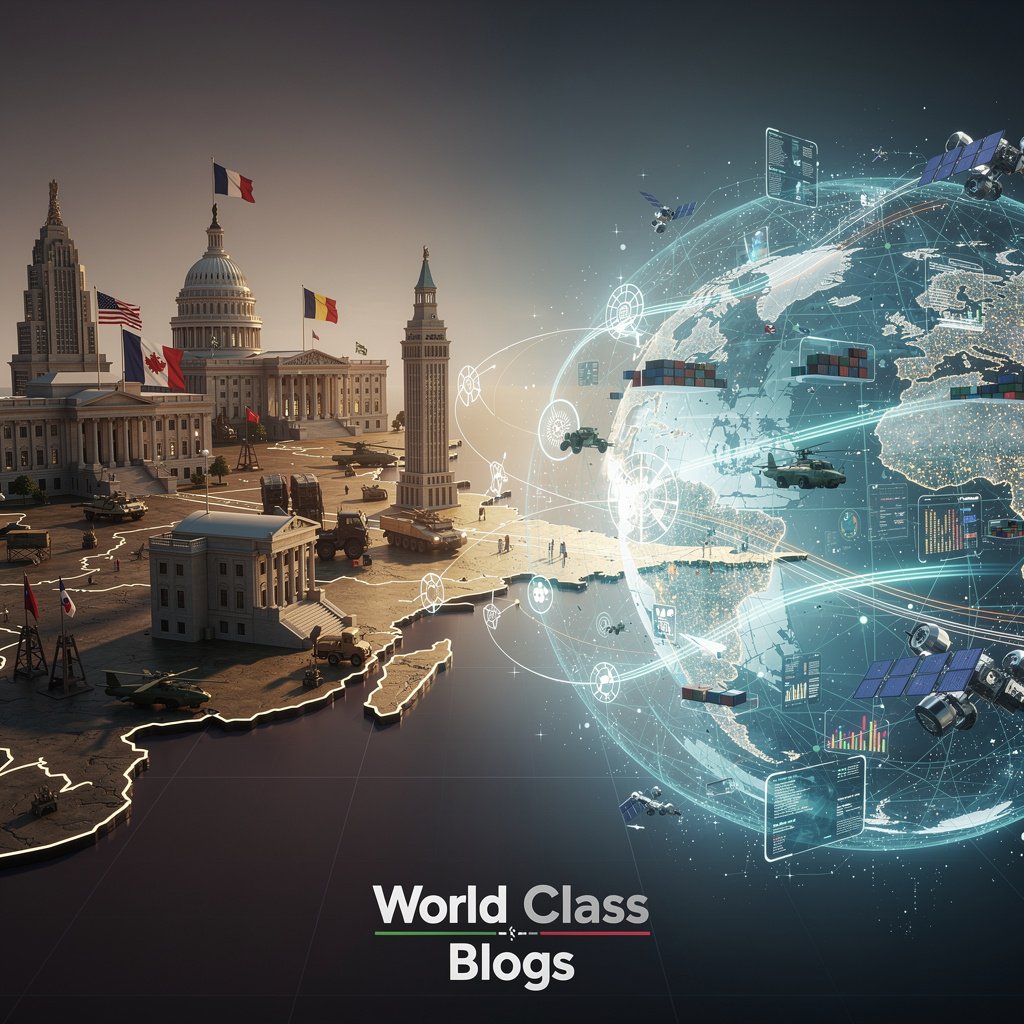
Sovereignty is not disappearing; it is disaggregating, multiplying, and transforming. The 21st-century world will not be a neat system of equal, independent blocks. It will be an uneven, overlapping web of authorities—states, cities, corporations, international bodies—competing and cooperating across different domains.
Key Takeaways:
- Sovereignty is Relational, Not Absolute: A state’s sovereignty is defined by its interactions—its bargains with other states, its contests with corporations, and its relationship with its own citizens. It is a dynamic status, not a permanent possession.
- Capacity is King: De facto sovereignty—the ability to actually govern, tax, secure, and protect—is what matters. States must invest in the technical, administrative, and regulatory capacity to wield authority in a complex world, or they will see it hollowed out.
- The Battle is Over Rule-Making Power: The core geopolitical competition is about who sets the rules for the digital economy, global finance, and emerging technologies. The EU regulates, the U.S. sanctions, China builds alternate infrastructure. This is sovereignty exercised through systemic influence.
- New Actors Are in the Game: Cities, regions, and even corporations are now sovereign actors in specific contexts. The C40 Cities network on climate or the governance of online communities by platform “community standards” are forms of functional sovereignty that exist alongside the state.
- The Democratic Challenge is Paramount: As authority shifts, the greatest risk is an accountability vacuum. The central political task of our era is to build legitimate, transparent mechanisms for governing transnational forces, ensuring that the redefinition of sovereignty empowers people, not just elites or algorithms.
The future belongs not to those who cling to an idealized past of absolute control, but to those who can strategically navigate, shape, and legitimize this new layered world of sovereign pluralism.
FAQs
1. Q: Is the nation-state becoming obsolete?
A: No, it is adapting and remains pre-eminent. It is still the primary source of law, identity, security, and democratic legitimacy. However, its monopoly on governance is over. It now operates in an ecosystem of other powerful actors and must share authority on many issues.
2. Q: What’s the difference between sovereignty and independence?
A: Independence is freedom from control by another state. Sovereignty is the supreme authority to make and enforce laws within a territory. A state can be independent (not colonized) but have its sovereignty constrained by treaties, economic dependence, or weak institutions.
3. Q: How do tax havens challenge sovereignty?
A: Tax havens exploit the sovereign right of states to set their own tax laws to attract capital from other jurisdictions. This undermines the fiscal sovereignty of high-tax states by enabling corporations and wealthy individuals to avoid their tax obligations, starving those states of revenue needed to provide public services.
4. Q: Can a company be “sovereign”?
A: Not in the legal sense of international law. However, in practical terms, companies like large platform operators exercise quasi-sovereign power within their digital domains: they make and enforce rules (community standards), adjudicate disputes (content moderation), and have “citizens” (users) who spend much of their social and economic life on the platform.
5. Q: What is “data sovereignty”?
A: Broadly, it means that data is subject to the laws and governance of the nation where it is collected or stored. More specifically, it’s the idea that citizens and states should have control over their own data. This can mean data localization laws (requiring data to be stored domestically) or rights like the GDPR’s right to erasure.
6. Q: How does climate change force us to rethink sovereignty?
A: Because greenhouse gases emitted in one country cause harm globally, climate change makes the classic model of territorial sovereignty inadequate. It creates a demand for “shared sovereignty” over the atmosphere. The Paris Agreement, based on national pledges, is a weak form of this. More robust models could involve ceding some energy policy authority to a global body.
7. Q: What is “lawfare” and how does it relate to sovereignty?
A: Lawfare is the use of legal systems and international law as weapons of strategic competition. For example, using national courts to sue foreign officials or using international tribunals to tie up an adversary in legal battles. It’s a way of projecting sovereignty through legal means to constrain another state’s freedom of action.
8. Q: Why did Brexit happen if pooling sovereignty in the EU is beneficial?
A: Brexit was fundamentally a political and cultural revolt against the perception of lost sovereignty. Pro-Leave campaigns successfully framed EU membership as a loss of democratic control over laws, borders, and money. It highlighted that sovereignty bargains require ongoing public consent; when perceived benefits (economic growth) are unevenly distributed or intangible, the costs (loss of autonomy) can become politically toxic.
9. Q: How do international sanctions violate sovereignty?
A: Sanctions are a deliberate violation of the target state’s sovereignty, intended to compel a change in behavior. They are an instrument of coercion justified by the sanctioning state(s) as enforcing international norms (e.g., non-proliferation, human rights). They illustrate that in practice, sovereignty is not equally respected—it is often contingent on compliance with dominant powers’ preferences.
10. Q: Can cities truly be sovereign actors?
A: They can exercise sovereign-like authority in specific domains. While they lack armies and formal recognition in international law, global cities like New York, London, and Singapore wield enormous economic, cultural, and soft power. They set policies (e.g., climate action, minimum wage) that have global ripple effects, negotiate directly with foreign investors and other cities, and often act independently of their national governments.
11. Q: What is the “responsibility to protect” (R2P) and how does it challenge sovereignty?
A: R2P is a UN principle that state sovereignty entails a responsibility to protect populations from genocide and mass atrocities. If a state fails, the international community has a responsibility to intervene. It redefines sovereignty as conditional on responsible behavior, not an absolute right to non-interference. Its application remains deeply controversial, seen by critics as a pretext for Western intervention.
12. Q: How does the global supply chain, as analyzed in resources like The Complete Guide to Global Supply Chain Management, affect sovereignty?
A: Complex global supply chains create deep interdependence, making states vulnerable to disruptions abroad (as seen during the pandemic). They also empower multinational corporations who can move production, giving them leverage over states seeking investment. In response, states are now pursuing “supply chain sovereignty” or “friendshoring” to regain control over critical goods, re-politicizing economic networks.
13. Q: What is “sovereign wealth” and how is it used?
A: Sovereign wealth funds (SWFs) are state-owned investment pools, often from natural resource revenues. They are a tool of financial sovereignty, allowing states to save for the future, stabilize budgets, and project strategic influence by taking stakes in foreign companies, infrastructure, and technology. They blur the line between state and investor.
14. Q: How does cryptocurrency challenge state sovereignty?
A: Decentralized cryptocurrencies like Bitcoin operate on networks outside the control of any single state, challenging the state’s monopoly on issuing currency (a core sovereign function). They enable cross-border flows that are difficult to tax or track. In response, states are cracking down on their use or developing their own CBDCs to reassert monetary sovereignty.
15. Q: What does “strategic autonomy” mean for the EU?
A: It’s the EU’s ambition to be able to act independently, particularly in defense, technology, and critical supply chains, without over-reliance on the U.S. or China. It’s not about isolation but about building sufficient sovereign capacity within the EU bloc to make its own choices and defend its interests. It’s a bid for sovereignty at the regional, rather than national, level.
16. Q: Are there any areas where state sovereignty has actually increased?
A: Yes, in surveillance and border control. Technological advances (biometrics, AI, drones) have given states unprecedented capabilities to monitor their populations and manage borders. The “smart border” and the “surveillance state” represent a heightening of internal sovereignty, even as external sovereignty is challenged.
17. Q: How do diaspora communities affect sovereignty?
A: Diasporas can act as transnational interest groups, lobbying their host countries to adopt policies favorable to their homeland or sending remittances that influence the home economy. They create a form of “deterritorialized sovereignty” where a state’s influence extends to its people abroad, and those people, in turn, shape the state.
18. Q: What is the role of the United Nations in all this?
A: The UN is both a product of state sovereignty (its Charter is based on sovereign equality) and a constraint on it (through Security Council resolutions, human rights mechanisms). It is the primary arena where the redefinition of sovereignty is debated and where attempts to build new norms (e.g., for cyberspace) are negotiated.
19. Q: Can sovereignty be “hacked”?
A: Metaphorically, yes. Cyberattacks on electoral systems, critical infrastructure, or disinformation campaigns aim to undermine a state’s internal control and legitimacy—its de facto sovereignty. They are attacks on the operational capacity that underpins sovereign authority.
20. Q: What is “food sovereignty”?
A: A concept promoted by farmers’ movements and some states, arguing that nations should have the right to define their own agricultural and food policies to ensure food security, protect rural livelihoods, and promote sustainable practices, rather than being subject to global market forces and trade rules that favor agribusiness.
21. Q: How does the AI race, a topic we cover in our tech analysis, intersect with sovereignty?
A: AI is a new sovereignty battleground. Leadership in AI is seen as critical for economic and military power. States are racing to build “sovereign AI” capabilities—developing their own foundation models, compute infrastructure, and regulatory frameworks. AI also creates new sovereignty challenges, like controlling powerful AI systems that could act autonomously or be used for mass manipulation.
22. Q: Is there such a thing as “individual sovereignty”?
A: In political philosophy, it’s the idea of personal autonomy and self-ownership. In the digital age, it’s invoked in debates about data ownership (your data as an extension of yourself) and bodily autonomy. It can clash with state sovereignty when individuals use technology (encryption, cryptocurrencies) to carve out spaces of privacy and action free from state oversight.
23. Q: How do pandemics reshape sovereignty?
A: A pandemic demonstrates that biosecurity is a foundational element of sovereignty. A state that cannot protect its population’s health loses legitimacy. It forces states to impose internal controls (lockdowns) that test the social contract and to cooperate internationally (on vaccine distribution, travel rules) in ways that require sharing data and ceding control—a dramatic, real-time sovereignty bargain.
24. Q: What is “sovereign default” and what does it mean?
A: When a government fails to repay its debt. It is the ultimate financial failure of a state. While legally complex, it represents a major blow to a state’s economic sovereignty, as it loses access to capital markets and becomes subject to conditions imposed by creditors (like the IMF) in exchange for a bailout.
25. Q: Where is all this heading? Will we have a world government?
A: A single world government is extremely unlikely. More probable is a patchwork system: functional supranational governance on specific issues (climate, health), regional blocs like the EU gaining power, resilient nation-states handling core functions, and powerful non-state actors filling gaps. Sovereignty will be distributed, contested, and layered—a “neo-medieval” system of overlapping authorities.
About the Author
The World Class Blogs Geopolitics Team specializes in analyzing the intersection of law, technology, and state power. Our contributors include scholars of international relations, digital policy experts, and former diplomatic personnel. We are dedicated to providing rigorous, accessible analysis of the fundamental structures shaping global affairs. Explore our mission and methodology on our About Us page.
Free Resources
- The Sovereignty Index (Hinrich Foundation): A research project measuring and ranking countries’ economic sovereignty in the context of global trade.
- Carnegie Endowment for International Peace – Digital Sovereignty Publications: In-depth reports on how different nations and blocs are approaching digital governance and technological independence.
- The Global Observatory (International Peace Institute): Analysis on issues of sovereignty, intervention, and international law.
- European Council on Foreign Relations (ECFR) – Sovereignty Papers: Research on EU strategic autonomy and sovereignty debates within Europe.
- For insights on the kinds of complex partnerships states now must navigate, see The Alchemy of Alliance on the Shera Kat Network.
- Delve into our full archive of analytical deep dives on our main Blogs page.
Discussion
The redefinition of sovereignty forces us to ask: what is the proper scale for human governance? Should the primary locus of our loyalty and democracy be the nation, the city, the region, or the planet? Can we design systems of authority that are both effective in solving global problems and democratically accountable to the people they affect? We invite you to share your vision for a legitimate 21st-century political order.
Engage with these ideas further in our Nonprofit Hub, which explores models of transnational collaboration. Learn more about our analytical lens on our Focus page. We welcome your feedback via our Contact form.


