


Introduction: The Great Workplace Transformation
The conversation around AI and the future of work has often been dominated by alarming headlines about mass job displacement and robots replacing human workers. While automation will undoubtedly change the nature of many jobs, this narrative overlooks a more complex and ultimately more promising reality: AI is not just destroying jobs; it’s transforming them and creating entirely new categories of work. From healthcare to finance to creative industries, artificial intelligence is becoming a collaborative partner, augmenting human capabilities and freeing professionals from repetitive tasks to focus on higher-value work that requires creativity, empathy, and strategic thinking.
This transformation represents both a challenge and an unprecedented opportunity. The workers and organizations that thrive will be those who proactively adapt, embracing lifelong learning and developing the skills needed to work alongside intelligent machines. This article moves beyond the fear-mongering to provide a clear-eyed view of how AI is reshaping the workplace, what new opportunities are emerging, and how you can prepare for the future of work. For those concerned about the ethical implications of this shift, our previous article on Ethical AI provides crucial context.
Background/Context: From Industrial Revolution to AI Revolution
Every major technological shift has transformed the nature of work. The Industrial Revolution moved populations from farms to factories. The Computer Revolution created entirely new industries around software and digital services. Now, the AI Revolution is poised to be equally transformative. According to the World Economic Forum’s “Future of Jobs Report 2023,” approximately 23% of jobs are expected to change by 2027, with 69 million new jobs created and 83 million eliminated.
What makes this revolution different is the pace of change and the type of tasks being automated. While previous automation waves primarily affected manual labor, AI is increasingly capable of automating cognitive tasks—data analysis, pattern recognition, and even some forms of creative work. This doesn’t render humans obsolete; rather, it redefines the unique value that humans bring to the table. As AI handles more routine cognitive work, human skills like critical thinking, leadership, and emotional intelligence become more valuable than ever. This shift is affecting everything from global supply chain management to creative professions.
Key Concepts Defined
- Human-AI Collaboration: The partnership between human workers and AI systems, where each focuses on their comparative strengths.
- Augmented Intelligence: The concept that AI should enhance human intelligence rather than replace it.
- Task Automation: The use of AI to perform specific, repetitive tasks within a job, rather than automating the entire job.
- Skills Gap: The mismatch between the skills workers currently have and the skills needed in an AI-driven economy.
- Reskilling and Upskilling: The process of learning new skills (reskilling) or improving existing ones (upskilling) to adapt to changing job requirements.
- Hybrid Jobs: Roles that combine technical AI skills with traditional domain expertise.
How It Works: The Changing Landscape of Professions

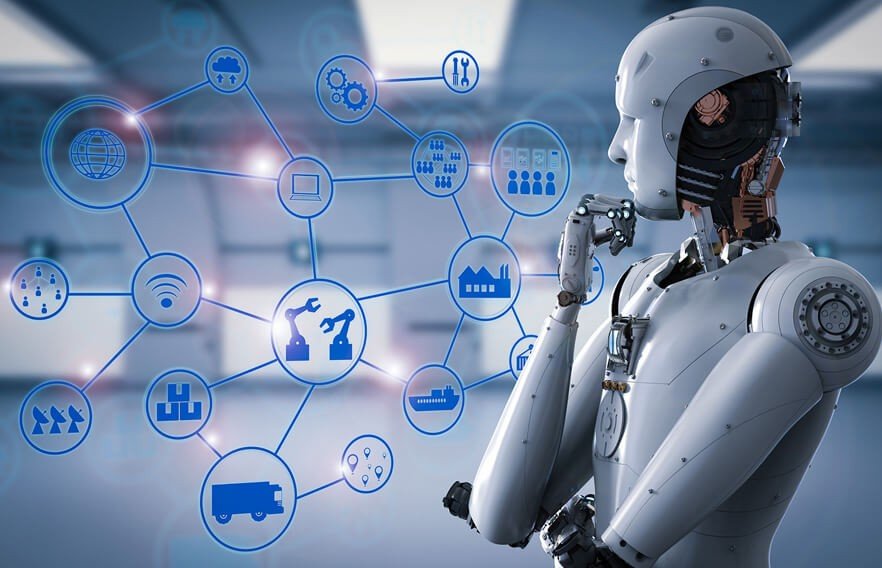
The impact of AI varies significantly across different sectors and roles. Here’s how specific professions are evolving:
1. Healthcare: From Administrative to Augmented
- Changing Roles: Medical coders and transcriptionists are seeing their roles automated, while radiologists are being augmented by AI that can flag potential anomalies in scans.
- New Opportunities: Roles like AI Healthcare Specialist and Clinical Informatics Analyst are emerging, requiring both medical knowledge and AI literacy.
- The Shift: Professionals are moving from pure diagnosis to complex patient management and treatment planning, using AI as a diagnostic assistant.
2. Creative Industries: From Production to Curation
- Changing Roles: Graphic designers are using AI tools like Midjourney and DALL-E for initial concept generation, while copywriters use GPT-4 for brainstorming and drafting.
- New Opportunities: Prompt Engineers, AI Content Strategists, and Creative AI Trainers are new roles focusing on guiding AI to produce high-quality creative work.
- The Shift: The value is shifting from technical execution to creative direction, editing, and strategic oversight.
3. Business and Finance: From Analysis to Strategy
- Changing Roles: Financial analysts are using AI for data processing and initial analysis, while accountants benefit from AI that automates reconciliation and compliance checks.
- New Opportunities: AI Ethicists in finance, Algorithmic Trading Managers, and AI Implementation Consultants are in growing demand.
- The Shift: Professionals are focusing more on interpreting AI-generated insights, strategic decision-making, and client relationships.
4. Manufacturing and Logistics: From Manual to Cognitive
- Changing Roles: Warehouse workers are transitioning to managing robotic systems, while truck drivers may shift to monitoring autonomous vehicle fleets.
- New Opportunities: Robotics Technicians, AI Systems Maintenance Specialists, and Supply Chain AI Optimizers are emerging roles.
- The Shift: The focus is moving from physical labor to technical management and optimization of AI-driven systems.
Why It’s Important: Embracing the AI-Augmented Workplace
Understanding and adapting to these changes is crucial for several reasons:
- Economic Competitiveness: Countries and companies that successfully integrate AI into their workforce will gain significant competitive advantages in productivity and innovation.
- Career Resilience: Individuals who develop AI-relevant skills will enjoy greater job security and higher earning potential in the evolving economy.
- Addressing Global Challenges: Human-AI collaboration can help solve complex problems in healthcare, climate change, and education more effectively.
- Job Satisfaction: By automating routine tasks, AI can free humans to focus on more meaningful, creative, and strategic work, potentially improving overall mental health and job satisfaction.
- Innovation Acceleration: The combination of human creativity and AI’s computational power can accelerate scientific discovery and technological advancement.
Common Misconceptions About AI and Employment
- Misconception 1: AI will lead to mass unemployment. Reality: While certain jobs will decline, history shows that technological revolutions typically create more jobs than they destroy, though the nature of work changes significantly.
- Misconception 2: Only low-skilled jobs are at risk. Reality: AI is affecting knowledge workers significantly, including lawyers, accountants, and software developers, by automating routine cognitive tasks.
- Misconception 3: You need to be a programmer to work with AI. Reality: Many new AI roles require domain expertise combined with basic AI literacy, not advanced programming skills.
- Misconception 4: The changes are decades away. Reality: The transformation is already underway and accelerating across most industries.
Recent Developments: The Emergence of New AI-Driven Roles
The job market is already responding to AI adoption with several new career paths:
- Prompt Engineers: Professionals who specialize in crafting effective instructions for generative AI models.
- AI Trainers and Ethicists: Experts who ensure AI systems are trained on appropriate data and operate fairly.
- Machine Learning Operations (MLOps) Engineers: Specialists who manage the deployment and maintenance of AI systems in production.
- AI Integration Specialists: Professionals who help organizations implement and customize AI tools for specific workflows.
- AI-Augmented Creatives: Artists, writers, and designers who use AI as a collaborative tool in their creative process.
Case Study: How IBM is Reskilling Its Workforce for AI
The Challenge: As a leader in enterprise AI solutions, IBM recognized that widespread AI adoption would transform many of its own roles and required a proactive approach to workforce development.
The Solution: IBM launched its “SkillsBuild” platform and internal reskilling programs focused on “new collar” jobs—roles that don’t necessarily require traditional four-year degrees but instead prioritize skills and capabilities. The company identified which roles were likely to be augmented by AI and created clear pathways for employees to transition into growing fields like AI engineering, data science, and cloud computing.
The Result: IBM has successfully reskilled thousands of employees, demonstrating that with proper investment in learning and development, organizations can transform their workforce from within. This approach not only future-proofed their business but also improved employee retention and engagement.
Real-Life Examples: AI Creating New Opportunities

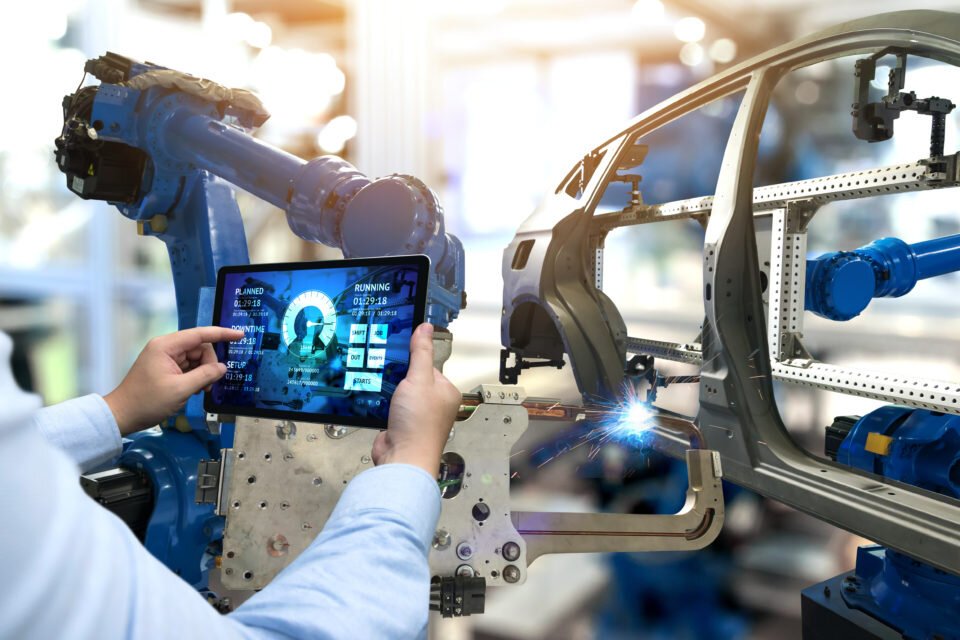
- Healthcare: AI diagnostic tools are creating demand for medical professionals who can interpret and validate AI recommendations while providing compassionate patient care.
- E-commerce: AI-powered recommendation engines have created roles for specialists who optimize these systems and analyze their impact on customer behavior, crucial for any e-commerce business.
- Agriculture: AI-driven precision farming has created jobs for agricultural data analysts who help farmers optimize crop yields while reducing environmental impact.
- Education: AI tutoring systems are creating opportunities for educators who can design AI-enhanced curricula and provide the human mentorship that technology cannot replace.
How to Future-Proof Your Career: A Practical Guide
- Develop AI Literacy: Understand the basics of how AI works and its capabilities. You don’t need to code, but you should understand what AI can and cannot do.
- Focus on Human-Centric Skills: Strengthen skills that AI struggles with: critical thinking, creativity, emotional intelligence, collaboration, and complex problem-solving.
- Embrace Lifelong Learning: Continuously update your skills through online courses, workshops, and certifications. Platforms like Coursera and edX offer numerous AI-related courses.
- Learn to Work with AI Tools: Familiarize yourself with AI tools relevant to your field, whether it’s ChatGPT for writing, Midjourney for design, or data analysis tools for business.
- Cultivate Adaptability: Be open to changing roles, responsibilities, and even career paths as the landscape evolves.
- Consider Hybrid Skills: Combine your domain expertise with basic AI knowledge to position yourself as a bridge between technical teams and business needs.
Conclusion & Key Takeaways
The future of work in the age of AI is not a dystopian vision of human obsolescence, but rather a transformation toward more collaborative, creative, and strategic roles. The most successful professionals will be those who view AI as a powerful tool to augment their capabilities rather than as a threat to their livelihoods.
Key Takeaways:
- Augmentation, Not Replacement: AI is primarily transforming jobs rather than eliminating them entirely, automating specific tasks within roles.
- New Opportunities Are Emerging: The AI revolution is creating entirely new categories of jobs that combine technical and domain expertise.
- Human Skills Are Increasingly Valuable: As AI handles more routine tasks, skills like creativity, empathy, and strategic thinking become more important.
- Lifelong Learning is Essential: Continuous skill development is no longer optional for career resilience in the AI era.
- The Future is Collaborative: The most productive workplaces will be those that effectively combine human and artificial intelligence.
The transition will require effort and adaptation from individuals, educational institutions, and policymakers. But by embracing this change proactively, we can shape a future of work that is more productive, fulfilling, and human-centered than ever before. For more insights on navigating technological change, explore our Technology & Innovation section.
Frequently Asked Questions (FAQs)
1. What percentage of jobs will be affected by AI?
Most estimates suggest that while few jobs will be fully automated, the majority of jobs will have significant portions of their tasks affected by AI, requiring adaptation.
2. What are the safest careers from AI automation?
Roles requiring high levels of creativity, complex strategic thinking, emotional intelligence, and physical dexterity in unpredictable environments (like therapists, nurses, teachers, and skilled tradespeople) are relatively safer.
3. How can I start learning about AI for my current job?
Begin with online courses on AI fundamentals, experiment with AI tools relevant to your field, and follow thought leaders in AI application for your industry.
4. Will AI create more jobs than it destroys?
Most economic analyses suggest yes, but there will be a challenging transition period as workers need to reskill for new roles.
5. How is AI affecting remote work?
AI tools are making remote collaboration more effective through better communication platforms, project management tools, and productivity enhancements.
6. What is “prompt engineering,” and is it a real career?
Yes, prompt engineering involves crafting effective instructions for AI systems and is becoming a valuable skill, particularly with the rise of generative AI.
7. How can small businesses prepare for AI in the workplace?
Start by identifying repetitive tasks that could be automated with existing AI tools, and invest in training employees to work with these new technologies.
8. What role will governments play in the AI workforce transition?
Governments will need to support reskilling programs, update education systems, and potentially consider policies like portable benefits to support workers through transitions.
9. How is AI changing the hiring process?
AI is being used for resume screening and initial assessments, but this raises important ethical concerns about bias that need to be carefully managed.
10. What are “human-in-the-loop” AI systems?
Systems where AI handles routine tasks but passes complex or exceptional cases to human operators, creating collaborative workflows.
11. How will AI affect salaries and compensation?
Workers with AI-relevant skills are likely to see wage premiums, while those in roles heavily impacted by automation may face wage pressure.
12. Can AI help with workforce training?
Yes, AI-powered personalized learning platforms can accelerate skill development by adapting to individual learning styles and needs.
13. How is AI impacting creative professions?
AI is becoming a collaborative tool for creatives, handling technical execution while humans focus on creative direction and emotional resonance.
14. What industries will be most transformed by AI?
Healthcare, finance, manufacturing, transportation, and education are undergoing significant AI-driven transformations.
15. How can managers lead teams in the AI era?
They need to focus on change management, foster a culture of continuous learning, and help team members identify how to work effectively with AI tools.
16. What is the timeline for these workplace changes?
Significant changes are already happening and will accelerate over the next 5-10 years as AI capabilities continue to advance.
17. How does AI impact personal finance professionals?
AI automates routine analysis and compliance tasks, allowing professionals to focus on strategic advisory services and complex client needs.
18. Will there still be entry-level jobs in the AI era?
Yes, but they may require different skills, particularly basic digital literacy and the ability to work alongside AI systems.
19. How can educational institutions prepare students for AI workplaces?
By integrating AI literacy across curricula, emphasizing critical thinking over rote memorization, and teaching students how to learn and adapt continuously.
20. What are the psychological impacts of AI in the workplace?
While AI can reduce burnout by automating tedious tasks, it can also create anxiety about job security, highlighting the importance of transparent communication from employers.
21. How is AI creating opportunities in developing countries?
AI is enabling leapfrogging in areas like mobile banking, healthcare diagnostics, and education access, while also creating new remote work opportunities.
22. What role do unions play in the AI workplace transition?
Unions can help ensure that AI implementation considers worker interests, provides adequate training, and shares productivity gains fairly.
23. How can older workers adapt to AI-driven workplaces?
Through employer-supported reskilling programs, focusing on transferring valuable experience to new contexts, and leveraging mentorship roles.
24. Where can I find more resources on preparing for the future of work?
Explore our Blogs section for ongoing coverage of workplace trends and Our Focus area for deeper dives into specific topics.
25. How can I share my experiences with workplace AI transformation?
We welcome perspectives from professionals navigating these changes. Please connect with us through our Contact Us page.


