


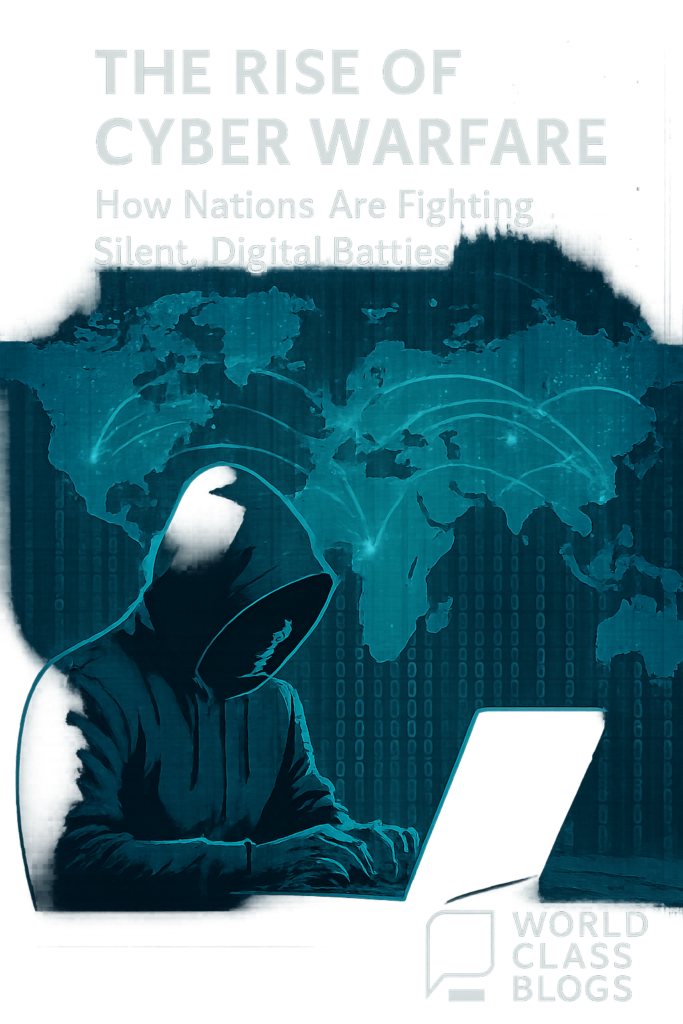
The Rise of Cyber Warfare: How Nations Are Fighting Silent, Digital Battles
Introduction – Why This Matters
Imagine a war where no tanks roll across borders, no missiles light up the sky, and no soldiers are seen. Yet, a country’s power grid fails, its hospitals are paralyzed, its financial systems crash, and its citizens’ most private data is stolen and weaponized. This is not science fiction; it is the reality of 21st-century conflict. Cyber warfare has emerged as the most pervasive and asymmetric threat to international security, reshaping how nations project power, defend sovereignty, and engage in geopolitical rivalry.
In my experience advising on digital risk, the most dangerous misconception is that cyber warfare is a future concern. What I’ve found is that it is the present—a constant, simmering conflict happening beneath the surface of our daily digital lives. For the curious beginner, understanding this domain is key to deciphering modern news headlines. For the professional, it’s an essential refresher on a landscape evolving at microprocessor speed. This guide will demystify cyber warfare, breaking down its mechanisms, actors, and profound implications for global stability.
Background / Context
The roots of cyber conflict trace back to the early days of networked computers. One of the first recognized state-sponsored attacks was the 1986 “Cuckoo’s Egg” incident, where a German hacker, working for the KGB, breached U.S. military and research networks. However, the concept truly entered the global consciousness with Stuxnet (discovered in 2010), a sophisticated digital weapon widely attributed to the U.S. and Israel, which physically destroyed Iranian nuclear centrifuges. This proved that code could cause real-world, kinetic damage.
Since then, the battlefield has exponentially expanded. The 2015 cyber-attack on Ukraine’s power grid, the 2017 NotPetya ransomware masquerading as a state-sponsored Russian attack that caused over $10 billion in global damage, and the colossal 2020 SolarWinds supply chain compromise attributed to Russian intelligence, which infiltrated thousands of organizations globally, including U.S. government agencies, have set alarming precedents.
The context today is defined by great power competition, primarily among the U.S., China, and Russia. Each has integrated cyber capabilities into its military doctrines. China’s focus is often on long-term intellectual property theft for economic and military advantage. Russia employs disinformation and disruptive attacks to sow chaos and undermine democratic institutions. North Korea uses cyber heists to fund its regime, while Iran conducts disruptive attacks as a tool of regional pressure.
Key Concepts Defined
- Cyber Warfare: The use of digital attacks by one nation-state (or non-state actors with significant state backing) to disrupt, damage, or destroy another nation’s critical infrastructure, computer systems, or networks for strategic military or political purposes.
- Advanced Persistent Threat (APT): A stealthy, continuous, and sophisticated hacking process, often state-sponsored, targeting a specific entity to steal data or monitor systems over a long period.
- Critical Infrastructure: The physical and virtual assets, systems, and networks (e.g., energy, water, finance, healthcare, transportation) so vital that their incapacitation would have a debilitating effect on security and public health.
- Zero-Day Exploit: An attack that targets a previously unknown software vulnerability, giving developers “zero days” to fix it. These are highly valued cyber weapons.
- Attribution: The process of identifying the perpetrator of a cyber-attack. This is notoriously difficult due to obfuscation techniques like routing traffic through multiple countries.
- Deterrence in Cyberspace: The strategy of discouraging hostile action by convincing an adversary that the costs of an attack would outweigh the benefits. This is complex in cyberspace due to attribution challenges and the difficulty of proportional response.
- Hybrid Warfare: A military strategy that blends conventional warfare, irregular warfare, and cyber warfare with other influencing methods, such as disinformation and economic pressure.
How It Works (Step-by-Step Breakdown)

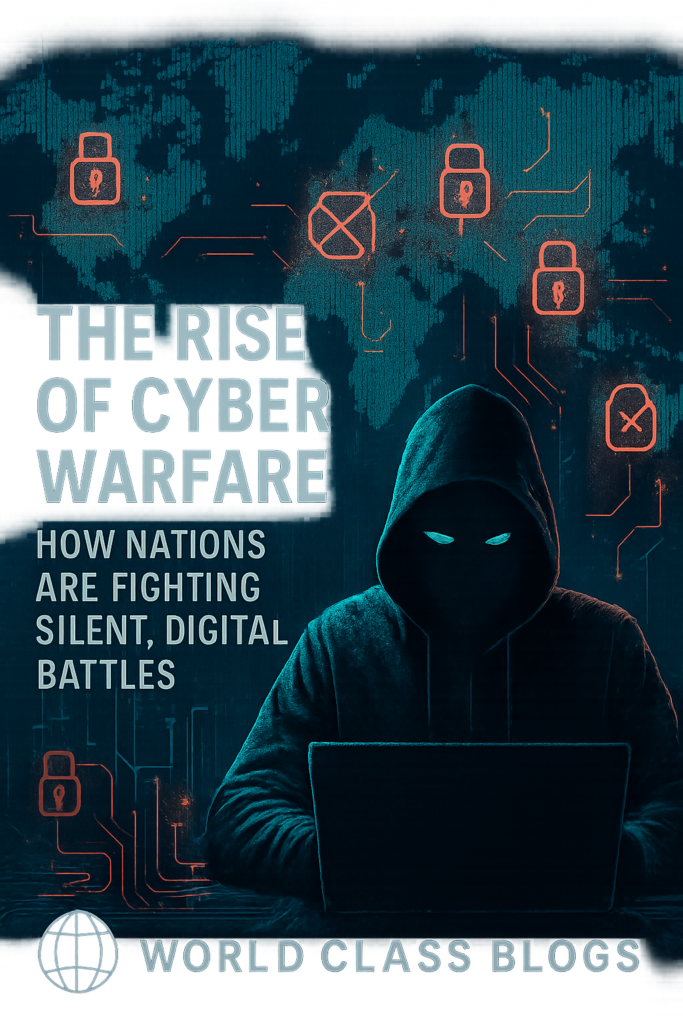
A state-sponsored cyber operation is a meticulous process, far more structured than the smash-and-grab of a typical criminal hack.
- Reconnaissance & Target Selection: The attacking nation identifies a target (e.g., a power utility software vendor). They scour public information, social media, and network data to map the target’s digital footprint.
- Weaponization & Tool Development: Attackers acquire or develop a cyber weapon. This could be malware (like Stuxnet), a phishing email crafted with impeccable language, or an exploit for a zero-day vulnerability. Nation-states often have arsenals of such tools.
- Delivery & Initial Intrusion: The weapon is deployed. Common methods include:
- Phishing: Deceiving an employee into clicking a malicious link or opening an infected attachment.
- Supply Chain Attack: Compromising a trusted third-party vendor (like SolarWinds) to reach the ultimate target.
- Direct Network Exploitation: Scanning for and attacking vulnerable, internet-facing systems.
- Exploitation & Establishment: Once inside, the attackers exploit vulnerabilities to escalate privileges, moving from a regular user account to an administrator with full system control.
- Persistence & Lateral Movement: They install backdoors to maintain long-term access, then move laterally across the network, searching for key systems and data. This phase can last months or even years.
- Command & Control (C2): The compromised systems communicate with the attacker’s servers, receiving instructions and exfiltrating stolen data.
- Actions on Objectives: This is the final phase—the “why” of the operation. Objectives vary:
- Espionage: Stealing sensitive data (military blueprints, R&D, diplomatic cables).
- Disruption: Deploying ransomware or wipers to disable systems (like NotPetya).
- Destruction: Causing physical damage (like Stuxnet).
- Influence: Planting or altering information to shape public perception.

Why It’s Important
Cyber warfare matters because it erodes the traditional boundaries of conflict, creating pervasive vulnerability.
- Democratization of Power: A small, resource-poor nation with skilled hackers can threaten a superpower’s infrastructure, creating a profound asymmetry.
- Economic Catastrophe: A successful, widespread attack on the global financial system (SWIFT, stock exchanges) could trigger a depression. In 2024, the World Economic Forum’s Global Risks Report again ranked cyber threats among the top 10 global risks.
- Blurred Lines Between War and Peace: Constant low-level cyber intrusions create a “gray zone” below the threshold of armed conflict, challenging international laws and norms. When is an intrusion an “act of war”?
- Threat to Democracy: Disinformation campaigns and electoral interference, as seen in 2016 and beyond, undermine public trust in democratic institutions. This is a core tool of modern information warfare.
- Human Cost: While often seen as “bloodless,” attacks on healthcare (like the 2017 WannaCry ransomware that hit UK hospitals) or water treatment facilities can lead directly to loss of life. For a broader look at wellbeing in our connected age, explore our partner’s guide on mental health in the modern world.
Sustainability in the Future
The cyber arms race is unsustainable. The stockpiling of zero-day vulnerabilities by intelligence agencies weakens global digital security for everyone when those tools leak or are used. The future demands a focus on resilience and norms.
- Resilience by Design: Nations and corporations must assume breach and design systems to withstand and quickly recover from attacks (e.g., air-gapped backups, robust incident response plans). This concept of resilient systems is equally vital in the physical world of global supply chains.
- International Norms: Efforts like the UN’s Group of Governmental Experts (GGE) and the Paris Call for Trust and Security in Cyberspace seek to establish rules—such as not attacking critical infrastructure during peacetime or tampering with another country’s electoral processes. Widespread adoption is slow but critical.
- Public-Private Partnership: Over 80% of critical infrastructure in most democracies is privately owned. Effective defense requires unprecedented collaboration and information sharing between government and industry.
Common Misconceptions

- Misconception 1: “Cyber warfare is just hacking on a bigger scale.”
- Reality: It is a component of national military and intelligence strategy, integrated with diplomatic, information, and economic tools to achieve geopolitical goals.
- Misconception 2: “Stronger firewalls and antivirus can stop it.”
- Reality: While essential for basic hygiene, they are insufficient against determined, well-resourced APTs. Defense-in-depth, employee training, and proactive threat hunting are required.
- Misconception 3: “Attribution is impossible, so attackers get away with it.”
- Reality: While difficult, attribution is improving through technical forensics, intelligence gathering, and diplomatic pressure. Public attribution (naming and shaming) and subsequent sanctions are increasingly common tools.
- Misconception 4: “It only targets governments and the military.”
- Reality: Private companies are prime targets for espionage and are often the victims of disruptive attacks intended to cause societal chaos.
Recent Developments (2024-2025)
- AI-Powered Offense and Defense: Both attackers and defenders are leveraging AI. In 2024, Microsoft reported seeing state actors using large language models (LLMs) to research targets, improve phishing lures, and troubleshoot technical issues. Conversely, AI is being used to detect anomalous network behavior faster than humans can. The intersection of AI and security is a fascinating frontier, much like its transformative role in other sectors, which you can read about in our AI and Machine Learning section.
- The Software-as-a-Service (SaaS) Threat: As organizations move to cloud services like Microsoft 365 and Google Workspace, attackers are following. “Token theft” attacks, where they steal session cookies to bypass passwords and multi-factor authentication, have surged.
- Ransomware Goes Geopolitical: Criminal ransomware groups, often based in or tolerated by certain states, are increasingly targeting critical infrastructure. The 2021 Colonial Pipeline attack was a wake-up call. Governments are now more aggressively targeting these groups’ infrastructure and finances.
- Preparing for Quantum Decryption: While still years away, a functional quantum computer could break the public-key encryption that secures the modern internet. Nations and companies are now investing in post-quantum cryptography to future-proof their systems.
Success Stories (If Applicable)
- The Disruption of the Cyclops Blink Botnet (2022): A coordinated effort by U.S. and UK cyber authorities, alongside private companies like Mandiant, successfully disrupted a sophisticated botnet controlled by Russian military intelligence (GRU). This proactive “defend forward” action prevented future attacks.
- Ukraine’s Cyber Resilience (2022-Present): Facing a full-scale invasion and relentless cyber-attacks, Ukraine has demonstrated remarkable cyber resilience. A combination of decentralized infrastructure, rapid public-private information sharing with Western allies, and moving critical data to the cloud has allowed it to withstand attacks that would have crippled less-prepared nations.
Real-Life Examples
- Case Study: SolarWinds (2020)
- What Happened: Russian hackers (APT29) compromised the software build process of SolarWinds, a network management company. Updates to their “Orion” software were then sent to 18,000 customers, including the U.S. Departments of Treasury, Homeland Security, and Commerce, creating a massive espionage platform.
- The Lesson: It highlighted the extreme risk of supply chain attacks. Trust in a single vendor can become a systemic vulnerability. This principle of vetting and securing partnerships is crucial in any business context, as detailed in this guide on building successful business alliances.
- Case Study: The Log4j Vulnerability (2021)
- What Happened: A critical flaw (Log4Shell) was discovered in Log4j, a ubiquitous, open-source logging library used in millions of applications worldwide. It gave attackers an easy way to take remote control of systems.
- The Lesson: It exposed the fragility of the open-source software ecosystem. A single vulnerability in a common, often overlooked component can create a global security emergency, demanding a massive, coordinated patching effort.
Conclusion and Key Takeaways
The silent war in cyberspace is the defining security challenge of our era. It is persistent, asymmetric, and evolves at a pace that often outstrips policy and law.
Key Takeaways:
- Cyber warfare is ongoing. It is not a future threat but a present reality in great power competition.
- The goal is often espionage and destabilization, not just destruction. Shaping perceptions and stealing secrets are primary objectives.
- Defense requires more than technology. It demands international norms, public-private partnership, and a culture of security awareness from the boardroom to the individual employee.
- Attribution is getting better, leading to more diplomatic and economic consequences for malicious state actors.
- Resilience is the key objective. The focus must shift from perfect prevention to rapid detection, response, and recovery.
Navigating this landscape requires continuous learning and adaptation, whether you’re a policymaker, a business leader, or an informed citizen. For more deep dives into complex global topics, explore our other categories in the Our Focus section.
FAQs (Frequently Asked Questions)
Q1: What’s the difference between cyber warfare, cyber terrorism, and cyber crime?
A: Cyber warfare is state-sponsored for political/military goals. Cybercrime is financially motivated and conducted by criminals. Cyber terrorism uses digital attacks to incite fear for ideological reasons, typically by non-state groups. The lines can blur, especially when states use criminal proxies.
Q2: Has a cyber attack ever triggered a traditional military response?
A: Not directly to date. Nations have been cautious about crossing the “use of force” threshold in cyberspace due to attribution challenges and escalation risks. Responses have been sanctions, indictments, or retaliatory cyber operations.
Q3: How do countries build cyber weapons?
A: Through national intelligence agencies (e.g., NSA, GCHQ, GRU, PLA Unit 61398) that recruit top talent, invest in R&D, purchase exploits from the private hacker market, or steal tools from other states.
Q4: Can a major cyber attack cause physical casualties?
A: Yes. An attack that disables a hospital’s systems, causes a train derailment, or poisons a water supply could directly lead to loss of life. This potential is what makes securing critical infrastructure paramount.
Q5: What is “hack-back” or “active defense”?
A: This refers to a victim proactively hacking into an attacker’s systems to disrupt them, destroy stolen data, or retrieve information. It is generally illegal for private entities in most countries, as it constitutes unauthorized access.
Q6: How do I know if my business is a target for state-sponsored attacks?
A: If you are in defense, energy, finance, tech (especially with proprietary R&D), healthcare, or are part of a critical supply chain, you are a potential target. Often, smaller firms are targeted as stepping stones to larger partners.
Q7: What is the “Cyber Geneva Convention”?
A: It’s a popular term for proposed international treaties to establish rules for cyber conflict, akin to the laws of war. Progress has been slow, but non-binding norms are being discussed at the UN.
Q8: How does cryptocurrency play into cyber warfare?
A: It’s the primary payment method for ransomware and is used by states (like North Korea) to launder stolen funds and finance operations outside the traditional banking system.
Q9: What are “indicator-sharing organizations” like ISACs?
A: Information Sharing and Analysis Centers (ISACs) are sector-specific groups (Financial Services ISAC, Health ISAC) where companies privately share threat data to improve collective defense.
Q10: Is there such a thing as a “cyber Pearl Harbor” or “cyber 9/11”?
A: These terms describe a hypothetical, single catastrophic cyber attack. Most experts believe a series of escalating, disruptive attacks is more likely than one sudden, knockout blow.
Q11: What role does social media play in cyber warfare?
A: It’s a key vector for disinformation campaigns (spreading propaganda), reconnaissance (profiling employees), and phishing delivery. Platform manipulation is a core tactic.
Q12: Can cyber attacks affect military operations?
A: Absolutely. They can target command and control systems, intelligence networks, communication links, and even weapons platforms. The U.S. military’s “Cyber Command” is now a unified combatant command.
Q13: What is a “wiper” malware?
A: Malware designed to erase or corrupt data on infected systems, causing disruption (unlike ransomware, which asks for payment). NotPetya was a wiper disguised as ransomware.
Q14: How do you defend against a zero-day exploit?
A: Since by definition there’s no patch, defense relies on layered security: application whitelisting, strict network segmentation, minimizing user privileges, and behavioral detection tools that spot anomalous activity.
Q15: What is a “threat actor”?
A: A generic term for the individual or group conducting malicious cyber activity. They are often given names by cybersecurity firms (e.g., APT28 “Fancy Bear,” attributed to Russia).
Q16: Are there “cyber mercenaries”?
A: Yes. A growing industry of private firms sells surveillance software (like Pegasus from Israel’s NSO Group) and hacking services to governments, often with little oversight.
Q17: How does 5G technology relate to cybersecurity?
A: 5G’s expansion creates a vastly larger attack surface for IoT devices and critical communications. Concerns also center on the dominance of certain vendors (like Huawei) in network infrastructure, raising fears of state-backed backdoors.
Q18: What is a “watering hole” attack?
A: Compromising a website frequently visited by a target group (e.g., a defense industry forum) to infect the computers of visitors.
Q19: Is my personal data valuable in cyber warfare?
A: Potentially. Bulk personal data can be used to profile individuals for espionage recruitment, craft convincing phishing (spear-phishing), or create fake personas for influence operations.
Q20: Where can I learn more about personal cyber hygiene?
A: Start with resources from CISA (Cybersecurity & Infrastructure Security Agency) or your national cyber center. Basics include using strong, unique passwords, enabling multi-factor authentication, updating software, and being skeptical of unsolicited communications. For managing digital stress related to these threats, consider insights from this mental well-being resource.
About Author
Sana Ullah Kakar is a cybersecurity and geopolitical risk analyst with over a decade of experience advising governments and Fortune 500 companies on digital threat landscapes. Having worked on incident response teams during major state-sponsored attacks, they bring a practical, frontline perspective to the complex intersection of technology and international security. They are a contributor to World Class Blogs, where we break down complex global issues. Learn more about our mission at our About Us page.
Free Resources
- CISA’s Shields Up Technical Guidance: Essential steps for organizations to improve cybersecurity posture.
- The MITRE ATT&CK Framework: A globally accessible knowledge base of adversary tactics and techniques.
- The Council on Foreign Relations – Cyber Operations Tracker: Documents state-sponsored cyber attacks since 2005.
- “Sandworm” by Andy Greenberg: A gripping book on the rise of Russia’s most destructive cyber unit.
- For entrepreneurs looking to build secure and resilient online operations from the start, check out this 2026 guide to starting an online business.
Discussion
We want to hear from you! What aspect of cyber warfare concerns you the most—the threat to critical infrastructure, the erosion of privacy through espionage, or the spread of digital disinformation? Have you seen the impacts of a cyber attack in your industry? Share your thoughts and experiences. For more conversations on pressing topics, visit our main blogs hub. If you have specific questions or insights, feel free to contact us.


