


Introduction: Why the Castle-and-Moat is Obsolete
For decades, the foundational model of cybersecurity was the “castle-and-moat” approach. Build a strong perimeter firewall—the “moat”—and once someone is inside the corporate network—the “castle”—they are largely trusted. This model is now catastrophically broken.
The explosion of cloud computing, mobile devices, and remote work has evaporated the traditional network perimeter. Your data is no longer just in your office; it’s in AWS, Azure, SaaS applications, and on employees’ home networks. In this new world, the insider threat, whether malicious or accidental, is as dangerous as the external hacker.
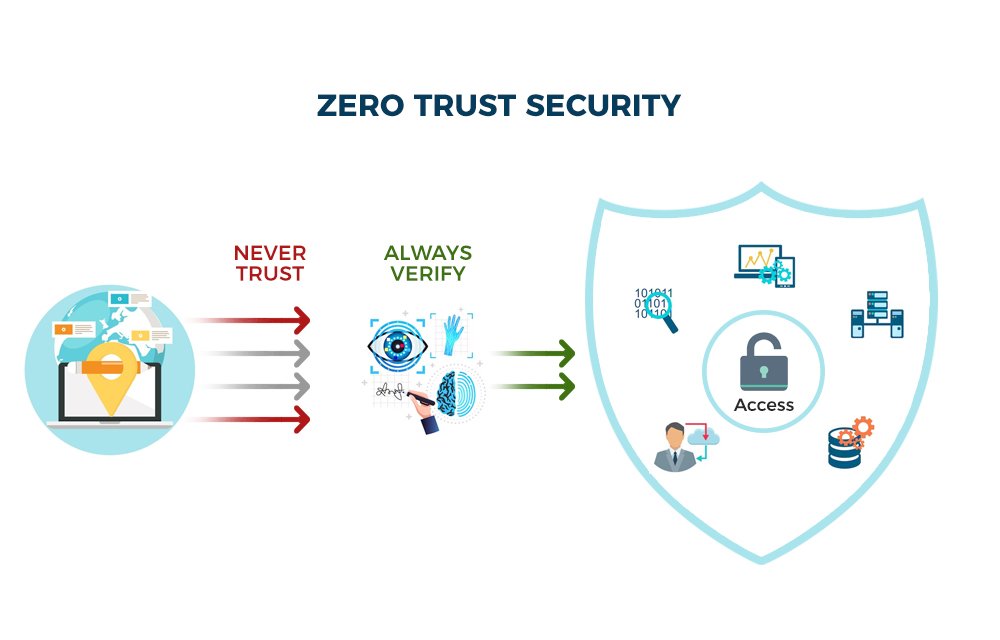
Enter Zero Trust Architecture (ZTA). Zero Trust is not a single product but a strategic cybersecurity model founded on a simple, powerful mantra: “Never Trust, Always Verify.” It mandates that no user, device, or network flow should be trusted by default, regardless of whether they are sitting within the corporate walls or accessing from a coffee shop on the other side of the globe. For businesses, understanding and adopting Zero Trust is no longer a forward-thinking strategy; it is a critical defense against the escalating sophistication of cyber threats. This guide will provide a master blueprint for understanding and implementing this paradigm shift. For more on foundational tech concepts, explore our Technology & Innovation category.
Background & Context: The Evolution from Perimeter to Zero Trust
The concept of Zero Trust was formally coined by Forrester Research analyst John Kindervag in 2010, but its adoption has accelerated exponentially due to several converging trends:
- The Death of the Perimeter: Cloud migration and SaaS applications mean there is no single, definable network edge to defend.
- The Rise of Remote and Hybrid Work: The COVID-19 pandemic forced a mass shift to remote work, shattering the idea of a “safe” internal network.
- Sophisticated Attack Vectors: Attackers now routinely bypass perimeter defenses through phishing, then move laterally across a network once inside. The 2013 Target breach, which started with an HVAC vendor, is a classic example of this failure.
- The “Assume Breach” Mindset: Zero Trust operates on the principle that a breach is inevitable or may have already occurred. The focus shifts from solely preventing breaches to limiting their “blast radius” and preventing lateral movement.
This evolution represents a fundamental shift from network-centric security to data-and-identity-centric security. It’s about protecting the “crown jewels”—your data—wherever they reside.
Key Concepts Defined: The Core Principles of Zero Trust
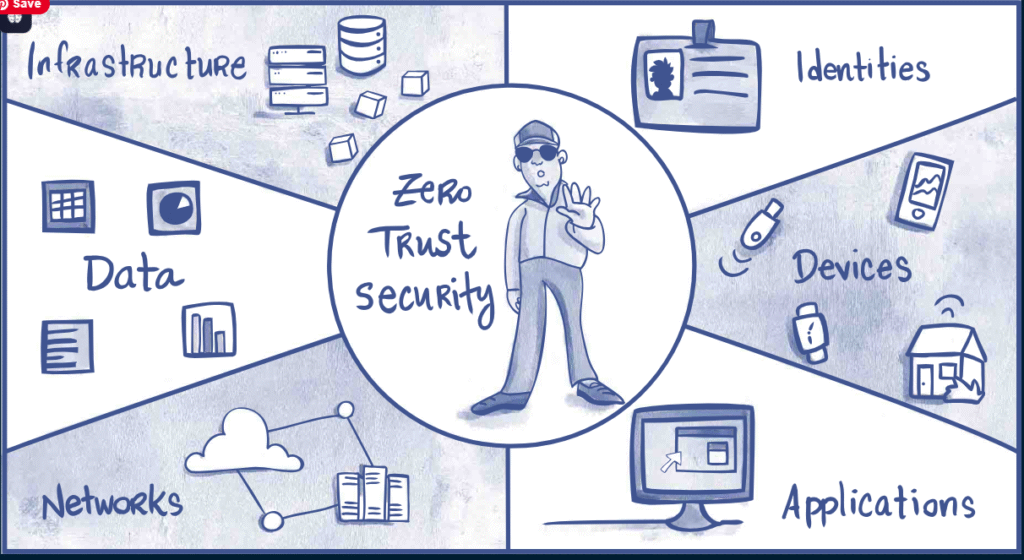
Zero Trust is built on several foundational pillars that guide its implementation:
- Verify Explicitly: Authenticate and authorize every access request based on all available data points, including user identity, device health, location, service requested, and the sensitivity of the data.
- Use Least Privilege Access: Limit user access with just-in-time (JIT) and just-enough-access (JEA) principles. Users should only have the access necessary to complete their specific task, for the minimum time required.
- Assume Breach: Operate as if an attacker is already inside your environment. This mindset minimizes the impact of a breach by segmenting access and preventing lateral movement.
- Micro-segmentation: This is the technical implementation of least privilege for the network. It involves breaking up security perimeters into small zones to maintain separate access for separate parts of the network. A breach in one segment doesn’t compromise the entire network.
- Identity as the New Perimeter: In a Zero Trust model, user and device identity becomes the primary control plane for security, replacing the network boundary.
How Zero Trust Works: A Step-by-Step Implementation Framework
Implementing Zero Trust is a journey, not a one-time project. Here is a phased, step-by-step approach, often aligned with frameworks from NIST and CISA.

Phase 1: Foundation and Discovery
- Step 1: Identify Your “Protect Surface”: Instead of trying to defend the entire “attack surface,” focus on your most critical data, assets, applications, and services (DAAS). These are your “crown jewels.”
- Step 2: Map Transaction Flows: Understand how traffic moves across your network to access these protected resources. You cannot protect what you cannot see.
- Step 3: Build a Zero Trust Architecture Plan: Design a new architecture based on micro-segmentation and identity-centric controls. Decide on key technology components like Identity and Access Management (IAM), Multi-Factor Authentication (MFA), and Endpoint Detection and Response (EDR) tools.
Phase 2: Securing Identities and Devices
- Step 4: Strengthen Identity Governance: Implement a robust IAM system. Enforce MFA universally—it is the single most effective control you can deploy. This is non-negotiable.
- Step 5: Secure All Devices: Ensure every device (corporate and personal, if used for work) meets security health standards before granting access. This includes requiring up-to-date OS, antivirus, and encrypted hard drives.
Phase 3: Securing Applications and Data
- Step 6: Adopt a “Zero Trust Network Access (ZTNA)” Model: Replace traditional VPNs with ZTNA. Instead of providing broad network access, ZTNA grants users direct, encrypted connectivity to specific applications, which are hidden from the public internet.
- Step 7: Implement Micro-segmentation: Use firewalls and software-defined policies to create granular security zones around your protect surface. A developer in one zone should not be able to access the financial database in another without explicit authorization.
Phase 4: Automation and Optimization
- Step 8: Leverage Analytics and Automation: Use Security Information and Event Management (SIEM) systems and AI-driven tools to monitor for anomalous behavior, automatically triggering responses like suspending a user account.
- Step 9: Continuously Monitor and Improve: Zero Trust is a dynamic process. Regularly audit logs, update policies, and adapt to new threats and business changes.
Why Zero Trust is Important: The Unignorable Business Case
Adopting a Zero Trust model is not just a technical upgrade; it delivers a powerful strategic advantage.
- Enables Secure Remote Work: ZTNA provides secure, seamless access to applications for remote workers without the performance and security drawbacks of traditional VPNs.
- Reduces Business Risk and Blast Radius: By assuming breach and using micro-segmentation, a single compromised account or device cannot lead to a catastrophic network-wide breach.
- Improves Regulatory Compliance: Zero Trust principles directly support compliance with regulations like GDPR, HIPAA, and CCPA by enforcing strict data access controls and providing detailed audit trails.
- Simplifies IT and Security Operations: While complex to set up, a mature Zero Trust environment can simplify security management by providing consistent, policy-driven controls across cloud and on-premises environments.
- Builds Customer Trust: Demonstrating a modern, robust security posture is a competitive advantage and builds trust with customers and partners who entrust you with their data.
Common Misconceptions and Pitfalls to Avoid
As with any paradigm shift, Zero Trust is often misunderstood.
- Misconception: Zero Trust means “trust no one.”
Reality: It means “never blindly trust.” Trust is established dynamically and contextually for each session, and it is continuously verified. - Misconception: It’s just a new name for VPN.
Reality: VPNs provide broad network access (a “trusted” tunnel). ZTNA, a key component of Zero Trust, provides granular, application-level access to “untrusted” users. - Misconception: It’s too expensive and complex for SMBs.
Reality: While enterprise-scale implementations are complex, the core principles can be adopted by any business. Starting with enforcing MFA and implementing basic network segmentation is a highly effective and affordable first step. - Misconception: You have to rip and replace your entire IT infrastructure.
Reality: Zero Trust is a journey. You can layer Zero Trust controls over existing infrastructure, starting with your most critical applications and data. - Misconception: It’s only for large tech companies.
Reality: Every organization with digital assets is a target. Small businesses are often targeted precisely because they have weaker defenses. The principles of Zero Trust are universally applicable.
Recent Developments and a Case Study
The Zero Trust landscape is rapidly evolving, driven by cloud adoption and AI.
Recent Developments:
- Integration with SASE: Secure Access Service Edge (SASE) combines ZTNA with SD-WAN and other security services into a cloud-native platform, representing the future of secure network access.
- AI-Powered Policy and Analytics: Machine learning is being used to analyze user behavior and automatically adjust access policies or flag anomalies in real-time.
- Government Mandates: The U.S. White House Executive Order on Improving the Nation’s Cybersecurity has made Zero Trust a mandatory requirement for federal agencies, pushing it into the mainstream.
Case Study: Google’s BeyondCorp
Perhaps the most famous and successful implementation of Zero Trust is Google’s BeyondCorp initiative.
- The Problem: Like many companies, Google’s perimeter-based security model was ill-suited for a workforce using untrusted networks and a multitude of devices.
- The Solution: Google developed BeyondCorp, a Zero Trust model that shifted access controls from the network perimeter to individual devices and users. Access to applications is granted based on dynamically assessed trust scores derived from device inventory and user credentials, regardless of network location.
- The Lesson Learned & Outcome: The key lesson is that a perimeter-less security model is not only possible but more secure and user-friendly. By eliminating the privileged internal network, Google significantly reduced its attack surface. BeyondCorp enabled secure, seamless access for its global workforce and has become the gold-standard blueprint for Zero Trust implementations worldwide, inspiring many of the commercial ZTNA products available today.
Conclusion & Key Takeaways
The digital world has fundamentally changed, and our security models must change with it. The castle-and-moat is a relic of a bygone era. Zero Trust Architecture is the necessary, intelligent response to a borderless, cloud-first, and threat-filled world.
It is a journey that requires a cultural shift as much as a technological one. It demands that we move from a mindset of “trust but verify” to the more resilient and pragmatic “never trust, always verify.”
Key Takeaways:
- Identity is the New Firewall: The core of security has shifted from the network boundary to user and device identity.
- MFA is the Foundation: Universal Multi-Factor Authentication is the single most critical first step on the Zero Trust journey.
- Think Micro, Not Macro: Implement micro-segmentation to limit the blast radius of any potential breach.
- Assume You Are Already Hacked: This mindset forces you to build controls that contain damage, not just prevent entry.
- Start Small, Think Big: Begin with your most critical data and applications. A phased rollout is the key to success.
Just as maintaining Mental Wellbeing requires proactive and continuous care, so does the health of your digital environment. For businesses building their online presence, securing an E-commerce Business with these principles from the start is crucial. To learn more about our mission at World Class Blogs, visit our About Us page. For more insights, explore our other Blogs or get in touch via our Contact Us page.
Frequently Asked Questions (FAQs)
1. What is the simplest way to start with Zero Trust?
The simplest and most impactful first step is to enforce Multi-Factor Authentication (MFA) on all user accounts for all applications, especially email and cloud services.
2. Does Zero Trust mean my employees will have a worse user experience?
Initially, there might be a slight adjustment, but a well-implemented Zero Trust model can actually improve the user experience. ZTNA often provides faster, more direct application access than clunky VPNs, and “single sign-on” (SSO) reduces password fatigue.
3. How does Zero Trust work with cloud services like AWS or Azure?
The cloud shared responsibility model aligns perfectly with Zero Trust. You are responsible for securing your data, identities, and access within the cloud. Cloud providers offer native tools (like Azure AD Conditional Access, AWS IAM) that are designed to implement Zero Trust principles.
4. Can Zero Trust prevent all cyber attacks?
No security model can guarantee 100% prevention. However, Zero Trust is designed to minimize the impact and “blast radius” of a breach, making it far harder for an attacker to move from an initial compromise to accessing critical data.
5. What is the difference between ZTNA and VPN?
A VPN grants a user full access to the internal corporate network. ZTNA grants a user access only to specific, authorized applications. Think of VPN as a master key to the entire office building, and ZTNA as a keycard that only opens the doors you are authorized to enter.
6. Is Zero Trust only about technology?
No. Successful Zero Trust implementation requires a combination of People (training and culture), Process (policies and procedures), and Technology (tools and platforms).
7. How long does it take to implement a full Zero Trust architecture?
For a large enterprise, it is a multi-year journey. For a small business, core principles can be implemented in months. It’s a continuous process of improvement, not a destination with a fixed end date.
8. What are the biggest challenges in implementing Zero Trust?
Common challenges include legacy application compatibility, cultural resistance to change (“why do I need MFA?”), the complexity of policy creation, and the initial cost of new tools and expertise.
9. Does Zero Trust apply to IoT devices?
Absolutely. IoT devices are often the weakest link. Zero Trust mandates that they are identified, authenticated, and given only the minimum network access required to function, often through micro-segmentation.
10. How does Zero Trust relate to data encryption?
Encryption is a critical component. In a Zero Trust model, data should be encrypted both in transit and at rest. Even if an attacker bypasses some controls, encrypted data is useless without the keys.


