
Global Data Privacy Laws in 2025: A Business Guide to GDPR, CCPA, and Beyond
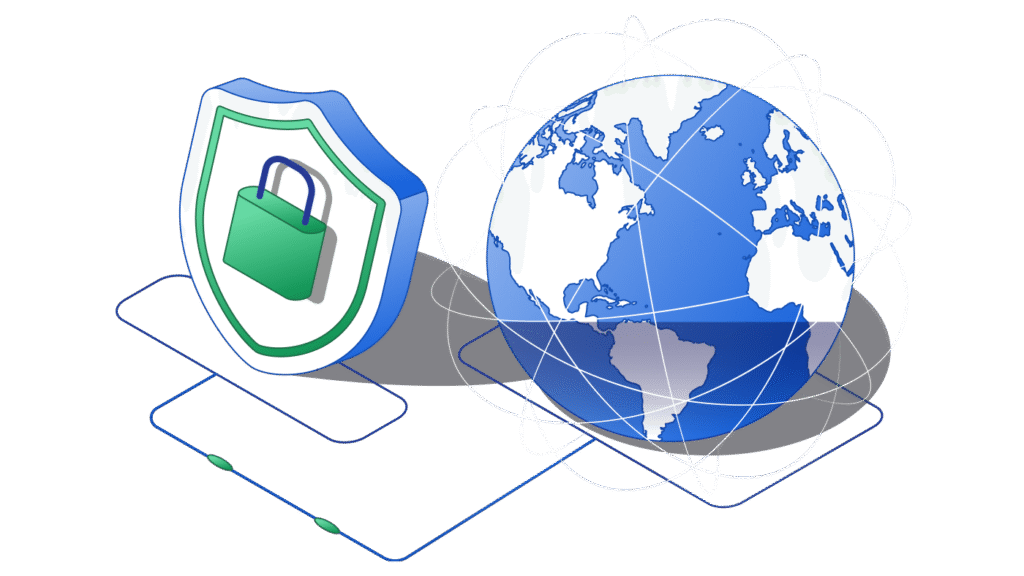
A world map highlighting major data privacy regulations like GDPR, CCPA, LGPD, and PIPL, showing the global trend towards data protection.
Introduction: The New Global Standard for Business
Data has been called the “oil of the 21st century,” fueling innovation and driving the digital economy. But unlike oil, personal data is intrinsically tied to human identity, autonomy, and fundamental rights. For decades, this data was extracted and processed with minimal oversight, leading to a landscape of corporate surveillance, massive data breaches, and a loss of public trust.
This era of digital wild west is over. A global wave of data privacy regulations is fundamentally reshaping how businesses collect, use, and protect personal information. From the European Union’s landmark GDPR to California’s CCPA and China’s PIPL, a new legal framework is emerging, establishing data privacy not as a niche compliance issue, but as a core business imperative and a fundamental human right.
Understanding and complying with this complex, patchwork quilt of global data privacy laws is no longer optional for any business with an online presence. Non-compliance can result in astronomical fines (up to 4% of global revenue), crippling lawsuits, and irreparable brand damage. This guide serves as your essential roadmap, demystifying the major regulations and providing a practical, step-by-step framework for building a resilient and compliant data privacy program. For more on building a trustworthy online presence, see our guide on Starting an E-commerce Business.
Background & Context: From Directive to Regulation
The journey to modern data privacy began in earnest with the EU’s 1995 Data Protection Directive. However, as a directive, it required member states to enact their own laws, leading to fragmentation. The 2018 General Data Protection Regulation (GDPR) changed everything. As a regulation, it was directly applicable across all EU member states, creating a unified and powerful legal standard.
GDPR’s “extraterritorial” scope was a game-changer. It applies to any organization worldwide that processes the personal data of individuals in the EU. This meant a small business in Kansas selling products online to customers in France had to comply with GDPR. This principle has been copied by regulators worldwide, effectively making GDPR the de facto global standard.
This triggered a “Brussels Effect,” where other jurisdictions began enacting their own comprehensive laws, including:
- California Consumer Privacy Act (CCPA/CPRA): The first major state-level law in the U.S., granting Californians similar rights to Europeans.
- Brazil’s LGPD (Lei Geral de Proteção de Dados): Heavily inspired by GDPR.
- China’s PIPL (Personal Information Protection Law): A stringent law that adds a layer of data sovereignty and security requirements.
We have moved from a world where data processing was allowed unless explicitly forbidden, to a world where it is forbidden unless explicitly allowed under a strict set of conditions.
Key Concepts Defined: The Universal Language of Privacy
To navigate this landscape, you must master its core vocabulary:
- Personal Data / Personal Information: Any information relating to an identified or identifiable natural person. This is broadly interpreted and can include IP addresses, device IDs, and location data.
- Data Controller: The entity that determines the purposes and means of processing personal data (e.g., the company collecting user data).
- Data Processor: The entity that processes data on behalf of the controller (e.g., a cloud hosting provider like AWS or a email marketing service like Mailchimp).
- Processing: Any operation performed on personal data, including collection, storage, use, erasure, etc.
- Lawful Basis for Processing: The legal justification for processing data. Under GDPR, these are: consent, contract, legal obligation, vital interests, public task, and legitimate interests.
- Data Subject Rights: The rights granted to individuals over their data, including the right to access, rectify, erase (“right to be forgotten”), restrict processing, data portability, and object to processing.
- Data Protection Impact Assessment (DPIA): A process to systematically identify and minimize the data protection risks of a project.
- Privacy by Design and by Default: The principle of integrating data privacy measures into the development of products and business practices from the outset.
A Guide to Major Global Privacy Laws
1. The General Data Protection Regulation (GDPR) – European Union
- Scope: Any organization processing data of EU residents, regardless of location.
- Key Requirements:
- Requires a lawful basis for all processing.
- Mandates robust consent (freely given, specific, informed, unambiguous).
- Grants extensive data subject rights.
- Requires data breach notifications within 72 hours.
- Appoints a Data Protection Officer (DPO) for certain organizations.
- Restricts international data transfers to countries with “adequacy” or with appropriate safeguards.
2. The California Privacy Rights Act (CPRA) – USA
- Scope: For-profit businesses that operate in California and meet specific revenue or data processing thresholds.
- Key Requirements:
- Grants rights to access, delete, and correct personal information.
- Introduces the right to opt-out of “sharing” for cross-context behavioral advertising.
- Limits the use of “sensitive personal information.”
- Establishes the California Privacy Protection Agency (CPPA) for enforcement.
3. The Personal Information Protection Law (PIPL) – China
- Scope: Organizations processing the personal information of individuals in China.
- Key Requirements:
- Requires separate, explicit consent for processing.
- Imposes strict data localization requirements for critical data.
- Mandates a designated person to oversee data protection.
- Has stringent rules for cross-border data transfer.
How to Achieve Compliance: A Step-by-Step Framework
Achieving compliance is a continuous journey, not a one-time project. Follow this structured approach:
Step 1: Data Mapping and Discovery
- Action: Identify what personal data you collect, where it comes from, where it is stored, who has access to it, and who it is shared with (including third-party vendors).
- Output: A Record of Processing Activities (ROPA), as required by GDPR.
Step 2: Lawful Basis and Consent Management
- Action: For each data processing activity, document your lawful basis. If relying on consent, ensure it meets the standard of being freely given, specific, informed, and an unambiguous indication. Implement a robust consent management platform.
- Output: A documented lawful basis for all processing and a compliant consent mechanism.
Step 3: Fulfilling Data Subject Rights (DSAR)
- Action: Create a streamlined process to receive, verify, and respond to Data Subject Access Requests (DSARs) within the legally mandated timeframe (e.g., 30 days under GDPR). This often requires dedicated software.
- Output: A functional DSAR workflow that empowers individuals and ensures compliance.
Step 4: Vendor and Third-Party Risk Management
- Action: Identify all your data processors (vendors). Sign Data Processing Agreements (DPAs) with them that are compliant with applicable laws. Regularly audit their security practices.
- Output: A managed vendor risk program with compliant contracts in place.
Step 5: Data Security and Breach Preparedness
- Action: Implement technical and organizational measures to secure data (encryption, access controls). Develop an incident response plan that includes procedures for mandatory breach notification.
- Output: A secure data environment and a tested breach response plan.
Step 6: Employee Training and Culture
- Action: Conduct regular, role-specific data privacy training for all employees. Foster a culture of privacy within the organization.
- Output: An informed workforce that acts as the first line of defense.
Step 7: Ongoing Monitoring and Documentation
- Action: Continuously monitor your compliance posture. Conduct DPIAs for new projects. Keep all documentation, such as your ROPA and privacy policy, up to date.
- Output: A living, breathing privacy program that adapts to changing laws and business practices.
Why Compliance is a Strategic Advantage, Not Just a Cost
Beyond avoiding fines, a robust privacy program delivers significant business value:
- Builds Customer Trust and Brand Loyalty: In an era of data breaches, demonstrating a commitment to privacy is a powerful competitive differentiator.
- Enhances Data Governance: The compliance process forces you to clean and organize your data, leading to better quality data for analytics and decision-making.
- Improves Operational Efficiency: Understanding your data flows helps eliminate redundant data collection and storage, reducing costs.
- Facilitates International Business: A GDPR-compliant program provides a strong foundation for adapting to other laws like CPRA or PIPL, smoothing global expansion.
- Mitigates Financial and Reputational Risk: The cost of compliance is almost always lower than the cost of a major fine or a public data breach scandal.
Common Misconceptions and Pitfalls
Many organizations fail due to incorrect assumptions.
- Misconception: “We don’t operate in Europe/California, so the laws don’t apply to us.”
Reality: The extraterritorial scope of laws like GDPR and CPRA means if you have users or customers there, you are likely subject to them. - Misconception: “If we just update our privacy policy, we are compliant.”
Reality: Compliance is about demonstrable actions and processes, not just documentation. Your practices must match your policy. - Misconception: “Consent is the only lawful basis we need.”
Reality: Consent is one of six bases under GDPR and is often misused. For employee data or essential services, “performance of a contract” or “legitimate interests” may be more appropriate and reliable. - Misconception: “We’re too small to be targeted by regulators.”
Reality: While large companies make headlines, regulators are increasingly targeting SMEs to set examples. Data breaches at small businesses also attract regulatory action and lawsuits. - Misconception: “Our cloud provider (AWS, Azure) is responsible for compliance.”
Reality: Cloud providers act as Processors. You, as the Controller, are ultimately responsible for ensuring the overall processing is compliant. This is the shared responsibility model.
Recent Developments and a Case Study
The regulatory landscape is not static.
Recent Developments:
- The Schrems II Ruling and New Data Transfer Frameworks: The EU Court of Justice’s Schrems II decision invalidated the Privacy Shield framework for EU-US data transfers. This has led to a new, complex landscape requiring supplementary measures and the adoption of the new EU-U.S. Data Privacy Framework.
- The Rise of AI Regulation: Laws like the EU’s AI Act are emerging, creating specific rules for how personal data can be used in AI systems, directly impacting data privacy.
- U.S. Federal Privacy Law Debate: While no federal law has passed yet, the ongoing debate signals that a national standard could eventually emerge, complicating but potentially simplifying the state-by-state patchwork.
Case Study: Meta’s GDPR Fine for Data Transfers
- The Situation: Following the Schrems II ruling, Meta (formerly Facebook) continued to transfer EU user data to the U.S. under Standard Contractual Clauses (SCCs) without implementing sufficient supplementary measures to protect against U.S. government surveillance.
- The Outcome: In May 2023, Meta was hit with a record €1.2 billion fine by Ireland’s Data Protection Commission and was ordered to suspend all future transfers of EU data to the U.S. and to delete data that had been unlawfully transferred.
- The Lesson Learned: This case underscores the critical importance of lawful international data transfers. It is not enough to simply sign SCCs; companies must conduct a transfer impact assessment and implement technical, contractual, and organizational supplementary measures to ensure data is afforded equivalent protection. This has massive implications for any global business reliant on cloud infrastructure headquartered in the U.S.
Conclusion & Key Takeaways
The global trend towards stringent data privacy regulation is irreversible. What began with GDPR has sparked a worldwide movement, placing power back into the hands of individuals and imposing new responsibilities on organizations. Viewing this shift as a mere compliance burden is a missed opportunity.
A proactive, strategic approach to data privacy builds resilience, fosters trust, and creates a foundation for sustainable growth in the digital economy. Just as maintaining Mental Wellbeing requires a proactive and holistic approach, so does managing the health of your organization’s data practices.
Key Takeaways:
- Think Globally, Act Locally: Understand the specific requirements of all jurisdictions where your users reside. Your program must be adaptable.
- Privacy is a Journey, Not a Destination: Compliance requires continuous monitoring, assessment, and improvement as your business and the laws evolve.
- Documentation is Your Best Defense: A well-documented ROPA, DPIA, and lawful basis analysis is critical for demonstrating compliance to regulators.
- Know Your Data Flows: You cannot protect what you don’t know. Comprehensive data mapping is the essential first step.
- Embed Privacy in Your Culture: Technology and policies are useless without a workforce that understands and values data protection.
Navigating this complex environment is part of modern business leadership. For more insights into global operations and strategy, explore our section on Global Affairs & Policy. To learn more about our mission, visit our About Us page or explore our other Blogs.
Frequently Asked Questions (FAQs)
1. What is the single biggest difference between GDPR and CCPA/CPRA?
The core philosophical difference is the default opt-in. GDPR generally requires opt-in consent for many types of processing, while CCPA/CPRA is largely an opt-out regime, where businesses can collect and use data until the consumer tells them to stop.
2. Do we need a Data Protection Officer (DPO)?
Under GDPR, you need a DPO if your core activities involve large-scale, regular monitoring of individuals or large-scale processing of special categories of data (e.g., health data). Even if not legally required, appointing a privacy lead is a best practice.
3. What is a “legitimate interest” and when can we use it?
Legitimate interest is a flexible lawful basis under GDPR. It applies when you have a genuine business reason to process data, it is necessary for that purpose, and it does not override the individual’s rights. You must conduct a “Legitimate Interests Assessment” (LIA) to document this. Examples include fraud prevention and direct marketing to existing customers.
4. How do we handle data transfers from the EU to the U.S. post-Schrems II?
The primary mechanism is now the EU-U.S. Data Privacy Framework for certified companies. Alternatively, you can use Standard Contractual Clauses (SCCs) but must conduct a Transfer Impact Assessment (TIA) and implement supplementary technical measures (like encryption) to protect the data from U.S. government access.
5. What constitutes a data breach that requires notification?
A breach is not just a hacker stealing data. It is any unauthorized access to, loss of, or destruction of personal data. If the breach is likely to result in a risk to people’s rights and freedoms, you must notify the regulator (and in some cases, the individuals).
6. Are there any industries exempt from these laws?
Exemptions are limited. For example, GDPR has certain exemptions for law enforcement and national security. However, most commercial businesses, including non-profits, are fully subject to these laws.
7. What is “Privacy by Design”?
It’s the concept of building privacy protections into products, services, and business practices at the design phase, rather than bolting them on as an afterthought. It involves things like data minimization, pseudonymization, and user-centric privacy settings.
8. How can a small business with no legal team possibly comply?
Start with the fundamentals: know what data you have, use a reputable consent management platform for your website, review your vendor contracts, and create a simple process for handling user requests. Many free resources and guides are available from data protection authorities.
9. What is the “right to be forgotten”?
Also known as the right to erasure, it allows an individual to request the deletion of their personal data. You must comply if the data is no longer necessary, consent is withdrawn, or the data has been unlawfully processed, unless a legal exemption applies.
10. How often should we update our privacy policy?
You should review it at least annually, or whenever there is a significant change in your data processing activities, your business model, or the privacy laws themselves.