What is a DAO? The Complete Guide to Decentralized Autonomous Organizations
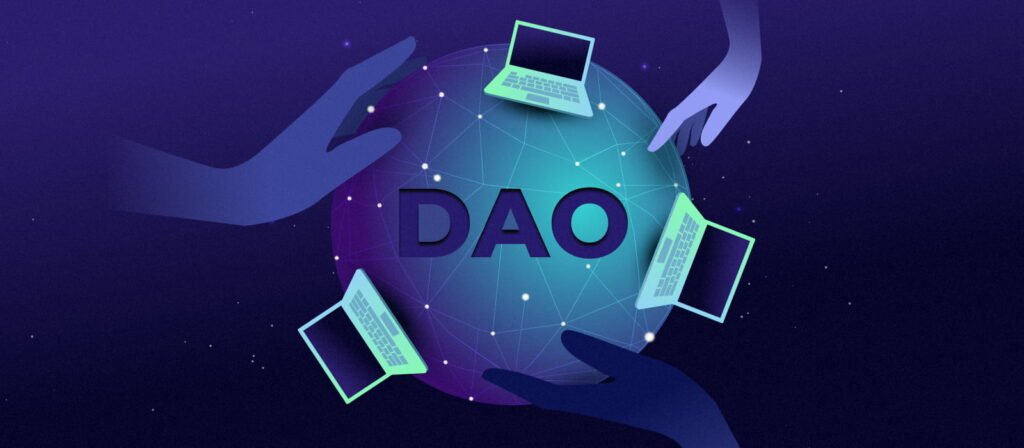
The DAO Governance Workflow: From community proposal to on-chain execution via token-based voting.
Introduction: Why DAOs Represent a Governance Revolution
Imagine an organization with no CEO, no board of directors, and no hierarchical management, yet it can manage millions of dollars, make complex decisions, and coordinate people across the globe. This is not a theoretical concept; it’s the reality of a Decentralized Autonomous Organization (DAO). DAOs are poised to redefine how we collaborate, govern, and build anything from a small internet community to a multi-billion-dollar protocol. For entrepreneurs, investors, and anyone interested in the future of work and organizational structure, understanding DAOs is essential. They represent a fundamental shift from top-down, centralized control to community-driven, transparent, and global collaboration. To grasp the broader context of this innovation, explore our Technology & Innovation hub.
Background/Context: The Origins of a New Organizational Paradigm
The conceptual roots of DAOs lie in the core ethos of blockchain: decentralization and trustlessness. The first notable attempt was “The DAO” in 2016, a venture capital fund built on Ethereum. While a vulnerability led to its infamous hack and collapse, it proved the concept’s potential and served as a massive learning experience for the entire ecosystem.
The true maturation of the model came with the rise of DeFi. Protocols like MakerDAO, which manages the DAI stablecoin, and Compound, a lending protocol, needed a way to decentralize control and ongoing governance. They issued governance tokens, distributing power to their users, and thus, the modern DAO was born. Today, DAOs manage tens of billions of dollars in treasuries and govern everything from investment funds and philanthropic organizations to social clubs and collector groups. This evolution mirrors the complexity of managing a global enterprise, akin to the challenges and solutions discussed in this guide on Global Supply Chain Management.
Key Concepts Defined: The Lexicon of Decentralized Governance
- DAO (Decentralized Autonomous Organization): An organization represented by rules encoded as a transparent computer program, controlled by its members, and not influenced by a central government or entity.
- Governance Token: A cryptocurrency that grants the holder voting rights in the DAO’s decisions. One token often equals one vote, though more advanced models exist.
- Smart Contracts: The automated, self-executing rules that form the DAO’s operational backbone, handling everything from treasury management to vote execution.
- Proposal: A formal suggestion submitted by a token holder for a change or action, such as spending treasury funds or adjusting a protocol’s parameters.
- Treasury: The pool of funds (typically cryptocurrency) owned and managed by the DAO, used to pay for expenses, fund projects, or provide grants.
- On-Chain vs. Off-Chain Governance: On-chain governance involves voting that is recorded and executed directly on the blockchain. Off-chain governance uses informal discussions on platforms like Discord and Forum posts to gauge sentiment before an on-chain vote.
How It Works (Step-by-Step): The Lifecycle of a DAO Proposal
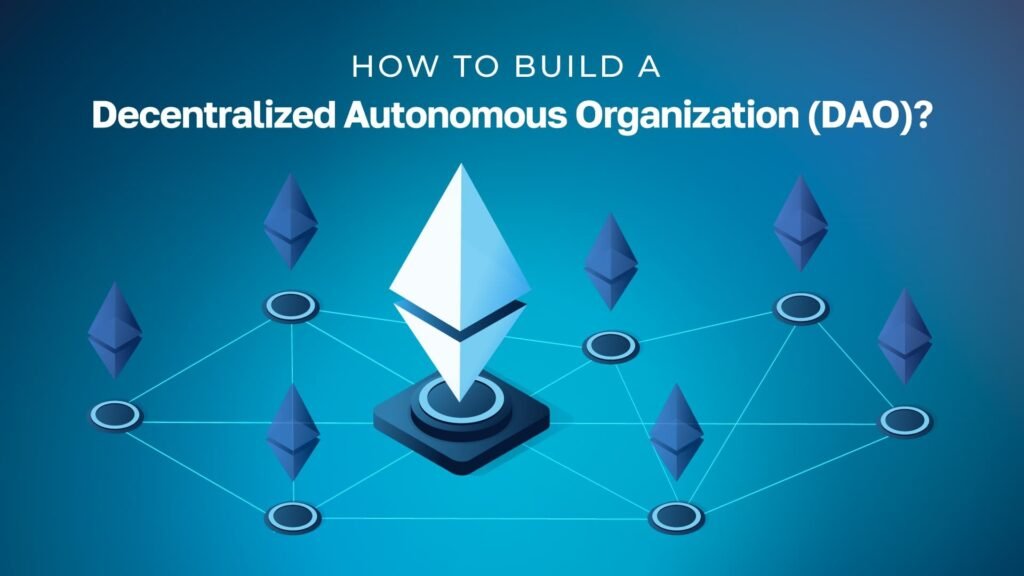
Let’s walk through how a typical proposal passes in a DAO like Uniswap, which governs one of the world’s largest decentralized exchanges.
Step 1: Idea & Discussion
A community member has an idea—for example, “Should the DAO deploy Uniswap v3 on a new blockchain like Base?” They first bring this idea to the DAO’s off-chain forum. Here, the community discusses the merits, feasibility, and potential risks. This “temperature check” prevents poorly conceived ideas from clogging the formal voting system.
Step 2: Formal Proposal Drafting
If the forum discussion is positive, the idea is formalized into a structured proposal. This draft outlines the specific actions, the smart contract code required to execute them, and the rationale. It is posted back to the forum for a final round of review and refinement.
Step 3: On-Chain Voting
The formal proposal is now deployed on the blockchain. A snapshot is taken of all token holders at a specific block. Those holders then cast their votes using their governance tokens. The voting period typically lasts for several days to ensure global participation.
Step 4: Execution
If the vote passes a pre-defined threshold (e.g., a majority and a minimum quorum), the proposal is considered successful. In many cases, the approved actions—such as the code to deploy on the new chain—are executed automatically by the smart contracts, without any human intermediary. This is the “autonomous” part of the DAO.
Step 5: Implementation & Monitoring
The change is implemented, and the community monitors its impact. This creates a feedback loop for future proposals and continuous improvement of the protocol.
Why It’s Important: The DAO Value Proposition
- Transparency & Trust: All rules, financial transactions, and votes are recorded on a public blockchain, open for anyone to audit. This eliminates backroom deals and hidden agendas.
- Global Participation & Permissionless: Anyone, anywhere in the world with an internet connection and a governance token can participate in governing an organization they care about.
- Reduced Operational Overhead: Automation through smart contracts reduces the need for managers, accountants, and lawyers for routine operations.
- Community Alignment: By giving users a direct stake and a voice, DAOs align the incentives of the organization with its most active participants, fostering fierce loyalty and collaboration.
- Resilience & Censorship-Resistance: With no central point of failure, a DAO is incredibly difficult to shut down or censor.
Common Misconceptions
- DAOs are completely lawless and have no rules. They are full of rules; they’re just written in code (smart contracts) instead of legal documents. The rules are often more rigidly enforced than in traditional organizations.
- One token equals one vote, so DAOs are just plutocracies. While this is a valid criticism of the basic model, many DAOs are innovating with quadratic voting (where the cost of votes increases quadratically) or conviction voting to mitigate whale dominance. Some also use non-financial metrics for voting power.
- DAOs can replace all corporations today. DAOs are excellent for specific use cases (protocol governance, global communities, investment pools) but face legal and operational challenges that make them unsuitable for many traditional business models currently.
- Participating in a DAO is just about voting. Active participation involves forum discussions, creating and reviewing proposals, contributing to working groups, and building tools. Voting is just the tip of the iceberg. This requires a significant investment of time and mental energy, underscoring the importance of the Mental Wellbeing principles discussed elsewhere.
Recent Developments & Success Stories
Recent Development: Legal Wrappers and The Wyoming DAO Law
A major hurdle for DAOs has been legal recognition. In 2021, Wyoming became the first U.S. state to pass a law allowing DAOs to register as Limited Liability Companies (LLCs). This “legal wrapper” provides members with limited liability protection, a crucial step for DAOs to interact with the traditional legal system, open bank accounts, and sign contracts.
Success Story: ConstitutionDAO – The Power of Flash Mobilization
In November 2021, a group of internet strangers formed ConstitutionDAO with a single, audacious goal: to win a Sotheby’s auction for an original copy of the U.S. Constitution. Through a viral social media campaign, they raised over $47 million in ETH from 17,000 contributors in less than a week. While they ultimately lost the auction, ConstitutionDAO demonstrated the unprecedented power of DAOs to rapidly mobilize capital and people around a shared mission. It was a cultural milestone that introduced thousands to Web3. The fundraising and community-building mechanics offer a fascinating contrast to traditional models, like those in our partner’s guide on Starting an Online Business.
Case Study & Lessons Learned: The MakerDAO MKR Takeover Vote
Case Study: In 2020, a single entity (later identified as the decentralized lending protocol Aave) purchased a large amount of MKR, the governance token of MakerDAO. They then voted to add their own native token, AAVE, as a collateral type within the Maker protocol. This would have directly benefited their own project.
Lessons Learned:
- The Hostile Takeover Risk: The event highlighted a critical vulnerability: a well-funded actor could theoretically “buy” governance control to steer the DAO for their own benefit.
- The Importance of Delegation: In response, MakerDAO and other major DAOs have strongly encouraged vote delegation. Token holders who aren’t active voters can delegate their voting power to trusted, knowledgeable community members, creating a more informed and resilient governance system.
- Governance Mining is Dangerous: Protocols that simply “farm out” governance tokens to users who may not care about long-term governance are vulnerable to such attacks. True governance requires an engaged community, not just token holders.
Conclusion & Key Takeaways
DAOs are a revolutionary but nascent experiment in human coordination. They are messy, slow at times, and face significant legal and technical challenges. However, they have already proven their ability to manage vast sums of capital and govern critical internet infrastructure in a transparent and global manner.
Key Takeaways:
- DAO is a Tool, Not a Panacea: It is an incredibly powerful organizational structure for specific, often internet-native, use cases.
- Community is Everything: The technology enables DAOs, but a strong, engaged, and aligned community is what makes them successful.
- Get Involved: The best way to learn is to participate. Join the Discord server of a DAO you’re interested in, read the forum discussions, and even acquire a small amount of a governance token to observe the process.
- The Legal Landscape is Evolving: DAOs exist in a regulatory gray area. Stay informed about legal developments in your jurisdiction.
- The Future is Hybrid: We are likely to see a future where traditional legal structures and DAO-like governance models merge, taking the best from both worlds.
The era of decentralized collaboration is just beginning. To explore more thought-provoking content on the future of technology and society, browse our full collection of Blogs. If you’re working on a DAO-related project, we’d love to hear from you via our Contact Us page.
Frequently Asked Questions (FAQs)
1. How do I make money in a DAO?
You can earn by: 1) Receiving grants for contributing work (development, marketing, etc.), 2) Earning a share of the protocol’s revenue if the DAO distributes profits, 3) Staking your tokens to earn rewards, or 4) The potential appreciation of your governance tokens.
2. What’s the difference between a DAO and a traditional co-operative?
While similar in spirit, DAOs are global by default, operate on transparent and automated rules (smart contracts), and can form and raise capital with unprecedented speed. Traditional co-ops are often geographically bound and rely on traditional legal and governance structures.
3. Can a DAO be hacked?
The smart contracts that run a DAO can have vulnerabilities, as “The DAO” hack in 2016 showed. The treasury can also be a target. However, security practices and audit standards have improved dramatically since then.
4. What are some of the biggest DAOs today?
Uniswap DAO, Aave DAO, MakerDAO, and BitDAO (now Mantle) are some of the largest by treasury size and influence.
5. Do I need to be technical to join a DAO?
No. DAOs need a diverse range of skills: writers, designers, marketers, community managers, and legal experts, not just developers.
6. What is “voter apathy” in DAOs?
It’s a major challenge where a large percentage of token holders do not vote on proposals. This can lead to low quorums and decisions being made by a small, potentially unrepresentative group.
7. How is a DAO’s treasury funded?
Typically through an initial token sale, by taking a fee from the protocol’s operations (e.g., a percentage of trading fees on a DEX), or through direct investments.
8. What is a “Moloch DAO”?
It’s a specific type of DAO, named after the god of coordination failure, designed for grant funding. It uses a mechanism where members who vote “no” on a proposal must burn some of their shares, forcing them to carefully consider their opposition.
9. Can a DAO decision be reversed?
Once a decision is executed on-chain, it is typically immutable. However, a new proposal can be created to reverse the effects of a previous one, if the community agrees.
10. Are DAOs the future of all companies?
It’s unlikely they will replace all companies, but they will certainly become a dominant form for open-source software projects, online communities, and global investment pools, forcing traditional companies to adopt more transparent and participatory practices.




3 thoughts on “What is a DAO? The Complete Guide to Decentralized Autonomous Organizations”