The Right to Development: From Global Principle to Local Reality
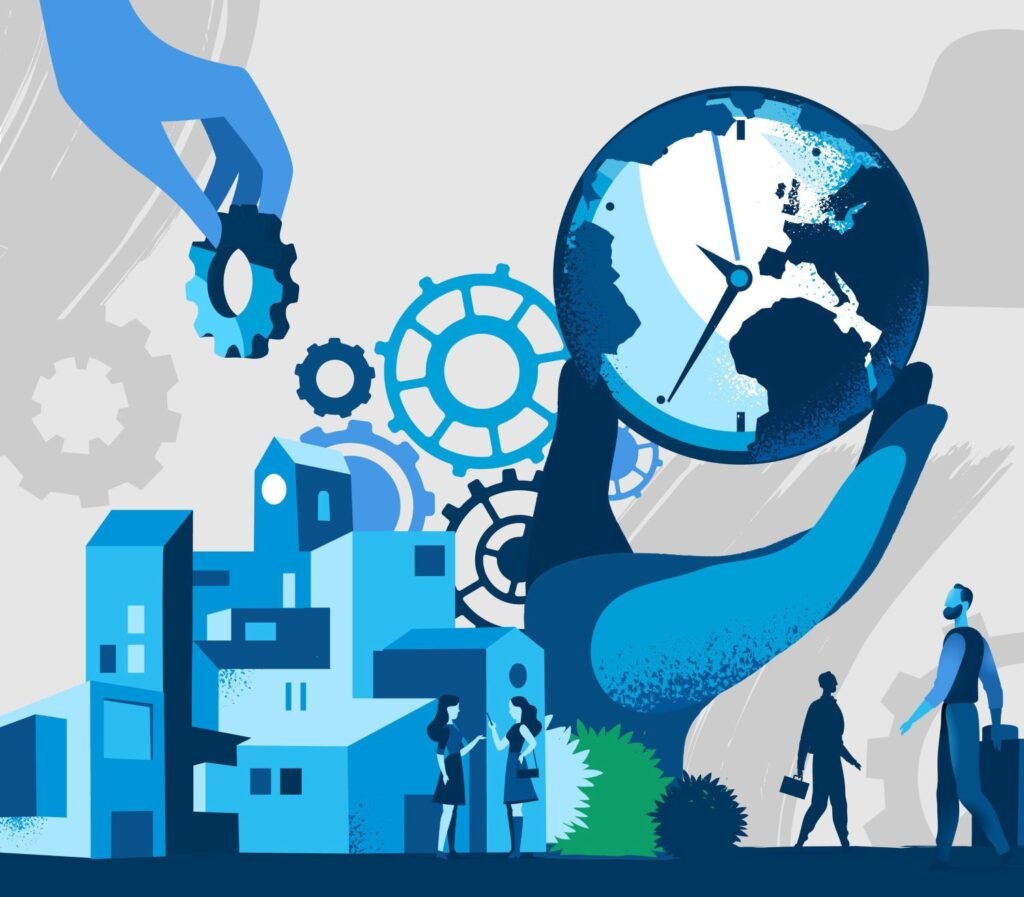
The right to development emphasizes active, free, and meaningful participation in development processes.
Introduction: Why This Matters
Amidst the complex debates on aid, trade, and debt relief, a powerful and often overlooked idea persists: that development is not a privilege, but a human right. This is the core principle of the 1986 United Nations Declaration on the Right to Development. It asserts that every human person and all peoples are entitled to participate in, contribute to, and enjoy economic, social, cultural, and political development. This matters because it reframes the entire global development project. It’s not about charity from wealthy nations to poor ones; it’s about justice, obligation, and the creation of an international order where every person can achieve their full potential. Understanding this right is crucial for dismantling paternalistic aid structures and building a world where development is truly people-centered, equitable, and sustainable.
Background/Context
The concept of the right to development emerged in the 1970s from the post-colonial discourse, led by newly independent nations in Africa and Asia. These states, frustrated with the unequal global economic order, sought to articulate a right that would address structural imbalances and affirm their sovereignty over their own resources and development path.
After years of negotiation, the UN General Assembly adopted the Declaration on the Right to Development in 1986, with a overwhelming majority. However, it was not consensus-driven; the United States was the only country to vote against it, and several other developed nations abstained, highlighting the deep political divisions that surround it. Since then, the right has been reaffirmed in numerous UN world conferences and is recognized as a cornerstone of the human rights framework, though its practical implementation remains a subject of intense debate and slow progress.
Key Concepts Defined
- The Right to Development: A comprehensive economic, social, cultural, and political right, based on the concept that development is a process that improves the well-being of all individuals and the entire population, and in which they must actively participate.
- Active, Free, and Meaningful Participation: The core principle that individuals and communities must be central agents in their own development, not passive recipients.
- Fair Distribution of Benefits: The principle that the benefits of development must be shared equitably among all, requiring a focus on reducing inequalities and eradicating all forms of discrimination.
- Sovereign Right: The declaration affirms that states have the right and duty to formulate appropriate national development policies. This emphasizes national ownership.
- International Cooperation: The duty of states, individually and collectively, to create an international environment conducive to development, including in areas of trade, finance, and technology transfer.
- Holistic Development: Development is not just economic growth but the constant improvement of the well-being of the entire population and all individuals.
How It Works (Step-by-Step)
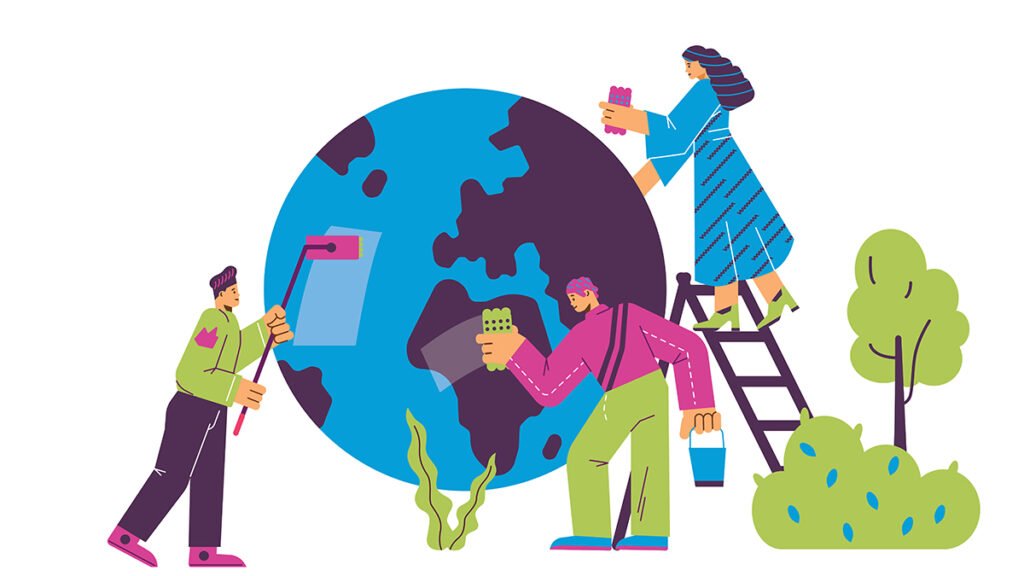
Realizing the right to development is a complex, multi-level process:
- National Level: Policy Formulation
- States must adopt development policies that are participatory and transparent. This involves consulting with civil society, marginalized groups, and local communities to identify priorities and design programs that reflect their needs.
- Example: A government creating its national poverty reduction strategy through a series of town hall meetings and consultations with farmers’ cooperations and women’s groups.
- National Level: Legislation and Accountability
- Enact laws that guarantee key rights essential for development, such as the right to education, health, and social security. Establish independent judiciary and national human rights institutions to hold the government accountable for its development obligations.
- Example: Passing a Free and Compulsory Education Act and setting up an ombudsman to handle complaints about schools.
- National Level: Fair Distribution
- Implement progressive taxation and social spending policies that prioritize the needs of the poorest and most marginalized. This ensures that economic growth translates into improved well-being for all.
- Example: Using tax revenue from a natural resource boom to fund universal healthcare and rural infrastructure projects.
- International Level: Creating a Conducive Environment
- Developed states have a duty to engage in fair trade practices, provide development assistance that is not tied to political conditions, and support debt relief for heavily indebted poor countries.
- Example: A developed country removing agricultural subsidies that make it impossible for farmers in developing countries to compete on the global market.
- International Level: Global Governance Reform
- Reform international financial institutions (like the IMF and World Bank) and decision-making bodies to give developing countries a greater voice and vote in global economic governance.
- Monitoring and Evaluation
- States must report on their progress in realizing the right to development, and civil society must be empowered to monitor and critique this progress, using the SDGs as a key framework.
Why It’s Important
The Right to Development is critically important because:
- It Provides a Legal and Moral Framework: It moves development from the realm of policy discretion to one of legal obligation and moral imperative, giving marginalized communities a powerful tool for advocacy.
- It Empowers People: By centering participation, it ensures that development is driven by local needs and knowledge, leading to more sustainable and appropriate outcomes.
- It Addresses Root Causes: It forces a confrontation with the structural injustices in the global economic system—unfair trade rules, illicit financial flows, and unequal power dynamics—that perpetuate underdevelopment.
- It Demands Accountability: It creates obligations for both national governments (to their people) and the international community (to create a fair system), establishing clear lines of accountability that are often absent in traditional aid models.
Common Misconceptions
- Misconception 1: “It’s a right to be developed by others, justifying endless aid.”
- Reality: The opposite is true. It emphasizes national sovereignty and self-reliance. It calls for an enabling international environment, not perpetual charity. It’s about empowerment, not dependency.
- Misconception 2: “It’s a collective right that overrides individual human rights.”
- Reality: The Declaration is explicit that the human person is the central subject, participant, and beneficiary of development. It seeks to create conditions where all individual human rights can be realized.
- Misconception 3: “It’s an outdated, ideological concept with no practical value.”
- Reality: Its principles are more relevant than ever. The SDGs’ focus on “leaving no one behind” and partnership are direct reflections of the right to development. It provides the “why” behind the “what” of the SDGs.
Recent Developments and Success Stories
A major recent development is the renewed effort to create a Legally Binding Instrument on the Right to Development. An intergovernmental working group at the UN Human Rights Council is currently negotiating this treaty, aiming to transform the 1986 Declaration’s principles into hard law, though this process is politically contentious.
Success Story: Botswana’s Sovereign Fund
Following the discovery of diamonds, Botswana established the Pula Fund, a sovereign wealth fund to save a portion of its mineral revenues for future generations. This is a practical application of the right to development’s principles: asserting sovereign control over natural resources, ensuring the benefits of development (resource wealth) are managed sustainably, and prioritizing the long-term well-being of the people.
Case Study: The Alaskan Permanent Fund Dividend
- Background: The U.S. state of Alaska discovered massive oil reserves in the late 1960s. The state government faced the challenge of how to manage this resource wealth for the benefit of all its citizens, both present and future.
- The Right to Development in Action: In 1976, Alaskans voted to amend their state constitution to establish the Alaska Permanent Fund. A portion of all state oil revenues is placed into this fund. The principal is invested, and the earnings are used to pay an annual dividend to every eligible Alaskan resident.
- Lesson Learned: This model directly embodies the principles of the right to development: the fair distribution of benefits from a collective resource, sovereign management of that resource, and a focus on holistic well-being by providing direct financial support to individuals, which has helped reduce poverty.
- Outcome: The fund has grown to over $70 billion and has paid out dividends for over 40 years. It demonstrates a practical, if imperfect, model for ensuring that the profits from national resource development are shared directly with the people, a key demand of the right to development.
Real Life Examples
- Conditional Cash Transfers (e.g., Brazil’s Bolsa Família): These programs provide financial aid to poor families conditional on them sending their children to school and getting health check-ups. This embodies the right by actively involving families in human capital development and ensuring a fairer distribution of economic benefits.
- Community-Led Total Sanitation (CLTS): An approach to improving sanitation that facilitates a process where communities themselves analyze their sanitation practices and collectively decide to end open defecation. This is a prime example of active, free, and meaningful participation.
- The Fight Against “Vulture Funds”: These are funds that buy up the debt of very poor countries at a discount and then sue them for full value. Developing countries and their advocates have fought for international regulation of these funds, arguing they violate the right to development by siphoning away scarce public resources.
Conclusion & Key Takeaways
The Right to Development remains an ambitious and unfinished project. It is both a goal and a process. While its full realization is hampered by political resistance and global power imbalances, it provides an indispensable framework for a more just and equitable approach to global progress.
Key Takeaways:
- Development is an Entitlement, Not a Gift: This fundamental shift in perspective is the declaration’s most powerful legacy.
- People are Agents, Not Objects: Meaningful participation is non-negotiable for legitimate and sustainable development.
- The International System is Part of the Problem—and the Solution: Achieving this right requires deep structural reforms in global economic governance.
- It Complements All Other Rights: It is an “enabling right” that creates the conditions for the realization of civil, political, economic, social, and cultural rights.
- The Struggle Continues: From local budget advocacy to global treaty negotiations, the fight to make the right to development a reality is a central challenge of our time.
For more analysis on the policies shaping global equity, explore our other content in Global Affairs and Policy.
FAQ’s
- Is the Right to Development legally binding?
- The 1986 Declaration itself is not a legally binding treaty. However, it is a authoritative interpretation of the UN Charter and the core human rights treaties, and its principles are increasingly reflected in binding international law and national constitutions.
- Why did the US vote against the Declaration?
- The US government argued that development is a goal or process, not a right, and expressed concerns that it could be used to justify authoritarian regimes that prioritize state-led development over individual liberties.
- How is it different from the Sustainable Development Goals (SDGs)?
- The Right to Development is the normative and legal framework that provides the “why.” The SDGs are a global action plan that provides the “what.” The right’s principles (participation, equity, accountability) are the means of achieving the SDGs.
- What is the role of non-state actors like corporations?
- While states are the primary duty-bearers, the Guiding Principles on Business and Human Rights establish that corporations have a responsibility to respect the right to development, for example, by paying fair taxes, providing decent work, and not causing environmental harm.
- How can citizens claim this right?
- Through advocacy, by participating in public hearings on development projects, by using Right to Information laws to access government data, by voting, and by holding their governments accountable through civil society organizations.
- Does the right to development conflict with environmental protection?
- No. The declaration defines development as holistic and sustainable. True development cannot be achieved by destroying the environment upon which future well-being depends. This is a key focus of our Our Focus section.
- What are the biggest obstacles to its realization?
- Corruption, weak governance in some states, unfair global trade and financial systems, massive illicit financial flows out of developing countries, and a lack of political will from powerful states.
- How is it related to personal finance and economic empowerment?
- The right to development creates the conditions where individuals can achieve financial stability. Understanding personal finance, as outlined in guides like this one on personal finance, is a key component of individual development within this broader framework.
- What is “policy space” in this context?
- It refers to the freedom and flexibility that developing countries need to adopt policies tailored to their specific circumstances, without being forced into a “one-size-fits-all” model by international financial institutions or trade agreements.
- Has the COVID-19 pandemic affected the right to development?
- Yes, severely. It has reversed development gains, exposed global inequalities in vaccine access (a failure of international cooperation), and highlighted the urgent need for a more resilient and equitable global system based on the right to development’s principles.
- What is the “third generation of human rights”?
- It refers to solidarity rights, including the right to development, the right to a healthy environment, and the right to peace. They are called “third generation” because they emerged after civil/political (first) and economic/social/cultural (second) rights.
- How does climate change relate to the right to development?
- Climate change is a massive threat to the right to development, as its impacts undo decades of progress. The concept of “climate justice” is directly linked, demanding that the costs of addressing climate change are shared fairly, respecting the right of all people to develop.
- Are there any countries that have successfully implemented this right?
- No country has fully implemented it, as it is an ongoing process. However, countries that have successfully reduced poverty and inequality through participatory and equitable policies, like Costa Rica (focus on health and education) or South Korea (land reform and industrial policy), demonstrate key aspects of the right in practice.
- What is the UN High-Level Task Force on the Right to Development?
- It is a UN body tasked with monitoring and reviewing progress on the implementation of the right to development and providing recommendations to states and other stakeholders.
- How can I learn more and get involved?
- Follow the work of the UN Office of the High Commissioner for Human Rights (OHCHR) on the right to development. Support organizations working on tax justice, debt relief, and fair trade. Educate yourself on these global issues through resources like our About World Class Blogs page to understand our mission-driven focus.