
The Art of Travel Journaling: Documenting Your Cultural Encounters for Personal Growth
Master travel journaling for deeper trips & personal growth. This 2026 guide covers methods, prompts, integration & how to create a meaningful record of your cultural explorations. travel journaling, how to keep a travel journal, travel diary, reflective travel, memory keeping.

Find your journaling style. There’s no wrong way, only your way.
Introduction – Why This Matters: More Than a Souvenir
In the age of instant digital capture, the deliberate, tactile practice of keeping a travel journal might seem quaint. Yet, this is precisely why it has never been more vital. A travel journal is not a competitor to your camera; it is its essential partner. While a photo captures what a place looked like, a journal captures what it felt like, what it meant to you, and how it changed your perspective. It is the tool that transforms a trip from a series of locations into a chapter of personal growth.
What I’ve found is that the act of journaling forces a quality of attention that is otherwise easily lost. On a trip to Varanasi, India, my camera was overwhelmed by the sensory chaos. It was only later, sitting by the Ganges with my notebook, that I could untangle the threads: the scent of marigolds and incense, the quiet determination of a pilgrim’s prayer, my own oscillating feelings of awe and intrusion. Writing created clarity from chaos. For the curious beginner, it’s a simple gateway to deeper travel. For the professional needing a refresher, it’s a return to the core purpose of exploration: integration. At its heart, this practice aligns with the focus of World Class Blogs on meaningful, reflective engagement with the world.
Background / Context: From Logbook to Legacy
The travel journal has a storied history. Marco Polo’s Il Milione, while disputed, began as a travelogue. The 18th-century Grand Tour was defined by young aristocrats’ detailed diaries, blending art, observation, and self-education. In the 20th century, it became a more private pursuit, with figures like Bruce Chatwin elevating it to a literary art form.
Today, we stand at a fascinating crossroads. Digital tools offer unprecedented convenience—apps for note-taking, mapping, and audio recording. Yet, a 2025 study by the Travel & Mindfulness Institute found that 68% of travelers who kept an analog (pen-and-paper) journal reported higher levels of trip satisfaction and memory retention compared to those who only used digital means. The physical act of writing appears to cement experience. The modern travel journal is a hybrid: a tactile book augmented by digital ephemera, a space for messy, personal, unstructured reflection in a world of curated digital feeds.
Key Concepts Defined: The Journalist’s Toolkit
Travel Journaling vs. Diary Keeping: A diary often focuses on internal states and daily life regardless of location. Travel journaling is inherently contextual and place-centric. It documents the external world as a catalyst for internal reflection.
Observation vs. Interpretation: The core dialectic of good journaling. Observation is the objective recording of sensory data (sights, sounds, smells). Interpretation is your subjective analysis, emotion, and connection. A powerful entry balances both.
Cognitive Offloading: The psychological process of transferring information from your mind to an external source (like a journal). This frees up mental bandwidth, reduces anxiety about forgetting details, and allows you to be more present.
Materiality: In journaling, this refers to the significance of the physical objects used—the texture of the paper, the smudge of a local ink, the ticket stub glued in place. Materiality creates a multi-sensory memory anchor that a pure digital file cannot.
Integration: The post-travel process of reviewing, synthesizing, and deriving meaning from your journal entries. This is where personal growth is solidified, transforming raw experience into wisdom.
Key Takeaway: The Journaling Spectrum – From Log to Legacy
Journal Type Primary Focus Best For Format The Log Facts & Itinerary The organized planner; a reliable trip record. Lists, times, costs, names. The Sensory Record Observations & Details The detail-oriented traveler; capturing atmosphere. Descriptive prose, sketches of patterns, architectural details. The Reflective Mirror Internal Reactions & Growth The philosophically-minded; personal transformation. Questions, emotional responses, connections to personal life. The Creative Fusion Artistic Synthesis The artist/writer; creating a standalone artifact. Mixed media, poetry, collage, detailed illustrations.
How It Works: A Step-by-Step Framework for Meaningful Journaling
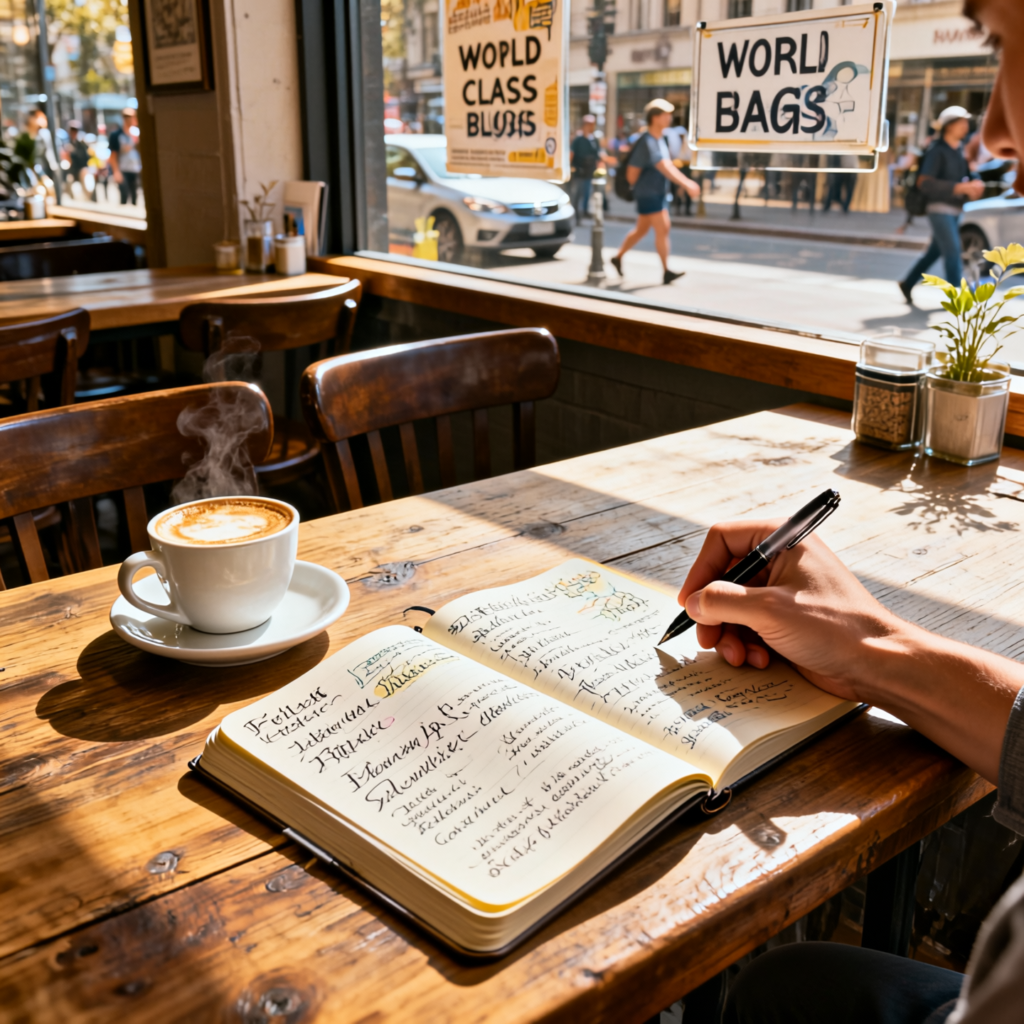
Phase 1: Preparation – Before You Go
- Choose Your Vessel: Select a notebook that inspires you but isn’t too precious to get dirty. Consider paper weight if you’ll use ink or watercolor.
- Create an Anchor Page: On the first page, write your intention. “Why am I taking this trip? What do I hope to notice?” Also, leave space for a basic map of your route.
- Pack a Minimal Kit: A good pen, a glue stick or washi tape for ephemera, a small watercolor set if inclined. Don’t overburden yourself.
Phase 2: In-the-Moment Practice – On the Road
- The Daily Ritual: Carve out 15-20 minutes, ideally at a quiet time like morning coffee or evening wine. Consistency beats duration.
- Prompts Over Pressure: Don’t stare at a blank page. Start with a prompt: “The most surprising thing today was…” or “A conversation that stuck with me…”
- Engage All Senses: Go beyond sight. Describe the taste of the street food, the sound of the market, the feel of the ancient stone.
- Collect Ephemera Relentlessly: Ticket stubs, receipts, local postage stamps, a leaf, a packet of sugar—glue them in. They are priceless memory triggers.
Phase 3: Integration & Curation – After You Return
- The Post-Trip Review: Within a week of returning, read your entire journal. This is a crucial, often overlooked step.
- Synthesize Key Themes: Use a different colored pen to annotate in the margins. What patterns emerge? What changed in you?
- Create a “TL;DR” Summary: Write a one-page summary of the trip’s core lessons and feelings. This becomes your quick-reference touchstone.
- Digitize for Preservation: Take photos or scans of your favorite pages. Store them in a dedicated digital folder or a service like Evernote, linking them to your photo library.
Why It’s Important: The Lasting Returns on a Small Investment
Travel journaling is an act of active learning, not passive recording. It deepens observation, making you a more attentive and respectful traveler as you notice details you would otherwise miss. It serves as a powerful emotional processing tool, helping you navigate the disorientation of culture shock or the overwhelm of profound beauty. By creating a rich, personal archive, it combats the “flatness” of digital photo albums, preserving the context that gives memories meaning. Ultimately, it turns experience into narrative, which is how humans fundamentally understand and grow from their lives. This reflective practice complements the kind of strategic, long-term thinking explored in resources like the guide to global supply chain management on The Daily Explainer, where analysis and documentation are key to optimization.
Sustainability in the Future: Mindful Pages for a Conscious Planet
The future of travel journaling intersects powerfully with sustainable travel values.
- Digital-Physical Hybrids: Using QR code stickers in your journal that link to audio recordings you made on-site or to ethical tourism project websites, reducing paper needs for lengthy info.
- Supporting Local Artisans: Choosing journals made by local bookbinders using sustainable materials, or pens from community cooperatives, turning your tool into a form of economic contribution.
- Eco-Awareness Logs: Dedicating a section of the journal to document environmental observations—wildlife spotted, plastic pollution levels, changes in weather patterns—contributing to citizen science.
- The “Anti-Performance” Journal: A movement against showcasing perfect sketches on social media, and towards valuing the messy, private, and authentic process, which inherently consumes less and means more.
Common Misconceptions
Misconception 1: “I’m not a writer or artist, so I can’t keep a good journal.”
Reality: Travel journaling is not about creating publishable art. It’s about honest documentation. Bullet points, bad sketches, and glued-in receipts make a fantastic journal. It’s for your eyes only.
Misconception 2: “It takes too much time away from the experience.”
Reality: This is the biggest fallacy. Journaling is part of the experience. It is the dedicated time to process and savor, preventing the trip from becoming a blur. It makes you more present, not less.
Misconception 3: “My phone notes app does the same thing.”
Reality: The convenience of an app comes at the cost of depth. The tactile slowness of handwriting engages different neural pathways, aiding memory. A physical book also doesn’t have notifications begging for your attention.
Misconception 4: “I have to write every single day in perfect prose.”
Reality: This is a surefire way to abandon the practice. Some days you’ll write a paragraph, other days a single word and a smudge of dirt from your hike. Both are perfect.
Recent Developments (2025-2026)
- Specialized Travel Journaling Retreats: Tour operators now offer trips centered around guided journaling workshops in inspiring locations, led by writers and artists, combining skill-building with immersion.
- AI-Powered Journaling Assistants: Apps like “JourneyAI” can now transcribe your voice memos from the day, suggest reflective prompts based on your location data (“You visited a temple today. How did the silence affect you?”), and even create a timeline of your trip, which you can then use as a scaffold for your analog entries.
- Blockchain-Verified Memory Keeping: Emerging platforms allow you to timestamp and immutably store a digital copy of your journal entry linked to a GPS coordinate, creating a verifiable “proof of experience” and personal digital legacy.
- Community Integration Platforms: Sites like “Atlas Obscura’s Logbook” allow you to share select, anonymized journal entries (e.g., a sketch of a hidden doorway) with a community of travelers, creating a collaborative, non-social-media map of human experience.
Success Stories & Real-Life Examples
Success Story: The Pandemic Journals & Community Healing
During the travel halt of the early 2020s, initiatives like “The World in Our Windows” encouraged people to journal about their local environments with the attentiveness of a traveler. This practice exploded. People documented changing bird species, neighborhood histories, and the texture of daily lockdown life. In 2025, many of these journals were curated into local museum exhibitions, serving as profound historical records of resilience and rediscovery. This demonstrated journaling’s power not just for personal growth, but for community memory and psychological well-being, a connection explored in depth in the mental health guide on The Daily Explainer.
Real-Life Example: The Business Traveler’s Reframe
A management consultant, burned out from constant flights, began a micro-journaling practice. For each city, she would write one observation and one personal reflection on a single index card. In Frankfurt: “Observation: The apple wine pubs in Sachsenhausen have green curtains. Reflection: My work here feels as established as this ritual, but am I adding real flavor?” This simple act helped her reclaim a sense of agency and curiosity, turning taxing trips into a source of introspection. She later used these cards to identify a desire for more creative projects, a pivot that required building new partnerships, a process akin to the alchemy of alliance detailed on Sherakat Network.
Success Story: The Language Learner’s Visual Journal
A student learning Japanese used a travel journal during a homestay in Kyoto not for long prose, but as a visual dictionary and cultural log. She sketched household items and labeled them, diagrammed the tea ceremony steps, and taped in packets of strange snacks with flavor notes. This active, contextual documentation accelerated her language acquisition far beyond textbook study and created a cherished artifact of her immersion. The entrepreneurial mindset behind creating such a personalized, effective learning system shares DNA with the innovative approaches discussed in the guide to starting an online business in 2026 on Sherakat Network.
Conclusion and Key Takeaways
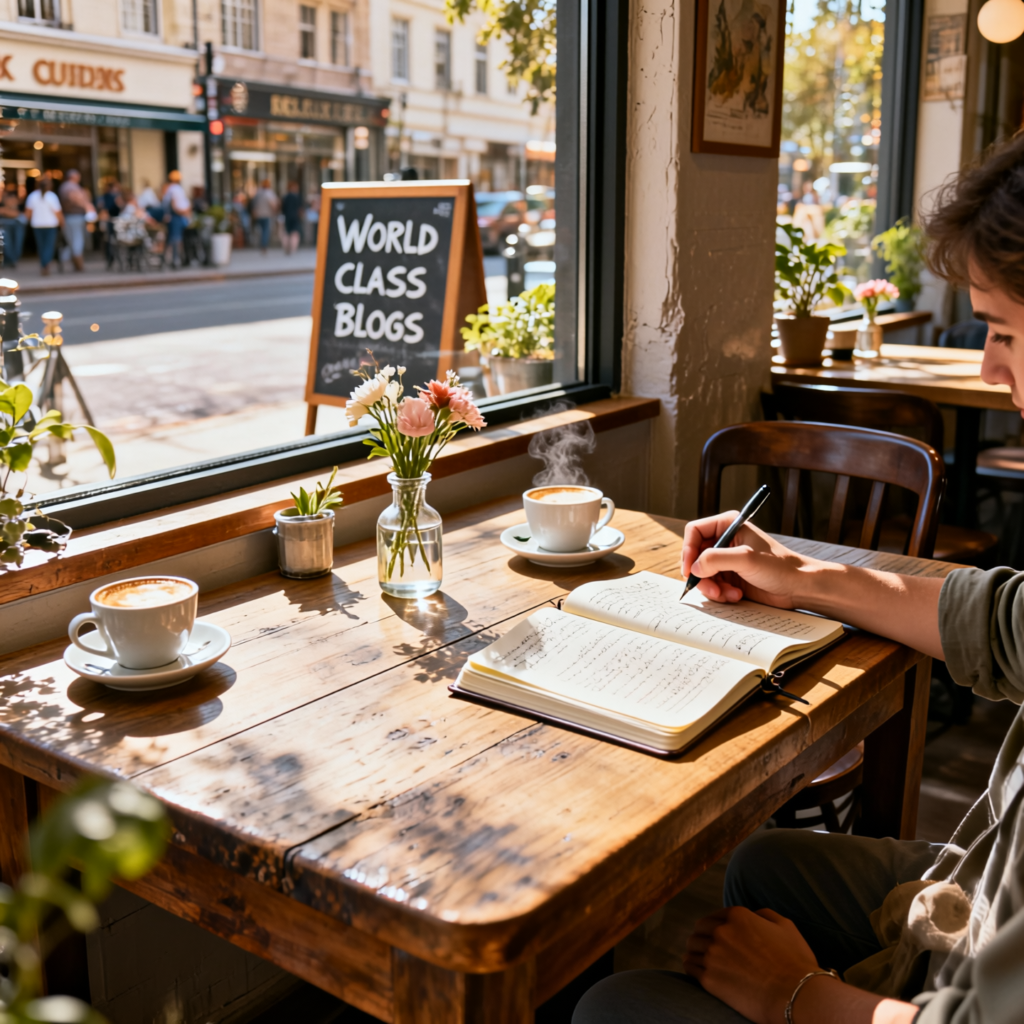
A travel journal is the quiet, steady companion that whispers, “Pay attention. This matters.” In a world of fleeting digital impressions, it offers depth, texture, and a lasting testament to your journey, both outward and inward. It is the single most effective tool to ensure your travels shape you, rather than just pass by you.
Key Takeaways to Begin Your Practice:
- Start Small and Physical: A cheap notebook and a pen are enough. The barrier to entry is gloriously low.
- Prioritize Process Over Product: Embrace messiness. The value is in the act of recording, not the beauty of the result.
- Use Prompts as Scaffolding: When stuck, use simple questions to guide your pen and your perception.
- Collect the Ephemeral: Glue in the physical detritus of your trip; these objects will outlive digital files.
- Make Time for Integration: The post-trip review is non-negotiable. It’s where the dots connect, and growth is realized.
For those interested in other methods of documenting and understanding complex systems, whether personal or technological, the insights in our category on artificial intelligence and machine learning at World Class Blogs may offer intriguing parallels.
FAQs (Frequently Asked Questions)
Q1: I’m overwhelmed at the end of a busy day. Any quick journaling techniques?
Try the “5-4-3-2-1” sensory method: Write down 5 things you saw, 4 you felt, 3 you heard, 2 you smelled, and 1 you tasted. It takes 3 minutes and captures the day’s essence.
Q2: What do I do if I fall behind and miss several days?
Don’t try to retroactively chronicle every detail. Simply start fresh with today’s entry. You can add a headline like “Catching Up After the Mountain Trek” and jot down a few bullet-point memories that still feel vivid. Let the gaps be.
Q3: Are there ethical considerations when journaling about people I meet?
Absolutely. Be discreet. Avoid using full names or identifying details unless you have explicit permission. Write about your experience of the interaction and what you learned, not their private story. Treat their lives with the same respect you’d want.
Q4: How can I protect my journal from damage or loss while traveling?
Use a journal with a durable cover. Keep it in a zip-lock bag in your daypack. Make a habit of not leaving it unattended. For ultimate security, take a photo of each completed page and upload it to cloud storage nightly.
Q5: Can journaling help with post-travel blues or reverse culture shock?
It’s one of the best tools. Writing about the difficulty of re-entry helps process it. Re-reading joyful entries can also rekindle positive feelings and help integrate your “travel self” with your “home self.”
Q6: What are some effective prompts for deeper reflection?
“What did I learn today that I couldn’t have learned from a book?” “What assumption did I have that was challenged?” “If this place had a scent, what would it be and why?” “What did I give today, and what did I receive?”
Q7: How do I handle writing in public spaces where I feel self-conscious?
Start small. A pocket notebook is less conspicuous. Remember, most people are absorbed in their own phones. You are engaging in a radical act of presence that likely intrigues, rather than bothers, them.
Q8: Is it worth journaling on short trips or even weekend getaways?
Yes! Short trips are perfect for focused, deep journaling. The limited timeframe can make your observations even more intense and detailed. It’s excellent practice.
Q9: How can I incorporate my photos into my analog journal?
Print a few key photos as small “Polaroid-style” prints before your trip (portable photo printers are great) or have them printed locally at a kiosk. Glue them in alongside your writing for that day.
Q10: I want to share some insights with friends or family. Any advice?
Rather than handing over the raw journal, use your post-trip synthesis to write a concise letter or email sharing your key takeaways. Or, create a short slideshow using photos alongside scanned excerpts of your journal. This curated approach is more digestible and respectful of your private reflections.
About the Author
Sana Ullah Kakar is a writer and narrative coach who views travel journaling as a foundational practice for intentional living. With a background in anthropology and experiential education, they have led journaling workshops on five continents, from the Saharan dunes to Scottish bothies. Their work is dedicated to helping people capture not just where they’ve been, but who they became along the way. They believe a well-kept journal is the first draft of a life well-lived. They contribute regularly to the diverse conversations found in the blogs at World Class Blogs and invite you to learn more about the platform’s mission on the about page of World Class Blogs.
Free Resources

- The Travel Journalist’s Prompt Pack: A downloadable PDF with 52 reflective prompts—one for each week of the year or for every day of a long trip.
- Ephemera Kit Templates: Printable sheets for organizing ticket stubs, photo corners, and mini-envelopes for sand or seeds, designed to be cut out and glued into your journal.
- “Voice-to-Text” Guide for Integration: A step-by-step tutorial on using your phone’s dictation feature to quickly transcribe handwritten journal pages post-trip for digital safekeeping and easy searching.
- For those looking to build a disciplined, reflective practice in other areas of life or business, such as managing complex operations, the principles here resonate with the systematic approach in the complete guide to global supply chain management. Furthermore, the skills of curation and personal branding developed through journaling can be foundational for entrepreneurs, a journey detailed in the “Start an Online Business 2026” guide on Sherakat Network.
Discussion
Let’s share the journey:
- What’s your biggest hurdle when it comes to keeping a travel journal, and how have you overcome it (or how can we help)?
- Share a journaling tip or a favorite prompt that has unlocked deeper reflection for you.
- Do you prefer pure analog, pure digital, or a hybrid approach? What’s your ideal journaling kit?
Your experiences enrich this practice for everyone. We look forward to reading your stories in the comments below.