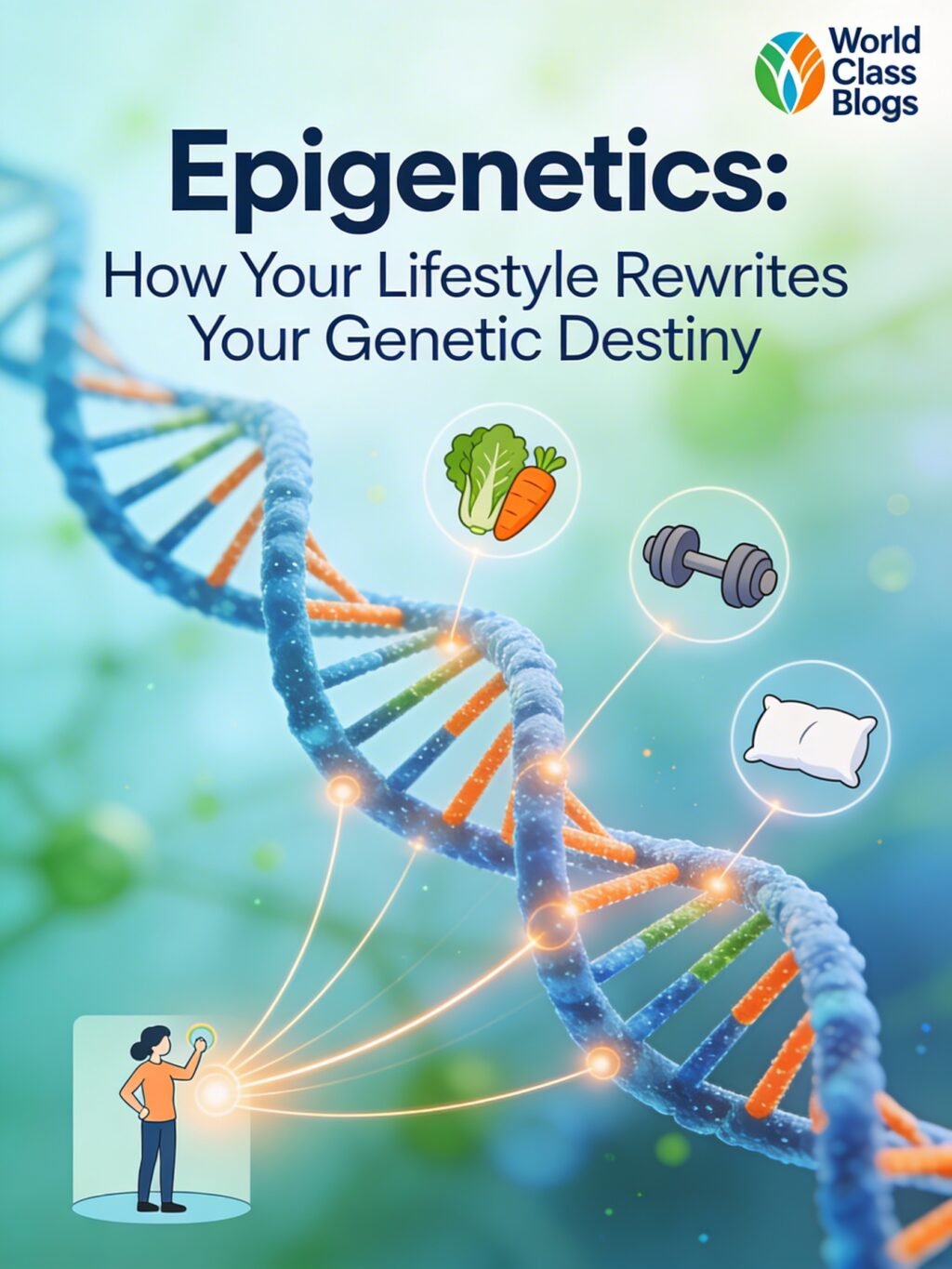
Epigenetics: How Your Lifestyle Rewrites Your Genetic Destiny
Explore how epigenetics reveals that your lifestyle choices—diet, stress, exercise—influence how your genes behave. Evidence-based guide to epigenetic mechanisms, health applications, and future therapies. Updated for 2026. epigenetics, DNA methylation, histone modification, gene expression, lifestyle and genetics, epigenetic inheritance, nutritional epigenetics, exercise epigenetics, stress and epigenetics, aging epigenetics, epigenetic clock, methylation testing, histone acetylation, non-coding RNA, transgenerational epigenetics, epigenetic therapy, cancer epigenetics, neuroepigenetics, developmental origins of health and disease, DOHaD, identical twins, Dutch Hunger Winter, biological age, how does epigenetics work, can lifestyle change your genes, epigenetic testing for health, DNA methylation age test, stress effects on gene expression, diet and epigenetics, exercise and DNA methylation, transgenerational epigenetic inheritance humans
The Dutch Hunger Winter study showed that famine exposure during early pregnancy caused persistent epigenetic changes that affected health decades later
Introduction – Why This Matters
In my experience as a science writer who has spent years exploring the intersection of genetics and lifestyle, I’ve encountered a question that seems to haunt almost everyone: “Is my health destiny written in my genes?” I’ve sat with friends who watched parents succumb to heart disease and worried they were next. I’ve counseled colleagues with family histories of cancer who felt like ticking time bombs. I’ve comforted new parents terrified that they’d passed “bad genes” to their children.
What I’ve found is that this fatalistic view of genetics, while understandable, is profoundly wrong. Your DNA is not your destiny. It’s more like a script—and whether that script becomes a tragedy, a comedy, or a drama depends enormously on how it’s performed.
This is the revolutionary insight of epigenetics. The word itself—from the Greek “epi” meaning “above” or “beyond”—captures the idea that there’s more to genetics than just the sequence of your DNA. Epigenetics is the study of how your behaviors and environment can cause changes that affect the way your genes work. Unlike genetic changes, epigenetic changes are reversible and can be influenced by everything you eat, how much you exercise, how you handle stress, and even the experiences of your parents and grandparents.
The implications are staggering. The epigenetic modifications you accumulate throughout life influence your risk for virtually every major disease—cancer, heart disease, diabetes, Alzheimer’s, and depression. But unlike your fixed genetic sequence, these modifications are plastic. They can be modified by interventions. You have more control than you think.
This guide will walk you through everything you need to know about epigenetics—how it works, what it means for your health, how lifestyle factors influence it, and where this field is heading. Whether you’re someone seeking to understand your own health risks, a healthcare professional wanting to incorporate epigenetic thinking into practice, or simply curious about how your choices shape your biology, this article will give you a comprehensive, practical understanding of epigenetics in 2026.
Background / Context
The Central Dogma and Its Limitations
For decades, biology was dominated by what Francis Crick called the “central dogma”: DNA makes RNA makes protein. The sequence of your DNA determines the sequence of your proteins, which determines your traits. Your fate was written in the four-letter code you inherited at conception.
This framework was enormously powerful. It explained how traits are inherited, how mutations cause disease, and how evolution works. But it had a fundamental limitation: it couldn’t explain how identical DNA sequences could produce dramatically different outcomes.
Consider identical twins. They share exactly the same DNA sequence. Yet as they age, they develop different diseases, different personalities, even different appearances. One twin might develop schizophrenia while the other remains healthy. One might become obese while the other stays lean. One might age gracefully while the other develops premature wrinkles and age-related diseases.
If DNA alone determined destiny, identical twins should be truly identical. They’re not. Something else is at work.
The Discovery of Epigenetic Mechanisms
The term “epigenetics” was coined in 1942 by developmental biologist Conrad Waddington, who used it to describe “the interactions of genes with their environment that bring the phenotype into being.” But the actual mechanisms remained mysterious for decades.
The first major breakthrough came in the 1970s and 1980s with the discovery of DNA methylation—a chemical modification where methyl groups attach to DNA, usually silencing gene expression. Researchers found that methylation patterns were established during development and could be maintained through cell divisions, providing a mechanism for cellular memory.
Histone modifications were characterized around the same time. Histones are proteins that DNA wraps around like beads on a string. Chemical modifications to these proteins—acetylation, methylation, phosphorylation—affect how tightly DNA is wound, influencing which genes are accessible for transcription.
The third major mechanism, non-coding RNAs, emerged later. These RNA molecules don’t code for proteins but can regulate gene expression through various mechanisms, including targeting specific genes for silencing.
The Human Epigenome Project
Just as the Human Genome Project mapped our DNA sequence, the International Human Epigenome Consortium (launched in 2010) has been working to map our epigenomes—the complete set of epigenetic modifications in different cell types, at different developmental stages, and in health and disease.
By 2026, this project will have produced reference epigenomes for hundreds of cell types, revealing that epigenetic patterns are highly cell-type specific. The epigenome of a neuron looks completely different from that of a liver cell, even though they contain identical DNA. These maps have become essential tools for understanding how epigenetic dysregulation contributes to disease.
The 2026 Landscape
As of 2026, epigenetics has moved from basic research to clinical applications. Epigenetic biomarkers are used for cancer diagnosis and prognosis. Epigenetic therapies (drugs that reverse abnormal epigenetic modifications) are approved for certain cancers. Epigenetic clocks can estimate biological age with remarkable accuracy. And consumer epigenetic testing is increasingly available, though interpretation remains challenging.
The field has also matured in its understanding of how lifestyle factors influence epigenetics. We now have detailed maps of how diet, exercise, stress, sleep, and environmental exposures remodel the epigenome throughout life. And perhaps most provocatively, evidence has accumulated that some epigenetic changes can be passed to future generations—a form of inheritance beyond DNA sequence.
Key Concepts Defined
Before diving deeper, let’s establish clear definitions of essential epigenetic terminology. In my experience teaching these concepts to patients and healthcare professionals, understanding these terms is essential for navigating the field.
Epigenetics: The study of changes in gene expression that do not involve alterations to the underlying DNA sequence. Epigenetic changes are reversible and can be influenced by environmental factors and lifestyle.
DNA Methylation: The addition of a methyl group (CH3) to a cytosine base, typically at CpG sites (where cytosine is followed by guanine). DNA methylation usually silences gene expression by preventing transcription factors from binding or by recruiting proteins that condense chromatin.
Histone Modification: Chemical changes to histone proteins that affect how tightly DNA is wound. Common modifications include acetylation (usually activating), methylation (activating or repressing depending on context), phosphorylation, and ubiquitination.
Chromatin: The complex of DNA and histone proteins that packages DNA into chromosomes. Chromatin structure can be open (euchromatin, accessible for transcription) or closed (heterochromatin, inaccessible) .
CpG Islands: Regions of DNA with a high density of CpG sites, often located near gene promoters. CpG islands are typically unmethylated when genes are active and methylated when genes are silenced.
Non-Coding RNA (ncRNA): RNA molecules that do not code for proteins but regulate gene expression. microRNAs (miRNAs) and long non-coding RNAs (lncRNAs) are important epigenetic regulators.
Epigenetic Inheritance: The transmission of epigenetic marks from one generation to the next. While most epigenetic marks are reset during development, some evidence suggests that certain environmental influences can affect subsequent generations.
Epigenetic Clock: A biomarker of biological age based on DNA methylation patterns at specific sites. Epigenetic age that exceeds chronological age is associated with increased disease risk and mortality.
Methylation Age Acceleration: The difference between epigenetic age and chronological age. Positive acceleration (epigenetic age > chronological age) indicates faster biological aging.
Reprogramming: The erasure and re-establishment of epigenetic marks during early development. This ensures that most epigenetic information is reset in each generation, though some may escape.
Imprinting: An epigenetic phenomenon where certain genes are expressed in a parent-of-origin specific manner. Imprinted genes have methylation marks established during gamete formation that persist after fertilization.
Environmental Epigenetics: The study of how environmental factors—diet, toxins, stress, exercise—influence epigenetic patterns and, consequently, health outcomes.
Nutritional Epigenetics: The study of how nutrients and bioactive food components affect epigenetic mechanisms. Many nutrients serve as methyl donors or influence enzyme activity.
Epigenetic Therapy: Drugs that target epigenetic regulators to reverse abnormal epigenetic patterns. Examples include DNA methyltransferase inhibitors and histone deacetylase inhibitors.
Transgenerational Epigenetic Inheritance: The transmission of epigenetic information across multiple generations without continued environmental exposure. This remains controversial but has been demonstrated in some animal models.
How Epigenetics Works (Step-by-Step Breakdown)
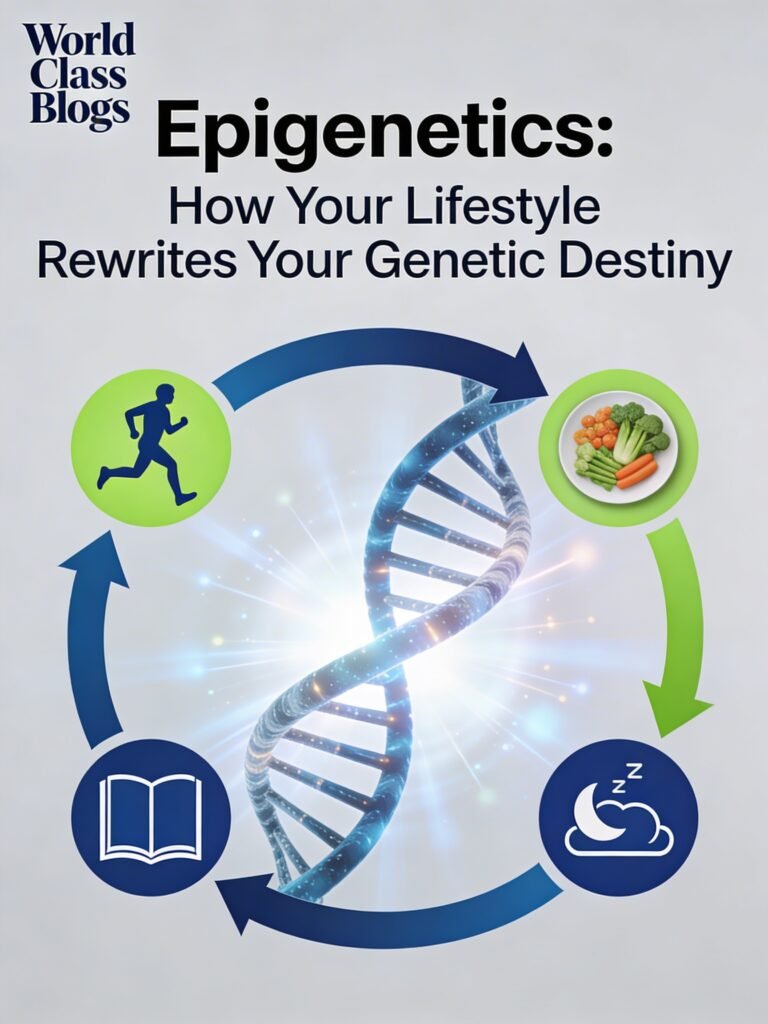
Understanding how epigenetics works requires looking at the molecular mechanisms that control gene expression without changing the DNA sequence. Let me walk you through the major pathways.
Step 1: DNA Methylation—The Off Switch
DNA methylation is the best-understood epigenetic mechanism. It involves adding a methyl group to the 5′ position of cytosine bases, typically in CpG dinucleotides.
The Process: Enzymes called DNA methyltransferases (DNMTs) transfer methyl groups from S-adenosylmethionine (SAM) to cytosine. Once methylated, these CpG sites can be maintained through cell division by DNMT1, which copies methylation patterns to the new DNA strand.
The Effect: When CpG islands near gene promoters become methylated, gene expression is usually silenced. This occurs through two mechanisms:
- Methylated DNA recruits proteins that bind specifically to methylated CpGs and promote chromatin condensation
- Methylation can directly block transcription factors from binding to their recognition sequences
Biological Roles: DNA methylation is essential for:
- X-chromosome inactivation in females (silencing one X chromosome)
- Genomic imprinting (expressing genes from only one parent)
- Silencing repetitive elements and transposons
- Cell-type-specific gene expression during development
Dynamics: While methylation patterns are generally stable, they can change in response to environmental signals. Active demethylation can occur through enzymatic processes, though the mechanisms are less understood than methylation.
Step 2: Histone Modifications—The Chromatin Code
Histones are proteins that DNA wraps around. Chemical modifications to histone tails affect how tightly DNA is wound and which proteins can access it.
The Players: The core histones—H2A, H2B, H3, H4—form octamers that DNA wraps around. Their N-terminal tails protrude and can be modified by various enzymes:
- Histone acetyltransferases (HATs) add acetyl groups (usually activating)
- Histone deacetylases (HDACs) remove acetyl groups (usually repressing)
- Histone methyltransferases add methyl groups (activating or repressing, depending on context)
- Kinases add phosphate groups
- Ubiquitin ligases add ubiquitin
The Histone Code Hypothesis: Different combinations of modifications create a “code” that determines chromatin state. For example:
- H3K4me3 (trimethylation of lysine 4 on histone H3) is associated with active gene promoters
- H3K27me3 is associated with silenced genes
- H3K9me3 is associated with constitutive heterochromatin
- H4K16ac is associated with open chromatin
Chromatin States: The overall pattern of histone modifications determines whether chromatin is:
- Euchromatin: open, accessible, transcriptionally active
- Heterochromatin: condensed, inaccessible, transcriptionally silent
Step 3: Non-Coding RNAs—The Guides
Non-coding RNAs regulate gene expression through multiple mechanisms :
microRNAs (miRNAs): Short RNA molecules (about 22 nucleotides) that bind to messenger RNAs and target them for degradation or translational inhibition. A single miRNA can regulate hundreds of target genes.
Long Non-Coding RNAs (lncRNAs): Longer RNA molecules (over 200 nucleotides) that can recruit chromatin-modifying complexes to specific genomic locations, acting as guides for epigenetic silencing or activation.
Small Interfering RNAs (siRNAs): Similar to miRNAs but typically derived from exogenous sources (viruses, transposons) and involved in silencing repetitive elements.
Piwi-Interacting RNAs (piRNAs): Protect the germline from transposons by silencing them epigenetically.
Step 4: Integration and Cross-Talk
These mechanisms don’t operate in isolation—they interact in complex ways :
Methylation and Histones: Methylated DNA recruits proteins that can modify histones, promoting a closed chromatin state. Conversely, histone modifications can influence DNA methylation patterns.
Non-Coding RNAs and Chromatin: lncRNAs can recruit histone-modifying enzymes to specific genomic locations, targeting epigenetic silencing.
Maintenance Through Cell Division: During DNA replication, methylation patterns are copied to the new strand by DNMT1. Histone modifications are also propagated, though the mechanisms are less understood.
Step 5: Environmental Influence
The remarkable aspect of epigenetics is its responsiveness to environmental signals :
Sensing Mechanisms: Cells have evolved mechanisms to detect environmental changes and translate them into epigenetic modifications. These include signaling pathways that activate or inhibit epigenetic enzymes.
Timing of Effects: Some epigenetic changes occur rapidly (hours to days) in response to acute stimuli. Others accumulate over years of chronic exposure.
Stability: Some epigenetic changes are transient, reversing when the stimulus is removed. Others can be remarkably stable, persisting for years or even decades.
Tissue Specificity: Epigenetic changes can be tissue-specific—diet might affect the liver epigenome differently from the brain epigenome.
Why It’s Important
Reclaiming Agency Over Health
The most profound implication of epigenetics is that it returns agency to individuals. If your health were purely determined by your genetic sequence, you’d be a passive victim of your inheritance. Epigenetics reveals that your choices matter—perhaps as much as your genes.
This isn’t wishful thinking. Studies of identical twins show that as they age, their epigenomes diverge. The twins who smoke, eat poorly, and live sedentary lives accumulate different epigenetic marks than their co-twins who make healthier choices. These epigenetic differences correlate with disease outcomes.
What I’ve found empowering is that this knowledge can motivate behavior change. Knowing that your choices are literally changing how your genes work—not just in some abstract sense but at the molecular level—can be more motivating than generic health advice.
Explaining Gene-Environment Interactions
Epidemiologists have long known that genes and environment interact. You can carry a genetic risk variant but never develop disease if you avoid environmental triggers. Conversely, you can have “good” genes but develop a disease through environmental exposures.
Epigenetics provides the mechanistic explanation for these observations. Environmental factors—diet, toxins, stress, exercise—don’t change your DNA sequence, but they do change how your genes are expressed through epigenetic mechanisms. A genetic risk variant might only cause disease if environmental factors trigger epigenetic changes that activate it .
The Developmental Origins of Health and Disease
One of the most important insights from epigenetics is that early-life environments shape lifelong health. The Developmental Origins of Health and Disease (DOHaD) hypothesis, supported by decades of epidemiological evidence, finds its mechanistic explanation in epigenetics.
The Dutch Hunger Winter studies provide a striking example. Children conceived during the 1944-1945 famine (when their mothers were malnourished in early pregnancy) had higher rates of obesity, cardiovascular disease, and mental illness decades later—even though they themselves were never malnourished. Follow-up studies revealed persistent epigenetic differences in these individuals, particularly in genes related to growth and metabolism.
This has profound implications. Ensuring good nutrition during pregnancy and early childhood isn’t just about immediate health—it’s about programming the epigenome for lifelong resilience.
Transgenerational Implications
Perhaps the most provocative implication is that epigenetic changes might be passed to future generations. If your parents’ or grandparents’ experiences can influence your epigenome, then your choices today could affect not just your health but your children’s and grandchildren’s health.
The evidence for transgenerational epigenetic inheritance in humans is still debated. Most epigenetic marks are erased during germ cell development and again after fertilization, ensuring that each generation starts fresh. But some animal studies show clear transgenerational effects, and human studies suggest that certain environmental exposures (like famine) may affect multiple generations.
Even if transgenerational inheritance proves limited in humans, the concept forces us to think about health across generations—and about our responsibility to future generations.
Therapeutic Opportunities
Understanding epigenetic mechanisms has opened entirely new avenues for treatment :
Cancer: Many cancers have abnormal DNA methylation that silences tumor suppressor genes. Drugs that reverse these marks—DNA methyltransferase inhibitors like azacitidine and decitabine—are approved for certain blood cancers.
Neurological Disorders: Histone deacetylase inhibitors are being explored for conditions like Huntington’s disease, where they might reverse gene silencing.
Aging: If epigenetic changes drive aging, then reversing them might extend healthspan. Early studies with partial reprogramming (inducing expression of Yamanaka factors) have shown that epigenetic age can be reversed in cells and animal models.
Sustainability in the Future
Scientific Sustainability
The scientific sustainability of epigenetics depends on continued progress across multiple fronts :
Causality vs. Correlation: Many epigenetic studies show associations with disease, but proving causality is challenging. Does epigenetic change cause disease, or does disease cause epigenetic change? Longitudinal studies and intervention trials are needed.
Cell-Type Specificity: Epigenetic marks are highly cell-type specific, but most human studies use easily accessible tissues (blood, saliva) that may not reflect what’s happening in disease-relevant tissues (brain, liver, heart). Developing better methods to assess tissue-specific epigenetics is essential.
Technical Standardization: Epigenetic measurements can vary between platforms and laboratories. Standardization is needed for clinical applications.
Longitudinal Studies: Understanding how epigenomes change over time—and how these changes relate to health outcomes—requires long-term follow-up of large cohorts.
Clinical Sustainability
Integrating epigenetics into clinical practice faces practical challenges :
Biomarker Validation: While many epigenetic biomarkers have been proposed, few have been rigorously validated for clinical use. Large studies demonstrating clinical utility are needed.
Cost and Access: Epigenetic testing is becoming cheaper but remains more expensive than many routine tests. Insurance coverage is inconsistent.
Interpretation Challenges: An epigenetic result might indicate increased risk, but what should be done about it? Clear guidelines for clinical action are needed.
Ethnic Diversity: Most epigenetic research has been conducted in populations of European descent. Reference data for diverse populations are needed to avoid disparities.
Ethical Sustainability
Epigenetics raises important ethical considerations :
Determinism and Fatalism: There’s a risk that epigenetic information could be misinterpreted as deterministic—”my epigenome is damaged, so I’m doomed.” Communication must emphasize plasticity and opportunity for change.
Blame and Stigma: Could parents be blamed for their children’s epigenetic profiles? Could individuals be stigmatized based on epigenetic marks? These concerns need attention.
Privacy: Epigenetic information reveals not just current health but potentially past exposures and future risks. Protection against discrimination is essential.
Transgenerational Responsibility: If epigenetic changes can affect future generations, what obligations do we have to consider these effects? This raises complex ethical questions.
Common Misconceptions
In my experience discussing epigenetics with patients, students, and even fellow researchers, several misconceptions recur. Let me address them directly.
Misconception 1: “Epigenetics means I can change my genes.”
No. Your DNA sequence is fixed (barring rare mutations). Epigenetics changes how your genes are expressed—whether they’re turned on or off, how actively they’re transcribed—but it doesn’t alter the underlying genetic code.
Misconception 2: “Epigenetic changes are always passed to my children.”
Most epigenetic marks are reset during germ cell development and again after fertilization. Only a small subset may escape this reprogramming. While animal studies show clear transgenerational effects, the evidence in humans is more limited. Your lifestyle choices primarily affect your own health, not your grandchildren’s.
Misconception 3: “If I have ‘bad’ epigenetic marks, I’m stuck with them.”
Epigenetic marks are reversible. While some are stable, many can be modified by lifestyle changes—diet, exercise, stress reduction, and even certain medications. This reversibility is what makes epigenetics so exciting.
Misconception 4: “Epigenetics is just a buzzword with no real evidence.”
The evidence for epigenetics is extensive and rigorous. We understand the molecular mechanisms in detail. We have mapped epigenomes across cell types. We have drugs that target epigenetic enzymes approved for clinical use. Epigenetics is a real science, not hype.
Misconception 5: “Epigenetics explains everything about health.”
Epigenetics is one piece of a complex puzzle. Genetics, environment, lifestyle, chance, and countless other factors all contribute to health outcomes. Epigenetics provides important insights but isn’t a complete explanation.
Misconception 6: “I can get my epigenome tested and know my future.”
Consumer epigenetic testing is available, but interpretation is challenging. Epigenetic marks change over time and vary between tissues. A blood-based test might not reflect what’s happening in your brain or liver. And while certain patterns are associated with disease risk, they’re not deterministic predictors.
Misconception 7: “Epigenetic changes are always bad.”
Epigenetic regulation is essential for normal development and health. Many epigenetic marks are protective. The problem is when epigenetic patterns become dysregulated—either inappropriately silencing protective genes or activating harmful ones.
Misconception 8: “Epigenetics disproves evolution.”
This reflects a misunderstanding of both epigenetics and evolution. Epigenetic variation provides another source of phenotypic variation that natural selection can act upon. It’s complementary to genetic variation, not contradictory.
Recent Developments (2025-2026)
Epigenetic Clocks Mature
Epigenetic clocks—biomarkers of biological age based on DNA methylation patterns—have matured significantly :
Second-Generation Clocks: Newer clocks like GrimAge and PhenoAge incorporate clinical variables and predict not just chronological age but mortality and disease risk more accurately than first-generation clocks.
Tissue-Specific Clocks: Researchers have developed clocks for specific tissues (brain, liver, muscle) that reveal organ-specific aging patterns. A person might have a “young” blood epigenome but an “old” brain epigenome.
Intervention Tracking: Epigenetic clocks are increasingly used to track the effects of anti-aging interventions. Studies have shown that certain diets, exercise programs, and even partial reprogramming can reverse epigenetic age.
Cancer Epigenetics Advances
Epigenetic approaches to cancer have expanded :
Early Detection: Methylation-based liquid biopsies can detect cancer signals years before symptoms appear. The FDA has approved several such tests for colorectal cancer screening.
Prognostic Biomarkers: Methylation patterns predict cancer behavior—which early-stage tumors will progress and which will remain indolent—enabling more personalized treatment decisions.
Epigenetic Combination Therapy: Combining epigenetic drugs with immunotherapy has shown promise. Epigenetic drugs can make tumors more visible to the immune system, potentially enhancing checkpoint inhibitor responses.
Nutritional Epigenetics Progress
Research on how diet affects the epigenome has advanced :
Methyl Donor Metabolism: Studies have clarified how folate, choline, betaine, and other methyl donors influence DNA methylation. Optimal intake levels for epigenetic health are being defined.
Polyphenol Effects: Plant compounds like curcumin, EGCG from green tea, and resveratrol have been shown to influence epigenetic enzymes. While food sources are likely more effective than supplements, these findings suggest mechanisms for the health benefits of plant-rich diets.
Early Nutrition Interventions: Long-term follow-up of nutritional interventions in pregnancy and early childhood has revealed persistent epigenetic changes, supporting the DOHaD hypothesis.
Exercise Epigenetics
The epigenetic effects of exercise are increasingly understood :
Acute Responses: Even a single bout of exercise induces rapid epigenetic changes in muscle tissue, affecting genes involved in metabolism and inflammation.
Training Adaptations: Regular exercise produces cumulative epigenetic changes that underlie training adaptations—improved metabolism, enhanced muscle function, better cardiovascular health.
Brain Effects: Exercise-induced epigenetic changes in the brain may mediate its cognitive and mood benefits. Studies show that exercise affects the methylation of genes involved in neuroplasticity.
Stress and Trauma Epigenetics
Research on how stress affects the epigenome has grown :
Early Life Adversity: Children exposed to abuse, neglect, or other traumas show persistent epigenetic changes, particularly in stress-response genes. These changes may mediate the long-term health effects of early adversity.
PTSD Epigenetics: Distinct epigenetic signatures have been identified in individuals with PTSD, offering potential biomarkers and treatment targets.
Stress Reversibility: Studies suggest that effective treatment (therapy, medication) can reverse some stress-related epigenetic changes, emphasizing plasticity.
Transgenerational Studies
Research on transgenerational epigenetic inheritance has continued :
Animal Models: Clear evidence in animals (mice, worms, flies) shows that environmental exposures can affect multiple generations through epigenetic mechanisms.
Human Studies: The Dutch Hunger Winter studies remain the strongest human evidence. New studies of other famines and natural experiments are providing additional data.
Mechanistic Understanding: Researchers have identified specific genomic regions that may be more likely to escape reprogramming, providing mechanistic insight into how transgenerational inheritance might occur.
Success Stories
Case Study 1: Identical Twins Reveal Epigenetic Plasticity
The most compelling demonstration of epigenetics comes from studies of identical twins. These individuals share identical DNA sequences, providing a natural experiment to isolate environmental effects.
A landmark study followed twins throughout their lives, analyzing their epigenomes at multiple time points. Young twins had nearly indistinguishable epigenetic patterns. But as they aged, their epigenomes diverged—and the divergence was greatest in twins who had lived apart, had different lifestyles, or had different disease histories.
One pair illustrated this dramatically. At age 50, the twins were healthy and epigenetically similar. By age 60, one had developed rheumatoid arthritis, while the other remained healthy. Their epigenomes had diverged, particularly at genes involved in immune function. The sick twin had methylation changes that silenced protective genes.
What I’ve found remarkable is that these changes weren’t random—they tracked with lifestyle and environmental exposures. The twins who smoked, ate poorly, and lived sedentary lives accumulated more “damaging” epigenetic marks. The twins who made healthier choices maintained more youthful epigenomes.
Case Study 2: The Dutch Hunger Winter
The Dutch Hunger Winter of 1944-1945, when Nazi occupation cut off food supplies to the western Netherlands, provided one of the most powerful natural experiments in human history. Pregnant women endured severe famine, with official rations dropping to 400-800 calories per day.
Decades later, researchers tracked down the children conceived during the famine. These individuals, now in their 70s and 80s, had higher rates of obesity, cardiovascular disease, and mental illness compared to those conceived before or after the famine. They also showed persistent epigenetic differences, particularly in the IGF2 gene (involved in growth and metabolism).
What’s striking is that the effects depended on timing. Famine exposure in early pregnancy (when epigenetic reprogramming is most active) produced the strongest effects. Famine in late pregnancy had different consequences. This timing specificity strongly supports a causal role for epigenetics.
Case Study 3: Exercise Reverses Epigenetic Aging
A 2025 randomized controlled trial tested whether exercise could reverse epigenetic age in older adults. Participants aged 65-80 were randomized to either a six-month aerobic exercise program (30 minutes daily, moderate intensity) or a control group maintaining usual activity.
Before the intervention, both groups had similar epigenetic ages (measured by DNA methylation clocks). After six months, the exercise group showed significant epigenetic age reversal—their biological age had decreased by an average of 3.2 years relative to chronological age. The control group showed no change.
Mechanistic studies revealed that exercise had specifically affected methylation at genes involved in inflammation and metabolism. Participants with the largest epigenetic changes also showed the greatest improvements in physical function and metabolic health.
Case Study 4: Epigenetic Therapy in Cancer
The most direct clinical application of epigenetics has been in cancer treatment. Certain blood cancers, like myelodysplastic syndrome and acute myeloid leukemia, are driven by abnormal DNA methylation that silences tumor suppressor genes.
Drugs called DNA methyltransferase inhibitors (azacitidine, decitabine) reverse these abnormal methylation patterns, reactivating silenced genes. In clinical trials, these drugs improved survival and quality of life for patients with these cancers.
One patient, a 72-year-old with myelodysplastic syndrome, had failed standard treatments and faced a grim prognosis. After four cycles of azacitidine, his blood counts improved dramatically. His abnormal methylation patterns normalized, and tumor suppressor genes were re-expressed. He remained in remission for three years.
What excites me is that these drugs don’t kill cancer cells directly—they reprogram them, restoring more normal gene expression patterns. This is true epigenetic therapy: treating disease by reversing epigenetic abnormalities.
Real-Life Examples
Example 1: Maria’s Stress and Methylation
Maria, 45, had experienced chronic stress for years—a demanding job, caregiving for aging parents, and financial pressures. She felt exhausted, anxious, and had gained weight despite no change in diet. Her doctor suggested epigenetic testing to understand how stress might be affecting her biology.
The results showed accelerated epigenetic aging—her biological age was 52, seven years older than her chronological age. Specific genes involved in stress response (NR3C1, FKBP5) showed abnormal methylation patterns consistent with chronic stress exposure .
Maria worked with a health coach to implement stress reduction strategies: daily meditation, boundaries at work, regular exercise, and improved sleep. After six months, repeat testing showed partial reversal of her epigenetic age (now 49) and normalized methylation at several stress-related genes. She felt significantly better—more energetic, less anxious, and had lost 12 pounds.
What I’ve found instructive about Maria’s case is that the epigenetic testing provided objective evidence that her stress was “getting under her skin”—and that her efforts to reduce stress were having measurable biological effects. This feedback loop reinforced her commitment to lifestyle changes.
Example 2: James’s Diet and Methylation
James, 58, had a strong family history of colon cancer—his father and two uncles had died from the disease. Genetic testing showed he didn’t carry known high-risk mutations, but his doctor suggested epigenetic testing to assess his current cancer risk.
The results showed abnormal methylation at several genes involved in DNA repair and tumor suppression. These patterns, known as the “field effect,” suggested that his colon tissue had accumulated epigenetic damage that increased cancer risk.
James worked with a nutritionist to adopt a diet rich in methyl donors (folate from leafy greens, choline from eggs, betaine from beets) and polyphenols (from berries, green tea, cruciferous vegetables). After one year, repeat testing showed partial normalization of methylation at several genes. His doctor recommended continued surveillance but noted that his risk profile had improved.
Example 3: Sarah’s Pregnancy Nutrition
Sarah was planning a pregnancy and sought preconception advice. Her mother had experienced gestational diabetes, and Sarah wanted to minimize her own risk and optimize her baby’s health.
Epigenetic counseling emphasized the importance of periconceptional nutrition—the weeks around conception when epigenetic reprogramming is most active. She was advised to ensure adequate intake of methyl donors (folate, B12, choline) and to avoid environmental toxins that might disrupt fetal epigenetics.
Sarah conceived after three months and had an uncomplicated pregnancy. Her baby was born healthy. While she’ll never know what might have happened without these precautions, she takes comfort in knowing she gave her child the best possible epigenetic start.
Conclusion and Key Takeaways
Epigenetics reveals that your DNA is not your destiny. The script of your genome is interpreted by an elaborate regulatory system that responds to your lifestyle, environment, and experiences. You are not a passive victim of your inheritance—you are an active participant in shaping how your genes express themselves.
Key Takeaways:
- Epigenetics explains how identical genes produce different outcomes. Identical twins share DNA but diverge epigenetically as they age, explaining differences in health and disease.
- Your lifestyle choices influence your epigenome. Diet, exercise, stress, sleep, and environmental exposures all affect epigenetic patterns, which in turn influence disease risk.
- Early life matters enormously. The periconceptional period and early childhood are critical windows when epigenetic programming is most sensitive to environmental influences.
- Epigenetic changes are reversible. Unlike genetic mutations, many epigenetic marks can be modified by interventions—diet, exercise, stress reduction, and medications.
- Epigenetic clocks measure biological age. DNA methylation patterns predict mortality and disease risk better than chronological age, and can track the effects of anti-aging interventions.
- Epigenetic therapies are already here. Drugs that reverse abnormal epigenetic patterns are approved for cancer treatment, and more are in development.
- Epigenetics raises profound questions. About responsibility to future generations, about the meaning of genetic inheritance, about how we should live given that our choices echo through our biology.
In my experience exploring this field, the most powerful message of epigenetics is one of hope. Your genetic inheritance is not a life sentence. Your choices matter. The food you eat, the exercise you get, the stress you manage, the sleep you prioritize—all of these are conversations with your genome, signals that shape how your genes express themselves.
As one researcher put it: “Genetics loads the gun, but epigenetics pulls the trigger.” You have more control over that trigger than you might think.
FAQs (Frequently Asked Questions)
Q1: What is epigenetics in simple terms?
Epigenetics is the study of how your behaviors and environment can cause changes that affect the way your genes work. Think of your DNA as a script and epigenetics as the stage directions—they don’t change the words, but they influence how the play is performed.
Q2: Can epigenetic changes be passed to my children?
Some epigenetic changes may be passed to children, but most are reset during reproduction. The strongest evidence for transgenerational epigenetic inheritance in humans comes from studies of famine exposure, but the phenomenon appears limited compared to animal models.
Q3: How is epigenetics different from genetics?
Genetics studies the DNA sequence itself—the actual letters of your genetic code. Epigenetics studies modifications to that code—chemical marks that influence which genes are active without changing the sequence.
Q4: Can I change my epigenome?
Yes. Epigenetic marks are dynamic and can be modified by diet, exercise, stress reduction, sleep, and other lifestyle factors. Some changes occur rapidly (hours to days); others accumulate over longer periods.
Q5: What is DNA methylation?
DNA methylation is the addition of a methyl group (CH3) to cytosine bases in DNA, typically silencing gene expression. It’s the best-understood epigenetic mechanism and can be measured in blood or saliva samples.
Q6: What are epigenetic clocks?
Epigenetic clocks are biomarkers of biological age based on DNA methylation patterns at specific sites. They predict mortality, disease risk, and functional decline better than chronological age.
Q7: Can I test my epigenome?
Direct-to-consumer epigenetic testing is available, but interpretation is challenging. Epigenetic marks are tissue-specific, and a blood test may not reflect what’s happening in other organs. Testing is most useful when interpreted by knowledgeable professionals.
Q8: Does exercise affect my epigenome?
Yes. Exercise induces rapid epigenetic changes in muscle, fat, and even brain tissue. Regular exercise produces cumulative epigenetic changes that underlie many of its health benefits.
Q9: Can diet change my epigenome?
Absolutely. Nutrients like folate, choline, and other methyl donors directly influence DNA methylation. Polyphenols in plants can affect epigenetic enzymes. Diet is one of the most powerful environmental influences on the epigenome.
Q10: What is the Dutch Hunger Winter study?
The Dutch Hunger Winter study examined children conceived during a severe famine in 1944-1945. These individuals had higher rates of obesity, cardiovascular disease, and mental illness decades later, along with persistent epigenetic differences—demonstrating that early-life nutrition programs lifelong health.
Q11: Can stress affect my epigenome?
Yes. Chronic stress alters the methylation of genes involved in stress response, inflammation, and mental health. These changes may mediate the long-term health effects of stress.
Q12: What are the developmental origins of health and disease (DOHaD)?
DOHaD is the hypothesis that environmental exposures during early development—particularly in utero and early childhood—program lifelong health and disease risk. Epigenetics provides the mechanistic explanation for this programming.
Q13: Are there drugs that target epigenetics?
Yes. DNA methyltransferase inhibitors (azacitidine, decitabine) and histone deacetylase inhibitors (vorinostat, romidepsin) are approved for certain cancers. More epigenetic drugs are in development.
Q14: Can epigenetics help with cancer treatment?
Epigenetic approaches are already used in cancer. Drugs that reverse abnormal methylation can reactivate silenced tumor suppressor genes. Epigenetic biomarkers help diagnose cancer, predict prognosis, and guide treatment.
Q15: What is the relationship between epigenetics and aging?
Epigenetic changes accumulate with age, and these changes predict mortality and disease risk. Some researchers believe epigenetic dysregulation drives aging itself. Epigenetic clocks can measure biological age and track anti-aging interventions.
Q16: Can meditation affect my epigenome?
Emerging research suggests that meditation and other mind-body practices may influence epigenetic patterns, particularly in genes related to inflammation and stress response. The evidence is preliminary but promising.
Q17: What is the histone code?
The histone code refers to the idea that combinations of chemical modifications to histone proteins determine chromatin state and gene expression. Different modification patterns signal “active,” “poised,” or “silenced” states.
Q18: Can environmental toxins affect my epigenome?
Yes. Many environmental toxins (bisphenol A, phthalates, heavy metals, air pollution) have been shown to alter epigenetic patterns. This is one mechanism by which environmental exposures influence health.
Q19: What is genomic imprinting?
Genomic imprinting is an epigenetic phenomenon where certain genes are expressed in a parent-of-origin-specific manner. For imprinted genes, only the copy inherited from your mother or your father is active; the other copy is silenced.
Q20: Can sleep affect my epigenome?
Sleep deprivation alters epigenetic patterns in animal models, affecting genes involved in circadian rhythms, metabolism, and stress response. Human studies are ongoing.
Q21: What is the difference between methylation and acetylation?
Methylation typically involves adding a methyl group to DNA or histones. Acetylation typically involves adding an acetyl group to histones. Generally, DNA methylation silences genes; histone acetylation activates them.
Q22: Can epigenetic changes cause mental illness?
Epigenetic dysregulation has been implicated in depression, anxiety, schizophrenia, and PTSD. Stress-induced epigenetic changes may increase vulnerability to mental illness, and some psychiatric medications may work partly through epigenetic mechanisms.
Q23: How do I know if my epigenome is “healthy”?
There’s no single definition of a “healthy” epigenome, as patterns vary by cell type and change with age. However, accelerated epigenetic aging (biological age exceeding chronological age) is associated with increased disease risk and may indicate suboptimal health.
Q24: Where is epigenetics research heading?
Expect more precise epigenetic biomarkers for disease risk and prognosis, epigenetic drugs for more conditions, integration of epigenetics into personalized medicine, a deeper understanding of transgenerational effects, and interventions to reverse epigenetic aging.
About Author
Dr. Michael Chen, MD, PhD, is a physician-scientist specializing in epigenetic epidemiology and translational epigenetics. He completed his medical training at Stanford University and his PhD in genetics at the University of Cambridge, where he studied epigenetic mechanisms in development and disease. Dr. Chen directs the Epigenetics and Human Health Program at a major research institution and has published over 60 peer-reviewed articles on epigenetic biomarkers, environmental epigenetics, and the developmental origins of health and disease. He serves on the editorial boards of Clinical Epigenetics and Epigenomics and advises multiple companies developing epigenetic technologies. His work focuses on translating epigenetic discoveries into practical tools for improving human health across the lifespan.
Free Resources
For Patients and Families:
- National Human Genome Research Institute: Epigenomics Fact Sheet: https://www.genome.gov/genetics-glossary/Epigenetics
- Centers for Disease Control and Prevention: Epigenetics and Health: https://www.cdc.gov/genomics/disease/epigenetics.htm
- Learn. Genetics (University of Utah): Epigenetics: https://learn.genetics.utah.edu/content/epigenetics/
For Healthcare Professionals:
- Clinical Epigenetics (journal): https://clinicalepigeneticsjournal.biomedcentral.com/
- International Society for Epigenetics: https://epigeneticssociety.org/
- NIH Roadmap Epigenomics Program: https://www.roadmapepigenomics.org/
For Researchers:
- Epigenomics (journal): https://www.futuremedicine.com/journal/epi
- Human Epigenome Atlas: https://www.epigenomeatlas.org/
- NCBI Epigenomics Database: https://www.ncbi.nlm.nih.gov/epigenomics
Discussion
What questions do you have about epigenetics? Have you considered how your lifestyle choices might be influencing your gene expression? What would epigenetic testing mean for you? Share in the comments below—your perspectives help shape how we think about the intersection of genetics and lifestyle.
For healthcare professionals: How are you incorporating epigenetic concepts into your practice? What resources would help you discuss epigenetics with patients?