Blue Carbon Ecosystems: The Ultimate Guide to Nature’s Marine Climate Solution
Discover what blue carbon is, how mangroves, seagrasses & salt marshes fight climate change, their critical importance, & 2026 conservation strategies. A complete guide for beginners & professionals. blue carbon, climate change, carbon sequestration, mangroves, seagrass, salt marsh, coastal ecosystems, climate mitigation, carbon sink, environmental conservation, sustainability, ocean science, climate science, biodiversity, carbon credits, ecosystem restoration, how do mangroves store carbon, what is the role of seagrass in climate change, blue carbon credits for beginners, importance of salt marshes for coastal protection, difference between blue carbon and green carbon.
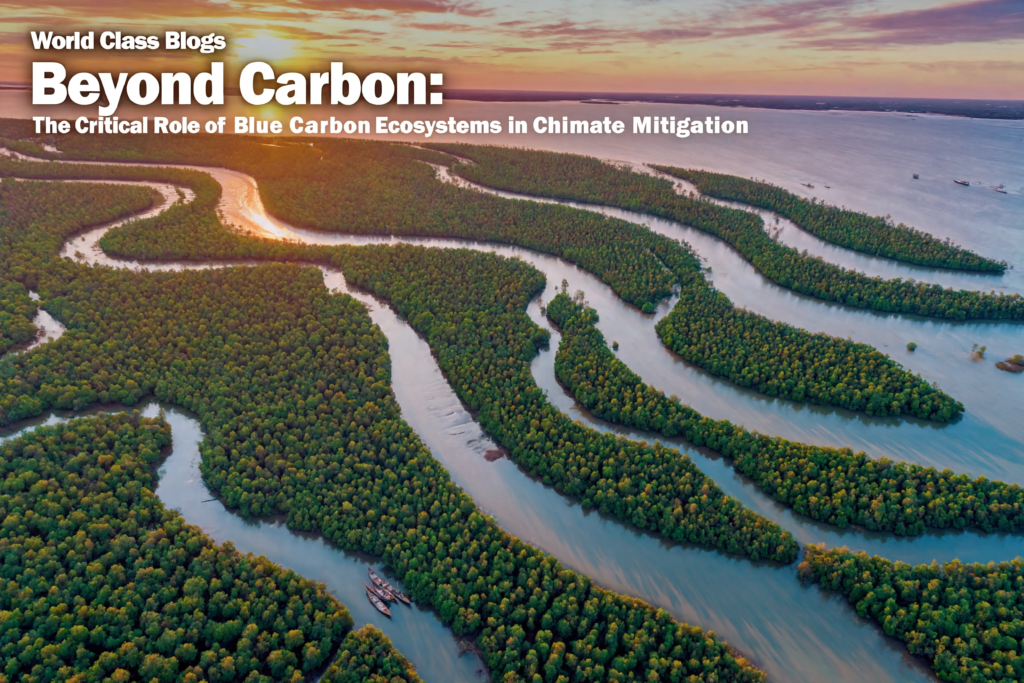
Global distribution of carbon stored in mangrove forests. Data sourced from Global Mangrove Watch and recent scientific studies.
Introduction – Why This Matters
When we talk about natural solutions to climate change, our minds often jump to vast rainforests like the Amazon. But there’s another, equally powerful hero in this story, one that works silently beneath the waves and along our coastlines. These are blue carbon ecosystems—marine powerhouses that sequester carbon at rates up to four times greater than terrestrial forests per unit area.
In my experience, both as a writer and someone who has spent years visiting coastal communities, the disconnect between land-based climate action and marine conservation is striking. We champion tree planting while simultaneously destroying mangroves for aquaculture. What I’ve found is that understanding blue carbon bridges this gap, revealing a tangible, efficient, and multifaceted climate tool that also protects coastlines and supports fisheries.
This isn’t just an ecological niche topic. As of 2025, the High-Level Panel for a Sustainable Ocean Economy reports that scaling up investment in blue carbon solutions could deliver up to 20% of the emissions reductions needed to stay within the 1.5°C Paris Agreement target. This guide will demystify blue carbon, explain its vital mechanics, explore its global importance, and highlight the innovative projects shaping our sustainable future.
Background / Context
The term “blue carbon” was officially coined in a 2009 UNEP report, but the science behind it has been growing for decades. It refers specifically to the carbon captured and stored by coastal and marine ecosystems. For millennia, these ecosystems have been pulling carbon dioxide from the atmosphere, locking it away in plant biomass and, more importantly, in the deep, water-logged soils beneath them.
Historically, these areas were viewed as wastelands—bug-infested swamps or murky seagrass beds, often cleared for development, agriculture, or shrimp farms. Since 1940, we have lost approximately 50% of the world’s mangroves, 35% of seagrass meadows, and 30% of salt marshes, according to the International Union for Conservation of Nature (IUCN). This destruction is a double blow: it not only stops ongoing carbon sequestration but also releases ancient, stored carbon back into the atmosphere, turning these carbon sinks into carbon sources.
The tide is turning. The 2021-2030 UN Decade on Ecosystem Restoration and the UN Decade of Ocean Science have placed blue carbon squarely on the global policy agenda. Major frameworks like the Paris Agreement now recognize the role of oceans and coastal ecosystems in Nationally Determined Contributions (NDCs).
Key Concepts Defined
- Blue Carbon: The carbon dioxide (CO₂) captured from the atmosphere by ocean and coastal ecosystems and stored in their biomass (leaves, roots, stems) and sediments.
- Carbon Sequestration: The long-term capture and storage of atmospheric carbon dioxide to mitigate climate change.
- Carbon Sink: A natural or artificial reservoir that accumulates and stores carbon-containing chemical compounds for an indefinite period (e.g., a forest, soil, ocean, or blue carbon ecosystem).
- Carbon Source: A process, activity, or mechanism that releases more carbon into the atmosphere than it absorbs (e.g., burning fossil fuels, degrading a mangrove forest).
- Biomass Carbon: The carbon stored in the living plants themselves (above and below ground).
- Sediment Carbon: The carbon stored in the soils and sediments is often built up over centuries or millennia. This is the majority (70-90%) of the carbon in blue carbon ecosystems.
- Coastal Wetlands: The umbrella term for mangroves, tidal salt marshes, and seagrass meadows.
- Carbon Accounting: The process of measuring and tracking the amount of carbon sequestered or emitted by an ecosystem, project, or nation.
How It Works (Step-by-Step Breakdown)
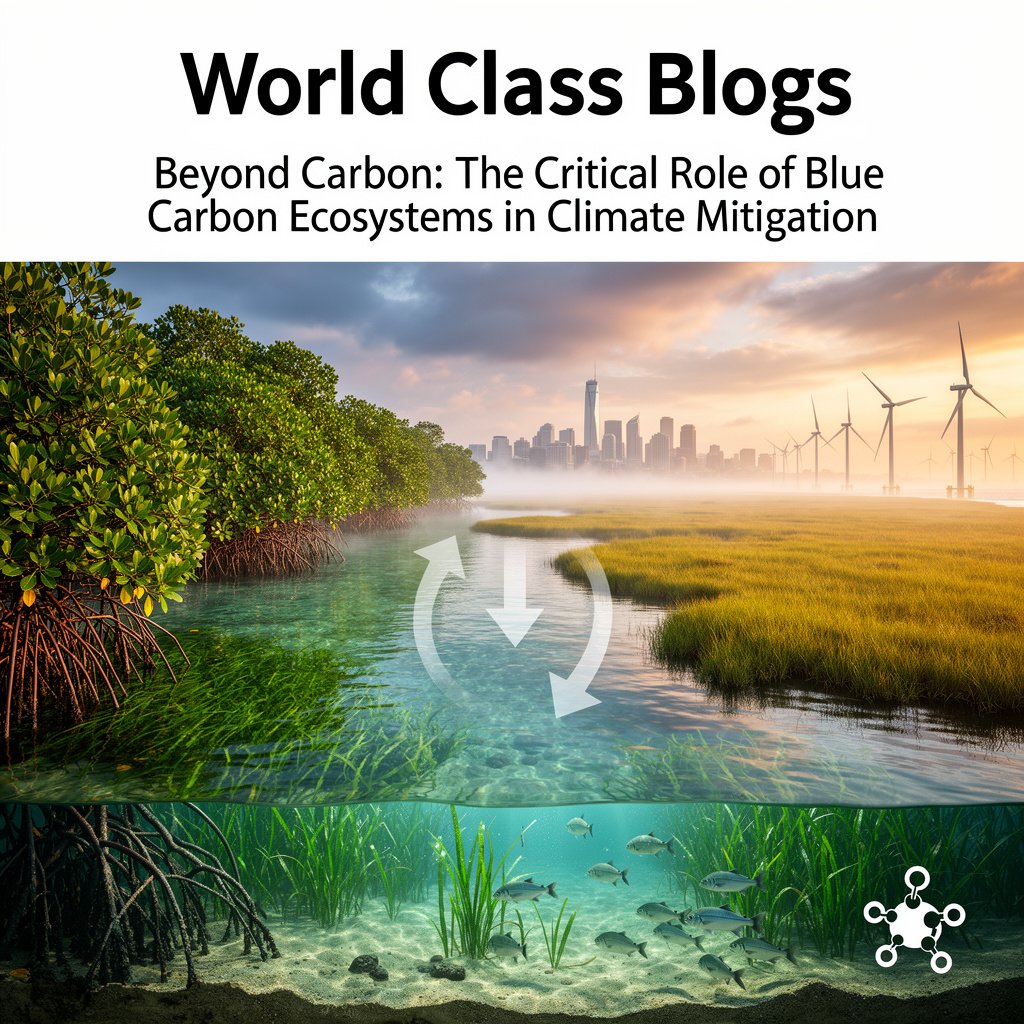
The superpower of blue carbon ecosystems lies in their unique, waterlogged environment. Here’s how they capture and lock away carbon so effectively:
- Capture (Photosynthesis): Just like land plants, mangroves, seagrasses, and salt marsh grasses absorb CO₂ from the atmosphere (or dissolved in water) and convert it into organic matter (sugars, leaves, roots) through photosynthesis.
- Transfer to Sediments: A significant portion of this organic matter, especially from roots and fallen leaves, becomes trapped in the dense, tangled root systems of the plants.
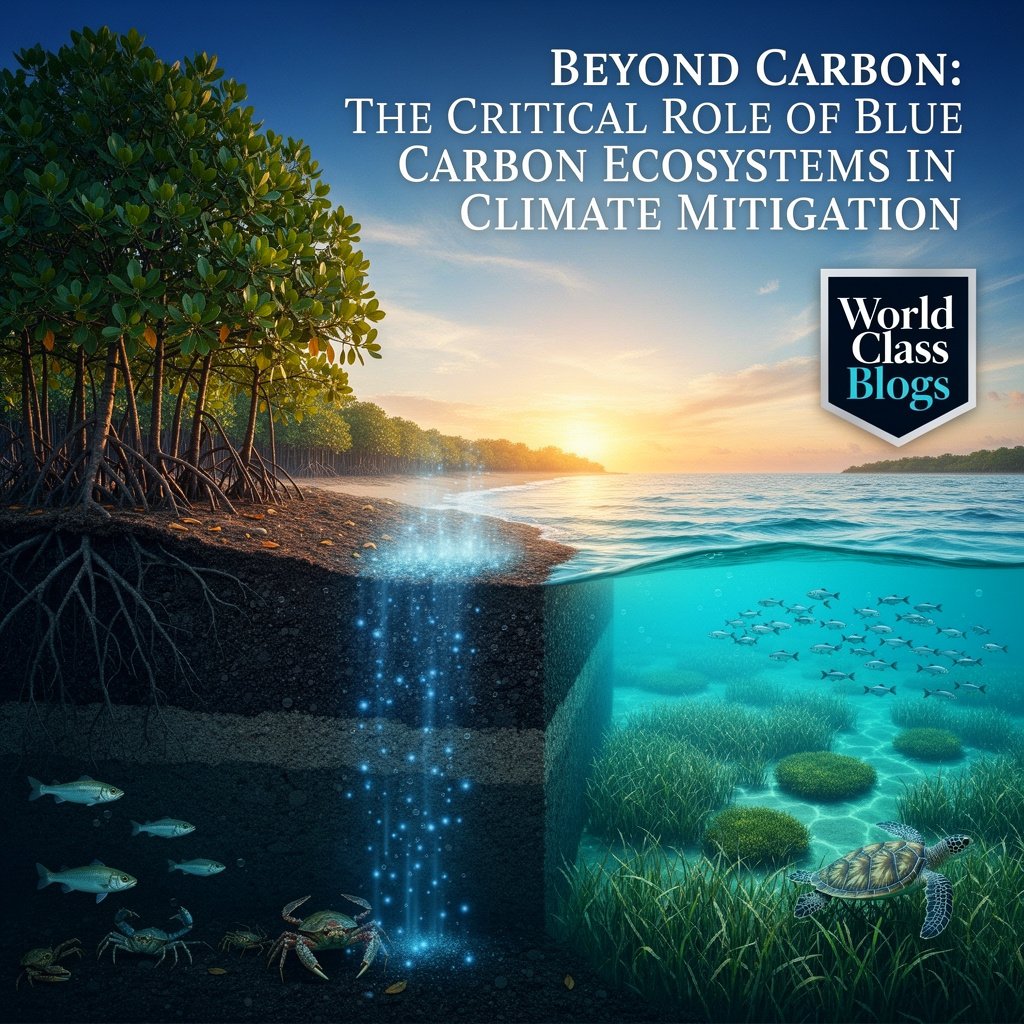
- Anaerobic Storage (The Key Difference): This is the critical step. In waterlogged, oxygen-poor (anaerobic) soils, decomposition by microbes happens incredibly slowly. On land, dead plant matter decomposes relatively quickly, releasing CO₂ back into the air. Underwater, this process can take millennia.
- Accumulation: Over time—centuries—layer upon layer of carbon-rich organic matter builds up, creating deep peat-like soils. Some seagrass meadows have sediment layers over three meters deep, storing carbon deposited over thousands of years.
- Long-Term Lock-Up: If left undisturbed, this carbon remains locked away, effectively removed from the atmospheric carbon cycle. The constant input of new plant material and the slow decay create a stable, long-term carbon sink.
Comparison Table: Blue Carbon vs. Terrestrial Forests
| Feature | Tropical Rainforest (Terrestrial) | Mangrove Forest (Blue Carbon) |
|---|---|---|
| Primary Carbon Pool | Above-ground biomass (trees) | Below-ground sediments (soil) |
| Carbon Density | High in biomass | Extremely High in soil (up to 5x more per hectare) |
| Sequestration Rate | Moderate to High | Very High (per unit area) |
| Storage Security | Coastal protection, fisheries support, water filtration, and biodiversity | More secure if undisturbed; anaerobic soils protect carbon |
| Co-Benefits | Biodiversity, water cycling, air quality | Coastal protection, fisheries support, water filtration, biodiversity |
| Major Threat | Deforestation | Coastal development, aquaculture, sea-level rise |
Why It’s Important
The importance of blue carbon extends far beyond a single metric. It’s a multi-solution tool.
- Climate Mitigation Powerhouse: As mentioned, their efficiency is unmatched. Protecting existing blue carbon ecosystems is one of the most cost-effective forms of natural climate action.
- Climate Adaptation: These ecosystems are natural infrastructure. Mangrove roots reduce wave energy by over 70%, protecting 15 million people and preventing over $65 billion in property damage annually (2025 World Bank estimate). They are the first line of defense against storms and sea-level rise.
- Biodiversity Hotspots: They serve as critical nurseries for over 25% of all marine fish species, supporting global fisheries and food security for hundreds of millions of people.
- Water Quality & Pollution Control: They filter land-based pollutants, absorb excess nutrients from agricultural runoff, and help prevent coastal eutrophication and dead zones.
- Livelihoods & Cultural Value: They support tourism, provide timber and fuel, and are integral to the cultural identity of countless coastal communities worldwide.
Sustainability in the Future
The future of blue carbon lies in a three-pillar strategy: Protect, Restore, Manage Sustainably.
- Protection: Halting further loss is the immediate priority. This involves creating Marine Protected Areas (MPAs), enforcing coastal zoning laws, and integrating blue carbon values into national climate policies. The 30×30 initiative (protecting 30% of the planet by 2030) is a key driver here.
- Restoration: Actively replanting mangroves and seagrasses. While challenging, new techniques are improving success rates. The Global Mangrove Alliance aims to facilitate the restoration of half of recent mangrove losses by 2030.
- Sustainable Management: Working with local communities to develop sustainable aquaculture (like silvo-fishery, combining mangroves with fish ponds), eco-tourism, and non-destructive harvesting practices.
Financing is critical. Blue Carbon Credits are emerging as a key mechanism, where the verified carbon sequestered by a protected or restored ecosystem is sold on voluntary carbon markets, funding its conservation. However, robust standards (like Verra’s VM0033 methodology) are essential to ensure integrity.
Common Misconceptions
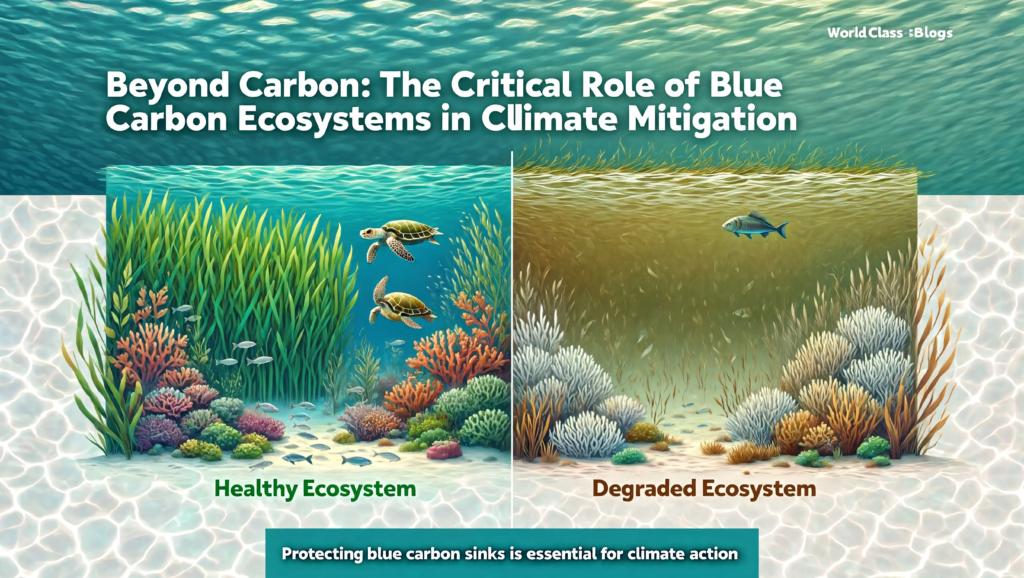
- Misconception: “Blue carbon is just about planting more mangroves.”
- Reality: Protection of existing, carbon-rich ecosystems is far more important and effective than restoration. A mature, ancient mangrove forest holds vastly more carbon than a newly planted one. Restoration is complementary but cannot replace protection.
- Misconception: “All oceans are major carbon sinks, so blue carbon is redundant.”
- Reality: The open ocean is a sink, but it’s slow, diffuse, and leads to ocean acidification. Coastal blue carbon ecosystems are concentrated, fast, and their storage is more durable (centuries vs. decades in surface waters).
- Misconception: “Blue carbon projects can offset fossil fuel emissions without limit.”
- Reality: This is a dangerous form of greenwashing. Blue carbon is a complementary solution, not a substitute for the deep, rapid decarbonization of our energy, transport, and industrial systems. It’s for tackling residual emissions and historical drawdown.
- Misconception: “Measuring blue carbon is too uncertain for real policy.”
- Reality: Scientific methodologies have advanced tremendously. Using remote sensing, sediment coring, and standardized models, scientists can now quantify blue carbon stocks and fluxes with high and acceptable levels of certainty for inclusion in national greenhouse gas inventories.
Recent Developments (2024-2026)
- Satellite Monitoring Breakthroughs: NASA’s Carbon Monitoring System (CMS) and ESA’s satellites are now providing near-real-time data on mangrove extent and biomass, revolutionizing tracking and verification for carbon projects.
- Incorporation into NDCs: As of COP29 (2024), over 60 countries have included coastal wetland management in their updated Nationally Determined Contributions, a significant jump from just 28 in 2020.
- The Rise of “Blue Bonds”: Countries like Belize, Ecuador, and Barbados have successfully issued sovereign blue bonds, restructuring national debt in exchange for commitments to protect large marine areas, with funds directly supporting blue carbon conservation.
- Corporate Commitments: Major corporations, particularly in the shipping and coastal tourism sectors, are increasingly investing in high-quality blue carbon credits as part of their net-zero pathways, driving demand and funding for projects.
- Scientific Discovery: 2025 research published in Nature Geoscience confirmed the significant role of kelp forests in the deep-sea carbon cycle, potentially adding a new, important category to the blue carbon family, though methodologies for crediting are still in development.
Success Stories
Project Example: Mikoko Pamoja, Kenya
Translating to “Mangroves Together,” this was one of the world’s first community-led blue carbon projects. Since 2013, it has protected 117 hectares of mangroves in Gazi Bay. The sale of verified carbon credits has funded clean water wells, school supplies, and new mangrove planting. In my experience reviewing such projects, Mikoko Pamoja stands out for its genuine community ownership—decisions on credit revenue spending are made by a committee of local residents. It’s a model that proves environmental and social benefits can be intrinsically linked.
National Example: The United Arab Emirates
Facing intense coastal development pressures, the UAE has made blue carbon a national priority. The Abu Dhabi Blue Carbon Demonstration Project has meticulously mapped and measured the carbon in its coastal ecosystems. This data is now being used to inform development planning and explore crediting mechanisms. The country has also embarked on massive mangrove afforestation projects, planting over 30 million mangroves since 2020, aiming for 100 million by 2030 as part of its Net Zero 2050 Strategic Initiative.
Real-Life Examples
- Florida’s “Marsh Dieback”: In the early 2000s, a sudden die-off of salt marshes in the southeastern US provided a tragic natural experiment. Scientists found that the degraded areas switched from carbon sinks to significant carbon sources, releasing greenhouse gases equivalent to a small power plant. This event starkly illustrated the risk of leaving these ecosystems vulnerable.
- The Philippines’ Post-Typhoon Recovery: After the devastation of Typhoon Haiyan in 2013, studies showed that villages with intact mangrove belts suffered significantly less damage. This catalyzed national and community-led mangrove restoration efforts, recognizing them as life-saving infrastructure. Today, this is a core part of the country’s climate adaptation strategy.
- Seagrass in the Mediterranean: The Posidonia oceanica meadows, which can form ancient, massive underwater “reefs,” are now being valued for their carbon storage. In Spain and Italy, damaged seagrass beds are being restored not just for biodiversity but explicitly for their climate benefits, funded by regional climate finance mechanisms.
Conclusion and Key Takeaways
Blue carbon ecosystems represent one of the most powerful, efficient, and multi-beneficial tools in our climate action toolkit. They are not a silver bullet, but they are a vital piece of the puzzle—one that has been overlooked for far too long.
Key Takeaways:
- Act Now to Protect: The most urgent priority is to halt the destruction of existing, carbon-rich mangroves, seagrasses, and salt marshes.
- Think Beyond Trees: Effective climate action requires looking beyond forests to include our coasts and oceans.
- Embrace Multiple Benefits: Blue carbon solutions deliver co-benefits for adaptation, biodiversity, and communities, making them highly resilient investments.
- Demand Integrity: Support for blue carbon finance (like credits) must be paired with rigorous science, transparent accounting, and respect for local community rights and leadership.
- Integrate into Policy: From local planning to international climate agreements, blue carbon values must be systematically integrated.
As we navigate the complex challenges of the 21st century, restoring our relationship with the ocean and its coasts is paramount. Investing in blue carbon is an investment in a more stable climate, a more resilient coastline, and a more sustainable future for all. For more on integrating science into practical solutions, explore our content on Technology & Innovation.
FAQs (Frequently Asked Questions)
- Q: What exactly are the three main types of blue carbon ecosystems?
- A: The three core, universally recognized ecosystems are: 1) Mangrove Forests: Salt-tolerant trees and shrubs found along tropical and subtropical coastlines. 2) Seagrass Meadows: Underwater flowering plants that form dense beds in shallow coastal waters worldwide. 3) Tidal Salt Marshes: Grassy wetlands found in temperate regions, flooded and drained by salt water brought in by the tides.
- Q: How much carbon can a blue carbon ecosystem store compared to a land forest?
- A: Per unit area, blue carbon ecosystems are superstars. A hectare of mangrove forest can store 3-5 times more carbon than a hectare of tropical rainforest. The carbon is primarily in the deep, water-logged soils, not just in the visible plants.
- Q: Can I buy blue carbon credits as an individual to offset my carbon footprint?
- A: Yes, several reputable platforms now offer retail blue carbon credits from verified projects (e.g., Mikoko Pamoja). It’s crucial to research the project’s certification (look for Verra or Gold Standard), its transparency, and how it involves local communities. It should be part of a broader “reduce-then-offset” strategy.
- Q: Why is the carbon storage considered more “permanent”?
- A: The anaerobic (oxygen-poor) conditions in the waterlogged sediments dramatically slow down the decomposition process that would release carbon. This carbon can be locked away for centuries to millennia, whereas carbon in a tree is released upon its death and decay (unless it becomes fossilized).
- Q: What is the biggest threat to blue carbon ecosystems today?
- A: Coastal development and conversion for agriculture/aquaculture remain the biggest direct threats. However, climate change itself is a major indirect threat through sea-level rise (which can “drown” some ecosystems if they can’t migrate inland) and increased water temperatures, causing die-offs.
- Q: Are kelp forests considered blue carbon ecosystems?
- A: This is an active area of research. Kelp grows rapidly and sequesters carbon, but most science suggests it doesn’t provide the same long-term, locally stored carbon as coastal wetlands because much of the kelp carbon is exported to the deep ocean or decomposes. It may contribute to a different part of the ocean carbon cycle. As of 2026, it is not included in official carbon accounting frameworks like the IPCC guidelines.
- Q: How does sea-level rise affect these ecosystems?
- A: It’s a double-edged sword. If healthy and given space (e.g., an undeveloped coastline), mangroves and salt marshes can often migrate landward, building new soil and keeping pace with sea-level rise. However, if they are trapped by seawalls or development, they will be submerged and die, releasing stored carbon.
- Q: What is “carbon burial rate”?
- A: It’s the rate at which an ecosystem deposits and stores carbon in its sediments over time, typically measured in grams of carbon per square meter per year (g C m⁻² yr⁻¹). Blue carbon ecosystems have exceptionally high burial rates.
- Q: How do scientists measure the carbon in these ecosystems?
- A: They use a combination of field work (taking sediment cores to measure depth and carbon content, harvesting plant samples) and remote sensing (satellite/airborne LiDAR to measure canopy height and biomass). These data are fed into models to estimate total “carbon stocks.”
- Q: Can restoring a degraded blue carbon ecosystem make it a sink again?
- A: Absolutely. Restoration halts emissions from degradation and, as the plants regrow, re-initiates active carbon sequestration. However, it takes decades to centuries to rebuild the deep sediment carbon stocks of a pristine ecosystem, highlighting why protection is paramount.
- Q: What role do blue carbon ecosystems play in fisheries?
- A: They are often called “fish nurseries.” The complex root structures provide shelter for juvenile fish, crustaceans, and mollusks from predators. An estimated 75% of commercially caught fish in the tropics spend part of their life cycle in mangroves.
- Q: Are there any downsides or risks to blue carbon projects?
- A: Risks include: Poorly designed projects that fail ecologically; Carbon colonialism where local communities are excluded from benefits; and Moral hazard if companies use blue carbon offsets to avoid cutting their own emissions. Robust standards and oversight are needed.
- Q: How does this relate to ocean acidification?
- A: By drawing down CO₂ from the water during photosynthesis, healthy seagrass meadows can create localized refuges with a higher pH, offering respite for shell-forming organisms like oysters and corals from the impacts of acidification.
- Q: What is “blue carbon financing”?
- A: It refers to the flow of funds (from carbon markets, biodiversity credits, conservation grants, debt-for-nature swaps like blue bonds) directed specifically towards the protection and restoration of blue carbon ecosystems.
- Q: Is the carbon storage uniform across all mangroves or seagrasses?
- A: No, it varies significantly based on species, geography, climate, and hydrodynamics. For example, mangrove forests in equatorial regions with high rainfall and large rivers delivering silt tend to have the highest carbon densities.
- Q: What can I do personally to support blue carbon?
- A: 1) Educate yourself and others. 2) Support NGOs focused on marine conservation (e.g., The Nature Conservancy’s coastal work, WWF). 3) If you travel to coasts, choose eco-tourism operators that respect these habitats. 4) Consider high-quality blue carbon offsets for unavoidable emissions. 5) Advocate for policies that protect coastal zones.
- Q: How does this connect to plastic pollution?
- A: Blue carbon ecosystems, especially mangroves, act as natural filters, trapping plastic debris and preventing it from entering the open ocean. While this is a service, it also means these ecosystems are bearing a heavy pollution burden, which can harm their health.
- Q: What is the IPCC’s position on blue carbon?
- A: The Intergovernmental Panel on Climate Change (IPCC) has recognized coastal wetlands in its 2013 Wetlands Supplement and subsequent reports as critical for climate mitigation. It provides the official methodologies that countries use to account for emissions and removals from these ecosystems in their national reports.
- Q: Are there any successful large-scale government policies?
- A: Indonesia, home to over 20% of the world’s mangroves, has made a moratorium on mangrove conversion for aquaculture a key part of its climate strategy. Australia has laws protecting seagrasses and salt marshes as “Matters of National Environmental Significance” under its EPBC Act.
- Q: What’s the difference between “avoided loss” and “restoration” in carbon credits?
- A: “Avoided loss” credits are generated by protecting an ecosystem that was under verified, imminent threat of destruction. “Restoration” credits are generated by actively replanting or rehabilitating a degraded area. Both are valid but represent different actions.
About Author
Sana Ullah Kakar is a science communicator and environmental writer with over a decade of experience covering climate change, ocean science, and sustainability. With an academic background in marine biology, they have worked with research institutions, NGOs, and policy groups to translate complex environmental science into actionable insights for the public and professionals. Their writing is driven by a conviction that understanding our natural world is the first step toward protecting it. They are a regular contributor to World Class Blogs’ Science and Frontiers section. Connect with us to learn more about our mission on our About Us page.
Free Resources
- The Blue Carbon Initiative: The go-to scientific hub for reports, methodologies, and maps. (Website: thebluecarboninitiative.org)
- IPCC 2013 Wetlands Supplement: The formal accounting guidelines for wetlands. (Download via IPCC website)
- Global Mangrove Watch: Interactive online platform using satellite data to track mangrove extent and change. (Website: globalmangrovewatch.org)
- UN Decade on Ecosystem Restoration – Marine & Coastal: Toolkit and project registry. (Website: decadeonrestoration.org)
- Report (2025): “The Ocean as a Solution to Climate Change: Updated Opportunities for Action” by the High-Level Panel for a Sustainable Ocean Economy.
Discussion
We’d love to hear from you! Have you ever visited a mangrove forest or seagrass meadow? Does your country have policies protecting these ecosystems? What questions do you still have about blue carbon as a climate solution? Share your thoughts, experiences, and questions in the comments below. For further discussion on impactful global topics, explore our partner network, including insights on global supply chain management and building sustainable business partnerships.