
The Silent Revolution: How Ambient Computing is Weaving Intelligence into the Fabric of Everyday Life
Discover Ambient Computing, the tech that works silently in the background. Learn how IoT, AI, and smart devices create a seamless, predictive, and helpful environment around you.

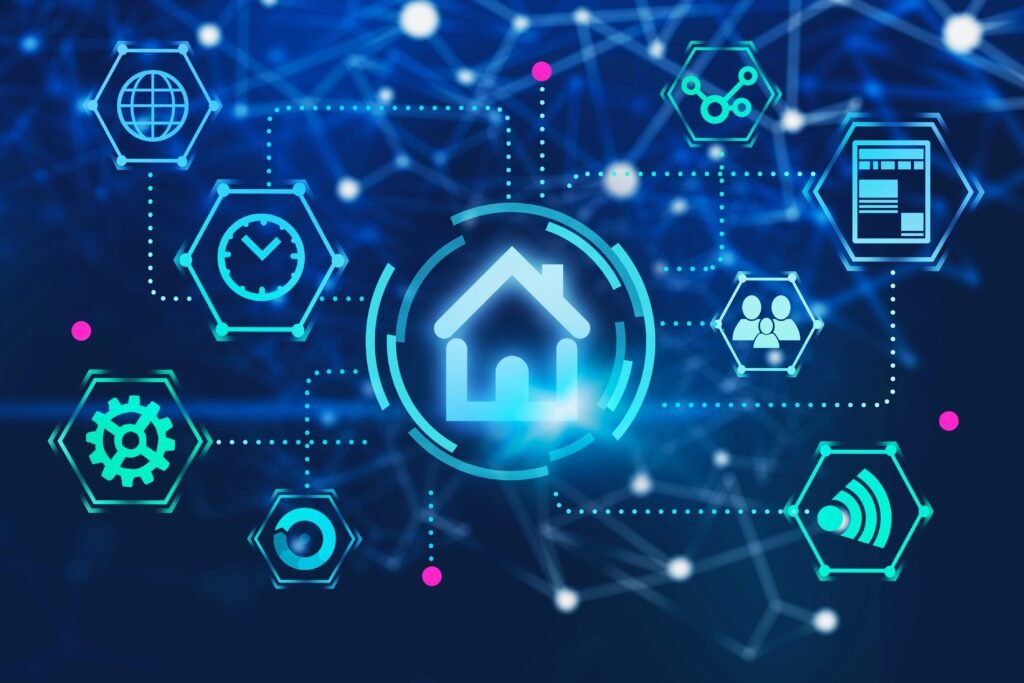
Ambient Computing in the home: a seamless network of intelligent devices working together in the background to anticipate and meet your needs.
Introduction: Why an Invisible Interface is the Ultimate Luxury
We live in a world of screens. We wake up to them, work on them, and unwind with them. This constant demand for our attention is a source of what is often called “digital fatigue.” But what if technology could achieve its purpose without demanding our focus? What if it simply worked in the background, anticipating our needs and seamlessly integrating into our environment? This is the promise of Ambient Computing.
Ambient Computing matters because it represents a fundamental shift from a “human-to-computer” interaction model to a “human-to-environment” model. The technology itself fades into the background, becoming a quiet, intelligent utility—like electricity—that empowers us without constant negotiation. It’s not about a single device; it’s about a cohesive, contextual, and often self-sufficient ecosystem. Understanding this shift is key to grasping the next phase of digital convenience, one that prioritizes calmness, efficiency, and well-being over flashy features and constant notifications.
Background/Context: From Personal Computing to Personal Environment
The evolution of computing has been a journey of increasing integration and decreasing visibility:
- Mainframe Era (1960s): Computing was a distant resource in a locked room.
- Personal Computer Era (1980s): Computing moved to our desks, but we still had to go to it.
- Mobile & Cloud Era (2000s): Computing became a device in our pocket, always with us.
- Ambient Era (2010s+): Computing is now dissipating into our surroundings. It’s in our lights, our thermostats, our speakers, and our cars. The environment itself is the computer.
This was first articulated by Mark Weiser at Xerox PARC in the 1990s as “Ubiquitous Computing.” He described it as the “calm technology” that “engages both the center and the periphery of our attention, and in fact moves back and forth between the two.” Only now, with the maturation of IoT, AI, and connectivity, is this vision becoming a commercial reality.
Key Concepts Defined
- Ambient Computing: A paradigm where computing is seamlessly integrated into the environment, becoming invisible and context-aware, and is available whenever needed without conscious effort.
- Internet of Things (IoT): The network of physical objects (“things”) embedded with sensors, software, and other technologies to connect and exchange data with other devices and systems over the internet. IoT is the hardware foundation of ambient computing.
- Ubiquitous Computing (Ubicomp): The original academic term for the concept of computing everywhere, in any object. It is synonymous with ambient computing.
- Context-Awareness: The ability of a system to gather information about its environment at any given time and adapt its behavior accordingly (e.g., your phone silencing itself in a movie theater).
- Predictive Analytics: The use of data, statistical algorithms, and machine learning techniques to identify the likelihood of future outcomes. In ambient computing, this is used to anticipate user needs.
- Interoperability: The ability of different products, systems, and devices to work together seamlessly. This is the holy grail for a true ambient experience, allowing your car to talk to your calendar and your house.
How Ambient Computing Works: A Step-by-Step System View

The magic of ambient computing is an orchestrated loop of data collection, analysis, and action.
Step 1: Pervasive Sensing
A distributed network of sensors constantly collects data from the environment. These can be in dedicated devices (smart speakers, thermostats) or in devices you already carry (your smartphone’s microphone, GPS, accelerometer). They sense motion, light, temperature, sound, location, and more.
Step 2: Data Aggregation & Context Building
The raw sensor data is sent to a central hub or the cloud. Here, AI algorithms process this data to build a contextual understanding of the situation. It doesn’t just see “motion in the living room at 7 PM”; it understands that “the homeowner has arrived home from work.”
Step 3: Predictive Modeling & Intent Inference
The system uses historical data and patterns to predict what you will likely want next. Based on the context “arrived home from work,” it cross-references your past behavior: “On 90% of weekdays, when the homeowner arrives after 6 PM, they lower the thermostat to 68°F and turn on the living room lights.”
Step 4: Seamless Actuation
The system sends commands to the actuators in the environment to execute the predicted action without you asking. The smart thermostat adjusts to 68°F, and the smart lights turn on to a warm, 40% brightness. The action is the output; the interface is the lack of one.
Step 5: Continuous Learning & Refinement
The system monitors your reaction. If you manually override the thermostat, it notes this feedback and adjusts its model for future predictions. This creates a self-improving loop where the environment becomes more attuned to your preferences over time.
Why It’s Important: The Unseen Benefits
Ambient computing’s value lies in its subtlety and profound impact on daily life:
- Enhanced Efficiency & Convenience: It automates mundane tasks, from reordering laundry detergent when you’re running low to preheating the oven as you’re driving home. This frees up mental bandwidth and time.
- Energy Conservation & Sustainability: A context-aware home can drastically reduce energy waste by intelligently managing heating, cooling, and lighting based on occupancy and weather, contributing to a more sustainable lifestyle.
- Proactive Health & Wellness: Ambient systems can monitor for subtle changes in a senior’s daily activity patterns, alerting family members to potential health issues before they become emergencies. This supports a proactive approach to Psychological Wellbeing and independent living.
- Accessibility: For individuals with disabilities, ambient computing can be transformative. Voice-controlled environments, automated routines, and predictive assistance can restore a level of independence and control.
- Optimized Business Operations: In logistics, ambient intelligence can track assets across a Global Supply Chain, predict maintenance needs for machinery, and optimize warehouse layouts in real-time.
Common Misconceptions
- Myth: Ambient Computing is just a fancy term for the “Smart Home.”
Reality: A smart home is a collection of connected devices. Ambient Computing is the intelligent, cohesive experience that emerges when those devices work together seamlessly and proactively. The smart home is the hardware; ambient computing is the brain. - Myth: It’s a privacy nightmare waiting to happen.
Reality: While valid, this is a design and policy challenge, not an inherent flaw. The best ambient systems are designed with “privacy by design,” processing data locally on the device whenever possible and being transparent about what data is collected and why. - Myth: It will make us lazy and less capable.
Reality: Like any tool, its impact depends on its use. By offloading cognitive load for mundane tasks, it can free us to focus on more creative, complex, and fulfilling activities. - Myth: You need to buy all new, expensive gadgets.
Reality: You can start with a single smart speaker and a smart plug. The ecosystem builds gradually. The smartphone in your pocket is already a powerful ambient computing device.
Recent Developments
- Matter Protocol: This new, royalty-free connectivity standard is a game-changer. Backed by Apple, Google, Amazon, and others, it aims to ensure that smart home devices from different brands work together reliably, solving the major interoperability problem.
- Edge AI: More processing is moving from the cloud to the device itself (the “edge”). This reduces latency, increases reliability (works without internet), and enhances privacy.
- Spatial Audio & Personalization: Smart speakers are now using spatial awareness to distinguish who is speaking and where they are in the room, allowing for personalized responses (e.g., reading your calendar but not your spouse’s).
- Integration with Wearables: Your smartwatch or fitness tracker is becoming a key sensor for the ambient ecosystem, providing data on your health, sleep, and location for even more personalized context.
Success Story: The Amazon Echo & Alexa Ecosystem
Amazon’s Echo devices are a prime example of an ambient computing gateway.
- How it works: It starts with a voice command, but the true ambient nature is in the “Routines.” You can create a “Good Morning” routine where a single voice command (“Alexa, good morning”) triggers a cascade of actions: turning on lights, reading the news, reporting the weather, and starting the coffee maker. Over time, Alexa Guard can listen for the sound of breaking glass or a smoke alarm when you’re away, acting as an ambient security system.
- The Lesson: Success in ambient computing comes from creating a central, accessible hub that can orchestrate a wide array of third-party devices, creating a unified and valuable whole that is greater than the sum of its parts.
Case Study: Nest Learning Thermostat
The Nest Thermostat provides a perfect case study in a single, powerful ambient device.
- The Lesson Learned: Nest’s initial success wasn’t just about remote control; it was about its “Learning” feature. By observing user adjustments for a week, it built a schedule automatically. This “set-it-and-forget-it” model demonstrated that the highest value in smart devices is automation, not just remote access. It showed that users were willing to pay a premium for technology that worked silently in the background to save them money and effort.
Real-Life Examples
- Lighting: Philips Hue lights that gradually brighten to simulate a sunrise, helping you wake up more naturally.
- Shopping: Amazon Dash Replenishment, where a smart printer can automatically order ink, or a smart soap dispenser can order more soap, integrating seamlessly with your E-commerce habits.
- Driving: Your car automatically adjusting the seat, mirror, climate, and infotainment preferences based on which key fob is used.
Sustainability of the Trend and Its Future
Ambient computing is a sustainable trend because it delivers tangible, everyday value.
- Economic Driver: It creates a massive market for devices, services, and the underlying AI and connectivity infrastructure.
- Resource Efficiency: Its core promise is to eliminate waste—wasted time, wasted energy, wasted effort.
- Aging Population: As populations in many countries age, ambient computing offers a scalable solution for enabling seniors to live independently and safely for longer.
The Future (5-10 years out): We will move beyond voice and phones. Interfaces will be more natural—gestures, glances, and eventually, brain-computer interfaces. Our environments will become truly predictive, potentially managing our Personal Finance by automatically optimizing energy bills or suggesting more efficient shopping habits. The line between our digital and physical selves will blur as our environments respond to our presence and state of being.
Conclusion & Key Takeaways
Ambient Computing is not about adding more technology to our lives; it’s about making the technology we already have work together more intelligently and unobtrusively. It’s the quiet, steady hum of a system designed to serve, not to interrupt.
Key Takeaways:
- The Best Interface is No Interface: The ultimate goal is for technology to achieve its purpose without a dedicated screen or a complex command.
- Context is King: The power of ambient systems comes from their deep understanding of the situation—who, what, where, and when.
- Interoperability is Non-Negotiable: For the dream to be realized, all our devices must speak the same language. Standards like Matter are critical.
- Privacy and Trust are the Foundation: Widespread adoption depends on users trusting that these always-listening, always-watching systems have their best interests and privacy at heart.
- It’s a Gradual Evolution: You don’t build an ambient home overnight. It’s an ecosystem that grows and learns with you over time.
To stay updated on how such technologies are evolving and impacting various sectors, explore our Technology & Innovation category and our broader Blogs archive.
Frequently Asked Questions (FAQs)
1. What is the simplest way to start building an ambient computing environment at home?
Start with a smart speaker (Amazon Echo, Google Nest) and a single smart bulb. Create a simple routine like “turn on the light at sunset.” This gives you an immediate taste of automated, context-aware convenience.
2. Is Apple’s HomeKit an example of ambient computing?
Yes, absolutely. HomeKit, especially with Scenes and Automations, is designed to create a seamless, multi-device experience that can be triggered by a single command or context (like location or time).
3. How is ambient computing different from AI?
AI is the brain—the intelligence that processes data and makes predictions. Ambient computing is the body—the distributed network of sensors and actuators that the AI controls within an environment.
4. What are the biggest security risks?
The main risks are unauthorized access to your home network through a vulnerable IoT device (like a smart camera) and the potential for data breaches of the personal information collected by these systems.
5. Will ambient computing work without an internet connection?
It depends. Basic, pre-programmed automations might work, but the “intelligence”—the cloud-based AI that learns and adapts—requires an internet connection. Edge computing is making devices smarter offline.
6. How does this technology impact my personal data?
It collects a significant amount of data about your habits and preferences. It’s crucial to review the privacy policies of the devices you buy, use strong, unique passwords, and enable features like local data processing where available.
7. Can I make my current “dumb” appliances ambient?
Yes, to a degree. Smart plugs can make lamps and coffee makers switch on/off on a schedule or by voice. Vibration sensors can be added to washing machines to send an alert when a cycle is finished.
8. What is the “Internet of Things” (IoT) and how is it related?
IoT refers to the vast network of connected physical objects. Ambient Computing is the user-experience layer and intelligence that sits on top of the IoT, making it useful and seamless for people.
9. Is this only for wealthy people?
Not anymore. The cost of smart devices has plummeted. Basic smart bulbs and plugs are very affordable, making the entry point for ambient computing accessible to a wide audience.
10. How can ambient computing help with energy bills?
A smart thermostat like Nest or Ecobee learns your schedule and can automatically lower the heat or AC when you’re away, leading to savings of 10-15% on heating and cooling costs.
11. What happens if the system makes a wrong prediction?
Good systems allow for easy manual override. This manual correction is then fed back into the system as a learning data point, making it smarter for next time.
12. Are there any health concerns related to always-on devices?
Concerns typically revolve around radiofrequency (RF) exposure from wireless devices and the potential psychological effects of constant monitoring. The scientific consensus is that RF levels from consumer devices are safe, but the psychological impact is a personal and evolving area of study.
13. Can I create custom ambient experiences for specific activities, like “Reading Mode”?
Yes. Most platforms allow you to create “Scenes” or “Routines.” A “Reading Mode” could dim the main lights, turn on a specific lamp to 100%, and play soft, ambient music—all with one command.
14. How will this affect the way we design and build homes in the future?
New homes will likely be built with integrated wiring for power and data, central networking hubs, and architectural considerations for sensor placement, making ambient intelligence a foundational utility, much like plumbing.
15. What role does 5G play in ambient computing?
5G’s low latency and high device density support is crucial for large-scale ambient deployments, like in smart cities, where thousands of sensors need to communicate instantly and reliably.
16. Can businesses use ambient computing?
Yes, this is a huge area. Offices can use it to manage energy, book meeting rooms automatically based on occupancy, and provide visitors with seamless wayfinding.
17. What is a “digital twin” in this context?
A digital twin is a virtual representation of a physical environment. In ambient computing, your smart home’s data could be used to create a digital twin for simulating energy usage or testing new automation rules before applying them to the real world.
18. How can nonprofits leverage this technology?
Nonprofits could use ambient monitoring in assisted living facilities or community centers to improve safety and efficiency while reducing operational costs. Explore more such ideas in our Nonprofit Hub.
19. Is there a “killer app” for ambient computing?
There isn’t one single app. The “killer feature” is the orchestration itself—the feeling of a home or environment that effortlessly adapts to you.
20. What are the ethical considerations?
Major ethical questions involve data ownership, algorithmic bias (e.g., a system that doesn’t recognize certain accents), and the potential for creating a surveillance society if misused.
21. How do I ensure different brands of devices will work together?
The best strategy is to choose devices that support the new Matter standard or that explicitly state compatibility with your chosen ecosystem (Apple HomeKit, Google Home, Amazon Alexa).
22. Can ambient computing help with sleep?
Yes. Systems can use your wearable data to know your sleep stage and then trigger a gradual “wake-up” light simulation during your lightest sleep phase, leading to a more natural and refreshed awakening.
23. Where can I learn more about the technical side of setting this up?
Our About World Class Blogs page shares our mission to provide accessible tech knowledge. We also recommend manufacturer support sites and dedicated smart home forums and blogs.
24. Is this just a fad?
No. The trend towards more integrated, intelligent, and invisible technology is a direct continuation of the computing evolution that has been underway for 50 years. It is the logical next step.
25. I’m overwhelmed. Who can help me plan my ambient computing setup?
Start small and learn as you go. For more inspiration and a clear sense of direction, check out our Our Focus page. For specific questions, you can always Contact Us.