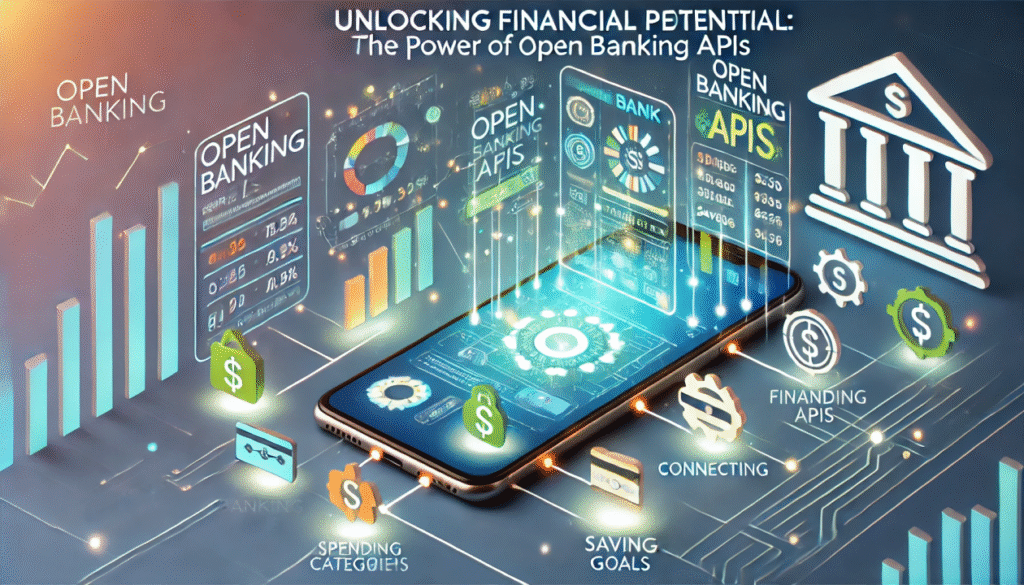
The Open Banking Revolution: How APIs Are Transforming Financial Services Forever
Discover how open banking is transforming finance through secure APIs. Learn about benefits, security, real-world applications, and what it means for your financial future in our 5000-word deep dive.
Discover how open banking is transforming finance through secure APIs. Learn about benefits, security, real-world applications, and what it means for your financial future in our 5000-word deep dive.
Introduction: The Democratization of Financial Data
Imagine a world where your financial life isn’t locked inside separate banking silos. Where you can seamlessly transfer funds between institutions, get personalized loan offers in seconds, and have all your financial data work together to serve you better. This isn’t science fiction—it’s the reality being built today through Open Banking revolution. At its core, open banking represents a fundamental shift from financial institutions as gatekeepers to becoming platforms that empower consumers and innovators alike.
For too long, our financial data has been trapped within individual banks, creating friction, limiting competition, and stifling innovation. Open banking changes this paradigm through secure application programming interfaces (APIs) that allow authorized third parties to access financial information—with the customer’s explicit consent. This revolution is creating a more transparent, competitive, and customer-centric financial ecosystem that benefits everyone from individual consumers to global enterprises. As we explore this transformation, consider how this connects to broader personal finance management strategies that are evolving alongside technological innovation.
Background/Context: From Closed Systems to Open Ecosystems
The journey to open banking began as a response to several converging forces. After the 2008 financial crisis, regulators worldwide sought to increase competition in banking sectors dominated by large, established players. Consumers were increasingly frustrated by poor digital experiences and limited financial mobility. Meanwhile, technology companies were demonstrating how data interoperability could create superior user experiences in other sectors.
The European Union’s Payment Services Directive 2 (PSD2), implemented in 2018, became the landmark regulation that forced the issue. It mandated that banks provide access to customer accounts to licensed third parties through APIs. Similar initiatives followed in the UK (Open Banking Implementation Entity), Australia (Consumer Data Right), and other markets. These regulations didn’t emerge in a vacuum—they reflected a broader digital transformation sweeping across industries, including the optimization seen in global supply chain management.
Traditional banking’s “walled garden” model, where institutions controlled all aspects of the customer relationship, was becoming increasingly untenable in a world where consumers expected seamless digital experiences comparable to Amazon, Google, and Apple.
Key Concepts Defined
- Open Banking: A banking practice that provides third-party financial service providers open access to consumer banking, transaction, and other financial data from banks and non-bank financial institutions through the use of application programming interfaces (APIs).
- API (Application Programming Interface): A set of protocols and tools that allows different software applications to communicate with each other. In banking, APIs enable secure data sharing between institutions and authorized third parties.
- Third-Party Providers (TPPs): Licensed companies that use open banking APIs to offer financial services. There are two main types:
- Account Information Service Providers (AISPs): Access account data to provide services like financial dashboards or spending analysis.
- Payment Initiation Service Providers (PISPs): Initiate payments directly from user accounts.
- PSD2 (Payment Services Directive 2): The European Union directive that regulates payment services and requires banks to open their payment infrastructure and customer data to third parties.
- Consent Management: The process by which customers explicitly grant, manage, and revoke permissions for third parties to access their financial data.
- Banking as a Service (BaaS): The provision of banking products and services through third-party distributors using APIs, allowing non-banks to offer financial services.
- Financial Aggregation: The collection of financial information from multiple sources into a single interface, enabled by open banking APIs.
How Open Banking Works: A Step-by-Step Technical Breakdown

Step 1: Regulatory Framework and Standardization
Open banking begins with regulatory mandates or industry initiatives that establish rules for data sharing. These frameworks specify:
- Which data must be shared
- Security requirements
- Customer consent protocols
- Liability frameworks
- Technical standards for APIs
Step 2: API Development and Implementation
Banks develop standardized APIs that allow secure access to customer data. These APIs typically include:
- Authentication endpoints for verifying third-party credentials
- Account information endpoints for retrieving balances and transactions
- Payment initiation endpoints for processing transfers
- Consent management endpoints for handling customer permissions
Step 3: Third-Party Authorization and Licensing
Fintech companies and other providers apply for regulatory approval to become authorized TPPs. This process involves:
- Meeting capital requirements
- Implementing robust security measures
- Undergoing regular audits
- Obtaining professional indemnity insurance
Step 4: Customer Consent Flow
When a user wants to use an open banking service:
- The TPP application requests access to specific financial data
- The user is redirected to their bank’s authentication portal
- The user reviews and approves the requested access (scope, duration, purposes)
- The bank issues an access token to the TPP
- The TPP uses this token to make API calls within the approved scope
Step 5: Data Exchange and Service Delivery
Authorized TPPs can now:
- Retrieve account information for aggregation or analysis
- Initiate payments on behalf of the user
- Provide personalized financial products based on real-time data
- Offer value-added services like automated savings or investment advice
Step 6: Ongoing Monitoring and Security
Continuous security measures include:
- Token expiration and renewal mechanisms
- Activity monitoring for suspicious patterns
- Regular security updates and penetration testing
- Compliance with data protection regulations like GDPR
Why Open Banking Is Important: The Transformational Impact
For Consumers:
- Enhanced Financial Control: Complete visibility across all financial relationships in one dashboard
- Better Products and Pricing: Increased competition drives innovation and better terms
- Personalized Services: AI-powered insights based on comprehensive financial data
- Reduced Friction: Seamless account switching, mortgage applications, and loan approvals
- Financial Inclusion: Alternative credit scoring enables access for underserved populations
For Businesses:
- Streamlined Operations: Automated accounting, cash flow management, and reconciliation
- Improved Credit Access: Real-time financial data facilitates faster, more accurate lending decisions
- Innovation Opportunities: New business models and revenue streams through financial data
- Reduced Costs: Lower payment processing fees and operational efficiencies
For the Financial Ecosystem:
- Increased Competition: Breaks monopoly power of large institutions
- Accelerated Innovation: Fosters fintech development and collaboration
- Systemic Resilience: Diversified financial services landscape
- Standardization: Common protocols improve interoperability and security
Common Misconceptions About Open Banking

Myth 1: “Open banking means my data is public”
Reality: Data is only shared with authorized third parties with explicit customer consent. Security standards are often higher than traditional banking channels.
Myth 2: “Banks are giving away their competitive advantage”
Reality: Banks that embrace open banking become platforms, earning revenue from API usage while maintaining customer relationships through superior experiences.
Myth 3: “It’s only about payments and account aggregation”
Reality: Open banking enables diverse applications including lending, insurance, wealth management, and business financial tools.
Myth 4: “Small banks can’t compete in an open banking world”
Reality: Smaller institutions can leverage Banking-as-a-Service platforms to offer innovative services without massive infrastructure investments.
Myth 5: “Open banking benefits only fintech companies”
Reality: Traditional banks gain new partnership opportunities, data insights, and can accelerate their own digital transformation.
Recent Developments and Emerging Trends
Global Regulatory Expansion
While Europe led with PSD2, other regions are rapidly catching up:
- Brazil’s Open Banking Initiative: Phased implementation with strong central bank leadership
- Nigeria’s Framework: Focus on financial inclusion in Africa’s largest economy
- India’s Account Aggregator System: Unique approach using consent managers as intermediaries
- United States: Market-led initiatives gaining momentum despite lack of unified regulation
Technical Evolution
- API Standardization: Industry groups like FDX (Financial Data Exchange) creating global standards
- Enhanced Security: Implementation of FAPI (Financial Grade API) security profiles
- Real-time Capabilities: Moving beyond batch processing to instant data access
- Embedded Finance: Open banking enabling financial services within non-financial apps
Business Model Innovation
- Premium APIs: Banks monetizing advanced data services
- Ecosystem Marketplaces: Platforms connecting multiple financial service providers
- Variable Recurring Payments: Enabling flexible subscription billing directly from accounts
- Green Banking: Using transaction data to calculate and offset carbon footprints
Success Stories and Real-World Applications
Case Study 1: Monzo’s Marketplace Strategy
Background: UK digital bank Monzo leveraged open banking from its inception, positioning itself as a “financial control center.”
Implementation:
- Built a marketplace of third-party financial services accessible within the Monzo app
- Used open banking to aggregate external accounts, even from competitor banks
- Created “Pots” feature allowing automatic savings based on spending patterns
- Developed business accounts with integrated accounting software connections
Results:
- Over 7 million customers with high engagement rates
- 30% of users connect at least one external account
- Average user checks app 20+ times per month
- Business accounts growing 20% month-over-month
Lesson Learned: By embracing openness rather than fighting it, digital natives can build more valuable customer relationships than traditional closed models.
Case Study 2: Plaid’s API Infrastructure
Background: Plaid started as a simple connectivity layer between banks and fintech apps, solving the “screen scraping” problem.
Evolution:
- Developed robust API infrastructure serving thousands of financial institutions
- Expanded from basic connectivity to data enrichment and analytics
- Built tools for identity verification, asset verification, and income verification
- Created a developer ecosystem with comprehensive documentation and support
Impact:
- Connects to over 12,000 financial institutions globally
- Powers major fintechs like Venmo, Coinbase, and Robinhood
- Processes billions of data requests monthly
- Valued at $13.4 billion in recent funding rounds
Key Insight: The “picks and shovels” approach—building infrastructure rather than consumer-facing products—can create enormous value in ecosystem transformations.
Sustainability and Future-Proofing
Environmental Considerations
Open banking contributes to sustainability through:
- Digital-First Operations: Reducing paper-based processes and physical branch requirements
- Efficient Resource Allocation: Better data enabling green lending and investment decisions
- Carbon Footprint Tracking: Transaction analysis for environmental impact assessment
- Circular Economy Support: Enabling innovative sharing economy business models
Social Impact and Inclusion
- Alternative Credit Scoring: Using cash flow data rather than traditional credit history
- Microfinance Enablement: Lower-cost distribution of small loans
- Remittance Cost Reduction: Cheaper cross-border payments through increased competition
- Financial Literacy Tools: Personalized education based on actual financial behavior
Long-term Viability Factors
- Regulatory Harmony: Need for international standards to enable cross-border services
- Consumer Trust: Maintaining security while simplifying user experience
- Economic Sustainability: Ensuring all ecosystem participants can operate profitably
- Technological Resilience: Building systems that can scale and evolve over decades
Conclusion and Key Takeaways
The open banking revolution represents one of the most significant transformations in financial services history. By treating banking infrastructure as a platform rather than a product, it unleashes innovation, empowers consumers, and creates a more resilient financial ecosystem.
Key Takeaways:
- Customer-Centricity Wins: Financial institutions that prioritize user control and transparency will build stronger, more valuable relationships.
- Collaboration Over Competition: The future belongs to ecosystems where banks, fintechs, and other providers work together to solve customer problems.
- Data as Infrastructure: Financial data, properly secured and consented, becomes a utility that drives innovation across the economy.
- Security and Trust are Non-Negotiable: Maintaining rigorous security standards while providing seamless experiences is the defining challenge of open banking implementation.
- Global Momentum is Irreversible: Despite regional variations, the direction toward more open, connected financial systems is clear and accelerating.
- Opportunities Abound: From entrepreneurs to established institutions, open banking creates new possibilities for value creation and service delivery.
As this transformation continues, staying informed about both technological possibilities and mental wellbeing considerations in rapidly changing environments becomes increasingly important. The financial world is being rebuilt before our eyes, and understanding these foundations is crucial for anyone participating in the modern economy.
Frequently Asked Questions (FAQ)
Technical and Operational Questions
Q1: How is open banking different from screen scraping?
A: Screen scraping requires users to share login credentials, violating bank terms and creating security risks. Open banking uses secure APIs with explicit customer consent, no credential sharing, and robust regulatory oversight.
Q2: What programming languages are commonly used for open banking APIs?
A: Most open banking APIs use RESTful principles with JSON data formats. Common implementations use Java, Python, Node.js, and .NET frameworks, with OAuth 2.0 for authentication.
Q3: How do banks ensure API reliability and uptime?
A: Banks implement comprehensive API management platforms with monitoring, rate limiting, caching, and fallback mechanisms. Most regulations require minimum uptime standards (typically 99.5% or higher).
Q4: Can open banking work with legacy banking systems?
A: Yes, through API gateways and integration layers that translate between modern API protocols and legacy mainframe systems. This is often the most complex part of implementation.
Q5: How is data format standardization achieved across different banks?
A: Regulatory bodies and industry consortia (like FDX, Berlin Group) define common data models and API specifications that all participants must follow, ensuring interoperability.
Security and Privacy Questions
Q6: Who is liable if something goes wrong with an open banking transaction?
A: Liability frameworks vary by jurisdiction but generally follow the “spirit of PSD2”: banks are liable for unauthorized payments unless the customer acted fraudulently; TPPs are liable for failures in their services.
Q7: How often do access tokens need to be renewed?
A: Typically, account information access tokens are valid for 90 days, while payment initiation tokens are single-use. Customers can revoke access anytime through their bank interface.
Q8: What happens to my data if a third-party provider goes out of business?
A: Regulations require TPPs to have contingency plans for data deletion or transfer. Customers will be notified and access will be automatically revoked.
Q9: How are small fintech startups able to meet stringent security requirements?
A: Many use cloud-based security services and compliance platforms that provide enterprise-grade security at affordable scales. Some jurisdictions also have tiered requirements based on company size.
Q10: Can I selectively share only certain types of transaction data?
A: Yes, modern consent frameworks allow granular permissioning—you might share only credit card transactions but not savings account details, for example.
Consumer and Business Questions
Q11: How does open banking benefit someone with a poor credit history?
A: By analyzing actual cash flow and transaction patterns rather than just credit scores, lenders can make more nuanced decisions, often extending credit to those previously excluded.
Q12: What’s the business model for free open banking apps?
A: Common models include: premium features (freemium), affiliate commissions on financial products, anonymized data analytics (with consent), and B2B services to other companies.
Q13: How long does it take to implement open banking for a medium-sized business?
A: For basic account aggregation: 2-4 weeks. For full payment initiation and integration with accounting systems: 3-6 months. Complexity depends on existing infrastructure.
Q14: Can open banking help with international money transfers?
A: Yes, by providing real-time balance verification and cheaper alternatives to traditional SWIFT transfers through PISP-enabled services.
Q15: How does this relate to cryptocurrency and blockchain?
A: Open banking APIs can connect traditional accounts with crypto exchanges, enable fiat on/off ramps, and potentially interact with decentralized finance protocols in regulated ways.
Regulatory and Global Questions
Q16: Why does the US not have unified open banking regulations?
A: The US financial system is more fragmented with multiple regulators. Market-driven initiatives (like Financial Data Exchange standards) are progressing alongside potential future regulation.
Q17: How do cross-border open banking services work?
A: Currently challenging due to differing regulations. Initiatives like the EU’s one-leg-out principle help, but true global interoperability requires international standards alignment.
Q18: What happens if I travel and try to use open banking services?
A: Services are typically tied to your home country’s regulatory framework. Some providers offer limited international functionality, but full features usually require local regulatory approval.
Q19: Are there age restrictions for using open banking services?
A: Generally, you must be at least the age of majority in your jurisdiction (usually 18) and have capacity to enter contracts. Some services offer parental consent mechanisms for younger users.
Q20: How does open banking affect people with disabilities?
A: Regulations often include accessibility requirements. API-based services can be more easily adapted to assistive technologies than traditional banking interfaces.
Future and Strategic Questions
Q21: Will open banking make traditional bank branches obsolete?
A: Not entirely, but their role will transform toward complex advisory services. Routine transactions will increasingly move to digital channels enabled by open banking.
Q22: How might quantum computing affect open banking security?
A: Quantum-resistant cryptography is being developed to protect against future threats. The API-based nature of open banking makes cryptographic updates more manageable than legacy systems.
Q23: Can open banking APIs handle the volume of global financial transactions?
A: Current implementations handle millions of requests daily. Cloud scalability and efficient API design allow systems to scale with demand, though peak loads require careful architecture.
Q24: How does this connect to Central Bank Digital Currencies (CBDCs)?
A: Open banking infrastructure could provide the interface layer between CBDCs and existing financial systems, enabling seamless integration when CBDCs launch.
Q25: What skills are most valuable for careers in open banking?
A: API design, cybersecurity, regulatory compliance, data analytics, and partnership management are all highly valued. Understanding both technology and finance is particularly powerful.
Q26: Where can I learn more about implementing these concepts in business?
A: Explore our technology and innovation resources for practical insights, or consider how these principles apply to ecommerce business development in digitally transformed markets.