Friend-Shoring vs. China+1: How Global Supply Chains Are Being Rewritten for Security
An master guide to the global supply chain transformation. Understand friend-shoring, China+1, nearshoring, and build a resilient, secure, and cost-effective global operation. Updated for 2025. Friend-Shoring, China Plus One, Supply Chain Resilience, Global Sourcing, Geopolitical Risk, Nearshoring, Reshoring, Supply Chain Diversification, Trade Strategy, Risk Management, Global Manufacturing, Strategic Sourcing, Supply Chain Security, Diversification Strategy, Cost vs Security, Supply chain reconfiguration, alternative sourcing, multi-sourcing strategy, supply chain risk assessment, total landed cost analysis, Uyghur Forced Labor Prevention Act (UFLPA) compliance, regionalization, supply chain transparency, supplier diversification, trade war impact, friend-shoring destinations.

In the new geopolitics of trade, supply chain maps are being redrawn not just for cost, but for security and alliance.
The Great Supply Chain Reconfiguration: A Strategic Guide to Friend-Shoring, China+1, and Building Resilient Global Networks
Introduction – Why This Matters
If the 21st century’s first two decades were defined by supply chain optimization—relentlessly pursuing the lowest cost through globalized, just-in-time models—then this decade is characterized by supply chain reconfiguration for resilience, security, and strategic alignment. The phrases “friend-shoring” and “China+1” are not just corporate buzzwords; they represent a fundamental recalculation of risk that is actively reshaping where and how the world produces everything from semiconductors to sneakers.
For the curious beginner, this is a live case study in how geopolitics, pandemics, and climate change collide with economics, forcing a rewrite of the global trade rulebook. For the professional needing a refresher, it’s a complex, urgent, and costly operational mandate: to audit, stress-test, and redesign supply networks that were once considered masterpieces of efficiency but are now seen as single points of catastrophic failure.
In my experience consulting for multinationals, the transition is messy and emotionally charged. What I’ve found is that leadership teams often swing between two poles: panic-driven, wholesale retreat from Asia (which is often infeasible) and paralysis, clinging to old cost models while geopolitical storm clouds gather. The successful strategies emerging occupy a nuanced middle ground. They involve sophisticated geopolitical risk mapping, multi-tier supplier transparency, and portfolio approaches to sourcing that balance cost, resilience, and compliance with new regulatory realities like the Uyghur Forced Labor Prevention Act (UFLPA) or the EU’s Carbon Border Adjustment Mechanism (CBAM).
The stakes are astronomical. A single, concentrated supply chain failure can wipe out a company’s annual profit. Geopolitical tensions can turn a reliable supplier into an inaccessible one overnight. This isn’t about marginal efficiency gains; it’s about existential continuity and competitive advantage in a fragmented world.
Background / Context: The Unraveling of Hyper-Globalization
The drive for “friend-shoring” and “China+1” didn’t emerge in a vacuum. It is the direct result of four seismic shocks to the foundational logic of hyper-globalized supply chains:
- The China Risk Reassessment: For 30 years, “Made in China” was synonymous with unbeatable scale, infrastructure, and cost. However, China’s geopolitical assertiveness, its “dual circulation” strategy focusing on self-reliance, strict COVID lockdowns, and rising labor costs have led Western boardrooms to re-categorize China from a “low-cost manufacturing hub” to a “strategic competitor and systemic risk.” Dependency is now seen as vulnerability.
- The Pandemic Stress Test: COVID-19 exposed the fragility of elongated, single-source supply chains. Factory closures in one region cascaded into global shortages of autos, electronics, and medical supplies. The just-in-time model morphed into a “just-in-case” nightmare.
- The Weaponization of Interdependence: Russia’s invasion of Ukraine and the subsequent Western sanctions demonstrated how trade and financial systems could be used as geopolitical weapons. This triggered a profound realization: Economic interdependence with an adversarial state is not a guarantee of peace, but a potential weapon. If energy and wheat can be weaponized, so can lithium, rare earths, and microchips.
- The Climate and Regulatory Shock: Increasing climate volatility disrupts ports and agriculture. Simultaneously, new Western regulations demand proof of ethical sourcing (UFLPA) and lower carbon footprints (CBAM), which are difficult to verify in opaque, multi-tier supply chains concentrated in jurisdictions with different standards.
These converging forces shattered the consensus that supply chains should be optimized purely for cost and speed. The new tripartite objective is: Resilience, Security, and Sustainability (RSS), with cost becoming a secondary, though still vital, constraint.
Key Concepts Defined
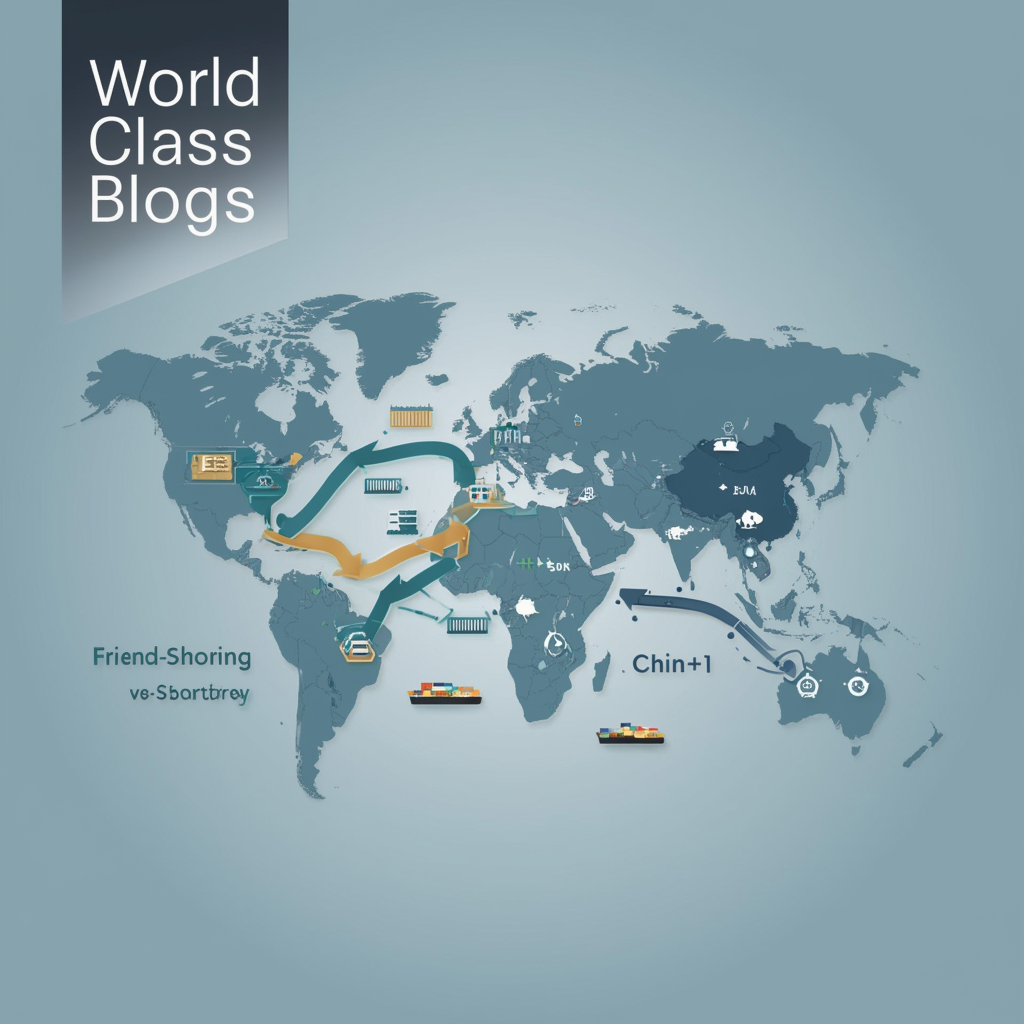
- Friend-Shoring (or Ally-Shoring): The practice of relocating supply chains or sourcing from countries that are political and economic allies, sharing similar values and regulatory frameworks. The goal is to reduce exposure to geopolitical risks from adversaries. It’s a geopolitical filter applied to sourcing decisions.
- China+1 (or Plus-One): A risk mitigation strategy where companies maintain their existing operations or sourcing in China but establish alternative, redundant production or sourcing capacity in one or more other countries. The “+1” is typically in Southeast Asia (Vietnam, Thailand), South Asia (India, Bangladesh), or Latin America (Mexico). It’s about diversification, not necessarily decoupling.
- Nearshoring: Shifting production or sourcing to a country geographically closer to the end consumer market (e.g., a US company moving production from China to Mexico or Central America). The drivers are shorter lead times, lower transport costs, and regional trade agreements.
- Reshoring (or Onshoring): Bringing production or sourcing back to the company’s home country. Driven by subsidies (like the US IRA), national security concerns, and desire for control, but often the most expensive option.
- Strategic Decoupling: A conscious, policy-driven effort by nations (primarily the US and allies) to reduce dependency on a geopolitical rival (China) in critical sectors (chips, clean tech, pharmaceuticals) by building parallel, allied supply chains.
- Supply Chain Resilience: The ability of a supply chain to anticipate, prepare for, respond to, and recover from disruptive events to restore operations and meet customer obligations.
- Multi-Tier Visibility: The capability to see not just your direct (Tier 1) suppliers, but also their suppliers (Tier 2, Tier 3, etc.), down to raw materials. Critical for compliance with forced labor and carbon footprint regulations.
- Dual Sourcing / Multi-Sourcing: Procuring the same component or material from two or more independent suppliers, often in different geographic regions, to avoid disruption if one fails.
- Geopolitical Risk Assessment: A formal process of evaluating how international political dynamics, conflicts, sanctions, and trade policies could impact a company’s operations, assets, and supply chain.
How It Works: Implementing a Reconfiguration Strategy (Step-by-Step)
This is not a one-size-fits-all process. It’s a strategic overhaul.
Step 1: The Materiality Assessment – What to Move?
Not everything needs to be friend-shored. Companies conduct a criticality vs. concentration analysis.
- Y-Axis (Criticality): How essential is the component/product to revenue, safety, or national security? (e.g., a patented drug API, a custom semiconductor).
- X-Axis (Concentration Risk): How reliant are you on a single geographic region or even a single supplier?
Quadrant Analysis: - High Criticality, High Concentration (Danger Zone): Priority #1 for reconfiguration. (e.g., lithium-ion batteries from China).
- High Criticality, Low Concentration: Maintain diversified sourcing; focus on strengthening supplier relationships.
- Low Criticality, High Concentration: May accept risk or seek simpler, lower-cost alternatives.
- Low Criticality, Low Concentration: Minimal action required.
Step 2: The “Friend-Shoring” Filter – Where to Go?
Identifying the “+1” or friend-shoring destination involves a multi-factor scorecard:
- Geopolitical Alignment: Is the country part of a key alliance (NATO, IPEF, USMCA, EU)? What is its relationship with China/Russia?
- Trade Agreement Access: Does it have preferential trade access to your target consumer markets? (e.g., Mexico has USMCA; Vietnam has CPTPP).
- Infrastructure & Ecosystem: Ports, roads, reliable power, and the presence of a supplier ecosystem (e.g., electronics in Malaysia, textiles in Bangladesh).
- Cost Competitiveness: Total landed cost, including labor, logistics, and tariffs.
- Regulatory/Compliance Environment: Ease of doing business, rule of law, intellectual property protection, and alignment with ESG standards.
- Talent & Skill Availability: Workforce size, skill level, and language capabilities.
Step 3: The Execution Model – How to Move?
There are multiple pathways, not all involving building your own factory:
- Supplier Diversification: Qualifying new suppliers in the target country while maintaining existing ones.
- Contract Manufacturing Partnership: Partnering with an established contract manufacturer (e.g., Foxconn in India) to produce your goods.
- Joint Venture: Forming a JV with a local partner to share risk and gain market knowledge.
- Greenfield Investment: Building your own new facility (highest control, highest cost/risk).
- Acquisition: Buying an existing local company with the needed capabilities.
Step 4: Building Resilience into the Network Design
The new network is designed to be agile:
- Dual Sourcing: For critical items, have at least one supplier in a “friend-shored” location and one in China (China+1) or two in different friendly regions.
- Buffer Stock & Strategic Inventory: Moving from “just-in-time” to “just-in-case,” holding safety stock of critical components, potentially in decentralized regional hubs.
- Regionalization: Creating semi-autonomous supply chains for major regions (Americas, EMEA, Asia-Pacific) to serve local demand, reducing trans-oceanic shipping dependencies.
Step 5: The Technology Enabler – Visibility & Control
You cannot manage a diversified, resilient supply chain with spreadsheets and emails.
- Supply Chain Control Towers: Digital platforms providing end-to-end visibility, predictive analytics, and scenario modeling for disruption.
- IoT & Track-and-Trace: Sensors and blockchain to track shipments and verify origins for compliance (e.g., proving cotton is not from Xinjiang).
- Supplier Risk Management Platforms: Tools that continuously monitor suppliers’ financial health, geopolitical exposure, and ESG performance.
Why It’s Important: The Strategic Imperative
1. Risk Mitigation and Business Continuity:
- Avoiding Single Points of Failure: Diversification protects against localized disruptions (natural disasters, lockdowns, strikes).
- Geopolitical Insulation: Friend-shoring reduces the risk of your supply chain being caught in the crossfire of sanctions, export controls, or retaliatory trade measures. A company sourcing critical components only from China would be devastated by a Taiwan contingency. One with a qualified supplier in Poland or Mexico has a lifeline.
2. Compliance with New Regulatory Realities:
- Forced Labor Laws: The UFLPA in the US creates a rebuttable presumption that goods made wholly or in part in Xinjiang are made with forced labor and are banned. Proving otherwise requires exhaustive, multi-tier traceability—extremely difficult with concentrated, opaque Chinese supply chains. Sourcing from Vietnam or India simplifies compliance.
- Carbon Footprint Regulations: The EU’s CBAM and corporate sustainability directives (CSRD) require detailed carbon accounting. Shorter, regionalized supply chains (nearshoring) typically have lower Scope 3 transportation emissions and are easier to audit.
3. Competitive Advantage and Customer Trust:
- Brand Protection: Consumers and B2B customers increasingly demand ethical and secure sourcing. “Made in a trusted country” is becoming a valuable brand attribute.
- Speed to Market: Nearshoring to Mexico for the US market or to Eastern Europe for the EU can drastically reduce lead times, enabling faster response to trends and reducing working capital tied up in transit.
4. Access to Subsidies and Government Support:
- Policy-Driven Incentives: The US Inflation Reduction Act and CHIPS Act offer massive subsidies, but often with domestic content or “friendly country” requirements. To qualify for a $7,500 EV tax credit or a CHIPS grant, companies must friend-shore segments of their supply chain. This makes reconfiguration not just prudent, but profitable.
5. Long-Term Strategic Positioning:
- First-Mover Advantage in Growing Markets: Building capacity in India or Southeast Asia isn’t just about leaving China; it’s about positioning for the next decade of growth in those consumer markets themselves.
- Talent Access: Diversifying manufacturing can tap into new pools of engineering and technical talent outside of traditionally saturated hubs.
*What I’ve found is that the most sophisticated companies are moving beyond a defensive “de-risking” mindset to an offensive “strategic positioning” mindset. They see the reconfiguration as an opportunity to build a more agile, transparent, and customer-responsive operating model that will be a source of advantage for the next 20 years.*
Sustainability in the Future: Building Agile, Ethical, and Green Networks
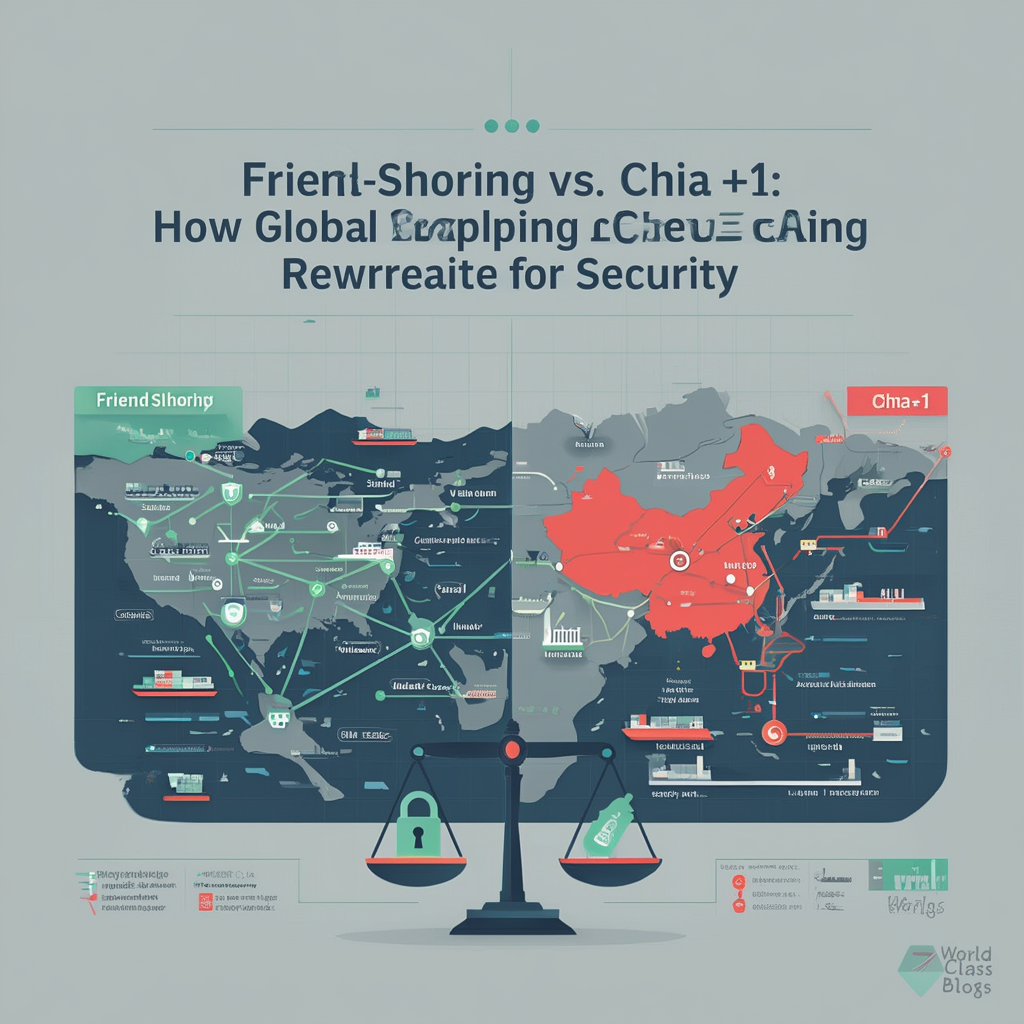
The reconfigurated supply chain of the future must be sustainable in three dimensions: operational, ethical, and environmental.
- The Agile, Adaptive Network: Future sustainability means designing networks that can reconfigure dynamically. Instead of a static map, imagine a “supply chain cloud” where production of a good can be digitally allocated to underutilized factory capacity in Poland, Malaysia, or Mexico based on real-time cost, risk, and carbon signals. This requires incredible digital integration and flexible manufacturing.
- The Ethical Imperative: Friend-shoring is, in theory, aligned with ethical sourcing if “friends” are defined by shared labor and human rights standards. However, it’s not automatic. Diligence is required to ensure new hubs don’t simply replicate poor practices. The sustainable model involves building long-term partnerships with suppliers, investing in their capabilities, and auditing collaboratively, as opposed to the old punitive, cost-squeezing model.
- The Green Calculus: Nearshoring reduces transportation emissions but may shift production to countries with dirtier energy grids. A sustainable reconfiguration must include a holistic carbon assessment and plans to help suppliers in friend-shored locations decarbonize (e.g., through green power purchase agreements). This is where strategic partnership, as explored in resources like Sherakat Network’s guide to Business Partnerships, becomes key.
- Circularity and Resilience: The most sustainable supply chain uses fewer virgin materials. Future networks will need to integrate reverse logistics and remanufacturing hubs regionally, keeping materials in circulation and reducing dependency on volatile raw material markets.
The ultimate sustainable model is a regionalized, circular, and digitally-enabled supply web that is both low-carbon and capable of withstanding systemic shocks.
Common Misconceptions
- Misconception: “Friend-shoring means leaving China completely.”
- Reality: For most companies, a full exit is economically impossible and strategically unwise. China remains a peerless ecosystem for speed, scale, and certain advanced manufacturing. The prevailing strategy is “de-risking,” not decoupling—reducing critical dependencies while maintaining a presence for the Chinese domestic market and non-critical goods. China+1 embodies this.
- Misconception: “It’s all about politics; economics will win out in the end.”
- Reality: Politics is now a core part of the economic calculus. Government subsidies, sanctions, and trade restrictions directly alter cost structures and risk assessments. The “economics” of a supply chain now includes a geopolitical risk premium that can dwarf small labor cost differences.
- Misconception: “Nearshoring to Mexico or Eastern Europe is always more expensive than Asia.”
- Reality: Total Landed Cost Analysis often tells a different story. While unit labor cost may be higher, savings from lower tariffs (USMCA), faster shipping (days vs. weeks), reduced inventory buffers, and lower logistics insurance can make nearshoring cost-competitive, especially for bulky or high-value goods.
- Misconception: “Diversification automatically means higher costs and complexity.”
- Reality: It can, if done poorly. Smart diversification focuses on strategic multi-sourcing of critical items only, not every single component. The complexity is managed with technology (control towers). The cost of diversification must be weighed against the existential cost of a single-source disruption, which can be many times higher.
- Misconception: “This is only for large multinationals.”
- Reality: SMEs are often more vulnerable because they lack the bargaining power and resources to quickly pivot. They are also directly subject to the same regulations (UFLPA). SMEs must leverage trade associations, digital platforms, and government export assistance programs to explore diversification.
Recent Developments (2024/2025)
- The “China+1” Maturity: The “+1” destinations are now facing their own growing pains. Vietnam is experiencing power shortages and rising wages. India’s manufacturing growth is impressive but faces infrastructure and bureaucracy hurdles. Mexico is booming but struggles with security in certain regions. The strategy is evolving into “China+N” – a broader, more flexible diversification across several friendly nations.
- Data-Driven Friend-Shoring: Tools are emerging to quantify geopolitical risk. Firms like Klarity, Dun & Bradstreet, and Everstream Analytics now offer dashboards that score supplier locations based on political stability, trade restriction exposure, and climate vulnerability, allowing for more nuanced decisions.
- The “Screening” of Investments: The US, EU, and other allies are implementing or strengthening outbound investment screening mechanisms to prevent their companies’ capital and expertise from flowing into sensitive tech sectors (advanced semiconductors, AI, quantum) in countries of concern, actively shaping friend-shoring flows.
- Friend-Shoring in Critical Minerals: The US-led Mineral Security Partnership (MSP) and the EU’s Critical Raw Materials Act are explicitly designed to funnel investment for mining and processing of lithium, cobalt, etc., into allied nations (Canada, Australia, Brazil, partner countries in Africa), creating a parallel, “friendly” battery material supply chain.
- The “Altasia” Concept Gains Traction: Analysts now refer to “Altasia” (Alternative Asia)—a coalition of 14 countries from Japan to India—as a combined manufacturing base that rivals China in population, low-cost labor, and factory output. Companies are building networks across this region rather than betting on a single “+1”.
Success Stories & Strategic Implementations
- Apple’s Cautious Pivot: Apple, long the symbol of deep Chinese supply chain integration, is executing a textbook China+1/N strategy. It has rapidly increased iPhone production in India (from <5% to an estimated 20-25% by 2025) via partners Foxconn and Tata, while also expanding in Vietnam for other products like AirPods and MacBooks. It maintains its vast Chinese operations but has achieved meaningful diversification.
- Tesla’s “Local for Local” Playbook: Tesla is building a regionalized supply chain. Gigafactories in Shanghai serve Asia, Berlin serves Europe, and Texas and Mexico (planned) serve the Americas. This reduces transcontinental shipping of bulky cars and batteries, aligns with IRA incentives, and provides geopolitical insulation. It’s friend-shoring and nearshoring combined.
- Intel’s “Fab-Footprint” Diversification: Following the CHIPS Act, Intel is building major new advanced logic chip fabs in Ohio (USA) and Magdeburg (Germany), while maintaining and expanding in “friend-shored” locations like Ireland and Israel. It is deliberately creating a geographically balanced, politically resilient manufacturing network for the most critical of components.
- Walmart’s “Onshoring/Nearshoring” Push: The retail giant has committed to sourcing an additional $350 billion in goods made, grown, or assembled in the US by 2030. It is investing in building supplier ecosystems domestically and in nearby nations like Honduras and Guatemala for categories like textiles and agriculture, shortening lead times and enhancing control.
Real-Life Examples & Case Studies
Case Study: The Electronics Manufacturer & The UFLPA Nightmare
- Before: A US consumer electronics company sourced 80% of its components and final assembly from China. Its solar panels for facilities used polysilicon potentially linked to Xinjiang.
- The Crisis: In 2023, US Customs detained a $20 million shipment at port under UFLPA. The company couldn’t provide verifiable, document-by-document proof of the supply chain for over 100 components back to the raw material. The goods were eventually refused entry.
- The Reconfiguration Strategy (China+1 & Friend-Shoring):
- Critical Component Audit: Identified 15 “high-risk” components (solar panels, LCD screens, certain capacitors) with potential Xinjiang exposure.
- Diversification: For those 15 items, it qualified new suppliers in Thailand (for screens), Malaysia (for capacitors), and a US-based company (for solar panels).
- Supplier Collaboration: With its remaining Chinese suppliers, it invested in joint traceability software to map Tier 2/3 suppliers and provide auditable documentation.
- Result: Higher costs for the 15 components (5-15% increase), but full compliance, restored shipments, and a more resilient supply chain. The company now markets its products as “ethically sourced.”
Case Study: The Automotive Tier-1 Supplier’s Dual-Sourcing Play
- Situation: A German supplier of advanced brake sensors had a single-source contract with a factory in Shanghai.
- Risk: The Shanghai lockdowns of 2022 halted production for weeks, forcing global auto production lines to slow down. The supplier faced massive contractual penalties.
- Action: The company implemented a true dual-sourcing strategy.
- It worked with its existing Chinese partner to open a second, smaller plant in Changsha (China, but different region).
- Simultaneously, it partnered with a contract manufacturer in Hungary to establish a “friend-shored” production line for the European market.
- It redesigned the sensor to have a standardized core module produced in both locations, with final customization done locally.
- Outcome: A 30% increase in capital expenditure and slightly higher unit costs. However, it created an “all-weather” supply capability. When floods hit Changsha, Hungary ramped up. When European energy prices spiked, China could increase output. Customer satisfaction and contract retention soared.
Conclusion and Key Takeaways
The era of the monolithic, cost-optimized global supply chain is over. The new paradigm is the multi-polar, resilient supply network, designed with geopolitical maps alongside spreadsheets. Friend-shoring and China+1 are not temporary trends but permanent features of the global operating environment.
Key Takeaways:
- Reconfiguration is a Journey, Not a Destination: This is a multi-year strategic initiative, not a quarterly project. It requires sustained investment, leadership commitment, and a willingness to accept higher short-term costs for long-term security.
- Data is Your Most Critical Asset: You cannot de-risk what you cannot see. Investment in supply chain mapping, risk intelligence platforms, and traceability technology is non-negotiable.
- The “Plus-One” is Evolving into a “Portfolio”: The most resilient companies are building a portfolio of manufacturing and sourcing options across friendly regions (Altasia, North America, Europe). Flexibility is the new superpower.
- Partnerships are Key: Success depends on deep collaboration—with suppliers (to improve their practices), with governments (to access incentives and navigate regulations), and with logistics partners (to build agile networks). Forging these alliances is critical, as detailed in resources like Sherakat Network’s guide to Strategic Alliances.
- The Human Element is Vital: This shift requires new skills in your team: geopolitical analysis, digital supply chain management, and ethical sourcing expertise. Upskilling your procurement and operations teams is essential.
The companies that thrive will be those that view this great reconfiguration not as a burdensome cost, but as a generational opportunity to build a competitive moat based on resilience, transparency, and trust. In a volatile world, the most reliable and ethical supply chain will be the most valuable.
FAQs (Frequently Asked Questions)
1. What’s the concrete difference between friend-shoring and China+1?
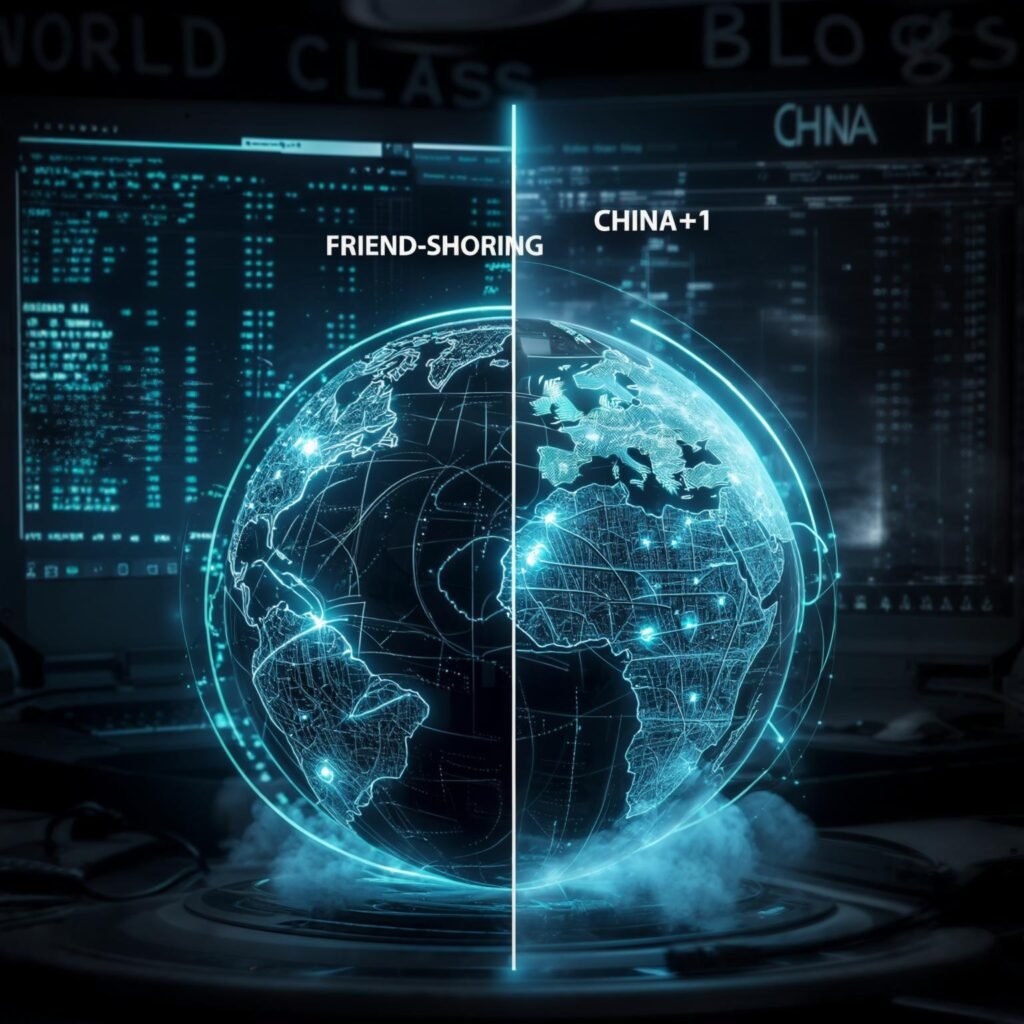
China+1 is primarily a corporate risk mitigation strategy focused on diversification. It says, “Let’s not put all our eggs in China’s basket.” Friend-shoring is a geopolitical and policy-driven strategy focused on alignment. It says, “Let’s put our eggs in the baskets of countries that share our values and security interests.” In practice, they overlap significantly.
2. Is Mexico the biggest winner from nearshoring/friend-shoring?
For the US market, Mexico is a prime beneficiary, but not the only one. Its advantages are proximity, USMCA, and established manufacturing corridors. However, countries in Southeast Asia (Vietnam, Thailand, Malaysia) are winning huge investments from companies diversifying away from China for global markets. India is a massive winner for both its domestic market and as an export base.
3. How do I conduct a geopolitical risk assessment for my suppliers?
- Map Your Tier 1 Suppliers: Get exact factory addresses.
- Use Risk Intelligence Tools: Subscribe to services that provide country and regional risk scores (political stability, conflict, trade restrictions).
- Scenario Analysis: Model impacts of specific events (e.g., “Taiwan blockade,” “Strait of Hormuz closure”) on your supply routes and supplier operations.
- Consult Experts: Engage with political risk consultancies for tailored assessments on critical suppliers.
4. Doesn’t diversification increase complexity and management costs?
Yes, initially. Managing multiple suppliers across different time zones and regulatory regimes is more complex. However, this is mitigated by digital supply chain platforms that provide a single pane of glass for monitoring and by focusing diversification only on critical/high-risk components, not every single part.
5. How are governments encouraging friend-shoring?
Through carrots and sticks:
- Carrots: Subsidies (IRA, CHIPS Act), tax breaks, and trade agreements (USMCA, IPEF).
- Sticks: Sanctions, export controls (on advanced tech to rivals), and import bans (UFLPA) that make sourcing from “unfriendly” places risky or illegal.
6. What is the role of ASEAN in the China+1 strategy?
ASEAN is the quintessential “+1” region. It offers scale, lower costs, developing infrastructure, and relatively neutral geopolitical positioning. Countries like Vietnam, Thailand, and Indonesia are absorbing massive foreign direct investment as companies build parallel capacity there. It’s often the first port of call for diversification out of China.
7. Can small and medium-sized enterprises (SMEs) realistically friend-shore?
Yes, but they need to be strategic and collaborative.
- Leverage Your Customers/Buyers: Large corporations are often mandated to de-risk their own supply chains and may help qualified SMEs in their network to diversify or relocate.
- Use Digital Marketplaces: Platforms like Alibaba.com now have “Ready to Ship” hubs in friend-shored locations like South Korea and Vietnam.
- Pool Resources: Collaborate with other SMEs in your industry through associations to share the cost of exploring new markets or conducting supplier audits.
8. How does climate change factor into friend-shoring decisions?
It’s a dual consideration. Physical Risk: Avoid sourcing from regions highly vulnerable to floods, droughts, or hurricanes (e.g., some coastal Asian regions). Transition Risk: Friend-shoring to countries with cleaner energy grids (like parts of the EU or Canada) can reduce your Scope 3 carbon footprint and future-proof against carbon taxes.
9. What about intellectual property (IP) risk in new locations?
IP protection is a major concern, especially when moving to countries with weaker enforcement records. Mitigation strategies include:
- Staging Technology Transfer: Only move mature, less sensitive processes initially.
- Legal Structuring: Use joint ventures with clear IP ownership clauses.
- Digital Guardrails: Use digital rights management on transferred designs and manufacturing files.
10. Is “just-in-case” inventory the new norm?
Strategic inventory buffers are indeed becoming standard for critical items. The key is intelligence: using data to determine the right level of safety stock based on lead time variability and part criticality, rather than blindly stocking up on everything.
11. How does friend-shoring affect product pricing for consumers?
In the short to medium term, it likely contributes to “greenflation” or “resilience-flation”—higher prices due to increased costs of manufacturing in higher-wage, better-regulated locations and maintaining redundant capacity. In the long term, increased competition among new supplier hubs and technological efficiencies may moderate these costs.
12. What is the “China-for-China” strategy?
This is a corollary to friend-shoring. It involves maintaining or even expanding operations in China purely to serve the Chinese domestic market, while sourcing for Western markets from elsewhere. It acknowledges China’s market size while de-risking global supply chains.
13. How do I handle my existing long-term contracts with Chinese suppliers?
Negotiation is key. Approach them as partners in resilience. Options include:
- Diversification Support: Ask them to establish a facility in a “+1” country, perhaps as a joint venture.
- Contract Re-negotiation: Adjust volumes and introduce flexibility clauses for force majeure events.
- Phased Transition: Gradually reduce volumes over the contract period as you ramp up alternative sources.
14. Are there “friend-shoring” indices or scores for countries?
Yes, emerging from banks and consultancies. They score countries based on: Political alignment with Western blocs, trade agreement access, logistics performance, business environment, and ESG factors. These can provide a useful starting point for evaluation.
15. What’s the single biggest mistake companies make in reconfiguration?
Underestimating the time and resource commitment. Qualifying a new supplier, especially for complex components, can take 12-24 months. It requires engineering visits, quality audits, trial runs, and regulatory approvals. Starting late means being exposed when a crisis hits.
16. How does the war in Ukraine influence friend-shoring decisions?
It is a stark case study in supply chain weaponization and has accelerated friend-shoring in two ways:
- Energy Security: Companies are seeking to manufacture closer to stable energy sources (e.g., the US with its shale gas).
- Proximity to Conflict: It has made Eastern Europe a more nuanced choice—countries like Poland and the Czech Republic are seen as resilient EU members, but their proximity to Russia is a factor in risk assessments.
17. Will this lead to a world of competing trade blocs?
That is the trajectory. We are moving toward a tri-polar or multi-polar trade system: a US-centric bloc (Americas, parts of Asia), a China-centric bloc (China, Russia, parts of Global South), and the EU as a powerful third pole. Supply chains will increasingly align within these blocs.
18. How do logistics providers adapt to this new model?
They are building multi-modal, regional hub-and-spoke networks. Instead of mega-ports in Shanghai and Rotterdam, they are developing smaller, agile ports in Vietnam, India, and Mexico, connected by rail and truck to regional manufacturing clusters.
19. What’s the impact on innovation?
Potentially positive. Diversification can expose companies to new manufacturing techniques and regional innovations (e.g., India’s frugal engineering, Germany’s automation). However, it could also fragment R&D efforts if not managed centrally.
20. How do I communicate this strategy to investors?
Frame it as strategic CAPEX for resilience and compliance, not just a cost. Highlight:
- Risk Reduction: Lower volatility in earnings.
- Regulatory Future-Proofing: Avoiding fines and shipment seizures.
- Customer Assurance: Meeting B2B and consumer demand for ethical sourcing.
- Access to Subsidies: Tapping into government incentives.
21. Is automation and robotics making location less important?
Yes, to an extent. Highly automated “lights-out” factories are less sensitive to labor costs and can be economically viable in higher-wage countries, enabling reshoring. However, they require massive upfront investment and skilled maintenance, which still favors locations with strong technical ecosystems.
22. What role does cybersecurity play in the new supply chain?
A huge role. As supply chains become more digital and interconnected, they become more vulnerable to cyberattacks. Securing the digital thread—from supplier ERP systems to your own control tower—is as important as securing physical logistics.
23. How can I assess the true “total landed cost” of a friend-shored option?
Model must include:
- Unit Cost (materials, labor)
- Logistics (freight, insurance, duties)
- Inventory Carrying Cost (faster/slower cycle times)
- Cost of Quality (expected defect rates)
- Risk Premium (cost of disruption probability)
- Carbon Cost (current/future taxes)
24. Are there industries where friend-shoring is virtually impossible?
Certain industries remain deeply anchored due to unique ecosystems:
- Advanced Electronics Assembly: The Shenzhen ecosystem is still unparalleled for speed from prototype to mass production.
- Specialty Chemicals/Pharma APIs: China dominates due to scale and relaxed environmental regulations. Shifting requires rebuilding complex, permitted chemical plants—a decade-long process.
25. Where can I find reliable data and case studies on this trend?
- Consulting Firms: McKinsey, BCG, Kearney publish regular reports on supply chain reconfiguration.
- Industry Groups: The US Chamber of Commerce, National Association of Manufacturers.
- Government Sources: U.S.-China Economic and Security Review Commission (USCC), European Parliament reports.
- Media: The Economist, Bloomberg (supply chain sections), Financial Times.
- For broader context on managing complex global operations, see The Daily Explainer’s guide to Global Supply Chain Management.
About Author
Sana Ullah Kakar is a Global Supply Chain Strategist and Managing Director of a firm specializing in geopolitical risk and operational resilience. With over 20 years of experience living and working across Asia, Europe, and the Americas, they have led supply chain transformations for Fortune 500 companies in the automotive, electronics, and pharmaceutical sectors. They combine hands-on logistics expertise with macro-level geopolitical analysis to provide actionable strategies. Connect with our team for more insights via our Contact Us page.
Free Resources
- Kearney’s Reshoring Index: Annual report tracking the flow of manufacturing back to the US.
- McKinsey Global Institute’s “Risk, resilience, and rebalancing in global value chains”: A foundational report on the economics of reconfiguration.
- U.S. Department of Commerce’s “Supply Chain Competitiveness” Resources: Data and tools for companies.
- Dun & Bradstreet’s “Global Business Risk Report”: Provides country risk scores.
- The Conference Board’s Geopolitical Strategy Toolkit.
- For mental models on adapting to systemic change and stress, The Daily Explainer’s guide to Psychological Wellbeing offers valuable parallel insights.
- To explore the foundational technologies enabling supply chain transparency, visit our Technology & Innovation category.
Discussion
The reconfiguration is underway. Is your company actively pursuing friend-shoring or China+1? What has been your biggest challenge: finding qualified suppliers, managing costs, or navigating new regulations? Do you believe the benefits of resilience outweigh the significant investments required? Share your stories, questions, and predictions for the next phase of this great transformation.
For more expert analysis on the forces reshaping global business and policy, explore the full spectrum of content at World Class Blogs.