From Battlefield to Bargaining Table: A Beginner’s Guide to the Core Concepts of Modern Diplomacy
A comprehensive beginner’s guide to modern diplomacy. Learn key concepts, how peace negotiations work, recent trends, and why diplomacy is vital for global stability. Perfect for students & professionals.

A visual analysis of the key factors that enhance or undermine effective diplomacy in contemporary international relations.
Navigating the complex world of diplomacy is essential for global stability, as it offers a structured framework for peaceful dialogue and prevents conflicts from escalating into devastating wars.
In an era marked by headlines of conflict and geopolitical tension, the quiet, persistent work of diplomacy is often overlooked. Yet, it is this very work that prevents wars, forges vital trade agreements, and enables global cooperation on existential threats like climate change and pandemics. Diplomacy is the art and science of managing international relations through peaceful means, a complex practice that has evolved over thousands of years from ancient envoys to today’s digital dialogues. This guide demystifies the core concepts of modern diplomacy. Whether you’re a curious beginner seeking to understand global affairs or a professional in need of a structured refresher, this article will provide you with a clear, comprehensive foundation. We will explore what diplomacy truly is, how it functions in theory and practice, and why it remains humanity’s most critical tool for building a stable and prosperous world. To begin with, a clear overview, the table below contrasts the core principles of effective diplomacy with common barriers that undermine it.
Introduction – Why This Matters
The importance of diplomacy transcends the image of formal summits and state dinners. It is the foundational operating system for international relations, providing the protocols and channels through which countries communicate, negotiate, and coexist. In a world of nearly 200 sovereign nations with diverse interests, ideologies, and histories, friction is inevitable. Diplomacy is the mechanism that converts potentially destructive friction into dialogue and, ideally, mutual agreement.
Consider the alternative—when diplomatic channels break down, the risk of miscalculation, escalation, and open conflict skyrockets. The human and economic costs of war are catastrophic. Diplomacy, therefore, is not a luxury or an abstract concept; it is a practical necessity for global security and human well-being. It is the primary tool for conflict prevention, working behind the scenes to address grievances before they boil over into violence. As philosopher Immanuel Kant envisioned, diplomacy is the pathway to “perpetual peace,” a system where disputes are settled through rational discourse and law rather than force.
In my experience studying international crises, the public often sees only the climax—a signed treaty or a dramatic breakdown in talks. What remains invisible are the years of preventive diplomacy, the back-channel communications, the careful building of trust, and the complex negotiation of technical details that make peace possible. Understanding diplomacy means appreciating this unseen infrastructure that holds our interconnected world together.
Background / Context
Diplomacy is one of the world’s oldest professions, with its origins tracing back to the dawn of civilization. The earliest recorded evidence comes from clay tablets in the city-states of Sumer (modern-day Iraq) around 2500 BC, documenting messages and treaties between rulers. Ancient empires in Egypt, China, India, and Persia all developed sophisticated systems for sending envoys to negotiate alliances, ceasefires, and trade terms.
The modern framework for diplomacy began to crystallize in Renaissance Europe. The establishment of the first permanent embassy in the 1450s was a revolutionary development, creating a continuous presence for dialogue rather than relying on temporary messengers. A pivotal moment came with the Peace of Westphalia in 1648, which ended the Thirty Years’ War. This series of treaties established the foundational principles of state sovereignty and legal equality among nations, forming the bedrock of the international order that persists today. Soon after, in 1678, France’s Cardinal Richelieu created the first ministry of foreign affairs, professionalizing and centralizing the conduct of diplomacy.
The 20th century witnessed diplomacy’s scale transform with the creation of multilateral institutions like the League of Nations and its successor, the United Nations. These forums recognized that many challenges—from collective security to health and human rights—required coordinated, global responses. The nature of diplomatic actors also expanded beyond just foreign ministries. Today, non-state actors, including international corporations, non-governmental organizations (NGOs), city networks, and even influential individuals, play significant roles in what is termed “Track II” or informal diplomacy.
Key Concepts Defined
To navigate the field, it’s essential to understand its key terminology and frameworks.
- Diplomacy: As defined by DiploFoundation’s Jovan Kurbalija, it can be understood in three layers. Broadly, it is the conduct of international relations by peaceful means (the opposite of military action). Specifically, it includes the activities carried out by agents of states, international organizations, and other actors. Institutionally, it is the system operated by diplomatic services (foreign ministries, embassies, consulates).
- Sovereignty: The principle that a state has supreme authority and independence over its own territory and domestic affairs, free from external interference. This is the cornerstone of the international system.
- Bilateral vs. Multilateral Diplomacy: Bilateral diplomacy involves direct relations between two states. Multilateral diplomacy involves three or more states, typically within an international organization like the UN or WTO, to address issues of common concern.
- Track I and Track II Diplomacy: Track I refers to official, government-to-government diplomacy. Track II involves unofficial dialogue and problem-solving by non-state actors like academics, conflict resolution practitioners, and former diplomats. It often works in parallel to create innovative solutions and build trust away from political pressures.
- Soft Power: A concept popularized by Joseph Nye, it is the ability to shape the preferences of others through appeal and attraction—via culture, political values, and foreign policies—rather than coercion (hard power like military or economic sanctions).
- Negotiation & Mediation: Negotiation is a dialogue between conflicting parties aimed at reaching an agreement. Mediation involves a neutral third party facilitating the negotiation to help parties find a mutually acceptable settlement.
How It Works (Step-by-Step Breakdown)
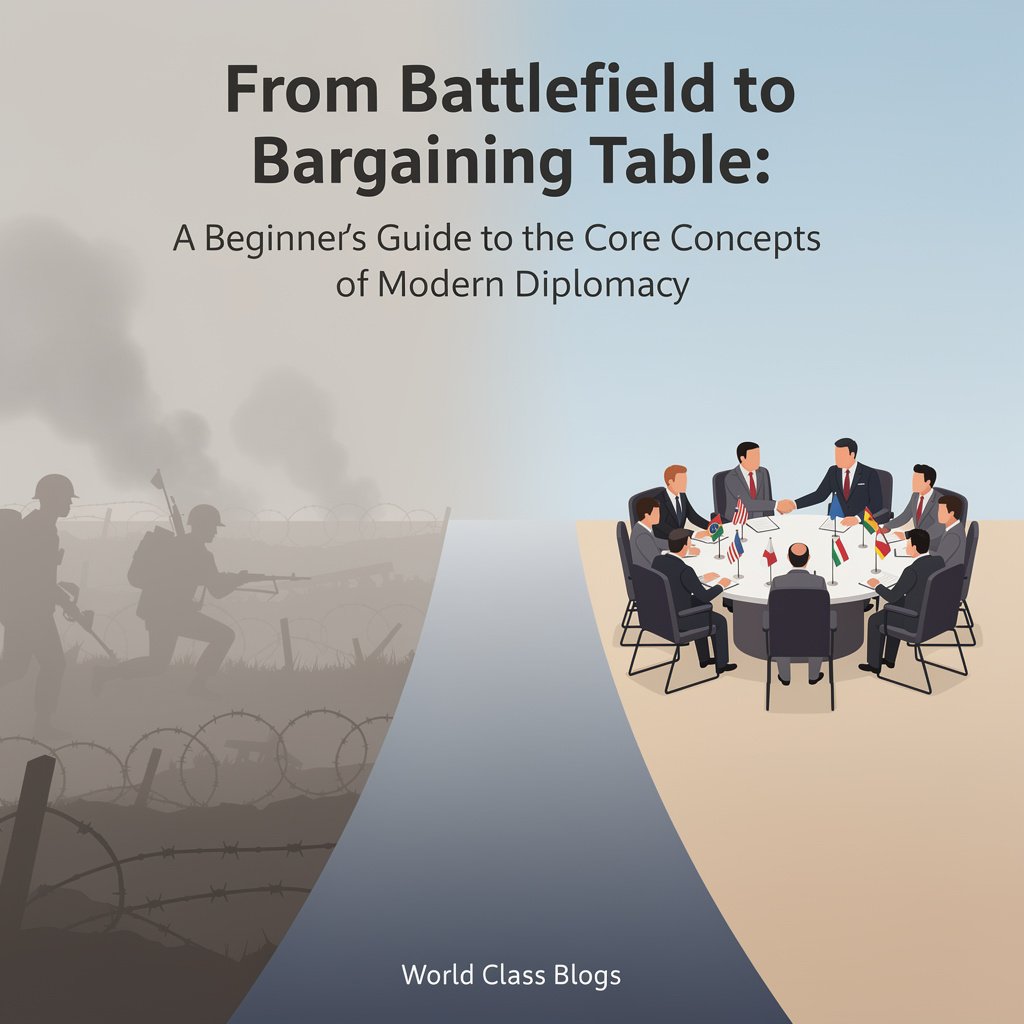
The diplomatic process, while adaptable to each situation, generally follows a structured path from initial contact to implementation.
- Agenda Setting and Pre-Negotiation
This foundational stage involves identifying the issue, the relevant stakeholders, and their core interests. Diplomats engage in shuttle diplomacy (moving between parties) and informal consultations to gauge positions and explore the “Zone of Possible Agreement” (ZOPA). The goal is to get parties to agree to formally negotiate. - Formal Negotiation
Parties convene, often with a set agenda. This involves:- Positioning: Stating initial, often maximalist, demands.
- Bargaining: The exchange of concessions. Effective negotiators focus on underlying interests (e.g., security, economic growth) rather than rigid positions (e.g., a specific border line).
- Drafting: Translating agreed points into precise treaty or agreement language, a painstaking process where every word carries weight.
- Reaching Agreement
Parties finalize the text. This may involve compromises and “package deals” where concessions in one area are traded for gains in another. The agreement is then signed, signaling political commitment. - Ratification and Implementation
For treaties, the signed document typically requires ratification according to a nation’s domestic laws (e.g., by a parliament). Only after ratification does it become legally binding. Implementation then begins, often monitored by a joint commission or international body. - Enforcement and Compliance
This ongoing phase ensures parties uphold their commitments. Tools range from voluntary reporting and peer review to more formal dispute settlement mechanisms and, in extreme cases, international sanctions for non-compliance.
Throughout this process, effective communication is paramount. Diplomats must master persuasion, active listening, and cultural fluency. They must build relationships of trust, as a diplomat’s word is their currency. Empathy is a critical, though often unspoken, skill—the ability to understand the domestic political pressures and historical narratives that shape an adversary’s stance can unlock solutions invisible from a rigid, confrontational posture.
Why It’s Important
Diplomacy’s importance can be measured in what it prevents, what it enables, and what it builds.
- Conflict Prevention and Resolution: This is diplomacy’s most vital function. By maintaining open channels, clarifying intentions, and offering face-saving solutions, diplomacy directly reduces the risk of war. The 2022 Grain Initiative, brokered by the UN and Türkiye between Ukraine and Russia, is a powerful recent example. Amidst active warfare, diplomats created a corridor that allowed millions of tons of grain to reach global markets, averting a catastrophic food crisis in vulnerable nations.
- Global Problem-Solving: No single nation can solve transnational challenges alone. Diplomacy facilitates the collective action needed for issues like climate change (the Paris Agreement), nuclear non-proliferation (the Iran Nuclear Deal, or JCPOA), and pandemic response (the COVAX facility). As global challenges become more complex, so too does the diplomatic machinery needed to address them.
- Facilitating Trade and Economic Stability: International trade, worth over $32 trillion annually, relies on a dense web of diplomatic agreements—from bilateral tax treaties to massive frameworks like the World Trade Organization (WTO) rules. Diplomacy provides the predictable, rules-based environment that allows commerce to flow, driving global prosperity.
- Protecting Citizens Abroad: Consular diplomacy, often the most visible to the public, involves assisting citizens overseas during crises—from natural disasters to political unrest—and upholding their rights under international law.
In my experience, the true measure of diplomatic success is often the catastrophe that didn’t happen. The cyber-attack that was de-escalated through a hotline, the border skirmish that was contained through a pre-existing military dialogue mechanism, or the trade dispute that was arbitrated rather than spiraling into a tariff war. These silent successes are diplomacy’s greatest contributions.
Sustainability in the Future
The practice of diplomacy is undergoing its most significant transformation in centuries, driven by technology and shifting global power structures. For diplomacy to remain effective—or “sustainable”—it must adapt.
- Digital Diplomacy (Digiplomacy): Social media, big data analytics, and artificial intelligence are reshaping how states engage global publics and analyze information. However, they also create new vulnerabilities. In my experience, while digital tools offer unprecedented reach, they often sacrifice the nuance and trust-building of in-person dialogue. The rise of deepfakes and AI-generated misinformation poses a profound challenge to the very foundation of diplomatic communication: verified, credible information.
- Inclusion and Diversity: Future diplomacy must be more representative to be legitimate and effective. This means greater gender parity—female ambassadors now lead nearly 30% of UN member state missions, a record high—and incorporating perspectives from the Global South. It also involves formally integrating non-state actors, from cities tackling climate change to corporations setting data standards, into diplomatic processes.
- Addressing Existential Risks: Modern diplomacy’s mandate is expanding to cover frontier issues like the governance of artificial intelligence, biotechnology, and space. The 2024 UN General Assembly resolution on AI governance is a prime example of diplomacy scrambling to establish norms for technologies that outpace traditional treaty-making. Similarly, climate diplomacy has shifted from a niche topic to a central pillar of bilateral and multilateral relations, embedded in everything from security dialogues to trade negotiations.
The sustainable future of diplomacy lies in a hybrid model: leveraging technology for efficiency and outreach while fiercely protecting the human-centric arts of empathy, confidentiality, and relationship-building. It requires diplomats who are as comfortable in a virtual town hall as they are in a confidential chamber.
Common Misconceptions
Diplomacy is often misunderstood. Clarifying these fallacies is key to a realistic appreciation of its role.
- Misconception: Diplomacy is Appeasement
Reality: Diplomacy is not about capitulation; it is about strategic engagement. It involves talking to adversaries not to endorse their actions, but to change them, manage crises, and explore areas of mutual interest even amid profound disagreement. As Winston Churchill stated, “To jaw-jaw is always better than to war-war.” - Misconception: Diplomats Just Go to Parties
Reality: While representational events are part of building networks, a diplomat’s core work is relentless analysis, reporting, and advocacy. A typical day might involve drafting a sanctions proposal, advising companies on local regulations, negotiating a visa agreement line-by-line, and providing emergency assistance to a detained national. - Misconception: Diplomacy is Always Slow and Bureaucratic
Reality: While treaty-making can be painstakingly slow, modern diplomacy also operates at digital speed. Crisis diplomacy requires immediate, around-the-clock communication. During the 2023 Sudan evacuation, diplomats used real-time satellite data, encrypted messaging, and coordination with other nations to secure safe passage for thousands. - Misconception: Only Governments Do Diplomacy
Reality: Track II diplomacy by NGOs, think tanks, and business leaders often creates the breakthroughs that formal channels cannot. For instance, the peace negotiations in Mozambique in the 1990s were significantly advanced by the work of the Community of Sant’Egidio, a Catholic lay organization. - Misconception: Strong Countries Don’t Need Diplomacy
Reality: Even the most powerful nations rely on diplomacy to legitimize their actions, build coalitions, and manage the unintended consequences of their power. Unilateral action often leads to isolation and long-term strategic costs.
Recent Developments
The diplomatic landscape is highly dynamic. Key recent trends include:
- The Weaponization of Interdependence: Globalization created deep economic ties between nations, once thought to be a guarantee of peace. Recently, these ties have become leverage in diplomatic disputes. The use of strategic trade controls on semiconductors, critical minerals, and energy is a new form of statecraft, blending economics and geopolitics. This demands a new diplomatic skill set focused on supply chain resilience and economic security.
- Multipolarity and Coalition Diplomacy: The unipolar moment is over. A more multipolar world with multiple centers of power (the U.S., China, the EU, India, etc.) means fewer issues can be solved by one or two nations. Success increasingly depends on building fluid, issue-based coalitions. The expansion of groups like the G20 and BRICS+ reflects this shift.
- Public Diplomacy in the Age of Disinformation: States are investing heavily in narrating their own stories directly to foreign populations via social media and streaming services. Concurrently, they are battling foreign influence operations and disinformation campaigns that seek to undermine social cohesion and electoral processes in target countries. This has turned information space into a contested diplomatic frontier.
- Rise of Humanitarian Diplomacy: With record levels of global displacement (over 117 million people as of 2024), diplomatic efforts to secure humanitarian access, funding, and protection for civilians in conflict zones have become a major pillar of international relations, often involving complex negotiations with non-state armed groups.
Success Stories
While diplomatic failures are often high-profile, numerous successes demonstrate its enduring value.
- The Montreal Protocol (1987): A landmark multilateral environmental agreement to phase out ozone-depleting substances. It is hailed as the most successful international treaty ever, with near-universal adherence. Through a framework of common but differentiated responsibilities and a flexible fund for technology transfer, it has put the ozone layer on a path to recovery by mid-century. It is a masterclass in science-based diplomacy with built-in equity and compliance mechanisms.
- The Good Friday Agreement (1998): Ended three decades of sectarian conflict in Northern Ireland. Its success lay in its ingenious structure: it didn’t force a final resolution on sovereignty but created power-sharing institutions where former enemies had to govern together. It was underpinned by intense U.S. mediation (Track I) and years of groundwork by civil society groups (Track II).
- The Iran Nuclear Deal (JCPOA, 2015): While currently in jeopardy, its initial achievement was monumental. It brought together major powers (the P5+1) to negotiate a highly technical, verification-heavy agreement that verifiably rolled back Iran’s nuclear program for years. It demonstrated that even on the most sensitive security issues, diplomacy with adversaries can yield results.
- ASEAN’s Role in Southeast Asian Stability: The Association of Southeast Asian Nations, through its consensus-based, non-confrontational diplomacy (“the ASEAN Way”), has maintained relative peace and fostered economic integration in a historically volatile region. It provides a constant forum for dialogue that manages tensions, such as those in the South China Sea.
Real-Life Examples
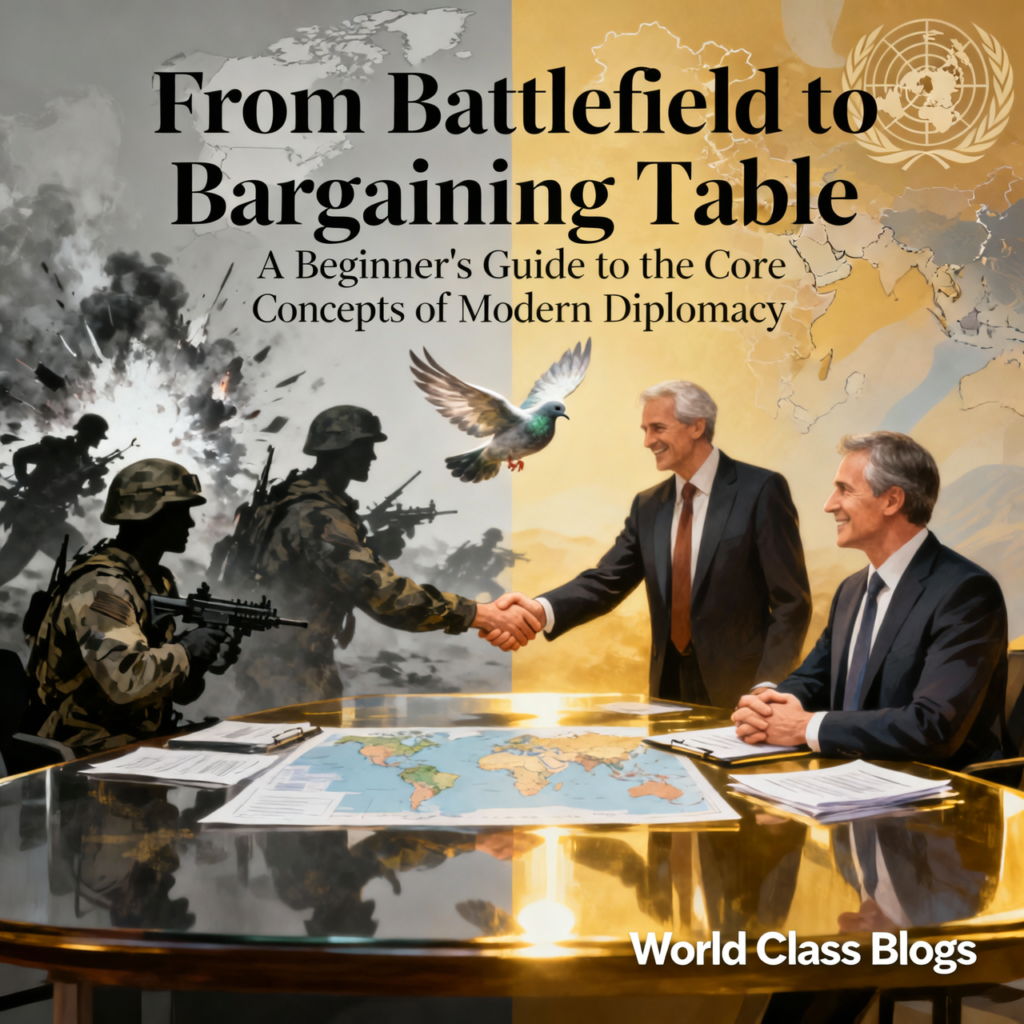
Examining contemporary cases brings the concepts to life.
- Ukraine Diplomacy: A Multi-Track Effort: The response to Russia’s 2022 invasion showcases modern diplomacy’s full spectrum:
- Track I: UN General Assembly resolutions to isolate Russia, and G7/EU coordination on sanctions.
- Military/Defense Diplomacy: The U.S.-led Ukraine Contact Group to coordinate arms shipments.
- Humanitarian Diplomacy: The UN/Türkiye-brokered Black Sea Grain Initiative.
- Legal Diplomacy: Efforts by dozens of states to build a case for aggression at the International Court of Justice.
This case shows how diplomacy, sanctions, and military support are integrated in a comprehensive strategy.
- U.S.-China Managed Competition: Relations between the two largest economies are the definition of complex interdependence. Diplomacy here is focused on “guardrails” and crisis communication to prevent competition from tipping into conflict. The establishment of military hotlines, working groups on AI risk, and recent dialogues on climate cooperation, even amid trade wars and strategic rivalry, illustrate diplomacy’s role in managing great-power relations.
- The 2024 Gaza Ceasefire and Hostage Negotiations: A stark example of high-stakes, third-party mediation involving the U.S., Qatar, and Egypt. It involves simultaneous negotiation on multiple issues: humanitarian pauses, prisoner exchanges, and aid delivery. The painstaking, incremental progress highlights how diplomacy operates under the extreme pressure of active warfare and deep public anguish.
Conclusion and Key Takeaways

Diplomacy is the indispensable, though imperfect, craft of building peace and order in an anarchic world. It is not a replacement for strength, but the means through which strength is translated into lasting influence and security.
- Key Takeaway 1: Diplomacy is a System, Not an Event. It is the continuous infrastructure of international relations—the embassies, the treaties, the communication channels—that allows for daily interaction and crisis management.
- Key Takeaway 2: It’s About Interests, Not Just Positions. Successful diplomacy digs beneath maximalist demands to find underlying common interests (security, prosperity, stability), which can be the basis for trade-offs and solutions.
- Key Takeaway 3: Modern Diplomacy is Multi-Actor and Multi-Track. While states remain primary, NGOs, businesses, and cities are vital partners. Official (Track I) and unofficial (Track II) processes work best in tandem.
- Key Takeaway 4: Technology is a Double-Edged Sword. Digital tools empower public engagement and analysis but threaten the confidentiality and trust essential for breakthrough negotiations.
- Key Takeaway 5: It Requires Patience and Persistence. Diplomatic achievements are often the result of years of unseen work. Setbacks are frequent, but the cost of abandoning dialogue is invariably higher.
The future will demand a new generation of diplomats and informed citizens who understand that in a crowded, interconnected, and armed world, the wisdom to talk and the skill to listen are our greatest strategic assets. For those looking to delve deeper into related fields, you can explore our resources on technology and innovation and the work of our nonprofit hub, which often engages in Track II initiatives.
Frequently Asked Questions (FAQs)
Q1: What’s the difference between a diplomat and an ambassador?
An ambassador is a specific, senior rank of diplomat. All ambassadors are diplomats, but not all diplomats are ambassadors. Diplomats are the broader corps of officials representing their country abroad, working in various roles and ranks within embassies, consulates, and foreign ministries. An ambassador is the head of a diplomatic mission (an embassy) in a foreign country.
Q2: Can anyone become a diplomat?
Typically, one becomes a diplomat by entering one’s country’s foreign service through a competitive examination and selection process. This process assesses knowledge of international affairs, language skills, analytical ability, and personal suitability for representing the nation abroad. Requirements vary by country, but generally demand a strong academic background and a commitment to public service.
Q3: Are diplomatic agreements always binding?
Not all agreements are legally binding treaties. Instruments like “Memoranda of Understanding” (MOUs) or “Joint Statements” often reflect political commitment rather than legal obligation. Treaties, which are binding under international law, usually require a formal ratification process (like a parliamentary vote) to take full effect.
Q4: How do diplomats communicate securely in the digital age?
They use a combination of highly secure, encrypted communication systems (like diplomatic cables sent over dedicated networks), secure facilities within embassies, and, for the most sensitive matters, still rely on face-to-face, in-person conversations in secure rooms to avoid any digital interception.
Q5: What is “Diplomatic Immunity”?
It is a principle of international law that grants diplomats (and often their families) exemption from the jurisdiction of local courts and certain taxes in their host country. Its purpose is not to allow lawbreaking, but to ensure diplomats can perform their duties without harassment or intimidation by the host government. Serious abuses can lead to the diplomat being declared persona non grata and expelled.
Q6: How important are cultural nuances in diplomacy?
Extremely important. A cultural misstep can derail negotiations or damage a relationship. This includes understanding body language, gift-giving etiquette, negotiation styles (direct vs. indirect), religious customs, and social hierarchies. Effective diplomats spend significant time studying the culture of their host country.
Q7: What happens when diplomacy fails?
The failure of diplomacy increases the likelihood of other instruments of statecraft being used, typically in an escalating sequence: increased political and economic sanctions, covert actions, shows of military force, and ultimately, armed conflict. Diplomacy’s primary goal is to find solutions that make recourse to these costly alternatives unnecessary.
Q8: How has social media changed diplomacy?
It has created “public diplomacy 2.0,” where foreign ministries and diplomats communicate directly with global publics, bypassing traditional media. It allows for rapid dissemination of a country’s viewpoint but also poses risks of messaging mistakes, public backlash, and the need to operate in a 24/7 news cycle where nuance is often lost.
Q9: What is “shuttle diplomacy”?
It refers to a mediator or diplomat traveling repeatedly between the locations of different parties who are unwilling or unable to meet face-to-face. This was famously used by U.S. Secretary of State Henry Kissinger in the Middle East in the 1970s. It allows for the exploration of compromises in a discreet manner.
Q10: Do diplomats have specialized areas of expertise?
Yes. While generalists, most diplomats develop expertise in specific areas like arms control, trade law, climate policy, cyber governance, or regional affairs (e.g., East Asia, the Middle East). Large foreign ministries have dedicated departments or desks for these functional and geographic specialties.
Q11: How do non-state actors like NGOs participate in diplomacy?
They engage in Track II diplomacy, providing research, facilitating discreet dialogues between conflicting parties, advocating for norms (like the treaties banning landmines or cluster munitions), and delivering humanitarian aid in ways that can build trust. They often have access and neutrality that official diplomats lack.
Q12: What is the role of the United Nations Secretary-General in diplomacy?
The UN Secretary-General (UNSG) plays a unique role as a “global convener” and impartial mediator. The UNSG can use their “good offices” to offer private mediation in conflicts, issue public appeals for peace, and mobilize the UN’s technical and humanitarian agencies to support diplomatic solutions. They act as the world’s chief diplomatic facilitator.
Q13: What are “sanctions,” and are they a form of diplomacy?
Sanctions are coercive economic or political measures (like asset freezes, travel bans, or trade restrictions) imposed by one or more countries against another to change its behavior. They sit at the intersection of diplomacy and force—an alternative to war but a step beyond pure dialogue. Their effectiveness is widely debated among scholars.
Q14: How do trade negotiations work?
They are a highly technical form of diplomacy. Teams of negotiators, often including lawyers and subject-matter experts, work over months or years to agree on reducing tariffs, harmonizing regulations (like food safety standards), protecting intellectual property, and opening markets for services. Agreements like the USMCA or RCEP are the complex results.
Q15: What is “preventive diplomacy”?
Actions taken to prevent disputes from arising, escalating into conflict, or spreading. It involves early warning systems, confidence-building measures (like military-to-military hotlines), and discreet mediation at the first sign of tension. It is the most cost-effective but least visible form of diplomacy.
Q16: Can small countries have effective diplomacy?
Absolutely. Small states often excel at diplomacy because it is their primary tool for influence. They can act as neutral mediators (e.g., Switzerland, Singapore), build powerful coalitions on niche issues (e.g., Pacific Island states on climate change), and leverage membership in international organizations to amplify their voice.
Q17: What is “consular diplomacy”?
The part of diplomatic work focused on assisting a country’s citizens abroad. This includes issuing passports and visas, helping nationals in distress (e.g., after an arrest, accident, or natural disaster), and supporting evacuations during crises. It is the most direct interaction most people have with diplomatic services.
Q18: How do peace treaties get enforced?
Enforcement mechanisms are built into the treaty itself. These can include: withdrawal clauses if terms are violated, the deployment of international peacekeeping or monitoring missions, the establishment of joint implementation commissions, and linkage to international financial support. Ultimately, enforcement relies on the continued political will of the signatories.
Q19: What is the difference between a ceasefire and a peace agreement?
A ceasefire (or truce) is a temporary halt to fighting. A peace agreement is a more comprehensive political settlement that aims to resolve the underlying causes of the conflict, addressing issues like power-sharing, governance, justice, and disarmament. Ceasefires are often the first steps toward a full peace agreement.
Q20: Is an embassy considered the soil of the country it represents?
This is a common misconception. An embassy is not the sovereign territory of the sending state. However, under the 1961 Vienna Convention on Diplomatic Relations, the premises of the embassy are “inviolable.” This means the host country’s authorities cannot enter without permission, giving it a protected status that is functionally similar in practice, though legally distinct.
About Author
This guide was authored by a contributor with over a decade of experience in international relations analysis and policy advisory roles. The author has worked with multilateral organizations and think tanks, specializing in conflict resolution processes and the evolution of diplomatic practice in the digital age. Their writing aims to bridge the gap between academic theory and real-world statecraft for a global audience. For more insights, explore our broader focus areas.
Free Resources
- UN Dag Hammarskjöld Library Diplomatic Research Guide: A superb starting point for key documents, databases, and terminology.
- DiploFoundation: Offers free online courses, podcasts, and articles on digital diplomacy and international affairs.
- The National Museum of American Diplomacy (NMAD): Features online exhibits and “The General and the Ambassador” video series, offering candid conversations on diplomatic practice.
- Coursera: “Global Diplomacy – Diplomacy in the Modern World”: A free course from the University of London offering a solid theoretical foundation.
- International Crisis Group Reports: In-depth analysis of ongoing conflicts and diplomatic efforts, providing real-world case studies.
Discussion
Diplomacy thrives on diverse perspectives. What do you believe is the single greatest challenge facing diplomacy today? Is it the erosion of trust between major powers, the pace of technological change, or something else? Share your thoughts, and let’s continue the conversation. For further reading on building effective international partnerships, which is a key diplomatic skill, consider this comprehensive guide on business partnerships and strategic alliances. To contribute your own insights or learn more about our platform, visit our blogs section or contact us directly. You can also learn more about our mission here.