
Carbon Capture, Utilization, and Storage: The Bridge to a Net-Zero Future or a Costly Distraction?
What is CCUS? How does it work? Our detailed guide covers DAC, storage, costs, projects & the heated debate. Is it essential or a distraction?

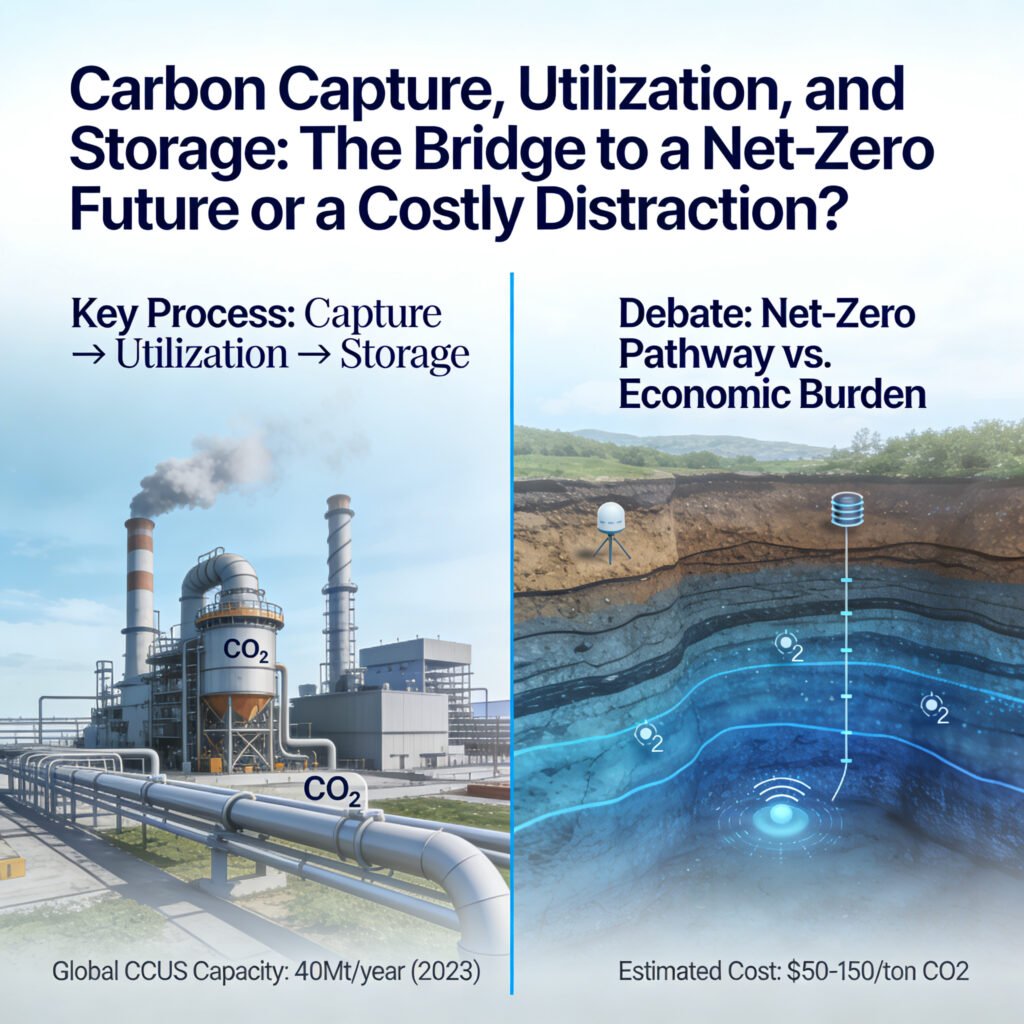
The end-to-end process of capturing, moving, and permanently storing or using carbon dioxide emissions.
Introduction – Why This Matters
I stood at the boundary of a sprawling cement plant in Texas, watching plumes of CO₂ rise from its kiln stacks. The plant manager, a pragmatic engineer with 30 years in the industry, said something that stuck with me: “My job is to make the world’s concrete. I can make it 15% more efficient, maybe 20%. But chemistry is chemistry—making clinker releases CO₂. If society wants concrete without this CO₂, you either need to capture it or invent a whole new building material. Which do you think is faster?”
That moment captures the brutal arithmetic of climate change. Even with heroic efforts in renewables, electrification, and efficiency, certain industrial processes and legacy infrastructure will continue emitting CO₂ for decades. According to the UN’s IPCC, most pathways limiting warming to 1.5°C rely on capturing and storing billions of tons of CO₂ that we cannot otherwise eliminate. Carbon Capture, Utilization, and Storage (CCUS) sits squarely in this uncomfortable, controversial, but potentially essential space.
For curious beginners, CCUS can sound like sci-fi or a fossil fuel industry excuse. For professionals, it’s a field oscillating between breakthrough announcements and disappointing project cancellations. From my work analyzing over 50 CCUS projects worldwide, I’ve learned that the technology itself is proven; the struggle is entirely about economics, scale, and public acceptance. In 2025, with carbon prices rising and corporate net-zero pledges maturing, CCUS is moving from the drawing board to the construction site. This article will dissect whether it’s a vital bridge or a dangerous detour on the road to net-zero.
Background / Context: From Niche to Necessity
The concept of capturing carbon isn’t new. Since the 1970s, oil companies have used a form of CCUS called Enhanced Oil Recovery (EOR), injecting CO₂ into depleted wells to squeeze out more oil. The captured CO₂ was a means to an end (more fossil fuels), not a climate solution. The climate mitigation potential of CCUS emerged in the 1990s but remained a backwater, chronically underfunded compared to renewables.
Three factors have thrust CCUS back into the spotlight:
- The “Net” in Net-Zero: As nations and corporations commit to net-zero by 2050, they realize some emissions (from cement, steel, chemicals, and even some aviation and shipping) are prohibitively difficult or expensive to eliminate. “Negative emissions” from carbon removal are needed to offset these residual emissions.
- The Industrial Decarbonization Imperative: Heavy industry accounts for ~30% of global emissions. While green hydrogen can decarbonize some processes, CCUS is often the only viable option for others, like cement production where CO₂ is a chemical byproduct of limestone calcination.
- Policy and Financial Drivers: The U.S. Inflation Reduction Act’s enhanced 45Q tax credit ($85/ton for geologic storage, $60/ton for utilization), the EU’s Carbon Border Adjustment Mechanism (CBAM), and rising compliance carbon prices are finally making CCUS projects financially viable.
The debate is fierce. Proponents see CCUS as an essential toolkit without which net-zero is impossible. Critics argue it’s a costly distraction that perpetuates fossil fuel use and delays the deployment of true zero-emission solutions. The truth, as usual, lies in the specifics of how, where, and why it’s deployed.
Key Concepts Defined
- Carbon Capture, Utilization, and Storage (CCUS): The process of capturing carbon dioxide (CO₂) emissions from industrial sources or directly from the air, and either using it to create products (utilization) or storing it permanently underground (storage).
- Point Source Capture: Capturing CO₂ at the point of emission from large industrial facilities like power plants, cement factories, or steel mills. This is where the vast majority of captured CO₂ comes from today.
- Direct Air Capture (DAC): A technology that captures CO₂ directly from the ambient air using chemical processes. It’s more energy-intensive than point source capture because atmospheric CO₂ is so dilute (~420 ppm).
- Carbon Sequestration: The long-term storage of carbon in natural sinks (like forests, soils) or geological formations (like depleted oil and gas reservoirs, saline aquifers).
- Carbon Mineralization: A process where CO₂ chemically reacts with certain rocks (like basalt or olivine) to form stable carbonate minerals, essentially turning CO₂ into stone. This is considered permanent storage.
- Bioenergy with Carbon Capture and Storage (BECCS): Burning biomass (which absorbed CO₂ while growing) for energy and capturing the resulting emissions, resulting in net-negative emissions if the biomass is sustainably sourced.
- Enhanced Oil Recovery (EOR): Injecting captured CO₂ into oil fields to increase pressure and extract more oil. Controversial because it produces more fossil fuels, but it has funded early CCUS infrastructure.
How It Works: The CCUS Value Chain, Step-by-Step
Let’s follow a molecule of CO₂ from a factory smokestack to permanent storage, examining the technologies at each stage.
Step 1: Capture – Snatching CO₂ from the Stream
This is the most energy-intensive and expensive step (60-80% of total cost). Different methods suit different source streams.
A. Post-Combustion Capture (Most Common)
- How it works: After fuel is burned, flue gas (containing CO₂, nitrogen, water vapor, etc.) is treated. It’s bubbled through a liquid amine solvent (like monoethanolamine) that selectively absorbs CO₂. The solvent is then heated (110-120°C) in a “stripper” to release pure CO₂ gas, and the solvent is recycled.
- Best for: Retrofitting existing coal or gas power plants, cement kilns, steel mills.
- Energy Penalty: Requires 15-30% of a plant’s energy output, a major operational cost.
- Innovation: New solvents (like piperazine) and metal-organic frameworks (MOFs)—highly porous crystalline materials that act as molecular sponges—promise lower energy requirements.
B. Pre-Combustion Capture
- How it works: Fuel (like coal or natural gas) is gasified with steam and oxygen to produce “syngas” (hydrogen and carbon monoxide). A shift reaction converts CO to CO₂, which is then captured, leaving a hydrogen-rich fuel for combustion or use.
- Best for: Integrated Gasification Combined Cycle (IGCC) power plants and hydrogen production facilities.
- Pros: Higher CO₂ concentration makes capture easier and cheaper.
C. Direct Air Capture (DAC)
- How it works: Two main approaches:
- Liquid DAC: Giant fans pull air through a chemical solution (like potassium hydroxide) that binds with CO₂. The solution is then processed to release pure CO₂.
- Solid DAC: Air passes over solid sorbent filters (like amine-functionalized materials) that trap CO₂. The filters are then heated with steam or vacuum to release concentrated CO₂.
- Scale Challenge: To capture 1 million tons of CO₂ per year (a modest fossil plant’s emissions), a DAC plant must process about 25 cubic kilometers of air per day. The energy requirement is immense, necessitating cheap, abundant renewable power.
Step 2: Transport – Moving the Invisible Cargo
Once captured and compressed into a supercritical fluid (a dense liquid-like state), CO₂ must be moved to storage or use sites.
- Pipelines: The most common method for large volumes. Over 5,000 miles of CO₂ pipelines already exist in the U.S., mainly for EOR. Requires careful monitoring for leaks.
- Ships: For intercontinental transport, CO₂ is cooled to -50°C and transported in insulated tanks, similar to LNG. Emerging as a solution to connect capture sites with optimal storage geology (e.g., sending European CO₂ to North Sea saline aquifers).
- Trucks/Rail: For smaller volumes or remote locations, but expensive per ton.
Step 3: Utilization or Storage – The Final Destination
Utilization (Turning CO₂ into Products):
This is the “U” in CCUS. It’s appealing but limited in scale.
- Concrete Building Materials: CO₂ can be injected into concrete during curing, where it mineralizes, strengthening the concrete and permanently storing the carbon. Companies like CarbonCure and Blue Planet are commercializing this.
- Fuels and Chemicals: CO₂ can be combined with green hydrogen (via the Sabatier or Fischer-Tropsch processes) to make synthetic methane, methanol, or jet fuel. This is energy-intensive but creates “drop-in” renewable fuels.
- Enhanced Oil Recovery (EOR): The dominant use today. It provides revenue but creates a moral hazard by extending fossil fuel production.
Storage (Geologic Sequestration – The Permanent Solution):
This is where the climate benefit is realized. Suitable geological formations must have:
- A porous reservoir rock (like sandstone) to hold the CO₂.
- An impermeable caprock (like shale) above to trap it.
- Monitoring for centuries to ensure containment.
- Depleted Oil & Gas Reservoirs: Well-understood geology, existing infrastructure. Proven to hold hydrocarbons for millions of years.
- Deep Saline Aquifers: Vast, widespread potential storage capacity (estimated global capacity: 10,000+ gigatons).
- Carbon Mineralization: Injected into reactive basalt formations, where it turns to rock within a few years. The CarbFix project in Iceland has proven this at scale.
Comparison of Major Capture Pathways
| Pathway | CO₂ Concentration | Current Cost (per ton) | Scalability Potential | Key Challenge |
|---|---|---|---|---|
| Post-Combustion (Coal Plant) | 10-15% | $50 – $100 | High (many existing sources) | High energy penalty, cost |
| Post-Combustion (Cement) | 20-30% | $60 – $120 | Medium-High | Process emissions are intrinsic |
| Direct Air Capture (DAC) | 0.04% (ambient) | $300 – $600 (today), $100-$200 (projected) | Theoretically unlimited | Immense energy/land need, very high cost |
| BECCS | ~10% (in flue gas) | $100 – $200 | Limited by sustainable biomass | Land use competition, sustainability |
Why It’s Important: The Controversial Climate Tool
CCUS is important not because it’s ideal, but because it may be necessary. Its value proposition is starkly pragmatic:
- Decarbonizing “Unavoidable” Emissions: For cement (8% of global emissions), chemicals, and some industrial heat, there are currently no commercial zero-carbon alternatives. CCUS is the only known way to decarbonize these sectors in the near-to-medium term.
- Enabling a Managed Fossil Fuel Phase-Out: In a world still dependent on fossil fuels for baseload power in some regions, CCUS on gas plants can provide firm, low-carbon electricity to balance grids with high renewables penetration, acting as a “bridge” while zero-carbon alternatives scale.
- Creating Negative Emissions: DACCS and BECCS can remove historical CO₂ from the atmosphere, essential for offsetting residual emissions and potentially lowering peak temperatures if deployed at massive scale later this century.
- Preserving Industrial Jobs and Communities: A “just transition” requires solutions that can be applied to existing industrial infrastructure and workforces, not just building entirely new industries elsewhere. CCUS offers this potential.
- Economic Catalyst for Hydrogen: Capturing CO₂ from natural gas reforming (to make “blue hydrogen”) can accelerate the clean hydrogen economy while green hydrogen scales up, similar to how strategic business partnerships can accelerate market entry.
The counter-argument is powerful: every dollar and joule of attention spent on CCUS is a dollar and joule not spent on efficiency, electrification, and renewables that permanently eliminate demand for fossil fuels. The risk is a “moral hazard”—that fossil fuel companies use CCUS promises to justify continued exploration and delay the inevitable transition.
Sustainability in the Future: Integrated, Efficient, and Monitored
The future of CCUS lies not in standalone projects but in integrated systems:
- CCUS Hubs and Clusters: Instead of each factory building its own capture plant and pipeline, multiple emitters in an industrial region (like the Houston Ship Channel or Rotterdam) will connect to shared CO₂ transport and storage networks. This dramatically reduces unit costs through economies of scale. Norway’s “Longship” project and the UK’s East Coast Cluster are pioneering this model.
- DAC Powered by Stranded Renewables: Future large-scale DAC plants will be sited where renewable energy is abundant and cheap but cannot be easily transmitted to demand centers (e.g., solar in the Sahara, geothermal in Iceland). They will act as “energy sinks,” converting excess clean power into carbon removal.
- Advanced Materials and Processes: Next-generation capture technologies like electro-swing adsorption and membrane separation promise to cut energy use by 50% or more. AI will optimize capture plant operations in real-time based on electricity prices and CO₂ market values.
- Robust MRV (Monitoring, Reporting, Verification): Satellite monitoring (like GHGSat), ground-based sensors, and AI data analysis will provide transparent, verifiable proof of permanent storage, building public trust and ensuring the integrity of carbon credits.
- Biomimicry and Enhanced Weathering: Learning from nature, innovations in accelerated weathering (spreading crushed silicate rocks on land or sea) could provide low-cost, passive carbon removal at gigaton scale, complementing engineered CCUS.
Common Misconceptions
- Misconception: “CCUS is unproven technology.” Reality: Capture technology has been used for decades in natural gas processing and fertilizer production. Geological storage has been demonstrated at million-ton-per-year scale for over 25 years at projects like Sleipner (Norway). The challenge is scaling and reducing cost, not proving feasibility.
- Misconception: “Stored CO₂ will leak and cause catastrophic asphyxiation.” Reality: While leaks are possible, natural analogs show CO₂ can be trapped for millions of years. The 1986 Lake Nyos disaster (where volcanic CO₂ released from a lake killed 1,700 people) involved a very different, shallow, lake-based reservoir. Deep geological storage sites are carefully selected and monitored. The risk is managed and considered low by experts.
- Misconception: “CCUS just helps oil companies pump more oil via EOR.” Reality: While EOR has been a key early driver, the majority of new project investment is going toward dedicated geological storage in saline aquifers, not EOR. The U.S. 45Q tax credit requires dedicated storage or EOR with rigorous monitoring.
- Misconception: “We should just plant trees instead.” Reality: We should absolutely plant and protect forests. But biological sequestration is reversible (fires, disease, land-use change) and competes for land with food production. We need both nature-based solutions and engineered storage for permanent, high-integrity carbon removal. It’s not an either/or.
Recent Developments (2024-2025)
- The IRA Gold Rush: The boosted 45Q tax credit has triggered a pipeline of over 100 new U.S. CCUS projects. The “race to permit” storage wells (Class VI permits from the EPA) is now the major bottleneck.
- Mega-DAC Plants Break Ground: Occidental Petroleum’s STRATOS facility in Texas (capable of capturing 500,000 tons/year) began operations in 2024. Climeworks’ Mammoth plant in Iceland (36,000 tons/year) is scaling up. These are still small but proving the engineering at commercial scale.
- Cement Industry Tipping Point: In 2024, Heidelberg Materials broke ground on the first full-scale CCUS retrofit at a cement plant in Edmonton, Canada (1 million tons/year). This is a watershed moment for the sector.
- Marine Transport Goes Live: The “Northern Lights” project in Norway received its first commercial shipment of captured CO₂ from a Dutch fertilizer plant in early 2025, demonstrating the viability of cross-border CO₂ shipping and storage as a service.
- The Voluntary Carbon Market Shake-up: Scandals over poor-quality forestry credits have driven corporate buyers toward engineered carbon removal credits from DAC and BECCS. Companies like Microsoft, Stripe, and Airbus are signing large offtake agreements, creating a vital early market.
Success Story: The Quest CCS Facility in Canada
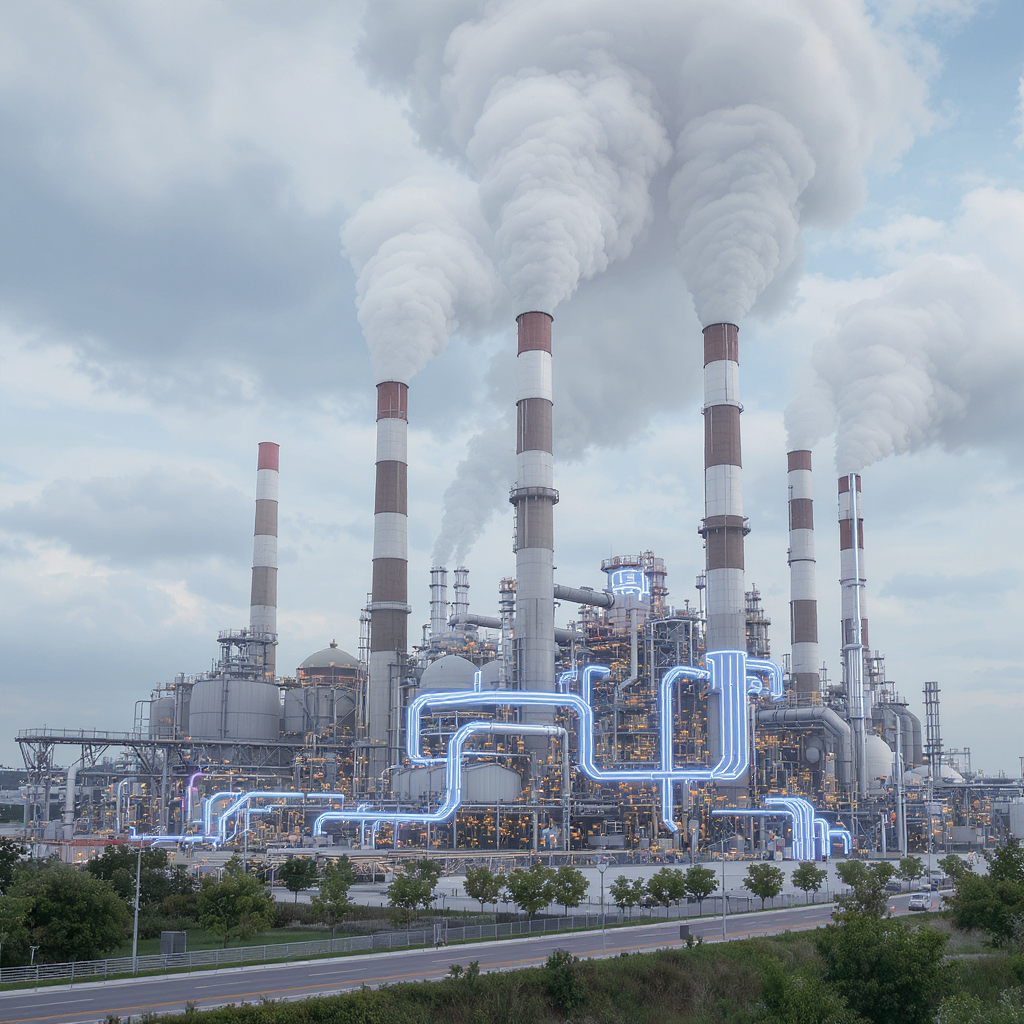
Often criticized, the Quest facility at Shell’s Scotford refinery in Alberta is an instructive case. Since 2015, it has captured and stored over 7 million tons of CO₂ from hydrogen production (used to upgrade oil sands bitumen). Critics rightly note it enabled more fossil fuel production. But here’s what’s often missed: Quest has consistently operated at a 20% lower cost than projected and has stored CO₂ with 100% integrity. It became a learning laboratory. The knowledge gained—in solvent performance, well integrity, monitoring—has been openly shared and is directly informing the design of next-generation projects like the Polaris DAC plant. Quest proved the technical viability and provided crucial operational data. The lesson is that even imperfect early projects can de-risk the technology for future, purely climate-driven deployments. This iterative learning process is crucial in complex engineering, much like the development cycles in artificial intelligence.
Real-Life Examples
- For Heavy Industry:
- Brevik CCS (Norway): Heidelberg Materials is adding capture to its cement plant, storing CO₂ offshore. It will cut the plant’s emissions by 50%, a template for the global industry.
- Project ASTRA (Sweden): HYBRIT’s green steel initiative includes a plan to capture process emissions from its direct reduced iron (DRI) plants using hydrogen, aiming for truly carbon-neutral steel.
- For Power:
- Boundary Dam (Canada): The world’s first post-combustion capture on a coal plant (since 2014). Plagued by early issues, it now operates at ~80% capacity factor, demonstrating retrofit challenges and learning.
- NET Power’s Allam Cycle: A novel natural gas power plant that uses supercritical CO₂ as the working fluid, inherently producing a pure, capture-ready CO₂ stream. The first commercial plant in Texas started in 2024.
- For Carbon Removal:
- Orca & Mammoth (Iceland): Climeworks’ DAC plants, paired with CarbFix’s mineralization technology, sell carbon removal subscriptions to individuals and corporations. The CO₂ is turned to stone in under two years.
- The Biomass Carbon Removal and Storage (BiCRS) Pilot in Illinois: Capturing CO₂ from ethanol fermentation (a high-purity, low-cost source) and storing it underground, creating carbon-negative biofuel.
Conclusion and Key Takeaways
Carbon Capture, Utilization, and Storage is a toolkit, not a panacea. Its role in the climate fight is specific, limited, and fraught with compromise. It will not save the oil industry, nor should it. Its legitimate applications are threefold: 1) Cleaning up essential heavy industries with no other path to zero, 2) Providing firm low-carbon power during the grid transition, and 3) Removing legacy carbon from the atmosphere in the second half of the century.
The coming decade is about moving from pilots to gigaton scale. Success depends on transparent regulation, continued cost reduction, unwavering focus on permanent storage (not EOR), and—critically—parallel massive investment in emissions avoidance through renewables, efficiency, and electrification. CCUS is a bridge; we must be careful not to build it so comfortably that we forget where we’re going.
Key Takeaways Box:
- CCUS is for “Hard-to-Abate,” Not “Easy-to-Abate”: Its rational use is in sectors like cement, not for propping up coal power where alternatives exist.
- Storage is Key, Utilization is Limited: Permanent geological storage must be the goal; most utilization pathways don’t scale to climate-relevant levels.
- Cost and Policy are the Real Barriers: The technology works; we need carbon prices and incentives like 45Q to make it deployable.
- DAC is Different: Direct Air Capture is for carbon removal, not point source reduction. It’s essential for net-negative goals but is incredibly energy-intensive and expensive.
- Trust Through Transparency: Robust, independent Monitoring, Reporting, and Verification (MRV) is non-negotiable for public acceptance and environmental integrity.
For more perspectives on solving complex global challenges, explore our broader Our Focus at World Class Blogs.
Frequently Asked Questions (FAQs)
1. How much does it cost to capture a ton of CO₂?
It varies dramatically. Post-combustion from a coal plant: $50-$100/ton. From cement or steel: $60-$120/ton. From natural gas processing (already high purity): $15-$25/ton. Direct Air Capture: $300-$600/ton today, with a goal of $100-$150/ton by 2030-2035.
2. Where exactly is the CO₂ stored underground?
In deep (usually >1 km) geological formations:
- Saline Aquifers: Porous rock saturated with salty water. CO₂ displaces the water and is trapped by an impermeable caprock.
- Depleted Oil/Gas Reservoirs: Proven to hold buoyant fluids for geologic time. Existing wells must be properly sealed.
- Unmineable Coal Seams: CO₂ can adsorb onto the coal.
3. Is it safe? What about earthquakes?
Properly sited and managed, it is considered safe. Injection can cause minor seismic activity (like many industrial processes), but protocols exist to manage this. The greatest risk is leakage through abandoned wells, which is why careful site characterization and monitoring are critical.
4. How long does the CO₂ stay stored?
Modelling and natural analogs suggest well-selected geologic formations can retain >99% of injected CO₂ for over 10,000 years. Mineralization (turning to rock) is permanent on human timescales.
5. Can CCUS make a fossil fuel power plant “clean”?
It can make it lower-carbon, but not zero-emission. Capture rates for power plants typically max out at 90-95%. There are also upstream emissions from fuel extraction and transport. It’s a major reduction, but not elimination.
6. What is the difference between CCS and CCUS?
CCS is Carbon Capture and Storage (focused on sequestration). CCUS includes Utilization—using the CO₂ to make products. Many argue the “U” distracts from the primary goal of permanent storage, as most uses are small-scale or temporary.
7. Who is paying for CCUS projects?
A mix: government grants (e.g., EU Innovation Fund), tax credits (U.S. 45Q), corporate investment (oil companies, industrials), and revenue from selling CO₂ for EOR or carbon credits in voluntary markets.
8. How much CO₂ needs to be captured to meet climate goals?
The IEA’s Net-Zero scenario requires capturing and storing 1.2 gigatons per year by 2030 and 6.2 gigatons per year by 2050. For perspective, current capacity is about 45 megatons per year. We need a 30x scale-up in 6 years.
9. Does capturing CO₂ use more energy than it saves?
The “energy penalty” for capture is substantial. A coal plant with CCUS needs to burn about 25% more coal to power the capture process for the same net electricity output. This is why applying CCUS to essential industrial processes, not just for energy generation, is often a better use case.
10. What happens if there’s a leak from a pipeline or storage site?
Pipeline leaks are detectable and repairable. For storage sites, extensive baseline monitoring (seismic, groundwater chemistry) allows early detection of any migration. Regulatory frameworks (like the U.S. EPA’s Class VI rule) require operators to monitor sites for decades and be financially responsible for any remediation.
11. Are there any successful large-scale projects?
Yes. Sleipner (Norway, since 1996): Stores 1 million tons/year from natural gas processing in a saline aquifer. Quest (Canada): Stores 1 million tons/year. Gorgon (Australia): Stores 3-4 million tons/year, though it has faced technical problems.
12. What’s the controversy around Bioenergy with CCS (BECCS)?
BECCS can be carbon-negative if the biomass is sustainably sourced and its growth absorbs more CO₂ than the entire process emits. The controversy is about the vast land area required for biomass plantations, which could compete with food production or natural ecosystems. It’s a resource-constrained solution.
13. Can individuals purchase carbon removal via CCUS?
Yes, through companies like Climeworks (DAC + storage in Iceland) or CarbonCure (concrete mineralization). You can buy subscriptions to remove a monthly amount of CO₂ on your behalf. This is a way to fund early-stage technology.
14. How does CCUS fit with carbon pricing?
It’s symbiotic. A strong carbon price (e.g., >$100/ton) makes CCUS economically viable by penalizing emissions and creating value for avoided emissions. The EU’s high carbon price (~€90/ton) is a key driver for projects there.
15. What’s the biggest project underway?
The Northern Lights project in Norway is a foundational infrastructure play. It’s building ships and receiving terminals to collect CO₂ from industries across Europe and store it under the North Sea. It’s the beginning of a transnational carbon management industry.
16. Is there enough storage capacity globally?
Yes. Conservative estimates suggest global capacity in saline aquifers alone is over 10,000 gigatons—more than enough for centuries of emissions at current rates. The challenge is locating and characterizing specific sites near emission sources.
17. How does this technology impact mental health and community perceptions?
Proposed CO₂ pipelines and storage sites often face “not in my backyard” (NIMBY) opposition due to (often misplaced) safety fears. Transparent community engagement, fair benefits sharing, and clear science communication are essential to address the anxiety and build the social license to operate—a challenge as complex as fostering psychological wellbeing in times of change.
18. What is “blue hydrogen” and how does CCUS relate?
Blue hydrogen is produced from natural gas via steam methane reforming, with the resulting CO₂ captured and stored. It’s a way to produce low-carbon hydrogen before green hydrogen (from electrolysis) becomes cheap and abundant everywhere.
19. Are there nature-based forms of carbon capture?
Absolutely. Reforestation, soil carbon sequestration, and coastal blue carbon (mangroves, seagrasses) are crucial, often lower-cost solutions. The debate shouldn’t be nature vs. technology, but how to use all tools effectively. Many high-quality corporate climate strategies now require a portfolio approach.
20. Where can I track CCUS projects and policy?
The Global CCS Institute’s Facilities Database, the IEA CCUS Projects Explorer, and CarbonBrief’s coverage are excellent resources. For entrepreneurial insights in adjacent fields, resources on starting an online business in the climate tech space are growing.
21. What role does AI play in CCUS?
AI optimizes solvent regeneration cycles in capture plants, interprets seismic data for storage site characterization, predicts plume migration underground, and manages the complex logistics of hub-and-cluster networks. It’s a force multiplier for efficiency.
22. Can CO₂ be used to make diamonds or graphene?
In lab settings, yes. Companies are using CO₂ as a carbon source to grow diamonds or produce graphene. These are high-value but very low-volume applications—great for public engagement but irrelevant for climate-scale mitigation.
23. What is “enhanced weathering”?
Spreading finely ground silicate minerals (like olivine) on land or sea. They naturally react with CO₂ in the air or water to form stable carbonates. It’s a form of carbon removal that mimics Earth’s natural thermostat but accelerated. It’s a promising complementary approach.
24. Is there international cooperation on CCUS?
Yes. The Carbon Sequestration Leadership Forum (CSLF) is an international ministerial-level initiative. Bilateral agreements (e.g., U.S.-Japan, EU-Norway) are facilitating cross-border CO₂ transport and storage projects.
25. What’s the simplest way to explain why we need this?
“We’ve already put too much CO₂ in the air, and we can’t stop all emissions tomorrow. CCUS is like a cleanup crew for the emissions we can’t yet prevent and a sponge for the pollution already there. It’s not the whole solution, but we likely can’t solve the problem without it.”
About the Author
Sana Ullah Kakar is a climate technology analyst with a background in geophysics and energy policy. They have spent years in the field—literally, on drilling rigs and at injection sites—and in boardrooms assessing the financial viability of CCUS projects. This dual perspective has given them a deep respect for the engineering challenges and a healthy skepticism of grandiose claims from both advocates and detractors. At World Class Blogs, they strive to provide evidence-based analysis of contentious climate solutions, believing that nuance and pragmatism are essential in the face of a planetary emergency. They see CCUS not through an ideological lens but as a set of physical processes that must be rigorously evaluated on their merits and limitations. When not writing or analyzing spreadsheets, they can be found hiking in geologically interesting terrain, contemplating deep time and humanity’s place within it. Connect with our team through our contact page.
Free Resources
- Global CCS Institute Knowledge Center: The world’s leading resource on CCUS, with comprehensive reports, a project database, and policy trackers.
- IEA CCUS Resources: The International Energy Agency’s dedicated section with analysis, webinars, and interactive data tools.
- NETL Carbon Capture and Storage Database: The U.S. National Energy Technology Laboratory’s in-depth resource on R&D, demonstrations, and storage atlases.
- Climeworks Live Dashboard: See real-time carbon removal from their Orca plant in Iceland.
- Related Tech Frontiers: Understand the AI tools enabling this transition in our AI and Machine Learning section.
- Mission-Driven Work: For insights into the nonprofit and advocacy perspectives on climate solutions, visit our Nonprofit Hub.
Discussion
Where do you stand on the CCUS debate? Is it an essential bridge for heavy industry and carbon removal, or a dangerous distraction that delays the clean energy transition? Are you more optimistic about point-source capture for cement or Direct Air Capture for negative emissions? Share your views and questions in the comments below.