Climate Action at a Crossroads: Financing the Transition in a Divided World
A deep dive into the crisis of climate finance. Explore the $2.4 trillion annual gap, broken promises, debt swaps, MDB reform, and the geopolitical battle over who pays for the global green transition. Essential for professionals & policymakers. climate finance, climate funding, green transition.
Navigating the multi-layered architecture of global climate finance, where diverse sources and instruments must converge to close a massive funding gap.
Introduction – Why This Matters
The climate crisis represents the single most complex coordination challenge humanity has ever faced, requiring an unprecedented global economic transformation at a pace never before attempted. While scientific consensus on the threat has solidified, the world is now grappling with an equally daunting question: Who will pay the staggering bill for climate action, and how? In 2025, climate finance has become the central arena where geopolitical rivalry, economic self-interest, and the imperative for global solidarity collide with ferocious intensity.
In my experience tracking climate investment flows and international negotiations, the gap between rhetoric and reality has never been wider. World leaders at COP29 in Baku again reaffirmed the need for trillions in annual investment, yet the actual flow of funds to the most vulnerable nations remains a fraction of what is needed and is often entangled in debt and conditionalities. What I’ve found is that the fundamental architecture of global finance, built for a different century, is structurally incapable of delivering capital at the scale and speed the climate emergency demands.
This deep dive moves beyond the temperature targets and emissions pledges to dissect the core engine of the transition: money. For policymakers and business leaders, understanding the labyrinth of climate finance—from green bonds and debt-for-nature swaps to carbon markets and blended finance—is now a non-negotiable skill. For engaged citizens, it’s key to holding power accountable and distinguishing real action from greenwashing. This article, part of our ongoing commitment to in-depth analysis at World Class Blogs, will map the high-stakes financial battlefield, identify the emerging winners and losers, and explore whether a new, more equitable economic paradigm can be forged in time to secure a livable planet.
Background / Context: The Evolving Climate Finance Landscape
The story of climate finance is one of escalating estimates, broken promises, and an increasingly urgent search for new mechanisms as the crisis accelerates.
The Foundation: A Promise Made (and Repeated)
The modern framework was established at the 2009 UN climate conference (COP15) in Copenhagen, where developed nations pledged to mobilize $100 billion per year by 2020 to help developing countries mitigate and adapt to climate change. This figure, more political than scientific, became a symbolic benchmark of trust. While the OECD confirmed this goal was finally met in 2022, the achievement was widely criticized. The funding arrived late, was overwhelmingly in the form of loans (not grants), and a significant portion was not “new and additional” as promised, but repackaged development aid.
The Escalating Reality: From Billions to Trillions
By the mid-2020s, it became starkly clear that $100 billion was a mere down payment. The UN, World Bank, and IPCC now estimate that emerging markets and developing countries (excluding China) need $2.4 trillion per year by 2030 for climate action—a figure that dwarfs all existing foreign aid and development finance combined. This includes investments in renewable energy, resilient infrastructure, sustainable agriculture, and early warning systems.
The Geopoliticization of Green Investment
Climate finance is no longer a niche development issue but a core element of geoeconomic strategy. The U.S. Inflation Reduction Act ($369 billion in clean energy incentives), the EU’s Green Deal Industrial Plan, and China’s dominance in green tech supply chains have triggered a global subsidy race. This “green industrial policy” aims to create jobs, secure supply chains, and establish technological dominance, often with domestic content requirements that exclude developing nations. This competition, while driving down technology costs, also risks fragmenting the global market and diverting capital and attention from the Global South’s needs.
Key Concepts Defined
- Climate Finance: Local, national, or transnational financing—drawn from public, private, and alternative sources—that seeks to support mitigation and adaptation actions addressing climate change.
- Mitigation vs. Adaptation Finance: Mitigation finance funds projects that reduce greenhouse gas emissions (e.g., solar farms, forest conservation). Adaptation finance funds projects that help communities adjust to current and future climate impacts (e.g., sea walls, drought-resistant crops). Adaptation is chronically underfunded, receiving less than 20% of tracked climate finance.
- The $100 Billion Goal: The collective commitment by developed countries to mobilize $100 billion per year in climate finance for developing countries by 2020, a key political commitment under the UNFCCC.
- Blended Finance: The strategic use of development finance (public or philanthropic funds) to de-risk and “crowd in” private sector investment for sustainable development in emerging markets. For example, a development bank might offer a first-loss guarantee to attract private investors to a geothermal project in Kenya.
- Debt-for-Climate/Nature Swaps: Agreements where a portion of a developing country’s foreign debt is forgiven in exchange for commitments to fund domestic climate or conservation projects with the freed-up local currency.
- Carbon Markets (Compliance & Voluntary): Systems that put a price on carbon emissions. Compliance markets are created by government cap-and-trade regulations (e.g., EU ETS). Voluntary carbon markets allow companies and individuals to purchase credits from emission-reduction projects (e.g., forest conservation) to offset their own footprint. Integrity and “additionality” are major concerns.
- Special Drawing Rights (SDRs): An international reserve asset created by the IMF to supplement member countries’ official reserves. There are active proposals to rechannel a portion of unused SDRs from rich countries to climate-vulnerable nations via multilateral development banks.
- Just Transition: A framework that ensures the shift to a green economy is fair and inclusive, creating decent work, addressing inequality, and not leaving communities (like fossil fuel workers) behind. Adequate financing for just transition is a critical demand.
How It Works: The Architecture of Global Climate Finance
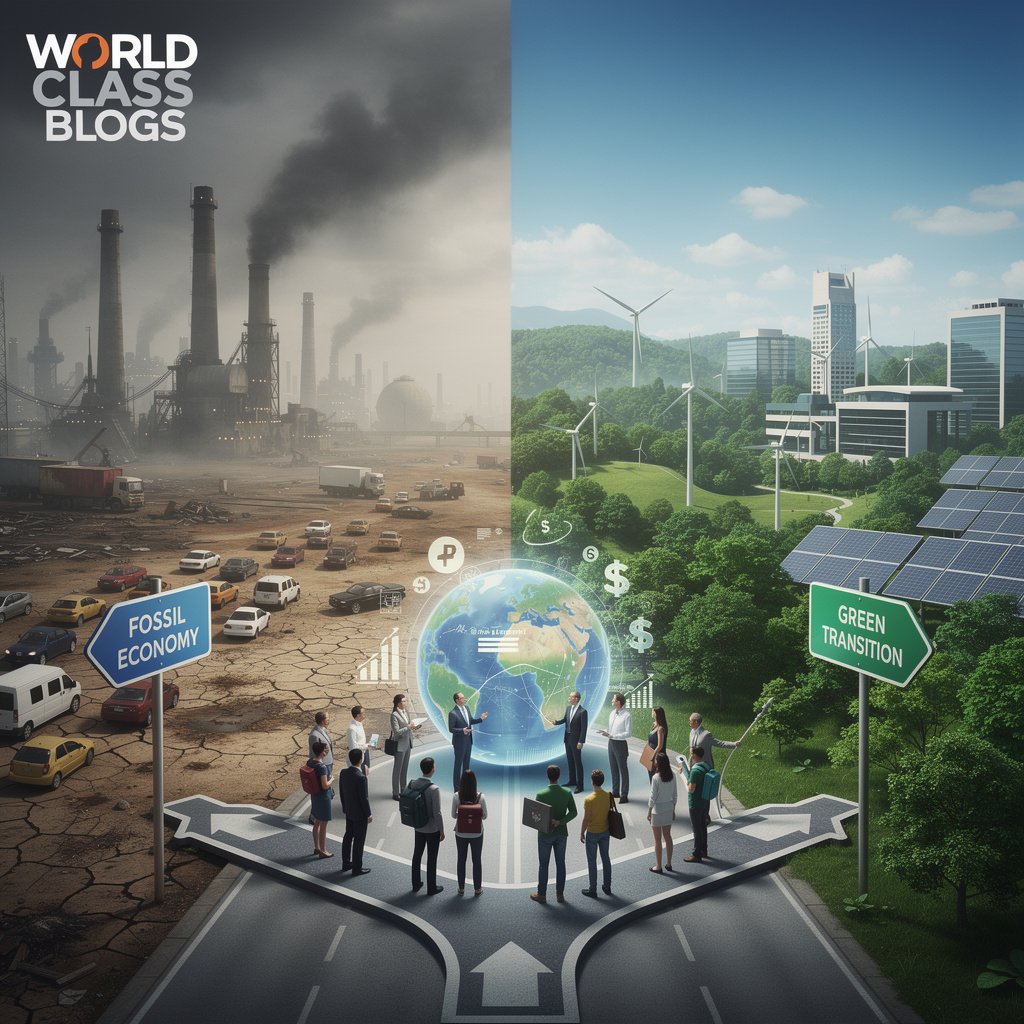
The flow of climate finance is a complex, multi-layered system involving a wide array of actors and instruments. Here is a step-by-step breakdown of the machinery.
Step 1: Sources of Capital – Where the Money Comes From
The financial ecosystem can be broken into three main sources, each with different motivations and constraints:
- Public Finance: Funds from governments and multilateral institutions.
- Bilateral Aid: Direct government-to-government grants and concessional loans from agencies like USAID or Germany’s GIZ.
- Multilateral Development Banks (MDBs): The World Bank, regional development banks (e.g., African Development Bank), and climate funds (e.g., Green Climate Fund, Adaptation Fund). They provide loans, grants, and guarantees.
- Private Finance: The largest potential pool, including commercial banks, institutional investors (pension funds, insurers), private equity, and corporations. They seek market-rate returns and manage risk, making them hesitant to invest in many developing country contexts without de-risking.
- Philanthropic Finance: Grants from large foundations (e.g., Bezos Earth Fund, Bloomberg Philanthropies). This capital is flexible and risk-tolerant but is a tiny fraction of the overall need.
Step 2: Financial Instruments – The Tools of the Trade
Capital is deployed using various instruments tailored to project risk and return.
- Grants: The most desirable form for recipients (no repayment), but scarce. Best suited for technical assistance, capacity building, and high-risk adaptation projects with no revenue stream.
- Concessional Loans & Credit: Loans offered at below-market interest rates or with longer grace periods. A key tool of public and climate fund finance.
- Guarantees & Insurance: Public institutions provide guarantees to cover specific risks (political, currency, default), encouraging private banks to lend. Climate risk insurance pools help vulnerable countries manage disaster recovery costs.
- Equity Investments: Direct ownership stakes in companies or projects (e.g., a renewable energy developer). Carries higher risk but potential for higher returns.
- Green, Social, Sustainability, and Sustainability-Linked Bonds (GSSS Bonds): Debt instruments where proceeds are earmarked for green/social projects, or where the bond’s financial terms are tied to the issuer’s sustainability performance. The market exceeded $1 trillion in annual issuance in 2024.
Step 3: Delivery Channels – How Money Reaches the Ground
Finance moves through a complex chain of intermediaries.
- International to National: Funds from a global entity like the Green Climate Fund are allocated to an accredited national entity (e.g., a ministry or national bank) in a developing country, which then manages domestic disbursement.
- Direct Project Finance: Investors or lenders finance a specific, ring-fenced project (e.g., a wind farm).
- Financial Intermediation: Funds are channeled through local commercial banks or microfinance institutions that on-lend to smaller businesses and households for climate solutions (e.g., rooftop solar loans).
Step 4: The Critical Role of Multilateral Development Bank Reform
A major 2023-2025 push, led by the G20 and championed by the Bridgetown Initiative, aims to “evolutionize” MDBs. The goal is to increase their lending capacity by hundreds of billions without new shareholder capital by:
- Optimizing Balance Sheets: Using callable capital and adopting more flexible risk frameworks.
- Expanding Guarantees: Using donor guarantees to unlock more private capital.
- Offering More Local-Currency Finance: Reducing foreign exchange risk for borrowers.
Success here is seen as the single biggest near-term lever to increase affordable climate finance.
Table: The Climate Finance Gap in Focus (2025 Estimates)
| Category | Annual Need (by 2030) | Current Annual Flow | Key Barriers |
|---|---|---|---|
| Global Mitigation | $4-6 Trillion | ~$1.5 Trillion | High perceived risk in EMDEs*, policy uncertainty, fossil fuel subsidies. |
| Global Adaptation | $160-340 Billion | ~$60 Billion | Lack of revenue-generating projects, difficulty measuring outcomes. |
| Needs of Developing Countries (ex-China) | $2.4 Trillion | ~$500 Billion | Debt distress, high cost of capital, currency risk, limited project pipelines. |
| EMDEs = Emerging Markets and Developing Economies. Sources: CPI, UNEP, IMF. |
Why It’s Important: The Stakes of Getting Finance Right
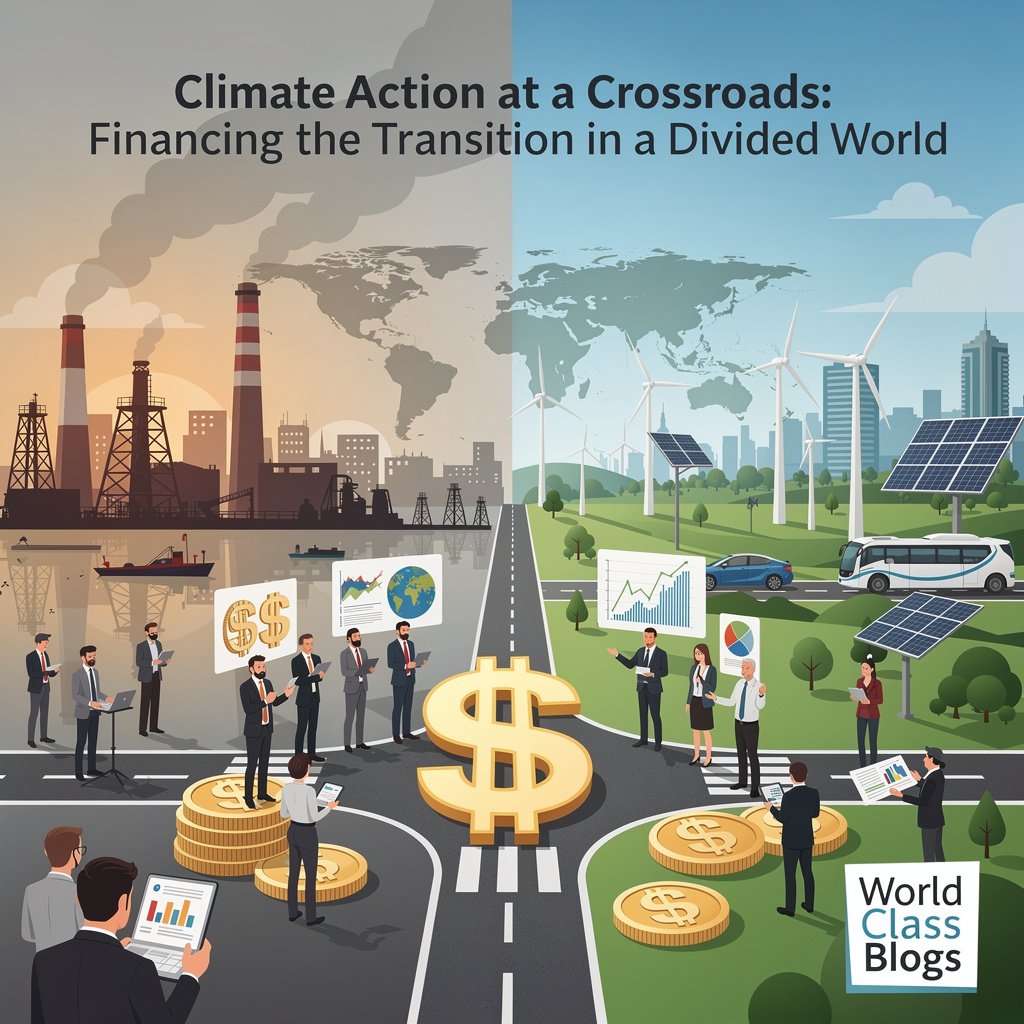
The success or failure of the entire global climate project hinges on finance. It is the bridge between pledge and implementation.
1. A Matter of Justice and Equity
The climate crisis was overwhelmingly caused by historical emissions from today’s wealthy nations, yet its impacts are felt most acutely by the world’s poorest and most vulnerable populations who contributed least to the problem. Financing the transition is therefore a core issue of climate justice. The inability of developed nations to meet their finance commitments has bred deep distrust in international negotiations, making cooperative action on other fronts far more difficult. It is seen as a test of the Global North’s good faith.
2. Preventing a Destructive Divergence
Without a massive surge in accessible finance, the world risks a “Great Green Divergence.” Wealthy nations and large emerging economies like China and India will accelerate their transitions with massive domestic investment. Meanwhile, most developing countries will be left behind, locked into high-carbon development pathways due to a lack of affordable alternatives. This would not only guarantee catastrophic global warming but also entrench economic inequality and instability for generations.
3. Unlocking Co-Benefits: Development, Health, and Stability
Properly directed climate finance is not a cost but a high-return investment in sustainable development. Funding decentralized solar grids brings electricity and creates jobs. Investing in climate-smart agriculture boosts food security. Protecting mangrove forests defends coastlines and supports fisheries. A well-financed transition can be a powerful engine for achieving the Sustainable Development Goals (SDGs), improving public health, and reducing the drivers of conflict and migration.
4. The Systemic Financial Stability Risk
Conversely, failing to finance the transition poses a direct threat to the global financial system. So-called “stranded assets”—fossil fuel reserves and infrastructure that must be left in the ground to meet climate goals—could trigger sudden repricing and losses, creating a “climate Minsky moment.” Central banks and financial regulators (networked through the NGFS) are now actively stress-testing banks for climate risk, recognizing that climate inaction is the riskier economic path.
Sustainability in the Future: Building a Resilient Financial System
Is the current patchwork of climate finance initiatives sustainable? Can it be scaled to meet trillion-dollar needs? The future viability of the system depends on overcoming several structural challenges.
1. Moving Beyond Debt: The Grant Imperative
Many climate-vulnerable countries are already in or near debt distress (over 60% of low-income countries in 2024). Pouring more climate finance into loans, even concessional ones, exacerbates this crisis. A sustainable system requires a quantum leap in grant financing for adaptation and loss & damage, particularly for the most vulnerable. This may require innovative taxes (e.g., on shipping, aviation, or fossil fuel profits) dedicated to global climate funds.
2. De-risking Private Investment at Scale
To attract the necessary private capital, public actors must systematically address the real risks that deter investors in developing countries: political instability, currency volatility, and underdeveloped regulations. This means massively scaling up blended finance instruments, local currency guarantees, and political risk insurance. The new Loss & Damage Fund, if capitalized with significant grant money, could also act as a major de-risking tool for climate resilience projects.
3. Reforming the Global Financial Architecture
Tinkering at the margins is insufficient. Proposals from the Bridgetown Initiative and others call for fundamental reform:
- Massively Scaling MDB Lending: As previously described.
- Automatic Debt Relief Triggers: Incorporating clauses in sovereign debt contracts that automatically suspend payments when a climate disaster strikes.
- Global Carbon Price Floor: A proposal from the IMF for a minimum carbon price among major emitters, which could generate substantial revenues for transition financing.
4. Building Domestic Capacity and Bankable Pipelines
Finance cannot flow without well-designed, “bankable” projects. A sustainable system invests heavily in building capacity within developing country governments and financial institutions to plan, structure, and execute major climate projects. This “project preparation” phase is unglamorous but critical.
The sustainable path is not about finding a magic money tree but about intentionally redesigning global financial rules and instruments to align private sector incentives with public climate goals and to ensure capital flows to where it is needed most, not just where it is easiest to invest.
Common Misconceptions
- Misconception: There simply isn’t enough money in the world to fund the climate transition.
Reality: The capital exists—global financial assets total over $500 trillion. The challenge is mobilization and allocation, not scarcity. Trillions are currently invested in fossil fuels and other high-carbon activities. The task is to shift this capital through smart policy, carbon pricing, and de-risking instruments. The annual $2.4 trillion need for developing countries is less than 2% of projected global GDP in 2030. - Misconception: Private sector investment alone can solve the climate finance gap.
Reality: The private sector is essential but will not, and should not, fill the entire gap, especially for adaptation, conservation, and just transition in the poorest countries. These are public goods with limited revenue potential. Private capital follows risk-adjusted returns. Public finance must lead in high-risk areas, fund enabling infrastructure, and create the conditions (stable policy, carbon prices) that make private investment viable. - Misconception: Climate finance is just another form of foreign aid.
Reality: While it includes aid (grants), climate finance is a much broader ecosystem of investments, loans, guarantees, and market mechanisms. It’s about catalyzing systemic economic transformation, not just charity. Viewing it solely as aid misunderstands its scale and purpose and can perpetuate unhelpful donor-recipient dynamics. - Misconception: China is the world’s largest emitter, so it should now be a major climate finance donor, not a recipient.
Reality: This is a major point of contention. China officially still classifies itself as a “developing country” and argues the historical responsibility lies with the West. However, given its economic size and current emissions, there is growing pressure for China to contribute to global climate finance pools, especially to other developing nations. Its role is evolving from recipient to a potential major South-South financier via its own institutions like the Asian Infrastructure Investment Bank (AIIB).
Recent Developments (2024-2025)
- COP29 & The New Collective Quantified Goal (NCQG): The central task of COP29 in Baku was to set a new, post-2025 climate finance goal to replace the $100 billion target. Negotiations were fraught, with developing nations pushing for a goal in the trillions, anchored in grants, while developed nations resisted a single numerical target, emphasizing the role of private finance and a “contributor base” that includes wealthier emerging economies.
- Loss & Damage Fund Becomes Operational (Sort Of): The fund established at COP27 began operationalization in 2024, hosted by the World Bank. However, pledges remain under $1 billion—dwarfed by the estimated $400 billion annual need for loss and damage. The fund’s governance and accessibility to communities remain key battles.
- The Carbon Market Clean-Up: Following scandals over flawed rainforest credits, 2024 saw a push for rigorous new integrity standards for voluntary carbon markets (VCMs) from bodies like the Integrity Council for the VCM (ICVCM). High-quality credits are seen as a key source of finance for forest nations, but trust must be rebuilt.
- Debt Distress & Climate Swaps Gain Traction: With Zambia finalizing a major debt restructuring and Ghana exploring a $1 billion debt-for-nature swap, 2025 is seeing increased practical focus on integrating climate clauses into sovereign debt deals to free up fiscal space for green investment.
- The “Green Subsidy War” Impacts Global Flows: The Inflation Reduction Act and EU Net-Zero Industry Act are successfully pulling private investment into their jurisdictions, raising concerns of “green protectionism” that could starve developing countries of capital and technology.
Success Stories: Models for Scaling Finance
- The Just Energy Transition Partnership (JETP) Model: South Africa’s $8.5 billion JETP (2021) pioneered a model where wealthier nations provide a package of grants, concessional loans, and investment guarantees to support a country’s shift from coal. Similar deals have followed with Indonesia ($20 billion) and Vietnam ($15.5 billion). While implementation has been slower than hoped, they offer a blueprint for country-led, packaged finance deals.
- Leveraging Islamic Finance for Climate: Green Sukuk (Islamic bonds compliant with Shariah law) are a growing asset class. Indonesia and Saudi Arabia have issued sovereign green Sukuk, and the Islamic Development Bank is a major issuer. This taps into a vast pool of ethically-directed capital (estimated at over $3 trillion) for sustainable projects in Muslim-majority countries and beyond.
- Kenya’s Geothermal Success Story: Kenya now generates over 90% of its electricity from renewables, primarily geothermal, financed through a mix of public investment (government, World Bank), development finance, and private equity. It demonstrates how a clear national strategy, supported by patient public capital for high-risk exploration, can unlock abundant, low-cost clean energy and attract further investment.
Real-Life Examples
1. The African Development Bank’s Hybrid Capital Experiment:
In early 2024, the AfDB executed a landmark $750 million hybrid capital issuance backed by Japan and the UK. This innovative financial instrument, which counts as equity on the bank’s balance sheet, is estimated to allow the AfDB to lend an additional $6-10 billion for climate and development projects over the next decade. This is a prime example of the “MDB evolution” in action—using financial engineering to multiply the impact of donor funds without new taxpayer appropriations.
2. The Barbados-Blueness Debt Swap (Hypothetical but Indicative):
Barbados, highly vulnerable to hurricanes and sea-level rise, has championed debt-climate swaps. While not yet finalized for Barbados, a model might work as follows: A consortium of philanthropic and bilateral donors buys a portion of Barbados’ commercial debt on the secondary market at a discount. In exchange, Barbados commits to using the debt service savings to fund a national coastal restoration fund, with payments legally tied to verified conservation outcomes. This directly links debt relief to climate resilience.
3. India’s Solar Park Model & The International Solar Alliance:
India’s massive, utility-scale solar parks (like Bhadla, one of the world’s largest) were made possible by a de-risking public-private partnership model. The government provided land, transmission, and a power purchase agreement, reducing key risks for private developers who then financed, built, and operated the plants. This model, promoted through the International Solar Alliance (co-founded by India and France), is now being adapted across sun-rich nations, showing how smart public facilitation can unlock massive private investment.
Conclusion and Key Takeaways
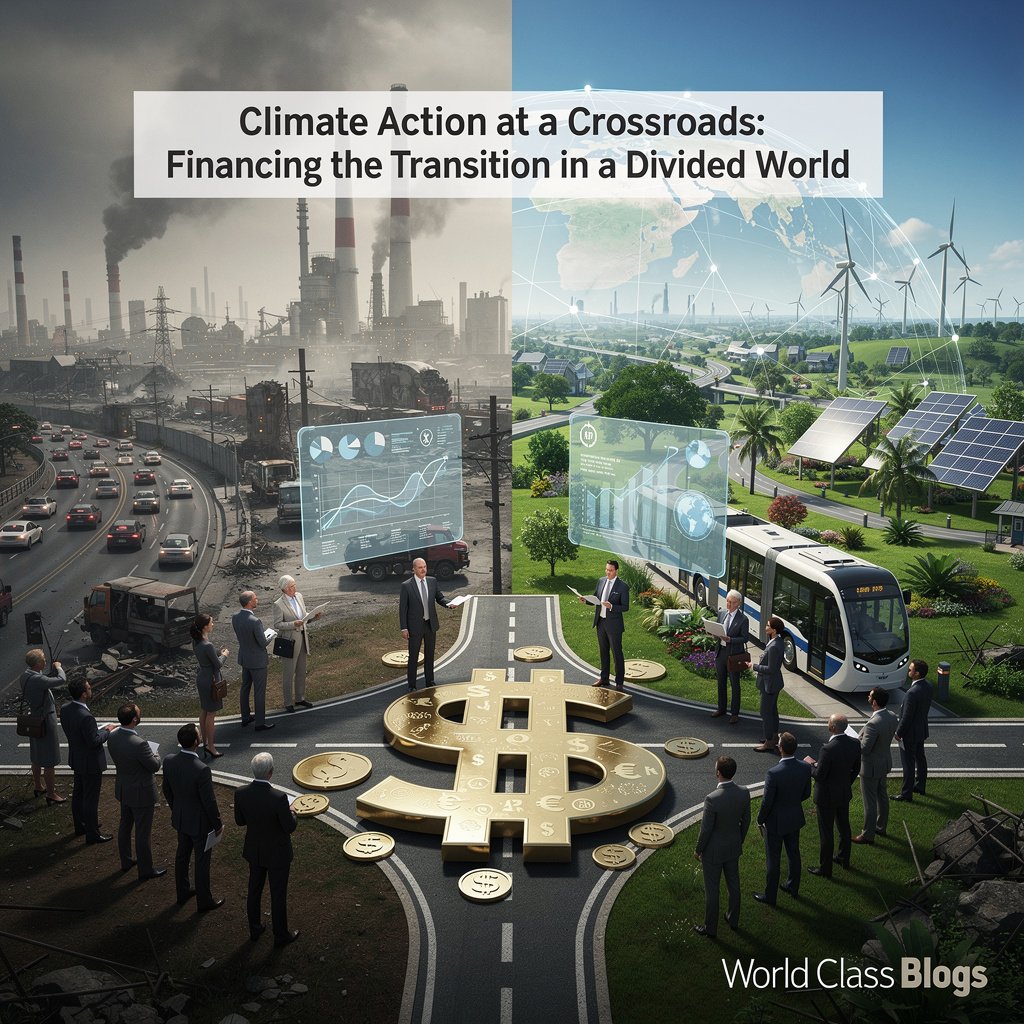
The climate crisis is, in its final analysis, a crisis of capital allocation. We have the technology and, increasingly, the political will. What we lack is a financial system rewired to deliver investment at the necessary speed, scale, and equity. The year 2025 finds us at a crossroads: one path leads toward a fragmented world of green subsidy wars and climate apartheid; the other, more difficult path requires bold cooperation to build a new, inclusive financial architecture.
Key Takeaways:
- The Gap is the Crisis: The multi-trillion dollar annual shortfall in climate finance, especially for adaptation in developing countries, is the single biggest obstacle to meeting global climate goals. Closing it is non-negotiable.
- Justice is Central: Climate finance is not a technocratic issue but a fundamental issue of fairness and historical responsibility. Broken promises on finance poison wider cooperation.
- Public Finance Must Lead the Way: Grants and highly concessional finance are essential for adaptation, loss & damage, and de-risking private investment. Reforming MDBs is the most powerful near-term lever to increase flows.
- Innovation is Unlocking Capital: From hybrid capital and debt swaps to green Sukuk and integrity-driven carbon markets, financial innovation is accelerating. These tools must be scaled and focused on real-world impact.
- Domestic Action Enables International Flow: Developing countries need support to build strong institutions, clear policies, and pipelines of bankable projects. The best international finance multiplies effective domestic action.
The finance secured in this decade will determine the climate of the next century. It is the ultimate test of whether our global systems can be repurposed to serve a collective existential interest, or whether they will remain captive to short-term competition and outdated paradigms.
FAQs
1. Q: What exactly counts as “climate finance”? Is funding for a general development project that happens to be low-carbon included?
A: This is a major area of debate. There is no single, universally agreed-upon definition, which leads to disputes over what gets counted toward pledges like the $100 billion. Most agree it must be specifically targeting climate mitigation or adaptation objectives. However, developed countries often use broader definitions, while recipient nations argue funding should be “new and additional” to existing development aid, not just relabeled.
2. Q: Why is adaptation finance so much harder to fund than mitigation?
A: Mitigation projects (like renewable energy) often generate a revenue stream (selling electricity) that can repay loans and provide a return to investors. Adaptation projects (like building sea walls or developing drought-resistant seeds) are primarily public goods that protect communities but don’t generate direct financial returns. They are harder to commercialize and thus rely more on grants and government budgets.
3. Q: What are “debt-for-climate swaps” and how do they work?
A: In a typical swap, a bilateral or philanthropic entity purchases a portion of a country’s commercial debt on the secondary market (often at a discount). The debtor country agrees to cancel that debt and, in exchange, commits to spending an agreed amount of its local currency on domestic climate projects (e.g., reforestation). It doesn’t provide new foreign currency but frees up the national budget for climate spending.
4. Q: How can ordinary citizens or investors contribute to climate finance?
A: Citizens can advocate for governments to meet finance pledges. As investors, individuals can: invest in green bonds or ESG funds; if accredited, invest in climate-focused venture capital or private equity funds; or purchase high-integrity carbon credits from verified projects. Due diligence is key to avoid greenwashing.
5. Q: What is the “Green Climate Fund” and how is it different?
A: The GCF, established under the UNFCCC, is the world’s largest dedicated climate fund. It is designed to be an equitable, country-driven fund, with a 50/50 balance between mitigation and adaptation and a focus on the most vulnerable. It accredits national institutions in developing countries to manage projects directly. Its governance is split evenly between developed and developing country representatives.
6. Q: Why do developing countries emphasize the need for grants over loans?
A: Many are already burdened by high debt, and climate impacts (disasters, lost productivity) further strain their finances. Taking on more debt for adaptation—which doesn’t generate revenue to repay loans—can worsen their fiscal position. Grants are seen as aligned with the polluter-pays principle and do not increase debt distress.
7. Q: What is “blended finance” and can it really attract trillions?
A: Blended finance uses public or philanthropic funds to absorb the “first loss” or highest risk portion of an investment, making the remaining “senior” portion safe enough for private investors. It’s a powerful tool but complex to structure. To scale to trillions, public actors would need to vastly increase the capital dedicated to first-loss guarantees and catalytic grants.
8. Q: How does the U.S. Inflation Reduction Act affect global climate finance?
A: The IRA is a massive domestic stimulus that will lower global clean tech costs. However, its “Made in America” provisions may divert investment and supply chains away from developing countries. It also sets a new benchmark for climate spending that other nations feel pressured to match, potentially diverting funds that could have gone as international climate finance.
9. Q: What role do carbon markets play in generating climate finance?
A: In theory, they can direct billions to emission-reduction projects (like forest conservation) in developing countries by allowing companies to offset emissions by buying credits. In practice, integrity issues have plagued voluntary markets. If robust rules are established (ensuring credits represent real, additional, permanent cuts), they could become a significant source of finance. Compliance markets (like the EU ETS) also generate government revenue that can be used for climate spending.
10. Q: What is “climate reparations,” and how is it different from finance?
A: “Reparations” is a term some activists and scholars use to frame climate finance as compensation for historical harm and lost development opportunities caused by the Global North’s emissions. It carries a stronger connotation of legal and moral obligation than the more technocratic term “finance.” The official UN term is “loss and damage” funding, which addresses unavoidable climate impacts.
11. Q: Are China and Saudi Arabia now expected to be climate finance donors?
A: The Paris Agreement states that developed countries “should” provide finance, while others are “encouraged” to do so voluntarily. There is intense diplomatic pressure, especially on China given its economic size, to formally contribute to multilateral funds like the GCF. Some wealthier Gulf states have begun making voluntary contributions. The debate over the “contributor base” was central to the NCQG negotiations at COP29.
12. Q: How does climate change make it harder for countries to repay their existing debt?
A: Climate disasters destroy infrastructure, reduce agricultural yields, and harm tourism—eroding the tax base and economic growth used to service debt. At the same time, governments must spend more on disaster recovery and climate resilience, squeezing budgets further. This vicious cycle is called the “climate-debt trap.”
13. Q: What are Special Drawing Rights (SDRs) and how can they be used for climate?
A: SDRs are a kind of reserve asset the IMF can allocate to countries. Wealthy countries, which don’t need them, can on-lend or donate their SDRs to multilateral development banks or a prescribed IMF trust. These institutions can then use them to provide low-interest, long-term loans to vulnerable countries for climate and health needs. Rechanneling $100 billion in SDRs is a key proposal.
14. Q: What is the “Bridgetown Initiative”?
A: Spearheaded by Barbados Prime Minister Mia Mottley, it’s a set of ambitious proposals to reform the global financial architecture to respond to the interconnected climate and debt crises. Its pillars include: massive expansion of MDB lending, automatic debt suspension clauses for disasters, and new global taxes to fund climate resilience.
15. Q: Why is funding for “loss and damage” so controversial?
A: Because it directly addresses liability and compensation for climate harms already occurring. Developed nations have historically resisted any framework that could create open-ended legal liability for their historical emissions. The agreement to create a fund at COP27 was a historic breakthrough, but the fight over its scale, funding sources, and which countries should pay into it continues.
16. Q: How can we ensure climate finance actually reaches local communities and isn’t lost to corruption or bureaucracy?
A: Key principles include: direct access modalities (funding local institutions directly), strong social and environmental safeguards, transparent tracking and reporting, and participatory decision-making that involves communities in designing projects. Tools like blockchain are being piloted to enhance transparency in fund flows.
17. Q: Does climate finance include funding to phase out fossil fuels in developing countries?
A: Yes, this is a critical and growing part of mitigation finance, exemplified by the JETP deals. It includes funding for early retirement of coal plants, retraining workers, and building replacement clean energy. However, it is politically and technically complex, as it must ensure energy security and a just transition for affected communities.
18. Q: What’s the difference between the Green Climate Fund and the Global Environment Facility?
A: The GEF, established in 1992, is an older fund that addresses a broader range of global environmental issues (biodiversity, chemicals, etc.) alongside climate. The GCF, established in 2010, is exclusively focused on climate change and was designed to be larger and more responsive to developing country priorities. They are both financial mechanisms of the UNFCCC.
19. Q: How does political instability in a developing country affect its access to climate finance?
A: It severely hampers it. Donors and investors are reluctant to commit funds in unstable environments due to heightened political and security risks. This creates a cruel paradox: the countries most in need of resilience-building finance are often least able to access it. This underscores the need for special mechanisms and grants for fragile states.
20. Q: Is nuclear energy considered part of climate finance?
A: This is divisive. Some countries (like France) argue nuclear is a vital zero-carbon baseload power source and should be eligible. Others (like Germany and many developing nations) argue it is too expensive, risky, and slow to build, and that finance should focus on renewable energy. Most multilateral climate funds have very restrictive criteria for nuclear, if they allow it at all.
21. Q: What are “nature-based solutions” and their role in climate finance?
A: NbS are actions to protect, manage, or restore ecosystems (like forests, wetlands, mangroves) to address societal challenges like climate change. They can provide cost-effective mitigation (carbon sequestration) and adaptation (coastal protection) benefits. Financing NbS through carbon credits or payments for ecosystem services is a major focus, but must be done with the full consent and benefit of indigenous and local communities.
22. Q: How do climate investments create “co-benefits”?
A: A well-designed climate project delivers multiple wins. A solar mini-grid: provides clean energy (mitigation), powers clinics and schools (development), creates local jobs (just transition), and reduces indoor air pollution from kerosene (health). Tracking and valuing these co-benefits can make projects more attractive to a wider range of funders.
23. Q: Why is local currency financing important?
A: If a country borrows in U.S. dollars to build a solar plant but earns revenue in local currency, a depreciation of the local currency can make debt repayment cripplingly expensive. Offering climate finance in local currency, or providing currency risk guarantees, removes this major barrier and makes projects more financially sustainable.
24. Q: What is “stranded asset” risk and how does it relate to finance?
A: Stranded assets are fossil fuel reserves, power plants, and infrastructure that lose their value prematurely due to the climate transition. If investors do not accurately price this risk, a sudden revaluation could trigger a financial crisis. Prudent financial regulators are now pushing banks and funds to stress-test their portfolios and disclose climate risks.
25. Q: Where can I track data and progress on climate finance flows?
A: Key sources include: Climate Policy Initiative’s (CPI) “Global Landscape of Climate Finance” report (most comprehensive); the OECD’s climate finance reports (tracks developed country contributions); the UNFCCC’s Standing Committee on Finance Biennial Assessments; and the One Planet Summit’s public/private financial tracking.
About the Author
The World Class Blogs Sustainability & Global Affairs Team is a group of economists, policy analysts, and former climate negotiators. We combine expertise in international finance, environmental science, and geopolitical strategy to dissect the most pressing challenges at the intersection of economy and ecology. Our work is dedicated to providing clear, actionable insights that cut through complexity and empower informed decision-making. Learn more about our rigorous analytical standards on our Focus page.
Free Resources
- Climate Policy Initiative (CPI) Global Landscape of Climate Finance Interactive Data: The definitive annual report tracking climate finance flows.
- OECD Climate Finance Dashboard: Tracks progress toward the $100 billion goal and provides detailed breakdowns of public finance.
- Green Climate Fund Project Portfolio: Browse all approved GCF projects with detailed documents on funding, outcomes, and implementation.
- Taskforce on Nature-related Financial Disclosures (TNFD) Framework: Essential guidance for organizations to assess and report on nature-related risks and opportunities.
- For a deeper understanding of the global economic systems that climate finance must transform, explore The Complete Guide to Global Supply Chain Management from our partners at The Daily Explainer.
- For insights on building the coalitions necessary to advance complex financial reforms, the guide The Alchemy of Alliance on the Shera Kat Network provides valuable strategies.
- Explore our full library of analysis on technology, policy, and global affairs in our main Blogs section.
Discussion
The climate finance dilemma forces us to confront foundational questions of global governance: Can our international financial institutions, created in a different era, be radically reformed to serve a planetary emergency? Is there a political pathway for wealthy nations to provide trillions in genuine support without it being seen as politically untenable aid? Can a system built on competition and growth be retooled for cooperation and resilience? We invite you to share your perspectives on these defining challenges of our time.
For more on mobilizing collective action for systemic change, visit our Nonprofit Hub. To learn more about our mission and team, please see our About page. We welcome your thoughtful feedback and inquiries through our Contact Us portal.