
Climate Justice: The Unseen Frontier of Human Rights in the 21st Century
Understand Climate Justice: why the climate crisis is a human rights crisis. Explore its principles, the plight of climate refugees, real-world impacts, and the global fight for a fair and equitable future.

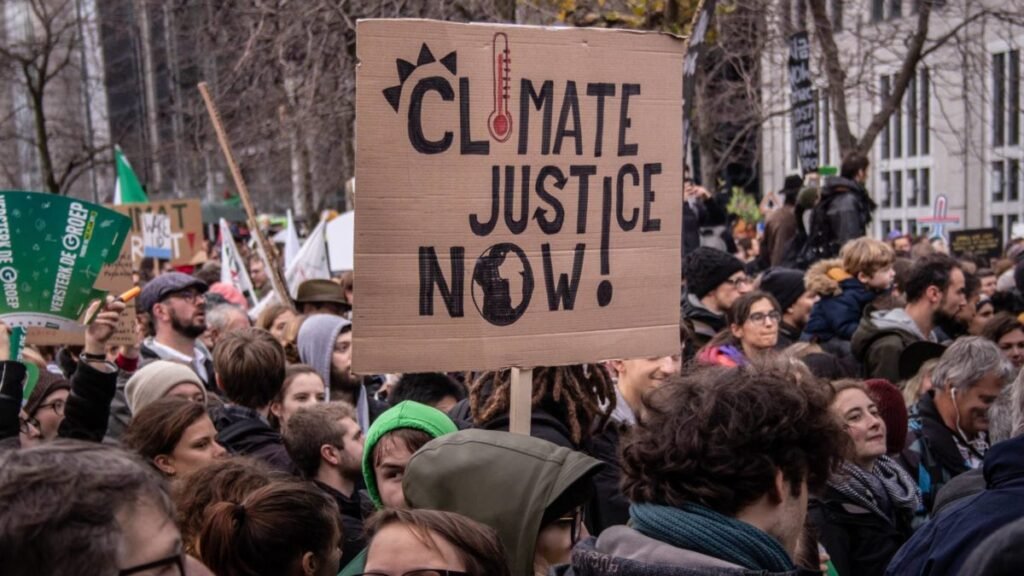
The climate justice movement is driven by those who contributed least to the crisis but bear its heaviest burdens.
Introduction: Why This Matters
When we picture climate change, we often see melting ice caps and endangered polar bears. But beneath these iconic images lies a deeper, more human crisis. The climate emergency is not just an environmental issue; it is the defining human rights challenge of our time. Climate Justice is the framework that reveals this truth. It asserts that the impacts of a warming world—from devastating floods to prolonged droughts—are not felt equally. The world’s most vulnerable, who have contributed the least to global carbon emissions, are suffering the most. This isn’t a coincidence; it’s a profound injustice. Understanding climate justice is crucial because it moves the conversation beyond mere parts-per-million of CO2 to questions of equity, responsibility, and the right to life, health, and dignity for all. It is the moral compass that must guide our global response to the planetary crisis.
Background/Context
The link between environment and human rights was formally recognized in the 1972 Stockholm Declaration. However, the term “climate justice” emerged from grassroots environmental justice movements in the United States in the 1980s and 1990s, which fought against the disproportionate siting of polluting industries in minority and low-income communities.
This concept went global in the 2000s, as international NGOs and networks from the Global South began highlighting the inequities of climate change. The 2010 Cancún Agreements under the UNFCCC formally acknowledged that parties should “fully respect human rights” in all climate actions. The 2015 Paris Agreement Preamble also references human rights, a victory for climate justice advocates. Today, the movement is a powerful global force, led by indigenous communities, small island states, and youth activists like Greta Thunberg, demanding that those most responsible for the crisis take accountability.
Key Concepts Defined
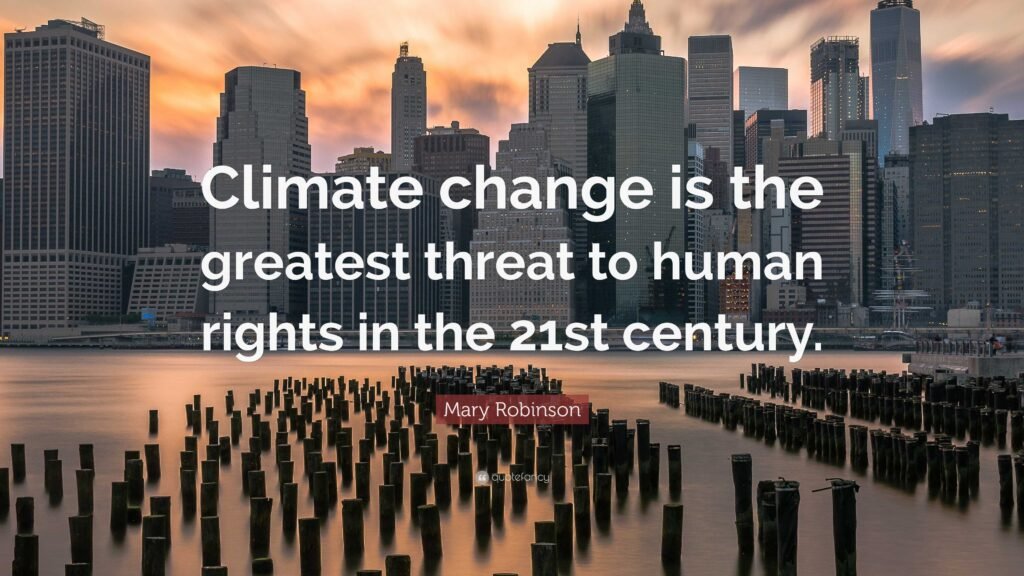
- Climate Justice: A concept that addresses the ethical and political dimensions of climate change, focusing on the unequal distribution of its causes and effects, and seeking equitable solutions.
- Environmental Racism: The disproportionate impact of environmental hazards on people of color and ethnic minorities. Climate change exacerbates this existing injustice.
- Climate Refugees/Displaced Persons: People who are forced to leave their homes due to sudden or gradual environmental changes caused by climate change (e.g., sea-level rise, desertification). Their legal status is not yet formally recognized under international law.
- Loss and Damage: A principle referring to the impacts of climate change that cannot be adapted to (e.g., loss of lives, sovereignty, cultural heritage). It is a key demand of vulnerable nations for compensation from major polluting countries.
- Intergenerational Equity: The principle that present generations have a duty to preserve the environment for future generations, ensuring they inherit a healthy and sustainable planet.
- Just Transition: A framework to ensure the shift to a green economy is fair and inclusive, creating decent work opportunities and supporting communities and workers currently dependent on fossil fuel industries.
How It Works (Step-by-Step)
Achieving climate justice requires a multi-faceted approach:
- Acknowledge the Inequity: The first step is for governments, corporations, and the international community to formally recognize the disproportionate burden borne by vulnerable nations and communities.
- Amplify Marginalized Voices: Ensure the participation of frontline communities—indigenous peoples, women, youth, and the poor—in national and international climate negotiations and policy-making, such as at COP conferences.
- Integrate Human Rights into Climate Policy: All climate actions, from national adaptation plans to renewable energy projects, must undergo human rights impact assessments to prevent harm and ensure benefits are shared equitably.
- Provide Adequate Climate Finance: Wealthy nations must meet and exceed their commitments to provide climate finance to developing countries. This funding must be accessible, grants-based (not loans), and prioritized for adaptation and resilience-building in the most vulnerable regions.
- Operationalize the “Loss and Damage” Fund: Establish and fund the mechanism agreed upon at COP27 to provide financial assistance to nations already experiencing irreversible climate impacts.
- Uphold a Just Transition: Plan for the economic shift away from fossil fuels in a way that protects workers’ rights, provides retraining, and invests in affected communities to build new, sustainable economies.
- Strengthen Legal Accountability: Support strategic litigation where citizens and communities sue governments and corporations for their failure to act on climate change or for climate-related human rights violations.
Why It’s Important
Climate justice is vital for three core reasons:
- Moral Imperative: It is a fundamental issue of fairness. It is unjust for a subsistence farmer in Bangladesh to lose her land to sea-level rise caused primarily by the industrial activities of the Global North.
- Effectiveness of Action: Solutions that are equitable and inclusive are more sustainable and effective. Policies imposed from the top-down without community buy-in often fail. Just Transition plans ensure broader public support for the necessary rapid decarbonization.
- Social Cohesion and Stability: Ignoring climate justice fuels social unrest, conflict over scarce resources, and forced migration. Addressing the root causes of this inequity is essential for global peace and security.
Understanding these global interdependencies is key to modern policy, much like understanding the complex networks in global supply chain management.
Common Misconceptions
- Misconception 1: “Climate justice is just a distraction from the ‘real’ science of climate change.”
- Reality: It is a complementary framework. The science tells us what is happening to our planet; justice tells us why it matters and who is responsible. Both are necessary for a comprehensive response.
- Misconception 2: “It’s about punishing developed countries and stopping all development in the Global South.”
- Reality: It’s about shared but differentiated responsibilities. It calls on historical emitters to lead in emissions cuts and finance, while ensuring the Global South has the support to develop sustainably using clean energy.
- Misconception 3: “We can’t afford justice; we just need to cut emissions by any means necessary.”
- Reality: An unjust transition will face massive political and social resistance, slowing down climate action. A Just Transition builds the broad coalition needed for the speed and scale required.
Recent Developments and Success Stories
A landmark recent development is the operationalization of the Loss and Damage Fund at COP28 in 2023, a decades-long demand of climate-vulnerable nations. While the funding commitments are still insufficient, it represents a major political victory for the justice movement.
Success Story: The Urgenda Foundation vs. The Netherlands
In a historic 2015 case, the Dutch Supreme Court ruled that the government had a legal duty of care to protect its citizens from climate change and must cut emissions by at least 25% by the end of 2020. This case, inspired by climate justice principles, set a global precedent for using human rights law to hold governments accountable for climate inaction.
Case Study: The Pacific Island Nation of Vanuatu
- Background: Vanuatu is one of the world’s most climate-vulnerable countries, facing existential threats from sea-level rise and intensifying cyclones. Despite contributing less than 0.0016% of global emissions, its people are on the front lines.
- The Justice in Action: In 2021, Vanuatu launched a daring diplomatic initiative, seeking an advisory opinion from the International Court of Justice (ICJ) on the obligations of states to protect the rights of present and future generations from climate harm.
- Lesson Learned: Vanuatu demonstrated that small nations can wield significant moral and legal authority. Instead of only asking for aid, they pursued a path that could reshape international environmental law for everyone, framing climate change squarely as a human rights issue.
- Outcome: The UN General Assembly overwhelmingly passed a resolution to seek the ICJ’s opinion. This process could clarify the legal obligations of states, strengthen the legal basis for “loss and damage,” and empower communities worldwide in their climate litigation efforts.
Real Life Examples
- The Arctic: Indigenous Sami people in Scandinavia are fighting to protect their reindeer herding lands from mining projects for “green” minerals, highlighting the need for a Just Transition that doesn’t repeat past injustices.
- Louisiana’s “Cancer Alley”: Predominantly Black communities in this industrial corridor face both high pollution levels and increased climate vulnerability (e.g., flooding), a clear case of environmental racism compounded by the climate crisis.
- Bangladesh: River erosion driven by more erratic weather displaces hundreds of thousands each year, creating internal climate migrants who often end up in the urban slums of Dhaka, struggling to access basic rights.
Conclusion & Key Takeaways
Climate justice is not a peripheral concern; it is the heart of an effective and moral response to the climate crisis. It forces us to look at the human face of global warming and demands solutions that are as much about equity as they are about technology.
Key Takeaways:
- The Climate Crisis is a Human Rights Crisis: It directly threatens the rights to life, water, food, health, housing, and self-determination.
- Inequity is Baked In: The poorest, who are least responsible, are the most affected. This is the core injustice.
- Justice is a Prerequisite for Effective Action: Without a Just Transition and equitable finance, we will not build the political will needed for the rapid transformation required.
- Frontline Communities are Leaders: The solutions and the moral authority often come from those most affected.
- Legal Avenues are Powerful: Climate litigation, inspired by human rights law, is becoming a critical tool for enforcing accountability.
For more deep dives into the policies shaping our world, explore our other content on Global Affairs and Policy.
FAQ’s
- What’s the difference between climate change and climate justice?
- Climate change is the physical phenomenon of a warming planet. Climate justice is the social, ethical, and political framework that addresses its unequal impacts.
- Are climate refugees legally recognized?
- No. The 1951 Refugee Convention does not include environmental factors. This is a major legal gap that climate justice advocates are working to address.
- What is “carbon inequality”?
- It refers to the vast disparity in emissions between the wealthy and the poor. The richest 1% of the world’s population emit more than twice as much as the poorest 50%.
- How does climate change affect women differently?
- Due to existing gender inequalities, women often have fewer resources to cope with disasters, face greater health risks, and bear the increased burden of securing water and food in a changing climate.
- What can an individual in a developed country do for climate justice?
- Educate yourself, support organizations led by frontline communities, advocate for your government to increase climate finance and uphold its commitments, and hold corporations accountable.
- Is nuclear energy part of a just transition?
- This is debated. Proponents see it as low-carbon baseload power. Opponents point to risks of radioactive waste (an intergenerational justice issue) and the high cost, which could divert resources from distributed renewables.
- What is “green colonialism”?
- When wealthy nations or corporations implement green energy projects (like large-scale solar farms) in developing countries without local consent, displacing communities and replicating colonial patterns of extraction.
- How does climate justice relate to indigenous rights?
- Intrinsically. Indigenous peoples are guardians of 80% of the world’s remaining biodiversity. Their knowledge is vital for resilience, and their land rights are often the first line of defense against deforestation and fossil fuel extraction.
- What is the “duty of care” concept in climate law?
- The legal principle that governments and corporations have a responsibility to avoid causing foreseeable harm to others, including harm from climate change.
- Are businesses involved in climate justice?
- Increasingly, yes. Ethical businesses are conducting human rights due diligence in their supply chains, setting science-based emissions targets, and supporting climate policy. However, “greenwashing” remains a major concern.
- What is the role of the youth movement?
- The youth movement, like Fridays for Future, has been instrumental in centering justice and intergenerational equity, arguing that their future is being sold out by current inaction.
- How is mental health a climate justice issue?
- The anxiety, trauma, and grief associated with experiencing or anticipating climate impacts—known as “eco-anxiety”—disproportionately affect young people and frontline communities. For more on this, see this guide to psychological wellbeing.
- What is “climate resilience” in a justice context?
- It means building the capacity of communities to withstand climate impacts, but doing so in a way that reduces underlying vulnerabilities and inequalities, not just building physical infrastructure.
- How does climate change lead to conflict?
- Exacerbating resource scarcity (e.g., water, fertile land), it can intensify existing social and ethnic tensions, leading to displacement and conflict, as seen in parts of the Sahel.
- Where can I learn more about supporting climate justice organizations?
- Research and support groups like 350.org, the Climate Justice Alliance, and local, grassroots organizations in vulnerable regions. You can find resources and further reading in our dedicated Nonprofit Hub.