The Green Hydrogen Revolution: From Promise to Practical Power
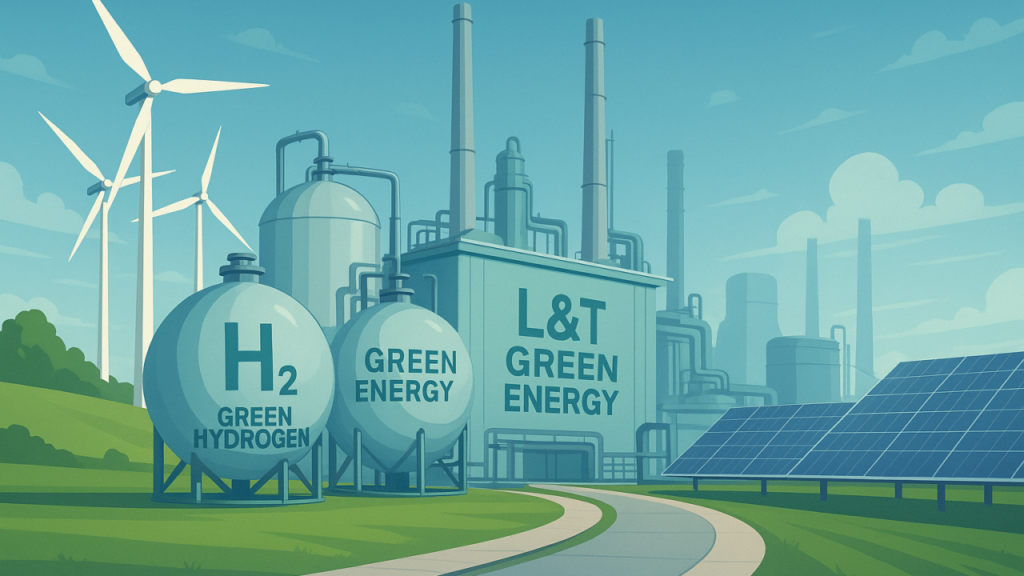
The multi-step journey of green hydrogen from production to final application in hard-to-decarbonize sectors.
Introduction – Why This Matters
I remember standing on the deck of a cargo ship in the Port of Rotterdam in 2023, watching thick black smoke pour from its funnel as it burned some of the dirtiest fuel on earth. The captain told me, “We know it’s terrible, but what’s the alternative? Batteries can’t power this.” That conversation crystallized for me the monumental challenge of decarbonizing “hard-to-abate” sectors—shipping, steel, aviation, heavy industry. These industries need more than electrons; they need molecules with immense energy density. That’s where green hydrogen enters the stage, not as a silver bullet, but as the essential missing piece in our net-zero puzzle.
For curious beginners, hydrogen might conjure images of the Hindenburg or futuristic cars. For professionals, the hydrogen discussion has cycled through hype and disappointment for decades. What I’ve learned from engineers, policymakers, and investors on three continents is this: Green hydrogen is different this time. We’re not waiting for a technology breakthrough—the fundamental science of electrolysis (splitting water with electricity) is 200 years old. What’s changed is the economics: the plummeting cost of renewable electricity has made green hydrogen financially viable for the first time in history. In 2025, with over 1 terawatt of global renewable capacity, we finally have the cheap, clean electrons needed to make clean hydrogen at scale. This article will separate the genuine promise from the persistent hype, showing exactly where green hydrogen will—and won’t—change our world.
Background / Context: Hydrogen’s Colors and Contradictions
First, a crucial distinction: not all hydrogen is created equal. Its environmental impact depends entirely on how it’s produced, denoted by a color code:
- Grey Hydrogen: Made from natural gas via steam methane reforming (SMR). Produces 9-12 kg of CO₂ per kg of hydrogen. Dominates 95% of today’s market. It’s cheap but dirty.
- Blue Hydrogen: Grey hydrogen plus carbon capture and storage (CCS). Captures 50-90% of emissions. A transitional solution.
- Green Hydrogen: Produced via electrolysis using 100% renewable electricity (solar, wind, hydro). Zero operational emissions. The gold standard.
For decades, hydrogen’s potential was undermined by a fundamental irony: we proposed a clean fuel made primarily from fossil fuels. The “hydrogen economy” remained a perpetually distant dream because the economics only worked with cheap natural gas, locking us into grey hydrogen. The game-changer has been what I call the “renewables cost plunge.” Since 2010, the levelized cost of solar PV has fallen by 89%, and wind by 70%. When renewable electricity drops below $20/MWh (now common in optimal locations), electrolyzers can produce green hydrogen that competes with grey hydrogen—especially when carbon prices are factored in. According to BloombergNEF, green hydrogen could undercut blue hydrogen globally by 2030. This economic tipping point, not a new invention, is what fuels today’s revolution.
Key Concepts Defined
- Electrolysis: The process of using electricity to split water (H₂O) into hydrogen (H₂) and oxygen (O₂). Occurs in an electrolyzer.
- Electrolyzer: The device that houses electrolysis. Main types: Alkaline (mature, lower cost), PEM (Proton Exchange Membrane, more flexible), and SOEC (Solid Oxide Electrolyzer Cell, high efficiency, emerging).
- Fuel Cell: The inverse of an electrolyzer. It combines hydrogen and oxygen to produce electricity, water, and heat. Used in hydrogen vehicles and stationary power.
- Power-to-X (P2X): A concept where surplus renewable electricity is converted into other energy carriers or products. Green hydrogen is often the first step in P2X chains (e.g., Power-to-Hydrogen-to-Ammonia).
- Energy Density: The amount of energy stored in a given system per unit volume or mass. Liquid hydrogen has roughly three times the energy density of gasoline by mass, making it attractive for transportation.
- Hydrogen Embrittlement: A degradation process where hydrogen atoms diffuse into metals, making them brittle and prone to cracking. A major engineering challenge for pipelines and storage tanks.
- Hydrogen Valley: A geographical area (like a region or industrial cluster) where multiple hydrogen production and end-use applications are integrated to create a scalable ecosystem.
How It Works: From Renewable Electron to Clean Molecule

Let’s walk through the entire green hydrogen value chain, highlighting where technology is solving critical challenges.
Step 1: Production – The Electrolyzer Farm
The process begins at a facility co-located with abundant, cheap renewable energy—a vast solar farm in the Atacama Desert or a wind-rich coastline.
Inside the Electrolyzer:
- Water Purification: Extremely pure water (deionized) is fed into the system. Impurities can damage the electrolyzer.
- The Electrochemical Reaction:
- In a PEM electrolyzer, water is fed to the anode. Electricity is applied, splitting water into oxygen (O₂), protons (H⁺), and electrons (e⁻).
- The proton-exchange membrane allows only H⁺ ions to pass through to the cathode.
- At the cathode, H⁺ ions combine with electrons to form hydrogen gas (H₂).
- Gas Processing: The hydrogen gas is cooled, dried, and compressed for storage or transport. The oxygen is typically vented or sold as a byproduct.
The Efficiency Challenge: Today’s best commercial electrolyzers are about 70-80% efficient (i.e., they lose 20-30% of the input electrical energy). While this seems high, consider the “round-trip efficiency” if that hydrogen is later converted back to electricity in a fuel cell (50-60% efficiency). This is why green hydrogen is poorly suited for applications where batteries work well.
Scale & Innovation: Electrolyzers are scaling rapidly. While most today are in the 1-20 MW range, projects like Air Liquide’s 200 MW facility in Normandy and the 2 GW Asian Renewable Energy Hub in Australia show the path to gigawatt-scale plants.
Step 2: Storage & Transportation – The Logistics Puzzle
Hydrogen is the lightest element, making it tricky to store and move efficiently.
Storage Options:
- Compressed Gas: Stored in high-pressure tanks (350-700 bar). Used for vehicles and short-term storage. Energy-intensive.
- Liquid Hydrogen (LH2): Cooled to -253°C. Higher density but requires expensive cryogenic equipment and loses about 1% per day to “boil-off.”
- Material-Based: Absorbing hydrogen into metal hydrides or porous materials. Safer and more compact but heavy and expensive. Still largely in R&D.
Transportation Pathways:
- Pipelines: The most cost-effective for large volumes over fixed routes. Existing natural gas pipelines can sometimes be retrofitted, though hydrogen embrittlement is a concern. Europe is developing a dedicated hydrogen backbone.
- Shipping: For global trade, hydrogen is converted into easier-to-handle carriers:
- Liquid Hydrogen: Specialized cryogenic tankers (like those used by Japan).
- Ammonia (NH₃): Hydrogen is combined with nitrogen. Ammonia is easier to liquefy (-33°C) and has existing global infrastructure. The hydrogen must be “cracked” back at the destination.
- Liquid Organic Hydrogen Carriers (LOHCs): Oil-like organic compounds that bind hydrogen chemically. They are transported at ambient conditions, then release hydrogen at the destination.
Comparison of Hydrogen Carriers:
| Carrier | Energy Density | Transport Maturity | Key Challenge |
|---|---|---|---|
| Compressed H₂ | Low | High for short distances | High compression energy, low density |
| Liquid H₂ | High | Medium (specialized ships) | Boil-off losses, high liquefaction energy |
| Ammonia (NH₃) | Medium-High | Very High (global trade exists) | Toxicity, need for cracking back to H₂ |
| LOHCs | Medium | Low (pilots only) | High dehydrogenation energy, carrier cost |
Step 3: End Use – Where Green Hydrogen Makes Sense
This is the critical filter: not every application warrants green hydrogen’s cost and efficiency losses.
Top-Tier Applications (No Good Alternatives):
- Industrial Feedstock: Ammonia production (for fertilizer) already uses 55% of global hydrogen (all grey). Direct green hydrogen substitution is straightforward and vital for food security.
- Steelmaking: Replacing coking coal in blast furnaces with green hydrogen in “direct reduced iron” (DRI) processes. Projects like HYBRIT in Sweden are commercializing this.
- Long-Haul Shipping & Aviation: Batteries are too heavy. Green hydrogen-derived fuels (like e-ammonia for ships or e-kerosene for planes) are the leading pathway for deep decarbonization.
Promising Applications (Competitive with Alternatives):
- Long-Duration Energy Storage: Storing excess summer solar as hydrogen for winter power or weeks of windless periods. Unlike batteries, hydrogen doesn’t degrade with seasonal storage.
- Heavy-Duty Trucking: For routes >500 km where battery weight and charging time become prohibitive. Fuel cell trucks are operational in California and China.
- Industrial High-Temperature Heat: For processes >400°C where electricity is inefficient or impractical (e.g., glass, cement kilns).
Poor Applications (Use Electricity Directly):
- Passenger vehicles (batteries are superior)
- Residential heating (heat pumps are 3-5x more efficient)
- Short-term grid balancing (batteries are faster and more efficient)
Why It’s Important: The Hard-to-Abate Sector Decarbonizer
Green hydrogen’s importance stems from its unique ability to tackle emissions that other clean technologies cannot reach:
- Climate Imperative: The International Energy Agency (IEA) states that achieving net-zero by 2050 requires 530 million tons of low-carbon hydrogen annually, two-thirds of which should be green. That’s a 100-fold increase from today.
- Energy Security & Geopolitics: Countries with abundant sun and wind (Chile, Australia, Namibia, Saudi Arabia) can become green hydrogen exporters, reshaping global energy trade much like the partnerships discussed in strategic alliance models. This reduces reliance on fossil fuel geopolitics.
- Industrial Competitiveness: Nations investing early (like Germany, Japan, South Korea) aim to secure first-mover advantage in hydrogen technologies—electrolyzers, fuel cells, turbines—creating export industries for the 21st century.
- Renewable Grid Enabler: Hydrogen provides a “sink” for excess renewable generation, solving the curtailment problem and making very high (>80%) renewable grids more feasible and economic.
- Circular Economy Link: Green hydrogen can be used to produce “e-fuels” (synthetic hydrocarbons) using captured CO₂, creating a closed carbon loop for existing combustion engines and infrastructure.
Sustainability in the Future: The Hydrogen-Native Economy
Looking toward 2040-2050, we won’t just be slotting green hydrogen into today’s systems. We’ll be redesigning systems around it:
- Hydrogen-Dedicated Infrastructure: New industrial clusters and “hydrogen valleys” will have integrated production, storage, and pipeline networks, minimizing transportation losses.
- Electrolyzer Technology Leap: Next-generation technologies like anion exchange membrane (AEM) electrolyzers promise to combine the low cost of alkaline with the flexibility of PEM. High-temperature solid oxide electrolyzers could reach 90% efficiency by using industrial waste heat.
- Biologically Inspired Production: Research into photoelectrochemical cells and biohydrogen (using algae or bacteria) could enable decentralized, solar-driven hydrogen production without the intermediate electricity step.
- AI-Optimized Hydrogen Hubs: AI will manage complex hydrogen networks, predicting demand from factories and transportation, optimizing production schedules based on weather forecasts, and balancing the entire system in real-time—an application as sophisticated as those in artificial intelligence and machine learning for other complex systems.
- Standardized Global Trade: A liquid global market for green hydrogen and its carriers (like ammonia) will emerge, with standardized quality certifications and pricing indexes, similar to today’s LNG market.
Common Misconceptions
- Misconception: “Hydrogen cars will replace EVs.” Reality: For passenger vehicles, the battle is over. Batteries won due to superior efficiency (70-90% vs. 25-35% for hydrogen), faster infrastructure rollout, and lower operating costs. Hydrogen’s transport role is in heavy trucks, ships, and planes.
- Misconception: “Green hydrogen is too expensive.” Reality: The cost curve is plummeting. In optimal locations (Chile, Middle East), green hydrogen already costs $3-4/kg, competitive with grey hydrogen where carbon prices exist. The U.S. Inflation Reduction Act’s $3/kg production tax credit makes it instantly competitive.
- Misconception: “Hydrogen is dangerously explosive.” Reality: All fuels carry risk. Hydrogen is lighter than air and disperses rapidly if leaked (unlike gasoline vapors). It has a wide flammability range but requires higher ignition energy. With proper engineering (like in the space industry, which has used it for decades), risks are manageable.
- Misconception: “We should wait for better technology.” Reality: The technology is ready for scaling. The biggest bottlenecks are not technical but related to permitting, regulation, and market creation. Learning-by-doing is essential to drive down costs, as we saw with solar and wind.
Recent Developments (2024-2025)
- IRA Turbocharging the US: The Inflation Reduction Act’s clean hydrogen production tax credit (up to $3/kg) has unleashed a project pipeline exceeding 15 million tons per year capacity—more than the entire current global hydrogen market.
- EU’s First Hydrogen Auction Results: In 2024, the European Hydrogen Bank awarded €720 million to projects producing green hydrogen at prices between €0.30-€0.48/kg, demonstrating subsidy levels needed to bridge the cost gap.
- China’s Electrolyzer Dominance: Chinese manufacturers like PERIC and LONGi now produce the world’s cheapest alkaline electrolyzers (<$300/kW), driving down global project costs and controlling 40% of manufacturing capacity.
- First “Hydrogen-Ready” Industrial Plants: Steelmaker ThyssenKrupp is converting a blast furnace in Duisburg, Germany, to run on green hydrogen by 2026. Cement giant Holcim has begun trials of hydrogen in its kilns.
- Maritime Milestones: In 2025, the world’s first ammonia-fueled container ship, owned by Maersk, will enter service on a green corridor between South Korea and California.
Success Story: The HySynergy Project in Denmark
In the industrial heartland of Denmark, the HySynergy project exemplifies the integrated “hydrogen valley” approach. It connects three key elements:
- Production: A 150 MW electrolyzer facility (scaling to 1 GW) powered by offshore wind.
- Storage: Massive underground salt caverns storing hydrogen for seasonal energy shifting.
- End-Use: A nearby oil refinery uses the hydrogen to desulfurize fuel, replacing its grey hydrogen. Later phases will supply local heavy transport and inject hydrogen into the natural gas grid.
What makes HySynergy a success isn’t just technology—it’s the business model. By securing offtake agreements with the refinery first, the project derisked financing. It also leverages existing infrastructure (salt caverns were previously used for natural gas). The project lead told me, “We’re not building a hydrogen economy from scratch. We’re plugging green hydrogen into the existing industrial economy, molecule by molecule.” This pragmatic, incremental approach is proving more effective than grandiose standalone plans.
Real-Life Examples
- For Industry:
- Yara International (Norway): The fertilizer giant is building a 24 MW electrolyzer to produce green hydrogen for ammonia at its Porsgrunn plant, cutting 40,000 tons of CO₂ annually.
- H2 Green Steel (Sweden): Building a “greenfield” steel plant in Boden powered entirely by green hydrogen from a 700 MW electrolyzer. They’ve secured $5 billion in financing and binding offtake agreements with BMW and others.
- For Transportation:
- California’s Hydrogen Trucking Corridors: State funding is building refueling stations along I-710 and I-5 for fuel cell trucks from manufacturers like Toyota and Hyzon.
- ZeroAvia: Developing hydrogen-electric powertrains for regional aircraft (10-80 seats), with test flights already completed and commercial entry targeted for 2027.
- For Energy Systems:
- The Advanced Clean Energy Storage (ACES) project in Utah: Combining 220 MW of electrolyzers with two gigantic salt caverns to store 300 GWh of hydrogen—enough to power 150,000 homes for a year. It will provide long-duration storage to the western U.S. grid.
Conclusion and Key Takeaways
The green hydrogen revolution is not about replacing everything that runs on fossil fuels. It’s a precision tool for specific, critical tasks that electrification cannot solve. We are moving from the “hydrogen hype cycle” to the “hydrogen deployment decade.”
The journey ahead is immense. We need to build electrolyzer factories, retrofit pipelines, develop safety codes, train workforces, and create markets. But unlike previous false starts, the fundamentals now align: climate urgency, cheap renewables, supportive policy, and corporate demand.
Green hydrogen reminds us that the energy transition is not a single solution but a mosaic. Alongside renewables, batteries, and energy efficiency, green hydrogen fills the critical gaps. Its success won’t be measured by how many cars it powers, but by how many tons of steel, fertilizer, and shipping fuel it decarbonizes.
Key Takeaways Box:
- Green ≠ All Hydrogen: Only hydrogen made from renewables via electrolysis is truly sustainable.
- It’s About Molecules, Not Just Electrons: Hydrogen’s value is in decarbonizing sectors that need chemical feedstocks or very high-density fuels.
- Economics Have Tipped: Plummeting renewable energy costs and strong policy support now make green hydrogen projects bankable.
- Think “And,” Not “Or”: Green hydrogen complements electrification and batteries; it doesn’t compete with them.
- Start with Industry: The most viable early markets are existing industrial hydrogen users (fertilizer, refineries) and hard-to-electrify sectors (steel, shipping).
For more on how transformative technologies intersect with society, explore our broader perspective at Our Focus.
Frequently Asked Questions (FAQs)
1. What’s the difference between a fuel cell and an electrolyzer?
An electrolyzer uses electricity to split water into hydrogen and oxygen (production). A fuel cell combines hydrogen and oxygen to produce electricity, water, and heat (consumption). They are essentially inverse processes.
2. How much water does green hydrogen production require?
About 9 liters of ultra-pure water per kilogram of hydrogen. While not negligible, this is small compared to other industrial and energy uses. In water-scarce regions, seawater desalination can be used, adding about 5-10% to energy requirements.
3. Can existing gas pipelines carry hydrogen?
Yes, but with limitations. Hydrogen can cause embrittlement in some steel pipelines. It also leaks more easily and has lower energy density per volume, so pipelines would carry less energy unless flow rates are increased. Many countries are assessing their networks; new “hydrogen-ready” pipelines are being built.
4. What is “blue hydrogen” and is it a bridge or a distraction?
Blue hydrogen (from natural gas with CCS) can reduce emissions by 50-90%. It’s controversial: proponents say it can scale hydrogen demand and infrastructure now while green hydrogen ramps up. Critics argue it locks in fossil infrastructure and methane leakage. Most experts see it as a transitional option, not an end state.
5. How efficient is the green hydrogen value chain?
From renewable electricity to end-use, efficiencies vary:
- Electricity → H₂ (electrolysis): 70-80%
- H₂ → Electricity (fuel cell): 50-60%
- Round-trip (electricity → H₂ → electricity): 35-50%
- Electricity → H₂ → Industrial heat: ~70%
This low round-trip efficiency is why direct electrification is preferred where possible.
6. Is hydrogen safer than gasoline or natural gas?
It has different safety properties. It’s lighter than air (rises quickly if leaked), non-toxic, but has a wide flammability range. Proper engineering and codes (like NFPA 2) make it as safe as other fuels. Public perception remains a challenge.
7. What’s stopping widespread adoption today?
The classic “chicken and egg” problem: producers won’t build large-scale facilities without guaranteed buyers, and buyers won’t invest in hydrogen equipment without reliable, affordable supply. Policy is crucial to break this cycle.
8. How does green hydrogen compare cost-wise to batteries for storage?
For short-duration storage (<8 hours), batteries are far cheaper. For seasonal storage (weeks/months), hydrogen becomes competitive because its storage cost doesn’t scale with duration. A hydrogen salt cavern costs ~$1/kWh, while batteries cost ~$200/kWh.
9. What are “e-fuels” or “synthetic fuels”?
E-fuels are made by combining green hydrogen with captured CO₂. For example, hydrogen + CO₂ can make synthetic methane, methanol, or gasoline. These “drop-in” fuels can use existing engines and infrastructure but are expensive and inefficient due to multiple conversion steps.
10. Who are the leading countries in green hydrogen?
Producers: Australia, Chile, Saudi Arabia, Namibia (abundant renewables).
Consumers/Technology Leaders: Japan, South Korea, Germany, EU, China (massive electrolyzer manufacturing).
Policy Leaders: United States (IRA tax credits), EU (Hydrogen Bank, Carbon Border Adjustment).
11. Can homes be heated with hydrogen?
Technically yes, but it’s vastly inefficient compared to heat pumps. The UK has piloted hydrogen heating blends, but most experts see electrification via heat pumps as the better solution for residential heating.
12. What happens to the oxygen produced during electrolysis?
Typically vented, but it’s a valuable byproduct! Some projects are exploring selling it for medical or industrial use (welding, wastewater treatment), providing additional revenue.
13. How will green hydrogen be certified as truly “green”?
“Guarantees of Origin” schemes are being developed, requiring electrolyzers to be connected to new renewable assets (not just grid power) and ensuring temporal correlation (production matches renewable generation). Blockchain is being used for tracking.
14. What’s the employment potential of the hydrogen economy?
Significant. The Hydrogen Council estimates 30 million jobs by 2050 across manufacturing, construction, operations, and R&D. These range from high-skilled engineering to technical trades.
15. How does hydrogen storage in salt caverns work?
Salt formations are solution-mined to create enormous, impermeable caverns a kilometer underground. Hydrogen is injected under pressure. This is the cheapest, safest large-scale storage method, but only viable in regions with suitable geology.
16. Can hydrogen be used in existing natural gas power plants?
Yes, most modern gas turbines can handle blends of up to 20-30% hydrogen with minimal modification. Some manufacturers have turbines that can run on 100% hydrogen. This provides a pathway to decarbonize existing gas power assets.
17. What is the environmental impact of mining for electrolyzer materials?
Electrolyzers use catalysts with platinum group metals (PEM) or nickel (alkaline). Mining impacts must be managed. Research focuses on reducing or eliminating precious metals and improving recyclability—a circular economy challenge, as discussed in our nonprofit innovation hub.
18. How long do electrolyzers last?
Current lifespan is about 60,000-80,000 hours (7-9 years of continuous operation). Degradation occurs, mainly in the catalysts and membranes. The industry target is 100,000+ hours. Recycling and refurbishment processes are being developed.
19. Is there a risk of hydrogen leaking and impacting climate?
Yes. Hydrogen itself is not a greenhouse gas, but it extends the lifetime of methane in the atmosphere and affects atmospheric chemistry, indirectly contributing to warming. The IPCC estimates its global warming potential is about 12x CO₂ over 100 years. Low-leakage systems are essential.
20. What’s the simplest way for a business to start using green hydrogen?
If you’re an industrial user of grey hydrogen (like a refinery), start by negotiating a supply agreement with a green hydrogen project. If you’re in heavy transport, join a consortium to develop a refueling corridor. Start small with pilot projects to understand operational changes.
21. How does mental stamina factor into such a complex transition?
The scale and complexity of building a new global energy carrier can feel overwhelming. Breaking it down into manageable projects, celebrating milestones (like a first shipment of green ammonia), and connecting with the mission are crucial for the long-term perseverance needed, similar to maintaining psychological wellbeing in any ambitious endeavor.
22. What is “turquoise hydrogen”?
Made via methane pyrolysis: splitting methane (CH₄) into hydrogen and solid carbon (rather than CO₂). If the heat is supplied by renewables and the carbon is permanently sequestered or used, it could be low-carbon. Still in early development.
23. How is AI being used in hydrogen projects?
For optimizing electrolyzer operation in variable renewable conditions, predictive maintenance of equipment, designing better catalysts via machine learning, and optimizing supply chain logistics for hydrogen transport.
24. Can developing countries benefit from green hydrogen?
Absolutely. Countries with strong solar/wind resources but limited domestic energy demand can become exporters. This requires careful planning to ensure local communities benefit and resources like water are managed sustainably.
25. Where can I track the latest green hydrogen developments?
The International Energy Agency (IEA) Hydrogen Projects Database, Hydrogen Council reports, and industry publications like Recharge and Hydrogen Insight. For entrepreneurial angles, resources on starting a business in this space are emerging.
About the Author
Sana Ullah Kakar is an energy systems analyst specializing in the intersection of technology, policy, and finance in the clean energy transition. With a background in chemical engineering and a decade spent in both hydrocarbon and renewable energy sectors, they bring a pragmatic, technically-grounded perspective to the hydrogen discussion. They have worked on feasibility studies for major green hydrogen projects in Europe and the Middle East, witnessing firsthand the shift from theoretical models to bankable projects. At World Class Blogs, they are committed to cutting through the hype with data-driven analysis, believing that informed public discourse is essential for smart energy decisions. They see green hydrogen not as an ideology but as a critical engineering and economic challenge that, if solved, will transform our industrial base. When not analyzing energy markets, they can be found sailing—an activity that gives them deep respect for the power of wind and the challenges of maritime decarbonization. Learn more about our mission at About World Class Blogs.
Free Resources
- IEA Global Hydrogen Review 2024: The definitive annual report on hydrogen production, demand, policy, and projects worldwide.
- Hydrogen Council: Industry-led consortium with excellent reports on market outlook, cost trajectories, and case studies.
- DOE Hydrogen and Fuel Cell Technologies Office: U.S. government resource with technical targets, funding opportunities, and educational materials.
- IRENA’s Innovation Outlook: Renewable Ammonia: Detailed analysis of green hydrogen’s most promising derivative.
- Interactive Learning: Explore how AI is accelerating similar complex transitions in our AI and machine learning section.
- Business Frameworks: For those considering ventures in this space, foundational guides like building successful partnerships are invaluable.
Discussion
Which application of green hydrogen excites you most: cleaning up heavy industry, decarbonizing global shipping, or enabling seasonal renewable storage? What concerns do you have about its scalability or safety? Share your perspective on where the hydrogen revolution should be prioritized in the comments below.