From Zero to Local Hero: The Complete 2025 Blueprint for Dominating Local SEO and Map Pack Rankings
Step-by-step guide to local SEO. Learn how to optimize your Google Business Profile, build citations, get reviews & rank #1 in your city. Actionable 8-pillar framework for 2025. local SEO, Google Business Profile, Map Pack ranking, local search, Google My Business, NAP consistency, local citations, Google reviews, local link building, service area business, local SEO tools, BrightLocal, near me searches, local marketing, World Class Blogs, Google Business Profile, Map Pack ranking, local search marketing, NAP consistency, local citations, Google reviews, local link building, service area business, near me searches, local SEO tools, Google My Business optimization, local directory listings, BrightLocal, local SEO audit, Google Local Service Ads, GBP posts, how to rank higher in Google local pack 2025, best way to get more Google reviews, how to optimize Google Business Profile for more calls, local SEO for small business step by step, how to do a local citation audit, what is NAP and why is it important for SEO, local SEO vs traditional SEO difference.
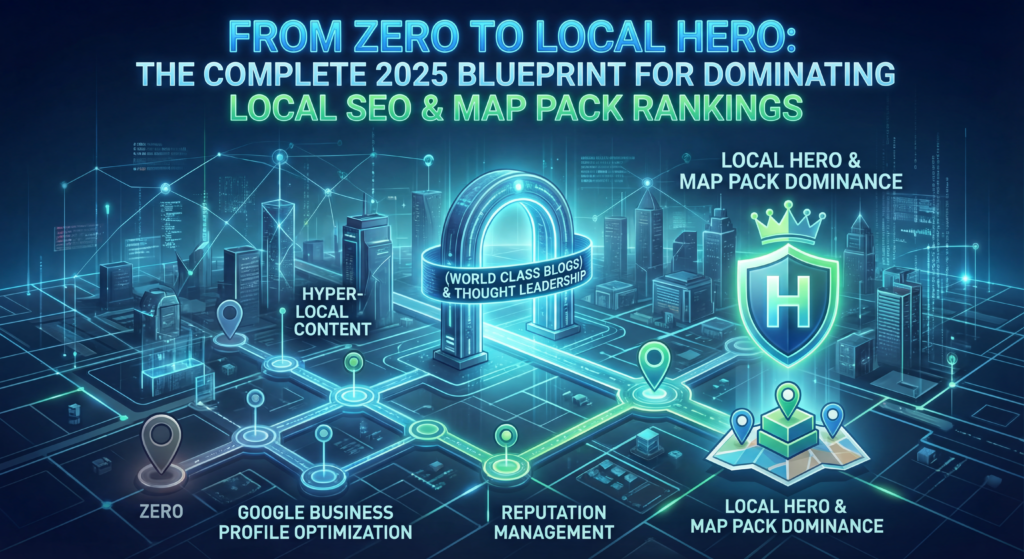
The complete framework for sustainable local search visibility. Each pillar is essential for supporting your ranking.
Introduction – Why This Matters
Imagine a potential customer standing just a few blocks from your business, searching on their phone for exactly what you offer. They don’t find you. Instead, they find your competitor whose name now flashes on their screen as the “closest” or “most relevant” option. That moment—that specific, hyper-local search—is where fortunes are won and lost in today’s economy. This is the battleground of Local SEO, and for business owners with a physical location or a local service area, it is not a secondary marketing channel; it is the single most critical line of digital defense and offense.
What I’ve found is that most local businesses approach this with overwhelming dread or bewildered neglect. They feel at the mercy of an algorithm they don’t understand, leading them to waste money on ineffective ads or generic web services. This article cuts through the noise. For the curious beginner, this is your comprehensive owner’s manual for becoming the most visible business in your neighborhood. For the professional, this is a 2025 update packed with the latest tactics, algorithm nuances, and a systematic blueprint to not just appear in local search, but to dominate the coveted Google Map Pack and convert local intent into a steady stream of foot traffic and phone calls.
Background / Context: The Hyper-Localization of Search
The story of local search began with the Yellow Pages, moved to basic online directories, and has now exploded into a complex, real-time ecosystem governed by Google’s Local Search algorithm. The catalyst was the smartphone. Over 60% of all searches now have local intent, and “near me” searches have grown by over 250% in the past five years.
The central player in this ecosystem is the Google Business Profile (GBP), formerly Google My Business. Think of it not as a simple business listing, but as your business’s mini-website, storefront, and customer service portal within Google’s own results. Its prominence was cemented with the introduction of the Local Pack (now often just the Map Pack)—the block of three local business listings that appears at the top of search results for local queries, often above all other organic results.
The context in 2024/2025 is one of intense competition and sophistication. The pandemic accelerated the “local search and buy” habit, and customers now expect flawless digital experiences—accurate hours, instant answers via messaging, photos of the interior, and a stream of recent reviews. Google is feeding this expectation with constant GBP updates, integrating AI for attribute discovery, and prioritizing businesses that provide the most complete, accurate, and engaging real-world information. For service-area businesses (SABs) like plumbers or electricians, the rules have tightened, requiring clearer verification and a focus on service cities over vague areas. For a broader perspective on how this fits into a complete online strategy, our guide to starting an online business covers foundational steps.
Key Concepts Defined
- Google Business Profile (GBP): Your free business listing on Google. It controls your appearance in Google Maps and local search results. It includes your NAP, hours, photos, posts, reviews, and Q&A.
- Map Pack / Local Pack: The block of typically three local business listings (with a map) that appears at the top of Google search results for local intent queries. Securing a spot here is the primary goal of Local SEO.
- NAP Consistency: The uniformity of your business’s Name, Address, and Phone Number across the entire web (your website, GBP, directories, social media). Inconsistency is a major ranking killer.
- Local Search Ranking Factors: The key signals Google uses to rank local businesses. The top three are: Relevance (how well your business matches the search), Distance (how close you are to the searcher’s location or stated location), and Prominence (how well-known your business is online and offline).
- Citations: Online mentions of your business NAP on other websites (directories, association sites, local news). They are foundational for building Prominence and verifying your legitimacy.
- Local Service Ads (LSAs): Google’s pay-per-lead advertising program for specific service industries (plumbing, cleaning, tutoring). They appear at the very top of search results with a “Google Guaranteed” badge.
- Geo-Modifiers: Keywords that include a location, such as “emergency plumber in Seattle” or “best coffee shop near Downtown.” These are the primary targets for local SEO.
- “Near Me” Searches: Queries that imply the searcher’s current location, like “shoe repair near me.” Google interprets these without the user needing to type a specific city.
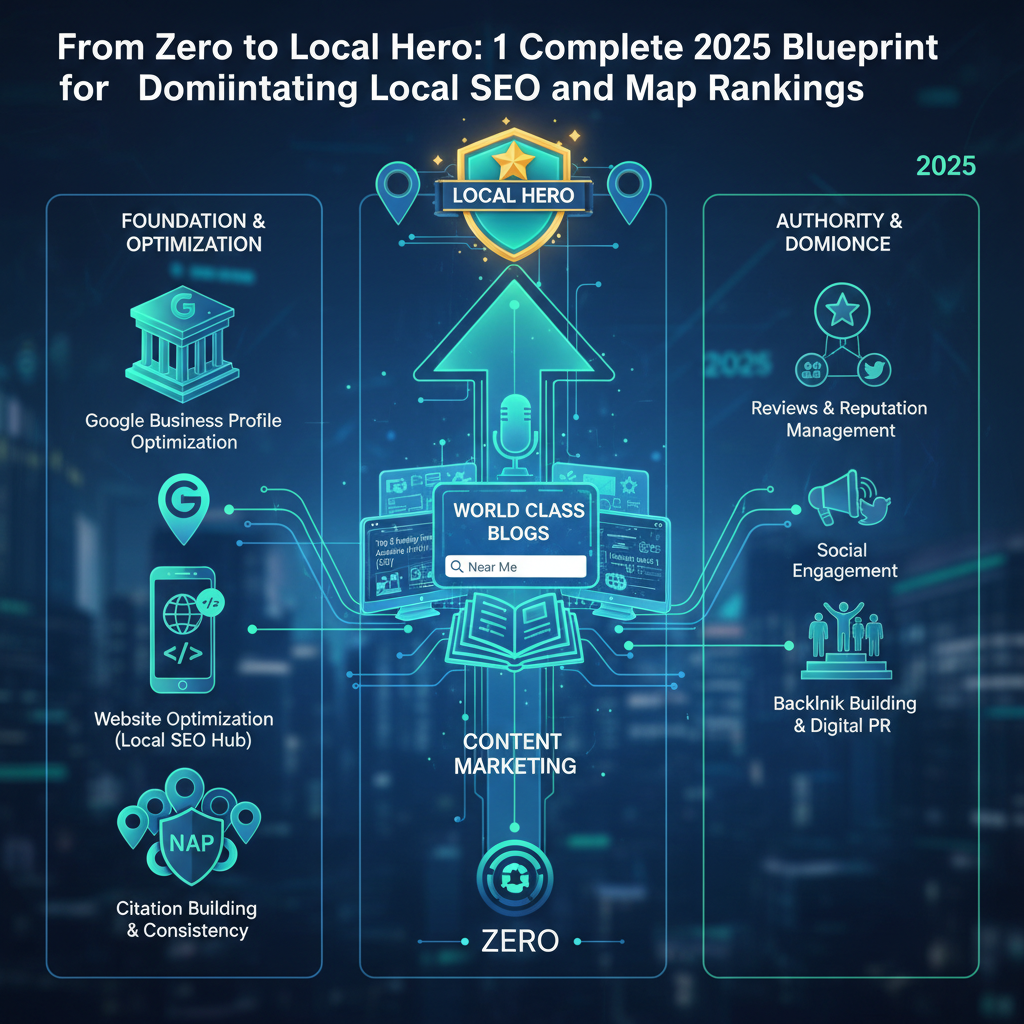
How It Works: The 8-Pillar Local SEO Domination Framework (Step-by-Step)

Forget random tactics. Sustainable local visibility is built on this interconnected framework.
Pillar 1: Google Business Profile – Claim, Complete, and Optimize
This is your command center. 90% of the battle is won or lost here.
- Claim & Verify: If you haven’t, claim your profile via Google Business Profile. Follow the verification process (postcard, phone, email) meticulously.
- The 100% Completion Mandate: Fill out every single field.
- Categories: Choose your primary category with extreme precision—it’s a powerful ranking signal. Then add relevant secondary categories.
- Attributes: Select every applicable attribute (e.g., “Women-led,” “Wheelchair accessible,” “Offers free Wi-Fi”). These are filters customers use.
- Service Menu / Product List: For service businesses, list every service with descriptions. For retailers, use the product module.
- Content & Engagement Engine:
- Posts: Publish weekly GBP Posts (events, offers, updates, articles). This signals activity and feeds the “From the Business” section.
- Photos: Upload high-quality, well-lit photos monthly. Include exterior, interior, staff at work, products, and popular dishes/items. User-generated photos in reviews are a huge trust signal.
- Q&A: Proactively add common Q&As. Monitor and answer questions publicly and promptly.
Pillar 2: On-Page Website Localization
Your website must scream your locality.
- Location Pages: If you have multiple locations, each must have a unique, substantial page (not just an NAP on a template). Include that location’s specifics, staff, testimonials from that area, and embedded Google Map.
- Local Keyword Integration: Naturally include geo-modifiers in page titles, H1 tags, meta descriptions, and body content. Don’t stuff; be helpful. (e.g., “Serving the [Neighborhood] community since 1995”).
- Schema Markup: Implement local business schema on your contact page and location pages. This structured data helps Google understand your business type, NAP, hours, and area served, often leading to rich results.
- Clear Calls-to-Action (CTAs): “Call our Austin office,” “Get directions to our Denver showroom,” “Schedule a free consultation in Boston.”
Pillar 3: Citation Building & Consistency Audit
Citations are your digital foundation.
- The Core 10: Ensure perfect NAP consistency on these key data aggregators and directories: Google Business Profile, Apple Business Connect, Bing Places, Facebook, Yelp, Better Business Bureau, Yellow Pages, Foursquare, Tripadvisor (if applicable), and your local Chamber of Commerce site.
- Industry & Niche Citations: List on directories specific to your field (e.g., HomeAdvisor for contractors, Zocdoc for doctors).
- Use a Tool: Services like BrightLocal or Whitespark can automate citation audits, find inconsistencies, and track your listings’ health.
Pillar 4: Review Acquisition & Management
Reviews are the social proof that drives clicks and conversions from the Map Pack.
- Systematize Asking: Use a polite, post-service email/SMS workflow. Google provides a short link you can share directly to the review interface. Make it easy.
- Respond to Every Review: Thank positive reviewers personally and specifically. Address negative reviews with empathy, a desire to fix the problem, and an offer to take the conversation offline. This public response is a massive trust-builder for future customers.
- Aim for Velocity & Consistency: A steady stream of reviews (even 2-3 per month) is better than 20 in one month and then silence. It signals ongoing, current relevance.
Pillar 5: Local Link Building
Links from other local websites are rocket fuel for Prominence.
- Local Sponsorships & Partnerships: Sponsor a Little League team, a local charity event, or a school program. The resulting link from the organization’s site is golden. Building a strategic alliance with a complementary local business can also yield powerful mutual benefits.
- Digital PR with Local Media: Pitch story ideas to local newspapers, TV stations, and blogs. A feature in the Austin Business Journal is a powerful local signal.
- Guest Posts on Local Blogs: Contribute valuable content to blogs that serve your city or region.
Pillar 6: Content Marketing with a Local Lens
Become the local expert.
- Create “Local Spotlight” Content: Write blog posts about “Best Parks in [Your City],” “A History of [Your Neighborhood],” or “A Guide to [Local Festival].”
- Feature Local Customers/Projects: With permission, showcase case studies or testimonials that highlight your work within the community.
- Target Hyper-Local Long-Tail Keywords: “HVAC repair for historic homes in Charleston,” “divorce lawyer specializing in military families near Fort Bragg.”
Pillar 7: Monitoring & Performance Tracking
You can’t manage what you don’t measure.
- Track Map Pack Rankings: Use tools like BrightLocal or Local Falcon to see where you rank for key terms in specific areas of your city, not just the centroid.
- Monitor Insights in GBP: Analyze how customers find your listing (search vs. maps), what actions they take (call, website visit, direction request), and popular photo views.
- Set Up Conversion Tracking: Use call tracking numbers on your GBP and website to attribute phone leads directly to your local SEO efforts.
Pillar 8: Managing Online Reputation & Competitor Analysis
- Regular Competitor Checks: Study the top 3 competitors in your Map Pack. What photos do they have? What posts are they making? What attributes do they use? What reviews are they getting?
- Suppress Duplicate Listings: Search for phantom or duplicate listings of your business that can confuse Google and dilute your citation strength. Use GBP’s “Suggest an edit” or dashboard tools to mark them as duplicates or closed.
Key Takeaway Box: The Local SEO Mindset
Think like a customer, not a marketer. Every piece of information—from your listed hours to the photo of your waiting room—answers a question a potential customer has while deciding whether to choose you. Your goal is to pre-emptively answer every possible question and objection through your GBP and website, making the choice to contact you the easiest, most obvious decision they can make.**
Why It’s Important: The Direct Line to Revenue
Investing in Local SEO is the highest-ROI activity for a local business because it puts you directly in front of customers at the precise moment they are ready to buy.
- High-Intent Traffic: Someone searching “emergency plumber 24/7 near me” isn’t browsing; they have a burst pipe and are ready to hire. Converting this traffic is significantly easier than cold traffic.
- Trust by Proximity: There’s an inherent trust in a local business. A 2024 BrightLocal survey found that 76% of people trust online reviews as much as personal recommendations, and local reviews are paramount.
- Cost-Effectiveness: Compared to broad PPC campaigns, local SEO targets a specific geography and intent, reducing wasted ad spend. A well-optimized GBP is free advertising that works 24/7.
- Mobile-First Reality: Over 80% of local searches happen on mobile devices. The Map Pack is designed for mobile, making it the primary interface for local discovery. If you’re not optimized for it, you’re invisible to the mobile customer.
What I’ve found is that businesses that master this see a transformative shift: they stop competing on price and start competing on visibility and reputation, allowing them to command premium rates.
Sustainability in the Future
Local SEO is becoming more dynamic and integrated.
- AI-Powered Local Search: Google’s SGE will incorporate local results. Queries like “best place to fix a flat tire” will generate AI summaries pulling from reviews, attributes, and business descriptions. Optimizing for conversational queries and rich data will be key.
- Hyper-Attribute Targeting: Attributes in your GBP will become even more critical as users filter searches by “black-owned,” “sustainable,” “pet-friendly,” or “offers virtual consultations.” Keeping these updated is non-negotiable.
- The “Profile-First” Experience: For many mobile users, your GBP is your website. Ensuring it can handle bookings, messages, and order placement directly will be essential. Integration with booking platforms (like Setmore, Squarespace Scheduling) will be a standard.
- Video & Virtual Tours: Static photos are becoming the baseline. Short videos of your team in action, virtual tours of your facility, or customer testimonial videos posted directly to your GBP will become major differentiators for engagement.
- Increased Verification & Spam Fighting: Google will continue to tighten verification processes, especially for service-area businesses, to combat spammy listings. Maintaining a clean, legitimate, and verifiable business presence will be your best defense.
Common Misconceptions
- Misconception 1: “If I’m listed on Google, my Local SEO is done.”
- Reality: Claiming your GBP is step 1 of 100. An incomplete, unmonitored profile is often worse than none at all, as it displays incorrect information (like old hours) that actively drives customers away.
- Misconception 2: “I need to get as many citations as possible on any directory.”
- Reality: Quality and consistency trump quantity. One citation with a wrong phone number on a prominent site can do more harm than 100 correct citations on obscure sites. Focus on the core, authoritative directories first.
- Misconception 3: “Local SEO is just for restaurants and retail stores.”
- Reality: Any business with a physical location or that serves a specific geographic area needs Local SEO. This includes lawyers, consultants (if they see clients in an office), contractors, doctors, and mobile services (like dog groomers or landscapers).
- Misconception 4: “Ranking #1 in the Map Pack is all about proximity.”
- Reality: While Distance is a key factor, Relevance and Prominence often outweigh it. A highly relevant, well-reviewed business 5 miles away can outrank a less-optimized business 2 miles away. You can influence these factors.
- Misconception 5: “I can’t compete with big franchises with huge marketing budgets.”
- Reality: Local SEO is the great equalizer. A franchise location might have brand recognition, but it often has a generic, neglected GBP managed by a corporate office. An independent business with a passionate owner who actively manages reviews, posts local content, and builds community links can absolutely outrank them.
Recent Developments (2024-2025)
- GBP “Follow” Function: Users can now “follow” a business profile for updates, creating a direct channel similar to social media. This increases the value of regular GBP Posts.
- AI-Generated Business Descriptions: Google now offers to auto-generate a business description for your GBP based on information from the web. Use extreme caution. Always edit and personalize this to ensure accuracy and brand voice.
- “Request a Quote” Feature Expansion: This lead-generation button within GBP is being expanded to more service categories, competing directly with Local Service Ads.
- Increased LSA Category Expansion: Local Service Ads are rolling out to new verticals beyond home services, including professional services like marketing agencies, accounting, and consulting, creating a new paid local channel.
- Profile Strength Meter in GBP: Google has introduced a clearer “Profile Strength” gauge in the dashboard, explicitly guiding businesses to complete missing elements, showing the direct impact of optimization.
Success Stories & Real-Life Examples
Case Study: “The Family-Owned Hardware Store vs. The Big Box”
A client ran a 40-year-old hardware store in a suburban strip mall, consistently losing foot traffic to a Home Depot 1.5 miles away.
- The Problem: Their online presence was a bare-bones GBP and an outdated website. They were invisible for “near me” searches like “pipe wrench” or “key cutting.”
- Our Local SEO Intervention (The 8-Pillar Framework):
- GBP: We optimized categories (“Hardware Store,” “Locksmith,” “Key Duplication”), added attributes (“Family-owned,” “Tool rental,” “Knowledgeable staff”), and began weekly posts featuring “Tool of the Week” and DIY tips.
- Website: Created localized pages for each major service (key cutting, screen repair, tool rental) with geo-modifiers.
- Citations: Cleaned up inconsistent NAP on 15+ directories.
- Reviews: Implemented a simple receipt-based review system, leading to 80+ new reviews in 6 months.
- Local Links: Sponsored a community garden project, earning a link from the city’s parks department website.
- Content: Published blog posts like “How to Winterize Your Sprinkler System in [City]” and “Local Building Code Tips for DIY Deck Projects.”
- The Result: Within 8 months, they ranked in the Map Pack for over 50 key local search terms. “Key cutting near me” became their #1 source of new customers. Overall, in-store traffic increased by an estimated 25%, with the owner reporting, “People now walk in and say, ‘I saw your post about…’ or ‘Google said you could do this.'”
Real-Life Example: The Power of Attributes
A search for “women’s haircut San Francisco” shows the Map Pack. The salons ranking in the top three almost universally have the “Women-led” attribute selected. A user who filters or values this can immediately see and choose these businesses. A salon without this attribute, even if it is women-led, misses this entire segment of targeted traffic. This highlights the critical, tactical importance of every single GBP field.
Conclusion and Key Takeaways
Dominating local search is a systematic, ongoing process of building and maintaining your digital footprint in your community. It requires attention to detail, a commitment to customer engagement, and a strategic understanding of how Google interprets local intent.
Final Takeaways:
- Your GBP is Your #1 Asset: Treat it with the care you would treat your physical storefront. Complete it 100%, post to it weekly, and monitor its insights daily.
- NAP Consistency is Non-Negotiable: Inconsistency confuses Google and customers. Audit and clean your citations as a foundational first step.
- Reviews are Modern Word-of-Mouth: A proactive, professional review strategy is the single fastest way to boost Prominence and click-through rates from the Map Pack.
- Think Hyper-Local in Content: Your content should serve your local community first. This builds relevance and earns local links.
- This is a Marathon, Not a Sprint: Local SEO results build over 3-6 months. Consistency in management (posts, photos, responses) is what sustains rankings long-term.
Start today. Open your Google Business Profile dashboard. What’s one section you can complete more fully? What’s one review you can respond to? That is the first step on the path from zero to local hero. For more insights into business strategy and growth, be sure to explore our other articles in the Blogs category.
FAQs
1. How long does it take to see results from Local SEO efforts?
You may see minor improvements in profile views within weeks. Meaningful movement in Map Pack rankings typically takes 3 to 6 months of consistent work. Cleaning citations can yield faster results, while building reviews and local links is a longer-term strategy. Patience and persistence are key.
2. I’m a service-area business with no physical storefront. Does this still apply?
Absolutely. For SABs, your service area (list of cities/ZIP codes) in your GBP is critical. You’ll hide your address. Focus even more on reviews, service descriptions, and photos of your work (vans, team in action, before/after projects). Verify your business thoroughly, as Google is stricter with SABs to prevent spam.
3. How many photos should I have on my GBP?
There’s no upper limit. Aim for a minimum of 30-50 high-quality photos and add new ones every month. Variety is crucial: exterior, interior, team, popular products/services, customer interactions (with permission), and branded signage.
4. Should I pay for a service to get more reviews?
Never pay for reviews. This violates Google’s policies and can get your profile suspended. Focus on providing an excellent service and implementing a polite, systematic ask. Google also penalizes businesses with a sudden influx of reviews from accounts with no history, which is typical of paid review services.
5. What’s more important: a high number of reviews or a high average star rating?
Both matter, but they serve different purposes. A high average rating (4.5+) is a crucial trust signal that influences clicks from the Map Pack. A high volume of reviews (100+) signals longevity, stability, and popularity, which feeds into Prominence. You need a strategy that builds both steadily.
6. How do I find duplicate listings of my business?
Search for your business name and phone number in various combinations on Google. Also, use the “Suggest an edit” feature on any suspicious listing to mark it as a duplicate. Tools like BrightLocal and Whitespark also have duplicate detection features in their audit suites.
7. Can I do Local SEO myself, or do I need an agency?
You can absolutely manage the core pillars yourself, especially with the resources provided here. An agency becomes valuable if you lack the time, need advanced technical work (schema, site migrations), or want aggressive link-building and content campaigns. Many agencies also specialize in specific business partnership models for local networks.
8. What’s the biggest waste of money in Local SEO?
Paying for generic, automated “citation blast” services that list your business on hundreds of low-quality, irrelevant directories. This often creates more NAP inconsistency than value. Focus on the quality core directories relevant to your business and location.
9. How does local SEO interact with traditional (organic) SEO?
They are symbiotic. Local SEO focuses on your GBP and local signals to win the Map Pack. Organic SEO focuses on your website to rank in the traditional blue links below it. A strong local presence can boost your brand, leading to more branded searches and organic clicks. Conversely, a strong, locally optimized website supports your GBP’s relevance.
10. My competitor is ranking #1 but has worse reviews. Why?
They are likely beating you on other ranking factors: more complete GBP, better-optimized website, stronger local backlinks, or more relevant category/attribute selections. Use this as a research opportunity to reverse-engineer their strengths and identify their weaknesses (like poor reviews) that you can capitalize on.
11. How important is responding to negative reviews?
Critically important. A thoughtful, professional response to a negative review shows potential customers you care about feedback and are committed to resolving issues. It can often mitigate the damage of the review itself. Ignoring negative reviews makes your business look indifferent.
12. What are the best tools for Local SEO?
- GBP Management: Google’s own GBP dashboard (free), BrightLocal (comprehensive audits, ranking tracking, review management).
- Rank Tracking: Local Falcon (for hyper-local rank mapping), SEMrush, or Ahrefs (for broader tracking).
- Citation Tracking: BrightLocal, Whitespark.
- Review Monitoring: ReviewTrackers, Podium.
13. How do I choose the right primary category for my GBP?
Think from the customer’s search intent. If you’re a dentist who does implants, your primary category should likely be “Dentist,” not “Cosmetic Dentist” or “Dental Implants Provider,” as “Dentist” is the broader, more-searched category. Use specific services and attributes to highlight your specialties.
14. Can I change my GBP address if I move?
Yes, but do it carefully. Update the address in your GBP dashboard. You must re-verify your listing, often via a postcard to the new address. Expect a temporary ranking fluctuation as Google reassociates your profile with the new location. Update your NAP everywhere on the web simultaneously.
15. How do Local Service Ads (LSAs) differ from Local SEO?
LSAs are a pay-per-lead advertising product. You pay Google when a qualified customer calls or messages you through the ad. Local SEO is an organic, free process to earn your place. They can work together: LSAs give you immediate top placement while you build your organic local SEO presence for long-term sustainability.
16. Is there a risk of “over-optimizing” my GBP?
The risk isn’t in providing too much accurate information. The risk is in engaging in manipulative behavior: keyword-stuffing your business name, creating fake reviews, or listing your business in categories that don’t apply. Focus on being helpful and accurate, not tricks.
17. What should I do if my business is incorrectly marked as “Permanently Closed”?
This is a critical issue. Go to your GBP dashboard, find the “Mark as open” option. If that doesn’t work, use the “Suggest an edit” feature on your own listing or contact Google Business Profile support directly. This can severely damage your business if not fixed immediately.
18. How does mental health relate to managing local SEO?
For small business owners, managing online reputation and dealing with negative reviews can be incredibly stressful. It’s important to depersonalize criticism, develop a calm response protocol, and remember that a single review does not define your business. Prioritizing your psychological wellbeing is essential for making clear-headed business decisions.
19. How often should I check my GBP insights?
Aim for at least a weekly check to monitor search queries, customer actions, and photo views. Daily checks are ideal for responding to new reviews and Q&A promptly. Setting aside 15 minutes each morning for this can make a huge difference.
20. What’s the single most impactful action I can take this week?
Conduct a NAP consistency audit. Google your business name, phone number, and address. See what comes up on the first two pages. Make a list of every directory with incorrect information and begin the process of claiming and correcting those listings. This foundational step clears the path for all other efforts.
About the Author
Sana Ullah Kakar is a Local SEO Strategist and the founder of a consultancy focused on helping Main Street businesses thrive online. With a background in geographic information systems (GIS) and a decade in digital marketing, Sam combines technical data analysis with a deep understanding of community-based commerce. He is a frequent contributor to industry publications and speaks on the future of hyper-local search. You can learn more about our broader mission and focus areas (https://worldclassblogs.com/category/our-focus/) on our site.
Free Resources
- Local SEO Starter Kit Checklist: A printable PDF checklist covering all 8 pillars with actionable steps.
- GBP Post Ideas Calendar (12 Months): A filled-in calendar with weekly post ideas for different industries.
- NAP Audit Template Spreadsheet: A Google Sheets template to log and track your business citations.
- Response Templates for Reviews: Professional templates for responding to positive, negative, and neutral reviews.
(These resources are available to our community. Please visit our contact page to request the access link.)
Discussion
We want to hear from you!
- What’s the biggest challenge you’ve faced with your Google Business Profile?
- Have you found a particularly creative way to generate local reviews or build local links?
- For those in competitive markets: what tactic made the most noticeable difference in your Map Pack ranking?
- What local SEO question are you still struggling to find a clear answer for?
Share your stories, struggles, and successes below. Let’s build stronger local businesses together.