
Conflict Resolution in 2025: Navigating Persistent Wars and Evolving Peacebuilding Strategies
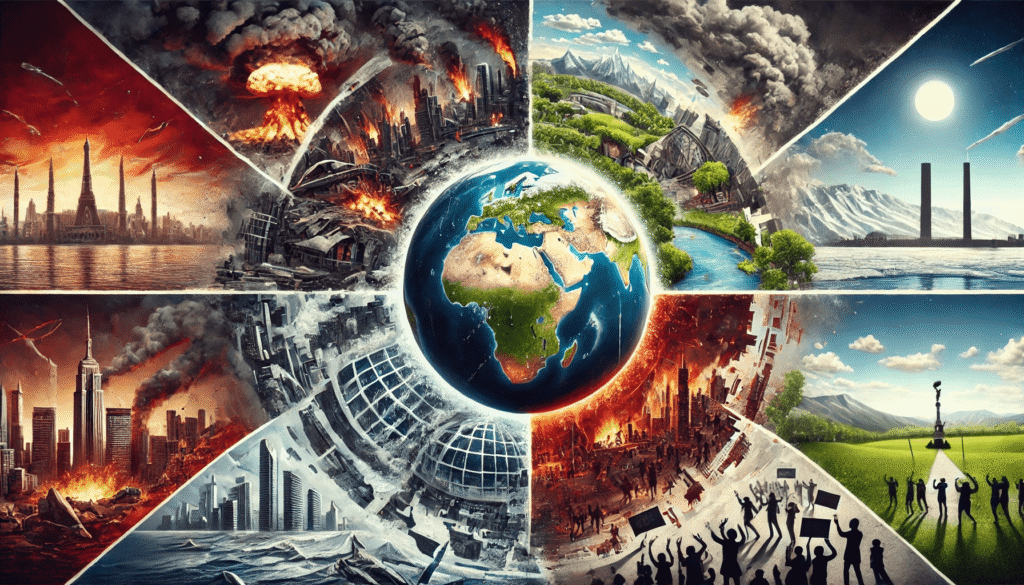
With traditional diplomatic routes blocked, conflict resolution in 2025 requires navigating a labyrinth of alternative tracks and constant adaptation.
Introduction – Why This Matters
In 2025, the world is facing a historic convergence of protracted conflicts that defy conventional resolution and are reshaping the very foundations of international security. From the grinding war in Ukraine and the catastrophic humanitarian crisis in Gaza, to the devastating civil conflicts in Sudan and Myanmar, and rising tensions in the South China Sea, our traditional peacebuilding toolkit appears increasingly inadequate. The global community stands at a critical juncture where century-old diplomatic frameworks are being tested against 21st-century warfare technologies, shifting alliances, and complex geopolitical rivalries.
In my experience working with conflict analysis teams across multiple regions, what I’ve found is that we’re not simply witnessing more conflicts—we’re witnessing a fundamental transformation in conflict nature. Today’s wars feature unprecedented combinations of conventional warfare, cyber operations, disinformation campaigns, private military companies, and economic coercion. They create layered humanitarian disasters that overwhelm international response systems while testing the limits of international law. For professionals in foreign policy, humanitarian work, and international security, understanding this new landscape isn’t just academic—it’s essential for developing effective responses. For curious observers, it’s key to interpreting a world that seems increasingly fragmented and volatile.
This comprehensive analysis moves beyond daily headlines to examine the structural forces driving modern conflict, the innovative—and often improvised—approaches to resolution, and the difficult questions facing the international community. We will explore why traditional diplomacy stalls, how humanitarian principles are being weaponized, and what emerging strategies offer fragile hope for de-escalation and sustainable peace in an increasingly polarized world.
Background / Context: The Changing Face of Global Conflict
To understand today’s peacemaking challenges, we must recognize how conflict itself has evolved since the post-Cold War era of liberal interventionism.
The Post-1991 Order and Its Assumptions
The period following the Cold War’s end was characterized by several core assumptions that shaped international conflict response:
- The Primacy of Liberal Peacebuilding: The belief that conflicts could be resolved through a standardized formula: ceasefire, peace agreement, elections, and integration into Western-led institutions.
- U.S.-Led Unipolar Enforcement: The expectation that the United States, often through NATO or UN mandates, could and would intervene to stop mass atrocities (as in Kosovo in 1999).
- The Normative Power of International Law: Confidence that institutions like the International Criminal Court (ICC) and treaties like the Geneva Conventions would constrain combatant behavior through norms and accountability.
The Erosion of the Old Framework
Multiple developments have systematically undermined these assumptions:
- The “Forever Wars” Legacy: The protracted, inconclusive interventions in Afghanistan (20 years) and Iraq created profound intervention fatigue in Western democracies and damaged the credibility of nation-building models.
- The Rise of Revisionist Powers: Russia and China have actively challenged the U.S.-led international order, not through direct confrontation, but through “gray zone” conflicts, economic coercion, and parallel institution-building (like BRICS+). They frequently employ UN Security Council vetoes to shield allies from consequences.
- The Proliferation of Non-State Actors: Modern battlefields feature complex ecosystems of transnational terrorist networks, criminal syndicates, private military companies (like Russia’s Wagner Group), and proxy militias funded by regional powers. These actors often operate with different incentives and less accountability than state militaries.
- The Weaponization of Interdependence: Globalization’s connective tissues—energy markets, supply chains, digital infrastructure—have become tools of conflict. The 2022 weaponization of European energy supplies by Russia and the use of economic sanctions as a primary tool of coercion represent this shift.
- The Technological Democratization of Violence: Cheap drones, cyberattack tools, and social media platforms for recruitment and disinformation have lowered barriers to conducting sophisticated hybrid warfare, enabling smaller states and even non-state groups to challenge conventional military powers asymmetrically.
By 2025, these trends have converged to create a landscape where multiple major conflicts run in parallel, straining diplomatic attention and humanitarian resources, while the foundational rules and institutions for managing them are in profound crisis.
Key Concepts Defined
- Multipolarity: The current global power structure where influence is dispersed among several major states (U.S., China, Russia, EU as a bloc, India) rather than concentrated under one hegemon or two superpowers. This complicates consensus-building for collective action.
- Hybrid Warfare: A military strategy that blends conventional warfare, irregular tactics, cyber warfare, lawfare (using legal systems for strategic gain), and sustained disinformation campaigns. Its ambiguity challenges traditional definitions of aggression and thresholds for response.
- Proxy Conflict: A war where third parties (states or non-state actors) support combatants in another conflict with funds, weapons, training, or even personnel, while avoiding direct, declared intervention. This allows patrons to pursue strategic aims while managing escalation risks.
- Humanitarian Crisis Complex: A situation where acute human suffering from conflict intersects with and is exacerbated by other systemic crises: famine driven by climate shocks, pandemics in weakened health systems, and mass displacement overwhelming neighboring states.
- Conflict Resolution vs. Conflict Transformation: Resolution often aims to end violent conflict and return to a pre-war status quo. Transformation seeks to address the underlying structural relationships, institutions, and grievances that caused the conflict, aiming for a fundamentally new, more just, and stable peace.
- Track I / Track II Diplomacy: Track I refers to official, government-to-government negotiations. Track II refers to unofficial dialogues and problem-solving activities among academics, former officials, civil society leaders, and mid-level influencers to build relationships and explore solutions outside formal constraints.
- Ceasefire vs. Cessation of Hostilities vs. Peace Agreement: A ceasefire is a temporary halt in fighting, often for humanitarian purposes. A cessation of hostilities is a more stable, monitored pause, but not yet a political settlement. A comprehensive peace agreement addresses the political roots of the conflict and establishes a roadmap for governance, security, and reconciliation.
- Responsibility to Protect (R2P): A UN-adopted principle (2005) that sovereign states have a responsibility to protect their populations from genocide, war crimes, ethnic cleansing, and crimes against humanity. If they fail, the international community has a responsibility to intervene through peaceful means, and as a last resort, through coercive measures. Its application remains deeply contested.
How It Works: The Anatomy of Modern Conflict Resolution Efforts
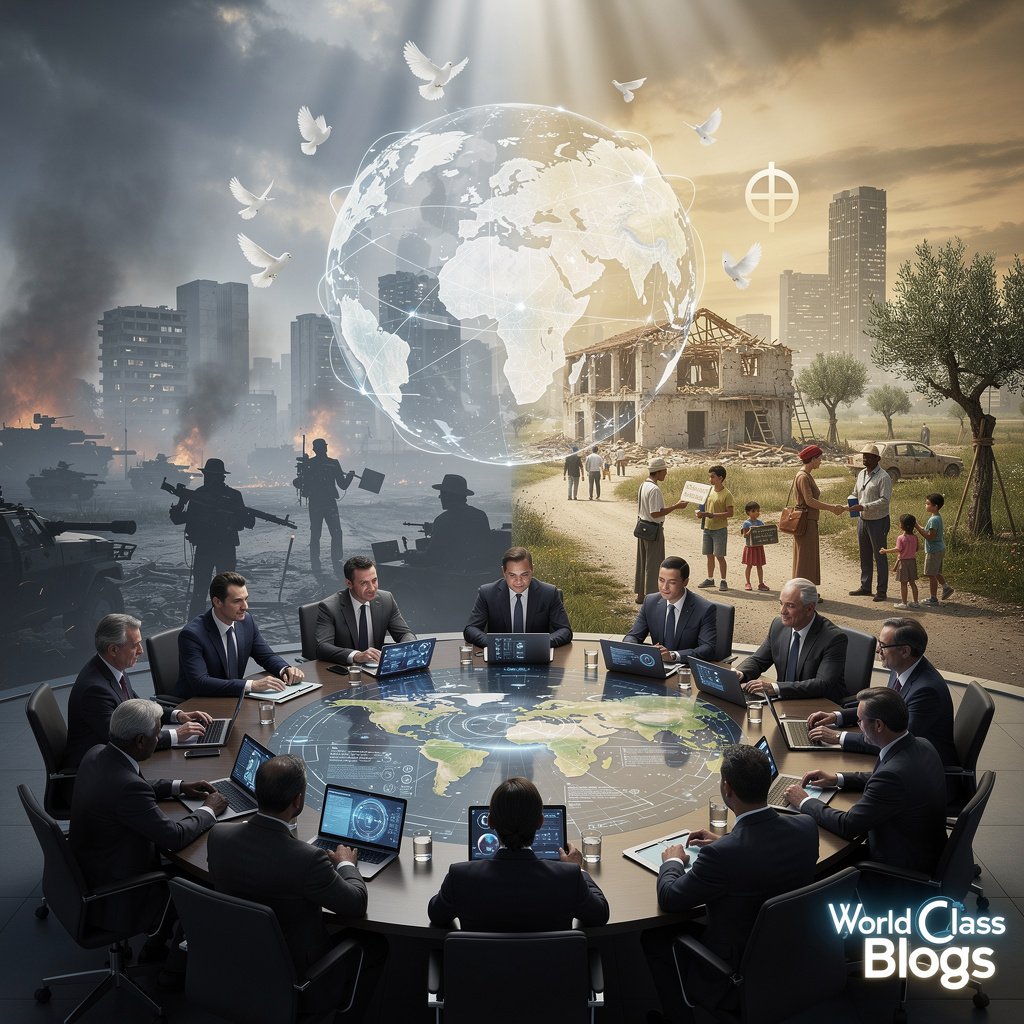
Resolving contemporary conflicts requires navigating a multi-layered, often contradictory system of actors, processes, and constraints. Here is a step-by-step breakdown of how peacemaking attempts to function today.
Step 1: Crisis Identification & Escalation Management
The initial phase focuses on preventing an acute crisis from spiraling into wider war.
- Early Warning Systems: Organizations like the UN’s Office for the Coordination of Humanitarian Affairs (OCHA) and NGOs like the International Crisis Group monitor political tensions, economic stress, and social indicators to flag potential conflicts. In 2025, these systems increasingly use AI-driven analysis of satellite imagery, social media sentiment, and economic data flows.
- Shuttle Diplomacy & “Quiet Diplomacy”: Before public announcements, envoys from neutral states, regional organizations, or the UN engage in discreet talks with conflict parties to explore intentions and signal concerns. Norway and Switzerland often play this role.
- De-confliction Mechanisms: In active warzones, especially where major powers have competing interests (e.g., Syria), military-to-military communication channels are established to avoid accidental clashes that could trigger escalation. These are tactical, not political, arrangements.
Step 2: Humanitarian Pause & Access Negotiation
Parallel to political efforts, humanitarian actors negotiate with warring parties.
- Humanitarian Corridors: These are temporary, specific routes agreed upon by combatants to allow civilians to evacuate and aid to enter. Their effectiveness is highly dependent on the goodwill of fighters on the ground and often proves fragile, as seen in Mariupol (2022) and Gaza (2023-2024).
- The “Dublin Principles”: Aid agencies operate on principles of humanity, neutrality, impartiality, and independence. However, in conflicts where one side is labeled an aggressor or terrorist group (e.g., Hamas), maintaining perceived neutrality with all parties has become extraordinarily difficult and politically charged.
- The UN Security Council Resolution Process: For major conflicts, a formal UNSC resolution can mandate ceasefires, sanctions, or peacekeeping missions. The process is often blocked by vetoes from the P5 (Permanent Five: US, China, Russia, France, UK). In 2024, the US vetoed multiple resolutions on Gaza, while Russia and China vetoed resolutions on Ukraine.
Step 3: Formal Negotiation & Mediation
When parties are willing to talk, a structured process begins.
- Choosing the Mediator: Credibility is key. It can be a neutral state (e.g., Qatar mediating between the U.S. and the Taliban), a regional organization (e.g., the African Union in Sudan), a UN special envoy, or even a religious figure.
- Setting the Agenda: Negotiators must decide if talks will follow a comprehensive approach (all issues at once) or a step-by-step approach (ceasefire first, then political talks). The latter is more common but risks stalling after the first step.
- Managing Spoilers: Actors who benefit from continued conflict—whether warlords, criminal networks, or political hardliners—will actively sabotage talks. Effective mediation requires strategies to either co-opt or marginalize spoilers.
Step 4: Implementation & Peacebuilding
The most challenging phase begins after an agreement is signed.
- Peacekeeping Missions: Modern UN peacekeeping (e.g., MINUSCA in Central African Republic) combines military protection of civilians with support for political processes, security sector reform, and human rights monitoring. However, missions are often under-funded, under-manned, and given weak mandates that limit their effectiveness against determined spoilers.
- Disarmament, Demobilization, and Reintegration (DDR): Programs to help former combatants transition to civilian life are critical for stability but require significant funding and long-term commitment, which often wanes as international attention shifts.
- Transitional Justice & Reconciliation: Processes to address atrocities—including truth commissions, reparations, and judicial accountability (via national courts or hybrid tribunals)—are essential for healing but are intensely political and easily derailed.
Table: The Evolving Toolkit for 2025 Conflict Mediators
| Traditional Tool | 2025 Adaptation / Challenge |
|---|---|
| UN Security Council Mandate | Frequently vetoed; increasing reliance on UN General Assembly “Uniting for Peace” resolutions (which are symbolic but not binding) or action by regional coalitions. |
| Neutral Humanitarian Aid | Increasingly politicized and instrumentalized, aid is used as bargaining chip; humanitarian workers targeted. |
| Classic Mediation (e.g., Camp David) | Complicated by multipolar competition; multiple mediators (e.g., Türkiye, Saudi, Egypt, Qatar in Gaza) sometimes work at cross-purposes. |
| Economic Sanctions | A primary tool, but effects are asymmetric, often harming civilians, and driving targets into alternative economic alliances (Russia-China). |
| International Criminal Court (ICC) | Facing accusations of selective justice; major powers (US, Russia, China, India) not members; arrest warrants (e.g., for Putin, Netanyahu) are powerful symbols but hard to enforce, potentially complicating diplomacy. |
Why It’s Important: The Global Stakes of Failed Conflict Resolution
The consequences of our collective inability to effectively resolve modern wars extend far beyond the immediate suffering in conflict zones, threatening global stability in interconnected ways.
1. The Humanitarian Catastrophe & Collapse of Global Norms
Modern warfare is disproportionately waged in urban areas with high-precision weapons, leading to staggering civilian casualties and the systematic destruction of essential infrastructure: hospitals, schools, water and power plants. In 2024, over 114 million people were forcibly displaced worldwide—a record high driven by conflicts in Ukraine, Sudan, Myanmar, and Gaza. This scale of suffering, often livestreamed, fuels global outrage but also normalizes the violation of international humanitarian law (IHL). When major powers are perceived as ignoring or enabling these violations, it erodes the foundational norms that have, however imperfectly, constrained warfare since 1945.
2. The Threat of Regional Conflagration & Miscalculation
Local conflicts now carry extreme risk of regional or even global escalation due to complex alliance structures and the involvement of nuclear-armed patrons. The war in Ukraine is a direct NATO-Russia proxy conflict. A strike from Lebanon’s Hezbollah (backed by Iran) could draw Israel into a wider regional war. Clashes in the South China Sea risk pulling the U.S. and China into direct confrontation. In a multipolar world with degraded communication channels, the risk of miscalculation and uncontrolled escalation is higher than at any time since the Cold War.
3. The Geopolitical Reordering & Institutional Paralysis
Ongoing conflicts are accelerating the fragmentation of the global order. They force countries to choose sides, creating new, adversarial blocs. They also paralyze and discredit multilateral institutions. The UN Security Council’s inability to act on Gaza or Ukraine has led to a crisis of legitimacy, prompting states to seek security through regional alliances (like ASEAN) or minilateral “coalitions of the willing” (like the U.S.-led coalition protecting Red Sea shipping). This institutional decay makes managing global crises like pandemics or climate change even more difficult.
4. The Socio-Economic Spillover: Migration, Inflation, and Insecurity
Conflict drives mass migration flows that strain neighboring countries and fuel political tensions in transit and destination states in Europe and North America. It disrupts critical global supply chains—Ukraine’s grain, Middle Eastern energy, Red Sea shipping lanes—contributing to food insecurity and inflationary pressures worldwide. Furthermore, failed states become safe havens for transnational terrorist and criminal networks, exporting insecurity far beyond their borders.
Sustainability in the Future: Can a New Model Emerge?
The current model of international conflict response is unsustainable. It is reactive, under-resourced, politically fragmented, and often ineffective. Building a more sustainable approach requires confronting several hard truths and innovating beyond state-centric diplomacy.
1. Financing the True Cost of Peace
Peacebuilding is chronically underfunded. The UN’s humanitarian appeals for 2025 face a multi-billion-dollar shortfall. Meanwhile, global military spending surpassed $2.2 trillion in 2024. A sustainable model requires a fundamental reallocation, including:
- Investing in Conflict Prevention: It is far cheaper to prevent wars than to end them. This means funding good governance, economic development, and climate adaptation in fragile states.
- Long-term Peacebuilding Commitments: Donors must move from short-term humanitarian funding cycles to 10-15 year commitments for reconciliation, governance, and economic recovery in post-conflict societies.
2. Embracing Inclusive Peace Processes
Sustainable peace requires buy-in from all segments of society, not just armed elites at the negotiating table.
- The Women, Peace and Security (WPS) Agenda: Evidence consistently shows that peace agreements are 35% more likely to last at least 15 years when women meaningfully participate in their creation. This is not merely about equity but effectiveness.
- Incorporating Civil Society & Youth: Local peacebuilders, religious leaders, and youth networks understand community-level drivers of conflict and are essential for implementing agreements. Digital platforms can now facilitate broader public consultation in peace processes.
3. Developing Adaptive Legal & Normative Frameworks
International law must evolve to address new realities:
- Regulating Cyber and AI in Conflict: New international treaties or protocols are needed to establish rules for cyberattacks on civilian infrastructure and the use of autonomous weapons systems.
- Holding Corporations Accountable: Strengthening mechanisms to hold private military companies and disinformation-for-hire firms accountable for actions in conflict zones.
- The “Duty of Care” for Digital Platforms: Developing frameworks for social media companies to mitigate the use of their platforms for incitement to violence and genocide, as alleged in cases against Myanmar and Ethiopia.
The sustainable path forward is not about finding a single new super-weapon for peace, but about patiently rebuilding a fragmented ecosystem of prevention, mediation, and long-term investment in just societies, while adapting our norms and institutions to a digital, multipolar age.
Common Misconceptions
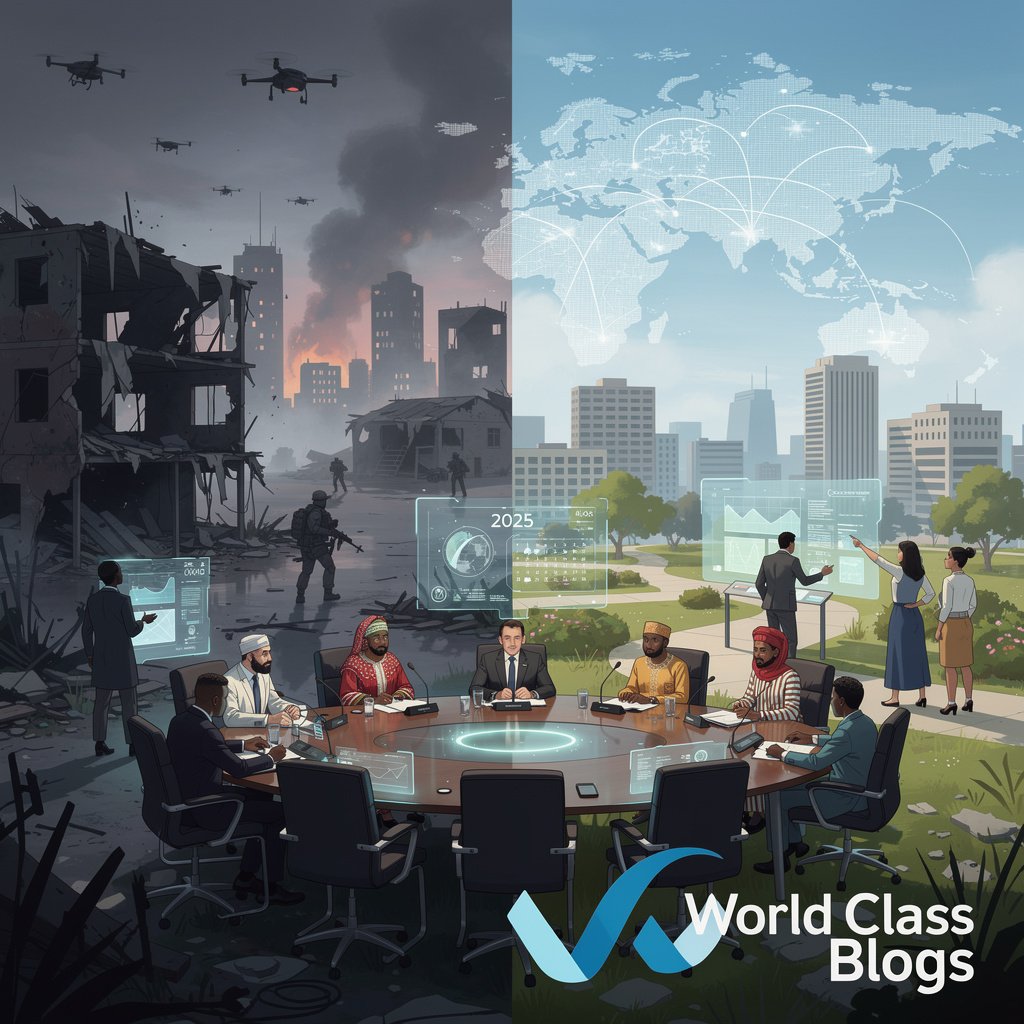
- Misconception: All conflicts can be solved if “both sides just sit down and talk.”
Reality: This assumes conflicts are primarily misunderstandings. Many are rooted in fundamentally irreconcilable claims over sovereignty, identity, or resources (e.g., Israel/Palestine, Ukraine’s territory). For some parties, continued conflict serves key political or economic interests. Diplomacy often manages rather than “solves” these conflicts, seeking to contain violence and create interim arrangements. - Misconception: The United Nations is powerless and irrelevant in stopping wars.
Reality: The UN is often politically paralyzed at the Security Council level due to vetoes. However, its humanitarian agencies (WFP, UNHCR, UNICEF) provide lifesaving aid to hundreds of millions. Its peacekeeping missions, despite flaws, prevent relapse into war in several countries (e.g., Cyprus, Lebanon). Its specialized agencies set vital technical standards. The problem is not the institution’s total failure but the political will of its most powerful members. - Misconception: International law and war crimes prosecutions (like the ICC) can stop atrocities.
Reality: International justice is a slow, political process, not a real-time deterrent. ICC investigations take years. However, its power is normative and symbolic. An arrest warrant can isolate leaders diplomatically, complicate their travel, and shape the historical record. It is a tool for long-term accountability, not an instantaneous tool for conflict cessation. - Misconception: More military intervention is the answer to stop “bad guys.”
Reality: The era of straightforward humanitarian intervention (like Kosovo 1999) is over. In today’s multipolar world, intervention by one power is likely to be countered by another, escalating and prolonging the conflict (see Syria). Furthermore, the track record of Western-led nation-building is poor. The focus has shifted to containment, sanctions, and supporting local partners, which have significant moral and practical dilemmas of their own.
Recent Developments (2024-2025)
The conflict landscape continues to evolve rapidly, with new dynamics shaping the possibilities for resolution.
- The “Frozen” Ukraine War & Shifting Frontlines: By mid-2025, the conflict has settled into a war of attrition with minimal territorial change. This has shifted diplomatic focus from outright victory to potential negotiations based on current frontlines, though the fundamental issue of Crimea and security guarantees remains unresolved. The U.S. and EU are discussing a $100+ billion package for Ukraine’s long-term security and reconstruction, signaling a move from emergency aid to a multi-decade strategy of containment and support.
- Gaza: The “Day After” Planning Impasse: Even as ceasefire talks sputter, intense behind-the-scenes diplomacy focuses on the “day after” Hamas. Plans revolve around a reformed Palestinian Authority, security guarantees for Israel, and a massive reconstruction fund led by Arab states. However, deep disagreements between Israel, the Palestinian leadership, and regional actors about governance and security make implementation highly uncertain.
- Sudan’s Forgotten War & Regionalization: The civil war between the Sudanese Armed Forces and the Rapid Support Forces has created the world’s largest internal displacement crisis (over 10 million). The conflict is increasingly regionalized, with external powers (Egypt, UAE, Iran, others) backing different factions, mimicking the proxy dynamics of Syria and Libya. African Union mediation efforts are struggling against these external interests.
- The Rise of “Digital Peacebuilding”: Organizations are using new tools: AI to analyze ceasefire violations via satellite and acoustic sensors, blockchain to ensure transparent delivery of aid in corrupt environments, and virtual reality simulations to train negotiators. While promising, these tools also raise ethical concerns about data privacy and digital colonialism.
- Climate Conflicts Enter the Mainstream: The UN Security Council has formally debated the link between climate change and conflict multiple times. In 2025, cases like the war in Sudan—partially driven by competition over shrinking arable land and water—are forcing mediators to integrate climate adaptation and resource-sharing agreements into peace talks, a complex new dimension.
Success Stories: Fragile Models in a Troubled World
Despite the bleak landscape, some cases offer glimmers of how progress can be made.
- The Ethiopia-Tigray Cessation of Hostilities (2022): After a brutal two-year war, a mediation led by the African Union (with key U.S. diplomacy) resulted in a deal. While implementation is imperfect and other conflicts simmer in Ethiopia, it showed that regional organizations with vested interests can sometimes succeed where global bodies fail. The agreement included a transitional justice process tailored to local contexts, moving beyond a one-size-fits-all ICC model.
- Colombia’s Persistent Peace Process: Despite ongoing violence from dissident groups, the 2016 peace agreement between the government and FARC guerrillas remains a landmark. Its relative endurance is due to its comprehensive nature—addressing rural development, political inclusion, and victim restitution—and the creation of a dedicated, complex implementation architecture (the Special Jurisdiction for Peace). It demonstrates that even deeply rooted conflicts can be transformed with sustained political will and a multifaceted approach.
- Azerbaijan-Armenia & The Shift to Bilateralism: After Azerbaijan’s 2023 military recapture of Nagorno-Karabakh, a long-frozen conflict resolved violently, a fragile peace process is underway. Notably, it is being led not by the Minsk Group (co-chaired by the US, Russia, and France), which stalled for decades, but by direct bilateral talks between the two nations, with the EU as a facilitator. This suggests that in some cases, local ownership and regional facilitation may succeed where great-power-led processes fail.
Real-Life Examples
1. The Red Sea Crisis: When a Regional Conflict Disrupts Global Trade
The Houthi attacks on international shipping, in solidarity with Gaza, triggered a U.S.-led multinational naval coalition (Operation Prosperity Guardian) to secure the waterways. This is conflict management in real-time: a non-state actor uses asymmetric capabilities (cheap drones, missiles) to exploit a global chokepoint, and a great power responds with a military coalition to protect an economic interest. There are no peace talks here—only deterrence and containment. It exemplifies how local conflicts now have immediate, costly global repercussions, forcing military responses that address symptoms (piracy, missile threats) but not the root cause (the war in Gaza).
2. Myanmar’s Civil War: The Ineffectiveness of Traditional Sanctions
Following the 2021 military coup, the West imposed severe sanctions on Myanmar’s junta. However, the conflict has metastasized into a nationwide civil war. Sanctions have crippled the formal economy but failed to weaken the military’s grip, as it has turned to illicit trade and strengthened ties with China and Russia. Meanwhile, a revolutionary “shadow government” and ethnic armed organizations are winning territory. This conflict is being decided on the battlefield, not at the negotiating table. It shows the limits of external economic pressure when a regime is willing to brutalize its population and has alternative patrons.
3. The Sahel: When Peacekeepers Exit and Jihadists Advance
In 2023-2024, UN and EU peacekeeping missions (MINUSMA, EUTM) exited Mali and Burkina Faso at the demand of military juntas who had seized power. These juntas then turned to Russia’s Wagner Group for security. The result has been a catastrophic surge in violence from jihadist groups. This case demonstrates the fragility of externally supported security and the dangerous vacuum that forms when local legitimacy is lost. It underscores that sustainable security must be built with, not for, local communities and governments.
Conclusion and Key Takeaways
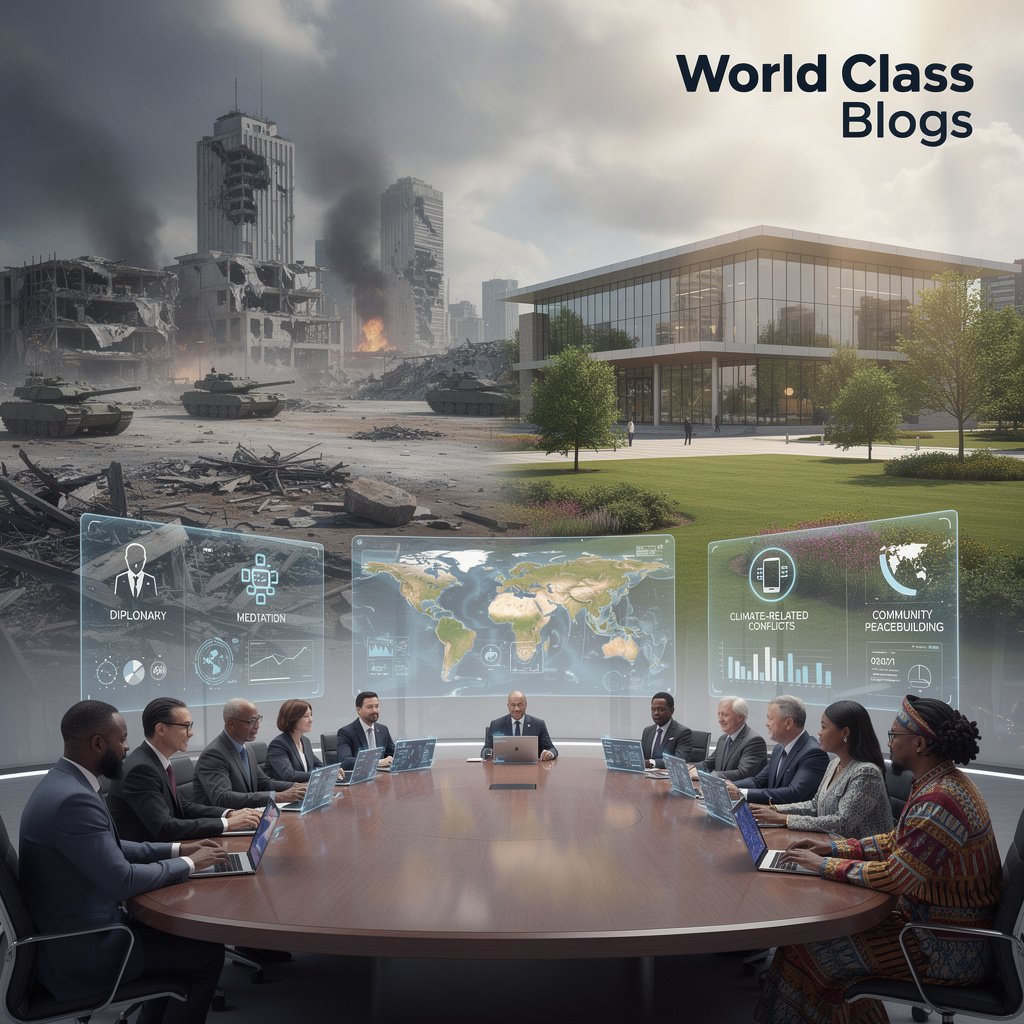
The world in 2025 is defined not by the absence of conflict resolution efforts, but by their profound inadequacy in the face of conflicts that are more internationalized, technologically complex, and norm-shattering than those of the past. The post-Cold War peacebuilding consensus has collapsed, but no coherent new model has taken its place. Instead, we see improvisation: digital tools, regional mediators, frozen conflicts, and painful trade-offs between humanitarian access and political principles.
Key Takeaways:
- Multipolarity Paralyses Collective Action: With major powers at odds, the UN Security Council is often deadlocked. Conflict resolution is increasingly privatized to regional organizations, ad-hoc coalitions, and individual states, leading to inconsistent and competing approaches.
- The Humanitarian Space is Collapsing: The principles of neutrality and impartiality are under attack from all sides. Aid is weaponized, workers are targeted, and human suffering is used as a strategic lever. Rebuilding this space is a moral and practical imperative.
- Technology is a Double-Edged Sword: While AI, satellites, and digital platforms offer new tools for monitoring, mediation, and aid delivery, they also enable new forms of warfare (cyber, drones, disinformation) that outpace international law and complicate resolution.
- There Are No Military-Only Solutions: The failures in Afghanistan, Iraq, and now Gaza prove that military force can topple regimes or degrade adversaries but cannot create sustainable peace. Long-term stability requires inclusive political settlements and massive investment in post-conflict reconstruction—endeavors that currently lack political will and funding.
- Prevention is Still the Best (and Most Neglected) Strategy: The international system remains overwhelmingly geared toward responding to crises, not preventing them. Investing in governance, climate resilience, and economic opportunity in fragile states is far more cost-effective than funding humanitarian responses to full-blown wars.
The path forward requires humility, patience, and a willingness to experiment. It means empowering regional and local actors, developing new norms for emerging technologies, making long-term investments in peace, and, above all, preserving the fundamental principles of humanity that war seeks to obliterate.
FAQs
1. Q: Why can’t the UN just send in peacekeepers to stop the fighting in places like Gaza or Ukraine?
A: UN peacekeeping missions require the consent of the host country and a mandate from the UN Security Council where no permanent member vetoes it. In Ukraine, Russia would veto any peacekeeping mandate. In Gaza, Israel would not consent to a UN force on its border without conditions no Palestinian faction would accept. Peacekeeping works only when major parties want a pause in fighting.
2. Q: What’s the difference between a ceasefire and a humanitarian pause?
A: A humanitarian pause is a temporary, localized halt in fighting to allow for specific humanitarian actions (evacuating wounded, delivering aid to a certain area). It is usually short (hours/days). A ceasefire is broader, aiming to stop military operations across the entire conflict zone, often as a precursor to political talks. It is intended to be more durable but is still not a peace agreement.
3. Q: Who are the main “mediators” in the world today, and how do they get chosen?
A: Major mediators include:
- Neutral States: Switzerland, Norway, Qatar (especially for talks involving non-state actors like the Taliban).
- Regional Powers: Türkiye (between Russia/Ukraine), Saudi Arabia & Egypt (in Arab conflicts).
- International Organizations: The UN Secretary-General’s envoys, the African Union, and the European Union.
They are chosen based on trust from all parties, relevant leverage (economic, political), a history of fairness, and sometimes simply because they are willing to do the difficult, often thankless work.
4. Q: What is “lawfare” and how is it used in modern conflicts?
A: Lawfare is the strategic use of legal systems and international law to achieve military or political objectives. Examples include: Russia falsely accusing Ukraine of genocide to justify invasion; using national courts to arrest rival officials; or flooding international bodies with complaints to tie up an adversary’s resources. It blurs the line between legal disputes and armed conflict.
5. Q: Why do some groups, like Hamas or the Houthis, get labeled as “terrorists,” and how does that affect peace talks?
A: The designation is a political and legal tool used by states to delegitimize an adversary, criminalize support for them, and justify military action. It massively complicates diplomacy because governments often have laws prohibiting official contact with “terrorist” groups. Talks then must occur through third-party intermediaries (like Qatar) or intelligence channels, making them slow and deniable.
6. Q: How does climate change actually cause wars?
A: It’s rarely a direct cause. Instead, it acts as a “threat multiplier.” It exacerbates existing vulnerabilities: drought destroys livelihoods for farmers, leading to migration and competition over scarce water and land. This fuels social tensions that corrupt or weak governments cannot manage, which armed groups can then exploit. The war in Sudan’s Darfur region is a classic case of climate stress intensifying existing ethnic and political conflicts.
7. Q: What are “private military companies” (PMCs) like Wagner, and why are they a problem for peace?
A: PMCs are corporate entities that provide military and security services. They allow states (like Russia) to project power deniably, avoid domestic casualty counts, and access lucrative natural resources (e.g., Wagner in Africa). They are a problem because they are less accountable than state armies, often commit atrocities, complicate battlefield accountability, and their profit motive can perpetuate conflict rather than seek its resolution.
8. Q: Can social media companies be held responsible for spreading hate speech that leads to violence, as in Myanmar?
A: This is a major frontier in international law. The principle is developing that companies have a “duty of care” to not let their platforms be used to incite atrocities. In 2024, a Canadian court allowed a lawsuit against Meta to proceed regarding its role in the Rohingya genocide. There is growing pressure for platforms to invest in content moderation in local languages and design algorithms that don’t amplify hate speech. However, enforcing this globally remains a huge challenge.
9. Q: What is a “frozen conflict,” and is that a good outcome?
A: A frozen conflict is where active, large-scale fighting has stopped but no political settlement has been reached, and the root issues remain unresolved (e.g., Cyprus, Eastern Ukraine pre-2022). It is a stable but unjust and fragile outcome. It prevents immediate bloodshed but leaves populations in limbo, often with unresolved displacement and human rights issues. It can freeze tensions for decades, only to “thaw” violently later, as seen in Nagorno-Karabakh.
10. Q: How do economic sanctions work, and do they actually help end wars?
A: Sanctions aim to pressure elites by crippling the economy, limiting access to finance and technology. Their effectiveness is hotly debated. They can weaken a war machine over time (as seen with Iran), but often strengthen the regime’s grip by creating a “siege economy” it controls. They frequently hurt ordinary civilians the most. At best, they are one tool to increase the cost of aggression and bring parties to the table, but they are rarely decisive on their own.
11. Q: What is “transitional justice” and why is it part of peace deals?
A: Transitional justice is the set of processes used by societies emerging from conflict to address legacies of mass abuse. It includes criminal prosecutions, truth commissions, reparations, and institutional reform. It’s included in peace deals because simply ignoring past atrocities leaves wounds festering and can lead to cycles of revenge. However, balancing justice with the need for reconciliation is incredibly difficult.
12. Q: Why is the war in Ukraine considered a global conflict, not just a regional one?
A: Because it involves the direct security interests of NATO (which supplies Ukraine) and is fundamentally a war about the European security order. It has triggered a global food and energy crisis, and its outcome will shape whether other authoritarian states feel emboldened to change borders by force. It is a proxy war between Russia and the West, with global implications for alliances, nuclear deterrence, and the rules-based order.
13. Q: How do you negotiate with someone you believe is a war criminal?
A: This is one of the toughest ethical and practical dilemmas. The standard diplomatic answer is that you negotiate to stop the killing, not to offer legitimacy or immunity. Talks can be held through intermediaries or with lower-level officials. The ICC can issue arrest warrants that apply after the individual leaves office. The hard truth is that sometimes ending atrocities requires engaging with their perpetrators.
14. Q: What is the “responsibility to protect” and why is it controversial now?
A: R2P, adopted after the Rwanda genocide, says sovereignty is not a license to kill; the world has a duty to intervene in genocide, war crimes, ethnic cleansing, and crimes against humanity. It’s controversial because it’s seen as applied selectively (used in Libya in 2011, ignored in Syria or Gaza). Critics argue that powerful states use it as a pretext for regime change, while others argue the failure to apply it makes a mockery of the principle.
15. Q: Are there any new technologies that help with peace negotiations?
A: Yes. Digital dialogue platforms allow thousands of citizens to contribute ideas to peace processes. Virtual reality is used to build empathy by letting negotiators “experience” the conflict from the other side’s perspective. AI-powered text analysis can scan thousands of previous peace agreements to suggest optimal wording for sticky issues. However, these are aids, not replacements for hard political compromises.
16. Q: What happens to child soldiers after a war ends?
A: Their reintegration is a critical part of DDR programs. It involves psychological counseling, family reunification, education, and vocational training. It is a long, difficult process, as these children are often traumatized and stigmatized. Successful reintegration is essential to break cycles of violence, as recovered child soldiers can become powerful peace advocates.
17. Q: How do you deliver aid in a warzone where all sides are stealing it?
A: Aid agencies use several strategies: negotiating directly with commanders for safe passage; using blockchain-tagged supplies to track them; delivering cash assistance via mobile phones instead of physical goods; and working through trusted local community networks rather than central authorities. Despite this, diversion is often unavoidable, and agencies must make grim calculations about how much loss is acceptable to reach those in need.
18. Q: Why is the war in Sudan not getting as much attention as Ukraine or Gaza?
A: This is often called “compassion fatigue” or “hierarchy of suffering.” Media attention is driven by geopolitical relevance (Ukraine involves Europe), historical ties (Gaza involves Western foreign policy), and the capacity of journalists to report safely. Sudan is seen as a distant, complex African conflict. This lack of attention directly translates to less political pressure and less humanitarian funding.
19. Q: Can conflicts be resolved without addressing the root causes like inequality or corruption?
A: Technically, yes—a peace agreement can stop the shooting. But such peace will be shallow and unstable. Unless the grievances that fueled the conflict are addressed through political reform, economic inclusion, and justice, the same tensions will likely erupt again, perhaps in a different form. Sustainable peace requires conflict transformation, not just resolution.
20. Q: What is the role of diaspora communities in conflict resolution?
A: Diasporas play a complex dual role. They can be forces for peace, sending remittances that sustain families, funding reconciliation projects, and advocating for political solutions from abroad. However, they can also be forces for war, funding hardline factions, promoting nationalist ideologies from a distance, and lobbying foreign governments to take hawkish stances. Engaging the diaspora constructively is a key challenge.
21. Q: How does a peace treaty actually get enforced?
A: Enforcement relies on a mix of: International monitoring (UN or regional observers on the ground); Verification mechanisms (satellite imagery, drone surveillance); Incentives (aid, investment, integration into international organizations for compliance); and Disincentives (threat of renewed sanctions or isolation for violations). Ultimately, it depends on the continued willingness of the parties to comply, which is why inclusive agreements they “own” are more sustainable than imposed ones.
22. Q: What are “confidence-building measures” (CBMs)?
A: CBMs are small, practical steps taken by adversaries to reduce tensions and build trust before tackling big political issues. Examples include: pulling troops back from a frontline, exchanging prisoners of war, cooperating on demining, or allowing cross-border family visits. They create a positive atmosphere and demonstrate goodwill, making bigger compromises easier later.
23. Q: Is the Geneva Conventions still relevant in wars with terrorist groups?
A: Absolutely. The Geneva Conventions establish fundamental rules to protect civilians, medics, and prisoners. They apply to all parties in a conflict, including non-state armed groups. The difficulty is enforcement. While states may accuse groups like ISIS of violations, those groups also accuse states (like the U.S. or Israel) of violations (e.g., disproportionate force). The Conventions remain the essential moral and legal benchmark, even when violated.
24. Q: Why do some peace agreements include amnesties for fighters?
A: Amnesties are a controversial but common bargaining chip. Armed groups will often refuse to lay down weapons unless their members are protected from prosecution. Negotiators face a terrible choice: grant amnesties to end the killing, or insist on justice and risk prolonging the war. Many modern agreements try to limit amnesties to combat crimes, excluding amnesty for war crimes, genocide, or crimes against humanity.
25. Q: Where can I find reliable, non-partisan information about ongoing conflicts?
A: Recommended sources include: The International Crisis Group for in-depth analysis; The UN Office for the Coordination of Humanitarian Affairs (OCHA) for humanitarian data; The Armed Conflict Location & Event Data Project (ACLED) for real-time incident mapping; and Reuters and Associated Press for straightforward news reporting. For academic perspectives, journals like International Security or Foreign Affairs are valuable.
About the Author
The World Class Blogs Global Affairs Team comprises former diplomats, humanitarian aid workers, and security analysts with direct field experience in conflict zones from Syria to the Sahel. Our analysis is grounded in practical realities, not just theory. We believe in dissecting the hard choices and structural forces that shape war and peace, providing our readers with the nuanced understanding needed to navigate today’s most pressing challenges. You can learn more about our mission and editorial standards on our Focus page.
Free Resources
- International Crisis Group (ICG) CrisisWatch: A monthly bulletin tracking conflict developments and peace initiatives worldwide.
- United Nations Peacekeeping – troop and finance data: Interactive databases showing which countries contribute to peacekeeping and how missions are funded.
- The Stockholm International Peace Research Institute (SIPRI) Yearbook: The authoritative source on global military spending, arms transfers, and conflict trends.
- The International Committee of the Red Cross (ICRC) – IHL Database: Access to treaties and case studies on International Humanitarian Law.
- For understanding the economic dimensions of conflict, explore The Complete Guide to Global Supply Chain Management from our partners at The Daily Explainer, which details how wars disrupt the global economy.
- For insights on the diplomatic partnerships essential for mediation, the guide The Alchemy of Alliance on the Shera Kat Network offers valuable perspectives on building the coalitions needed for effective peacemaking.
Discussion
The most difficult question facing the international community is one of moral and strategic triage: In a world of multiple, simultaneous major crises, where should limited diplomatic attention, humanitarian funding, and political capital be invested? Do we prioritize conflicts with the greatest scale of suffering, those with the highest risk of global escalation, or those where intervention might actually succeed? Can the principles of a rules-based order be upheld when adherence to them seems to grant advantages to those willing to brutalize civilians? We invite your thoughtful perspectives on these impossible questions.
Join deeper conversations on humanitarian response and ethical action in our Nonprofit Hub. To understand the vision behind our independent analysis, read about World Class Blogs. We welcome your feedback and inquiries through our Contact Us page.