
Scenarios for a Net-Zero Future: How Policymakers Use Models to Plan
Comprehensive guide to climate scenario analysis and modeling, explaining how integrated assessment models and other tools help explore pathways to net-zero emissions and inform climate policy decisions. climate scenarios, net-zero pathways, integrated assessment models, climate modeling, scenario analysis, decarbonization planning, climate policy models, energy system models, transition pathways, how policymakers use climate models, understanding net-zero scenarios, climate scenario analysis explained, integrated assessment models guide, decarbonization pathway modeling, climate scenarios, energy system models, transition pathways, climate policy modeling, net-zero planning, climate modeling, integrated assessment models, scenario analysis, climate pathways, decarbonization pathways.
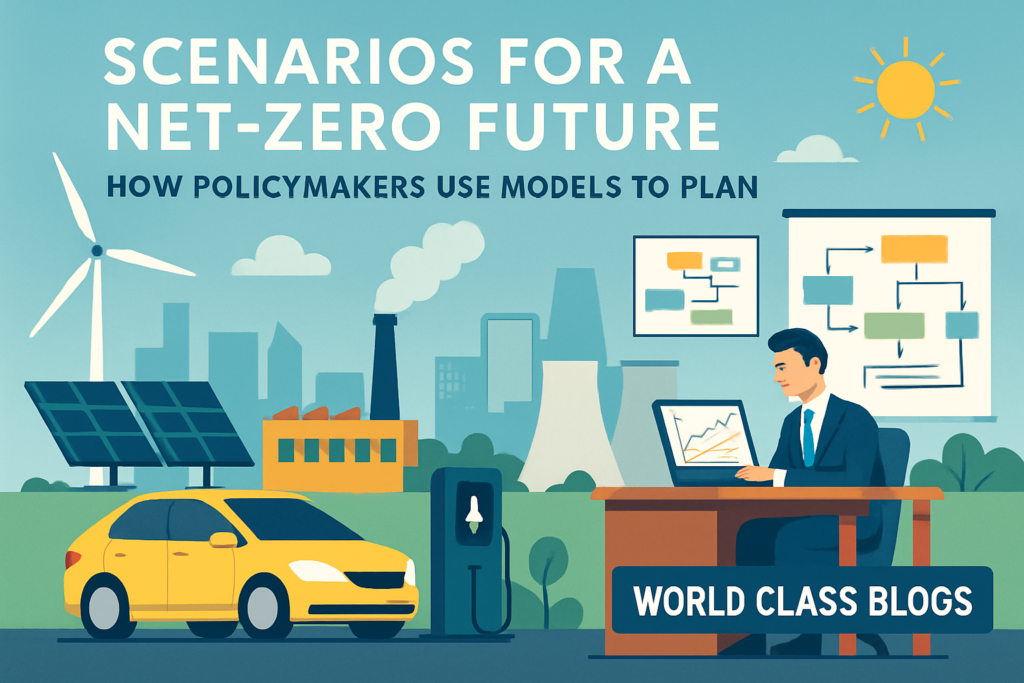
Climate scenarios connect qualitative narratives about possible futures with quantitative modeling of energy, economic, and climate systems to explore transition pathways.
Introduction – Why Modeling Our Climate Future Matters
In the complex challenge of addressing climate change, scenario analysis and modeling have become indispensable tools for policymakers, businesses, and researchers attempting to navigate toward a net-zero future. These analytical frameworks don’t predict what will happen but explore what could happen under different assumptions, technologies, and policy choices. For curious beginners and professionals seeking a quick refresher, understanding how these models work demystifies much of the technical language surrounding climate policy and reveals how decisions are informed in conditions of deep uncertainty.
In my experience working with climate modeling teams and policy analysts, what I’ve found most revealing is how these quantitative tools shape qualitative debates about our collective future. Models translate abstract climate goals into concrete pathways, revealing trade-offs, synergies, and decision points that might otherwise remain hidden. They serve as “what-if” machines that allow us to test the implications of different choices before committing to irreversible investments or policies. This exploratory function is particularly valuable for climate change, where decisions made today will shape options available for decades.
The journey to net-zero emissions by mid-century represents perhaps humanity’s most complex planning challenge, involving simultaneous transformation across energy, transportation, industry, agriculture, and land-use systems. Integrated assessment models and sectoral transition models provide structured ways to explore this multidimensional space, identifying pathways that balance technical feasibility, economic costs, social acceptance, and environmental outcomes. Understanding these tools—their capabilities, limitations, and appropriate uses—is essential for engaging with climate policy debates beyond superficial narratives.
Background / Context: The Evolution of Climate Scenario Analysis
Early Energy-Economy Models
The origins of modern climate scenario analysis trace back to energy system models developed in the 1970s during the oil crises, which sought to understand how economies could reduce dependence on imported fossil fuels. These early models focused primarily on energy supply and demand, with limited representation of environmental impacts or climate feedbacks. The Limits to Growth study published by the Club of Rome in 1972 represented an influential early attempt at integrated systems modeling, though its methodological limitations attracted significant criticism.
Throughout the 1980s and 1990s, climate considerations were gradually incorporated into energy-economic models, leading to the development of first-generation integrated assessment models. These frameworks connected simplified representations of the economy, energy system, and climate to assess the costs of emissions reduction and damages from climate change. While pioneering, these early models had significant limitations: they often assumed perfect markets and rational actors, treated technological change as exogenous, and simplified complex Earth system dynamics. Nonetheless, they established the conceptual foundation for more sophisticated subsequent generations.
The IPCC Scenario Framework
A major advance occurred through the Intergovernmental Panel on Climate Change’s scenario development process, which created standardized frameworks for comparing climate projections across research teams worldwide. The Special Report on Emissions Scenarios (2000) introduced the SRES scenarios, which explored different socioeconomic development pathways and their emissions implications. This was followed by the Representative Concentration Pathways (2010) and Shared Socioeconomic Pathways (2017), which separated socioeconomic development from climate policy.
This standardization enabled unprecedented comparison and synthesis across modeling teams, revealing robust insights despite different methodological approaches. The IPCC’s assessment reports rely heavily on this multi-model comparison approach, distinguishing findings that hold across multiple models from those sensitive to specific assumptions. This community-wide scenario development represents a unique scientific effort to systematically explore possible climate futures, informing both research priorities and policy debates.
Expanding Beyond Energy and Economy
Recent years have seen significant expansion in model scope and resolution. Earlier models focused primarily on energy and economy, but contemporary frameworks increasingly incorporate detailed representations of land use, agriculture, water systems, air pollution, materials cycles, and behavioral dimensions. This expansion recognizes that achieving net-zero requires transformation across all human systems, not just energy supply.
Additionally, there’s growing attention to spatial and temporal resolution. Global aggregate models are being complemented by regional and national models that capture local circumstances, and long-term century-scale projections are being supplemented with near-term decade-scale pathways that inform immediate policy decisions. This multi-scale approach allows exploration of both strategic direction and tactical implementation, though integrating across scales remains methodologically challenging.
Key Concepts Defined: Understanding Climate Modeling Frameworks
Integrated Assessment Models
Integrated assessment models represent the workhorse of long-term climate scenario analysis, connecting simplified representations of multiple systems: economy, energy, land use, and climate. IAMs typically optimize for economic efficiency (minimizing costs of achieving climate targets) or simulate system dynamics under different policy assumptions. They excel at exploring trade-offs across sectors and identifying cost-effective pathways but have limitations in representing distributional impacts, behavioral dimensions, and political feasibility.
Key IAM families include: process-based models like IMAGE and GCAM that represent physical systems in detail; cost-benefit models like DICE and FUND that focus on economic optimization; and general equilibrium models like REMIND and WITCH that capture market interactions. Each type offers different insights: process models reveal physical constraints, optimization models identify economic efficiency frontiers, and equilibrium models show market adjustments. Understanding these distinctions helps interpret model results appropriately.
Sectoral and Technology-Rich Models
While IAMs provide integrated perspectives, sectoral models offer detailed representation of specific systems: power sector models like PRIMES and NEMO simulate electricity generation and grid operation; transportation models like TIMES and TRACE analyze vehicle fleets and fuel switching; building models like Invert/EE-Lab assess efficiency improvements and electrification. These models capture technological specifics, infrastructure constraints, and operational details that aggregated models may overlook.
The relationship between integrated and sectoral models resembles strategic versus tactical planning: IAMs identify broad directions (e.g., electrify transport), while sectoral models specify implementation details (e.g., charging infrastructure requirements, grid integration strategies). Increasingly, modeling teams are linking different model types to combine breadth with depth, though computational and methodological challenges remain substantial. This multi-model approach provides more robust insights than reliance on any single framework.
Scenario Archetypes and Storylines
Climate scenarios are typically organized into archetypal families that explore different dimensions of uncertainty: socioeconomic development pathways (e.g., sustainability-focused versus fossil-fueled development); climate policy stringency (e.g., ambitious mitigation versus continued high emissions); and technological progress (e.g., rapid innovation versus incremental improvement). The Shared Socioeconomic Pathways framework defines five narrative storylines spanning sustainability challenges, regional rivalry, inequality, fossil-fueled development, and middle-ground pathways.
These qualitative storylines provide context for quantitative projections, ensuring that scenarios represent coherent, plausible futures rather than arbitrary combinations of assumptions. For example, a high-innovation scenario might assume complementary advances in digitalization, materials science, and biotechnology rather than isolated breakthroughs in renewable energy alone. This narrative dimension connects technical modeling with human dimensions of change, though integrating qualitative and quantitative elements remains methodologically challenging.
How Climate Scenarios Inform Policy: A Step-by-Step Process
Step 1: Defining Objectives and Boundaries
The scenario development process begins with clarifying decision context: what questions need answering, what time horizons matter, what uncertainties are most critical, and what stakeholders will use the results. For national climate policy, this might involve identifying cost-effective pathways to achieve emissions targets while ensuring energy security and affordability. For corporate strategy, it might focus on resilience across different policy and technology futures. Clear scoping prevents “modeling everything about nothing” and ensures analysis addresses practical decisions.
This stage also establishes system boundaries and resolution: which sectors to include, what geographical scope to consider, what time steps to use, and what level of technological detail to incorporate. These choices involve trade-offs between comprehensiveness and tractability—more detailed models provide richer insights but require more data and computational resources, and may become so complex that their behavior is difficult to interpret. Experienced modeling teams match resolution to decision needs rather than maximizing complexity.
Step 2: Developing Scenario Narratives and Assumptions
Before quantitative modeling begins, teams develop qualitative storylines describing how key drivers might evolve: population and economic growth patterns, technological change rates, governance approaches, social values, and international cooperation. These narratives ensure that quantitative assumptions form coherent packages rather than arbitrary combinations. The Shared Socioeconomic Pathways provide standardized starting points that can be adapted to specific contexts while maintaining comparability with global assessments.
This narrative development often involves stakeholder engagement to incorporate diverse perspectives, challenge conventional assumptions, and build ownership of results. Participatory scenario development can reveal blind spots in expert thinking, surface alternative framings of problems, and identify values conflicts that quantitative analysis alone might obscure. While time-intensive, this engagement often improves scenario relevance and legitimacy, particularly for decisions involving contested priorities or distributional impacts.
Step 3: Quantitative Modeling and Analysis
With narratives and assumptions defined, modeling teams conduct quantitative analysis using appropriate models. This typically involves running multiple scenarios to explore sensitivity to key assumptions, identifying robust insights that hold across different futures, and highlighting trade-offs between objectives. The analysis examines not only central outcomes but also ranges of uncertainty, recognizing that point estimates often convey false precision in complex systems with deep uncertainties.
Modern analysis increasingly employs ensemble approaches that combine results from multiple models with different structures and assumptions. This multi-model comparison helps distinguish findings robust across methodological choices from those sensitive to specific modeling decisions. The IPCC’s assessments rely heavily on such ensembles, with Working Group III typically synthesizing results from hundreds of model scenarios to identify consistent patterns despite diverse approaches.
Step 4: Interpretation and Communication
Model results require careful interpretation and contextualization to inform decisions appropriately. This involves distinguishing projections from predictions, highlighting key uncertainties, identifying decision-relevant trade-offs, and connecting quantitative outputs to qualitative narratives. Effective communication translates technical outputs into accessible insights: instead of presenting thousands of data points, it might highlight a few representative pathways that illustrate critical choices and their implications.
This stage also involves identifying policy insights rather than just presenting model outputs: which decisions are most timing-sensitive, which technologies offer optionality across multiple futures, which policy instruments address multiple objectives, where do synergies and trade-offs occur between different goals. The value of scenario analysis lies not in precise numerical projections but in improved understanding of system dynamics, choice points, and consequence pathways that inform more robust decisions.
Step 5: Iterative Refinement and Learning
Scenario analysis represents an iterative learning process rather than one-time exercise. As real-world developments unfold, models are updated with new data, recalibrated based on observed outcomes, and extended to address emerging questions. This learning cycle connects modeling with implementation: early retirement of coal plants might prompt reassessment of transition costs; faster-than-expected renewable cost declines might enable more ambitious scenarios; policy experiments might reveal behavioral responses not captured in original models.
This iterative approach recognizes that models are simplifications of reality that must continuously adapt as understanding improves and circumstances change. The most valuable modeling frameworks are those that facilitate learning rather than produce definitive answers—providing structured ways to test assumptions, explore implications, and update beliefs as evidence accumulates. This humble, adaptive approach contrasts with earlier modeling that sometimes presented results with unwarranted certainty.
Why Scenario Analysis Matters: Beyond Technical Modeling
Navigating Deep Uncertainty
Climate change involves deep uncertainty where we don’t know key parameters, can’t assign reliable probabilities to many outcomes, and may not even agree on what constitutes success. Traditional forecasting approaches that extrapolate historical trends or optimize based on known probabilities perform poorly under such conditions. Scenario analysis provides an alternative approach: instead of trying to predict the unpredictable, it explores multiple plausible futures to identify robust strategies that perform reasonably well across different outcomes.
This approach to uncertainty management is particularly valuable for long-lived infrastructure decisions where investments today shape options available decades hence. Should a city invest in natural gas distribution networks that might become stranded assets under stringent climate policy, or leapfrog directly to electrified heating despite higher near-term costs? Scenario analysis can’t eliminate this uncertainty but can clarify the conditions under which different choices prove advantageous, informing more resilient investment strategies.
Exploring Synergies and Trade-Offs
Complex transitions involve multiple interacting objectives: reducing emissions, ensuring energy access, maintaining affordability, creating jobs, improving health, enhancing security, and promoting equity. These objectives sometimes align (energy efficiency reduces emissions while lowering bills) but sometimes conflict (bioenergy expansion might reduce emissions but increase food prices). Scenario analysis provides systematic ways to explore these interactions, identifying win-win opportunities while revealing where difficult trade-offs require explicit priority-setting.
This multi-objective exploration is particularly important for developing country contexts where climate action intersects with pressing development needs. Scenarios can help identify climate-compatible development pathways that advance multiple Sustainable Development Goals simultaneously, rather than treating climate action as separate from or competitive with poverty reduction, health improvement, and economic growth. This integrated perspective supports more holistic policy design.
Informing Innovation and Investment Strategy
For businesses and investors, scenario analysis informs strategic positioning in transitioning markets. By exploring different policy, technology, and demand futures, companies can identify growth opportunities, assess portfolio risks, and guide research and development investments. This forward-looking perspective is increasingly embedded in corporate strategy, with many companies using climate scenarios to stress-test business models against different transition pathways.
This application extends beyond individual firms to financial system stability. Central banks and regulators are increasingly using climate scenarios to assess systemic risks from both physical climate impacts and transition policies. The Network for Greening the Financial System has developed reference scenarios that financial institutions can use to assess their exposure across different climate futures, promoting more resilient capital allocation and risk management.
Sustainability in the Future: Evolving Modeling Approaches
Improving Representation of Social and Behavioral Dimensions
Traditional climate-economic models often employ simplified behavioral assumptions—perfect rationality, complete information, cost-minimizing decisions—that poorly represent real-world decision-making. Recent modeling advances incorporate more realistic behavioral elements: inertia and status quo bias in technology adoption; social influence and network effects in diffusion processes; imperfect information and heuristic decision rules; and value-based choices beyond narrow economic optimization.
These behaviorally-realistic models often produce different insights than conventional approaches: they may show slower technology adoption despite favorable economics, identify tipping points where social norms shift rapidly, or reveal the importance of trusted information sources and social networks. Incorporating these dimensions makes scenarios more plausible and policy insights more implementable, though it increases model complexity and data requirements.
Enhancing Spatial and Temporal Resolution
Early climate scenarios often presented global aggregate results with limited geographical differentiation. Contemporary approaches increasingly provide regional, national, and even subnational detail, recognizing that transition pathways and impacts vary dramatically across contexts. Higher spatial resolution enables analysis of distributional consequences, infrastructure requirements, and region-specific opportunities—essential for designing equitable and implementable policies.
Similarly, improved temporal resolution addresses the disconnect between long-term climate goals and near-term decision cycles. Many models now produce detailed decade-scale pathways alongside century-scale projections, helping connect strategic direction with immediate actions. This multi-temporal perspective is crucial because decisions made this decade will largely determine whether long-term goals remain achievable, yet political and investment cycles operate on much shorter timeframes.
Integrating Multiple Knowledge Systems
Traditional modeling has predominantly employed Western scientific approaches that may overlook indigenous knowledge, local experiential understanding, and diverse cultural perspectives on human-nature relationships. There’s growing recognition that effective scenario development should integrate multiple knowledge systems, particularly for land-use and adaptation planning where local and indigenous knowledge offers crucial insights not captured in global datasets or generalized models.
This integrative approach presents methodological challenges but can produce more culturally appropriate and locally relevant scenarios. Participatory modeling techniques that engage communities in scenario development, agent-based models that represent diverse actor perspectives, and qualitative scenario methods that complement quantitative analysis all contribute to more inclusive futures thinking. This epistemological expansion makes scenario analysis more legitimate and useful across diverse cultural contexts.
Common Misconceptions About Climate Scenarios
“Models Make Predictions”
Perhaps the most persistent misconception is that climate scenarios represent predictions or forecasts of what will happen. In reality, scenarios explore what could happen under different assumptions—they’re exploratory tools rather than predictive ones. The IPCC explicitly states that scenarios are “alternative images of how the future might unfold” and “are not predictions.” This distinction matters because treating scenarios as predictions can lead to either unwarranted certainty (if one pathway is misinterpreted as most likely) or excessive skepticism (if any deviation from scenario projections is seen as model failure).
Scenarios are better understood as learning tools that help us understand system dynamics, explore implications of choices, and identify robust strategies. Their value lies not in precise numerical projections but in improved understanding of relationships, sensitivities, and trade-offs. Effective scenario users focus on insights about system behavior rather than point estimates of specific outcomes in specific years.
“Models Are Too Simplistic to Be Useful”
Critics sometimes dismiss climate models as oversimplified abstractions that can’t capture real-world complexity. While all models are simplifications by necessity, the relevant question isn’t whether they include everything but whether they include what matters for specific decisions. Simple models can provide powerful insights when they capture essential dynamics, while overly complex models can become “black boxes” whose behavior is difficult to interpret.
The appropriate level of complexity depends on the question being asked. For understanding broad energy system transformation pathways, aggregated models may suffice. For designing specific policy instruments, more detailed sectoral models may be needed. The modeling community increasingly employs multi-model approaches that combine different levels of complexity, recognizing that different questions require different tools. Dismissing all modeling as oversimplified ignores this methodological diversity and the careful matching of tools to tasks.
“Models Assume Perfect Implementation”
Some scenario critics argue that models present overly optimistic pathways that assume perfect policy implementation, instantaneous technology deployment, and frictionless market responses. While earlier models did incorporate strong simplifying assumptions, contemporary modeling increasingly includes implementation constraints: policy lags and gaps, technology diffusion delays, investment inertia, behavioral barriers, and political economy constraints. These more realistic representations often show slower, more costly transitions than idealized pathways.
However, even improved models struggle to fully capture governance and political challenges that often determine implementation success or failure. Participatory scenario development that engages policymakers and stakeholders can help ground models in political realities, though integrating qualitative governance insights with quantitative modeling remains methodologically challenging. Recognizing this limitation encourages appropriate humility about what models can and cannot tell us.
“All Models Are Biased Toward Technological Solutions”
Some critics contend that climate models exhibit techno-optimist bias, emphasizing technological solutions while undervaluing behavioral change, demand reduction, and systemic transformation. This critique has merit for certain modeling traditions, particularly optimization frameworks that minimize economic costs within current consumption patterns. However, other modeling approaches explicitly explore demand-side transformations, lifestyle changes, and sufficiency-oriented pathways.
The modeling community has increasingly diversified to include demand-focused scenarios that explore how changes in consumption patterns, mobility behaviors, dietary choices, and built environment design could reduce emissions. The IPCC’s Sixth Assessment Report included dedicated chapters on demand-side mitigation, drawing on scenarios that explicitly model reduced consumption through efficiency, sufficiency, and circular economy strategies rather than assuming fixed consumption patterns.
Recent Developments (2024-2025)
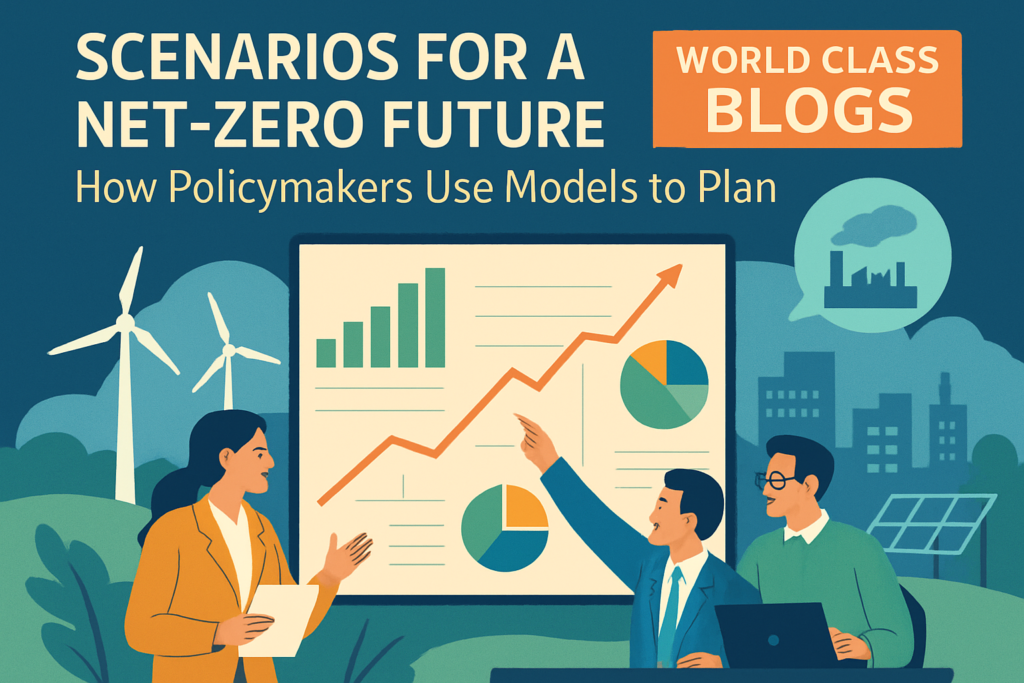
Improved Integration of Negative Emissions Technologies
Recent modeling advances have enhanced representation of carbon dioxide removal technologies and natural climate solutions in net-zero pathways. Earlier scenarios often treated CDR as a residual category to offset hard-to-abate emissions, but contemporary models increasingly detail specific removal approaches: direct air capture, bioenergy with carbon capture and storage, enhanced weathering, ocean alkalinity, and various natural sink enhancement methods. This improved representation enables more realistic assessment of land-use conflicts, energy requirements, and scalability constraints.
These modeling improvements reveal that CDR requirements vary dramatically depending on near-term mitigation ambition: delayed emissions reduction increases reliance on future carbon removal, with associated risks if promised CDR fails to materialize at scale. This insight reinforces the importance of rapid near-term action to minimize dependence on unproven technologies. Models also increasingly distinguish between CDR for offsetting residual emissions versus creating net-negative emissions later in the century—an important distinction for policy design.
Enhanced Treatment of Distributional Impacts
Growing attention to climate justice and equity has driven modeling improvements in representing distributional consequences of climate policies. Earlier models focused primarily on aggregate economic impacts, but contemporary approaches increasingly examine how costs and benefits are distributed across income groups, regions, and generations. This distributional analysis is crucial for designing policies that are not only efficient but also fair and politically sustainable.
These modeling advances employ disaggregated household data, regional economic modeling, and coupled climate-impact assessments to identify vulnerable populations and assess policy incidence. For example, carbon pricing analysis now routinely examines impacts across income quintiles, while energy transition models assess regional employment effects. This distributional focus aligns with growing policy attention to just transitions and climate justice in international negotiations and national policy design.
Integration of Climate Impacts and Adaptation
Traditionally, mitigation and adaptation modeling occurred in separate communities with limited integration. Recent efforts are coupling mitigation pathways with impact assessments to evaluate how different emissions trajectories influence adaptation needs and residual damages. This integrated perspective enables more comprehensive assessment of climate policy benefits, including avoided adaptation costs and reduced climate risks.
This coupling reveals important interactions between mitigation and adaptation: aggressive mitigation reduces long-term adaptation needs but may compete for near-term financial resources; some adaptation measures (like ecosystem restoration) also provide mitigation benefits; climate impacts themselves can affect mitigation potential (e.g., drought reducing bioenergy feedstock). Understanding these interactions supports more coherent climate policy packages rather than treating mitigation and adaptation as separate silos.
Success Stories: Where Scenario Analysis Informed Effective Policy
German Energiewende Planning
Germany’s energy transition planning has employed extensive scenario analysis since the 1990s, with research institutions regularly publishing detailed energy system scenarios that inform policy debates. These scenarios explored different nuclear phase-out timelines, renewable expansion rates, grid development options, and efficiency improvement pathways. While actual implementation has sometimes diverged from scenario projections, the iterative scenario development process has provided shared analytical foundation for stakeholders with diverse interests.
The German experience demonstrates how scenarios can structure democratic deliberation about complex, long-term transformations. By providing common reference points grounded in quantitative analysis, scenarios helped move debates from ideological positions to discussion of concrete trade-offs and implementation challenges. The transparency of German energy modeling—with assumptions, methodologies, and results publicly documented—has built credibility and enabled productive engagement across political divides.
California’s Climate Policy Development
California’s long-term climate planning has been informed by sophisticated modeling from state agencies, research institutions, and stakeholder groups. The California Air Resources Board’s scoping plan process employs detailed energy-economic modeling to assess policy packages for achieving emissions targets across multiple sectors. These models have evolved over time, incorporating improved representation of equity dimensions, air quality co-benefits, and regional economic impacts.
California’s modeling approach exemplifies iterative policy learning: early climate policies were informed by scenarios that later proved overly optimistic about certain technologies (like carbon capture) but pessimistic about others (like solar cost reductions). Regular model updates based on real-world experience have improved scenario quality over time. This adaptive approach recognizes that models are tools for learning rather than sources of definitive answers, with policy and modeling evolving together through feedback loops.
International Energy Agency Net-Zero Scenario
The IEA’s Net Zero by 2050 scenario, published in 2021, represents a landmark in global energy modeling that significantly influenced policy debates and investment decisions. Unlike previous IEA scenarios that primarily extrapolated current trends, the net-zero pathway adopted a normative approach—starting from the climate goal and working backward to identify necessary actions. This “backcasting” methodology provided concrete milestone for 2030 and 2050, detailing sectoral transformations, technology deployments, and investment requirements.
The IEA scenario’s impact demonstrates how authoritative modeling can shift discourse by making abstract targets concrete and actionable. By detailing what net-zero actually means for different sectors, the scenario provided reference point for governments, companies, and investors to align their plans. While critics noted limitations (including optimistic assumptions about behavioral change and international cooperation), the scenario’s clarity and comprehensiveness made it influential beyond traditional energy modeling circles.
Real-Life Examples: Sectoral Transformation Pathways
Electricity System Decarbonization Models
Power sector models have played crucial role in informing renewable energy policies worldwide. These models simulate electricity generation, transmission, and distribution under different technology, policy, and demand scenarios. The National Renewable Energy Laboratory’s Regional Energy Deployment System model, for instance, has informed U.S. renewable policy by identifying cost-effective pathways for achieving high renewable penetration while maintaining reliability.
These models have revealed important insights: renewable integration challenges are manageable but require complementary investments in transmission, storage, and flexible demand; optimal technology mixes vary by region based on resource endowments and existing infrastructure; decarbonization pathways typically involve phased retirement of existing fossil assets rather than immediate shutdowns. These insights have helped policymakers design renewable support mechanisms, grid modernization strategies, and just transition policies.
Transportation Electrification Scenarios
Transportation models have informed electric vehicle policies by projecting adoption rates under different incentive structures, charging infrastructure investments, and vehicle cost trajectories. The International Council on Clean Transportation’s roadmaps have influenced government targets by modeling technology diffusion, infrastructure requirements, and associated emissions reductions. These models typically employ agent-based approaches that simulate consumer decisions based on vehicle attributes, costs, and charging accessibility.
Key insights from transportation modeling include: charging infrastructure needs to expand ahead of vehicle adoption to alleviate range anxiety; incentive design should transition from purchase subsidies to usage-based mechanisms as costs decline; complementary policies like urban planning, public transit investment, and active transportation promotion can reduce overall transportation emissions beyond vehicle electrification alone. These insights have shaped comprehensive transportation decarbonization strategies rather than focusing solely on vehicle technology.
Industrial Transformation Pathways
Industrial sector models face particular challenges due to long asset lifetimes, trade exposure, and process emissions not addressed by fuel switching. Despite these challenges, models like the Industrial Transformation Model have informed policy by identifying cost-effective decarbonization pathways for cement, steel, and chemicals production. These models typically explore technology portfolios including energy efficiency, fuel switching, carbon capture, and circular economy strategies.
Industrial modeling has revealed that sector-specific approaches are needed rather than one-size-fits-all policies; innovation timing is crucial because many deep decarbonization technologies are not yet commercially available; international coordination helps address competitiveness concerns while creating markets for green industrial products. These insights have informed policies like carbon border adjustments, green public procurement, and sectoral climate agreements.
Conclusion and Key Takeaways

Scenario analysis and modeling have become indispensable tools for navigating the complex transition to net-zero emissions, providing structured ways to explore possible futures under different assumptions and choices. These tools don’t eliminate uncertainty but help decision-makers understand implications of different pathways, identify robust strategies, and connect near-term actions with long-term goals. As we approach critical decision points in climate policy, understanding how these models work—and their limitations—is essential for engaging productively with climate debates.
Several key insights emerge from examining climate scenario analysis:
First, scenarios are exploratory tools, not predictive ones. Their value lies in improving understanding of system dynamics, exploring implications of choices, and identifying robust strategies—not in providing precise numerical predictions. Effective use of scenarios focuses on insights about relationships, sensitivities, and trade-offs rather than point estimates of specific outcomes. This distinction matters for the appropriate interpretation and application of model results.
Second, model diversity strengthens insights. Different modeling approaches—integrated assessment models, sectoral models, agent-based models, narrative scenarios—provide complementary perspectives on complex transitions. Multi-model comparisons that synthesize findings across different methodologies typically yield more robust insights than reliance on any single approach. This methodological pluralism reflects the multifaceted nature of climate challenges.
Third, assumptions drive outcomes as much as model structure. Scenario results depend heavily on input assumptions about technological progress, policy effectiveness, behavioral responses, and socioeconomic development. Transparent documentation of assumptions is crucial for interpreting results, and sensitivity analysis that explores how outcomes change with different assumptions provides more valuable insights than single “best guess” scenarios.
Fourth, models increasingly integrate multiple dimensions beyond a traditional energy-economic focus. Contemporary modeling incorporates land use, materials cycles, behavioral elements, distributional impacts, and climate impacts—recognizing that net-zero transitions involve transformation across all human systems. This expansion improves scenario relevance but increases complexity, requiring careful matching of model scope to decision needs.
Fifth, scenario development benefits from stakeholder engagement. Participatory approaches that incorporate diverse perspectives can challenge expert assumptions, surface alternative problem framings, and build ownership of results. While methodologically challenging, this engagement often improves scenario relevance and legitimacy, particularly for decisions involving contested values or distributional consequences.
Sixth, scenarios inform but don’t determine decisions. Model outputs provide valuable inputs to decision-making but cannot substitute for judgment, values, and politics. The most effective scenario processes connect quantitative analysis with qualitative deliberation, recognizing that climate decisions involve ethical considerations, value trade-offs, and political feasibility beyond what models can capture.
As we navigate the critical decade for climate action, scenario analysis will continue evolving—incorporating improved behavioral representation, higher resolution, better uncertainty characterization, and more inclusive knowledge integration. These advances will enhance scenario usefulness while maintaining appropriate humility about what modeling can and cannot provide. Ultimately, scenarios serve not as crystal balls but as structured thinking tools that help us make better decisions amidst deep uncertainty about our collective future.
Frequently Asked Questions
What are climate scenarios and how are they used?
Climate scenarios are structured descriptions of possible future pathways, combining qualitative narratives with quantitative modeling to explore how different assumptions, choices, and uncertainties might shape emissions, climate impacts, and societal responses. They’re used by policymakers to inform long-term planning, by businesses to assess risks and opportunities, by researchers to identify knowledge gaps, and by civil society to deliberate about preferred futures.
What’s the difference between scenarios and predictions?
Scenarios explore what could happen under different assumptions, while predictions attempt to forecast what will happen. Scenarios are “what-if” explorations rather than forecasts, illustrating possibilities rather than probabilities. This distinction matters because treating scenarios as predictions can lead to either unwarranted certainty (if one pathway is seen as most likely) or excessive skepticism (if deviations from scenarios are seen as model failure).
What are integrated assessment models?
Integrated assessment models are analytical frameworks that connect simplified representations of multiple systems—typically economy, energy, land use, and climate—to explore interactions and trade-offs. IAMs help identify cost-effective pathways to climate goals, assess impacts of different policies, and understand system dynamics. Different IAM families emphasize different aspects: some focus on economic optimization, others on physical system representation, and others on market equilibrium.
How do climate scenarios account for technological uncertainty?
Scenarios explore technological uncertainty through different assumptions about innovation rates, cost reductions, and deployment barriers. Many scenarios use “learning curves” that relate cost declines to cumulative production, with different learning rates explored across scenarios. Some scenarios explicitly model research and development investments and their impacts on innovation. Multiple scenarios are typically developed to span ranges of technological optimism/pessimism.
What are the Shared Socioeconomic Pathways?
The Shared Socioeconomic Pathways are a set of five narrative storylines about how society might evolve this century, developed to provide common framework for climate scenario research. They include: sustainability (SSP1), middle-of-the-road (SSP2), regional rivalry (SSP3), inequality (SSP4), and fossil-fueled development (SSP5). These qualitative narratives are combined with climate policy assumptions to create integrated scenarios used in IPCC assessments.
How do models address behavioral change and social acceptance?
Traditional models often simplified behavioral dimensions, but contemporary approaches increasingly incorporate more realistic representations: inertia in technology adoption, social influence in diffusion processes, value-based choices beyond economic optimization, and political constraints on policy implementation. Some models use agent-based approaches that simulate individual decisions, while others employ more aggregated behavioral parameters based on empirical research.
What are “representative concentration pathways”?
Representative concentration pathways are standardized emissions trajectories used in climate modeling, defined by their radiative forcing levels in 2100: RCP2.6 (very low forcing), RCP4.5 and RCP6.0 (intermediate), and RCP8.5 (very high). These pathways provide common inputs for climate models to project temperature and impacts, allowing comparison across research teams. They’ve been largely superseded by the SSP-RCP framework that combines socioeconomic and climate dimensions.
How do scenarios inform near-term policy despite long-term focus?
While many scenarios project to 2100, they increasingly provide detailed near-term pathways (to 2030 or 2040) that inform immediate decisions. Near-term modeling identifies “no-regret” options that make sense across multiple futures, timing-sensitive decisions where delay closes options, and sequencing strategies that build toward long-term goals. This connection between near-term actions and long-term outcomes helps avoid path dependencies that make future goals unachievable.
What are the main limitations of climate scenarios?
Key limitations include: simplification of complex real-world systems; difficulty capturing disruptive technological or social changes; challenges representing political and governance dimensions; uncertainty about parameter values and relationships; potential for groupthink within modeling communities; and communication challenges that lead to misinterpretation. Recognizing these limitations encourages appropriate use of scenarios as exploratory tools rather than predictive ones.
How are equity and distributional impacts addressed in scenarios?
Earlier scenarios focused on aggregate impacts, but contemporary approaches increasingly examine distributional consequences across income groups, regions, and generations. This involves disaggregated household data, regional economic modeling, and analysis of policy incidence. Some scenarios explicitly explore equitable transitions that protect vulnerable groups, while others assess how different policy designs affect inequality. This distributional focus supports more just climate policy design.
What role do negative emissions technologies play in scenarios?
Most net-zero scenarios include some carbon dioxide removal to offset residual emissions from hard-to-abate sectors and potentially create net-negative emissions later in the century. CDR representation has improved from residual category to detailed modeling of specific approaches (direct air capture, bioenergy with CCS, natural solutions). Scenarios show that delayed mitigation increases CDR dependence, with associated risks if promised removal fails to materialize at scale.
How do scenarios account for climate impacts and adaptation?
Traditionally, mitigation and adaptation modeling occurred separately, but recent efforts couple mitigation pathways with climate impact assessments to evaluate how emissions trajectories influence adaptation needs and residual damages. This integrated perspective enables a more comprehensive assessment of policy benefits, including avoided adaptation costs. Some models now include two-way interactions where climate impacts affect mitigation potential (e.g., drought reducing bioenergy).
What’s the difference between “baseline” and “policy” scenarios?
Baseline (or reference) scenarios explore futures without new climate policies, showing where current trends might lead. Policy scenarios explore futures with different climate policies, allowing comparison of outcomes with and without intervention. Many analyses also include “pledge” scenarios that assume implementation of existing climate commitments. This comparison reveals the emissions gap between the current trajectory, current pledges, and climate goals.
How are scenarios developed for specific countries or regions?
Global scenarios are often “downscaled” to national or regional levels using additional modeling and data. This may involve linking global models with regional models, applying allocation rules based on equity principles or cost-effectiveness, or developing standalone national models consistent with global narratives. Participatory approaches that engage local stakeholders often improve relevance by incorporating regional specifics not captured in global frameworks.
What are “backcasting” scenarios?
Backcasting scenarios start with a desired future (like net-zero by 2050) and work backward to identify necessary actions, contrasting with forecasting that extrapolates current trends. This normative approach helps connect long-term goals with near-term milestones, identifying feasible pathways rather than likely trends. Backcasting is particularly useful for policy planning where the objective is known, but the pathway is uncertain.
How do energy system models differ from integrated assessment models?
Energy system models focus specifically on energy supply, conversion, and demand with detailed technological representation, while integrated assessment models have a broader scope, including economy, land use, and climate. Energy models provide finer sectoral detail but narrower system boundaries. These approaches are increasingly linked, with IAMs providing broad direction and energy models supplying implementation details.
What are “stochastic” scenarios, and why are they used?
Stochastic scenarios incorporate random variations in key parameters to explore how uncertainty propagates through systems. Unlike deterministic scenarios with fixed assumptions, stochastic approaches generate probability distributions of outcomes. These are particularly useful for assessing risks and designing robust strategies, though they require more computational resources and can be harder to interpret causally.
How frequently are climate scenarios updated?
Major scenario frameworks like the SSPs are updated every 5-10 years to incorporate new data, improved methodologies, and evolving understanding. Between major updates, individual modeling teams regularly refine their approaches. The IPCC assessment cycles (approximately every 6-7 years) drive coordinated scenario development across the research community, with each assessment featuring new scenario ensembles.
Where can I access climate scenario data?
Major scenario repositories include: the IPCC Data Distribution Center; the IAMC Scenario Explorer hosted by IIASA; the NGFS Climate Scenario Database for financial applications; and various model-specific databases. These repositories typically provide documentation, assumptions, and results in standardized formats. Many modeling teams also publish scenario data alongside journal articles or technical reports.
How can non-experts engage with climate scenario analysis?
Non-experts can: explore interactive scenario visualization tools; participate in stakeholder engagement processes for scenario development; use scenario narratives to inform organizational strategy; follow scenario-based assessments from authoritative institutions; and develop basic literacy in interpreting scenario results (focusing on ranges, insights, and limitations rather than precise numbers). Scenario thinking is a skill that improves with practice across domains.
About the Author
This guide was developed by climate scenario analysts and modelers with experience across multiple modeling traditions and applications. Our team includes contributors to IPCC scenario development, developers of widely-used integrated assessment models, and practitioners who have applied scenario analysis to inform policy decisions in government, business, and civil society contexts.
We believe that scenario thinking represents a crucial capacity for navigating complex, uncertain futures—not just for climate but for other systemic challenges. By making the assumptions, methods, and insights of climate modeling more accessible, we aim to support more informed engagement with climate policy debates and more robust decision-making amidst uncertainty. Scenarios don’t provide answers but help ask better questions about the futures we’re creating through today’s choices.
Our approach emphasizes transparency about methodological choices, appropriate interpretation of results, and the connection between quantitative analysis and qualitative judgment. We recognize that all models are simplifications with limitations, and that their value lies in structured thinking rather than precise prediction. This humble, pragmatic perspective guides our work in developing and communicating scenarios.
For more perspectives on navigating complexity and uncertainty, explore related content on our platform, including frameworks for optimizing global operations and guides to building strategic partnerships in evolving business landscapes.
Free Resources for Further Learning
- IPCC Scenario Process Documentation: Detailed explanation of how climate scenarios are developed and used in assessments, with access to scenario databases.
- IAMC Scenario Explorer: Interactive platform for exploring and comparing integrated assessment model scenarios from multiple research teams worldwide.
- Energy Modeling Forum: Stanford-based forum that conducts comparative studies of energy-economic models, with publications explaining different approaches.
- Open Energy Outlook: Open-source, transparent energy system modeling for the United States with detailed documentation of methods and assumptions.
- Climate Interactive En-ROADS Simulator: A user-friendly climate policy simulator that allows exploration of policy impacts in real-time.
- NGFS Climate Scenario Database: Climate scenarios designed for financial risk assessment, with documentation of methodologies and applications.
- IIASA Integrated Assessment Modeling Consortium: Research community advancing integrated assessment modeling with publications, tools, and scenario data.
For those interested in the psychological dimensions of engaging with complex futures, consider exploring this guide to psychological wellbeing which addresses how to maintain perspective and agency while confronting uncertainty.
Discussion
Climate scenario analysis raises important questions about knowledge, uncertainty, and decision-making:
How should scenarios balance exploratory breadth with decision relevance? Broad exploration of possible futures can reveal unexpected insights but may overwhelm decision-makers with complexity. Focused analysis of specific policy questions may provide actionable insights but risk missing important uncertainties or alternative framings. Finding the right balance involves iterative engagement between modelers and decision-makers rather than one-way delivery of results.
What constitutes appropriate transparency in scenario development? Complete transparency about assumptions, methods, and limitations is ideal but can create information overload. Selective transparency that highlights what matters for interpretation requires judgment that may introduce bias. Developing standards for scenario documentation that balance completeness with accessibility remains an ongoing challenge for the modeling community.
How can scenarios better incorporate indigenous and local knowledge? Traditional modeling approaches often overlook knowledge systems beyond Western science, particularly regarding human-nature relationships, resilience strategies, and value systems. Integrating multiple epistemologies presents methodological challenges but could produce more culturally grounded and locally relevant scenarios. Participatory methods, transdisciplinary approaches, and respectful knowledge exchange offer promising directions.
What ethical responsibilities do modelers have in communicating results? Model outputs can influence significant decisions with distributional consequences, creating ethical obligations beyond technical accuracy. These include: transparently communicating limitations and uncertainties; avoiding language that implies false precision or prediction; contextualizing results within broader value debates; and considering how framing might advantage or disadvantage different groups. Developing ethical guidelines for scenario communication represents an emerging frontier.
How should scenarios address deep value conflicts about desirable futures? Scenarios inevitably embed value judgments in their framing, indicator selection, and interpretation. Making these values explicit rather than presenting scenarios as value-neutral technical exercises could support more transparent deliberation about preferred futures. This might involve developing multiple scenario families that explicitly explore different value priorities rather than presenting single “optimal” pathways.
These questions have no simple answers but merit ongoing reflection as scenario analysis becomes more influential in climate governance. By engaging with these challenges, the modeling community can develop more rigorous, transparent, and legitimate approaches to exploring our collective future—not to predict it but to shape it more thoughtfully through today’s choices.