
Productive Failure: Why Getting It Wrong is the Secret to Getting It Right
Discover the power of Productive Failure—a learning science-backed approach that shows how struggle and initial failure are essential for deep understanding, problem-solving, and lifelong growth.
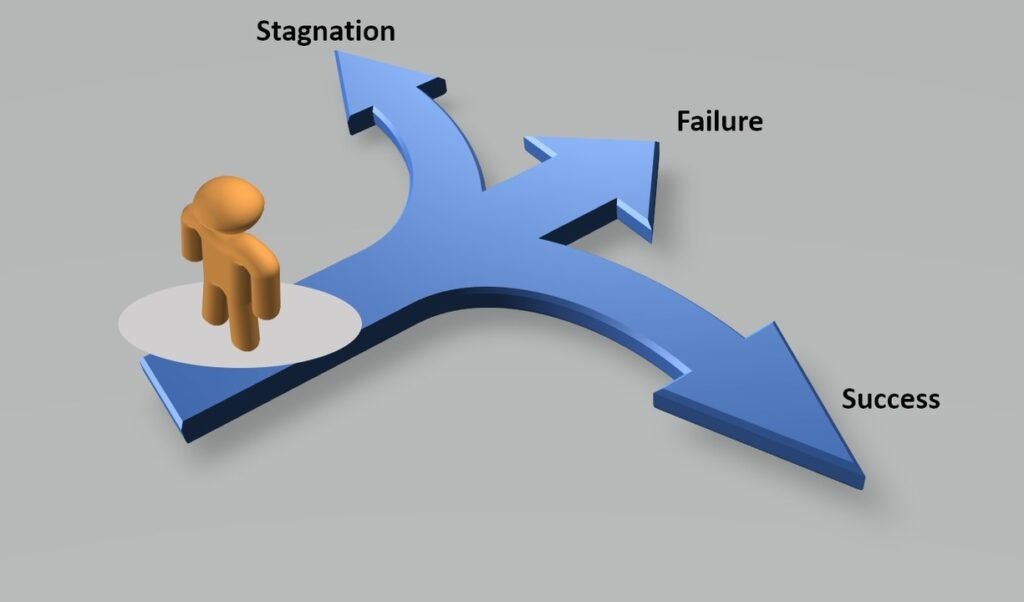
Productive Failure is not a dead-end; it's a cyclical process of attempt, analysis, and refinement that leads to robust and durable knowledge.
Introduction: Reframing the “F-Word” in Learning
Failure. It’s a word that carries immense weight, often synonymous with shame, inadequacy, and defeat. From a young age, our education systems and societal norms condition us to avoid it at all costs. We are taught to seek the right answer, to color inside the lines, and to view mistakes as evidence of our limitations. This fear of failure becomes a significant barrier to the very essence of lifelong learning—a process inherently filled with unknowns, challenges, and setbacks.
But what if we’ve been looking at failure all wrong? What if the stumbles and wrong turns are not obstacles on the path to mastery, but the very path itself?
Emerging from the field of learning sciences is a powerful and counterintuitive concept: Productive Failure. Coined by researcher Manu Kapur, Productive Failure is a learning design principle that argues that generating and exploring solutions to a complex problem before receiving instruction—even if those attempts fail—produces richer, deeper, and more flexible long-term learning than being directly taught the solution first.
This article is the missing piece in your lifelong learning arsenal. We’ve covered the mindset, the infrastructure (your Personal Learning Environment), and the cognitive engine (Spaced Repetition). Now, we tackle the emotional and psychological framework that allows you to persist when things get hard. Productive Failure is the bridge between knowing what to learn and developing the resilience to learn anything. It’s about leveraging the inherent struggle of learning, transforming it from a source of anxiety into your greatest teacher. By embracing this principle, you can decouple your self-worth from your outcomes and unlock a level of creativity and problem-solving you never thought possible.
Background/Context: The Shift from Performance to Learning
The traditional model of education is built on a “performance paradigm.” Success is measured by correct answers on tests, and errors are penalized. This system efficiently sorts students but often does a poor job of preparing them for the messy, ill-defined problems of the real world. In this environment, failure is a terminal event, a final judgment.
However, pioneers in psychology and education began to challenge this view. Psychologist Carol Dweck’s work on “fixed” vs. “growth” mindsets laid the groundwork. She demonstrated that when individuals believe their abilities can be developed (a growth mindset), they are more likely to embrace challenges and persist in the face of setbacks. Failure is no longer a reflection of who they are, but a snapshot of where they are currently in their learning journey.
Building on this, Manu Kapur’s research in the 2000s provided the empirical evidence for a structured approach. In his seminal studies, one group of students was asked to solve a complex problem with no prior instruction—they inevitably failed. Another group was first taught the canonical solution and then practiced it. When both groups were later tested on their understanding and ability to transfer knowledge to new problems, the “failure” group significantly outperformed the “direct instruction” group.
This research ignited a paradigm shift, moving the focus from a culture of “right answers” to a culture of exploration, iteration, and reflection. It suggests that the cognitive struggle involved in trying, failing, and analyzing why you failed is a critical catalyst for neural growth and conceptual change.
Key Concepts Defined

To fully grasp Productive Failure, let’s clarify its core components and related ideas.
- Productive Failure: A learning process where learners engage in problem-solving attempts that are likely to fail, but this failure generates critical feedback and activates prior knowledge, preparing them for subsequent instruction and leading to deeper conceptual understanding.
- Cognitive Struggle: The desirable difficulty experienced when grappling with a challenging problem. This mental effort, while often uncomfortable, is where the most significant learning occurs as the brain works to forge new connections.
- Fixed Mindset: The belief that intelligence and abilities are static, inherent traits. This leads to a desire to look smart and a tendency to avoid challenges and see effort as fruitless.
- Growth Mindset: The belief that intelligence and abilities can be developed through dedication and hard work. This creates a resilience that is essential for great accomplishment and is the psychological foundation for embracing Productive Failure.
- Metacognition: “Thinking about thinking.” It’s the practice of reflecting on how you are learning and problem-solving. In Productive Failure, metacognition is the crucial step of analyzing why a solution failed.
- Iteration: The process of repeating a cycle of procedures with the aim of approaching a desired goal. Each iteration is informed by the failures and learnings of the previous one. This is a core principle in our Technology & Innovation category.
- Ill-Defined Problems: Problems that lack a clear goal, path to solution, or expected solution. Most real-world challenges (e.g., “improve company culture,” “solve climate change”) are ill-defined, making the problem-solving skills honed through Productive Failure invaluable.
How to Harness Productive Failure: A 4-Step Framework
Integrating Productive Failure into your learning practice is a deliberate process. It’s not about failing randomly, but about failing strategically.
Step 1: Attempt & Generate (Embrace the Struggle)
Before you seek out the “right way” to do something, give yourself permission to explore.
- Tackle a Complex Problem: Choose a challenge just beyond your current skill level. This could be coding a small feature without a tutorial, trying to solve a math problem you haven’t been taught, or attempting to explain a complex concept from a book you’re reading in your own words.
- Generate Multiple Solutions: Don’t stop at your first idea. Brainstorm several possible paths or solutions, no matter how outlandish they may seem. The goal is not to be correct, but to activate your existing knowledge and explore the problem space.
- Resist the Urge to Look Up the Answer: The most critical part of this step is to sit with the discomfort of not knowing. This cognitive struggle is where the magic happens.
Step 2: Fail & Analyze (The Moment of Insight)
When your attempts inevitably fall short, the learning truly begins. This is not the end, but the pivot point.
- Compare and Contrast: Once you’ve exhausted your ideas, now seek out the expert solution or receive instruction. Look at the correct method or answer.
- Conduct a “Failure Autopsy”: This is where metacognition kicks in. Ask yourself:
- Where did my reasoning go astray?
- What assumptions did I make that were incorrect?
- What was missing from my knowledge base?
- How does the correct solution address the flaws in my approach?
- Identify the Knowledge Gaps: The failure illuminates the specific gaps in your understanding with laser precision, making the subsequent learning far more targeted and meaningful.
Step 3: Learn & Consolidate (Targeted Instruction)
With your mind primed by struggle and your knowledge gaps clearly identified, you are now in the optimal state to learn.
- Receive Instruction with Focus: Now, when you watch a tutorial, read a chapter, or consult an expert, you are no longer a passive recipient. You are actively seeking the answers to the specific questions your failure generated. This is where resources in your Personal Learning Environment become incredibly valuable.
- Connect New Knowledge to Old: Actively link the new, correct information to your failed attempts. “Ah, this is why my method didn’t work. I was missing this key principle.” This process builds rich, interconnected neural pathways.
- Refine Your Mental Models: Update your understanding of the concept based on the insights gained from your analysis. This leads to a much more nuanced and flexible knowledge structure.
Step 4: Iterate & Apply (Reinforce Learning)
Learning is not complete until it is applied and tested again.
- Re-attempt the Problem: Try the original problem again, or a similar one, using your new understanding.
- Explain the Concept: The ultimate test of understanding is being able to teach it. Write a blog post, create a video, or simply explain the concept and your learning process to a friend. This solidifies the knowledge and embeds the lesson of the productive failure. You can find inspiration for structuring such explanations in our Blog Category Hub.
- Seek New Challenges: Apply this same cycle to the next learning challenge, building your resilience and problem-solving muscles.
Why Productive Failure is a Non-Negotiable for Lifelong Learning
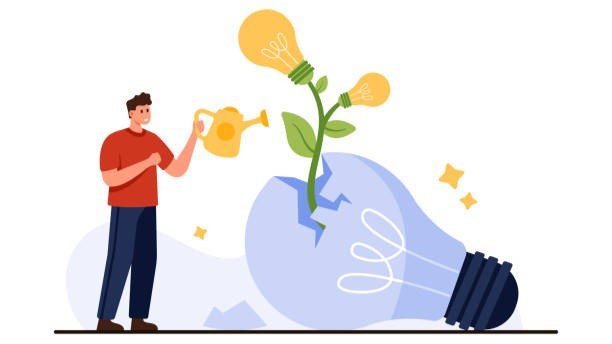
In a world of constant change, the ability to learn from failure is not just an advantage; it is a survival skill.
- Builds Deeper Conceptual Understanding: When you struggle with a problem, you are forced to engage with the underlying principles and relationships, leading to knowledge that is more robust and less fragile than memorized procedures.
- Enhances Problem-Solving and Creativity: By exploring multiple, often non-standard solutions, you develop flexible thinking and creativity. You learn to navigate ambiguity, a skill crucial for innovation in any field, from setting up an e-commerce business to managing complex projects.
- Fosters Resilience and a Growth Mindset: Repeatedly facing and overcoming challenges through Productive Failure rewires your brain to see setbacks as temporary and informative. It builds the psychological resilience needed for a long and successful learning journey.
- Prepares You for Real-World Challenges: The real world is full of ill-defined problems with no textbook answers. Productive Failure is the gym where you train for this reality.
- Makes Learning More Engaging and Meaningful: The “Aha!” moment that follows a period of struggle is far more rewarding and memorable than passively receiving information. It makes you an active agent in your own education.
Common Misconceptions and Myths About Productive Failure
This concept is often misunderstood. Let’s clarify what it is not.
- Myth 1: “Productive Failure means glorifying any and all failure.”
- Reality: Failure is only productive when it is followed by analysis and reflection. Random, unanalyzed failure is just failure. The “productivity” comes from the learning it generates.
- Myth 2: “It’s an argument against teachers and direct instruction.”
- Reality: Not at all! Direct instruction is critically important, but its timing is key. Productive Failure argues that instruction is most effective after a period of struggle, not instead of it.
- Myth 3: “This is just a fancy term for ‘trial and error.'”
- Reality: Trial and error is a component, but Productive Failure is a more structured and metacognitive process. It emphasizes the systematic analysis of errors to understand the underlying reasons for the failure, transforming random trials into a diagnostic tool.
- Myth 4: “It’s too time-consuming and inefficient.”
- Reality: While it may take more time upfront, the long-term efficiency is vastly superior. Knowledge gained through Productive Failure is retained longer and is more readily transferable, reducing the need for constant re-learning. It’s the difference between quickly digging a shallow hole and taking the time to dig a deep, stable well.
- Myth 5: “It will damage learners’ confidence.”
- Reality: When framed correctly, it does the opposite. By normalizing struggle and focusing on the learning process, it reduces the shame associated with being wrong. It builds confidence in one’s ability to work through difficulties, which is a far more durable form of self-efficacy.
Recent Developments and Success Stories
The principle of Productive Failure is being adopted far beyond the classroom, shaping modern innovation and professional development.
- The Agile and Lean Startup Movements: These business methodologies are built on Productive Failure. The concept of building a “Minimum Viable Product” (MVP), testing it in the market, learning from its failures (pivoting), and iterating is Productive Failure applied to entrepreneurship. This approach is vital for navigating the uncertainties of global supply chains and business operations.
- Design Thinking: This human-centered approach to innovation institutionalizes failure through rapid prototyping. Each prototype is a hypothesis, and its “failure” to fully meet user needs provides the essential insights for the next, improved version.
- Success Story: The Programmer Who Learned to Debug. A novice programmer, Anna, was stuck on a complex bug. Instead of immediately asking for help, she spent two hours generating hypotheses and testing them, all of which failed. Frustrated but analytical, she finally sought help. Because she could articulate exactly what she had tried and why each attempt failed, her colleague immediately spotted the underlying issue—a flawed assumption about how a function worked. That single, analyzed failure taught Anna more about the system’s architecture than a week of successful coding had.
- Success Story: The Writer’s Block Breakthrough. A writer struggled with a chapter that wasn’t working. He forced himself to write three completely different versions, each from a different character’s perspective. The first two were terrible, but the process of writing them revealed the core emotional conflict he had been missing. The third version, informed by the failures of the first two, was brilliant. The failed attempts were not wasted words; they were the necessary exploration to find the true story.
Case Study: Building a Nonprofit Strategy Through Productive Failure
Background: “EduFuture,” a small nonprofit focused on adult literacy, was struggling to increase enrollment in their programs. Their traditional marketing (flyers, library notices) was not working. The team, disheartened, felt they were failing in their mission. (For more on mission-driven work, see our Nonprofit Hub).
The Pivot to a Productive Failure Approach: The director decided to reframe their efforts. Instead of seeing low enrollment as a pure failure, they treated their current strategy as “Attempt #1” and launched a series of small, low-cost experiments.
- Experiment 1 (Failed): A paid Facebook ad targeting “adult education.” Result: High cost, low conversion. Analysis: The audience was too broad and the message too generic.
- Experiment 2 (Failed): Partnering with a local employment agency. Result: Few referrals. Analysis: The agency staff didn’t fully understand the program’s benefits to their clients.
- Experiment 3 (Failed): Offering a “free tablet with enrollment.” Result: Attracted people interested in a free tablet, not in learning. Analysis: The incentive was misaligned with the intrinsic motivation to learn.
The Insight and Success: Each “failure” provided crucial data. They learned their audience was not searching for “adult education” but for “how to get a better job” and “help reading a lease.” They learned partners needed simple, clear talking points. They learned incentives had to be tied to program milestones, not just enrollment.
Their final, successful strategy involved creating short, practical workshops at local housing complexes with childcare provided, framed as “Navigate Your Finances” and “Understand Your Rights as a Renter.” Enrollment soared. The initial failures were not setbacks; they were the essential, productive steps that led them to a truly effective solution.
Lesson Learned: The key lesson from EduFuture’s story is that Productive Failure requires a shift from a culture of blame to a culture of curiosity. Instead of asking “Whose fault is this?” they asked “What did this attempt teach us?” This creates a psychologically safe environment where innovation can flourish.
Real-Life Examples of Productive Failure
- The Child Learning to Walk: Every toddler falls hundreds of times. Each fall provides sensory feedback about balance and momentum, which their brain uses to adjust the next attempt. This is Productive Failure in its purest form.
- The Scientific Process: A hypothesis that is disproven by an experiment is not a failure; it is a success because it eliminates a false path and narrows the field of inquiry, bringing science closer to the truth.
- Learning a New Language: Attempting to speak and making grammatical errors is embarrassing but incredibly productive. The correction from a native speaker, received after the failed attempt, is far more memorable than just reading the grammar rule.
- Personal Development: Trying a new communication technique with a partner and having it fall flat is a productive failure if you reflect on why it didn’t work (tone, timing, context) and adjust your approach, leading to better relationships. This reflective practice is as crucial for mental wellbeing as it is for academic learning.
Conclusion & Key Takeaways
The journey of lifelong learning is a marathon, not a sprint, and the path is paved with obstacles. To navigate this path successfully, we must fundamentally change our relationship with failure. Productive Failure is not a consolation prize for when we get it wrong; it is a deliberate and powerful strategy for getting it more right than we ever could by playing it safe.
By embracing the struggle, conducting failure autopsies, and iterating based on insights, we transform our learning from a superficial activity into a profound process of growth. This approach builds not just knowledge, but character—fostering resilience, creativity, and the tenacity required to thrive in an ever-changing world.
Key Takeaways:
- Struggle is a Signal of Growth: Cognitive difficulty is not a sign that you are incapable, but that your brain is building new and stronger connections. Lean into the discomfort.
- Analysis is What Makes Failure Productive: The magic is not in the failure itself, but in the rigorous, metacognitive analysis of why it happened.
- Delay the Answer: Give yourself the gift of struggle before seeking out solutions. This primes your brain for deeper, more meaningful learning when the instruction comes.
- Cultivate a Culture of Curiosity: In teams, families, and your own mind, replace “Who is to blame?” with “What can we learn from this?”
- You Are Not Your Failures: Your failed attempts are data points, not definitions. Separate your identity from your outcomes to unlock the freedom to experiment and grow.
The next time you face a challenging problem, don’t fear the misstep. Welcome it. See it as the first, and most important, step on the path to true mastery. Start small, reflect deeply, and watch as your most “unproductive” moments become your greatest teachers.
Frequently Asked Questions (FAQs)
1. How is Productive Failure different from just “learning from your mistakes”?
It’s a more structured and intentional version. While learning from mistakes is a general life skill, Productive Failure is a specific pedagogical design that involves deliberately engaging with problems beyond one’s current knowledge before instruction to maximize learning.
2. Isn’t this approach too frustrating for learners?
It can be, which is why facilitation and framing are key. Learners need to understand why they are struggling and be assured that the struggle is a planned and valuable part of the process, not a sign of their inability.
3. Can Productive Failure be applied to all subjects?
It is most effective for complex, conceptual subjects where deep understanding and transfer are goals (e.g., mathematics, science, strategic thinking). It is less suitable for learning simple facts or rote procedures.
4. What is the role of the teacher or mentor in Productive Failure?
Their role shifts from “sage on the stage” to “guide on the side.” They design the initial problem, allow for struggle, resist giving answers too early, and then facilitate the crucial metacognitive discussion after the attempts to help learners consolidate their insights.
5. How do I know if my failure was “productive” or just a waste of time?
Ask yourself: Did I gain a specific insight into what I don’t understand? Can I articulate why my approach didn’t work? Do I now have a specific, targeted question? If yes, it was productive. If you’re just confused and don’t know why, you may need guidance to make it productive.
6. How can I create a “psychologically safe” environment for Productive Failure at work?
Leaders must model it by sharing their own failures and what they learned. Frame work as a series of experiments. Celebrate “intelligent failures”—those that are well-planned, small in scale, and provide valuable learnings. Punishing failure kills innovation.
7. Is there a point where too much failure becomes unproductive?
Yes. If failure leads to complete demoralization and a shutdown of effort, it is no longer productive. The key is to design challenges that are within a “zone of proximal development”—difficult enough to struggle, but not so difficult that success feels impossible even with effort.
8. Can I use Productive Failure with the Spaced Repetition System (SRS)?
Absolutely! When you rate an SRS card “Again” or “Hard,” that is a micro-failure. The act of then reviewing the correct answer and understanding why you got it wrong is the productive analysis. SRS is a tool that systematizes this process for factual knowledge.
9. How does this relate to a growth mindset?
A growth mindset is the belief system that makes Productive Failure possible. If you believe your abilities are fixed (fixed mindset), failure is threatening. If you believe you can grow (growth mindset), failure becomes a valuable source of information.
10. What’s a simple way I can try this today?
Try a new recipe without following the instructions step-by-step. Use your intuition about flavors and techniques. If it doesn’t turn out well, analyze why (too salty? overcooked?). Then, look at the recipe and see where your intuition diverged from the proven method. You’ll learn much more about cooking than by blindly following instructions.
11. Is Productive Failure the same as “discovery learning”?
It is a specific, more effective form of discovery learning. Pure discovery learning can be inefficient. Productive Failure structures the discovery phase (the generation of solutions) and crucially, follows it with consolidation and instruction, which pure discovery often lacks.
12. Can this help with fear of public speaking?
Yes. Reframe each speaking opportunity as an experiment. A talk that doesn’t land perfectly is not a failure of you as a person, but a productive data point on what works with an audience and what doesn’t. Analyze the feedback (explicit and implicit) to improve the next one.
13. How do I encourage a child to embrace Productive Failure?
Praise the process (“I love how you tried so many different ways to solve that!”) rather than the outcome (“You’re so smart!”). When they fail, ask curious questions: “What did you learn from that?” “What would you try differently next time?”
14. Does this mean I should never look for help?
No! The key is timing. Try to generate your own ideas first to activate your knowledge and identify the specific point of confusion. Then, when you seek help, you can ask a much more precise question, making the help you receive far more effective.
15. How does Productive Failure relate to the concept of a Personal Learning Environment (PLE)?
Your PLE is the ecosystem that supports Productive Failure. It contains the resources you use for the “Learn & Consolidate” phase (tutorials, articles, courses) and the tools for the “Iterate & Apply” phase (blogs, project spaces). It’s the scaffold that makes repeated, productive cycles of learning possible.
16. Is there a neurological basis for why this works?
Yes. Cognitive struggle and the process of resolving cognitive conflict are associated with stronger encoding of information in long-term memory and the development of more complex neural networks. The brain learns by reconciling errors.
17. Can organizations use this principle for training?
Absolutely. Instead of lecturing employees on a new procedure, give them a complex, realistic scenario to solve in groups first. Let them fail and brainstorm. Then, provide the formal procedure. The training will be more engaging and the knowledge will be retained and applied much more effectively.