The Smart Grid Evolution: How Digitalization Is Building a Smarter, Greener Power System
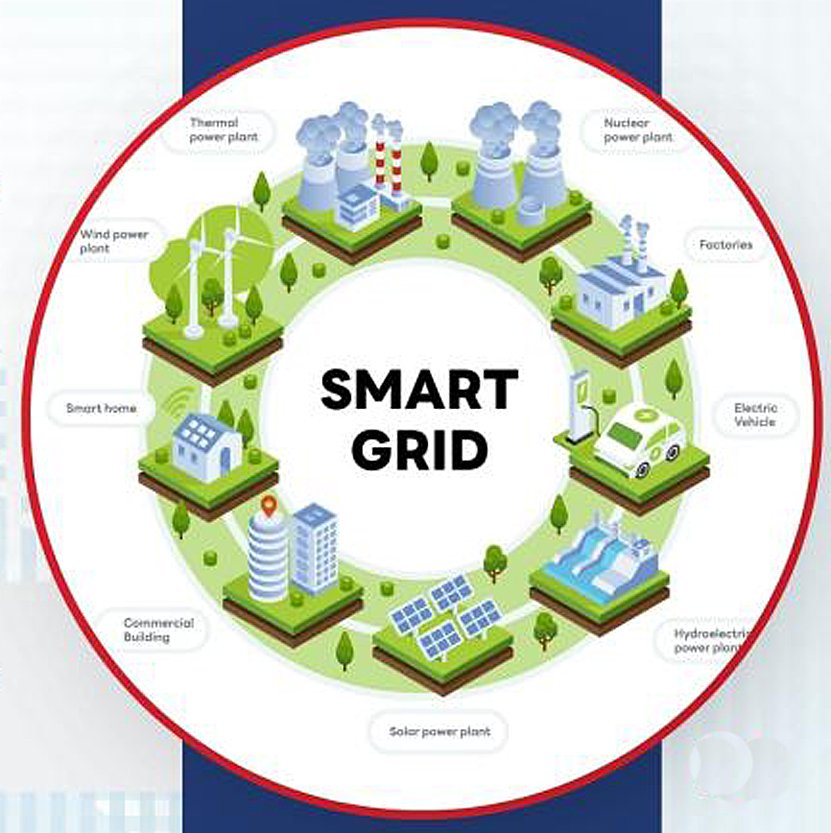
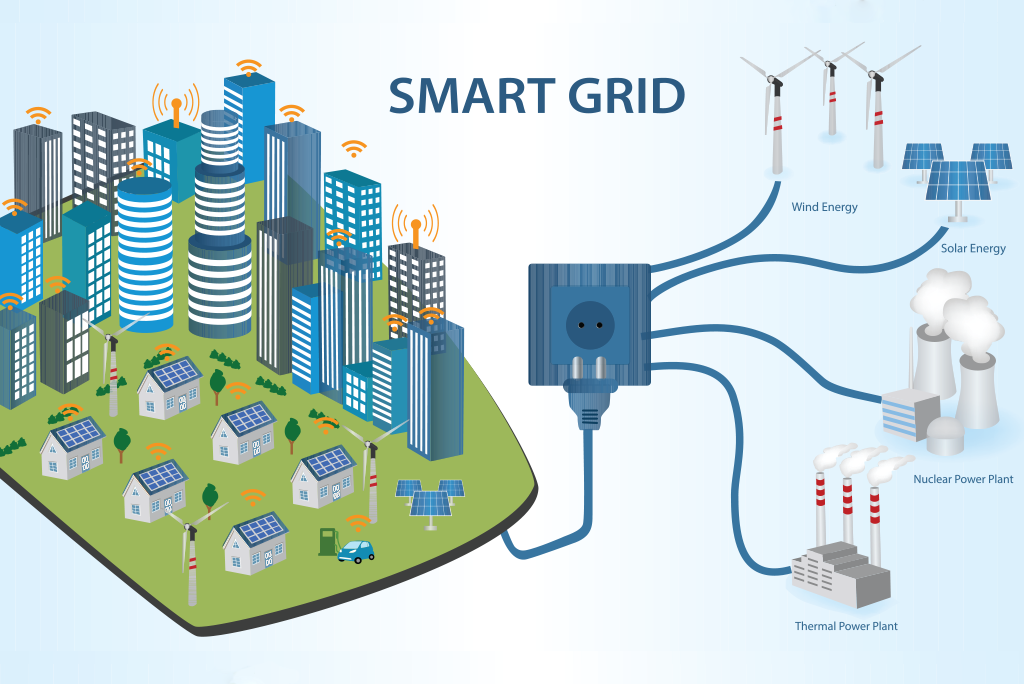
A visual map of the interconnected components and two-way data flows that define a modern smart grid.
Introduction – Why This Matters
Imagine your electricity grid as a vast, one-way highway system built in the 1950s. Power plants (the factories) send electricity (the cars) down large roads (transmission lines) to your neighborhood, with no traffic lights, no GPS, and certainly no electric vehicles feeding energy back into the traffic. Now, imagine trying to integrate millions of solar rooftops, wind farms, and electric vehicles onto this archaic highway. It would be chaos. This is the fundamental challenge of our century: our dumb, centralized grid is incompatible with a decentralized, renewable future.
What I’ve found, after working with utilities and clean tech startups, is that the conversation often jumps straight to sexy new generation sources like solar panels, while ignoring the unsexy but critical backbone needed to support them: the grid itself. The smart grid is that backbone. It’s the digital transformation of our entire electricity infrastructure, and it’s the single most important enabler for a sustainable energy future. In 2024, with global renewable capacity set to grow by a record 550 GW (according to the IEA), the smart grid isn’t a luxury—it’s an absolute necessity to prevent blackouts, reduce costs, and slash emissions.
Background / Context
For over a century, the electrical grid operated on a simple “generate, transmit, distribute, consume” model. Large, centralized power plants (coal, gas, nuclear, hydro) produced power, which flowed in one direction to passive consumers. Utilities estimated demand, spun up plants to meet it, and hoped nothing broke. This system was designed for predictability and control, not for variability or participation.
The 21st century introduced three disruptive forces:
- Variable Renewable Energy (VRE): Solar and wind are intermittent. The sun doesn’t always shine, the wind doesn’t always blow. This creates massive swings in supply that the traditional grid cannot manage.
- Distributed Energy Resources (DERs): Rooftop solar, home batteries, and electric vehicles turn consumers into “prosumers”—both producing and consuming energy. This two-way power flow breaks the old one-way model.
- Digitalization: The proliferation of cheap sensors, ubiquitous connectivity (IoT), and powerful data analytics created the tools to see and manage the grid in real-time.
The smart grid is the convergence of these forces. It’s the answer to the question: How do we run a reliable, efficient, and clean power system when the weather is our main power plant and every home is a potential mini power station?
Key Concepts Defined

- Smart Grid: An electricity network that uses digital communications technology, sensors, and automation to monitor, protect, and optimize the operation of its interconnected elements—from power plants and transmission lines to end-user appliances.
- Distributed Energy Resources (DERs): Smaller-scale power generation or storage technologies located close to where electricity is used. Includes rooftop solar, small wind turbines, battery energy storage systems (BESS), and electric vehicles (EVs).
- Advanced Metering Infrastructure (AMI): The system of smart meters, communications networks, and data management systems that enables two-way communication between utilities and customers.
- Demand Response (DR): Programs that incentivize consumers to reduce or shift their electricity usage during peak demand periods in response to grid signals or price changes.
- Microgrid: A localized, self-contained grid that can disconnect from the main grid to operate autonomously. It integrates local generation (like solar+storage) and serves a defined geographic area (a campus, military base, or town).
- Grid Resilience: The ability of the grid to anticipate, withstand, adapt to, and rapidly recover from disruptions, whether from extreme weather, cyberattacks, or equipment failures.
- Phasor Measurement Unit (PMU): A high-speed sensor that measures the electrical waves on the grid, providing a real-time “EKG” of grid health, allowing operators to see and prevent cascading failures.
How It Works: A Step-by-Step Breakdown of the Intelligent Network
Let’s trace how a smart grid handles a common modern scenario: a hot, sunny afternoon when solar production is high, but a thunderstorm is approaching.
Step 1: Sensing & Measurement (The Nervous System)
Thousands of devices feed data into the grid’s brain:
- Smart Meters at homes report real-time consumption and solar export.
- PMUs on transmission lines measure voltage, current, and frequency 30+ times per second.
- Sensors on transformers, substations, and even along power lines monitor temperature, load, and equipment health.
- Weather Forecasts and Solar/Wind Output Predictions are integrated via APIs.
Step 2: Communication & Data Aggregation (The Circulatory System)
This flood of data is sent via a secure, two-way communication network (fiber, cellular, RF) to a central Energy Management System (EMS) or, increasingly, to distributed control nodes. In my experience, the communications layer is the most underappreciated yet critical hurdle—without reliable, low-latency data pipes, the grid remains “dumb.”
Step 3: Analysis & Decision-Making (The Brain)
Advanced analytics and AI process this data in near real-time.
- The system predicts the storm’s impact and the sudden drop in solar output as clouds roll in.
- It identifies that neighborhood A has high EV charging demand, while neighborhood B has 100 home batteries sitting fully charged from the midday sun.
Step 4: Automated Control & Response (The Muscles)
The grid acts autonomously or with operator approval:
- It sends a Demand Response signal to smart thermostats in Neighborhood A, briefly raising AC setpoints by 2 degrees to reduce load.
- It dispatches a signal to the aggregated home batteries in Neighborhood B to discharge, injecting power to fill the solar gap.
- It re-routes power flows around a transmission line predicted to be vulnerable to high winds.
- It signals a utility-scale battery storage system to prepare for rapid discharge.
Step 5: Consumer Interaction & Market Participation
You, the consumer, are part of this loop. You might receive a push notification from your utility app: “High demand period. Credit available if you reduce usage for the next hour.” You opt-in, your smart appliances cycle down, and you earn a bill credit. Your EV, plugged in, might delay charging until 2 AM when wind power is abundant and cheap.
Comparison Table: Traditional Grid vs. Smart Grid
| Feature | Traditional Grid | Smart Grid |
|---|---|---|
| Communication | One-way (Utility to Consumer) | Two-way, Digital |
| Consumer Role | Passive Ratepayer | Active Participant / “Prosumer” |
| Generation | Centralized, Large Plants | Centralized + Distributed (DERs) |
| Operation | Manual, Reactive | Automated, Predictive |
| Resilience | “Fail and Fix” | “Anticipate and Adapt” |
| Renewable Integration | Difficult, Limited | Core Design Feature |
| Outage Management | Customer calls to report | Self-diagnosing, automatic rerouting |
Why It’s Important: The Multi-Billion Dollar Value Proposition
The smart grid is important not just for sustainability, but for economic competitiveness, national security, and consumer empowerment.
- Enables the Renewable Revolution: It’s the only way to reliably integrate high levels (50%+) of variable wind and solar power. Without it, we face curtailment (wasting renewable energy) and instability.
- Enhances Reliability & Resilience: Self-healing grids can isolate faults and reroute power automatically, minimizing outage times. After Hurricane Sandy, communities with microgrids kept their lights on while surrounding areas were dark for weeks.
- Lowers Costs for Everyone: By optimizing asset use, reducing peak demand (which requires expensive “peaker” plants), and minimizing losses, smart grids can reduce the need for costly new infrastructure. A U.S. Department of Energy study estimated smart grid investments could yield $2 trillion in benefits over 20 years.
- Empowers Consumers: Provides transparency into energy use, enabling savings. Allows participation in energy markets through DERs. It democratizes energy.
- Boosts Energy Security: Diversifies energy sources and reduces dependence on single points of failure, much like how a diversified strategy is key in building a successful business partnership.
- Accelerates Electrification: A robust, intelligent grid is prerequisite for mass adoption of electric vehicles and electric heating, which are crucial for decarbonizing transport and buildings.
Sustainability in the Future: The Self-Optimizing Grid
The future smart grid is a self-optimizing ecosystem. We’re moving toward:
- Transactive Energy: A grid where devices (your EV, your battery, your neighbor’s solar) automatically buy and sell energy from each other in a real-time local market, using blockchain or similar technology for settlement. Imagine your car earning money for you while parked by selling power back to the grid during a price spike.
- AI-Dominant Grid Operations: AI won’t just assist; it will autonomously manage vast swathes of the grid, predicting failures before they happen and orchestrating millions of DERs like a conductor leading an orchestra. This level of AI application is as transformative as the trends we see in artificial intelligence and machine learning across sectors.
- Universal Interoperability: A “plug-and-play” standard where any certified DER can seamlessly connect to the grid and communicate, much like a USB device works with any computer. This will unleash innovation.
- Integration with Other Infrastructure: The grid will communicate with water systems, transportation networks, and building management systems to optimize overall resource use and city resilience.
Common Misconceptions
- Misconception: “Smart grids are just about smart meters.” Reality: Smart meters are a visible consumer-facing component, but they are just one data source. The smart grid encompasses the entire infrastructure, from high-voltage transmission to your smart dishwasher.
- Misconception: “It’s a privacy nightmare—the utility will know when I take a shower.” Reality: While data granularity increases, regulations and technologies (like data aggregation) are designed to protect consumer privacy. The value of grid optimization typically uses anonymized or aggregated data.
- Misconception: “It’s too expensive and will raise my bill.” Reality: Upfront capital is significant, but the operational savings and deferred infrastructure costs lead to lower overall system costs. Many programs are funded through dedicated rate structures or government grants.
- Misconception: “A smart grid makes the grid more vulnerable to cyberattacks.” Reality: While digitalization expands the attack surface, a modern smart grid is built with cybersecurity-by-design. It is far more secure than the outdated, unmonitored legacy grid, which was also vulnerable but lacked the tools to detect or respond to an intrusion.
Recent Developments (2024-2025)
- AI for Extreme Weather Forecasting & Response: Utilities are now deploying AI models that combine hyper-local weather data with grid topology to predict exactly which poles and lines are most at risk from wildfires, hurricanes, or ice storms, allowing for pre-emptive reinforcement or de-energization.
- Vehicle-to-Grid (V2G) Scaling: Major automakers (Ford, GM, Nissan) and charging networks are rolling out bidirectional charging standards. In 2024, a pilot in San Diego demonstrated 100 EVs collectively providing grid services, acting as a virtual power plant.
- Virtual Power Plant (VPP) Explosion: Utilities and tech companies are aggressively aggregating home solar, batteries, and smart thermostats. In 2025, the U.S. Department of Energy launched a “VPP Partnership” with a goal of reaching 80 GW of capacity by 2030—equivalent to 80 large power plants.
- Grid-Forming Inverters: This breakthrough in power electronics allows solar and battery systems to create the grid’s stability (voltage and frequency), rather than just following it. This is a game-changer for grids with very high renewable penetration, making them inherently more stable.
Success Story: Texas ERCOT and the Rise of the Digital Grid
Following the devastating winter outage of 2021, the Texas grid operator (ERCOT) embarked on a massive digital modernization. While adding more gas plants made headlines, the quieter, more impactful work was in deploying millions of smart meters and advanced grid sensors. By the winter of 2024, ERCOT’s control room had a radically different view. They could see real-time demand at the circuit level and had enrolled over 1 GW of residential demand response. During a cold snap in January 2025, they were able to precisely curtail load in specific high-stress neighborhoods while avoiding rolling blackouts. Crucially, they used price signals to incentivize industrial users and aggregated battery farms to reduce demand and supply power. The event was managed without widespread outages, demonstrating that visibility and control are as important as raw generation capacity.
Real-Life Examples
- For a Homeowner: You have solar panels, a home battery (like a Tesla Powerwall), a smart thermostat, and an EV. Your home energy management system (HEMS) automatically decides when to charge the battery from solar, when to discharge to power your home or avoid peak rates, and when to charge the car with the cheapest, cleanest power. It participates in a VPP, earning you money.
- For a City: The city of Copenhagen uses a smart district heating and cooling grid integrated with the electrical grid. Excess wind power is used to generate heat stored in large water tanks, and waste heat from data centers is captured and redistributed. This holistic system dramatically increases overall efficiency.
- For a Business: A large factory participates in demand response. When the grid is stressed, it automatically shifts non-essential processes (like running the warehouse ventilation at full power or pre-heating furnaces) to a different time, receiving substantial payments that improve its bottom line. This operational agility mirrors the strategic flexibility needed in modern global supply chain management.
Conclusion and Key Takeaways
The smart grid is not a single technology you can buy; it’s a decades-long evolution of the world’s largest and most complex machine. It is the essential, enabling platform for a clean energy future. The transition is challenging, requiring significant investment, regulatory modernization, and public engagement. However, the alternative—a brittle grid that cannot support our climate and economic goals—is unthinkable.
The journey involves all of us. As consumers, we will evolve from passive bill payers to active grid citizens. As professionals, understanding this shift is crucial for careers in energy, tech, policy, and finance. As a society, it represents one of our most critical infrastructure projects of the 21st century.
Key Takeaways Box:
- The Smart Grid is an Enabler: It is the essential platform that allows high levels of wind, solar, EVs, and batteries to work together reliably.
- It’s a Two-Way Street: The future grid is defined by digital, two-way communication between utilities and millions of connected devices (DERs).
- Intelligence is Distributed: While central control remains, intelligence is moving to the grid’s edge—to your home, your battery, your EV.
- Resilience is Built-In: Self-healing capabilities and microgrids make the grid more robust against climate and security threats.
- You Have a Role: Your choices as a consumer—adopting smart devices, participating in demand response—directly contribute to a more efficient and sustainable system.
For more insights on how technology is driving innovation across different sectors, explore our broader focus at World Class Blogs.
Frequently Asked Questions (FAQs)
1. Is my personal energy usage data safe with a smart meter?
Yes, utilities are bound by strict data privacy regulations. Smart meter data is typically transmitted using encrypted communications. Personal consumption data is aggregated and anonymized for grid planning. You usually own your data and can choose who to share it with (e.g., with third-party energy saving apps).
2. Do I have to get a smart meter?
In many regions, utilities are deploying them as part of system-wide upgrades. There are often opt-out provisions, but these usually come with a monthly fee, as manual meter reading is more costly. The benefits of having one (detailed usage insights, faster outage detection, support for time-of-use rates) typically outweigh concerns.
3. What is “time-of-use” pricing and how does it relate to the smart grid?
Time-of-use (TOU) rates charge different prices for electricity based on the time of day (e.g., high price 4-9 pm, low price overnight). Smart meters enable this by tracking when you use power. This incentivizes shifting usage (like running laundry) to off-peak times, flattening demand and saving everyone money.
4. Can a smart grid prevent all blackouts?
No system can prevent all blackouts, especially those caused by catastrophic damage (e.g., a direct hurricane hit). However, a smart grid can dramatically reduce the frequency, size, and duration of outages through rapid fault isolation and rerouting. It turns widespread blackouts into localized “blinks.”
5. How does a microgrid relate to the main smart grid?
A microgrid is a smaller, localized smart grid that can connect to and disconnect from the main grid. It’s like a lifeboat on a ship. It operates within the main grid’s rules when connected but can “island” itself during a main grid outage to power its critical loads (like a hospital or campus) using its own local generation (solar + storage).
6. How expensive is it to build a smart grid?
Globally, the investment needed is in the trillions of dollars over the coming decades. However, this is not a pure cost; it’s an investment with a high return. Studies consistently show a 3:1 to 5:1 return on investment from reduced operational costs, deferred capital expenditure, and societal benefits from lower emissions and improved reliability.
7. What is the role of 5G in the smart grid?
5G offers ultra-reliable, low-latency communication (URLLC), which is perfect for mission-critical grid control signals, like telling a battery to discharge in milliseconds to stabilize frequency. It can also connect a massive number of IoT sensors cost-effectively. It’s a key enabling communication layer.
8. Can I make money from my home solar/battery with a smart grid?
Absolutely. Through Virtual Power Plant (VPP) programs, you can sign up to allow your utility or an aggregator to dispatch your battery during times of high grid stress. You get paid for the service. Similarly, you can sell excess solar power back to the grid (net metering or feed-in tariffs).
9. What is the single biggest technical challenge facing smart grids?
Interoperability. Ensuring that devices and software from hundreds of different vendors can communicate and work together seamlessly using common standards (like IEEE 2030.5). Without this, we have a “smart” grid of isolated, incompatible silos.
10. How does blockchain fit into the smart grid vision?
Blockchain is primarily explored for transactive energy applications. It could provide a secure, transparent, and automated ledger for peer-to-peer energy trading between neighbors or for tracking renewable energy credits from creation to consumption. It’s more about market mechanics than grid operations.
11. Will a smart grid eliminate the need for big power plants?
Not entirely in the near term. We will still need large-scale, dispatchable power for baseload and long-duration storage (like hydropower, geothermal, or gas with carbon capture). However, the smart grid will allow us to use these large assets far more efficiently and rely on them less often, enabling a much higher penetration of renewables.
12. How can I, as a homeowner, participate in the smart grid?
- Get a smart meter if available.
- Install smart thermostats, water heaters, and other plugs.
- Consider rooftop solar and/or a home battery.
- Enroll in your utility’s demand response or time-of-use rate program.
- Purchase an electric vehicle with smart charging capabilities.
13. Are there health risks from the radio waves of smart meters?
Regulatory agencies worldwide (like the FCC in the U.S.) have concluded that radiofrequency (RF) exposure from smart meters is well below safety limits and is far less than common devices like cell phones or Wi-Fi routers. The meters transmit very short bursts of data, not continuous signals.
14. What happens to the old grid equipment?
A major focus is on sustainable decommissioning and recycling. Copper and aluminum are highly recyclable. Utilities are developing circular economy plans for old transformers, meters, and poles, recovering valuable materials. This sustainable lifecycle thinking is crucial, similar to principles discussed in our Nonprofit Hub for mission-driven work.
15. How will the smart grid affect jobs?
It will transform them. There will be less need for manual meter readers and more demand for data scientists, cybersecurity analysts, software engineers, and DER integration specialists. It represents a significant upskilling opportunity for the utility workforce.
16. Can smart grid technology be hacked?
Any connected system has cyber risks. However, the energy sector treats cybersecurity with extreme seriousness, using military-grade encryption, air-gapped networks for critical control, continuous monitoring, and mandatory security standards (like NERC CIP in North America). The risk is managed, not ignored.
17. What is “grid edge” technology?
This refers to hardware and software at the consumer side of the meter: smart inverters for solar, home energy management systems, EV chargers, commercial building automation. This is where much of the innovation and complexity is now focused.
18. How long will the full transition to a smart grid take?
It’s a gradual evolution, not a flip of a switch. Core transmission and substation automation is well underway in developed nations. Full distribution-level intelligence and mass DER integration will likely take through 2040. It’s a continuous process of upgrade and integration.
19. What’s the environmental impact of manufacturing all these smart devices?
This is a valid concern. The lifecycle emissions from producing millions of sensors, meters, and chips must be outweighed by the operational emissions they save by optimizing the grid. Responsible sourcing, design for longevity, and robust recycling programs are essential to ensure a net-positive environmental benefit.
20. Where can I learn more about my local utility’s smart grid plans?
Visit your utility’s website and look for sections on “grid modernization,” “energy innovation,” or “future plans.” Regulatory bodies (like Public Utility Commissions) also host public proceedings and documents detailing approved investment plans.
About the Author
Sana Ullah Kakar is an energy systems strategist with over 15 years at the intersection of technology, policy, and utility operations. Their career began as an electrical engineer designing substation automation systems and evolved into roles advising regulators and startups on grid modernization. They have witnessed firsthand the painful disconnect between flashy cleantech promises and the gritty reality of legacy infrastructure. At World Class Blogs, they are passionate about translating complex infrastructure topics into clear, actionable insights for a broad audience. They believe that an informed public is essential for making the tough but necessary investments in our collective future. When not writing or analyzing grid data, they can be found hiking with their dog, a practice they find essential for maintaining the psychological wellbeing needed to tackle complex challenges. Learn more about our mission at About World Class Blogs.
Free Resources
- U.S. Department of Energy – Smart Grid Resource Center: An authoritative hub for reports, interactive guides, and fact sheets on all aspects of grid modernization.
- The International Energy Agency (IEA) – Electricity Grids Report: Essential reading for understanding global grid investment needs and policy frameworks.
- Local Utility Websites: Your own utility’s site is the best place for specific programs, rebates, and plans in your area.
- Explore Related Tech: Understand the foundational technologies powering this revolution in our section on Artificial Intelligence & Machine Learning.
- Entrepreneurial Angle: For those inspired to build a business in this space, see foundational guides like how to start an online business for operational basics.
- Join the Discussion: Continue the conversation and find more articles in our general blogs category.
Discussion
What’s your biggest question or concern about the smart grid? Are you excited about the potential to participate as a “prosumer,” or do you have reservations about cost, complexity, or privacy? Share your thoughts and experiences with home energy tech in the comments below. Let’s build a smarter conversation about our shared energy future.