Social Entrepreneurship: The Complete Guide to Building a Business That Changes the World
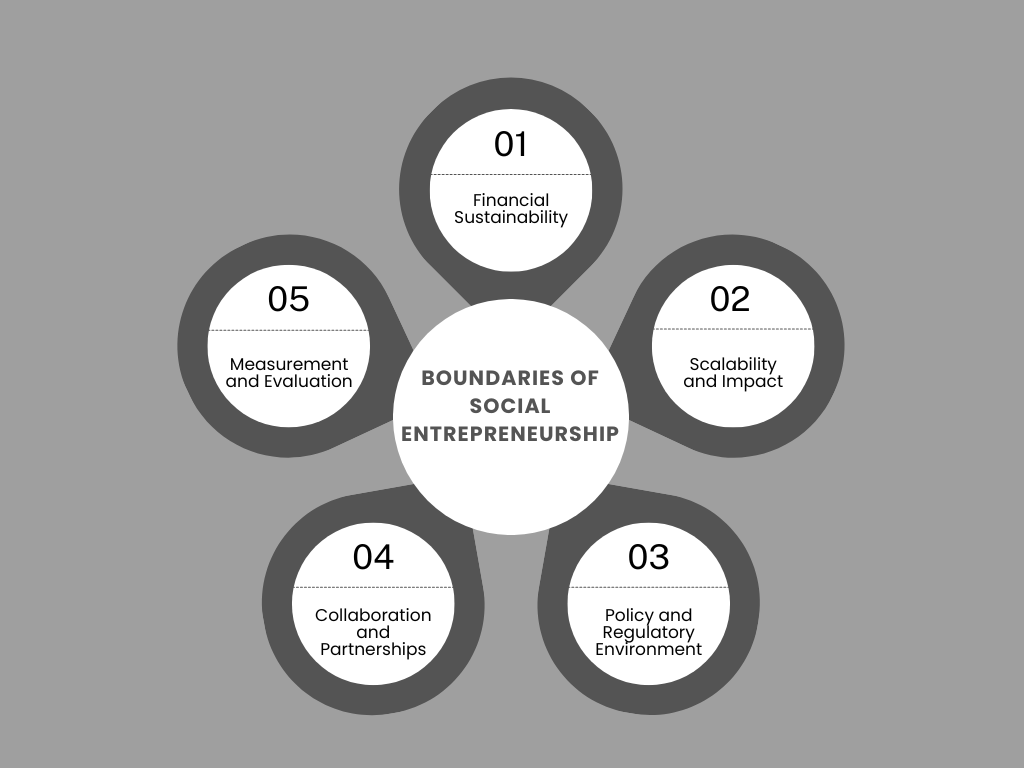
The Social Entrepreneurship Ecosystem: Where profit meets purpose to create sustainable change.
Introduction: Why Social Entrepreneurship is the Future of Business
The greatest challenges of our time—from poverty and inequality to climate change and resource scarcity—cannot be solved by governments and nonprofits alone. The scale of capital, innovation, and efficiency required demands a new kind of enterprise: one that harnesses the power of the market to drive social and environmental progress. This is the realm of social entrepreneurship.
Social entrepreneurs are the architects of a more sustainable and equitable future. They are individuals who identify a pressing social problem and develop a sustainable, scalable business model to solve it. They measure success not just in profit, but in positive impact. For aspiring changemakers, investors, and conscious consumers, understanding this field is no longer a niche interest; it’s critical to participating in the evolution of capitalism itself. It represents a fundamental shift from a singular focus on shareholder value to a broader commitment to stakeholder value. To understand our broader mission, learn more about World Class Blogs.
Background/Context: The Evolution from Charity to Sustainable Change
The concept has roots in the cooperative and mutual aid societies of the 19th century, but the modern social entrepreneurship movement gained traction in the late 20th century. Pioneers like Muhammad Yunus of Grameen Bank, who pioneered microfinance, demonstrated that a business could be both self-sustaining and profoundly impactful in alleviating poverty.
The term itself was popularised in the 1980s and 1990s by foundations like Ashoka and the Skoll Foundation, which began to identify and support these “changemakers.” The rise of the B Corp certification in 2006 provided a rigorous, independent standard for businesses to verify their social and environmental performance, giving the movement a recognisable brand and a legal structure (the Benefit Corporation) in many jurisdictions. This evolution mirrors a broader societal demand for transparency and purpose, a theme we explore in our Nonprofit Hub.
Key Concepts Defined: The Lexicon of Impact-Driven Business
- Social Entrepreneurship: The use of market-driven methods and business principles to develop, fund, and implement solutions to social, cultural, or environmental problems.
- Social Enterprise: The actual organisation or business that a social entrepreneur builds. Its primary purpose is to achieve social objectives, with profit being a means to that end, not the end itself.
- Triple Bottom Line (TBL or 3Ps): A framework that evaluates performance based on three pillars: People (social equity), Planet (environmental sustainability), and Profit (economic viability).
- Impact Investing: Investments made into companies, organisations, and funds with the intention to generate a measurable, beneficial social or environmental impact alongside a financial return.
- B Corp Certification: A private certification issued to for-profit companies by the non-profit B Lab. It is to business what Fair Trade certification is to coffee.
- Theory of Change: A comprehensive description of how and why a desired change is expected to happen in a particular context. It maps out the pathway from activities to impact.
How It Works (Step-by-Step): The Journey of a Social Entrepreneur
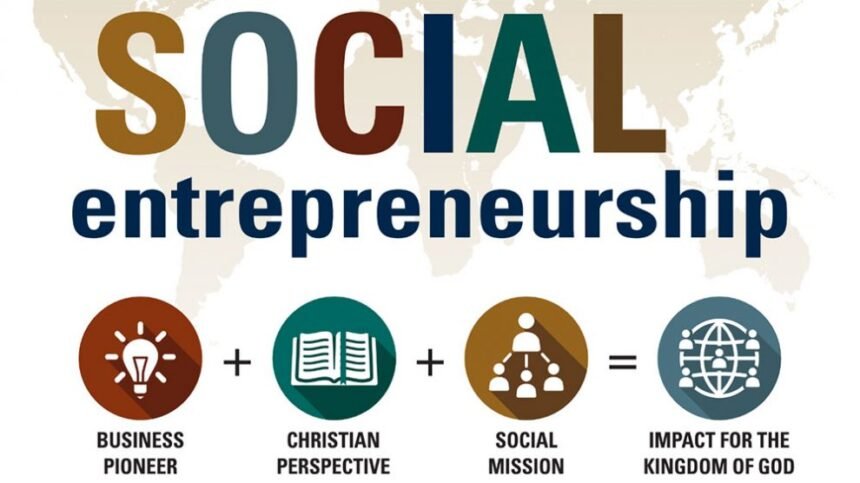
Building a social enterprise is a deliberate and structured process.
Step 1: Identify a Deeply-Felt Social or Environmental Problem
The journey begins with empathy and observation. The problem must be significant, underserved, and something the founder is passionate about. It could be local (e.g., food deserts in a city) or global (e.g., plastic pollution in oceans).
Step 2: Develop an Innovative, Sustainable Solution
The solution must be a product or service that directly addresses the root cause of the problem. Crucially, it must have a viable revenue model. Will you sell the product directly, use a cross-subsidy model (buy-one-give-one), or generate revenue through services? This requires the same strategic thinking as launching any successful venture, as outlined in this E-commerce Business Setup Guide.
Step 3: Craft a Mission-Locked Business Model
This is the core differentiator. The social mission must be “locked in” so it cannot be easily abandoned for profit. This can be achieved through:
- Legal Structure: Registering as a Benefit Corporation or a Cooperative.
- Governance: Including mission-related clauses in the company’s charter.
- Supply Chain: Sourcing from marginalised producers or using recycled materials.
Step 4: Measure Your Impact
What gets measured gets managed. Define Key Performance Indicators (KPIs) for your social and environmental goals. For example: number of trees planted, litres of water saved, jobs created in low-income communities, or carbon emissions reduced. This data is crucial for transparency and attracting impact investors.
Step 5: Secure Mission-Aligned Funding
Traditional venture capital may not be the right fit. Social entrepreneurs often tap into:
- Impact Investing Funds
- Grants from foundations
- Crowdfunding from a supportive community
- Debt financing from community development financial institutions (CDFIs)
Step 6: Scale the Impact
The ultimate goal is to scale the solution without diluting the mission. This could mean expanding geographically, franchising the model, or open-sourcing the methodology for others to replicate.
Why It’s Important: The Power of the Social Enterprise Model
- Sustainable Solutions: Unlike donor-dependent nonprofits, social enterprises can achieve long-term financial sustainability, ensuring the solution persists as long as the problem exists.
- Market Efficiency: They bring competition, innovation, and operational efficiency to sectors traditionally dominated by bureaucracy.
- Consumer and Talent Magnet: A clear social mission attracts conscious consumers and top talent who seek purpose in their work, which is vital for Mental Well-being in the workplace.
- Systems Change: Successful social enterprises can demonstrate new market possibilities, influencing policy and inspiring larger corporations to adopt more responsible practices.
Common Misconceptions
- “Social enterprises are just nonprofits with a different name.” False. While nonprofits rely on donations and grants, social enterprises generate the majority of their income through trade and aim to be self-sustaining or profitable.
- “You can’t make real money as a social entrepreneur.” Many social enterprises are highly profitable. The difference is in how those profits are used—often reinvested to scale impact rather than solely distributed to shareholders.
- “Impact is too fluffy to measure.” Modern impact measurement frameworks, like the IRIS+ system from the Global Impact Investing Network (GIIN), provide standardised, rigorous metrics to quantify social and environmental performance.
- “It’s a choice between doing good and being competitive.” The opposite is often true. A strong social mission can be a powerful competitive advantage, driving brand loyalty, employee engagement, and operational innovations that reduce costs (e.g., through energy efficiency).
Recent Developments & Success Stories
Recent Development: The Rise of ESG and Corporate Social Innovation
Environmental, Social, and Governance (ESG) criteria are now a mainstream consideration for investors. This has created a massive flow of capital towards sustainable businesses and forced large corporations to innovate. Many are now launching their own social intrapreneurship programs or acquiring successful social enterprises to integrate their innovations, validating the entire sector.
Success Story: TOMS Shoes & The Evolution of a Model
TOMS popularised the “One for One” model—for every pair of shoes sold, a pair was donated to a child in need. While criticised for potentially creating dependency, TOMS had a monumental impact by bringing the concept of “conscious consumerism” to the masses. Crucially, the company has since evolved its model. It now invests one-third of its profits in grassroots efforts for mental health, access to opportunity, and ending gun violence, demonstrating a more mature, systemic approach to creating impact.
Case Study & Lessons Learned: d.light
Case Study: d.light is a for-profit social enterprise whose mission is to create a brighter future for the 1 billion people without reliable electricity. They design, manufacture, and distribute affordable solar-powered solutions like lanterns, home systems, and solar TVs to low-income families in the developing world.
Lessons Learned:
- Dignity Through Design: d.light didn’t just make a cheap product; they invested in high-quality, desirable design. This respected the customer and built brand trust, moving beyond charity.
- Innovative Financing: They developed flexible payment plans to make their products accessible to customers with irregular incomes, understanding that affordability was a key barrier.
- Scale is Impact: By focusing on a profitable, scalable model, d.light has impacted over 100 million lives, proving that a business can achieve massive scale while serving the world’s poorest populations. Their success shows that optimising a supply chain for social good, as detailed in this guide on Global Supply Chain Management, is a core competency for global impact.
Real Life Examples
- Warby Parker: The eyewear company that provides a pair of glasses to someone in need for every pair sold, and has distributed millions through its “Buy a Pair, Give a Pair” program.
- Patagonia: The outdoor apparel company that is a certified B Corp and dedicates 1% of its total sales to environmental groups. Its mission statement is “We’re in business to save our home planet.”
- Grameen Danone: A joint venture between Grameen Bank and Danone that produces affordable, nutrient-fortified yoghurt for malnourished children in Bangladesh, solving a social problem through a corporate partnership.
Conclusion & Key Takeaways
Social entrepreneurship is not a trend; it is a necessary and powerful evolution of business. It proves that the most sustainable way to do good is to build a good business around it. The challenges of the 21st century demand solutions that are as scalable and resilient as the problems themselves.
Key Takeaways:
- Start with the Problem, Not the Product: Your passion for solving a specific issue is your most valuable asset.
- Build a Sustainable Engine: Design a business model that funds your mission without constant fundraising.
- Measure What Matters: Track your social and environmental impact with the same rigor as your financials.
- Mission-Lock is Non-Negotiable: Protect your social purpose through your legal structure and governance from day one.
- The Future is Hybrid: The lines between for-profit and nonprofit are blurring. The most effective organisations of the future will be those that can harness the best of both worlds.
The world’s most pressing problems are also its greatest market opportunities. By embracing social entrepreneurship, you can build a thriving business that leaves a legacy of positive change. For more insights into innovative organizational models, you might be interested in our article on What is a DAO?. To continue exploring, dive into our full archive of Blogs.
Frequently Asked Questions (FAQs)
1. What is the main difference between a social entrepreneur and a traditional entrepreneur?
A traditional entrepreneur’s primary goal is to maximize profit for shareholders. A social entrepreneur’s primary goal is to solve a social or environmental problem, using profit as a tool to achieve and scale that impact.
2. Can a social enterprise be a nonprofit?
Yes, a nonprofit can run a social enterprise as a revenue-generating arm. However, the term “social enterprise” typically implies a for-profit legal structure with a social mission.
3. How do I fund my social enterprise in the early stages?
Bootstrapping, grants from foundations focused on your issue area, impact angel investors, and crowdfunding are common early-stage funding sources.
4. What is a Benefit Corporation?
A legal structure for businesses that want to consider their impact on society and the environment, in addition to profit. It legally protects the company’s mission and gives directors the duty to consider non-financial stakeholders.
5. Is B Corp the same as a Benefit Corporation?
No. B Corp is a certification, while Benefit Corporation is a legal status. A company can be one, the other, both, or neither.
6. How do I measure social impact?
Start by defining your Theory of Change. Then, select relevant metrics (e.g., tons of CO2 reduced, number of students graduated) and use frameworks like IRIS+ or the UN Sustainable Development Goals (SDGs) for guidance.
7. What are the biggest challenges for social entrepreneurs?
Balancing the dual bottom line of profit and impact, accessing patient capital that understands the model, and measuring impact in a cost-effective way.
8. Can social enterprises pay competitive salaries?
Yes, and they should to attract and retain the talent needed to achieve their mission. Financial sustainability includes paying living wages.
9. What are some social business ideas for 2024?
Affordable renewable energy kits, upcycled fashion brands, ed-tech for underserved communities, sustainable packaging solutions, and mental health platforms with sliding-scale pricing.
10. How does impact investing work?
Impact investors actively seek to place capital in businesses that can provide a financial return while also achieving specific social or environmental goals. The return may be at, below, or even above market rate, depending on the investor’s strategy.
11. What is “greenwashing” and how can I avoid it?
Greenwashing is when a company spends more time and money marketing itself as environmentally friendly than on minimizing its environmental impact. Avoid it by ensuring your social mission is authentic, embedded in your operations, and backed by measurable data.
12. Can a large corporation be a social enterprise?
While traditionally associated with startups, the principles can be adopted by any company. Large corporations can foster social intrapreneurship—driving social innovation from within—and can restructure to prioritize broader stakeholder value.
13. How important is personal finance for a social entrepreneur?
Extremely. The early stages can be financially volatile. Sound Personal Finance management is crucial for the founder’s resilience and the venture’s stability.
14. Where can I find a community of social entrepreneurs?
Organizations like Ashoka, Echoing Green, Social Enterprise Alliance, and online platforms like Impact Hub host vibrant communities for connection and learning.
15. How do I get started if I have an idea?
Start by talking to the people you want to help. Validate the problem, then prototype your solution. Write a business plan that details both your financial and impact models. Then, seek out a mentor in the space and begin building your network.