
AgriTech for Sustainability: How Precision Farming, Vertical Agriculture, and AI Are Redefining Food Security
How is tech making farming sustainable? Explore precision agriculture, vertical farms, AI, & robotics. Real examples, benefits, costs & 25+ FAQs on the future of food. sustainable agriculture, precision farming, vertical farming, AgriTech, smart farming, farm drones, agricultural IoT, regenerative agriculture, food security, farm robotics, AI in agriculture, controlled environment agriculture, climate-smart agriculture, future of farming
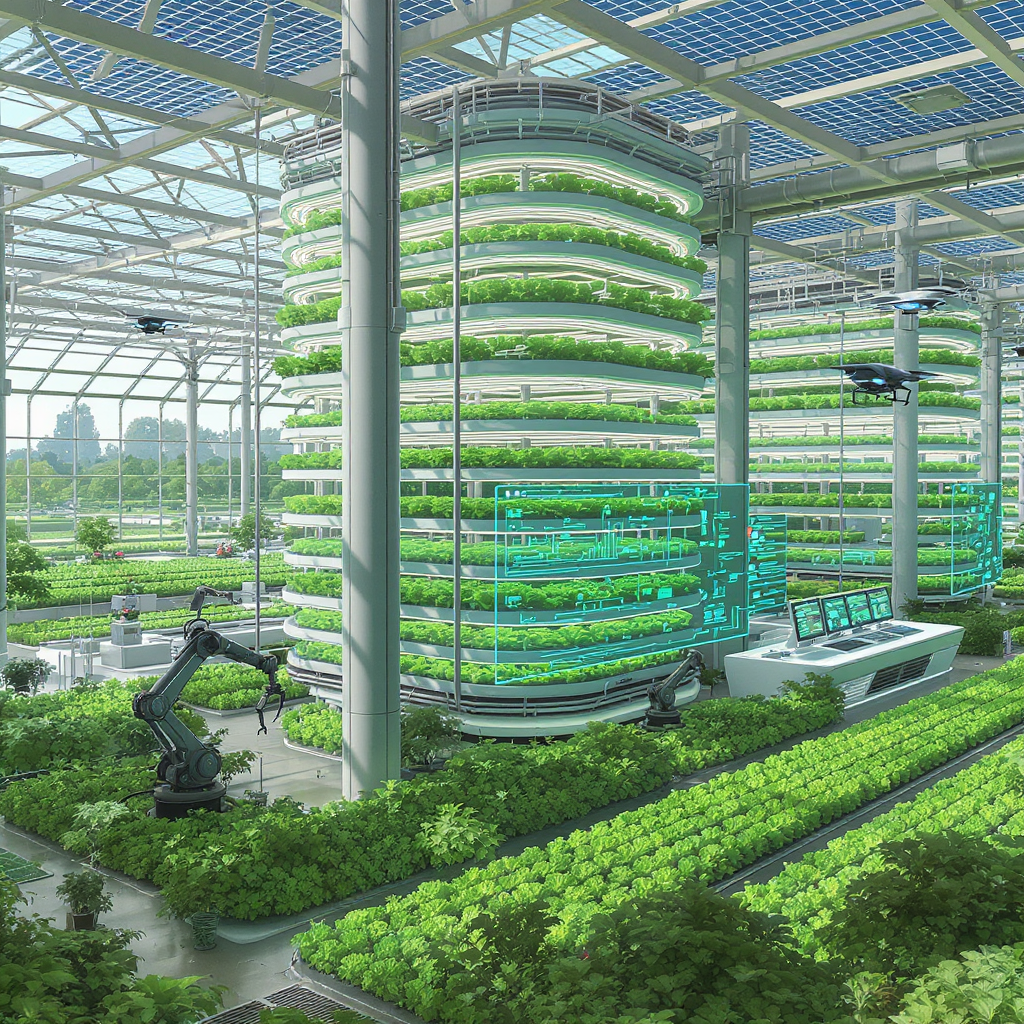
Modern sustainable agriculture is a closed-loop system of data collection, analysis, and precise action.
Introduction – Why This Matters
I was walking through a vertical farm in Singapore—a climate-controlled warehouse bathed in the pink glow of LED lights—when the manager handed me a head of butter lettuce. “This was harvested 20 minutes ago,” she said. “It grew with 95% less water, zero pesticides, and traveled 3 miles to its first customer. The field lettuce in the supermarket next door used 20 gallons of water, was sprayed twice, and traveled 1,200 miles.” That stark contrast isn’t just about lettuce; it’s about the future of how we feed 10 billion people on a warming planet.
For curious beginners, “AgriTech” might conjure images of giant tractors or complex biotech. For professionals needing a refresher, it’s easy to get lost in jargon. What I’ve learned from visiting farms on four continents is this: Sustainable AgriTech isn’t about replacing farmers with robots; it’s about augmenting human intelligence with data to grow more food with radically fewer resources. In 2025, with climate volatility threatening harvests and global food demand rising, AgriTech has moved from optional innovation to existential necessity. This article will explore how technologies—from AI and drones to CRISPR and vertical systems—are creating a new agricultural paradigm that is more productive, resilient, and harmonious with nature.
Background / Context: From the Green Revolution to the Green Evolution
The 20th-century Green Revolution saved billions from famine through high-yield crop varieties, synthetic fertilizers, and irrigation. But its legacy is mixed: it fed the world at the cost of depleted soils, polluted waterways, reduced biodiversity, and massive greenhouse gas emissions (agriculture contributes ~24% of global emissions).
We now face the imperative of a “Green Evolution” or “Doubly Green Revolution”—one that must:
- Increase yields to feed a growing population.
- Radically reduce environmental footprint (water, chemicals, land use, emissions).
- Build resilience against climate shocks (droughts, floods, new pests).
Technology is the bridge across this trilemma. The convergence of biotechnology, digital tools, and engineering allows us to understand and manage farms at a resolution that was previously science fiction—moving from treating entire fields as uniform to managing individual plants, and even the microbiome around their roots.
Key Concepts Defined
- Precision Agriculture (Smart Farming): A management concept that uses IoT sensors, drones, GPS, and data analytics to observe, measure, and respond to inter- and intra-field variability in crops. The goal: apply the right input (water, fertilizer, pesticide) in the right amount, at the right time, in the right place.
- Regenerative Agriculture: A holistic farming system that goes beyond sustainability to actively improve ecosystem health. Core practices include minimal soil disturbance, keeping soil covered, maintaining living roots, increasing biodiversity, and integrating livestock. Technology helps measure its outcomes (soil carbon, water infiltration).
- Vertical Farming: The practice of growing crops in vertically stacked layers, often in controlled-environment agriculture (CEA) facilities, using soilless techniques (hydroponics, aeroponics) and artificial lighting. Maximizes yield per square foot.
- Controlled Environment Agriculture (CEA): A technology-based approach to food production where environmental factors (light, temperature, humidity, CO₂, nutrients) are optimized in enclosed structures (greenhouses, vertical farms).
- Gene Editing (e.g., CRISPR): A precise biotechnology tool that allows scientists to make targeted modifications to an organism’s DNA to enhance desirable traits (drought tolerance, disease resistance, nutrient density) without introducing foreign genes (unlike traditional GMOs).
- Agricultural Internet of Things (Agri-IoT): The network of physical devices (soil moisture probes, weather stations, livestock wearables) embedded with sensors and software to connect and exchange data.
- Digital Farming Platform: A cloud-based software suite that integrates data from various sources (satellites, drones, tractors, weather) to provide farmers with actionable insights and predictive analytics.
How It Works: The Technology Toolkit for a New Agriculture
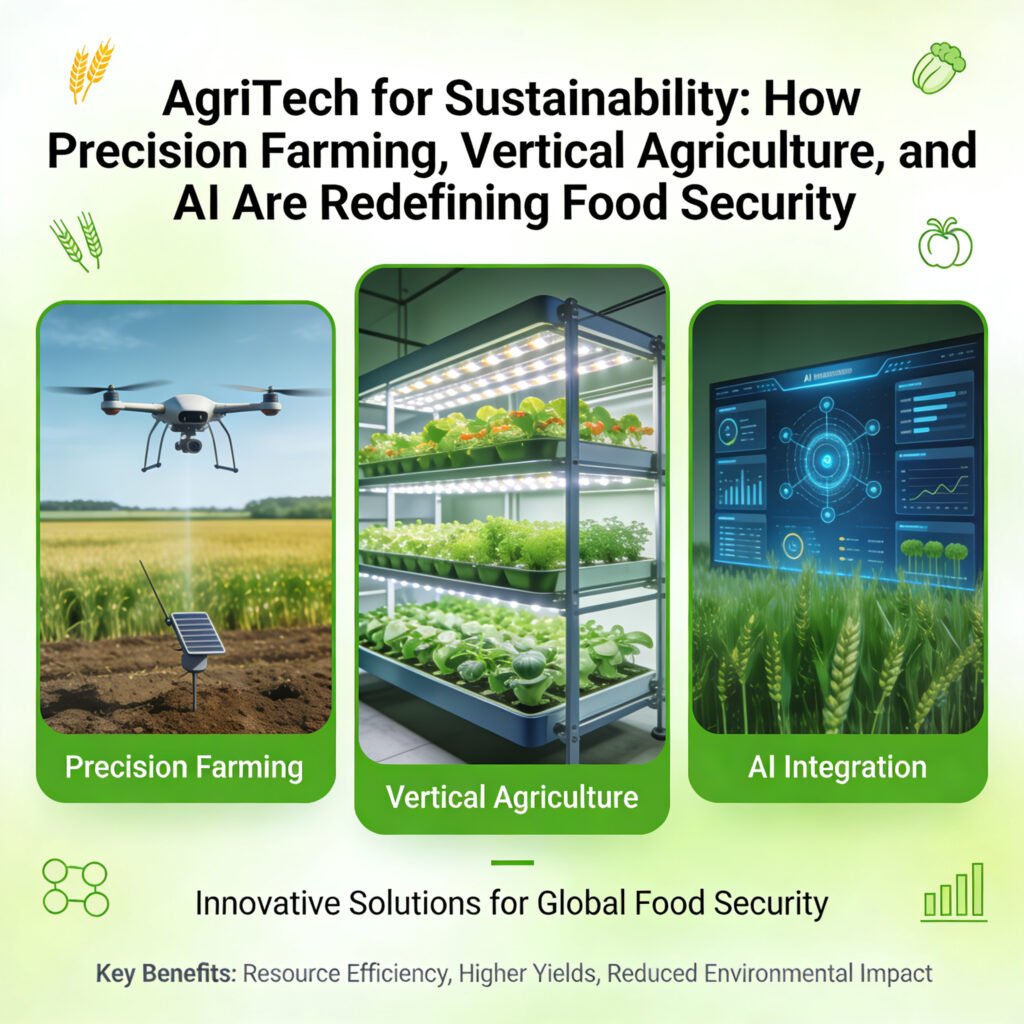
Let’s break down how these technologies are applied across different farm types and scales.
Layer 1: The Data Foundation – Seeing the Invisible
The first step is gathering hyper-local, real-time data.
- Satellite & Aerial Imagery: Multispectral and hyperspectral satellites (like Planet Labs) provide weekly images showing crop health (NDVI), moisture stress, and disease outbreaks across thousands of acres.
- Drones (UAVs): Flying closer, drones capture centimeter-resolution imagery. They can be equipped with:
- Multispectral cameras to identify nutrient deficiencies.
- Thermal cameras to detect water stress.
- LiDAR to create 3D maps of crop canopy and terrain.
- In-Ground Sensors: A network of sensors measures:
- Soil: Moisture, temperature, salinity, NPK (nitrogen, phosphorus, potassium) levels.
- Microclimate: Hyper-local rainfall, humidity, leaf wetness, wind speed at the canopy level.
- Connected Machinery: Modern tractors, combines, and sprayers are data-generating platforms, logging yield, fuel use, and application rates as they move through the field.
Layer 2: The Intelligence Layer – From Data to Decisions
Raw data is useless without analysis. This is where AI and machine learning transform farming.
- Computer Vision for Scouting: AI models trained on millions of images can identify weeds, diseases (like wheat rust, grape powdery mildew), and pest damage from drone or smartphone pictures with greater speed and accuracy than the human eye. Farmers get alerts: “Early blight detected in Sector B-7, 5% infestation.”
- Predictive Analytics:
- Yield Prediction: Combining historical data, weather forecasts, and real-time plant health to predict harvest volume and timing with >90% accuracy.
- Disease/Pest Risk Modeling: Predicting outbreaks based on weather conditions (e.g., apple scab infection risk requires specific leaf wetness and temperature hours).
- Prescription Maps: Analytics software generates georeferenced application maps that guide variable-rate technology (VRT) equipment.
- Example: A nitrogen prescription map tells a spreader to apply 80 lbs/acre in a low-organic matter zone, 40 lbs/acre in a high-zone, and 0 lbs/acre in a waterway buffer—all automatically.
Layer 3: The Action Layer – Automated, Precise Intervention
Data-driven insights trigger precise actions.
- Variable-Rate Technology (VRT): Equipment that automatically adjusts input application (seed, fertilizer, water, pesticide) on the go based on the prescription map.
- Automated Guidance & Robotics:
- Auto-steer and Section Control: GPS-guided tractors drive with 2 cm accuracy, eliminating overlaps and saving fuel/inputs. Section control turns off planter or sprayer rows on headlands.
- Field Robots: Small, autonomous robots are emerging for tasks like:
- Weeding: Using computer vision to identify and mechanically zap or laser individual weeds, eliminating herbicide use (e.g., FarmWise, Carbon Robotics).
- Harvesting: Selective harvesting of delicate fruits (strawberries, asparagus) using gentle robotic arms.
- Smart Irrigation: IoT-connected drip or pivot systems that water only when and where soil moisture sensors dictate, often integrated with evapotranspiration (ET) data. Can reduce water use by 30-50%.
Layer 4: The System Innovations – Redesigning Production
Beyond improving field agriculture, technology enables entirely new production systems.
- Vertical Farming Workflow:
- Seeding & Germination: Automated in sterile media plugs.
- Growth Towers/Trays: Plants move through climate-controlled zones on conveyor systems. LEDs provide specific light recipes (spectrum, intensity, photoperiod) for each crop stage.
- Nutrient Delivery: Closed-loop hydroponic/aeroponic systems deliver a mist or flow of nutrient-rich water directly to roots. Water is recaptured and recycled.
- Harvesting & Packing: Often done on-site, within hours of shipping.
- Gene Editing Pipeline: Scientists use tools like CRISPR to:
- Identify genes responsible for desirable traits (e.g., a gene that allows a wild tomato relative to be drought-tolerant).
- Precisely edit that gene in a high-yielding commercial variety.
- Field-test the new variety for performance and safety.
Technology Stack for a Modern Sustainable Farm:
| Scale/Focus | Key Technologies | Primary Sustainability Benefit |
|---|---|---|
| Large-Scale Row Crop (Corn, Soy, Wheat) | Satellite imagery, AI analytics, VRT, auto-steer, soil sensors | Reduced fertilizer/pesticide runoff, lower fuel use, preserved soil health |
| Specialty Crops (Fruits, Vegetables, Vineyards) | Drones, computer vision scouting, smart irrigation, robotic harvesters | Drastic reduction in pesticide/water use, labor optimization, premium quality |
| Livestock | GPS collars, health monitoring wearables, automated feeders, methane digesters | Improved animal welfare, efficient feed use, manure management, methane capture |
| Urban/Peri-Urban Production | Vertical farming, hydroponics, IoT climate control, blockchain for traceability | Zero pesticide runoff, ~95% less water, elimination of food miles, year-round local produce |
Why It’s Important: Beyond Yield to Systemic Resilience
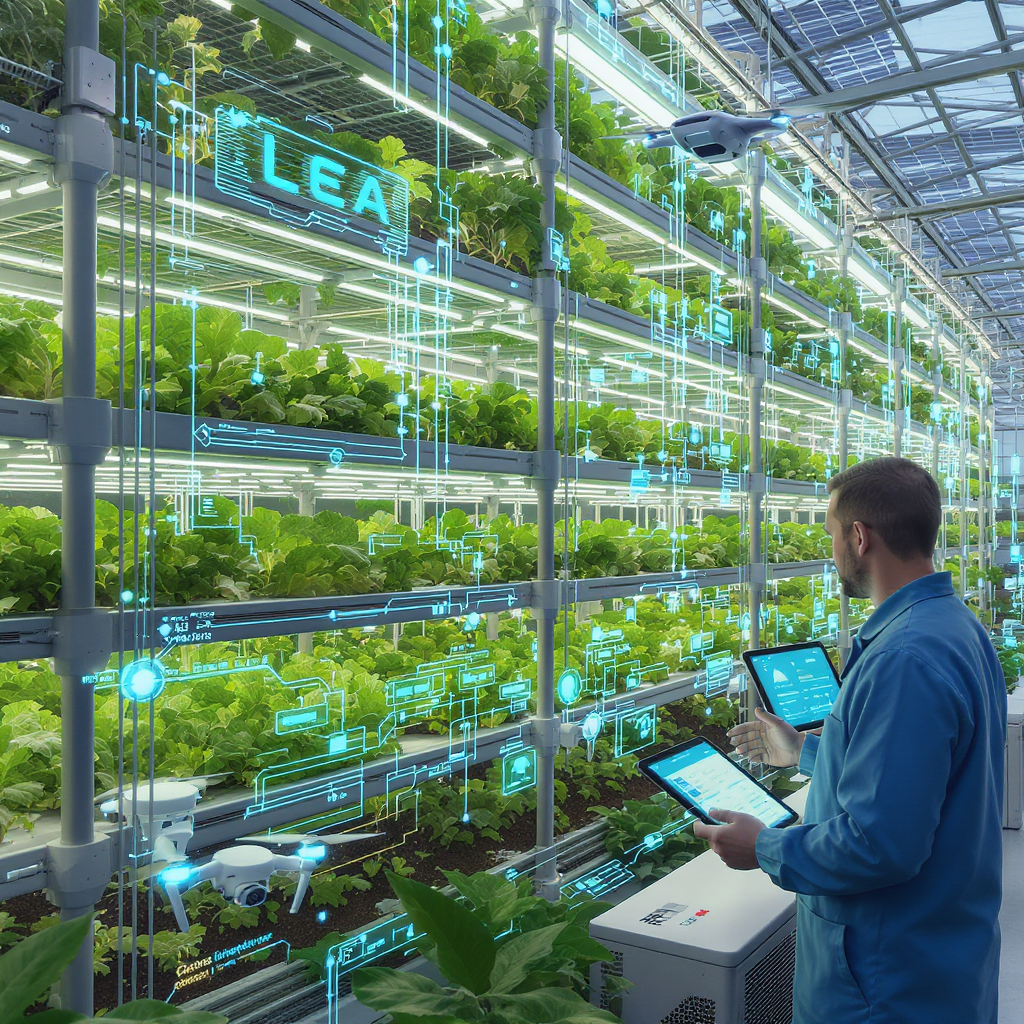
AgriTech’s value extends far beyond farm profitability. It’s about building a food system that can withstand 21st-century challenges:
- Climate Adaptation: Precision irrigation combats drought. Disease prediction models help manage new pathogens spreading due to warmer winters. Drought-tolerant gene-edited crops can maintain yields in marginal conditions.
- Resource Conservation: This is the core promise. The World Bank estimates precision agriculture can increase yields by 20% while reducing fertilizer and pesticide use by 30% and water use by up to 50%. In a world of water scarcity and degraded soils, this is non-negotiable.
- Biodiversity & Soil Health: By minimizing chemical overspray and enabling regenerative practices (like cover cropping and no-till), technology helps farms become ecosystems, not just production units. Soil carbon sensors allow farmers to monetize carbon sequestration.
- Food Security & Localization: Vertical farms can produce leafy greens and herbs in food deserts or arid regions, increasing local nutritional security. They provide a buffer against global supply chain disruptions, a lesson learned from recent crises in [global supply chain management](https://thedailyexplainer.com/global-supply-chain management-the-complete-guide-to-optimizing-worldwide-business-operations/).
- Farmer Livelihoods & Attracting New Talent: By reducing drudgery, input costs, and risk, AgriTech makes farming more knowledge-intensive and financially viable. It can attract a new generation of “farmer-data-scientists.”
- Transparency & Trust: Blockchain from farm to fork allows consumers to scan a QR code and see the provenance, water footprint, and carbon impact of their food, building trust in sustainable claims.
Sustainability in the Future: The Autonomous, Regenerative, and Connected Farm
By 2040, sustainable agriculture will look fundamentally different:
- The Autonomous Farm Ecosystem: Swarms of small, solar-powered robots will perpetually monitor and tend to fields—weeding, fertilizing micro-doses, and harvesting—while farmers manage the system via digital twins from a console.
- AI-Driven Plant Breeding: Generative AI will design optimal plant genomes for specific local conditions (a “climate-resilient, high-protein bean for the Midwest 2040 climate projection”), which will then be brought to life via speed breeding and gene editing.
- Full-System Integration: Farm data will seamlessly integrate with weather models, commodity markets, and even consumer demand signals from retailers, allowing true just-in-time, demand-driven production that minimizes waste.
- Widespread Ecosystem Service Markets: Farmers will receive verified payments for water quality, carbon sequestration, and biodiversity via IoT-collected data, making regenerative practices the most profitable option. This aligns economic and environmental incentives, much like effective business partnership models align partner incentives.
- Personalized Nutrition from the Farm: Crops will be tailored not just for yield but for nutritional output (higher anthocyanins, better protein profiles) for specific consumer health segments, blurring the line between food and medicine.
Common Misconceptions
- Misconception: “AgriTech is only for giant corporate farms.” Reality: While large farms adopted first, the cost of sensors, SaaS platforms, and drone services is plummeting. In India and Kenya, smallholder farmers access satellite-based irrigation advice via simple SMS messages. The scalability works both up and down.
- Misconception: “Vertical farming will replace all traditional agriculture.” Reality: Vertical farming excels at high-value, fast-growing leafy greens and herbs. It is far too energy-intensive for staple calories like wheat, corn, or rice. The future is a blended system: vertical farms for perishable greens in cities, and regeneratively managed, tech-enhanced field farms for staples.
- Misconception: “Gene editing is just ‘GMOs 2.0.'” Reality: Traditional GMOs often involve transferring genes between species (e.g., Bt toxin from bacteria to corn). Gene editing (like CRISPR) typically makes precise tweaks within a plant’s own genome to express natural traits faster, resembling accelerated selective breeding. The regulatory and consumer acceptance landscape is different.
- Misconception: “All this technology means fewer jobs in agriculture.” Reality: It shifts jobs from manual, repetitive labor (like weeding) to higher-skilled roles in data analysis, robotics maintenance, and system management. The challenge is retraining, not necessarily net job loss.
Recent Developments (2024-2025)
- Generative AI for Farm Management: Platforms like IBM’s Watson and startups are deploying LLMs (Large Language Models) trained on agronomic data. Farmers can ask, “What’s causing yellowing in my southeast corner?” and the AI cross-references satellite images, soil logs, and weather to diagnose and recommend treatment.
- Low-Earth Orbit (LEO) Satellite Revolution: Constellations like Starlink are providing high-speed, low-latency internet to remote farms globally, unlocking cloud-based AI tools for farmers previously offline.
- Robotic Pollination: With bee populations under stress, companies like Arugga AI Farming have developed robots that use computer vision to identify tomato flowers and vibrate them with precise frequency to release pollen, ensuring yields in greenhouses.
- Methane-Reducing Livestock Tech: Feed additives (like red seaweed Asparagopsis) and wearable masks for cows (from Zelp) that oxidize methane are moving from pilot to commercial scale, backed by carbon credit markets.
- “Farming as a Service” (FaaS) Models: Small farmers in emerging economies can now “subscribe” to precision services—a drone company flies their field weekly, an AI analyzes the images, and they get SMS recommendations. This democratizes access without large capital outlay.
Success Story: Bowery Farming and the Rebirth of Local Produce
Bowery Farming, operating vertical farms near major U.S. cities, exemplifies the new model. Their success isn’t just in growing lettuce. It’s in their Operating System (BoweryOS), which integrates every aspect:
- Thousands of sensors per farm track millions of data points daily (light, humidity, nutrients, plant growth rates).
- Machine learning algorithms optimize “recipes” for each crop variety, constantly improving yield, taste, and resource efficiency.
- Supply chain integration means harvests are scheduled against real-time supermarket demand.
The result? Produce with a 100x smaller physical footprint and 95% less water use than field agriculture, zero pesticides, and a shelf life 2-3x longer because it’s ultra-fresh. During the supply chain crises of recent years, Bowery’s local networks proved resilient. They haven’t replaced the California salad bowl, but they’ve created a new, complementary layer of the food system that is hyper-efficient, predictable, and local. Their story proves that reimagining agriculture requires reimagining the entire system—farm, software, and supply chain as one.
Real-Life Examples
- For a Midwest Grain Farmer:
- Uses a digital platform (like Granular or Climate FieldView) that ingests satellite data, soil maps, and machine data.
- In spring, an AI-generated prescription map guides the variable-rate planter.
- During the season, drone scouting identifies a patch of resistant weeds. The platform recommends a specific herbicide and generates a spot-spraying map for the drone or smart sprayer, treating only 5% of the field.
- At harvest, the combine’s yield monitor creates a map showing variability, informing next year’s plans.
- For a California Vineyard:
- Soil moisture sensors and evapotranspiration data dictate precise drip irrigation, improving water use efficiency by 40% and enhancing grape quality.
- Multispectral drone flights detect early signs of fungal disease before visible to the eye, allowing targeted, minimal fungicide application.
- Yield estimation AI helps plan harvest logistics and predict wine production.
- For a Smallholder in Kenya:
- Receives free satellite-based SMS from a service like Acre Africa: “Rain expected in 2 days. Hold irrigation. Fertilize maize in plot 3 next week.”
- Uses a simple soil testing probe connected to a smartphone app to get NPK recommendations.
- Accesses mobile-based crop insurance (index insurance) that pays out automatically based on satellite-detected drought, providing a safety net.
Conclusion and Key Takeaways
The future of food is not a choice between technology and nature; it’s about using technology to work with nature more intelligently and gently. AgriTech for sustainability represents the maturation of farming from an art and a craft into a data-informed science.
The transition will be uneven. The high upfront cost of some technologies, the need for digital literacy, and concerns about data ownership are real barriers. However, the direction is clear. The farms that will thrive—and the food systems that will sustain us—will be those that leverage data to enhance ecological health, optimize resource use, and build resilience against an uncertain climate.
We are moving from an era of extractive agriculture to one of regenerative precision. The goal is no longer just maximum bushels per acre, but optimal nutrition per drop of water, per gram of fertilizer, per joule of energy.
Key Takeaways Box:
- Precision over Uniformity: The core principle is replacing blanket field treatments with data-driven, micro-managed interventions.
- Data is the New Most Valuable Crop: The insights derived from sensors, drones, and AI are becoming the primary source of competitive advantage and sustainability gains.
- Diversify the Toolkit: No single technology (vertical farming, drones, CRISPR) is a silver bullet. The future is a portfolio approach tailored to crop, climate, and scale.
- Bridge the Digital Divide: For AgriTech to fulfill its global promise, access must be democratized through affordable “as-a-service” models and public infrastructure (like rural broadband).
- The Farmer Remains Central: Technology is a tool that amplifies farmers’ expertise and intuition; it doesn’t replace the deep contextual knowledge of the land steward.
For more on how technological innovation is reshaping other critical sectors, explore our collection of insights at World Class Blogs.
Frequently Asked Questions (FAQs)
1. Is the energy used by vertical farms worse than the transport emissions of field farming?
It depends on the energy source. A vertical farm powered by coal would have a huge carbon footprint. But one powered by renewables (common goal for the industry) can have a lower total footprint than field lettuce shipped across continents, considering all inputs (water, land use change, fertilizers). The industry is focused on improving LED efficiency and sourcing clean power.
2. How much does it cost to get started with basic precision agriculture?
Entry-level is now very accessible. A farmer can start with:
- A soil testing service ($15-30/acre)
- Free satellite imagery (from Sentinel Hub or paid higher-res from Planet)
- A basic digital farm management app (free tier of FarmLogs or similar): ~$100/year
- GPS guidance for existing tractor (add-on kit): ~$3,000-$10,000
This can yield 5-15% input savings in the first year.
3. Can gene-edited crops be considered organic?
This is the billion-dollar regulatory question. The USDA has ruled that certain gene-edited crops (where no foreign DNA is introduced) can be classified as non-GMO and eligible for organic certification. However, the Organic Trade Association and other bodies still exclude them. The debate is ongoing, with significant consumer education needed.
4. What happens to all the farmer’s data? Who owns it?
Data ownership and privacy are the biggest unresolved issues. Most platform agreements give the company broad rights to aggregate and anonymize data. Farmers should look for clear “Own Your Data” pledges in terms of service. Initiatives like the Farm Data Cooperative model are emerging, where farmers pool their data under their own control.
5. Do robots and AI really work in the messy, unpredictable environment of a farm?
They are getting remarkably robust. Computer vision models are trained on millions of images of crops in all conditions (muddy, windy, sunny). Robots use LiDAR and inertial sensors to navigate uneven terrain. They’re not perfect, but they are achieving commercial reliability for specific tasks like weeding and selective harvesting.
6. How does AgriTech help with soil health?
Directly and indirectly. Direct: sensors measure soil organic matter, moisture, and respiration. Indirect: By enabling no-till and precision chemical application, technology prevents the compaction and microbial die-off caused by heavy machinery and chemical overspray. It allows farmers to measure the carbon they sequester.
7. Are there AgriTech solutions for livestock sustainability?
Yes, rapidly growing:
- Precision feeding: RFID tags on cows dispense individualized feed rations to optimize health and reduce methane-producing excess.
- Methane monitoring: Lasers and sensors measure herd emissions.
- Virtual fencing: GPS collars contain livestock with audible cues, allowing adaptive rotational grazing that improves pasture health without physical fences.
8. What’s the simplest first step for a conventional farmer to become more sustainable?
Take a soil test and map your yields. Understanding your baseline variability is step zero. Then, implement variable-rate fertilization based on that soil map. It’s the single highest-return, lowest-risk precision practice, reducing costs and environmental impact immediately.
9. How is AI used in predicting crop diseases?
AI models are trained on historical disease outbreak data correlated with hyper-local weather conditions (temperature, humidity, leaf wetness hours). The model continuously ingests real-time weather station data from the field and alerts the farmer when the risk of, say, potato late blight exceeds 80%, recommending a preventative treatment only if needed.
10. Can vertical farming work in developing countries?
Yes, but the model differs. High-tech, capital-intensive vertical farms serve high-end urban markets. However, low-tech vertical systems (stacked hydroponic towers using natural light) are being used in peri-urban areas of countries like Colombia and Bangladesh to grow nutritious greens for local markets with much less water.
11. What is “carbon farming” and how is tech involved?
Carbon farming involves adopting practices (cover cropping, no-till, managed grazing) that sequester atmospheric CO₂ in soils. Technology is critical for Measurement, Reporting, and Verification (MRV). Soil carbon sensors, satellite imagery, and AI models are used to quantify the carbon stored, which farmers can then sell as verified carbon credits.
12. How do drones apply pesticides precisely?
Agricultural drones can be fitted with spray tanks. They fly pre-programmed routes, but with AI-enabled spot spraying: their cameras identify green (weed) vs. brown (soil) or use multispectral data to detect stressed plants, spraying only on those specific pixels. This can reduce herbicide volume by 90% compared to broadcast spraying.
13. What’s the role of blockchain in agriculture?
Primarily for provenance and traceability. Each step in the supply chain (harvest, wash, pack, ship, retail) is recorded as an immutable block. A consumer scanning a QR code can see the farm’s location, harvest date, water usage, and even the name of the farmer, building trust in sustainable and fair-trade claims.
14. Are there mental health benefits for farmers using AgriTech?
Potentially, yes. Farming is a high-stress profession fraught with uncertainty (weather, markets, pests). Technology that reduces guesswork, provides early warning of problems, and automates tedious tasks can alleviate significant anxiety. However, the learning curve and digital pressure are new stressors. Holistic support is needed, tying into broader themes of psychological wellbeing.
15. What is “speed breeding”?
A technique using controlled environments with extended LED lighting to accelerate plant growth cycles, allowing 4-6 generations of crops (like wheat) per year instead of 1-2. This dramatically speeds up conventional breeding programs for developing resilient varieties.
16. How does AgriTech reduce food waste?
At the farm level: better yield prediction helps match harvest to market demand. At the post-harvest level: computer vision sorting grades produce for quality and ripeness, optimally routing it to fresh market, processing, or other uses. In storage: IoT sensors monitor temperature and humidity in grain silos or containers, preventing spoilage.
17. Is the food from vertical farms as nutritious?
Studies show it can be more nutritious in certain dimensions. By tuning light spectra (e.g., more blue and UV), vertical farmers can boost phytochemicals like antioxidants (anthocyanins in basil, vitamin C in lettuce) beyond field-grown levels. Nutrient content is consistent and designed.
18. What about pollinators in high-tech agriculture?
In open fields, technology helps pollinators by reducing pesticide use. In closed vertical farms, pollination is mechanical (robots or human shaking) for crops like tomatoes. For ecosystems, the biggest benefit is that by raising yields on existing farmland, AgriTech can reduce pressure to convert wildlands (pollinator habitats) to agriculture.
19. How do smallholders access this technology?
Through Farming-as-a-Service (FaaS) platforms, cooperatives, and government extension programs. For example, “Uber for Tractors” apps allow farmers to rent precision equipment by the hour. Satellite advice via SMS is widespread in Africa and Asia.
20. What’s the next big breakthrough on the horizon?
AI-powered phenotyping and breeding. Drones and ground robots will autonomously measure thousands of physical traits (phenotypes) on thousands of experimental crop varieties daily, feeding data to AI that identifies the genes for ideal traits. This will collapse the decade-long breeding cycle into a few years.
21. How does this relate to water scarcity?
AgriTech is arguably the most powerful tool for addressing agricultural water use (70% of global freshwater). Smart irrigation can cut use by half. Breeding drought-tolerant crops expands the margin. In closed-loop vertical farms, water is recycled and loss is almost zero.
22. Can AI predict market prices for crops?
Yes, emerging AI models analyze weather patterns in growing regions globally, commodity futures, trade flows, and even social media sentiment to predict price trends. This helps farmers decide what to plant and when to sell.
23. What is a “digital twin” of a farm?
A virtual, dynamic replica of the physical farm that updates in real-time with sensor data. Farmers can run simulations (“What if I plant Variety X instead of Y?” or “What if we get a 2-week drought in July?”) to see projected impacts on yield, soil moisture, and profitability before making decisions.
24. How does this impact farm succession and new farmers?
Lowering the physical burden and increasing profitability can make farming more attractive to the next generation. However, the high capital cost of some technologies can be a barrier to entry, potentially favoring larger operations. Creative financing and leasing models are crucial.
25. Where can I see these technologies in action?
Many land-grant universities (like UC Davis, Wageningen) have public demonstration farms. Industry conferences like World Agri-Tech have virtual tours. YouTube channels like “Future Farming” provide excellent field footage. For entrepreneurial inspiration, resources on starting an online business in the AgriTech space are growing.
About the Author
Sana Ullah Kakar is an agricultural systems analyst with a background in environmental science and robotics. Their career began in international development, working with smallholder farmers in East Africa, where they saw firsthand the devastating impact of climate variability on livelihoods. This experience drove them to seek scalable solutions, leading to roles in agri-tech startups and policy research. At World Class Blogs, they bridge the gap between cutting-edge innovation and on-the-ground practicality, believing that the most sustainable technology is the one farmers will actually use and benefit from. They are passionate about a future where technology empowers farmers to be better stewards of the land while securing their own prosperity. When not visiting farms or analyzing data, they are an avid gardener, applying (and often humbled by) the principles they write about in their own backyard. Learn more about our broader mission at About World Class Blogs.
Free Resources
- FAO’s Digital Agriculture Platform: The UN Food and Agriculture Organization’s hub for reports, case studies, and tools on digital agriculture for sustainability.
- PrecisionAg Directory: A comprehensive directory of precision agriculture technology providers, reviews, and whitepapers.
- Open Agriculture Initiative (OpenAg) from MIT: Open-source research on food computers and controlled environment agriculture.
- Agriculture & Food Systems Institute: Science-based resources on biotechnology, gene editing, and their role in sustainable food systems.
- Related Tech Deep Dives: Understand the underlying AI/ML powering this revolution in our AI and machine learning section.
- Nonprofit Perspectives: For insights into the social and equitable dimensions of food tech, visit our Nonprofit Hub.
Discussion
Which aspect of AgriTech excites or concerns you the most? Do you believe technologies like gene editing and vertical farming will be widely accepted by consumers? For those with farming experience, what’s the most practical piece of technology you’ve adopted or want to adopt? Share your thoughts and questions below—the future of food is a conversation we all need to be part of.