TikTok Shop & Social Commerce Domination: The New Frontier for Ecommerce Sellers
Master TikTok Shop & social commerce. Our step-by-step blueprint reveals how to find winning products, create viral content, and build a profitable business inside the app. TikTok Shop, social commerce, TikTok for business, how to sell on TikTok, live shopping, TikTok affiliate, viral products, social media marketing, ecommerce trends, video commerce, TikTok ads, UGC, influencer marketing, Fulfillment by TikTok, social commerce, how to sell on TikTok, live shopping, TikTok for business, viral products, TikTok affiliate program, step by step guide to TikTok Shop for beginners, best products to sell on TikTok Shop 2025, how to create content for TikTok Shop.
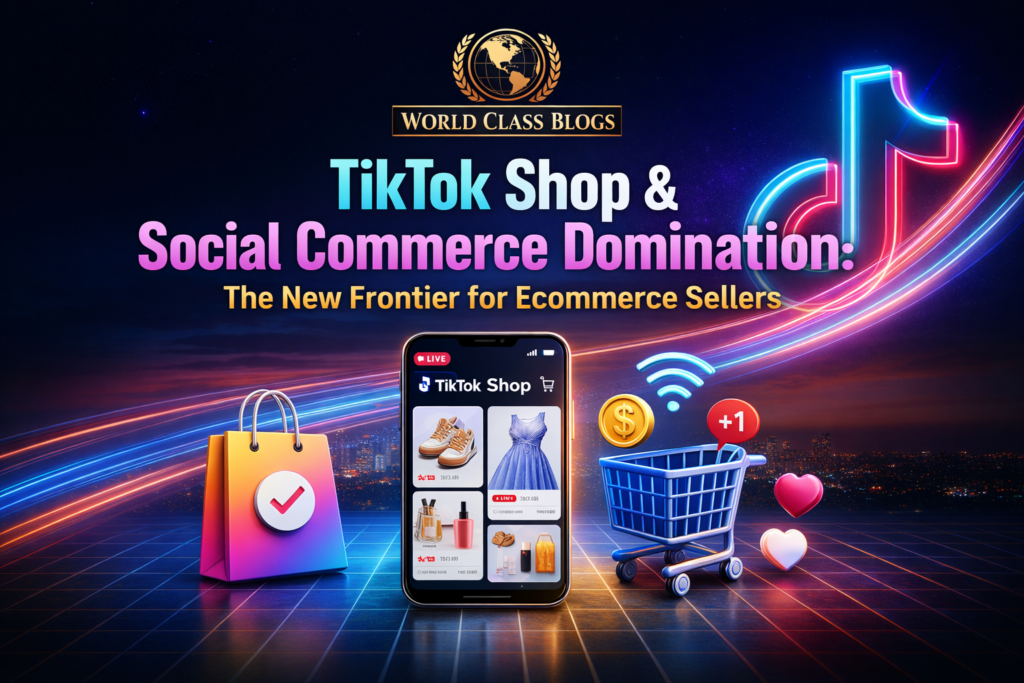
TikTok Shop collapses the traditional marketing funnel, enabling instant discovery and purchase within a single entertainment app.
Introduction: The Platform Shift
In the first quarter of 2024, TikTok Shop generated over $3.8 billion in gross merchandise volume (GMV) in the United States alone, marking a 350% year-over-year increase. This isn’t just another marketing channel; it represents a fundamental platform shift in how products are discovered, evaluated, and purchased. For the first time in ecommerce history, the entire customer journey—from initial awareness to the final “Buy Now” click—can happen natively within a single, entertainment-driven app, without ever redirecting to an external website. This changes everything.
In my experience launching and scaling multiple social commerce stores, I’ve found that the most common mistake sellers make is treating TikTok Shop like “Facebook Ads 2.0.” They try to port over old tactics of polished ads and direct calls-to-action, only to be met with crickets. What I’ve witnessed is that success on TikTok Shop requires a complete rewiring: you’re not an advertiser interrupting content; you’re a creator becoming the content. The most successful sellers aren’t just merchants; they’re entertainers, educators, and community members who happen to sell products that solve their audience’s problems.
This guide is your manual for navigating this new frontier. We’ll move beyond the hype to deliver a practical, step-by-step framework for building a profitable, sustainable business on TikTok Shop and other social commerce platforms. Whether you’re a complete beginner intimidated by video creation or a seasoned ecommerce professional looking to diversify from traditional funnels, you’ll learn how to leverage the unique mechanics of social commerce to build a brand, not just make a sale.
Background / Context: The Evolution of Social Commerce
To master TikTok Shop, we must understand the lineage it comes from and how it differs.
Generation 1: Social Media as a Billboard (2005-2015)
Platforms like Facebook and Instagram were discovery tools. You saw a nice picture of a product, clicked a link, and were taken to a website to complete the purchase. The social platform and the commerce platform were separate. The friction was high, and tracking was messy.
Generation 2: In-App Checkout & Shoppable Tags (2015-2020)
Instagram and Pinterest introduced native “shoppable posts.” You could tap a tag on a photo to see a product name and price, then tap again to check out within the app. This reduced friction but still felt like an add-on to a platform focused on connection and inspiration, not transactions.
Generation 3: Live Stream Commerce & Social-First Platforms (2020-Present)
This is the era defined by TikTok and its Chinese predecessor, Douyin. Commerce is not an add-on; it’s woven into the core content consumption experience. The key innovations are:
- Seamless In-Feed Shopping: A user is watching entertaining videos. They see a product demo that feels authentic. A product link appears natively on the video. They can tap, see details, and buy in 2-3 taps, all while staying in the endless scroll.
- Live Stream Shopping Dominance: Hosts sell directly to viewers in real-time through engaging, interactive broadcasts. This format, massive in Asia, is exploding in Western markets.
- Algorithm-Driven Discovery: Unlike search-based commerce (Amazon, Google), TikTok Shop is discovery-based. The algorithm learns a user’s interests and serves them products they didn’t know they wanted, creating impulse buys fueled by social proof and FOMO (Fear Of Missing Out).
The 2025 Social Commerce Consumer Report revealed that 62% of TikTok Shop purchases are “unplanned discoveries,” compared to just 28% of purchases originating from Google search ads. This highlights the paradigm shift: you’re no longer capturing existing demand; you’re creating new demand through content.
Furthermore, platforms are in a fierce “platform war.” To attract and retain sellers, they are offering unprecedented incentives. In 2024, TikTok invested over $500 million in seller subsidies, including new seller bonuses, shipping discounts, and commission holidays. For a limited time, the cost of entry and testing is artificially low, creating a golden window of opportunity.
Key Concepts Defined: The Language of Social Commerce
TikTok Shop: The integrated e-commerce platform within the TikTok app. It allows sellers to create a storefront, list products, manage orders, and sell directly through organic videos, paid ads, and LIVE streams.
Affiliate/Commission-Based Selling (TikTok Affiliate Program): A model where creators (affiliates) promote products from the TikTok Shop marketplace in their content. They earn a commission on each sale they drive, but they never handle inventory, customer service, or fulfillment. This is a powerful way for influencers to monetize and for sellers to get their products in front of new audiences.
Fulfillment by TikTok (FBT): Similar to Fulfillment by Amazon (FBA), this is a service where sellers send their inventory to TikTok’s warehouses. TikTok then stores, packs, ships, and handles returns for those orders. This is critical for enabling fast shipping (a key consumer expectation) and simplifying operations for sellers.
Product Detail Page (PDP): The native product listing page within TikTok Shop. It includes images/videos, description, price, variants, reviews, and related content (videos from the seller and affiliates showcasing the product). Optimizing your PDP is as important as optimizing a product page on your own website.
LIVE Shopping: A real-time, interactive video broadcast where a host showcases and sells products. Viewers can ask questions, react, and purchase products directly through on-screen product panels. Successful LIVE commerce blends entertainment, education, and urgency.
Social Proof & Virality: The currency of TikTok Shop. Products gain traction through shares, likes, comments, and most importantly, saves. The algorithm interprets high engagement as a signal of quality and relevance, pushing the video and linked product to more users. A single viral video (100k+ views) can sell out inventory in hours.
Trendjacking: The practice of creating content that aligns with a current trending audio, hashtag, or format on the platform. This dramatically increases the chances of your content being discovered by the algorithm and pushed to the “For You Page” (FYP) of users interested in that trend.
Community-Driven Commerce: The model where your customers become your marketers. When users create their own videos (User-Generated Content or UGC) featuring your product, it acts as authentic, trusted social proof that drives more sales than any ad you could create.
What I’ve found is that the sellers who struggle on TikTok Shop are those who focus on the “sell” first. The winners focus on the “value” or “entertainment” first. They ask: “How can I make the 3 seconds a viewer sees my video so compelling that they watch the next 27?” The sale is a byproduct of capturing attention.
How It Works: The TikTok Shop Domination Blueprint

Success requires a systematic approach across four interconnected pillars: Product, Content, Store, and Growth.
Pillar 1: Product Selection & Listing Optimization – What Sells on TikTok
Not every product is a TikTok product. The platform favors specific characteristics.
The “TikTok-able” Product Checklist:
- Visual & Demonstrable: The product’s benefit or “wow factor” can be shown in 3-10 seconds (e.g., a fabric shaver restoring a sweater, a clever kitchen gadget, a transformative beauty product).
- Problem/Solution Oriented: It solves a specific, relatable pain point. “ASMR ear wax cleaner” works; a plain black t-shirt does not.
- Impulse-Friendly Price Point: The sweet spot is typically $15-$50. This is low enough for an unplanned purchase but high enough for a decent margin. Premium products ($100+) can work but require more educational or trust-building content.
- Trend-Relevant: Aligns with platform trends (self-care, home organization, unique fashion, pet products, DIY/craft).
- UGC-Friendly: It’s easy for buyers to create their own before/after or review videos. Packaging and unboxing can be part of the experience.
Product Listing Optimization (Your In-App PDP):
Your Product Detail Page is your silent salesperson.
- Hero Video: Use your best, most engaging demo video as the first asset. Auto-plays on the page.
- Multiple Media: Include 5-10 images/videos showing the product from different angles, in use, and highlighting key features.
- Keyword-Rich Title & Description: Use natural language that a user would search. “Lululemon Align Leggings Dupe – High Waisted Yoga Pants for Women – Butter Soft & Squat Proof” is better than “Women’s Yoga Pants.”
- Clear Variants & Pricing: Make selecting size/color/option foolproof.
- Leverage TikTok’s Affiliate Center: Once listed, immediately go to the “Affiliate Marketplace” and set a competitive commission rate (10-20%) to attract creators to promote your product for you.
Table: Traditional E-commerce vs. TikTok Shop Product Strategy
| Aspect | Traditional Ecommerce (Shopify/Amazon) | TikTok Shop |
|---|---|---|
| Discovery Driver | Search Intent (Customer knows what they want) | Content & Algorithm (Customer discovers something new) |
| Key Product Assets | High-quality static images, detailed bullet points | Short, engaging demo videos, before/after visuals |
| Primary Competition | On price, reviews, and Amazon search ranking | On content creativity, trend relevance, and social proof |
| Pricing Strategy | Competitive analysis, value-based pricing | Often slightly higher to account for creator commissions; impulse-friendly brackets |
| Success Metric | Conversion Rate (CVR), Return on Ad Spend (ROAS) | Video View-Through Rate (VTR), Engagement Rate, Virality |
Pillar 2: Content Engine – The Art of the Selling Video
Content is your storefront, your sales pitch, and your customer service—all in one.
The Top-Performing TikTok Shop Video Formulas:
1. The “Problem-Agitate-Solve” Demo:
- (0-3 sec) Problem: Visually show the frustration (e.g., messy cord tangles, dull knives, stained shirt).
- (3-7 sec) Agitate: Zoom in, show the annoyance. Use text or a worried expression.
- (7-15 sec) Solve & Reveal: Introduce your product by solving it seamlessly. The “aha!” moment.
- (15+ sec) Social Proof/CTA: Show results, text overlay “Life changing!”. Add a clear “Shop Now” sticker.
2. The “Satisfying” or “Oddly Satisfying” ASMR:
- Focus on the sensory appeal: sounds of the product working (fabric shaver, kinetic sand), satisfying visuals (peeling a screen protector, organizing with a new tool). Use trending, calming audio.
3. The “Dupe” or “Find”:
- “I found a Lululemon dupe for $12 on TikTok Shop!” This leverages the desire for a known brand but offers an accessible alternative. Show a side-by-side comparison.
4. The Educational “How-To” or “Unexpected Use”:
- “3 ways you’re not using your [Product].” This provides value beyond the sale and positions you as an expert.
5. The UGC/Review Compilation:
- Stitch together clips from real customer reviews. This is the most powerful social proof. Always tag the original creators.
Production Values: Be Authentic, Not Perfect.
- Use Your Phone: High-quality phone video is perfect. No need for pro gear.
- Natural Lighting: Film near a window.
- Captions Are Mandatory: Over 80% of videos are watched on mute. Use bold, clear text overlays.
- Trending Audio: Always browse the “Commercial” sound library or use trending sounds (with permission for commercial use).
- Hook in the First 3 Seconds: The biggest thumb-stopping hook you can create. Ask a question, show a shocking before, or use an intriguing text overlay.
Pillar 3: Store Operations & Fulfillment – Scaling the Backend
A viral video is a gift and a curse if your operations collapse.
Fulfillment Strategy: The #1 Priority.
- Option A: Fulfillment by TikTok (FBT) – RECOMMENDED. If available in your region, use it. It ensures fast, reliable delivery (key to good reviews) and handles returns. You pay a fee but gain scalability and customer trust.
- Option B: Self-Fulfill or Use a 3PL. You must ship fast (within 48 hours of order) and provide tracking immediately. Use a reliable 3PL like ShipBob if you have inventory. Slow shipping is the fastest way to kill your shop’s reputation.
Customer Service & Reviews:
- Respond to EVERY comment, especially questions. The comment section is part of your sales funnel.
- Monitor reviews daily. Address negative reviews publicly and professionally, then take the conversation to DMs to resolve. A good response to a bad review can build more trust than a 5-star review.
- TikTok’s in-app messaging is crucial for pre- and post-sale support.
Pricing & Promotions:
- Use TikTok’s Promotional Tools: Vouchers (site-wide discounts), Gift for Purchase (free item with order), and Flash Sales (limited-time deep discounts). These tools are heavily promoted by TikTok to users and can trigger the algorithm.
- Factor in ALL Costs: Product cost, TikTok commission (~5-10%), payment processing, shipping, packaging, and potential affiliate commissions (if using the program). Price accordingly.
Pillar 4: Growth & Scaling – Beyond Your First Viral Hit
Sustainable success means building a flywheel, not chasing one-off hits.
1. Leverage the Affiliate Ecosystem:
Don’t just rely on your own content. Proactively recruit affiliates.
- Search the Affiliate Marketplace: Find creators in your niche with engaged audiences.
- Offer Competitive Commissions & Free Samples: Send your product to 10-50 micro-creators (1k-50k followers) in exchange for an honest review. Provide them with content ideas but not scripts.
- Create an Affiliate Welcome Kit: A PDF with product key selling points, video ideas, and best practices.
2. Run TikTok Shop Ads (Promote):
Boost your best-performing organic videos.
- Use the “Promote” feature: It’s simplified and effective. Choose “More website visits” or “More conversions” as your goal and set a daily budget ($20-$50 to start).
- Targeting: Start with automatic targeting. TikTok’s algorithm is excellent at finding buyers. You can later create custom audiences based on engagement with your profile or videos.
3. Host LIVE Shopping Events:
This is the ultimate conversion tool. Plan them like a show.
- Promote in Advance: Tease the LIVE in your videos for a week.
- Have a Co-Host or Guest: Makes the stream more dynamic.
- Prepare a Script/Outline: What products will you show and in what order? What special deals (LIVE-only discounts) will you offer?
- Engage Relentlessly: Call out viewer names, answer questions, run polls. The goal is to create a “can’t miss” event atmosphere.
4. Build a Community, Not Just a Following:
- Create a TikTok Group for your customers to share their own videos, tips, and feedback.
- Run regular challenges or contests with a branded hashtag.
- Feature your best UGC on your profile and in your ads. This turns customers into collaborators.
Why It’s Important: The Strategic Imperative of Social Commerce
Ignoring TikTok Shop and similar platforms isn’t just missing an opportunity; it’s risking obsolescence.
1. Access to a Massive, Engaged, and Young Audience:
TikTok has over 1.5 billion monthly active users globally, with a huge concentration in the coveted 18-35 demographic. These users spend an average of 95 minutes per day on the app. This is attention you cannot buy through traditional advertising at this scale.
2. Lower Customer Acquisition Costs (CAC):
While it’s rising, the CAC on TikTok Shop can be significantly lower than Facebook/Google ads, especially when organic virality is factored in. A single piece of content that costs $0 to produce can generate thousands in sales if it hits the algorithm. The blended cost of paid and organic is often superior.
3. Built-in Virality & Social Proof Mechanisms:
The platform’s design encourages sharing and discovery. Your marketing is amplified for free by users who share, duet, or stitch your content. Every customer review video is a potent, trusted ad for your product.
4. Shorter, Frictionless Purchase Journey:
The “See it, Like it, Buy it” path within one app reduces drop-off. There’s no redirect to an unknown website, no lengthy checkout form filling. This convenience converts window-shoppers into buyers.
5. First-Mover Advantage in a Blue Ocean:
While competitive, TikTok Shop is still in its relative infancy in Western markets compared to Amazon or mature social ad platforms. Early adopters who learn the unique nuances of the platform are building brand equity and audience relationships that will be much harder and more expensive to capture later.
6. Hedge Against Platform Dependency:
Relying solely on Facebook Ads or Google Shopping leaves you vulnerable to algorithm changes, policy shifts, and rising costs. Diversifying your revenue to include a native social commerce platform builds resilience.
7. Direct Line to Customer Trends & Feedback:
The comment section on TikTok is a real-time focus group. You get immediate, unfiltered feedback on your products and content, allowing for rapid iteration and innovation.
For a foundational understanding of the business models that can be adapted for social commerce, the guide on starting an online business offers valuable principles.
Sustainability in the Future: Building a Durable Social Commerce Brand
The trap of TikTok Shop is becoming a “viral product graveyard”—here today, gone tomorrow. The goal is to build lasting brand equity on the platform.
1. From Viral Products to a Trusted Brand Account:
- Develop a Consistent Niche: Don’t jump from pet products to car accessories. Become known as the go-to account for a specific category (e.g., “TikTok’s Plant Doctor” or “Home Organization Hacks”).
- Create a Recognizable Style: Use consistent colors, text fonts, and editing techniques so users recognize your content before they see your name.
- Build a Profile with Curation: Use your profile’s featured videos and bio to tell a cohesive brand story, not just showcase random bestsellers.
2. Ethical Influencer & Affiliate Partnerships:
- Vet Affiliates for Authenticity: Partner with creators whose values align with yours. Avoid those who promote anything for a commission.
- Transparent Relationships: Ensure affiliates disclose their partnership (#ad, paid partnership). Build long-term relationships with top performers, offering them exclusives or higher tiers of partnership.
3. Data Privacy & Responsible Targeting:
As scrutiny on social platforms grows, responsible data use will be a brand advantage.
- Focus on Interest-Based, Not Creepy, Targeting: Create content so compelling it attracts the right audience naturally, rather than relying on overly intrusive data targeting.
- Be Transparent with Data: If you collect email addresses via lead gen, be clear about how you’ll use them.
4. Quality & Customer Experience as Defense:
A viral product that arrives broken or under-delivers will kill your shop via negative reviews.
- Under-Promise, Over-Deliver on shipping times.
- Invest in Quality Packaging that enhances the unboxing experience (a huge source of UGC).
- Have a Generous and Clear Return Policy. This reduces negative reviews and builds trust.
5. Omnichannel Strategy: Use TikTok as a Launchpad, Not a Prison.
- Drive to Your Own Assets: Use TikTok’s bio link and content to grow your email list or direct traffic to your own website. This builds an asset you own and control.
- Repurpose Content: Your top-performing TikTok videos can be reformatted for Instagram Reels, YouTube Shorts, and Pinterest Idea Pins, maximizing reach.
- Develop Products Based on Feedback: Use the direct customer dialogue on TikTok to inform the development of future products, creating a loyal community invested in your brand’s growth.
This strategic, long-term thinking aligns with principles of building valuable partnerships, as explored in resources like The Alchemy of Alliance.
Common Misconceptions Debunked
Misconception 1: “You need millions of followers to sell on TikTok Shop.”
Reality: You can start with zero followers. The “For You Page” (FYP) algorithm is designed to push great content to interested users, regardless of follower count. Nano-influencers (1k-10k followers) often have the highest engagement and conversion rates. Focus on making trend-aligned, valuable content, not chasing follower counts.
Misconception 2: “It’s only for cheap, novelty products.”
Reality: While impulse-friendly products excel, brands are successfully selling premium skincare, cookware, fashion, and even small electronics. The key is content that justifies the value—deep education, stunning visuals, or undeniable transformation.
Misconception 3: “You have to dance or do crazy trends to go viral.”
Reality: The most reliable path to sales is problem-solving and demonstration. “Oddly satisfying,” educational, and “before/after” content consistently perform well for commerce without requiring you to be a dancer or comedian.
Misconception 4: “TikTok Shop is a passing fad.”
Reality: Social commerce is the logical evolution of online shopping, and TikTok is leading the charge with a best-in-class algorithm and a young, shopping-ready user base. While the platform itself may evolve, the model of discovery-based, video-first, in-app shopping is here to stay.
Misconception 5: “It’s impossible to make profit with all the fees and discounts.”
Reality: Margins need to be structured correctly from the start. A product that costs you $5 and sells for $15 on Shopify might need to sell for $18-20 on TikTok Shop to account for platform fees and potential affiliate commissions. It’s a different financial model, not an impossible one.
Misconception 6: “You can just repost your Instagram Reels.”
Reality: TikTok’s culture and editing style are distinct. Vertical, fast-paced, text-forward content works best. Content that feels too polished or “corporate” often underperforms. You need to create for TikTok.
Recent Developments: TikTok Shop in 2024/2025
The platform is evolving at breakneck speed. Here’s what’s new and critical:
1. The Rise of “Search Commerce”:
Users are increasingly using TikTok as a search engine (“TikTok kitchen organization hacks”). The platform is optimizing its search results to surface products. Optimizing your video captions, hashtags, and PDP with relevant keywords is now essential for SEO-like discovery.
2. AI-Powered Tools for Sellers:
- AI Video Script Generator: Helps sellers create engaging video scripts based on their product.
- Smart Background Removal & Product Highlighting: Automatically edits videos to make products pop.
- Predictive Analytics: New seller dashboards predict sales trends and suggest optimal discounting strategies.
3. Enhanced LIVE Shopping Features:
- Multi-Guest LIVE: Hosts can bring up to 4 guests on screen, enabling expert interviews and panel discussions.
- Interactive Product Galleries: Viewers can browse a full catalog during a LIVE without the host showing each item.
- Virtual Gifting for Sellers: Viewers can send paid “gifts” during a LIVE, creating a new revenue stream beyond product sales.
4. Stricter Seller Policies & Quality Controls:
To combat low-quality products and protect users, TikTok has implemented:
- Stricter on-time shipping requirements. Sellers with a low “valid fulfillment rate” face penalties.
- Enhanced product authenticity verification for branded goods.
- A “Preferred Seller” badge for shops with high ratings and reliability, which boosts visibility.
5. Expansion of Fulfillment by TikTok (FBT) Network:
Adding more warehouses across the US and Europe to enable 1-2 day shipping for more sellers, directly competing with Amazon Prime’s delivery promise.
For a deeper understanding of the AI technologies powering some of these features, explore our section on Artificial Intelligence & Machine Learning.
Success Stories: Real Sellers, Real Results
Case Study: “Soulfulness” – From Hobby to 7-Figure Brand on TikTok Shop
Background: Aisha started making handmade, scented soy candles as a pandemic hobby, selling a few on Etsy. In early 2024, she decided to test TikTok Shop.
The Strategy:
- Content Focus: She didn’t just show finished candles. She filmed the soothing, ASMR process of making them—pouring wax, adding scent, the first light. She paired it with trending calm music.
- Niche Storytelling: Her brand was about “mindfulness moments.” Each candle name and scent told a story (“Mountain Sunrise,” “Rainforest Mist”).
- UGC & Affiliate Focus: She sent free candles to 50 micro-creators in the #selfcare and #cozy aesthetic niches. Their authentic “night routine” videos featuring her candles went mini-viral.
- LIVE Events: She hosted weekly “Sunday Unwind” LIVE sessions, lighting a candle, chatting about mindfulness, and offering a LIVE-only discount.
Result: Within 6 months, she was generating over $100,000 per month in sales primarily through TikTok Shop. She used the profits to move into a small workshop and hire help. The key was leveraging the platform’s love for process, ASMR, and niche community, not hard-selling.
Real-Life Examples: The Power of a Single Video
Let’s dissect two approaches to selling the same product—a heated eyelash curler.
Seller A (Ineffective):
- Video: A static image of the product with text overlay “Heated Eyelash Curler $19.99 #beauty #makeup”.
- Result: 200 views, 0 sales. It feels like an ad, provides no value, and doesn’t demonstrate why it’s better than a regular curler.
Seller B (Masterful):
- Video:
- (0-2 sec): Close-up of eyes with straight, downward-pointing lashes. Text: “My lashes won’t hold a curl…”
- (2-5 sec): Quick shot of struggling with a traditional metal curler.
- (5-10 sec): Hands plug in the heated curler. Satisfying “click” sound effect. Show it gently warming up (visual heat indicator).
- (10-15 sec): Demonstration of curling one eye. Dramatic side-by-side comparison: curled vs. uncurled lashes with mascara.
- (15+ sec): Text: “Game changer. Lasts all day! 🔗 in bio.” On-screen “Shop Now” sticker.
- Audio: A trending, upbeat sound.
- Hashtags: #heatedeyelashcurler #lashhack #beautydupe #tiktokmademebuyit
- Result: 850,000 views, 3,200+ units sold in 48 hours, thousands of saves and shares.
The difference is demonstration, storytelling, and integrating seamlessly into the platform’s content culture.
Conclusion and Key Takeaways: Launching Your Social Commerce Empire
The barrier to entry for TikTok Shop has never been lower, and the potential reward has never been higher. But this isn’t a gold rush; it’s the early days of a new retail paradigm. Success will go to those who respect the platform’s culture, provide genuine value, and build systems for the long term.
Your 90-Day Launch Plan:
Month 1: Setup & First Content (Weeks 1-4)
- Set up your TikTok Shop seller account. Get approved.
- List 3-5 “TikTok-able” products with optimized PDPs (great videos, keywords).
- Create and post 1 video per day, every day. Focus on the “Problem-Agitate-Solve” and “Satisfying Demo” formulas. Don’t worry about sales; worry about watch time and engagement.
- Engage heavily in comments (yours and others in your niche).
Month 2: Analysis & First Scale (Weeks 5-8)
- Identify your top 2-3 performing videos (by watch time and engagement).
- Use the “Promote” feature to boost each with a $5/day budget targeting “Conversions.”
- Apply for the Affiliate Marketplace and set commissions for your products.
- Reach out to 10 micro-creators in your niche and offer a free product for an honest review.
Month 3: Systematize & Expand (Weeks 9-12)
- Based on data, double down on your winning content style.
- Plan and host your first LIVE shopping event (promote it for a week in advance).
- If sales are consistent, explore Fulfillment by TikTok (FBT) to improve shipping speed.
- Start a simple UGC contest with a branded hashtag.
The most important habit you can build is consistent creation and agile learning. Post daily, review your analytics nightly, and be ready to pivot your content based on what the data and your community tell you.
TikTok Shop represents a rare moment where creativity and commerce intersect on a level playing field. Your phone, a great product, and a willingness to provide value are the only required tickets. Start filming.
Key Takeaways:
- TikTok Shop is a discovery-based commerce platform, not just a marketing channel. Success requires native, value-driven content.
- Product selection is critical: choose items that are visual, demonstrable, and solve a clear problem.
- Content must hook viewers in the first 3 seconds and provide entertainment or education; the sale is a secondary outcome.
- Operational excellence (fast fulfillment, great customer service) is non-negotiable to maintain positive reviews and shop health.
- Leverage the affiliate ecosystem and LIVE shopping to scale beyond your own content reach.
- Build a brand on the platform by niching down, developing a consistent style, and fostering community.
- The financial model includes platform fees and potential affiliate commissions; price your products accordingly from the start.
- The algorithm rewards consistency, engagement, and watch time. Post daily and interact with your audience.
- Use TikTok as a launchpad to build owned assets (email list, website traffic) for long-term business resilience.
- The window of opportunity is open, but it will favor those who build with quality and authenticity, not just chase virality.
FAQs: Your TikTok Shop Questions Answered
1. What are the requirements to open a TikTok Shop in the US?
You need: a US business license (or SSN for sole proprietors), a US bank account, a US phone number, and to be at least 18 years old. You’ll also need to agree to their seller policies and may need to provide proof of inventory or sourcing.
2. How much does it cost to sell on TikTok Shop?
There’s no monthly subscription. TikTok charges a commission on each sale, which varies by category but is typically 2-8% of the product price (plus payment processing fees). They often run promotions with 0% commission for new sellers.
3. Can I sell the same products on my Shopify store and TikTok Shop?
Absolutely, and you should. This is an omnichannel strategy. You can manage both from different platforms or use an integrator like CommerceHQ or Sellvia to sync inventory and orders. Be mindful of pricing consistency.
4. How do I handle returns and customer service?
You are responsible for customer service. TikTok provides a portal to manage returns and refunds. You must comply with their return policy (which often mandates a minimum return window). Have clear FAQs and be responsive via in-app messaging.
5. What’s the difference between TikTok Shop and promoting my website with TikTok Ads?
- TikTok Shop: Native storefront within TikTok. Users buy in-app. Lower friction leverages TikTok’s trust.
- TikTok Ads (Promoting a Website): Drives traffic to your external site. You have full control over the post-purchase experience, but face higher friction (leaving the app). For beginners, TikTok Shop is simpler and often converts higher.
6. How long does it take to get approved as a seller?
Typically 1-3 business days if your documents are in order. The process has been streamlined significantly.
7. Do I need to hold inventory?
Not necessarily. You can use dropshipping with TikTok Shop, but you must ensure shipping times are under 10 days and tracking is provided immediately. Using a US-based dropship supplier or Fulfillment by TikTok (FBT) is highly recommended over direct China shipping.
8. What content is prohibited for TikTok Shop?
Adult products, weapons, illegal items, counterfeit goods, and products making unsubstantiated health claims. Read their Prohibited Products List carefully.
9. How do I get my first reviews?
- Offer a small discount in exchange for an honest review on your first order.
- Follow up with buyers via TikTok DM, politely asking for feedback.
- Provide exceptional service so customers are compelled to share.
10. Can I run promotions and discounts?
Yes, and you should. Use TikTok’s built-in “Voucher” center to create site-wide discounts, gift-with-purchase, or flash sales. Promoted products often get a boost in visibility.
11. What is the “Affiliate Marketplace” and how do I use it?
It’s a platform where TikTok creators browse products to promote. As a seller, you list your products there and set a commission rate (e.g., 15%). Creators then choose to promote them in their videos. You only pay if a sale is made through their unique link.
12. How important are hashtags?
Very. Use a mix: 2-3 broad niche hashtags (#homeorganization), 2-3 specific product hashtags (#cordorganizer), and 1-2 trending/commerce hashtags (#tiktokmademebuyit, #amazonfinds). Don’t overstuff; 5-8 relevant tags is ideal.
13. Should I show my face in videos?
It dramatically increases trust and connection, but it’s not mandatory. If you’re camera-shy, focus on hands-and-voice demos or use trending voiceovers with text. Showing your face, however, tends to build a brand faster.
14. How do I deal with copycats who steal my viral product idea?
Imitation is rampant. Your defense is: 1) Speed: Be first and build a loyal customer base quickly. 2) Branding: Customize the product with your logo/packaging. 3) Content Superiority: Your videos should be the best. 4) Community: Build a connection they can’t copy.
15. What analytics should I watch?
In your Seller Center: Click-Through Rate (CTR) from video to product, Conversion Rate on your PDP, Impression-to-Order rate. For videos: Watch Time, Engagement Rate (likes/comments/shares/saves), and Traffic Source (how people found you).
16. Can I sell digital products or services?
Currently, TikTok Shop is focused on physical goods. Digital products (ebooks, courses) are not supported. Services are also not a fit for the native shop model.
17. Is there a limit to how many products I can list?
Not officially, but quality over quantity. Start with 5-10 highly optimized, “TikTok-able” products rather than uploading hundreds of generic items.
18. How do I ship internationally?
TikTok Shop is currently limited to domestic shipping within the country you’re registered in (e.g., US to US addresses). For global sales, you’d need to use TikTok Ads to drive traffic to your own internationally-shipping website.
19. What happens if I get a negative review?
Respond publicly, professionally, and empathetically. “We’re so sorry your experience didn’t meet expectations! We’ve sent you a DM to resolve this.” Then move to private messages to address the issue (offer refund or a replacement). A good public response can mitigate the damage.
20. When should I consider using a TikTok Shop agency?
When you’re consistently doing $20k+/month in sales and the operational load (content creation, customer service, ad management) is preventing growth. Agencies can handle content production, LIVE hosting, or full account management for a fee or percentage of sales.
About the Author
I’ve been on the front lines of social commerce since its earliest iterations, from the first “Swipe Up” links on Instagram to managing seven-figure live shopping events on emerging platforms. My fascination has always been with the intersection of community psychology and conversion—understanding why people buy in one context but not another.
I launched my first TikTok Shop as an experiment in 2023, treating it as a laboratory to decode the algorithm and consumer behavior. The lessons from that store, both its explosive successes and costly failures, form the backbone of this guide. I’ve since consulted for brands ranging from bootstrap DTC startups to established retailers looking to “crack the TikTok code.”
My core belief is that the future of commerce is not transactional but relational. Platforms like TikTok Shop are proving that the most powerful sales tool is not a discount, but a genuine connection forged through valuable content. I write to demystify the process and empower entrepreneurs to build businesses that are not only profitable but also truly integrated into the daily lives and passions of their customers.
For more insights into building a holistic business in the digital age, explore our foundational guide on starting an online business.
Free Resources to Launch Faster
- “TikTok-able” Product Scoring Rubric: A checklist to rate your product ideas for their viral potential on the platform.
- Top 10 TikTok Shop Video Script Templates: Fill-in-the-blank scripts for the most reliable selling video formats.
- TikTok Shop PDP (Product Detail Page) Optimization Checklist: Ensure every product listing is conversion-ready.
- First 30-Day Content Calendar Template: A planned schedule of video ideas and hashtags for your launch month.
- Affiliate Outreach Email/Script Templates: Professional messages to recruit creators to promote your products.
(Note: These would be downloadable resources hosted on World Class Blogs.)
Join the Discussion
The landscape of TikTok Shop changes weekly. To stay ahead, we must learn together. I invite you to:
- Share your TikTok Shop handle and your biggest win or challenge in the comments.
- Ask specific questions about video ideas for your product niche.
- Connect with other sellers to share insights and strategies.
- Suggest features or topics you’d like to see covered in future updates.
For broader discussions on technology, innovation, and their impact on society, dive into our Technology & Innovation section. To get in touch directly, use our Contact Us page.
Remember, your competition isn’t just other sellers; it’s every other video on the “For You Page.” Your weapon is value. Start creating.