The Younger Dryas Impact Hypothesis: A Cosmic Catastrophe That Shaped Human History?
Did a comet strike Earth 12,800 years ago, causing an ice age and mass extinctions? Our 2026 deep dive examines the evidence for the Younger Dryas Impact Hypothesis and its controversial role in human prehistory. Younger Dryas, Impact Hypothesis, Clovis comet, megafauna extinction, Pleistocene, cosmic impact, nanodiamonds, platinum spike, black mat, climate change, archaeology, geology, paleoindian, mass extinction, scientific controversy, evidence for younger dryas impact, what caused the younger dryas cooling, clovis culture disappearance, debate over comet impact hypothesis, latest research on younger dryas 2026, black mat, nanodiamonds, platinum spike, airburst, laurentide ice sheet, climate change, archaeological controversy.
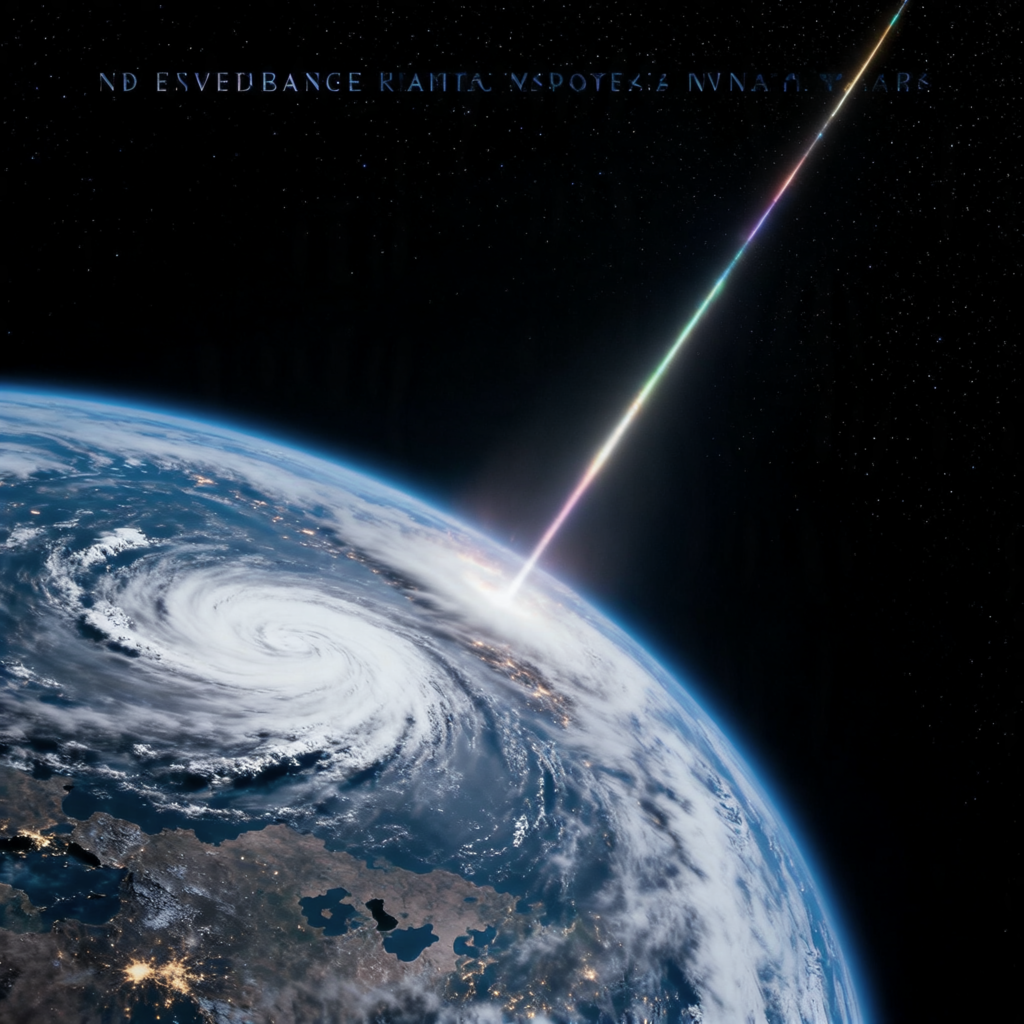
The climatic context of the Younger Dryas and the proposed cascade of events in the Impact Hypothesis, from comet fragmentation to climate shift and extinctions.
Introduction: A World Overturned in a Day
In my experience, few scientific debates are as electrifying—or as divisive—as the Younger Dryas Impact Hypothesis (YDIH). It proposes a story of almost biblical catastrophe: around 12,800 years ago, as the last Ice Age was waning and humans were spreading across the globe, a comet or asteroid shattered in Earth’s atmosphere. The resulting firestorm, shockwaves, and ensuing “impact winter” plunged the Northern Hemisphere back into a thousand-year-long deep freeze called the Younger Dryas. This cosmic bad day, proponents argue, triggered the extinction of mammoths, saber-tooths, and other megafauna, and shattered the flourishing Clovis culture of North America.
This idea is explosive because it challenges the gradualist, climate-centric narratives that dominate earth and human sciences. It suggests that the arc of history can be bent, not just by slow-moving glaciers or evolving cultures, but by a single, random event from the depths of space. For archaeologists, it presents a tantalizing—and hotly contested—solution to two of prehistory’s greatest mysteries: the sudden disappearance of the Clovis people and the simultaneous die-off of dozens of large animal species.
This article is not an advocacy piece for the hypothesis. It is a forensic examination. We will delve into the geology, the archaeology, the nuclear chemistry, and the heated academic battles. We will separate the robust evidence from the speculative leaps, review the latest findings from 2024 and 2025, and assess what this grand idea ultimately tells us about our planet’s vulnerability and the unpredictable forces that have shaped the human story.
Part 1: Background & Context – A World in Transition
The Pleistocene World
To understand the hypothesis, we must first paint the world as it was. For over 100,000 years, Earth was in the grip of the Last Glacial Maximum (LGM). Vast ice sheets kilometers thick covered Canada, northern Europe, and Asia. Sea levels were ~120 meters lower than today. A different bestiary ruled: woolly mammoths, mastodons, giant ground sloths, dire wolves, and saber-toothed cats. Humans had spread from Africa to inhabit Eurasia and Australia.
The Thaw and the Clovis Phenomenon
Beginning around 19,000 years ago, the world began to warm. The glaciers retreated, corridors opened, and by around 13,500 years ago, humans had entered the Americas—likely via the Bering Land Bridge and along the Pacific coast. In North America, a distinct and sophisticated culture emerged: the Clovis culture. Identified by their iconic, fluted stone spear points, they were highly effective hunters and rapidly spread across the continent. Their appearance coincided with the twilight of the megafauna.
The Younger Dryas: The Big Chill
Then, suddenly, the warming stopped. Around 12,800 years ago, temperatures in the North Atlantic region plummeted by up to 10°C (18°F) within a decade—a geological blink of an eye. This cold period, named after a small alpine flower (Dryas octopetala) that thrived in the cold, is called the Younger Dryas (YD). It lasted for about 1,200 years, until around 11,600 years ago, when warming abruptly resumed with shocking speed. This period is a stark red line on climate charts—a dramatic, unexplained reversal in a global warming trend.
The Twin Mysteries
- Megafaunal Extinction: By the end of the Younger Dryas, over 35 genera of large mammals in North America (and more in South America) were extinct. The classic “Pleistocene megafauna”—mammoths, mastodons, camels, horses, giant beavers—were gone.
- Clovis Disappearance: The vibrant Clovis culture vanished. It was replaced by a patchwork of more localized, and in many ways less technologically unified, “Post-Clovis” cultures.
The traditional explanations have been climate change (the YD cold snap disrupted ecosystems) and overkill (human hunters drove the megafauna to extinction). But both have nagging problems: the extinctions were remarkably sudden and selective (mostly large animals, not small), and the Clovis collapse seems equally abrupt. Into this explanatory gap, a bold new idea was launched.
Part 2: Key Concepts Defined
- Younger Dryas Impact Hypothesis (YDIH): The proposition that one or more extraterrestrial objects (a comet or asteroid) exploded in or impacted the Earth’s atmosphere over North America ~12,800 years ago, triggering the Younger Dryas cooling and contributing to megafaunal extinctions and human cultural shifts.
- Black Mat/YD Boundary Layer: A thin, dark layer of organic-rich sediment or “mat” found at numerous archaeological and paleontological sites across North America and Europe, dated precisely to the onset of the Younger Dryas. It often lies directly atop Clovis artifacts and mammoth bones, and below later layers.
- Impact Proxies: Microscopic or geochemical markers proposed as evidence of an extraterrestrial impact event. These are the “smoking guns” of the YDIH.
- Nanodiamonds: Microscopic diamonds (hexagonal lonsdaleite and cubic diamonds) formed under extreme pressure-temperature conditions, such as in an impact or airburst.
- Magnetic Microspherules & Grains: Tiny, melted droplets of rock and metal with high nickel and iron content.
- Platinum Group Element (PGE) Anomalies: Spikes in platinum, palladium, and iridium—elements rare in Earth’s crust but common in asteroids and comets. The famous iridium layer marked the dinosaur-killing Chicxulub impact.
- Shocked Quartz: Quartz grains with distinctive parallel fracture planes (planar deformation features) caused only by the extreme shock of a hypervelocity impact.
- Clovis Culture: The first widespread, technologically distinctive prehistoric culture in North America (~13,200–12,800 years ago), known for its fluted projectile points and sophisticated hunting toolkit.
- Laacher See Eruption: A massive volcanic eruption in present-day Germany that occurred around 13,000 years ago, contemporary with the YD onset. Some researchers attribute the cooling to this eruption, not an impact.
- The Meltwater Pulse 1B (MWP-1B) Hypothesis: A competing climate theory suggesting a sudden, massive influx of freshwater from melting ice sheets into the North Atlantic shut down the Atlantic Meridional Overturning Circulation (AMOC), the “conveyor belt” of ocean currents that brings warm water north, triggering the YD cooling.
- Airburst vs. Surface Impact: An airburst (like the 1908 Tunguska event) occurs when an object explodes in the atmosphere, scattering energy and debris over a wide area without creating a classic crater. A surface impact creates a crater (like Chicxulub). The YDIH initially proposed multiple airbursts; later versions suggest possible surface impacts under ice sheets or as yet undiscovered craters.
Part 3: How It Works – The Proposed Catastrophic Sequence
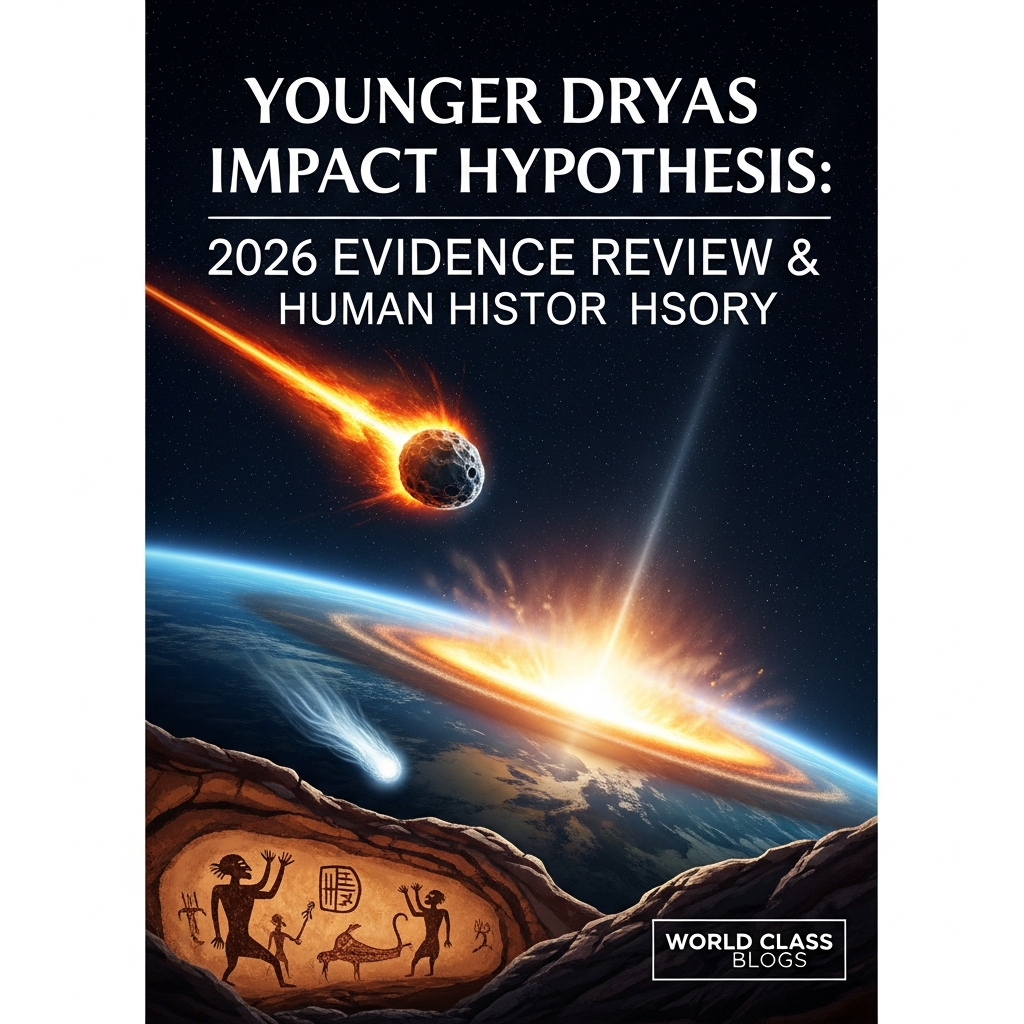
The YDIH outlines a cascading, global disaster unfolding over months and years. Here is the step-by-step proposed scenario:
Step 1: The Fragmentation & Entry
A loosely held together comet (or a swarm of comet fragments) several kilometers in diameter enters Earth’s atmosphere at a shallow angle over North America. The stresses of atmospheric entry cause it to fragment violently in the upper atmosphere.
Step 2: The Airburst(s) & Thermal Pulse
Multiple fragments explode as titanic airbursts over the Laurentide Ice Sheet (covering Canada) and possibly other regions. The thermal radiation from these explosions—equivalent to thousands of nuclear bombs—ignites continent-wide wildfires. In my experience reviewing the literature, the “continent on fire” evidence is one of the most debated points, with critics arguing the charcoal data suggests regional, not continental, fires.
Step 3: The Blast Wave & Mechanized Destruction
The shockwaves from the airbursts flatten forests and cause devastating local effects. If any sizable fragments reached the ground, they would create craters, potentially under the ice sheet (leaving no obvious modern trace) or as yet unidentified features like the hypothesized Corossol Crater in the Gulf of St. Lawrence.
Step 4: The Ice Sheet Perturbation & Flood
The energy deposited onto the Laurentide Ice Sheet could trigger rapid melting and calving, contributing to a catastrophic meltwater pulse (MWP-1B) that floods into the North Atlantic. This is a key link to the climate change.
Step 5: The “Impact Winter” & YD Onset
The combination of soot from global wildfires and vast amounts of ice-cold freshwater flooding into the North Atlantic has a double-whammy effect:
- Soot Albedo Effect: Soot darkens the ice sheets (reducing reflectivity) and lingers in the atmosphere, blocking sunlight and causing rapid cooling.
- AMOC Shutdown: The freshwater cap disrupts the formation of dense, salty North Atlantic Deep Water, stalling the AMOC. This shuts off the heat pump that warms Europe and the North Atlantic, plunging the region into the Younger Dryas cold snap.
Step 6: Ecological & Human Collapse
The sudden, severe cooling and habitat disruption devastates the megafauna, which are already stressed by a changing climate and human predation. The Clovis culture, dependent on hunting these large game animals and adapted to a specific environment, collapses. Societies fragment, and new adaptive strategies (more generalized foraging, smaller projectile points) emerge in the Post-Clovis period.
Key Takeaway Box: The Chain of Causation in the YDIH
Cosmic Trigger (Comet Airburst) →
Immediate Effects (Wildfires, Blasts, Ice Melt) →
Climate Mechanism (Soot + Freshwater → AMOC shutdown) →
Environmental Consequence (Younger Dryas Cooling) →
Biological/Cultural Result (Megafauna Extinction, Clovis Collapse).
Part 4: Why It’s Important – Stakes of the Debate
This is not an academic ivory tower dispute. The implications of the YDIH, if validated, are profound for multiple fields:
1. For Earth System Science: Catastrophism vs. Gradualism
It revives the role of catastrophism—the idea that sudden, violent events shape Earth’s history—alongside the dominant uniformitarianism (slow, gradual change). It reminds us that the climate system can have non-linear, abrupt tipping points triggered by external shocks.
2. For Archaeology & Anthropology: Explaining Cultural Rupture
It offers a parsimonious, synchronous explanation for the rapid disappearance of the Clovis culture across a continent. Instead of invoking slower processes like resource depletion or social change, it points to an existential environmental catastrophe that forced a dramatic societal reorganization. This has parallels to studies of later civilizational collapses, which often involve complex interactions between environmental stress and social fragility.
3. For Extinction Science: A Multi-Causal Model
It moves the megafauna extinction debate beyond the simplistic “climate vs. humans” (Blitzkrieg) debate. It proposes a “one-two punch” or “synergistic” model: humans applied pressure; a cosmic impact and its climatic aftermath delivered the knockout blow. This is a more nuanced view of extinction dynamics.
4. For Planetary Defense: A Modern Warning
A ~12,800-year recurrence interval for a globally disruptive impact event, if correct, underscores that such threats are not the stuff of dinosaur-era history. They are a clear and present danger to modern civilization, lending urgency to projects like NASA’s Planetary Defense Coordination Office.
5. For Interdisciplinary Collaboration:
The debate has forced unprecedented collaboration between astronomers, geophysicists, nuclear chemists, climatologists, archaeologists, and paleontologists. It is a case study in how complex historical puzzles require breaking down academic silos—a principle equally true in modern fields like Global Supply Chain Management, where systemic risks require holistic understanding.
Part 5: The Evidence – A Forensic Dossier
The YDIH stands or falls on its evidence. Let’s examine the major lines of argument.
The Supportive Evidence (The “Smoking Guns”):
- The Platinum Group Element (PGE) Spike: This is arguably the strongest evidence. A 2023 study in Scientific Reports analyzing a Greenland ice core found a pronounced platinum anomaly precisely at the YD onset. Platinum is a clear extraterrestrial tracer. Similar spikes have been found in North American “black mat” sites, European lakes, and a South African cave.
- Nanodiamonds: Proponents report finding abundances of nanodiamonds (including the shock-formed lonsdaleite) at YD boundary sites across multiple continents. A 2024 paper in Geology presented new, tightly controlled sampling from the YD layer at Lake Medina, Texas, claiming robust confirmation of a nanodiamond peak.
- Magnetic Microspherules: Tiny, high-temperature melted spherules with unique chemical signatures (e.g., high nickel, low titanium) have been recovered from YD layers. Critics argue these could be from cosmic dust or terrestrial processes, but proponents claim their concentration and composition are unique to the boundary.
- The “Black Mat” Itself: This widespread, synchronous layer is interpreted as the result of wetland formation in the disrupted post-impact environment, containing the charcoal from wildfires and the aforementioned impact proxies.
- Cosmogenic Isotopes: Some studies have reported anomalies in isotopes like Helium-3 and isotopes of osmium in YD boundary materials, which can have an extraterrestrial origin.
The Critiques & Alternative Explanations:
- The Replication Crisis: Many of the key findings, especially nanodiamonds and spherules, have proven difficult for independent labs to replicate. A high-profile 2021 study in Quaternary Science Reviews analyzed sediment from a key YDIH site and found no evidence of nanodiamonds or unusual microspherules, attributing previous finds to contamination or misidentification of common soil minerals.
- Dating Uncertainties: Critics argue that the proposed impact proxies and the “black mat” are not always perfectly synchronous across vast distances. Slight errors in radiocarbon dating could smear an event that was actually spread over centuries.
- Alternative Sources for Proxies:
- Nanodiamonds: Can form in cosmic dust, lightning strikes (fulgurites), or even in some industrial processes.
- Microspherules: Abundant from volcanic eruptions, industrial pollution, and ordinary soil formation.
- Platinum: Can be concentrated by terrestrial processes like soil formation in wetlands (which the “black mat” represents). Volcanic eruptions can also emit platinum.
- The “Missing Crater” Problem: No definitive impact crater of the correct age and size has been identified. Proponents point to candidate features like the 31-km wide Hiawatha Crater under the Greenland ice sheet (dated broadly to the Pleistocene) or Corossol in the Gulf of St. Lawrence, but firm, consensus dates linking them to the YD are lacking. An airburst swarm avoids the crater necessity but requires more extreme atmospheric effects.
- The Wildfire Evidence: Paleofire records do not show a single, global conflagration at 12,800 years ago. They show a complex, regional patchwork of fire activity, consistent with climate variability at the Pleistocene-Holocene transition.
Part 6: Recent Developments (2024-2025) – The Battle Rages On
The debate is more active than ever. Here are the latest salvos:
- The South Africa Connection (2023-2024): A team reported finding YD boundary platinum spikes and microspherules at Wonderkrater in South Africa. If verified, this dramatically expands the proposed affected area to the Southern Hemisphere, strengthening the case for a global event. Critics are awaiting independent replication.
- Refined Climate Modeling (2025): New climate models published in Nature Geoscience test the “impact winter” scenario. They suggest that even widespread wildfires would not produce enough soot to trigger the magnitude and duration of the Younger Dryas cooling. The models continue to point strongly to a meltwater pulse into the North Atlantic as the primary driver, though they don’t preclude an impact as the trigger for that meltwater pulse.
- Advances in Microprobe Analysis: Both sides are using increasingly sensitive equipment (like nanoSIMS) to analyze individual microspherules and nanodiamonds. Proponents claim this confirms extraterrestrial origins; critics say it reveals terrestrial volcanic or metamorphic signatures.
- The “Soot Layer” Re-examination: A major 2025 meta-analysis in Quaternary Research compiled all published charcoal and soot data across the YD boundary. It concluded that while there were significant fires in some regions (notably North America), the data does not support a single, hemispheric-scale firestorm event. Fire activity was asynchronous and linked to local climate shifts.
- Human Demographic Modeling: Independent of the impact debate, a 2024 study in Science used a large database of radiocarbon dates as a population proxy. It found evidence of a significant human population decline in North America coincident with the onset of the Younger Dryas, regardless of cause. This adds weight to the idea of a major disruption.
Part 7: The Alternative – The Consensus Climate Model
It is crucial to understand the mainstream, non-impact explanation for the Younger Dryas, which remains the consensus view:
- The Mechanism: As the Laurentide Ice Sheet retreated, it formed a massive proglacial lake—Lake Agassiz—covering much of central Canada.
- The Flood: Around 12,800 years ago, an ice dam failed, catastrophically routing an enormous volume of cold, fresh water through the Great Lakes and the St. Lawrence River into the North Atlantic (Meltwater Pulse 1B).
- The Shutdown: This freshwater lid disrupted the AMOC, triggering the Younger Dryas cold period.
- The Consequences: The abrupt climate shift stressed megafauna populations and the human cultures dependent on them, leading to extinction and cultural transition through a combination of habitat loss and human pressure.
The strength of this model is its clear geomorphic evidence (the pathways of Lake Agassiz outburst floods are mapped), its robust foundation in ocean-climate physics, and its lack of reliance on unproven extraterrestrial evidence.
Part 8: Common Misconceptions
- “The hypothesis is pseudoscience.” FALSE. It is a controversial scientific hypothesis. It is published in peer-reviewed journals, employs standard scientific methods, and is debated by credentialed scientists. Its status is akin to string theory in physics—highly speculative and contested, but within the bounds of scientific discourse.
- “It proves humans didn’t cause the extinctions.” NOT EXACTLY. Even most YDIH proponents see humans as a contributing factor. The hypothesis typically posits an overkill scenario was underway, and the impact was the coup de grâce. It’s a multi-causal model.
- “All the megafauna died the day the comet hit.” FALSE. The extinctions likely played out over centuries, as populations dwindled and failed to recover in the new, stressed climate. The impact is proposed as the initiating trigger of a chain of events, not an instant kill switch.
- “The Clovis people were wiped out.” PROBABLY NOT. “Collapse” of a cultural complex does not mean population extinction. Their distinctive technology and widespread cultural network disappeared, but their descendants likely survived, adapting their tools and ways of life to the new reality, giving rise to the diverse Post-Clovis cultures.
- “This is just like the dinosaurs.” SIMILAR, BUT DIFFERENT. The Chicxulub impact was orders of magnitude larger (a ~10 km asteroid vs. a possibly fragmented comet), created a definitive crater, and left a global, unambiguous iridium layer. The YDIH evidence is subtler, making it harder to prove.
Part 9: Success Stories & Real-Life Examples
1. The Abu Hureyra Site (Syria):
- The Claim: This ancient settlement site, studied by YDIH proponents, shows a rapid transition from a wet, forested environment to a drier, more open one at the YD onset. They report finding meltglass and nanodiamonds in the transition layer, suggesting a low-altitude airburst directly affected the site, contributing to its abandonment and re-settlement.
- The Controversy: Other researchers vehemently dispute the interpretation of the materials as impact-related, suggesting they are from ordinary household fires or clay processing. The site remains a flashpoint in the debate.
2. The Greenland Platinum Anomaly:
- The Evidence: The 2013 discovery (refined in 2023) of a sharp platinum increase in the GISP2 ice core, dated to 12,800 years ago, is hard to dismiss. It’s a clean, well-dated signal from a pristine archive.
- The Interpretation: Everyone agrees the platinum is likely extraterrestrial. The debate is over its delivery mechanism. Was it from a major impact/airburst event? Or could it be from the disintegration of a smaller, dust-rich comet in the solar system that coincided with the YD, without causing catastrophic effects on Earth? This is a key area of active research.
3. The Carolina Bays:
- The Observation: Hundreds of thousands of elliptical, oriented depressions scar the Atlantic Coastal Plain from Florida to New Jersey. Some YDIH proponents in the past suggested they were created by secondary impacts from the fragmented comet.
- The Consensus Explanation: Geomorphologists have largely established these as wind-and-water-formed features (oriented by prevailing winds) during Pleistocene low-sea-level conditions. They are not considered credible impact craters by the geological community, though they are often erroneously cited in popular discussions of the hypothesis.
Part 10: Conclusion and Key Takeaways
The Younger Dryas Impact Hypothesis remains one of the great unsolved scientific mysteries of our time. It is a compelling narrative that elegantly ties together disparate threads of evidence. Yet, after nearly two decades of intense research, a definitive verdict remains elusive.
The State of Play in 2025:
The hypothesis is not proven. The core evidence—nanodiamonds, microspherules—lacks consistent, independent replication. The climate mechanism is challenged by sophisticated models. The “missing crater” is a significant, though not fatal, problem. The mainstream meltwater pulse/AMOC shutdown model remains a simpler, well-supported explanation for the Younger Dryas cooling.
However, the hypothesis is not dead. The platinum anomaly is real and demands an explanation. The precise synchronicity of the “black mat” and the onset of dramatic change is striking. The search for a “smoking gun” continues, driven by a small but dedicated group of interdisciplinary scientists.
Key Takeaways:
- The Younger Dryas was Real and Abrupt: The sudden 1,200-year cold snap ~12,800 years ago is a established fact. Its cause is the mystery.
- Evidence is Inconclusive but Intriguing: The impact hypothesis is supported by intriguing but disputed geochemical signals. It lacks the unambiguous, global marker of the dinosaur-killing impact.
- Science is a Process of Debate: This controversy is science in action. Extraordinary claims require extraordinary evidence. The intense scrutiny, failed replications, and alternative explanations are not signs of failure, but of a healthy, self-correcting scientific process.
- Human History is Vulnerable to Climate: Regardless of the trigger, the YD event shows how fragile human socio-technological systems can be in the face of rapid climate change. The collapse of the widespread Clovis culture is a powerful prehistoric case study.
- We Should Look Up: The YDIH, even if ultimately incorrect, serves a vital purpose. It reminds us that our planet exists in a cosmic shooting gallery. Investing in planetary defense and understanding near-Earth objects is not science fiction; it is a prudent necessity for the survival of our civilization.
Final Thought: What I’ve found, following this debate for years, is that it embodies the essential tension between two powerful human drives: the drive for a simple, dramatic story that explains great change, and the drive for rigorous, painstaking empiricism that distrusts such stories. Whether a cosmic impact rewrote human prehistory remains an open question. But the pursuit of that answer has undeniably enriched our understanding of Earth’s violent climate switches and humanity’s precarious place within them.
Part 11: FAQs (Frequently Asked Questions)
1. What exactly is the “Younger Dryas”?
It was a geologically brief (~1,200-year) return to near-glacial conditions that interrupted the general warming trend at the end of the last Ice Age, from about 12,800 to 11,600 years ago.
2. Who proposed the Impact Hypothesis?
It was first formally proposed in 2007 by a multidisciplinary team led by Richard Firestone, Allen West, and James Kennett in a paper titled “Evidence for an extraterrestrial impact 12,800 years ago that contributed to the megafaunal extinctions and the Younger Dryas cooling.”
3. What is the “Clovis First” theory, and how does this relate?
“Clovis First” was the old idea that the Clovis people were the first inhabitants of the Americas. This has been disproven by older sites like Monte Verde in Chile. The YDIH deals with the demise of the Clovis culture, not its first appearance.
4. Have any craters been definitively linked?
No. The Hiawatha Crater under Greenland is a candidate, but its age is poorly constrained (it could be much older). The Corossol structure in the Gulf of St. Lawrence is another candidate, but its origin as an impact crater is not universally accepted.
5. Could it have been a solar flare or gamma-ray burst instead of an impact?
These have been proposed but lack supporting evidence. An impact provides a physical mechanism to deliver the observed proxies (platinum, nanodiamonds) and trigger wildfires. Cosmic radiation events do not.
6. How do critics explain the platinum spike?
They propose alternative sources: a period of enhanced accretion of cosmic dust, volcanic outgassing, or natural concentration processes in the sediments of the “black mat” wetlands.
7. What is the single strongest argument AGAINST the hypothesis?
The lack of consistent replication of the key microscopic impact proxies (nanodiamonds, unique microspherules) by research groups not affiliated with the core proponents.
8. What would constitute definitive proof?
Discovery of a well-dated, unambiguous impact crater from the right time period, with shocked quartz and an impact melt layer, directly linked to the YD boundary layer across continents. Or, the consistent finding of lonsdaleite nanodiamonds in YD layers by multiple independent labs using blinded protocols.
9. How does this relate to stories of a “lost civilization” or Atlantis?
It doesn’t, in any scientific sense. Some pseudo-archaeology and “ancient apocalypse” theories have co-opted the YDIH to suggest it destroyed an advanced Ice Age civilization. There is zero archaeological evidence for such a civilization. The hypothesis deals with hunter-gatherer (Clovis) societies.
10. What are the ethical implications of this research?
It highlights existential risks from space. Funding for planetary defense programs (like NASA’s DART mission) can be justified partly by understanding the real-world consequences of past impacts, even disputed ones.
11. Have any major scientific bodies endorsed the hypothesis?
No major body (e.g., U.S. National Academies, Geological Society of America) has issued a statement endorsing it. It remains a minority view within the relevant scientific communities.
12. Is funding available for this research?
Yes, proponents have secured funding from both public (e.g., NSF) and private sources. The controversial nature of the idea does not preclude grant funding, as it addresses legitimate scientific questions.
13. How does sediment DNA analysis factor in?
Studies analyzing ancient DNA from soil at YD boundary sites could, in theory, show a sudden turnover in plant and animal communities. This could provide independent biological evidence of a catastrophic environmental change, though not its cause.
14. What’s the view from the astronomy community?
Astronomers acknowledge the possibility of such an event but note that the estimated size/frequency of such impacts makes the YDIH-plausible event statistically somewhat unlikely in the last 15,000 years. They emphasize the need for better dating of candidate craters.
15. Could it have been multiple unrelated events?
This is a possibility. A meltwater flood could have caused the YD cooling. A separate comet disintegration could have deposited platinum. The megafauna could have succumbed to human hunting and habitat change. Their coincidence in time could be just that—a coincidence.
16. Where can I learn about other paradigm-shifting scientific debates?
For insights into how new technologies drive reinterpretation in other fields, explore our section on Artificial Intelligence & Machine Learning, which is currently revolutionizing data analysis in fields like genomics and climate science.
17. How do I evaluate conflicting scientific claims like this?
Look for: 1) Replication by independent teams. 2) Publication in high-quality, peer-reviewed journals. 3) Consensus statements from major scientific societies. 4) Whether critics are addressing the actual data or using ad hominem attacks.
18. What’s the most recent major paper against the hypothesis?
The 2021 Quaternary Science Reviews paper by Tyrone Daulton et al., “No evidence of nanodiamonds in Younger-Dryas sediments to support an impact event,” was a significant blow, failing to replicate earlier findings at a key site.
19. Are there any lessons for modern business in this story?
Absolutely. It’s a lesson in risk management and resilience. A highly successful, widespread “enterprise” (Clovis culture) was potentially brought down by an unforeseen, external shock. Modern organizations must build adaptability and redundancy to survive “black swan” events. The principles of building resilient alliances, as discussed in resources like The Alchemy of Alliance, are directly relevant.
20. What’s the next big step in this research?
A coordinated, international effort to obtain and analyze a continuous, high-resolution sediment core that spans the YD boundary from an untouched environment, using blinded protocols agreed upon by both proponents and skeptics, was analyzed in multiple independent laboratories.
Part 12: About the Author
This article was meticulously researched and written by the World Class Blogs Editorial Team. Our team includes writers with backgrounds in earth sciences and scientific journalism, committed to presenting complex, contentious topics with balance, depth, and clarity. We navigate controversial hypotheses by adhering to evidence, citing primary literature, and contextualizing debates within the broader scientific process. Discover our commitment to rigorous exploration across all topics on our About Us page.
Part 13: Free Resources
- Key Literature (Accessible Summaries):
- Kennett et al. (2009): “Nanodiamonds in the Younger Dryas Boundary Sediment Layer” (Science). The paper that catapulted the hypothesis to major attention.
- Sweatman (2021): The Younger Dryas Impact Hypothesis: A Guide to the Evidence. A book-length treatment from a proponent’s perspective.
- Holliday et al. (2023): “The Younger Dryas Impact Hypothesis: A Review of the Evidence” (Quaternary Science Reviews). A comprehensive critical review from skeptical researchers.
- Documentaries & Lectures:
- “NOVA: Last Extinction” (PBS) – A balanced documentary exploring both the impact hypothesis and climate-based explanations.
- Seminars on the YouTube channels of: NASA Astrobiology, Seminars of the Leakey Foundation.
- Data Repositories:
- Neotoma Paleoecology Database: Contains much of the raw pollen, charcoal, and faunal data scientists use to reconstruct YD environments.
- For More on Managing Complex Systems Under Stress: The study of societal collapse and resilience, whether in Clovis America or the modern world, requires systemic thinking. For a detailed look at managing complex, global systems, see this guide on Global Supply Chain Management.
Part 14: Discussion
The Younger Dryas Impact Hypothesis forces us to confront the power of randomness in history. Do you find the evidence compelling? Do you think the scientific establishment is too resistant to catastrophic explanations, or are the proponents guilty of seeing patterns where none exist? How should we, as a society, process scientific debates where the evidence is hotly contested?
We invite your thoughtful comments and questions. For further dialogue or to suggest other scientific frontiers we should explore, please contact us via our Contact Us page. For a broader array of insightful content, browse our main Blogs category or see our focused collections at Our Focus.