Data-Driven Decision Making for Modern Leaders: Moving from Gut Feel to Insights
Master data-driven decision making with our complete framework. Learn to build data-informed cultures, balance algorithms with judgment, and integrate insights into organizational rhythms. Guide with case studies & implementation tools. data-driven decisions, business analytics, data literacy, decision intelligence, data culture, evidence-based management, business intelligence, data-driven leadership, analytics, decision-making, data strategy, data governance, data-driven transformation, business metrics, data-informed decisions, insight activation, decision rhythms, cognitive bias mitigation, augmented intelligence, data hygiene, psychological safety, decision support systems, predictive modeling, data trust, algorithmic decisions, human judgment, decision mapping, data democratization, analytical sophistication, evidence-based leadership
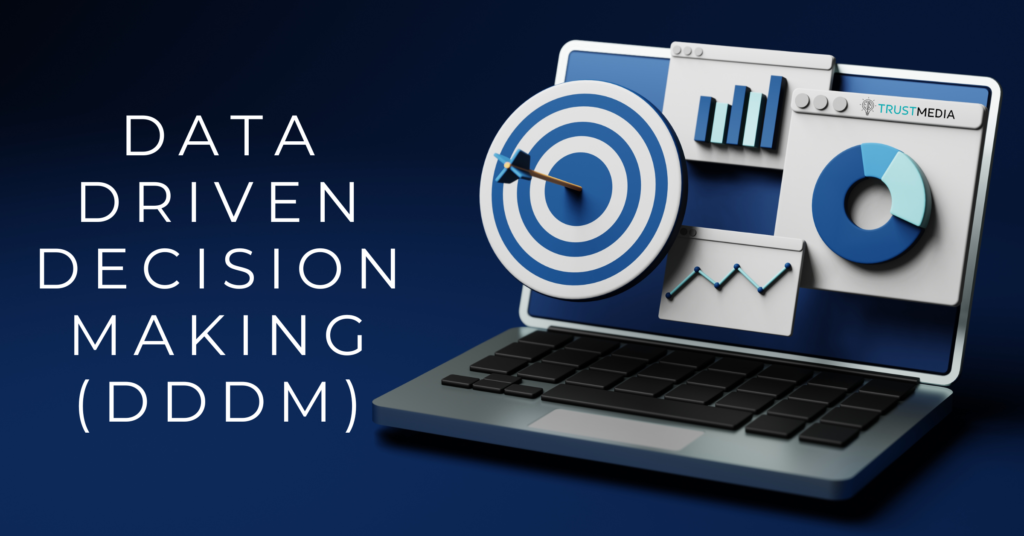
The maturity journey from intuition-driven to sophisticated data-informed decision-making across six levels
Introduction – Why This Matters
How many business decisions in your organization are still made primarily on intuition, hierarchy, or “the way we’ve always done it”? In my experience advising organizations across the digital maturity spectrum, I’ve found that companies leveraging data-driven insights outperform competitors by 20-30% on key financial metrics—yet fewer than 25% of mid-sized businesses have systematic data practices embedded in their decision cultures. We’re drowning in data but starving for insights.
Consider this paradox of our information age: organizations have more data available than at any point in human history, yet decision-making quality hasn’t improved proportionally. According to NewVantage Partners’ 2025 executive survey, 78% of leaders report their organizations are “data-rich but insight-poor,” and only 24% have successfully created data-driven cultures. The gap between data availability and decision improvement represents one of the greatest untapped opportunities in modern business.
This comprehensive guide moves beyond data collection to decision transformation. We’ll examine how forward-thinking leaders are building cultures where data informs but doesn’t replace judgment, where insights are democratized but contextualized, and where analytics drives action rather than just reports. Whether you’re leading a startup seeking scalable decision systems or a mature organization aiming to modernize decision-making, these frameworks will help you transform data from a technical function into a strategic capability.
Background / Context: The Evolution of Business Decision-Making
Decision-making has evolved through distinct eras, each with its own limitations and breakthroughs:
The Intuition Era (Pre-1990s): Decisions flowed from experience, hierarchy, and gut feel. While this allowed rapid decisions and leveraged hard-won wisdom, it suffered from cognitive biases, scalability limits, and inability to leverage growing digital information.
The Analytics Era (1990s-2010s): Business intelligence systems brought structured reporting and historical analysis. Decisions gained factual grounding but often remained backward-looking, siloed in technical teams, and slow to impact frontline decisions.
The Big Data Era (2010s-2020s): Explosive growth in data volume, variety, and velocity promised revolutionary insights but often delivered complexity without clarity. Organizations invested in data lakes that became data swamps, with technical capabilities outstripping organizational ability to derive value.
The Intelligence Era (Present-Future): We’re now entering an era where augmented intelligence combines human judgment with machine insights in continuous decision loops. The focus shifts from data collection to insight activation, from technical systems to decision culture, from historical reporting to predictive and prescriptive guidance.
The central challenge today isn’t technical—it’s organizational. McKinsey’s 2024 research reveals that the highest-performing organizations aren’t those with the most data or advanced algorithms, but those that most effectively integrate insights into daily decision rhythms across all levels. They’ve moved from having data scientists to being data-informed organizations.
What I’ve observed across successful transformations is that data-driven decision-making represents less a technical implementation than a cultural evolution—one that requires rethinking decision rights, meeting structures, performance metrics, and leadership behaviors simultaneously.
Key Concepts Defined
- Data-Driven Decision Culture: An organizational environment where data is systematically sought, critically evaluated, and thoughtfully applied to decisions at all levels, balanced with experience and intuition.
- Decision Intelligence: The practice of improving decision-making by explicitly understanding and engineering how decisions are made, combining data science, social science, and managerial science.
- Cognitive Bias Mitigation: Systematic approaches to reducing predictable thinking errors (confirmation bias, anchoring, availability heuristic) that distort decisions even with good data.
- Insight Activation Funnel: The process through which raw data becomes actionable insights, progressing through stages of collection, analysis, interpretation, communication, and decision integration.
- Data Literacy: The ability to read, understand, create, and communicate data as information across an organization, encompassing technical, analytical, and interpretive skills.
- Augmented Intelligence: The design pattern where AI systems enhance human intelligence rather than replacing it, particularly in complex decision contexts requiring both data analysis and human judgment.
How It Works: Building Data-Driven Decision Systems (Step-by-Step)

Phase 1: Foundation – Establishing Data Hygiene and Access
Before insights can flow, data must be trustworthy and accessible.
Step 1: Audit Current Data Assets and Gaps
Conduct a systematic inventory:
- Data Sources: What data exists (CRM, financial systems, operations, customer feedback, market research)?
- Data Quality: How accurate, complete, and timely is each source?
- Data Silos: Where is data trapped in departmental systems without integration?
- Decision Blind Spots: What important decisions lack supporting data?
Step 2: Establish Data Governance Framework
Create lightweight but clear policies:
- Data Ownership: Who is accountable for quality of each data domain?
- Data Definitions: Common business glossary for key metrics (What exactly do we mean by “active user,” “qualified lead,” “project profitability”?)
- Quality Standards: Minimum thresholds for accuracy, completeness, and timeliness.
- Access Protocols: Who can access what data with what permissions?
Step 3: Implement Foundational Infrastructure
Deploy tools that democratize access without overwhelming:
- Business Intelligence Platform: Tableau, Power BI, or Looker for visualization
- Data Warehouse/Lake: Centralized, cleaned data repository
- Self-Service Analytics: Tools that enable non-technical users to explore data safely
- Data Catalog: Searchable inventory of available data assets
Step 4: Start with Critical Decision Domains
Prioritize 2-3 high-impact decision areas for initial focus:
- Customer Acquisition: Marketing channel optimization
- Product Development: Feature prioritization based on usage data
- Operations: Process efficiency and quality tracking
- Talent Management: Retention risk prediction
Key Takeaway: The Data Trust Principle
“Data-driven cultures are built on trust, not technology. If decision-makers don’t trust the data, they won’t use it—no matter how sophisticated the analytics. Trust is earned through transparency about data sources, humility about limitations, and consistent accuracy in predictions. Start by ensuring 3-5 critical metrics are universally trusted before expanding your data ambitions.”
Phase 2: Integration – Embedding Data in Decision Rhythms
Data must flow to where decisions happen, in forms that fit decision contexts.
Step 1: Map Critical Decision Points
Identify where key decisions occur in your organization:
- Strategic: Quarterly planning, annual budgeting, M&A evaluation
- Tactical: Monthly business reviews, campaign planning, product roadmap decisions
- Operational: Weekly team meetings, daily prioritization, customer issue resolution
Step 2: Design Decision-Focused Dashboards
Move beyond generic reports to decision-specific views:
- Strategic Dashboard: Market trends, competitive moves, long-term leading indicators
- Tactical Dashboard: Department performance, project progress, initiative ROI
- Operational Dashboard: Daily metrics, alert triggers, workflow status
Step 3: Restructure Meetings Around Data
Transform meeting culture:
- Pre-circulate Data: Send analysis 24 hours before meetings
- Data-First Agenda: Begin with objective metrics before discussion
- Designated Skeptic: Rotating role to challenge assumptions and interpretations
- Clear Decision Records: Document decisions, data considered, and evaluation criteria
Step 4: Develop Data-Enhanced Processes
Embed data checkpoints into existing workflows:
- Proposal Requirements: All funding requests must include relevant data
- Post-Mortems: Systematic analysis of outcomes vs. predictions
- Promotion Criteria: Include data literacy and evidence-based decision making
Phase 3: Sophistication – Advancing from Descriptive to Predictive
Mature organizations move beyond understanding the past to shaping the future.
Step 1: Implement Predictive Analytics
Start with high-impact, feasible applications:
- Customer Churn Prediction: Identify at-risk customers for proactive retention
- Demand Forecasting: Predict inventory needs, staffing requirements
- Maintenance Prediction: Anticipate equipment failures before they occur
- Talent Retention: Identify flight risks based on engagement patterns
Step 2: Design Decision Support Systems
Create tools that recommend rather than just report:
- Next-Best-Action Systems: Sales and service recommendations
- Dynamic Pricing Engines: Real-time price optimization
- Automated Alerting: Notifications when metrics deviate from expected ranges
- Scenario Modeling Tools: “What-if” analysis for strategic decisions
Step 3: Balance Algorithms with Judgment
Establish clear boundaries for algorithmic decision-making:
- Full Automation: Decisions entirely by algorithm (e.g., ad bidding, fraud detection)
- Augmented Decisions: Algorithm recommends, human decides (e.g., medical diagnosis support, investment recommendations)
- Informed Decisions: Data provides context, human judgment primary (e.g., strategic planning, personnel decisions)
Step 4: Measure Decision Quality
Track not just outcomes but decision process quality:
- Decision Velocity: Time from data availability to decision
- Decision Accuracy: How often predictions match outcomes
- Assumption Tracking: Explicit documentation and later validation
- Learning Rate: How quickly decisions improve based on feedback
Phase 4: Culture – Fostering Data Literacy and Psychological Safety
Technical systems fail without cultural adaptation.
Step 1: Assess and Develop Data Literacy
Evaluate and build capabilities across three dimensions:
- Understanding: Interpreting charts, statistical concepts, metric definitions
- Analysis: Asking good questions, exploring data, identifying patterns
- Communication: Telling stories with data, visualizing effectively, contextualizing insights
Step 2: Create Psychological Safety for Data
Foster environments where:
- Data Can Challenge Hierarchy: Junior team members can present data that contradicts senior opinions
- Failed Predictions Are Learning Opportunities: Not blame assignments
- Uncertainty Is Quantified: Confidence intervals accompany predictions
- Cognitive Biases Are Named and Mitigated: Structured techniques to reduce bias
Step 3: Recognize and Reward Evidence-Based Decisions
Align incentives with desired behaviors:
- Promote those who demonstrate data literacy and good decision practices
- Celebrate decisions based on strong evidence, even when outcomes are unfavorable
- Share stories of data-driven decisions that created value
- Include decision quality in performance evaluations
Step 4: Lead by Example
Leadership behaviors that signal commitment:
- Ask “What data informs this view?” in discussions
- Publicly update beliefs when new data contradicts previous positions
- Share personal decision processes with teams
- Invest time in understanding key metrics and analyses
Evolution of Data-Driven Decision Maturity
| Maturity Level | Primary Focus | Key Capabilities | Cultural Indicators |
|---|---|---|---|
| Intuitive | Experience & hierarchy | Basic reporting, historical data | “Trust your gut,” decisions often unchallenged |
| Descriptive | Understanding the past | Dashboards, standardized metrics | “What happened?” discussions, data as reporting tool |
| Diagnostic | Understanding why | Root cause analysis, correlation insights | “Why did this happen?” mindset, data exploration |
| Predictive | Forecasting the future | Statistical modeling, machine learning | “What will happen?” orientation, scenario planning |
| Prescriptive | Recommending actions | Optimization, decision support systems | “What should we do?” focus, algorithmic recommendations |
| Cognitive | Continuous learning | Reinforcement learning, adaptive systems | Self-improving decisions, human-AI collaboration |
Why It’s Important

Organizations that master data-driven decision-making achieve significant advantages beyond basic efficiency:
Improved Strategic Alignment: Data creates common reference points that align organizations around facts rather than opinions. When teams share the same metrics and dashboards, they naturally coordinate around shared objectives. Companies with strong data alignment report 30% faster execution of strategic initiatives.
Enhanced Innovation Success Rates: Data-driven organizations kill bad ideas faster and scale good ideas faster. By testing assumptions with data before major investments, they reduce innovation failure rates while accelerating successful innovations. Data-informed product development achieves 40% higher market success rates according to MIT research.
Superior Talent Outcomes: Data-driven people decisions reduce hiring mistakes, identify high-potential talent earlier, and create more equitable promotion processes. Organizations using people analytics report 25% lower turnover and 40% higher internal fill rates for leadership positions.
Increased Adaptability: Continuous data feedback creates early warning systems for market shifts and operational issues. Data-driven organizations detect and respond to competitive threats 2-3 times faster than intuition-driven peers according to Bain research.
Stronger Risk Management: Quantifying risks enables better prioritization and mitigation. Financial institutions using advanced analytics for risk assessment have reduced losses from bad decisions by 30-50% while maintaining growth.
Customer Centricity at Scale: Data transforms vague “customer focus” into precise understanding of segments, journeys, and pain points. Companies leveraging customer analytics achieve 1.5-2x higher customer satisfaction and retention rates.
Sustainability and Data-Driven Decisions
Forward-thinking organizations are expanding their data frameworks to include sustainability metrics and impacts:
Integrated ESG Reporting: Leading companies are moving beyond separate sustainability reports to integrated reporting that shows how ESG performance connects to financial and operational outcomes. Data systems track carbon emissions, water usage, and social impact alongside traditional business metrics.
Circular Economy Measurement: Companies adopting circular business models are developing new metrics for material circularity, product longevity, and waste reduction. These metrics inform decisions about product design, supplier selection, and business model innovation.
Climate Risk Quantification: Data analytics now quantify physical climate risks (flood, fire, drought) and transition risks (policy changes, technology shifts) for specific assets and operations. This enables more informed capital allocation and strategic planning.
Social Impact Measurement: Beyond philanthropy, companies are measuring how their operations affect communities—job creation, local economic impact, skills development—and using this data to optimize positive impact.
Ethical Algorithm Governance: As algorithms influence more decisions, organizations are implementing data ethics frameworks to ensure fairness, transparency, and accountability in automated decision systems.
What I’ve observed is that sustainability metrics, when integrated into decision systems, often reveal unexpected efficiencies and opportunities. The most sophisticated organizations are discovering that what’s measured improves—including environmental and social performance.
Common Misconceptions
1. “Data-driven means eliminating intuition and experience.”
- Reality: The most effective approach is informed intuition—combining data insights with human experience, context, and judgment. Data provides the “what,” while experience provides the “why” and “how.” The goal is better decisions, not purely algorithmic decisions.
2. “We need perfect data before we can become data-driven.”
- Reality: Perfect data is unattainable; sufficient data is everywhere. Start with the data you have, acknowledge its limitations, and improve incrementally. Many valuable insights come from imperfect but directionally correct data.
3. “Data-driven decisions are slower than intuitive ones.”
- Reality: While initial data collection takes time, data-driven organizations ultimately make faster decisions because they reduce circular debates, build consensus around facts, and establish decision protocols. The key is having relevant data available at decision points.
4. “Data analysis is a technical function, not a leadership skill.”
- Reality: Data literacy is now a core leadership competency. Leaders don’t need to run analyses themselves but must ask insightful questions, interpret findings critically, and create cultures where data informs decisions. The most significant barriers to data-driven cultures are managerial, not technical.
5. “More data always leads to better decisions.”
- Reality: Data overload can paralyze decision-making. The key is relevant data—the few metrics that matter most for each decision—presented in actionable forms. Many organizations need data discipline more than data volume.
6. “Data will give us definitive answers.”
- Reality: Data reduces uncertainty but rarely eliminates it. The best data practices quantify uncertainty (confidence intervals, scenario ranges) rather than presenting false precision. Decisions still require judgment in the face of uncertainty.
Recent Developments (2024-2025)
- Generative AI for Decision Support: Tools like ChatGPT and specialized AI assistants are being integrated into decision processes to help analyze data, generate insights, and even recommend actions based on organizational data.
- Decision Intelligence Platforms: New category of software (like Sisu, Amplitude) that focuses specifically on improving decision processes rather than just analyzing data, combining data science with behavioral science.
- Real-World Data Integration: Companies are incorporating non-traditional data sources—IoT sensor data, satellite imagery, social sentiment, weather patterns—into decision models for more holistic insights.
- Ethical AI Governance Frameworks: As algorithms influence more decisions, organizations are implementing formal governance structures to ensure fairness, transparency, and accountability in automated decision systems.
- Data Mesh Architectures: Decentralized approach to data ownership and architecture that enables faster, more domain-specific decision-making while maintaining enterprise standards.
- Quantified Uncertainty Interfaces: Visualization and communication tools that better represent uncertainty in predictions, helping decision-makers appropriately weigh probabilistic information.
Success Stories
Netflix’s Data-Driven Content Revolution
The streaming giant’s decision systems illustrate sophisticated data integration:
- Decision Integration: Data informs decisions from strategic (which markets to enter) to tactical (which shows to promote) to operational (optimal streaming bitrates). Their famous “culture deck” explicitly values “judgment informed by data.”
- Balanced Approach: While data drives many decisions (content recommendations, thumbnail selection), creative judgment still dominates content creation. They’ve found the balance between data-informed and artist-driven.
- Experimentation Culture: Netflix runs thousands of A/B tests annually, including the famous “House of Cards” decision where data indicated the combination of director, actor, and political drama would succeed despite unconventional format.
- Democratized Access: Decision-relevant data is accessible to teams across the organization through intuitive dashboards, not trapped in analytics departments.
The result: Data-driven decisions have helped Netflix grow to over 250 million subscribers while creating award-winning content, demonstrating that data and creativity can powerfully coexist.
John Deere’s Transformation to Data-Driven Agriculture
The centuries-old manufacturer illustrates data-driven transformation in traditional industries:
- Business Model Evolution: From selling equipment to providing data-driven farming insights via their Operations Center platform, creating new revenue streams while deepening customer relationships.
- IoT Integration: Equipment sensors generate vast data on soil conditions, crop health, and equipment performance, enabling prescriptive recommendations to farmers.
- Decision Support: Farmers receive data-driven recommendations on planting, fertilizing, and harvesting timing to maximize yield while minimizing inputs.
- Ecosystem Building: Data integration with seed companies, weather services, and commodity markets creates comprehensive decision support.
The transformation has positioned John Deere as an agricultural technology leader, with data services becoming increasingly important to their value proposition and competitive differentiation.
Real-Life Examples
Example 1: Retail Chain’s Inventory Optimization
A national retailer with 200+ stores struggled with stockouts of popular items while overstocking slow movers, resulting in 28% inventory inefficiency.
Data-Driven Transformation:
- Integrated Data Sources: Combined POS data, supplier lead times, weather forecasts, local event calendars, and social media trends.
- Predictive Modeling: Developed demand forecasting algorithms specific to each store cluster.
- Decision Integration: Created daily “restocking recommendations” for store managers with override capability but tracking of overrides vs. recommendations.
- Continuous Learning: System improved based on actual vs. predicted sales, with human feedback incorporated.
Results: Reduced stockouts by 65%, decreased excess inventory by 41%, improved gross margins by 3.2 percentage points. The system now handles 85% of restocking decisions automatically, with humans focusing on exceptions and strategic adjustments.
Example 2: Professional Services Firm’s Talent Deployment
A consulting firm with 500 professionals experienced project staffing inefficiencies: mismatch of skills to projects, uneven utilization, and last-minute scrambles for talent.
Data-Driven Approach:
- Skills Inventory: Created detailed database of consultant capabilities, interests, and development goals.
- Project Forecasting: Developed algorithm to predict project needs 4-8 weeks out based on pipeline and historical patterns.
- Matching Algorithm: System recommended optimal staffing considering skills, development goals, geography preferences, and project needs.
- Human Oversight: Staffing directors made final decisions with system support, focusing on nuanced factors like team dynamics.
Results: Increased consultant utilization from 68% to 79%, improved project satisfaction scores by 22%, reduced last-minute staffing crises by 75%. Consultants reported better career development alignment and work-life balance.
Conclusion and Key Takeaways

Data-driven decision-making represents one of the most significant organizational capabilities of the digital age—not because data replaces judgment, but because it informs and enhances human intelligence at scale. The organizations that thrive in increasingly complex, fast-changing environments will be those that most effectively integrate insights into their decision fabric.
Essential principles for data-driven leadership:
- Focus on Decisions, Not Just Data: Begin with critical decision points and work backward to data needs, not forward from data collection to potential uses. Data exists to serve decisions, not vice versa.
- Build Trust Through Transparency: Data trust is earned through clarity about sources, humility about limitations, and consistency in application. Without trust, even perfect data is worthless for decision-making.
- Balance Algorithms with Judgment: Define clear boundaries for algorithmic decisions versus human judgment. Use data to inform, not replace, the human elements of context, ethics, and creativity.
- Embed Data in Organizational Rhythms: Integrate data into meeting structures, planning processes, performance management, and daily workflows. Data must flow to where decisions happen, in forms that fit decision contexts.
- Develop Data Literacy as Core Competency: Invest in building data understanding, analysis, and communication skills across all levels. Data-driven cultures require widespread literacy, not just technical specialists.
- Measure Decision Quality, Not Just Outcomes: Track how decisions are made—assumptions considered, alternatives evaluated, uncertainty acknowledged—since good processes lead to good outcomes over time.
The transition from intuition-driven to data-informed organizations represents both a technical challenge and a cultural transformation. The most successful implementations recognize that changing how decisions are made ultimately changes who we are as organizations—more evidence-based, more transparent, more adaptive, and ultimately more effective in achieving our missions.
FAQs (Frequently Asked Questions)
1. How do we start becoming more data-driven without overwhelming our team?
Begin with a single high-impact decision area and a small, committed team. Choose a decision that’s important, recurring, and currently made with limited data. Document the current decision process, identify 2-3 key data points that would improve it, create a simple dashboard, and run a pilot for 2-3 decision cycles. Success with one decision creates momentum for expansion.
2. What’s the right balance between data and intuition in decision-making?
The balance varies by decision type. For repetitive, data-rich decisions (inventory restocking, digital ad bidding), lean toward data/algorithmic approaches. For novel, complex decisions (entering new markets, major partnerships), use data to inform but rely more on experienced judgment. A useful heuristic: As decision frequency increases and variability decreases, increase data/algorithm weighting.
3. How much should we invest in data infrastructure versus data culture?
Aim for 60% culture/process and 40% technology in early stages. Many failed data initiatives overinvest in technology while underinvesting in adoption, training, and process change. Start with lightweight tools that solve immediate needs, and increase technical investment as adoption and sophistication grow.
4. How do we handle conflicting data or analyses?
Establish protocols for resolving data conflicts: (1) Verify data quality and definitions, (2) Examine time periods and segmentations, (3) Consider confidence intervals and margins of error, (4) Seek additional data sources, (5) Escalate to pre-agreed decision authority if unresolved. Document how conflicts were resolved to improve future processes.
5. What data skills should different roles develop?
- Executives: Asking insightful questions, interpreting dashboards, understanding statistical limitations, creating data-informed narratives.
- Managers: Exploring data to find insights, connecting metrics to actions, coaching teams on data use.
- Individual Contributors: Understanding key metrics in their domain, collecting quality data, following data-informed processes.
- Analysts: Statistical analysis, data visualization, tool expertise, translating business questions to analytical approaches.
6. How do we ensure data privacy and ethics in decision-making?
Establish clear governance: (1) Privacy-by-design in data systems, (2) Ethical review for algorithmic decisions affecting people, (3) Transparency about data use to stakeholders, (4) Regular audits of decision systems for bias or unfair impacts, (5) Clear accountability for data ethics at leadership level.
7. What metrics indicate we’re becoming more data-driven?
Leading indicators: Percentage of decisions with documented data considered, time from data availability to decision, employee data literacy scores, usage rates of analytics tools, reduction in meetings debating basic facts. Lagging indicators: Improved decision outcomes, faster strategic adaptation, competitive advantages gained through insights.
8. How do we deal with resistance from experienced employees who trust their intuition?
Respect their experience while demonstrating how data enhances rather than replaces it. Involve them in designing data approaches for their domains. Start with data that confirms their intuitions to build trust, then gently introduce data that offers new perspectives. Share stories of experienced professionals who enhanced their judgment with data.
9. What’s the role of experiments in data-driven decision-making?
Experiments (A/B tests, pilots, randomized trials) provide the highest-quality evidence for causal relationships. Develop capability to run rapid, low-cost experiments for significant decisions. The most sophisticated organizations maintain experimentation portfolios across strategic, tactical, and operational decisions.
10. How do we avoid analysis paralysis with too much data?
Implement the “sufficient for decision” principle: Determine what data would change the decision, collect that data, decide, and move forward. Establish decision timelines that balance analysis needs with action requirements. Design dashboards that highlight exceptions and recommendations rather than requiring exploration.
11. Should we centralize or decentralize data teams?
Hybrid models work best: Centralized teams for infrastructure, governance, and advanced analytics; embedded analysts in business units for domain-specific insights; self-service tools for widespread access. The key is coordination mechanisms between centralized and decentralized resources.
12. How do we measure ROI on data investments?
Track: (1) Decision quality improvements (accuracy, speed), (2) Operational efficiencies gained, (3) New opportunities identified, (4) Risk reductions achieved, (5) Cultural indicators of data use. Many benefits are qualitative initially; quantitative ROI often emerges over 12-24 months as capabilities mature.
13. What’s the biggest pitfall in becoming data-driven?
Treating it as a technology project rather than a cultural transformation. Successful implementations focus equally on tools, processes, skills, incentives, and leadership behaviors. The technical aspects are often easier than the organizational change aspects.
14. How does data-driven decision-making work in creative or innovative contexts?
Data informs constraints and patterns while creativity explores possibilities. In innovation: Data identifies customer pain points and market gaps; creativity generates solutions. In creative fields: Data reveals audience preferences and engagement patterns; creativity produces novel expressions. The key is sequential rather than simultaneous integration—data sets the stage, creativity performs.
15. What data visualization principles are most important for decision-making?
(1) Match visualization to decision type: time series for trends, bar charts for comparisons, scatter plots for relationships. (2) Highlight what matters: Use color and position to draw attention to key insights. (3) Show uncertainty: Error bars, confidence intervals, scenario ranges. (4) Enable exploration: Interactive elements for drilling down. (5) Tell a story: Narrative flow from problem to insight to action.
16. How do we handle legacy systems that don’t provide good data?
Implement “data wrappers”: Lightweight processes to extract, clean, and enhance data from legacy systems. Consider transitional systems that capture new data while maintaining legacy operations. Prioritize replacement of systems that create critical data gaps for strategic decisions.
17. What’s the role of external data in decision-making?
External data (market trends, competitor actions, economic indicators, weather, social sentiment) provides context for internal data. The most sophisticated decision models integrate internal performance data with external context data. Start by identifying 2-3 external data sources most relevant to your key decisions.
18. How do we maintain agility while becoming more data-driven?
Build “good enough” data practices rather than perfect ones. Implement rapid feedback loops rather than lengthy analysis cycles. Empower frontline decisions with real-time data. Balance thorough analysis for major decisions with rapid iteration for operational decisions. Data should enable agility, not inhibit it.
19. What ethical considerations are most important for algorithmic decisions?
Fairness (avoiding biased outcomes), transparency (explainable decisions), accountability (clear responsibility for outcomes), privacy (protecting personal data), and human oversight (maintaining meaningful human control over significant decisions). Establish review processes specifically for ethical considerations.
20. How do we sustain data-driven practices over time?
Embed data in rituals (meeting formats, planning processes), skills (hiring criteria, development programs), incentives (performance metrics, promotion criteria), and leadership behaviors (role modeling, accountability). Make data use part of “how we work here” rather than a separate initiative.
About Author
With over a decade specializing in data-driven transformation, I’ve guided organizations from startups to Fortune 500 companies in building decision capabilities that combine analytical sophistication with human judgment. My work spans industries including technology, healthcare, financial services, and retail, with particular focus on the cultural and leadership dimensions of becoming data-informed. I’ve served as Chief Data Officer for a multinational corporation, founded a data literacy training company, and advised executive teams on integrating analytics into strategic decision processes. I hold advanced degrees in statistics and organizational behavior from Stanford University and have published research on decision quality measurement. What I’ve found is that the most successful data transformations focus less on technical perfection and more on decision improvement—creating environments where evidence informs but doesn’t replace the essential human elements of judgment, ethics, and creativity.
Free Resources
- Decision Mapping Template: Tool to identify and document key organizational decision points and their current data support.
- Data Literacy Self-Assessment: Survey to evaluate data skills across understanding, analysis, and communication dimensions.
- Dashboard Design Checklist: Principles and best practices for creating decision-focused dashboards.
- Experiment Design Toolkit: Framework for designing business experiments to test decision assumptions.
- Data Ethics Assessment Guide: Questions and considerations for evaluating the ethical dimensions of data use and algorithmic decisions.
Discussion
I’m particularly interested in hearing about your journey toward data-driven decision-making. What challenges have you faced in integrating data into decisions? What successes have you achieved that might inspire others?
For leaders beginning this transformation, what questions or concerns feel most pressing? For those with more experience, what lessons would you share with organizations earlier in their journey?
For additional perspectives on operational excellence, you might explore frameworks for optimizing worldwide business operations through supply chain management, which increasingly relies on sophisticated data integration and analytics.